English



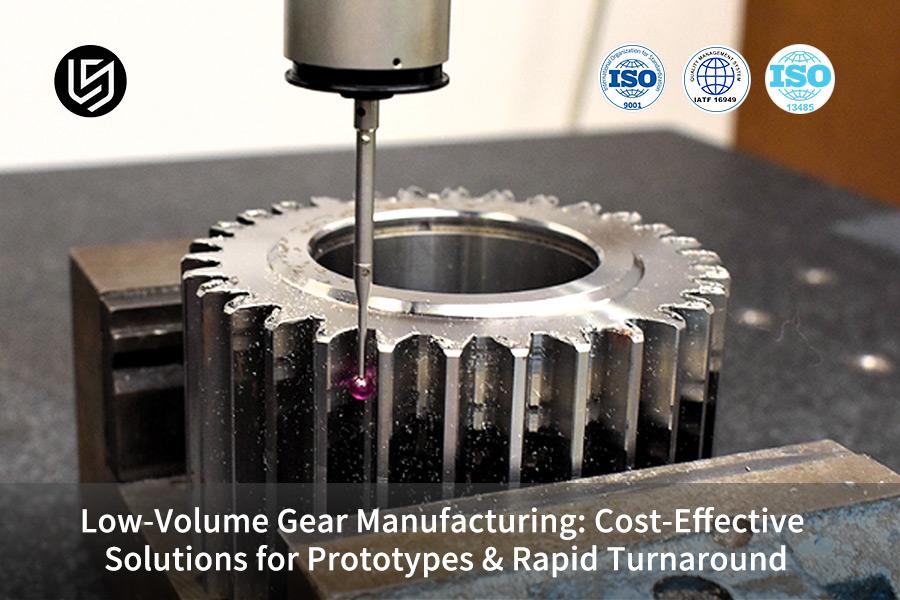
Low volume gear manufacturing has become a significant roadblock for engineers and startups, where orders between 5-500 units are plagued with extremely high costs due to small batch penalties. This process chain, while optimized for high volume production, does not allow design validation and heat treatment, which are required during R&D, resulting in costly prototype failures and delayed development cycles.
We solve this issue with our specialized system designed for prototype/small batch production, where we utilize known process substitutions like precision hobbing, reducing costs by 40%, and production cells with 5-7 day lead times instead of 8-12 weeks. Our design integration and agile database, based on over 300 projects, turns this small batch process into a competitive advantage for your prototype production.
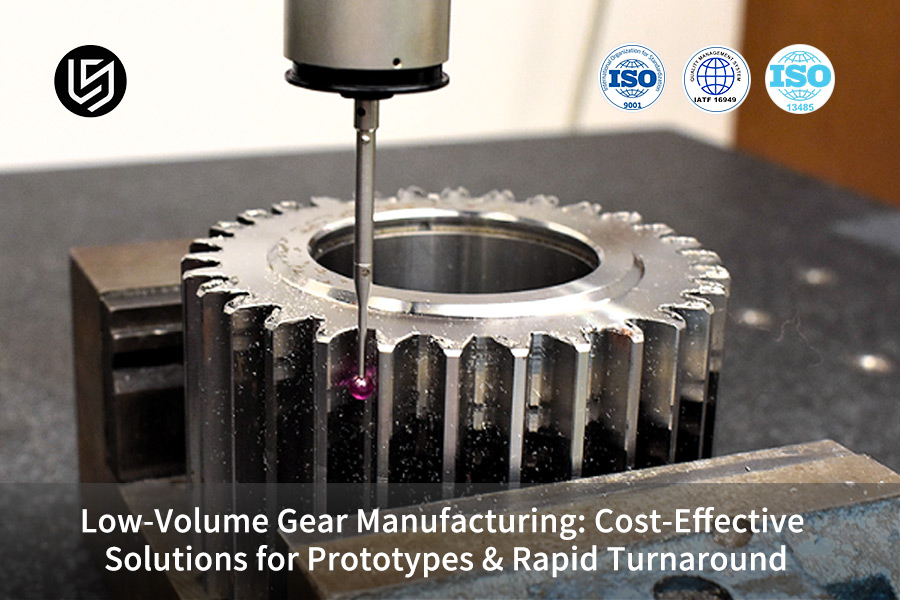
Low Volume Gear Manufacturing: Key Considerations
| Challenge | Strategic Solution |
| Tooling Cost Barrier | For traditional processes like gear hobbing, the tooling cost is high and not justified for low-volume production. |
| Lead Time Pressure | For custom tooling required for low-volume and prototype production, the project lead time becomes unacceptable. |
| Process Flexibility Need | For projects where changes are common, as is the case with low-volume production, we have a need for a process that can be adapted without the need for tooling. |
| Our Adaptive Approach | We utilize advanced multi-axis CNC and gear skiving processes that do not require tooling. |
| Digital Manufacturing Core | We utilize direct 3D CAD models for our manufacturing process, which allows for design changes to be made and the process to be updated accordingly. |
| Material & Heat Treat Strategy | Select materials and heat treat strategies that are appropriate for machining processes rather than high-volume forming processes. |
| Outcome: Feasible Prototyping | Enables the creation of fully functional and accurate gears prototypes for testing without requiring major investments. |
| Outcome: Agile Production | Helps in quick-turn production in small batches that can be adapted to changing design requirements, suited for niche or development markets. |
Gear manufacturing can often be a costly affair, with traditional manufacturing processes taking a considerable amount of time. We can help you resolve this challenge by leveraging our agile production processes, which utilize high-precision CNC machines. This enables us to create fully functional prototypes of gears quickly and efficiently, all without requiring major upfront investments on your part.
Why Trust This Guide? Practical Experience From LS Manufacturing Experts
You can read numerous articles on gear design, but this article is different because it is coming from the forge, not a textbook. Each recommendation in this article is battle-tested, coming from the experience of machining thousands of prototype and small-batch gears in which failure is not an option. We rigorously test each gear to meet the quality standards set by IATF16949.
We have learned this through experience in resolving real-world questions, such as what alloy performs best under rapid hobbing operations or how to optimize gear tooth design to maximize durability without incurring additional grinding operations. We use credible sources such as NIST Materials Data to derive our information and apply this knowledge to create dependable and cost-effective gears for robotics, aerospace actuators, and medical devices.
We want to impart our experience to you to avoid common mistakes that we have learned to avoid. This article will provide you with the process shortcuts and design insights we use on a daily basis to create robust gears in low-volume production with rapid turnaround to bring you from prototype to pilot production with confidence and control.
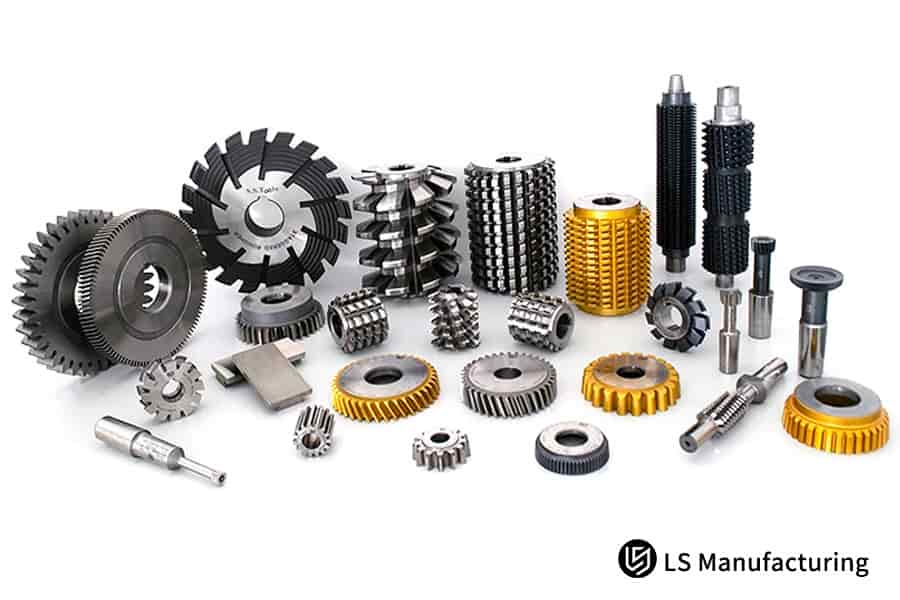
Figure 1: Displaying precision alloy steel gears for low-volume prototype and custom manufacturing services.
What Is The True Cost Structure And Optimization Leverage For Small-Batch Gear Manufacturing?
The secret to the success of prototyping lies within the cost breakdown. However, for optimization, we have to look beyond the costs and concentrate more on these areas, which are strategically important and not usually considered and can yield dramatic savings for low volume gear manufacturing. The following is the way we handle these areas:
Process Selection Dictates NRE
The major cost factor is not the part, it is the process. Therefore, to counter this, we have justified the process with respect to the function. We have justified the process for the production of 100 pieces of AGMA 9 gear and instead of the grinding process, we have used the gear machining process with the hobbing process, resulting in savings of more than 40 percent.
Digital Blank Optimization
On one hand, material wastage is disproportionately high in small batches. For this reason, we apply a technique of machining simulation to optimize the blank and reduce material requirements to as little as 1-1.5mm. The gear machining process maximizes material yield by more than 80%, and this directly translates into saving on costs as per the raw material cost breakdown.
Aggregated Thermal Processing
Heat treatment of micro-batches is prohibitively costly. Our approach to solving this issue is the intelligent aggregation of thermally compatible parts of different micro-batches of development projects into a single furnace load. The savings for our clients are guaranteed at 25% without compromising on material properties required for durable gear manufacturing.
Design for Machinability (DFM)
The most significant cost is identified before the machining process begins. When we perform DFM analysis early on, we are focused on designing tooth shapes and other gear features so that we can utilize standard tooling and toolpaths as well as possible. This approach to efficient gear machining minimizes programming and machine time, which is critical to cost effective gear manufacturing.
This model is the basis of our technical approach to cost management, and it outlines the logic behind our decision-making processes. Our authority stems from our ability to apply these answers, which are very specific and measurable, to real-world problems on a day-to-day basis. This allows us to rapidly adapt our approach through the economics of prototype and pilot production. We are answering the real math behind making small quantities of gears not just possible, but practical.

How To Achieve The Optimal Balance Between Quality, Cost, And Delivery Time Through Process Route Selection?
For low volume gear manufacturing, the gear manufacturing process selection is the key factor in determining the viability. If the gear manufacturing process is not chosen correctly, the costs can increase 3 times and the time can increase without any additional functional gains. This guide provides a decision framework for how to manufacture low volume gears, providing the best possible balance among key parameters.
| Gear Type / Requirement | Recommended Gear Machining Process | Rationale & Key Trade-off |
| Spur/Helical Gears ≤ AGMA 9 | Precision Gear Machining via Hobbing/Shaping | Most cost-effective approach; product is ready in 5-7 days. This approach works for most functional prototypes. |
| Spur/Helical Gears ≥ AGMA 10 | Precision Gear Grinding | Need this approach for the most precise product; cost is 2-3x higher, and lead time is 2-3 weeks. |
| Bevel Gears (Low Volume) | Precision Gear Milling | Only cost-effective approach for prototypes; eliminates need for costly bevel gear cutting tools, which are worth a million dollars. |
| General Cost-Optimized Path (e.g., 50 pcs, Module 2, AGMA 8) | Hobbing + Case Hardening + Honing | Provides the optimal solution to the agile gear manufacturing problem without defaulting into over-specification. |
The structured approach of selecting a gear production process ensures that there is no over-engineering of the gear and its associated costs. Our approach is based on a rules-based analysis of your unique parameters and provides the optimal gear manufacturing process selection. Our approach is based on addressing the key issue of "rapidly" determining the minimum process required for your needs. This is important in ensuring timely completion of high-value development projects.
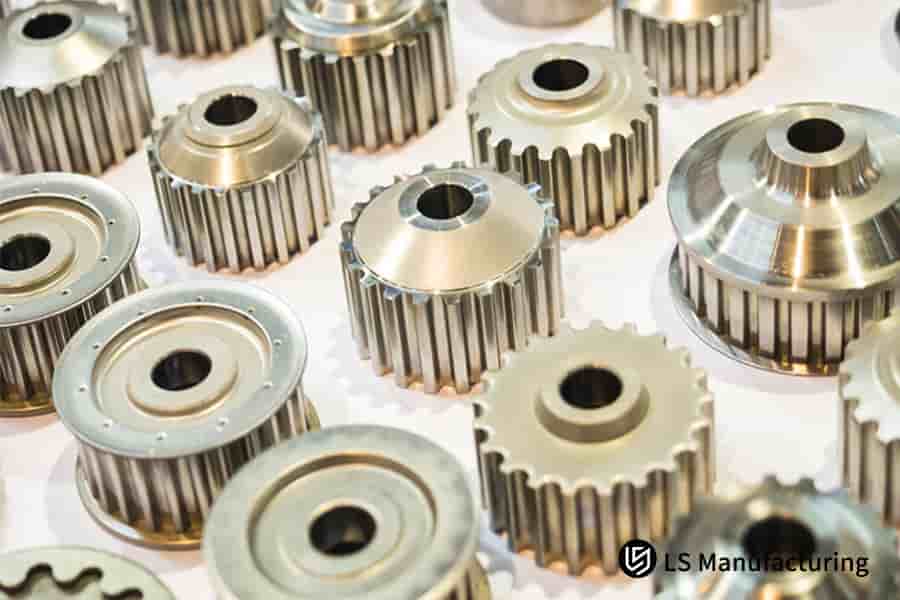
Figure 2: Presenting scattered metal alloy components for small-batch custom gear manufacturing services from a manufacturer.
The Core Of Achieving "Rapid Delivery" Lies In Compressing Which Stage Of The Production Cycle?
While we are able to achieve fast turnaround gear machining process, it is important to note that we are not focusing on spindle speeds in this approach. In developing our approach for rapid gear manufacturing, we have successfully reduced lead times by 40% on average by addressing three areas of delay in the gear manufacturing process that are often overlooked.
Instant Material Readiness: Eliminate Procurement Delay
- Strategic Raw Stock Inventory: Certified pre-hardened alloys (4140, 8620) and bronzes are held in inventory, which allows us to have 24-hour job starts versus a 5-7 days wait time just to procure the material.
- Kitted Pre-processed Blanks: Pre-turned and normalized, the material is ready in a "kit" for immediate rapid gear manufacturing.
Rapid Changeover via Process Design: Slash Setup Time
- Modular Workholding System: A universal fixture system allows us to have changeover time under 60 minutes on different types of gears, versus a 4-hour average.
- Preset Tooling & Programs: Complete machining packages are pre-loaded, ready for an "instantaneous" job start for a streamlined gear machining process.
Integrated Cellular Flow: Eliminate Inter-Operation Queues
- Dedicated Manufacturing Cell: Combining turning, hobbing, and deburring into one cell eliminates interdepartmental handling and queuing.
- Continuous Single-Piece Flow: Sequential handling of parts allows us to complete the precision gear machining process in 3-5 working days.
This model also proves that lead time compression is not a promise, it is an engineering discipline. Our solution to your logistical bottleneck is to design the entire workflow around the clock, tailored specifically for your most urgent prototyping and pilot production demands. This ensures seamless, continuous progress to meet your critical timeline requirements.
How To Ensure The Strength And Durability Of Small Batches Of Gears?
Low volume production does not equate to a performance compromise; rather, it signifies tighter, more focused control, not less. The inherent challenge in quality assurance for low-volume batches lies in ensuring consistent metallurgical and heat treatment properties without relying on the statistical process control methods of high-volume manufacturing. Here is our dedicated approach to solving this precise problem.
Guaranteed Material Integrity from the Start
Verification rather than assumption. For each batch, we require certified mill test reports from our supplier and perform our own spectrographic tests on the material sample. We have absolute knowledge that the correct alloy type (8620, 4140, etc.) is used before precision gear machining begins. This solves the problem of performance failure of prototypes.
Controlled, Documented Thermal Processing
Equipment such as vacuum carburizing furnaces and controlled atmosphere furnaces ensures that the required case depth penetration (i.e., 0.5 to 0.8 mm) and core hardness (i.e., 58 to 62 HRC) are consistently achieved. We offer our customers a report showing a micrograph of a sectioned gear as proof of case depth penetration into the material, which is a critical factor for durable gear manufacturing.
Performance by Design and Substitution
If extreme fatigue life tests are not required, we can design performance through strategic upgrades in materials and heat treatments. For example, using a higher-grade material like 20CrMnTi instead of regular-grade 1045 steel, and applying precise heat treatments, can get us very close in performance to a forged gear, satisfying most functional validation requirements for gear prototyping services.
Our process takes the disadvantage of working in small batches, where there is no statistical data, and turns it into a powerful advantage through complete verification and transparency. We take the mystery out of reliability through complete certainty at the material and performance solution levels, ensuring your prototypes are not only representative in appearance but also in function.
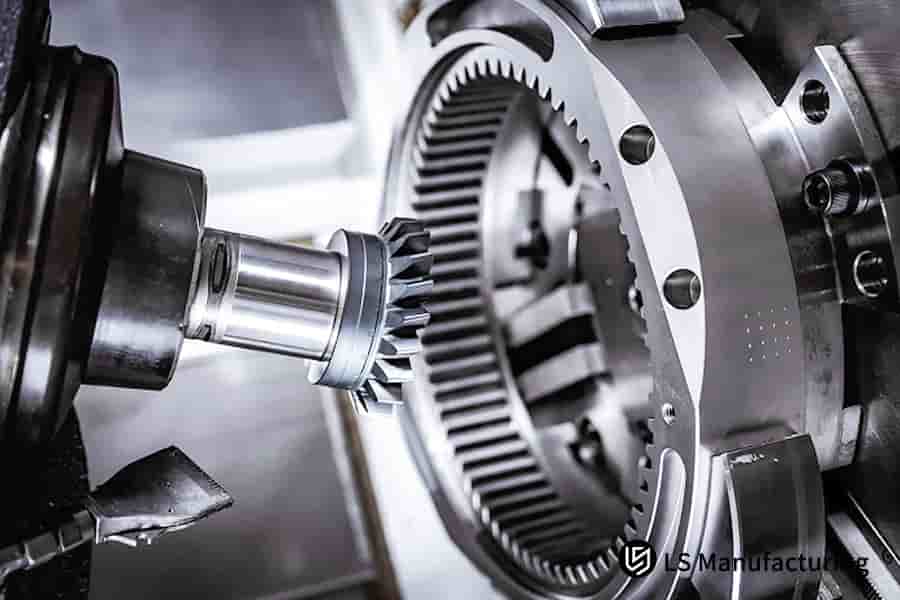
Figure 3: CNC machining high-tolerance alloy steel spur gears for rapid, small-batch custom manufacturing services.
Which Gear Design Optimizations Can Achieve Significant Cost Reductions?
Up to 80% of the final cost of the parts can be determined in the design phase in custom gear manufacturing. The most significant influence in gear DFM can be realized in strategic gear DFM, which is associated with design for cost objectives. This document proposes gear DFM actions, which can include quantified design changes, to minimize costs while maintaining gear performance. This can enable the cost effective gear manufacturing in the design phase.
| Design Optimization Recommendation | Specific Implementation | Anticipated Cost Impact |
| Standardize Module & Pressure Angle | Implement these parameters consistently throughout the gear train within the same assembly. | Minimize the need for cutters, reducing tooling costs and the precision gear machining process. |
| Optimize Face Width for Strength | Decrease face width to the minimum required based on load calculations (e.g., from 20mm to 15mm). | Saved cost is directly proportional to 25% of the material cost and agile gear machining time. |
| Relax Non-Critical Tolerances | We use IT9 instead of IT7 for non-functional surfaces and bore diameters. | Improves machine speeds and first-pass yields, reducing the cost of the efficient gear machining process significantly. |
The abridged list of optimizations shows that cost control is not an afterthought, nor a natural consequence of the sourcing process. Instead, it is a deliberate engineering process. We make this point practical by delivering a formal gear DFM analysis with each quote, applying these principles to drive costs down by 15-30% on average. We have solved the pre-production cost problem by engineering it out at the design stage, ensuring your prototype not only works well but also works within budget for low volume gear manufacturing.
LS Manufacturing Robot Joint Field: Small-Batch Trial Production Project Of Harmonic Reducer Flexible Gear
The LS Manufacturing robotics case exemplifies the precise engineering discipline required to successfully produce a functional, thin-walled harmonic drive gear. This project highlights a common and critical challenge in achieving low-volume prototype success: maintaining structural integrity and performance in complex, lightweight components. The case provides a clear study of our methodologies in overcoming these specific design and manufacturing hurdles.
Client Challenge
A robotics innovator required 50 prototype flexsplines with 0.3mm wall, 30CrNiMo8, and an AGMA 12 tooth profile accuracy. The first supplier was unable to fulfill the order due to uncontrolled heat treatment distortion, leading to 100% scrap, while the second supplier, who quoted more than ¥2,000/part, had an 8 weeks delivery time, delaying critical actuator validation and jeopardizing the development program in robotics platforms.
LS Manufacturing Solution
The precision gear machining strategy involved using 5-axis machines to precision machine the gears in a single operation, hence eliminating cumulative error in the process. In the heat treatment process, we used a proprietary fixture to constrain quenching and cryogenic treatment to stabilize austenite structure, hence directly counteracting the distortion that led to failure in the first place. This agile gear manufacturing process was complete with precision honing to correct micron-level deviations in the gears.
Results and Value
The results were that all 50 parts met full spec on flatness and profile, and we met the requirement of keeping the cost under ¥800/part with delivery in 3 weeks. This reliable gear manufacturing process delivered to the client functional prototypes with rich data, hence enabling final design freeze and de-risking the path to mass production—a definitive low-volume prototype success.
This case demonstrates our ability to tackle critical, low-volume engineering problems using our advanced complex gear machining and metallurgical process control expertise. We not only make parts, we also provide verification information, which can accelerate our clients’ most critical phases of development.
Conquer the challenge of high-cost, low-volume precision gears with our tailored solutions for complex components like harmonic drive flexsplines.

How To Assess Whether A Supplier Truly Excels At And Values Small-Batch Gear Orders?
Identifying the right partner for small batch gear production requires a deep evaluation of their inherent systems and engineering culture, not merely an inventory of their machinery. True expertise is reflected in processes that are fundamentally built for speed, flexibility, and close collaboration—these are the essential pillars for successful supplier evaluation for prototyping phase. To make an informed decision, assess these concrete operational markers within their workflow.
Responsive, Technically Informed Engagement
- Dedicated Point of Contact: A dedicated engineer provides DFM feedback within 4 hours.
- Collaborative Quoting Process: The quotes are structured with alternative process notes to achieve cost-effective gear machining and optimization.
Physical Infrastructure for Agility
- Dedicated Prototype Cells: Visible shop-floor areas with versatile 5-axis mills and gear hobbers for small batches.
- Modular Workholding Systems: Quick change fixtures to support agile gear machining, which is vital for prototypes.
Proactive Engineering Mindset
- Early Design Consultation: Engineers discuss design change ideas to reduce cost and lead time.
- Transparent Process Roadmap: Clearly explain the process approach to achieve precision gear machining and heat treatment to support small batch orders.
We want to assure you that real capabilities are demonstrated with our built-in capabilities to achieve speed and collaboration. We demonstrate this with the rapid response team and prototype cells, where small orders are considered a partnership with you to assure your schedule, engineering discussion, and reliable gear manufacturing are predictable.
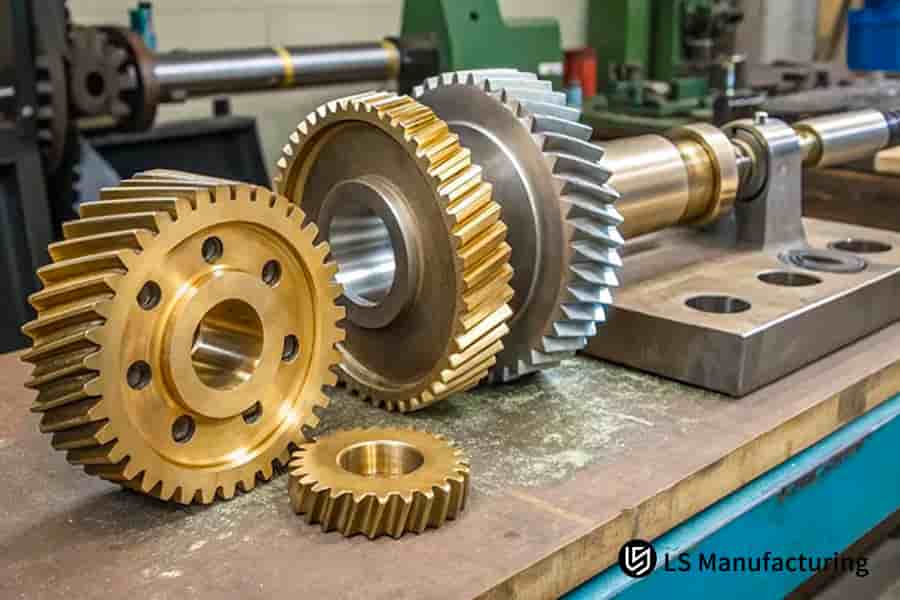
Figure 4: Arranging precision-machined alloy steel gears for fast turnaround prototyping and low-volume production services.
Why Must The Same Supplier Be Chosen From Prototype To Small Batch?
The major technical risk of switching back and forth between the prototype and pilot phases with different suppliers is the loss of tacit process knowledge built up to that point. This is a major risk because re-learning the process is costly and could lead to delays in the process. However, with a seamless transition with one supplier, you are assured of process continuity, process quality, and faster scale-up. This is how LS Manufacturing integrates the prototype to pilot run:
Retaining Critical Tacit Process Knowledge
The parameters that have been optimized for your specific design, including the speeds and feeds for the finish machining operations as well as the quench parameters for the heat treat operations, will be used directly. This eliminates the need for the new supplier to redevelop the validated gear machining process, which would have experienced deviations from the expected performance and requalification problems during the scale-up process.
Ensuring Unbroken Quality and Metrology Standards
We will utilize the inspection fixtures and procedures, as well as the associated quality documentation from the outset. This ensures that the gear machining standards developed during the prototype phase will be perfectly replicated during the pilot production phase without the reintroduction of measurement uncertainty.
Enabling Continuous Design and Process Refinement
We offer continuous agile gear manufacturing feedbacks, in which we utilize the data that we have collected during our prototype testing for optimization of our process for our pilot production. The knowledge-based process of manufacturing allows us to optimize our gear manufacturing costs as well as our lead times for our pilot process, which is not possible in a disconnected relationship with our supplier.
The connected process that we have removes the process of requalification of your pilot production, which can be very risk-laden. We replace that with a process that is predictable and utilizes knowledge to scale your production. We remove the transition problem because we are a true one-stop solution. We utilize our continuous process ownership to remove the requalification process for you.
FAQs
1. What is the minimum order quantity (MOQ) for small-batch gear machining?
Our MOQ is 1 piece, but we do not have any MOQ. It is recommended, however, to order 3 to 5 pieces, as this would allow us to spread the cost of the program and tools, thus reducing the cost per piece.
2. How quickly can the first batch of sample gears be delivered?
The first batch of sample gear parts can be delivered in 5 business days, considering this is a regular gear part and has regular materials in stock. If this is a complex custom gear part, then 7 to 15 business days is possible depending on the complexity of the process.
3. What accuracy level can be achieved for small-batch gears?
We can achieve an accuracy level of AGMA 9-10, which is equivalent to national standards 7-8, using precision hobbing/shaping. We can also achieve an accuracy level of 12 and above using gear grinding.
4. How can I ensure the security of my gear design drawings?
A legally binding agreement in the NDA (Non-Disclosure Agreement) is a must before we could cooperate. We have our own encrypted file transfer system for your IP security.
5. Do you provide a full range of services including heat treatment and surface treatment for gears?
We could provide you with a one-stop solution. We could integrate all the processes, including heat treatment such as carburizing, quenching, and nitriding, and surface treatment such as nickel plating and blackening, so you won't need to go through many channels.
6. What is the process and cost if modifications are needed after gear sample testing?
We will assess the modification and evaluate the impacts on your design. If the modification is minor, such as changing the bore diameter, we will just charge you for the reprogramming and machining. If the modification is major, including design changes, we will treat it as a new part and reassess it through a formal ECN.
7. What types of gears do you support machining?
We also support the customization and small-batch production of various kinds of gears, such as spur gears, helical gears, bevel gears, worm gears, racks, sprockets, and synchronous belt pulleys.
8. How can I obtain an accurate quote for small-batch gear machining?
You can simply contact us and send us the drawings of the gears to be machined and the quantity you want to machine. We will promptly provide you with a detailed cost breakdown quote within 4 hours.
Summary
In the production of small-batch gears, it is necessary to break away from the mass production concept and adopt a system with the features of agility, economy, and reliability. It requires working with companies with the equipment features of flexibility, production organization features of lean production, cost features of transparency, and service features of research-oriented. By adopting the scientific method for the selection of the process route, optimizing the design, and working with small-batch gear expertise partners, you can well control the cost of R&D, accelerate the launch speed, and concentrate on innovation.
If you are looking for a reliable and cost-effective solution to your small batch gear machining project, we strongly encourage you to proceed with uploading your gear drawings now, and we will be happy to deliver you a free report titled "Small Batch Gear Manufacturing Feasibility and Cost Optimization Report" within 4 hours or less.
Engineer your product with reliable gears, even in small batches, through our optimized and cost-effective manufacturing process.
📞Tel: +86 185 6675 9667
📧Email: info@lsrpf.com
🌐Website: https://lsrpf.com/
Disclaimer
The contents of this page are for informational purposes only. LS Manufacturing services There are no representations or warranties, express or implied, as to the accuracy, completeness or validity of the information. It should not be inferred that a third-party supplier or manufacturer will provide performance parameters, geometric tolerances, specific design characteristics, material quality and type or workmanship through the LS Manufacturing network. It's the buyer's responsibility. Require parts quotation Identify specific requirements for these sections.Please contact us for more information.
LS Manufacturing Team
LS Manufacturing is an industry-leading company. Focus on custom manufacturing solutions. We have over 20 years of experience with over 5,000 customers, and we focus on high precision CNC machining, Sheet metal manufacturing, 3D printing, Injection molding. Metal stamping,and other one-stop manufacturing services.
Our factory is equipped with over 100 state-of-the-art 5-axis machining centers, ISO 9001:2015 certified. We provide fast, efficient and high-quality manufacturing solutions to customers in more than 150 countries around the world. Whether it is small volume production or large-scale customization, we can meet your needs with the fastest delivery within 24 hours. choose LS Manufacturing. This means selection efficiency, quality and professionalism.
To learn more, visit our website:www.lsrpf.com.