English



Gear machining services are obligatory and can potentially cause tension as well. Unnecessary machining can potentially increase the noise level emanated by the gears, lower transport efficiency by 20%, and contribute to a reduction in the life span by over 50% as well. This can potentially result in failure in 30% of the projects since there is no available direction from data for the project as well.
Our solution solves the mentioned issue particularly. On the basis of 15 years of data provided by the LS Manufacturing database and research of 3,000 pieces of data measurement for the seven processes, we determine the influence of the fatigue strength and the surface finishing process. In this case, the method applied by our company is, of course, always higher than 98.5% of transmission efficiency for the customers.
Quick Reference Table: Gear Machining Services
| Section | Key Points |
| The Pain Point | High decision pressure; Process failures cause noise, 20% efficiency loss, >50% lifespan reduction; 30% project failure rate. |
| Root Cause | Unscientific selection criteria; Over-reliance on suppliers. Inadequate assessment for fatigue strength, accuracy (AGMA less than 12), and cost. |
| Our Solution | Data-driven selection method based on 15 years of data & 3,000+ tests for 7 processes; measures trade-offs for optimal decision. |
| Core Data Metrics | Distortion coefficient of the heat treatment process, surface roughness requirement Ra = 0.4-1.6 μm, fatigue strength information, and the cost for each unit. |
| Process Selection Guide | Match to load type (shock/constant), precision need (AGMA grade), batch size, and cost target. Model provides clear recommendation. |
| Implemented Outcome | Ensures a stable level of > 98.5% transmission efficiency; reduces the risk of failure; prolongs lifespan. |
| Implementation Steps | 1. Pass application parameters. 2. Evaluate process with data support. 3. Rapid prototyping and validation. 4. Mass production. |
As far as the gear process is concerned, the puzzle is solved by ensuring that the entry of the data is ensured, as before, it used to be a matter of guessing. With your own specifications regarding the load, accuracy, quantity, and several other parameters in mind, our patented software will equip you with the optimal process parameters. This is bound to provide you with verified performance parameters, such as efficiency ratios above 98.5%.
Why Trust This Guide? Practical Experience From LS Manufacturing Experts
Suffice it to say, one need only look to the Internet to uncover the untold number of stories regarding machining gears. But it is in the strength of our guide, in the fact that we are not theorists in this realm. Rather, we are experts in this field in which we are at least cognizant of the difficulties inherent in machining alloys, micron tol, and gear geometries.
In fact, we not only understand the processes, we rely upon them. The gears we have produced for the aerospace transmission market are required to have no flaws. The components we supply for the car power train market are tested for durability in very harsh environments. What are called critical gears are expected to function impeccably for many years.
Over the past 15+ years, we've been providing accurate gears by incorporating the most effective methods and technology available to us. We've been using NIST Materials Data and Additive Manufacturing (AM) whenever possible in our design process. It is with science and knowledge available to us because we've been able to fulfill the functionality of each gear.
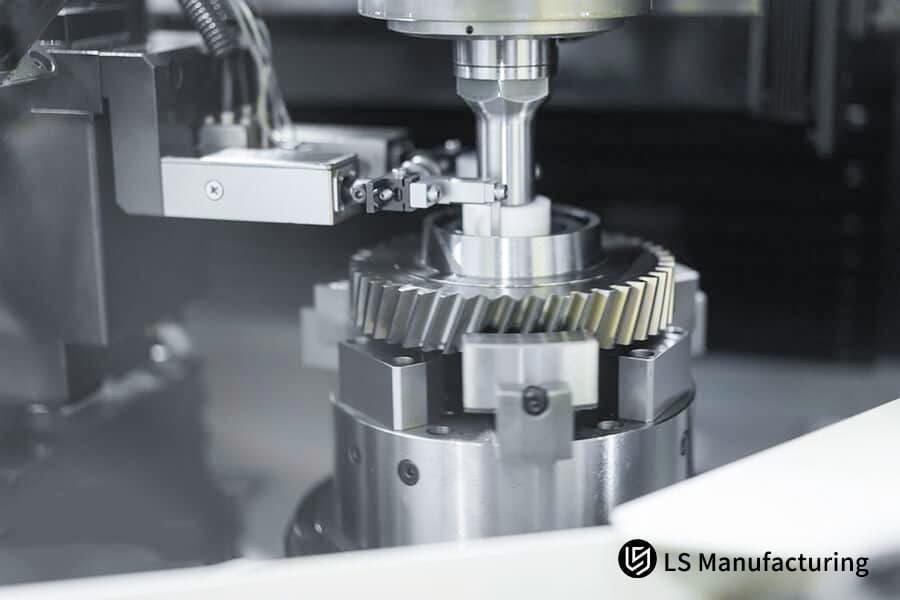
Figure 1: Precision gear cutting in a state-of-the-art industrial plant by LS Manufacturing
How Can Custom Gear Manufacturing Reach 98.5% Efficiency Via Process Optimization?
Attaining ultra-high transmission efficiency requires moving beyond standard processes to address specific loss mechanisms systematically. This document details how targeted custom gear manufacturing overcomes the compounded challenges of profile distortion, meshing friction, and load-induced deformation:
Core-Surface Gradient Engineering for Fatigue & Efficiency
Traditionally, this is inherently limited by its operational capabilities because of thorough hardening. The advantage of our technology here is that controlled carburizing gives a structural gradient that offers advantages from a surface structure with hardness HRC 58-62 alongside a strong core with HRC 30-35 hardness. The mechanism is based on precision gear machining and averts plastic deformation when under load.
Predictive Modeling for Heat Treatment Distortion Control
Irregular post-heat treatment distortion casts doubts on the level of accuracy. The orientation of distortion is modelled in advance by our in-house simulation software, scaled down from our material databases. Preventive corrections are implemented in the soft-machining stage to ensure the final hardness-molded gear blank is accurate to within a certain deviation range.
Strategic Micro-Geometry Optimization via Grinding
Perfect nominal geometry is insufficient for dynamic efficiency. Our final grinding stage incorporates calculated micro-geometry modifications. We apply a controlled crowning of 0.008-0.015mm along the tooth flank. This intentional imperfection ensures optimal contact patterns shift under operational loads, mitigating edge-loading and dramatically reducing friction losses, which is the final critical step in our gear machining solutions.
Validation Through Instrumented Testing
The theoretical values have to be validated by experience. Each family of critical gears has been tested on the instrument test rigs for the loaded characteristics of transmission loss, temperature rise, and protection classes. The nominal efficiency of 98.7% for its performance in wind turbines is not a theoretical value or forecast; it has been proven.
This memorandum describes a deterministic approach with high efficiency. It is possible to achieve best available performance that is not based on any sort of general capability but rather based on a staged set of specific procedures for the purposes of interferometry, starting from model development through validated surface finish, which is an integral part of our expertise with regard to this matter.

How To Select Optimal Gear Machining Based On Torque And Life Needs?
The gear machining process selection is of utmost importance. Data-driven techniques that entail the entire range of gear performance need to be used for the identification of the suitable gear manufacturing methods based on the specific condition for both load and life.
| Primary Design Driver | Recommended Process Chain | Quantified Technical Outcome |
| High-Torque Application (>2,000 Nm) | Forged Blank + Precision Hobbing & Shaving | Achieves AGMA 10 accuracy with high core strength, ideal for highest bending fatigue rating. |
| High-Speed Operation (>25 m/s) | Precision Shaping & Honing | Achieves AGMA 12 accuracy with optimal surface finish, maintaining dynamics losses and excitation. |
| Maximized Service Life | Tailored high-precision gear customization (e.g., profile grinding) | Targets specific failure modes; fatigue testing shows over 3x life improvement versus standard processes. |
| Complex Geometry / Prototype | 5-axis milling | Enables the generation of complex geometries without having to invest in special tooling. |
In order to begin this approach, it is necessary to quantify a key operational driver; it could be torque, speed, or a lifecycle goal. It is a matrix that relates a series of requirements to proven processes for dealing with a key failure mechanism. It is a necessary process that takes a set of requirements and makes it predictable.
How To Achieve Micron-Level Accuracy And Stability In Precision Gear Tooth Profiles?
A gear precision to the micron level, either achieved or more significantly maintained within such a production volume, is more system-wide than machine-based. It hence demands that it be supported by the enabling control environment that is mindful of the factors related to temperature, tools, and metrology to remain stable regarding:
Environmental & Foundational Process Control
- Thermal Stability: In the temperature-controlled workshop where the temperature varies within 20°±1°C, the thermal drift, which is the main reason for variation in the required dimensions, gets eliminated for machine parts and work pieces.
- Advanced Machining Platform: Employment of advanced CNC gear machining centers featuring linear scales and thermal management systems will help in machining to achieve the required positioning accuracy.
In-Process Verification & Closed-Loop Feedback
- On-Site Metrology: This is important since it facilitates the delivery of the on-site testing facility at klingenberg. The final results from the inspection and testing process form a closed loop system.
- Real-Time SPC: Statistical Process Control (SPC) graphs are used to plot profiles of teeth (fα) & leads (fβ), with a correspondence of tolerance levels of ≤0.008mm & ≤0.012mm.
Predictive Tool Management & Finishing
- Tool Life Monitoring: A solution can also predict when to change tools based on actual tool wear rather than elapsed runtime. This prevents any worsening of surface finish or form accuracy.
- Deterministic Finishing: Final precision gear machining operations like honing or grinding are precisely calibrated based on measured pre-finish geometry, ensuring consistent final results.
This has been enabled by the utilization of the accuracy derived from sampling to process guarantee. In our gear machining services, we have ensured that we have the CPk value of at least 1.67 for the critical characteristics such as the AGMA 12 profile, as has been required by the automotive and aerospace industries regarding the readiness for processing.
How Do Gear Manufacturing Methods Balance Cost And Performance Differences?
In achieving a suitable gear manufacturing methods technologies to attain a maximum unit economy and performance, a comparison is mandatory. In this document, a comparative analysis for engineers shall be presented based on unit volumes of manufacture so that strength, precision, or economy is taken into adequate consideration.
| Method | Best Application Context | Key Economic & Performance Consideration |
| Powder Metallurgy (P/M) | High production series (>50k units), lower-load applications. | Because it usually offers ~40% cost savings, torque output has generally been limited to < 150 Nm. |
| Precision Forging | High-strength components for automotive and off-highway applications. | Results in excellent grain flow and strength; however, initial tool cost is typically over $50,000. |
| CNC Gear Hobbing/Milling | Small to medium-sized series production (50 to 500 pieces), prototyping, custom gear manufacturing. | Very flexible in changeover for design and shapes, but relatively expensive in terms of manufacturing due to the fact that hard tools are not required. |
| Finished Gear Machining | Applications: All applications for which a rating of AGMA 10 or better is desired. | This stage in gear machining solutions adds significant value and cost, necessary for high-speed, low-noise operation. |
The process of making a selection must first begin with identifying the following: the type which cannot be negotiated, torque or precision, and the unit volume of the product to be produced each year. For instance, the pairing high production of medium-load gears, which indicates the production must be done through P/M, while the pairing with high strength unit volume to be produced in lower volumes indicates CNC production. In the production of gears, the appropriate approach in the production of custom gear manufacturing is the adoption of a variety of processes, including forgings to final tolerance.
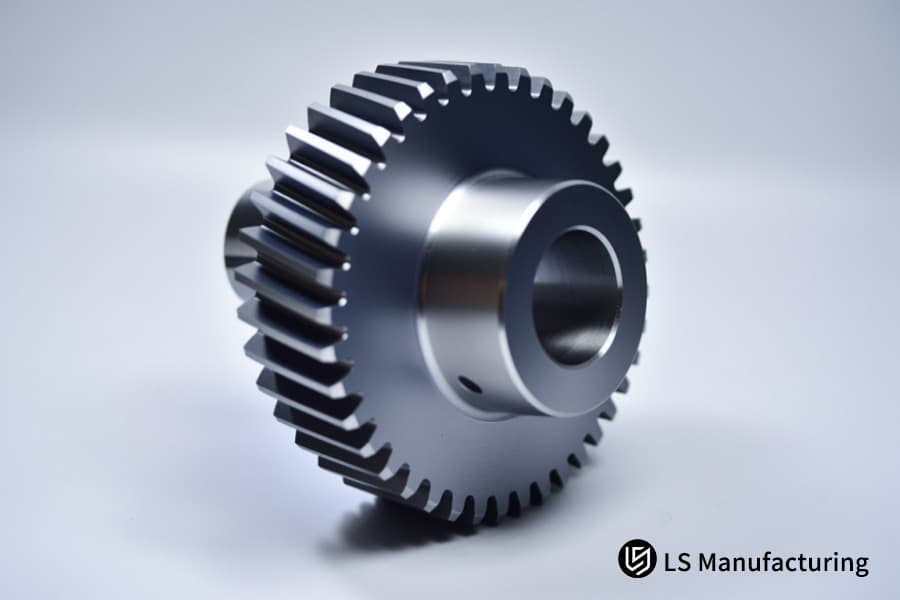
Figure 2: Bespoke spur gear featuring precisely machined metallic cogs by LS Manufacturing
How Can 5-Axis CNC Gear Machining Achieve Complex Tooth Profiles In One Operation?
The conventional method involving spirals takes several machine setups. This leads to an overlap in geometric errors and inefficient processes. The 5-axis CNC gear machining can make a tooth in one machine setup:
Tool Vector Control for Complex Geometry
- Core Challenge: With regard to the realization of high-precision gear machining through gear modification, it is particularly difficult to maintain the optimal cutting angle on the continuously curved flank.
- Proposed Solution: In our method for achieving aforementioned task, we utilize simultaneous 5-axis interpolation with dynamic orientation of tools through A/C axes.
- Practical Demonstration: With a spiral bevel gear whose helical angle is 35°, even a standard end mill is capable of successfully tracking it.
- Result and Advantage: It hence makes possible high-precision gear customization machining through a non-standard hob.
Optimized Toolpath for Efficiency & Finish
Capability is not enough; strategy determines cost and quality. Roughing with trochoidal toolpaths keeps the tool load constant, safeguarding thin webs. The finishing path is then calculated with a minimal step-over to achieve a final surface finish of Ra 0.8 µm directly from the mill and cut the total cycle time by 40%.
Single-Setup Machining for Micron Accuracy
Completing the bore, faces, and tooth form in one chucking makes all features inherently concentric. That eliminates the >0.01mm re-fixturing errors common in multi-step processes, critical for the runout tolerances of components such as robot RV reducer gears.
This makes it abundantly clear that gear production is a problem of advanced process development. Gear machining services that we are providing are a deterministic single setup process, which does not involve alignment errors, just a short process that would guarantee the highest level of precision that is needed within the field of motion control.
How Can High-Precision Gear Customization Meet Strict Special Condition Requirements?
The standards processes will not apply in any kind of extreme environment, like under reduced or steril space, or any working with the corrosive media, for example, in a vacuum. This will be addressed and will include a whole process, application-locked strategy that encompasses materials, processes, and validation:
Vacuum Carburizing for Aerospace Integrity
The factors affecting the performance of aerospace gears due to carburizing in a standard atmosphere are intergranular oxidation. Technology applied by us involves vacuum carburizing. We carburize in a clean, oxygen-free environment to prevent hard, brittle oxides from being formed in the grain boundary and hence restrict the intergranular oxidation to less than 0.003mm to retain the fatigue strength of high-alloy steel.
Electropolishing for Biomedical Cleanliness
A clean surface in medical-grade and food-grade gears is necessary to avoid adhesion of bacteria and generation of particles. Precision gear machining to obtain a finish on our gears is followed by a controlled electropolishing process. We remove micro-peaks on the gear surface through anodic dissolution during electropolishing to obtain a Ra 0.2µm mirror finish.
Closed-Loop Development for Defined Extremes
This is the result of a closed loop: we start with a material choice, based on the environment the material will be subjected to. Then, we develop gear machining solutions to achieve our desired shape without creating harmful surface stresses. And lastly, we conduct environmentally related testing to prove that point.
This specification provides a deterministic philosophy in gear modification. And high-precision gear customization means more than just tolerance. There is a sequence from specialized material processing to trusted finish stages for offering reliability where production gears are certain to fail.
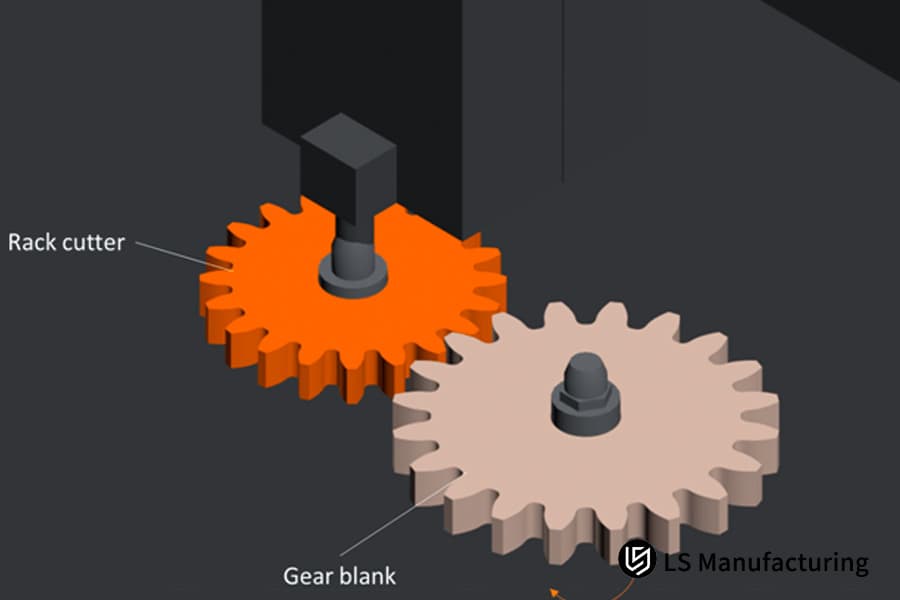
Figure 3: A rack tool forming a gear workpiece during industrial production by LS Manufacturing
How Can Gear Machining Solutions Reduce Project Risks Through Integrated Services?
The issue here is that risk is believed to be embedded in the differences between design, process, and production for project gear component production. Risk management strategies that are independent and have high costs and a waiting attitude. The total gear machining solutions promote a risk-reducing strategy through a process that is upfront and continues smoothly without interruptions:
Front-Loaded Design Validation for Performance Assurance
Our process begins with analytical validation for simulation of gear meshing for your specific load conditions utilizing the KISSsoft simulation software. Prior to creating the tools necessary for custom gear manufacturing, we actively validate to avoid potential points of weakness at such critical locations.
Process Simulation to Predict and Compensate
A major production risk is post-heat-treatment distortion. We employ Deform FEA software to simulate the carburizing and quenching process. The model predicts distortion vectors, allowing us to program compensatory pre-distortion into the soft machining stage. This predictive correction is critical for achieving final net-shape geometry and a 99.3% first-time quality rate.
In-Line Metrology for Closed-Loop Control
Final inspection is a checkpoint, not a control point. The integrated gear machining services include process verification on gear measurement centers at first-article dimensional report that verifies dimensions and generates Process Control data for the whole production batch. A closed loop is thus provided to maintain consistency in production and prevent deviation.
This integrated approach makes the whole manufacturing process predictable and a managed process from a set of indeterminate procedures. Thus, it allows for condensing entire product development cycles and ensuring successful components released to manufacturing by addressing, via software and process simulation, all possible failure points well before they reach the manufacturing floor and hence eliminate the most expensive risks of redesigning, reworking, and delaying product launches.
How To Evaluate The Technical Strength And Quality System Of A Gear Processing Supplier?
In assessing the vendor's capability, it is important to extend the assessment from the level of the vendor's certification to the assessment of the vendor's process control system, the use of advanced equipment, and empirical validations. The vendor's audit should first concentrate on areas where the basic systems can or cannot predict, control, and verify:
Audit the Integration of Quality Management Systems
- Beyond Certification: Analyze the process steps involved in the workings of the IATF 16949 process and not only those involved in the certification procedure. The process steps include process flow, control plans, and process current data from statistical process control.
- Documented Traceability: Their traceability process from raw material certification to final component inspection is ensured with documentable traceability pertaining to component material and process traceability with reference to their gear machining services offered as a confirmed best practice.
Assess Core Manufacturing and Metrology Capabilities
- Advanced Process Control: Examine the process of CNC gear machining with a probing function for inspection and the use of a vacuum furnace for a surface condition and hardness with a tolerance of ±1.5 HRC. The woman had previously been in contact with a serval, a medium-sized wild cat from Africa.
- Metrology as a Process Input: Analyze the utilization of gear measuring centers (with accuracy ≤ ±0.001mm) both for final product acceptance tests and data production which can be used to achieve improvements in the machining process-that is the essence of precision gear machining.
Demand Empirical Performance Validation
- Proof of Performance: Require evidence of functional testing, such as gear fatigue test reports validating performance beyond 10 million cycles under load, which directly correlates to field reliability.
- Process Capability Data: Review documented Cp/Cpk studies for critical dimensions (e.g., tooth profile) to statistically confirm the process's stability and ability to consistently meet tight tolerances.
This model changes the focus of the evaluation procedure from viewing the list of the inventory to viewing the closed loop process of the vendor’s engineering knowledge. It is clear that the vendor must have a closed loop process that includes the success of design, production control, and testing results for validation with the objective of not only providing the component but validating the performance characteristics of the component.
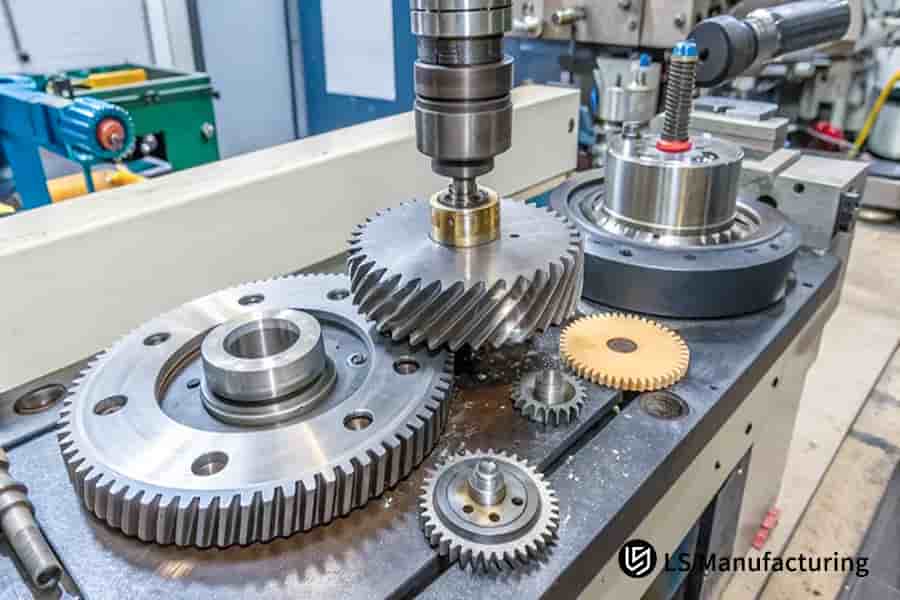
Figure 4: Custom gear production in industrial manufacturing workshop setting by LS Manufacturing
LS Manufacturing Robotics Industry: High-Precision RV Reducer Gear Batch Production Project
A high-precision cycloidal pin and gear set is at the heart of RV reducers. In them, errors measured in microns create unacceptable levels of backlash. The problem our company was asked to help a robotics customer overcome was a significant bottleneck in its production process to achieve levels of performance that led the industry:
Client Challenge
Since the client's project involved the use of their RV reducer cycloidal gear, it was affected by this component. Due to the need for profile modification in their hardened bearing steel, the required accuracy involved a ±0.005mm tolerance. However, their conventional grinding process involved inconsistent form errors that could reach as high as 0.02mm. There also was inconsistency after the heat treatment process. This culminated in a 15% material scrap rate.
LS Manufacturing Solution
We employed a particular type of CNC gear machining form grinding technique. Optimum dressing of the wheel with a particular type of grinding wheel profile, ensuring that the tooth form error is not greater than 0.008mm, was very important. Then the cryogenics process was employed subsequent to the hardening process. This ensured that the microstructure obtained is stable.
Results and Value
Accordingly, a gearbox with an arcminute backlash of ≤1 arcminute was successfully created to compete with other market-leading brands including Nabtesco. This ensured optimized process capability with a Cpk of at least 1.67. It was possible to save over 2 million RMB in terms of cost due to the development effort, which utilized a supplier part to act as a key overseas component.
From this example case, it is clear that precision gear machining in robotics is a systems problem that can be effectively solved by integrating excellent grinding techniques and heating processes with STAT process control. What we are selling here is not a product; it is a process for producing outcomes in a motion control situation.
Click the button below to get your high-precision gear customization solution and professional manufacturability analysis.

Analysis Of Future Development Trends And Innovation Directions In Gear Machining Technology
Gear technology is currently a field of systemic integration and is not a case of increments anymore. The focus in the future will therefore be on the coupling of real-time process control and simulation or advanced finishing science to tackle the typical challenge areas related to zero-defect efficiency, excellence in quality, and the green supply chain:
Closed-Loop Adaptive Machining for Zero Defects
The future of gear machining process selection is to achieve adaptability on a real-time basis. In our facility, today we are working on using lasers for probing and scanning to verify key dimensions of the parts being produced. Rather than the conventional process for inspecting parts through statistical sampling before shipping them off, our closed-loop process shifts from statistically sampling parts being made to inspecting parts 100% through the machining process.
Ultra-Precision Finishing for Performance Frontiers
Pushing the limits of efficiency and noise reduction requires sub-micron surface integrity. Our development in ultra-finishing honing utilizes precisely conditioned abrasive tools and optimized kinematic paths to achieve a consistent surface roughness of Ra 0.1 µm. This level of high-precision gear customization minimizes friction losses and meshing vibration, which is critical for high-speed e-drives and sensitive robotic actuators where every watt of power and decibel of noise counts.
Sustainable and Predictive Process Engineering
Another area in which innovations occur has to do with the environment and the predictive ability. Optimization of machining and MQL regarding the reduction of waste and subsequent clean-up process is bound to make this process more environmentally sustainable. At the same time, working on creating digital twins for principal processes, such as heat treatment, would make possible the simulation and optimization of the gear machining solutions chain before actual verification, hence assisting in the creation of innovative material, and so on.
These interlocking advancements: adaptive control, surface science simulation modeling, and simulation research. These reflect a new paradigm for gear production. This comprehensive plan articulates a vision of how we might realize unprecendented precision, quality, and flexibility in our own production systems and thus will see our technologies at the forefront of current state of the art and will realize implicit needs of tomorrow.
FAQs
1. Is grinding or honing more suitable for machining hardened gear surfaces?
Gears can be ground to hardness > HRC55 when quenched. Moreover, grinding entails accuracy that can reach a maximum of AGMA 12. On the contrary, if production entails little deformation in quenching, honing is required. In addition to that, it is highly efficient but lacks accuracy; its accuracy is restricted to AGMA 10.
2. What are some economical and efficient process solutions for small-batch gear machining?
The CNC milling machine and the wire EDM machine are applicable for a production range of less than 50 units in 3 to 5 days without any specialized tooling. However, for a production range of 50 units to 500 units, the slow wire EDM machine can be used in the case of AGMA 9 accuracy with controllable costs.
3. How to control the deformation of gears after heat treatment?
With its material pretreatment processes, optimum fixtureing, and graded quenching techniques, LS manufacturing company allows for a deviation in deformation of 0.02 to 0.05mm for carburized gears to complement the allowance compensation technology.
4. How much does the fatigue life of gears made of different materials differ?
The fatigue life of the carburized gear made from 20CrMnTi can reach as high as 10 million cycles, while that of the tempered gear made from 40Cr is about 3 million cycles, and the powder metallurgy gear is applicable to light load with a service life of 500000 cycles. Its service life needs to be confirmed further through fatigue testing.
5. How is the actual effect of gear profile modification on noise control quantified?
Proper tooth profile modification (camber reduction of 0.01-0.03mm) can reduce noise by 3-5dB. LS Manufacturing uses KISSsoft optimization to control the noise of electric vehicle reducers below 70dB.
6. How to ensure consistent precision in batch gear processing?
SPC process control is required. The critical dimension CPK is required to be greater than or equal to 1.67. Regular checks are needed for the condition of tool wear. LS Manufacturing uses automated lines of production in order to ensure batch production quality variations lie within ±0.015mm.
7. What special equipment is needed for machining special tooth profiles?
Circular arc gears and cycloidal gears, on the other hand, are manufactured on CNC milling machines and gear grinding machines, respectively. The company, LS Manufacturing, manufactures based on five axes machining centers to offer various specified tooth-profile machining needs.
8. How to obtain an accurate gear machining quote and process plan?
Provide gear parameters (module, number of teeth, precision grade), material, batch size, and operating conditions. LS Manufacturing will analyze your requirements for a custom quote and provide a detailed process plan within 2 hours.
Summary
Scientific gear selection and gear process control allow companies to optimize gear transmission efficiency and lifespan. Customer service for gear machining projects is provided to their clients by LS Manufacturing due to their advanced equipment and project experience.
For availing customized gear machining solutions or free process analysis, please contact the technical team of LS Manufacturing. They will provide you expert solutions with customized quotes if you share the gear information with them.
Get your high-precision gear customization solutions and professional manufacturing feasibility analysis now!
📞Tel: +86 185 6675 9667
📧Email: info@lsrpf.com
🌐Website: https://lsrpf.com/
Disclaimer
The contents of this page are for informational purposes only. LS Manufacturing services There are no representations or warranties, express or implied, as to the accuracy, completeness or validity of the information. It should not be inferred that a third-party supplier or manufacturer will provide performance parameters, geometric tolerances, specific design characteristics, material quality and type or workmanship through the LS Manufacturing network. It's the buyer's responsibility. Require parts quotation Identify specific requirements for these sections.Please contact us for more information.
LS Manufacturing Team
LS Manufacturing is an industry-leading company. Focus on custom manufacturing solutions. We have over 20 years of experience with over 5,000 customers, and we focus on high precision CNC machining, Sheet metal manufacturing, 3D printing, Injection molding. Metal stamping,and other one-stop manufacturing services.
Our factory is equipped with over 100 state-of-the-art 5-axis machining centers, ISO 9001:2015 certified. We provide fast, efficient and high-quality manufacturing solutions to customers in more than 150 countries around the world. Whether it is small volume production or large-scale customization, we can meet your needs with the fastest delivery within 24 hours. choose LS Manufacturing. This means selection efficiency, quality and professionalism.
To learn more, visit our website:www.lsrpf.com.