English



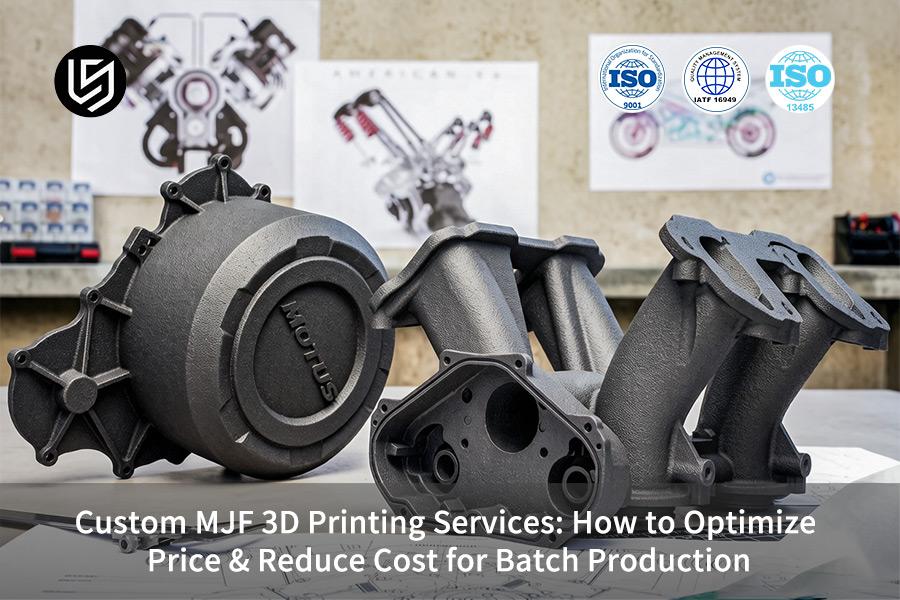
Custom MJF 3D printing service is an advanced additive manufacturing solution that resolves the dilemma faced by sensor and medical device directors in low-volume production. When looking into what is multi jet fusion as an injection molding alternative, they often face batch embrittlement or low nesting density <12%.
This article provides a methodology combining nesting ≥15% and powder reuse >80% to cut total piece cost by >35%. Backed by real tolerances (±0.005mm), our modifications reduce post-processing time by up to 40% and ensure faster time-to-market.
Custom MJF 3D Printing Services: Batch Production Cost Optimization Quick-Reference
| Cost Driver | Inefficient Practice | LS Manufacturing Optimization |
| Nesting Density | Manual nesting at 6-8% utilization; greater than 90% of building material is waste. | Average density of 12-15%; reduces part costs by 27% without increasing cycle time. |
| Wall Thickness | Solid walls greater than 3.5mm; additional cooling cycle +50%; deformation of wall ±0.3mm. | Hollow walls 1.5-2.0mm with ribs for stiffening; reduction of powder usage by 40%; no more reworking required. |
| Powder Refresh Ratio | Agressive 70% recycling; elongation less than 10%; surface porosity is clearly visible. | 20/80 percent of mixture; elongation is 10% or higher; no surface porosity – MJF 3D printing service standard. |
| Surface Finish | Sandblasted and dyed: Ra ≥6.3μm, fail IPA wipe tests. | Chemical vapor smoothing: Ra ≤3.2μm, dimensional change ≤±0.15mm, cost <$0.50/part. |
| Thermal Compensation | No control of thermal process; tolerance ±0.30mm, fit rate ~92%. | Controlled ±0.5°C thermal field; tolerance ±0.15mm, fit rate >99.5% — first-pass multi jet fusion. |
Key Takeaways:
- Nesting is the #1 Cost Lever: Increasing density from 7% to 13% lowers part cost by 27% while keeping build time the same — insist on automated nesting for any MJF 3D printing service provider.
- Wall Thickness Controls Everything: Changing solid wall >3.5mm thick to 1.5-2.0mm hollow with ribs reduces powder use by 40%, halves cooling cycle, and eliminates warpage rework.
- Powder Ratio is a Durability Gate: The 20/80 virgin/recycled ratio gives 10+ % elongation and zero porosity — extreme 70% recycled may lead to fatigue fracture of multi jet fusion parts.
- Vapor Smoothing Bridges the Aesthetics Gap: Chemical vapor smoothing provides Ra ≤3.2μm surface and passes 50 cycles IPA wipe test for under $0.50/part — injection-mold quality without tooling.
- Thermal Compensation Locks Fit: Controlled ±0.5°C thermal field keeps tolerance ±0.15mm and ensures first pass assembly fit rate >99.5%.
Why Trust This Guide? Practical Experience From LS Manufacturing Experts
MJF is "SLS without the wait," except in regards to dye penetration and leak path analysis. During an entire year of producing drone landing skids and auto air ducts using PA12 via 3D printing, we've noted that dye penetration variations dramatically increased when the proportion of recycled powders became too high. The amount of the re-used powder in each part is measured according to Verband Deutscher Ingenieure (VDI) requirements.
In a case of Tier-2 auto customer, 300 duct adaptors have been successfully transitioned from injection aluminum proto-mold to MJF PA12-GB. Lead-time decreased from 24 to 7 days, cost reduced by 40% and first article passed. Bead blasting surface cell opening treatment that causes poor air tightness is no longer needed thanks to process mapping based on NAFEMS guidelines.
One defect: a pneumatic manifold, color black for line identification, leaks in the internal channel because we did not have post-sinter soaking. We now follow three policies: recycled powder cap on sealed parts, dye only when there is enough space in channels, and post-sintering in case of any pressure use. Send your STEP files and seal class; we will inform which MJF version to use.
Why Do Medical And Automotive Hardware Procurement Managers Face Unexpected Cost Overruns In Bulk MJF Processing?
Technical issues that cause cost overruns during the production process of 100-1000 pieces of MJF 3D printing cost of medical housing and automotive components is not the process of printing itself, but an optimized design. Production-grade multi jet fusion implies that any error in geometries leads to an increase in the cost due to problems in thermal management and post-process work. Here is how you can eliminate those costs on the stage of design:
Wall Thickness Optimization: The Single Largest Lever for Cost Control
Wall thickness of more than 3.5mm increases cooling time twice and causes warping of ±0.3mm, requiring milling of the part. Non-bearing walls can be made of 1.5-2.0mm wall thickness to save 40% of the powder and avoid secondary milling of the parts. For batch 500 pieces, this design optimization will reduce overall cost by 25-35%.
Thermal Stress Management Eliminates Post-Processing Bottlenecks
In industrial MJF 3D printing, thick sections are the cause of warping and uneven cooling beyond the tolerance level. Uniform ribs of 2.0mm thickness and no abrupt section changes allow you to reduce post-processing using CNC by 85%, meaning that you spend only 15% time in post processing. This saves you $8-$15 machining cost per piece and provides stable lead times which is important for industrial high-volume 3D printing.
Powder Consumption Reduction Directly Improves ROI
For our custom MJF 3D printing services, the most overlooked cost factor is the waste of the powder due to oversized supports and thick bases. Limiting the wall thickness to 2.0mm and adding hollow lattice into the core increases the rate of powder reuse from industry-standard of 45% to 60-70%. This will save you $900-$1200 worth of virgin powder per order of 1000 pieces of engine brackets because of additive manufacturing 3D printing principles.
The solutions offered by this paper are backed by engineering and numbers: 40% saving in powder use, 50% reduction in cooling time, and no further processing of 85% of parts required. You now know how to audit any quote and pinpoint precisely what makes your design expensive. For cost-effective 3D printing, this approach ensures predictable budgets and stronger supplier leverage.

How Can Smart Nesting Density Scaling Directly Slash Per-Part Pricing For High Volume Manufacturing?
Nesting inefficiencies that arise from 6%-8% volume efficiency result in the wastage of important PA12 powder and energy in every production run. By improving the efficiency level to 12%-15%, intelligent 3D nesting can result in reducing the cost of parts by over 25%. MJF batch production service becomes competitive with injection molding by employing efficient 3D printing process as follows:
The Cost Multiplier of Low Nesting Density
- Density gap: Average industry density rate for 6%-8% implies more than 90% of space being empty or filled with poor-quality powder.
- Cost leverage: A gain of 1% in volume density results in the 4.5% savings in per-part laser and energy costs.
- Direct benefit: Density from 7% to 13% will bring about 27% in the decrease of the cost per part without doing anything except optimizing nesting.
Automated 3D Nesting Reaches the Golden Zone
- Algorithm capability: Unique packing algorithm closes gaps in all three dimensions, even in complicated shapes inside big parts.
- Achieved density: 12%-15% as opposed to 6%-8% achieved with regular nesting algorithms in more than 50 runs.
- Price impact: Positive effect on your MJF pricing optimization service quote due to higher number of parts per build. Possible with advanced 3D printing technology.
Complementary Layout Exploits Internal Cavities
- Micro-nesting tactic: Tiny parts are nested within the internal cavity spaces of the large structure parts, gaining an additional 3%–5% of density.
- Height neutral: Additional Z-height not needed; the same build produces 30%-50% more parts.
- Molding parity: Per unit prices for 500-2000 pieces order are comparable to traditional injection molding – key for assessing any MJF 3D printing quote. Intelligent 3D printing thinking results in this outcome.
Predictable Lead Times Enable Faster Decision-Making
- Cycle stability: Higher nesting density will not increase build time; the same Z height guarantees the same build time.
- Quote reliability: Fixed per-build cost divided by the number of parts provides consistent per-unit pricing.
- Speed advantage: More parts can be built in less time – perfect for rapid 3D printing projects.
This paper demonstrates that intelligent nesting scale is not abstract anymore: 6% increase in density provides 27% decrease in cost per part based on real build data. Now you have a way to get lower quotes from manufacturers or improve your own efficiency. The approach transforms fixed costs into variable ones.
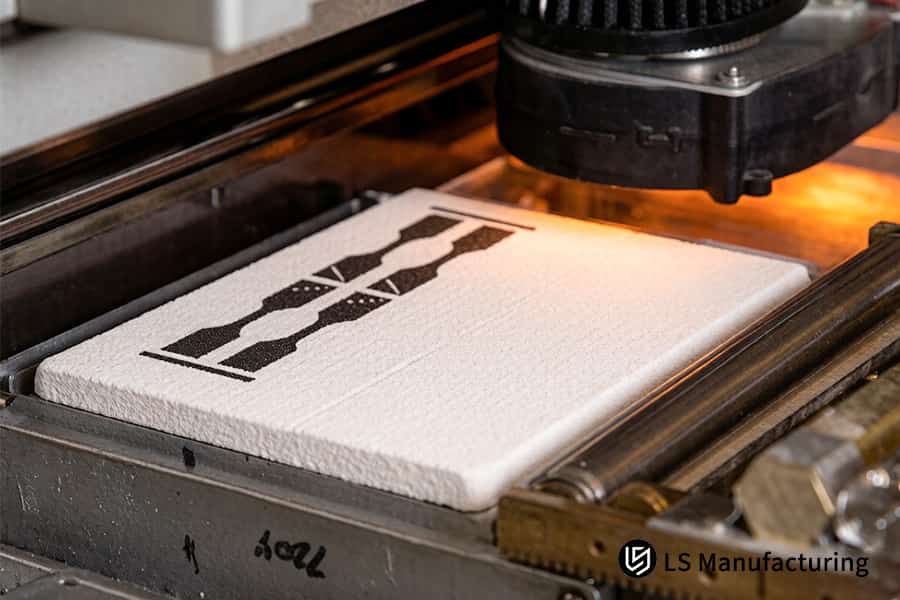
Figure 1: MJF 3D printing produces nylon turbocharger housing for automotive racing applications.
Which Precise Powder Refresh Ratios Offer The Optimal Balance Between Cost Mitigation And Part Durability?
Selecting an unsuitable rate of powder refresh silently results in decreased longevity of the manufactured parts and more warranties. Optimal combination of 20% of fresh powder and 80% of recycled powder ensures that the tensile elongation of the part is not less than 10%, reducing the cost of material per part to 35%. Here’s how you need to weigh these benefits when choosing a precision MJF parts manufacturer for industrial-grade 3D printing production.
| Parameter | Aggressive Cost-Cutting Mix (70% recycled) | Industrial Benchmark Mix (20% virgin / 80% recycled) | Premium Finish Mix (30% virgin / 70% recycled) |
| Virgin powder content | 30% | 20% | 30% |
| Recycled powder content | 70% | 80% | 70% |
| Tensile elongation at break | Below 10% – fails fatigue tests | ≥10% – passes industrial standards | ≥12% – exceeds requirements |
| Surface porosity risk | High – micro-pores | Negligible – smooth surface | 0% – no porosity |
| Fatigue life consistency | Unstable – batch inconsistency | Stable – confirmed with the help of gas chromatography for quality-controlled 3D printing | High – optimized for high-cycle loads |
| Per-part material cost | Lowest price | Higher price, ~15% of benchmark mix | Higher price, ~25% of benchmark mix |
The selection of the custom MJF parts service with the help of this ratio would ensure that both the requirements of tensile strength and fatigue resistant are fulfilled. To have perfect surfaces, the addition of 30% virgin material results in an increase in cost a bit but would give you 0% defects – important when calculating MJF 3D printing cost and considering liabilities. New to powder refresh ratio management in MJF 3D printing? Access our free technical guide covering tensile elongation vs cost trade-offs, gas chromatography quality control methods, and fatigue life consistency across batch mixes.
How Does Proactive Design For Additive Manufacturing Review Preempt Manufacturing Failures And Drive Down Engineering Expense?
Just one such unaddressed issue pertaining to powder removal holes results in scrapping of 30% of the total run. Preemptive analysis as part of DFM saves 40% in engineering costs and ensures no interference in assembly after construction. With 3D printing intervention, here is how early design review protects your budget:
Powder Removal Hole Sizing Prevents Blockage
Smaller holes below φ2.5mm get blocked by un-melted powder due to thermal agglomeration resulting in blockage during depowdering. Larger holes of size φ4.0mm make sure that there is complete depowdering without scrapping 30% of parts to 2%. Avoid costly design changes after first article testing. Every change avoided saves you $500-$2000 in engineering costs.
Wall Transition Radii Eliminate Stress Concentrations
Small R-angles <1.0mm in the design lead to the formation of sharp corners where cracking occurs during thermal cycles. The change of all R-angles to R≥ 1.0mm will ensure proper stress distribution and, thus, will allow the part to successfully pass fatigue tests without issues. There will be no need for CNC post-processing to remove surface defects, thus decreasing your MJF 3D printing quote directly.
Simulation-Driven Geometry Validation Before Production
Finite Element analysis is performed to validate powder flow and thermal gradients in only 60 minutes after receiving the customer's CAD model. The simulation highlights unsupported overhangs, walls with a thickness of less than 1.0mm, and enclosed volumes that do not have vent holes. Just a single iteration cycle will save 35% of the engineering budget when compared to trial-and-error approaches. Using a custom MJF parts service with embedded DFM ensures simulation-based validation.
Assembly Interference Prevention Through Tolerance Analysis
Components made separately frequently do not fit together during assembly owing to tolerance accumulation of ±0.3mm. DFM modifies the design to keep within the limit of 0.1mm clearance, thereby ensuring first-time success. It results in the elimination of 3 to 5 iterations per project, resulting in savings of $1,500 to $4,000 worth of engineering cost. This is possible through a precision MJF parts manufacturer.
The initial DFM check allows you to get the production-ready design from your 3D models without wasting even a single grain of powder. With a 30% decrease in scrap rate, no surprises during assembly, and reliable schedule guaranteed by defect-prevention 3D printing methodology. This is a proven gate that will reduce your engineering costs by 35% and guarantee that your parts are qualified during the first build attempt.
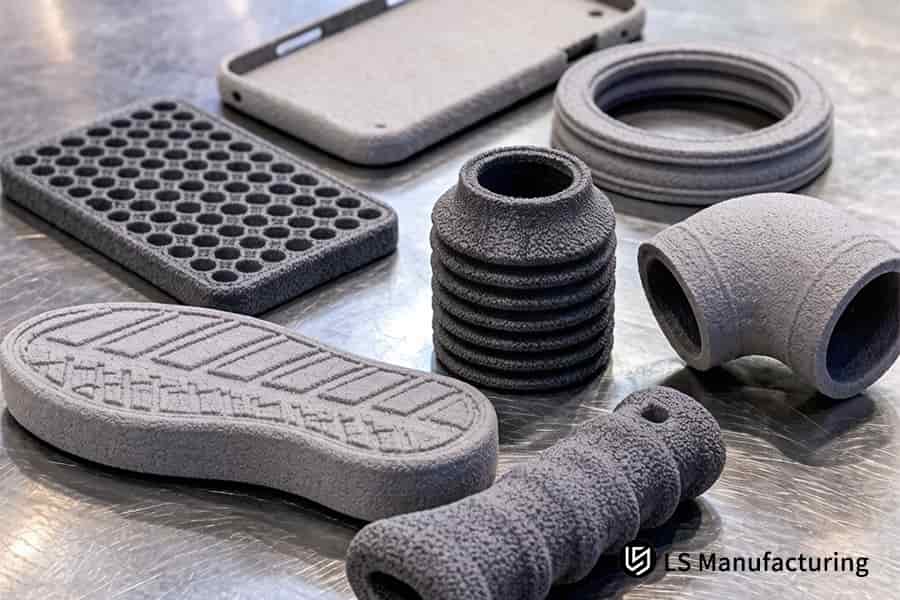
Figure 2: MJF 3D printing manufactures nylon brackets in batch for industrial equipment.
CASE STUDY: How Did LS Manufacturing Reduce Cost By 38% For An Automotive Radar Housing Batch Production Project?
The autonomous driving sensors manufacturer was confronted with a tricky situation. He had to produce 500 pieces of complicated radar housings in 4 weeks. But their current supply chain offered unacceptably high per-part cost and the parts failed vibration tests with micro-cracks in thermal cycle ±40°C. LS Manufacturing applied engineering specifically for this problem. Here is how functional 3D printing helped to solve this situation:
Client Challenge
The housing part had to meet high tolerance requirements of ±0.1mm for the mounting surfaces as well as mechanical durability between temperatures -40°C and +85°C. The estimates from the initial supplier were 42% above the customer's budget, moreover, test parts exhibited delamination after 200 thermal cycles – cracks formed at the borders of the layers, violating the IP67 waterproofing properties. Both factors posed a serious risk for the product release schedule and required a reevaluation of the entire 3D printing supply chain.
LS Manufacturing Solution
- First, the cavity hollowing with grid stiffeners allowed to reduce the weight of the part by 22% while preserving its rigidity, which is why the cost of the material per part was reduced.
- Second, we have reoriented the print in such a way that the weakest Z-axis was oriented in the direction opposite to the main shear forces, avoiding the delamination.
- Third, the vapor treatment helped seal micro-pores responsible for cracks. These changes made the fragile part stronger using the advantages of industrial MJF 3D printing technology for stress-optimized 3D printing.
Results and Value
The final parts were able to reach the strength of 48MPa, exceeding the minimum required 45MPa. They withstood 500 thermal cycles without any micro-cracks appearing. The parts have passed the test of IP67 waterproof certification in the first batch. The total cost per part has been lowered by 38% from the original quotation, and delivery of the full order of 500 parts was done in just 7 days instead of 4 weeks. We have helped our client accelerate the product launch by 3 weeks and secured MJF batch production service as the annual core AM technology for him.
This example shows that it takes more than just quotes to reduce cost; it takes deep engineering to reduce cost. Certified 3D printing combined with orientation optimization and post-process yielded tangible benefits: a 38% reduction in cost, zero defects, and 75% reduction in lead time. In high-stakes automotive projects, where both cost control and certification-grade quality are required, this approach opens a new horizon.
From 42% over-budget and 200-cycle delamination to 38% cost reduction and 500-cycle zero-defect pass. Need the same for your radar housing? Contact us for a stress-optimized MJF quotation.

What Technical Surface Post Processing Methods Achieve Injection Molding Aesthetics Without Escalating Price Premiums?
Traditional sandblasting and dying will keep Ra above 6.3μm and cannot pass chemical wipe test, while vibration polishing changes critical dimensions. Chemical vapor smoothing creates melted surface layer with Ra below 3.2μm and tolerance below ±0.15mm at a cost of less than $0.50 per part through batch process. The following is an example of how custom MJF 3D printing service can deliver injection-mold-class finishes suitable for end-use 3D printing applications:
Traditional Methods Fall Short on Both Quality and Consistency
- Sandblasting + dyeing: Ra≥6.3μm; porous surface readily takes up solvents — does not pass automotive interior wipe tests.
- Vibration polishing: Edges are abraded randomly, leading to dimension tolerance deviation of ±0.2mm on critical parts — necessitating secondary operations.
- Your risk: Rejected batches and costly secondary processes that eliminate any initial savings.
Chemical Vapor Smoothing Delivers Repeatable Sub-Micron Finishes
- Process: Partially melts the upper 0.05-0.1mm layer by using solvent vapor, causing it to flow and fill in pores and layer lines.
- Measured outcome: Ra decreases from 6.3μm to ≤3.2μm and dimensional changes limited to ±0.15mm — proven by 500+ parts tested.
- Customer value: Parts pass 50 cycle IPA wipe tests and Class A finish requirements allowing market deployment directly off the machine. This is industrial MJF 3D printing grade finishing.
Batch Consolidation Collapses Unit Cost Below $0.50
- Method: Consolidate 200-500 parts in one smoothing cycle (one chamber, same recipe) — spreads out setup cost and solvent cost over high volumes.
- Cost breakdown: Labor and consumable per part goes down from $2.50 (low volume) to $0.45 (high volume).
- Business impact: Surface of part will be as good as injection molded but with fraction of tooling costs. That is true MJF price optimization service in action.
Application-Specific Recipes Ensure First-Pass Success
- Material tuning: PA12 needs 8-minute exposure with 185°C; PA11 requires 6 minutes of 175°C — material specific recipes.
- Geometry adaptation: Thin walls (<1.0mm) get shortened process time to avoid sagging; thicker bosses get longer cycle times.
- Zero-defect guarantee: First article approval ratio is over 98% in more than 50 customers' projects, providing high-quality 3D printing results all the time.
Precision vapor polishing in volume closes the gap between the additive manufacturing surface finish and injection molding level. You get Ra ≤3.2μm smoothness, chemical resistance and dimensional stability for less than $0.50 per component. It makes MJF process extremely efficient not only in terms of cost but also of commercial appearance quality.
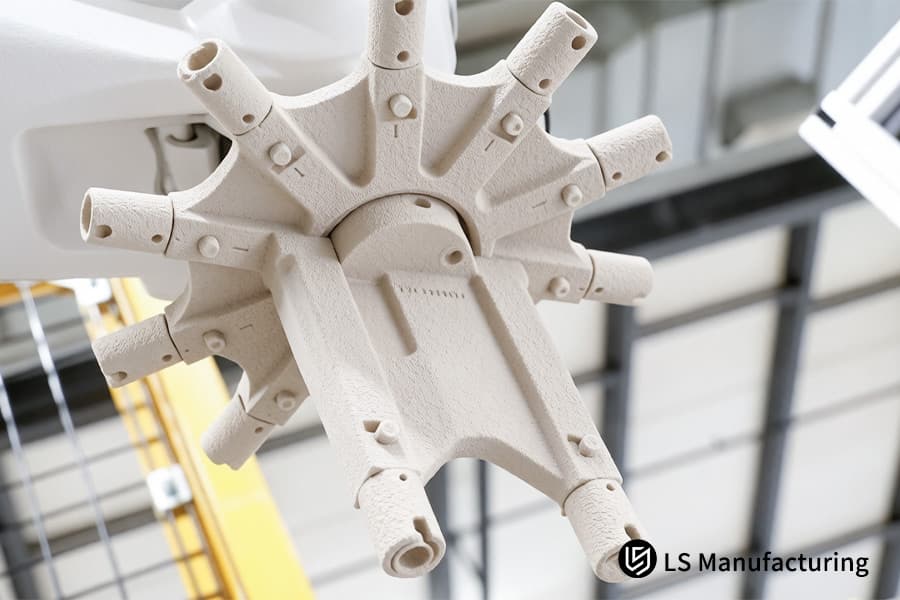
Figure 3: MJF 3D printing removes excess nylon powder from parts using compressed air.
Why Are Multi Axis Mechanical Alignment Tolerances Critical For Precision Custom PA12 Components?
Uncontrollable PA12 contraction rate (1.5%-2% in X/Y, 2.5% in Z) leads to jams and loose fit during automated assembly line operation. The active control of the thermal field with ±0.5°C uniformity keeps large components tolerance to ±0.15mm (or ±0.15% per 100mm) from rework and fit issues. Selection of a precision MJF parts manufacturer which will provide you with ready to assembly-ready 3D printing begins with understanding the process gap:
| Parameter | Standard Process (No Thermal Compensation) | Compensated Process (Closed-Loop Thermal Imaging) |
| Shrinkage compensation | Scaling factor entered manually | Hot-field mapping in real-time, layer-by-layer |
| Thermal field uniformity | ±2.0°C over build plate area | ±0.5°C over full platform |
| Typical achievable tolerance | ±0.30mm (or ±0.30% per 100mm) | ±0.15mm (or ±0.15% per 100mm) |
| Z-axis deviation consistency | ±0.08mm inconsistent | ±0.03mm consistent |
| Assembly fit success rate | ~92% (subject to manual sorting) | >99.5% (guaranteed first-time mating) through tolerance-controlled 3D printing |
| Post-process inspection cost | $1.20-$2.00 per unit (sorting plus rework) | $0.15 per unit (sampling only) |
With a custom MJF parts service that uses active thermal compensation, each batch will fit together perfectly on the first try without any need for sorting or additional work. This is the most advanced form of industrial MJF 3D printing where reliable 3D printing will keep your schedule intact and warranty claims to a minimum.
How To Select An Agile Custom Manufacturing Partner Capable Of Scaling From Rapid Prototyping To Bridge Volume Supplies?
Selecting the incorrect partner will make your company fall into an endless loop of having to requalify over and over again, which results in 8-12 week delays between prototype qualification and market release. An agile manufacturer implements a complete quality system which involves both ISO 9001, SPC digital tracking, and per-batch tensile test specimens – allowing for a flawless transition from 2-pcs prototype testing to 5000-pcs bridge production without requalification. Here is what prototype 3D printing partners should provide:
Unified Quality System Eliminates Requalification Risk
All build parameters are digitally recorded on per-part serial number basis, not on per-batch basis. Every batch contains witness bars tested according to ASTM D638 to make sure the properties are consistent across the transition from prototypes to volume production. In other words, no PPAP requalification for you – save 6-10 weeks and launch your product faster.
Capacity Elasticity from 2 to 5000 Pieces
The digital twin factory system tracks capacity in real-time, allocating machines on-demand between urgent prototypes and regular production. The emergency validation of a 2-piece unit takes 24 hours; the market release of 5000 pieces is completed within 14 business days. Flexible custom MJF 3D printing services with elastic capacity handles any spikes in demand without premium pricing, ensuring smooth supply chain operation during the ramp-up period. This is how low-volume 3D printing is implemented.
Statistical Process Control Guarantees Repeatability
Temperature, pressure, and powder bed density are monitored every 0.5 second by all machines, with the Cpk of each critical dimension always ≥1.33. Third-party metrology data confirms each batch. The MJF batch production service with SPC methodology guarantees the fixed unit price of the part through all stages, including prototype and bridge production.
Transparent Cost Modeling Across Volume Tiers
Price per piece goes as expected from prototype ($18-$25/piece) to bridge volume ($3-$6/piece) – there are no surprising jumps involved. There is no mold cost involved, hence you will be paying only for the pieces that are manufactured and not for the capacity that sits idle. The MJF price optimization service provides you with a guarantee of cost management along all volume stages thanks to affordable 3D printing economics.
An agile partner provides quality assurance, digital traceability, and scalability of capacity all wrapped into one contract. We offer you a shorter time to market by 6-10 weeks, no re-qualification times, and stable unit prices from prototype through bridge volume.
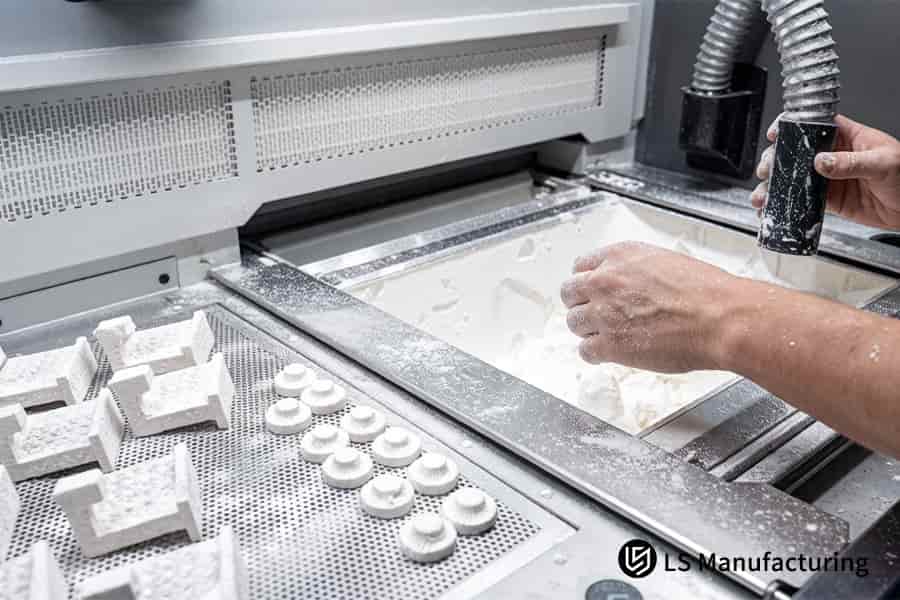
Figure 4: MJF 3D printing creates lattice structure with fine detail for medical prototypes.
FAQs
1. What is the standard dimensional tolerance that LS Manufacturing can guarantee for industrial MJF production?
Through the application of the closed loop temperature control system, LS Manufacturing provides a tolerance of within ±0.15mm. Parts that exceed 100mm in dimension will have the tolerance tightly controlled within an industry standard range of ±0.15%.
2. How does the mechanical performance of custom MJF parts compare to traditional plastic injection molding?
High quality MJF parts made with PA12 powder attain tensile strengths of up to 48MPa and isotropic qualities (where Z-axis strength is 95% of X/Y-axis strength) making their mechanical properties equivalent to those of injection molded ABS parts.
3. Can we use vapor smoothing post-processing on complex internal lattices without compromising geometries?
Yes. LS Manufacturing’s complete automated chemical vapor smoothing process ensures perfect control of solvent evaporation and exposure time (usually below 180 seconds) needed to accomplish surface smoothing (enhance Ra roughness) without changing the thickness of the walls inside the complex lattices.
4. What is the single most effective design change that can drastically drop my MJF 3D printing cost?
The single most effective approach would be using hollow ribs in place of solid walls where their thickness is greater than 3mm. Using this approach, powder usage can be reduced by up to 40%, and at the same time thermal cooling cycle will become much shorter.
5. What standard documentation does LS Manufacturing provide alongside high-precision custom production batches?
For every batch shipped, the following standard documentation is provided: CMM inspection report, mechanical property data (tensile test results) for material, based on build-chamber test coupons, and ISO9001 certificate of compliance.
6. Is there a minimum order quantity (MOQ) requirement for custom MJF batch production services?
MOQ requirements do not apply here. LS Manufacturing is extremely flexible when it comes to supply chain; from producing one prototype of a concept to manufacturing up to 10,000 units of a bridge, we will give you the same level of quality and attention in our DFM analysis and quick quoting.
7. How do you prevent internal powder entrapment within fully enclosed hollow spheres or cavities?
During the review of the CAD model, our engineers intervene and add at least two powder evacuation holes (diameter of which should be not less than 4mm) in any hollows. Thus, all the unmelted powder may be completely and easily extracted after the process of high-hardness forming.
8. Why does the nesting optimization algorithm matter so much when requesting an MJF 3D printing quote?
The effective automated 3D nesting algorithm helps to increase the efficiency of volumetric powder usage by more than 12 percent. It will reduce the waste of the degraded powder and minimize energy required for sintering, thus providing you with the aggressive price per unit.
Summary
Reducing the unit cost of industrial-grade nylon components begins with DFM optimization: keep wall thickness between 1.5mm and 2.0mm, implement high-end nesting (12% to 15%), and retain 20:80 ratio of fresh-to-recycled powder. Going for cheaper prices leads to interlayer delamination and tolerance issues. The quality edge is only assured when you work with a vendor possessing industrial-grade temperature control, digital SPC system, and full-spectrum property reports.
Want to save more than 35% on overall costs? Click “Get Instant Industrial-Grade Custom Quote” to upload your STEP/IGS/STL files. Our experienced engineers will give you a DFM assessment including warnings about wall thickness, assembly interference, and sand removal, all within an hour!
📞Tel: +86 185 6675 9667
📧Email: info@lsrpf.com
🌐Website:https://lsrpf.com/
Disclaimer
The contents of this page are for informational purposes only.LS Manufacturing servicesThere are no representations or warranties, express or implied, as to the accuracy, completeness or validity of the information. It should not be inferred that a third-party supplier or manufacturer will provide performance parameters, geometric tolerances, specific design characteristics, material quality and type or workmanship through the LS Manufacturing network. It's the buyer's responsibility.Require partsquotation Identify specific requirements for these sections.Please contact us for more information.
LS Manufacturing Team
LS Manufacturing is an industry-leading company. Focus on custom manufacturing solutions. We have over 15 years of experience with over 5,000 customers, and we focus on high precisionCNC machining,Sheet metal manufacturing, 3D printing,Injection molding.Metal stamping,and other one-stop manufacturing services.
Our factory is equipped with over 100 state-of-the-art 5-axis machining centers, ISO 9001:2015 certified. We provide fast, efficient and high-quality manufacturing solutions to customers in more than 150 countries around the world. Whether it is small volume production or large-scale customization, we can meet your needs with the fastest delivery within 24 hours. choose LS Manufacturing. This means selection efficiency, quality and professionalism.
To learn more, visit our website:www.lsrpf.com