English




Precision laser cutting service based on the knowledge of what is laser cutting must overcome an important OEM bottleneck of maintaining consistency in the +/- 0.1mm tolerance. The problem lies in the common adoption of standard fiber lasers without dynamic pulse adjustment for metals such as titanium alloy and 316L stainless steel, resulting in thermal distortion due to lack of real-time adjustments.
This is addressed through the application of a 12,000W laser that utilizes high-frequency digital pulses to achieve the +/- 0.1mm tolerance. Our solution involves a comprehensive DFM process and path compensation strategy that reduces thermal damage to the kerf by 40% and ensures precision throughout prototype and mass production processes. Below is an analysis of this data-driven solution to OEM precision laser cutting challenges.
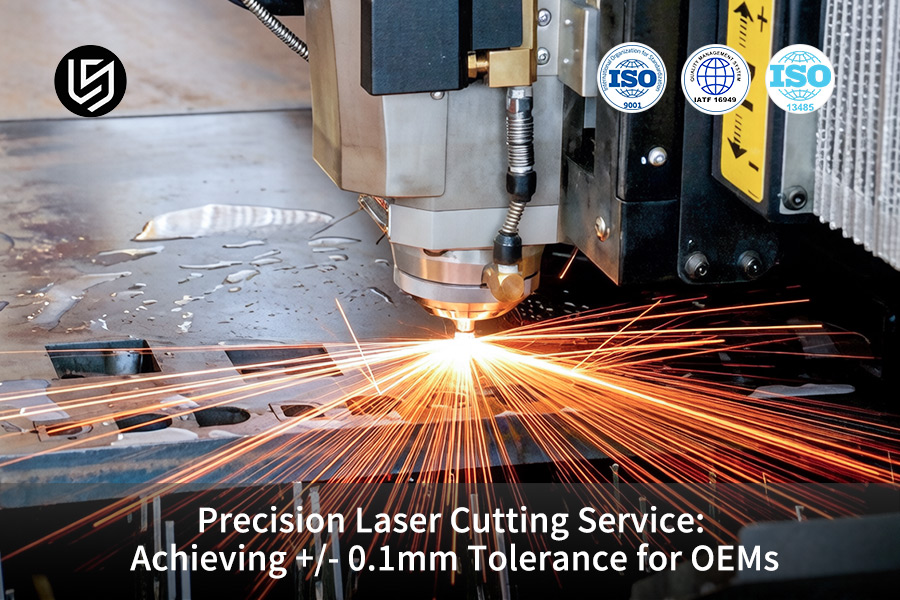
Precision Laser Cutting: OEM Tolerance Quick-Reference
| Critical Control Factor | Technical Implementation for ±0.1mm |
| Machine Calibration & Stability | We conduct volumetric accuracy testing and thermal calibration of the laser and motion system daily. |
| Material Consistency Management | We purchase verified sheet metal that is manufactured to control the material flatness and composition to ensure consistent cutting results. |
| Nozzle & Focus Control | We conduct automatic nozzle cleaning and height sensing of the assist gas and focus point. |
| Cutting Parameter Optimization | We design and lock the laser cutting parameters for all materials and thicknesses to ensure high edge quality and precise dimensions. |
| Our In-Process Monitoring | We monitor the parts' positions and surface condition using vision cameras and capacitive height sensors. |
| Result: Dimensional Repeatability | This approach guarantees dimensional repeatability and delivers batches of components within ±0.1mm tolerance range suitable for automation. |
| Result: Superior Edge Quality | The cutting process provides edge quality without dross and minimal heat-affected zone, allowing skipping secondary processing steps. |
We resolve the difficulties of maintaining tight tolerances of ±0.1 mm in laser-cut parts for OEM production. Our tightly controlled process takes into account the stability of machines, differences in materials, and cutting process dynamics, allowing us to manufacture precisely measured components ready for use that will fit right and save assembly time while ensuring the quality of your product.
Why Trust This Guide? Practical Experience From LS Manufacturing Experts
There are many articles written about laser cutting and its precision. Why should you then read this one? We are experts who know the ropes of this process firsthand. In our factory, we work daily with difficult alloyed metals and strive for ±0.1 mm of tolerance. The results are real, and we share them in this guide.
We bring experience born out of ten years of experience fulfilling OEM requirements, having learned from both our successes and failures along the way. Our experience in dynamic control for titanium alloy and 316L stainless steel materials is second to none, having optimized all the relevant parameters in real-time production scenarios consistent with Deloitte Insights industry standards.
Our firm has methods that have been tried and tested to guarantee that tolerance will be sustained through efficient means and that thermal management does not become a challenge. Our total quality assurance program, which includes SPC checks during production, ensures the material consistency of all laser cutting service batches. The safety element in our Occupational Safety and Health Administration (OSHA).
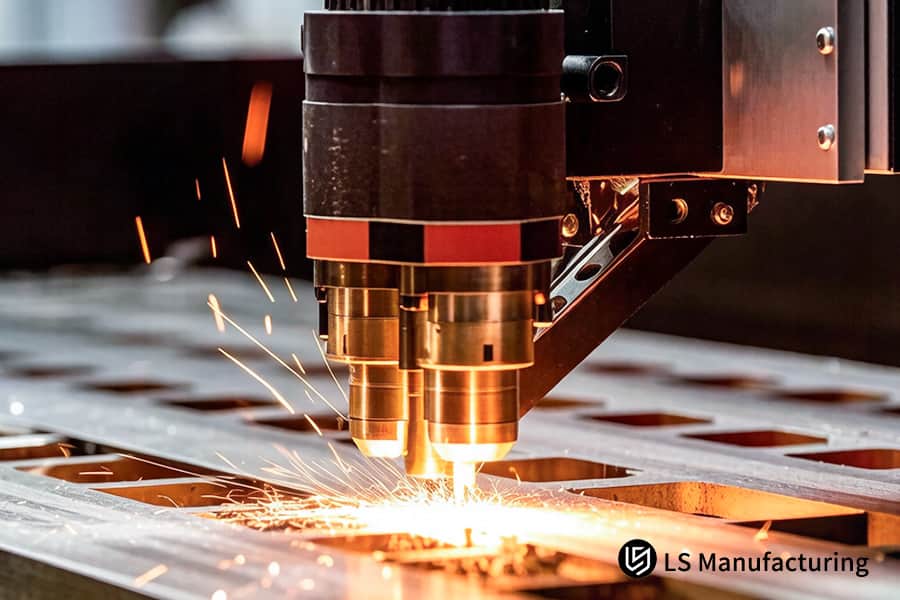
Figure 1: Slicing a titanium alloy sheet for aerospace frame or bracket components with tight tolerance.
Why Should Procurement Managers Verify Precision Laser Cutting Service Capabilities For High Speed Assembly?
Confirmation of the precision laser cutting service capability of a supplier is essential in avoiding automated assembly problems. Inadequate precision results in immediate mechanical interference and equipment downtime. The following is an analysis of the technical process used to ensure component quality and thus safeguard high-cost automation laser cutting by addressing the key problem, which is the avoidance of tolerance-related assembly problems.
Pre-Order Technical Collaboration Protocol
We conduct a collaborative analysis of your assembly design in order to pinpoint any key interface points, such as screw bosses. A quality assurance strategy for testing these key components, along with the methods to be used, is signed off on prior to manufacturing. This makes the placement of an order into a technical agreement.
In-Process Control with Integrated Metrology
On-machine probing systems are used for real-time validation. Certain dimensions in laser cutting components are checked periodically through integrated probes, which provide data to statistical process control charts. Machine adjustments can be made immediately based on trends that tend towards limits, thus avoiding any formation of non-conforming batches.
Dynamic & Feature-Specific Tolerance Strategy
Dynamic tolerance laser cutting is used, surpassing static tolerance. Relative to a set of holes, the tightness of the positioning tolerance (±0.05mm) is considered while the locating tolerance is considered relatively relaxed for that particular set of holes. Precision-focused laser services guarantee automatic screwdriver fitting while retaining efficiency.
Delivering Conclusive Conformity Evidence
Evidence of conformity is provided with delivery service from our end. Dimension reports are available for both the first and final part in a batch, where all the critical dimensions will be verified. This will ensure quality assurance with the high-stakes laser cutting process while serving as evidence for your incoming inspection process.
Our competitive edge in this process lies in the integration of validation into the design cycle, making assembly interface failure an irrelevant issue. In addition to offering precision laser cutting service, we provide these components and guarantee that they will work together according to the specifications of automation. We solve the underlying issue of having poorly functioning laser cutting components in your fast-moving assembly system.

How Can 0.1mm Tolerance Laser Cutting Mitigate Material Waste In Precious Metal Fabrication For OEMs?
Waste that occurs while producing precious metals impacts the profit of the OEMs. Our technology includes both algorithmic nesting and better laser cutting technologies. Hence, we have a material yield of more than 92% and require no grinding whatsoever. Ultimately, this translates to a full-fledged precision laser cutting service. 0.1mm tolerance laser cutting is only the starting point.
Algorithmic Nesting for Maximum Material Yield
- Dynamic Layout Optimization: Proprietary software allows for maximum material optimization, typically reaching more than 92%.
- Common-Cut Path Implementation: Cut path sharing among pieces prevents kerf loss during cutting.
- Material utilization optimization: This is the key element in OEM cost optimization.
Ultra-Narrow Kerf and Thermal Control
- High-speed laser cutting: Process speed and precision optimized to control heating.
- Narrow-kerf cutting technology: Control of the beam and gases ensures that the kerf is less than 0.15mm wide.
- Real-time Thermal Compensation: Sensor data helps regulate the process parameters and delivers precise 0.1mm tolerance laser cutting.
Dross Elimination via Advanced Laser Modulation
- Fiber laser cutting systems: Brighter lasers help provide greater process control.
- High-frequency laser modulation: This facilitates dross-free laser cutting for immediate use.
- Secondary Process Elimination: Saves money on grinding work and speeds up manufacturing operations.
Closed-Loop Process Refinement
- In-line Metrology: Allows visual inspection of cut quality as needed.
- Predictive Parameter Adjustment: Machine learning adjusts machine settings and enhances the precision laser cutting service for every job.
The aforementioned strategy demonstrates that a closed-loop engineering system has been implemented. It resolves the key issues faced by OEMs with respect to deterministic production with cost optimization. The technical know-how of our company is proven by the requirement for accurate control of the precious metal laser cutting process, delivering superior results in manufacturing.
Why Is Tight Tolerance Laser Cutting Essential For Maintaining Mechanical Properties In Heat Sensitive Parts?
Conventional laser cutting processes might compromise the mechanical characteristics of temperature-sensitive metals due to a phenomenon referred to as the Heat Affected Zone (HAZ). This technical paper presents the techniques that we employ for high tolerance laser cutting to maintain the material integrity, minimizing thermal effects while complying with the mechanical criteria of the metal components.
| Challenge | Our Technical Solution | Quantified Outcome / Data Point |
| Maintaining HAZ depth in thin but robust alloys. | Precision laser pulse adjustment and assisted gas laser cutting. | HAZ depth restricted to below 0.05mm. |
| Avoiding softening due to annealing near the cut edge. |
High precision laser cutting through laser beam shaping and high-pressure gas process. |
The post-cutting tensile strength retains above 98% of base material. |
| Maintaining cut uniformity in large batches. | Kerf quality and thermal signature inspection throughout the cutting process. | Grain structure analysis shows consistent microstructure without defects. |
| Testing part performance for certification. | Laser cutting metallography tests for all batches. | OEMs receive verified data on material integrity preservation. |
Thermal degradation is solved through our precision-first laser cutting technology that preserves the integrity of the microstructure of the material being cut. Thus, we are able to acquire tight tolerance laser cutting parts with reliable mechanical characteristics, providing us with an invaluable competitive advantage in the field. With our laser cutting technology based on analysis and statistics, we can assure you of our quality parts.
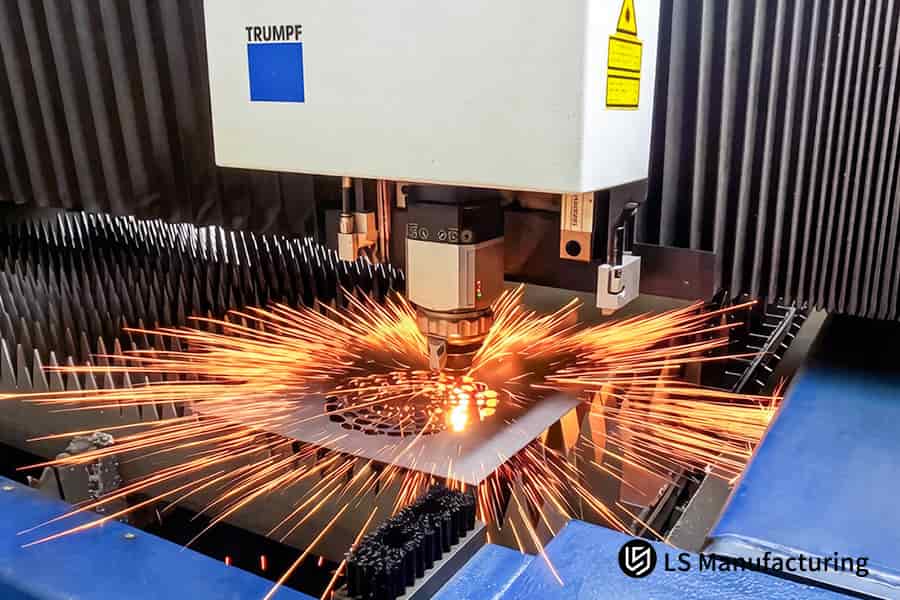
Figure 2: Cutting a steel mounting plate for industrial machinery with a high-power TRUMPF laser system.
How Do Custom Laser Cutting Service Providers Ensure 100 Percent Consistency In Million Scale Production Runs?
Achieving perfect consistency in million-scale production is the ultimate challenge for a custom laser cutting service. Variability in material flatness and thermal drift directly threatens part tolerances. Our solution integrates real-time hardware compensation with statistical process control, creating a deterministic, self-correcting production system. This engineering approach guarantees the production consistency required for global supply chains:
Real-Time Focal Plane Maintenance
We deploy a high-frequency capacitive sensor on the cutting head, continuously monitoring the nozzle-to-workpiece distance. This system detects surface deviations as small as 20µm in real-time. A closed-loop controller instantly adjusts the Z-axis, dynamically compensating for warp or waviness. This ensures the laser focal point remains perfectly positioned, which is the absolute foundation for consistent edge quality in high-volume laser cutting.
Optical Path Trajectory Calibration
In addition to vertical compensation, we conduct in-process optical alignment for the XY movement path. The system utilizes fiducials to verify the difference between the actual and commanded locations of the cutting head. Any deviations measured at the micrometer level are corrected instantly. This guarantees that all features will be accurately cut over time, which is essential for automated laser cutting processes.
SPC-Driven Process Certification
Consistency can be verified using information rather than assertions. Metrological systems in line provide automatic measurement of key dimensions of selected samples. Live data goes into an SPC dashboard and gives real-time Cp/Cpk statistics to quantify production consistency. Such a mechanism allows us to implement proactive measures, allowing us to adjust parameters before any deviation exceeds the limits. Information-based approach guarantees our precision laser cutting service.
The following documentation describes a set of verifiable engineering controls. The proposed solution consists of real-time hardware corrections and statistical process control management. We offer a solution to the problem of variability in our custom laser cutting service by building a self-adjusting production environment.
Why Does Expert Precision Laser Cutting For OEMs leverage DFM Reviews To Avoid Secondary Processing Costs?
Secondary processes such as grinding can often be a major hidden cost associated with laser cutting OEM components. A good precision laser cutting for OEMs should be able to consider manufacturability right from the beginning. Through our Design for Manufacturability (DFM) analysis, we are able to identify any problematic areas that may lead to thermal issues, ensuring all components are ready to be assembled after being laser-cut. Our DFM service takes our custom laser cutting service to another level by becoming an efficient cost-saving partner through:
Proactive Geometry Analysis to Prevent Thermal Defects
- Overburn mitigation at corners: The geometry of the part is analyzed to determine if there are sharp corners that are vulnerable to thermal issues such as overburning.
- Strategic path compensation: Engineers advise on using gentle corner rounding or "lead-in/lead-out" toolpath modification. This strategic modification of the toolpath achieves even heating during intricate laser cutting.
- Problem solved: With this proactive measure, we prevent localized melting and slag buildup, solving the root cause of edge finishing through grinding.
Parameter Prescription for Optimal Edge Quality
- Material-specific parameter libraries: Our system utilizes an extensive library of cutting parameters tailored to different metals and thicknesses, which is the hallmark strength of our precision laser cutting for OEMs.
- Dynamic parameter adjustment: For complex contours, our system can automatically modulate power and speed. This ensures consistent energy input along varying geometries.
- Result achieved: The result is a consistently smooth and clean edge, typically obtaining Ra <1.6 µm right off the machine, adhering to finish requirements without further processing.
Design Optimization for Nesting and Micro-Joint Integrity
- Nesting efficiency review: Our designers examine the shape of the components for effective nesting to achieve maximum utilization of materials, which is critical in design optimization.
- Micro-joint strategy: In relation to components that are prone to damage, our designers recommend the number, placement, and size of the micro-tabs on such components. This keeps the component stable during cutting, but it is easily removable without any deformation or damage to the component.
- Value delivered: This guarantees the component does not only have clean cuts but also stays secure and easy to remove without causing damage.
Documentation and Iterative Learning
- Formalized DFM report: The deliverable product will be an official DFM report complete with drawings and recommendations backed up with data on design optimization.
- Closed-loop feedback system: Results from our manufacturing process will be incorporated into our parameters and rapid laser cutting database to improve our standards for DFM in future projects.
The aim of this paper is not to provide the description of the service offered. However, the distinctive feature of our custom laser cutting service is not only in the fact that we offer our clients more than just the cost estimate but also in the way how we can help you solve the most acute problem of OEM - hidden costs of post-production process. What distinguishes our service from those provided by other companies is the capability to utilize the manufacturing expertise in design optimization to reduce overall cost of your part manufacturing.
How Can High Tolerance Laser Cutting Solve Complex Geometry Challenges In Medical Grade Components?
Medical device components require extreme geometric precision and pristine material integrity. Complex internal features and stringent cleanliness standards present unique manufacturing challenges. This document details how an integrated system for high tolerance laser cutting solves these problems. Our approach combines ultra-fine motion control with contaminant-free processing for the medical industry.
| Challenge | Technical Solution | Quantifiable Outcome / Mechanism |
| Extreme Geometric Precision | Lasers with real-time feedback mechanism. | It enables achieving geometric accuracy of ±0.01mm for complicated geometric figures. |
| Micro-Feature Integrity | Precision pulse control for micro-feature laser cutting. | Enables producing 0.2 mm holes on a 0.5 mm sheet of metal without inducing any thermal distortions. |
| Cut Edge Purity & Biocompatibility | Oil-free assist gas systems for clean laser cutting. | Helps avoid carbonization to achieve edge purity and meet biocompatibility standards. |
| Process Consistency & Validation | Real-time monitoring and complete traceability using digital technologies. | Eases the documentation of data for auditing, ensuring quality consistency in the medical laser cutting process. |
The below information outlines the technical solution devised to overcome the issues involved with the manufacturing of devices in the medical industry. We provide a precision laser cutting service which ensures parts of great geometric shape and traceability. OEMs can trust us to solve their issues related to precision and compliance. This is the definition of advanced high tolerance laser cutting.
Figure 3: Cutting a custom aluminum bracket for automotive suspension components with high precision lasers.
Case Study: LS Manufacturing Semiconductor Stainless Steel Cooling Plate Precision Laser Cutting Project
Another client faced an issue related to seal integrity in cooling plates made of 316L stainless steel. The previous contractor had manufactured holes with variable tolerances. In the following, I will discuss the case study of how LS Manufacturing solved the problem for this customer through our precision laser cutting service, hence gaining their business as an OEM laser cutting service provider.
Client Challenge
This section consists of 3mm 316L stainless steel with a unique pattern of holes suitable for a vacuum seal. For the formation of a gasket seal, it was required to have a cumulative tolerance position between holes at ±0.10mm. However, when using their current supplier, there was an error in the tolerance of ±0.15mm, causing vacuum leaks in the range of 10^-7 mbar. This problem did not allow their assembly to take place, forcing them to delay the release of their essential equipment by four weeks.
LS Manufacturing Solution
The solution involved the utilization of laser cutting with high-pressure nitrogen clean laser cutting technology in order to prevent oxidation. Our uniqueness lies in the implementation of double-loop positioning technology with a thermal compensation loop. It worked perfectly well because it included dynamic laser focal point adjustment based on the feedback of the material hardness in each batch. Utilizing high-accuracy laser cutting, we achieved a cumulative hole pattern tolerance of ±0.08mm.
Results and Value
The completed cooling plates were successful during the helium leak test conducted at 1x10^-9 mbar. The first attempt assembly yielded a 100% success rate without any requirements for remanufacture. The extremely reliable laser cutting process service ensured a decrease in assembly time for each item of 120 minutes. The technical certainty achieved by the company provided an opportunity to establish a 5-year long strategic relationship with LS Manufacturing being considered one of its vital suppliers.
This example confirms our approach to overcoming difficult tolerance issues via process integration, rather than conventional machining alone. By considering the specific characteristics of each material, and using closed-loop feedback, we ensure deterministic precision laser cutting service results. In high-risk assembly situations, our approach turns a custom laser cutting service into a technical certainty.
End vacuum leaks caused by poor cuts. Let's guarantee ±0.08mm precision for your cooling plates.

What Technical Metrics Define The Best OEM Laser Cutting Service For High End Industrial Electronics?
Selecting a partner for your mission-critical industrial electronics requires analyzing their systems to ensure part integrity and a secure supply chain. This memo explains the key technical factors that determine what qualifies an OEM laser cutting service as an excellent one. It centers on the actual process capabilities used in ensuring traceability, accuracy, and stability in your laser cutting operations.
Certified Material Traceability and Verification
All our projects begin by verifying materials' certification against their Mill Test Reports (MTR). This guarantees that your material has been metallurgically verified as a fail-proof measure against any unverified variations of your metal that may occur. The entire material traceability is done through our digital system, and it forms the backbone of an excellent laser cutting service.
Objective Dimensional Certification via CMM
Geometry validation of critical parts is performed with automated Coordinate Measuring Machines that produce reports based on comparison with initial CAD geometry. This is an independent and quantitative method of verifying dimensions and location tolerances. This documentation acts as a conformity certificate for the customer. This procedure is aimed at proving the results of our high-accuracy laser cutting procedure. It goes from the claim to the evidence of precision laser cutting for OEMs.
Active Laser Power and Thermal Drift Compensation
Our system uses real-time monitoring and automatic compensation for the power loss and thermal lensing of the laser beam. This is our stable laser cutting control, which ensures constant energy density and the same high-quality laser cutting results throughout thousands of operations. The system actively works against the inevitable deterioration of optics. This is critical in order to achieve the same first and ten-thousandth part.
Integrated Digital Quality and Process Tracking
Every production batch is associated with a digital dossier containing its MTR, machine parameters, and inspection reports. This integrated system provides full traceability for audits and enables rapid root-cause analysis should any deviation occur. It transforms the advanced laser cutting process into a managed, transparent quality outcome, giving OEMs unparalleled oversight and risk mitigation.
The system provides a technological alliance built on a proven process and systematic control. The problem of manufacturing risks faced by the OEM client will be solved by giving them proof-based control over the materials used, geometrical shape, and manufacturing process. Through the OEM laser cutting service provided, we can assure the OEM that there are indeed reliable electronic components manufactured from our company.
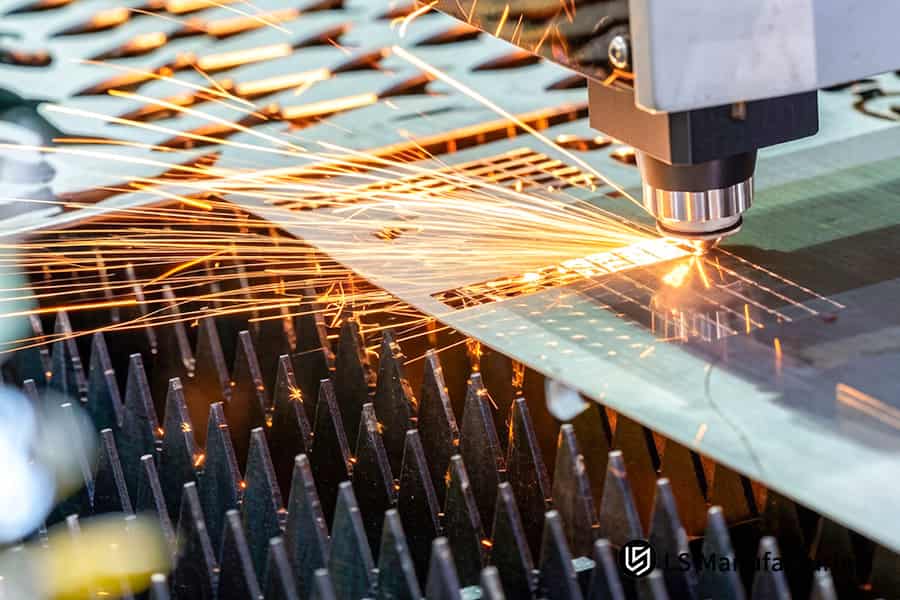
Figure 4: Drilling micro ventilation holes in aluminum with 0.1mm tolerance laser cutting for aerospace thermal management.
FAQs
1. Why is a tolerance of +/- 0.1mm the standard for LS Manufacturing's precision laser cutting service?
Our fiber lasers are rated at 12kW along with the use of linear motors for drive purposes. This system design has been found to be very effective in eliminating backlash that usually occurs in conventional gear-driven systems. The system maintains a uniform accuracy of ±0.1mm for high volume productions.
2. How does your laser cutting service handle materials sensitive to the Heat Affected Zone (HAZ)?
LS Manufacturing manages heat generation by using ultra-high-frequency pulse modulation. The depth of the Heat Affected Zone (HAZ) is kept below 0.05mm to protect the mechanical properties of the material being processed.
3. Can LS Manufacturing provide OEM laser cutting services for thick stainless steel parts?
Yes, our powerful fiber lasers can process stainless steel plates with thicknesses up to 50mm. Moreover, we use dynamic focusing to keep the angle of the cut edges within a limit of ±0.2mm.
4. What certifications ensure that your custom laser cutting service meets international standards?
Our company complies with the ISO 9001:2015 certification process. All OEM orders delivered are provided with a Material Test Report (MTR) and a detailed dimensional inspection report.
5. How do you optimize costs for high-tolerance laser cutting projects?
Our technical team carries out rigorous DFM evaluations. Using cutting path optimization and effective nesting techniques, we have managed to minimize wastage by about 15% for each project. This results in competitive price quotations.
6. Which materials are suitable for your precision laser cutting services for OEMs?
We have extensive experience working with stainless steel, aluminum alloy, titanium alloy, brass, and different types of carbon steel sheet metals. Moreover, we have developed anti-reflection laser control systems to cut highly reflective metals effectively.
7. What is the typical lead time for a custom laser cutting service quote and for production?
Our team guarantees that we will deliver your quote after engineering evaluation within 24 hours. Your prototype can be ready and dispatched internationally within 3 business days.
8. Does LS Manufacturing offer secondary processing services after laser cutting?
Absolutely, we offer a one-stop service solution where we carry out CNC bending, deburring, anodizing, powder coating, and high-precision welding processes, guaranteeing that we cover all your needs for fully customized finished products.
Summary
In the competitive OEM industry, accuracy is critical in determining product quality. By employing state-of-the-art technologies and performing a DFM analysis, LS Manufacturing guarantees that the tolerances can reach ±0.1mm. Being an innovative supplier, we provide highly precise components and ensure no supply-chain surprises through perfect integration and stringent quality control. LS Manufacturing is your trusted partner for complicated semiconductor components or aerospace applications.
Find out how your high-tolerance parts will benefit from laser cutting by LS Manufacturing and get guaranteed quality without unnecessary costs due to defective pieces. Order a free DFM drawing audit for only 24 hours – simply upload your STEP/PDF file, and get your free quote in no time. Fill out our contact form or click here for your customized quote.
Stop gambling on laser cutting accuracy. Achieve guaranteed ±0.1mm precision for your mission-critical parts.
📞Tel: +86 185 6675 9667
📧Email: info@lsrpf.com
🌐Website: https://lsrpf.com/
Disclaimer
The contents of this page are for informational purposes only. LS Manufacturing services There are no representations or warranties, express or implied, as to the accuracy, completeness or validity of the information. It should not be inferred that a third-party supplier or manufacturer will provide performance parameters, geometric tolerances, specific design characteristics, material quality and type or workmanship through the LS Manufacturing network. It's the buyer's responsibility. Require parts quotation Identify specific requirements for these sections.Please contact us for more information.
LS Manufacturing Team
LS Manufacturing is an industry-leading company. Focus on custom manufacturing solutions. We have over 20 years of experience with over 5,000 customers, and we focus on high precision CNC machining, Sheet metal manufacturing, 3D printing, Injection molding. Metal stamping,and other one-stop manufacturing services.
Our factory is equipped with over 100 state-of-the-art 5-axis machining centers, ISO 9001:2015 certified. We provide fast, efficient and high-quality manufacturing solutions to customers in more than 150 countries around the world. Whether it is small volume production or large-scale customization, we can meet your needs with the fastest delivery within 24 hours. choose LS Manufacturing. This means selection efficiency, quality and professionalism.
To learn more, visit our website:www.lsrpf.com.