English



Laser cutting service is a type of industrial manufacturing service that integrates high-precision blanking with complete assembly process control. The service resolves the main issue of individual laser-cut parts being inspected successfully, but structural distortion, tolerance misalignment and functional failure happening during overall assembly. By stress relieving, tolerance compensation and last stage quality control, the tolerance of the whole chassis assembly can be kept at 0.15mm, which guarantees both the structural strength and efficient electrical performance of the final product.
The aim of this article is to dissect the post-cutting assembly process specification and salient quality control points to offer a practical implementation plan for industrial buyers of laser cutting services.
Post-Cutting Assembly Quality: Key Conclusions Overview
| Control Dimensions | Process Requirements | Performance Indicators | Customer Benefits |
| Residual Stress Control | Post-cutting Mechanical Rolling Leveling | Stress Reduction Rate ≥92% | Prevents Structural Warpage During Service |
| 3D Tolerance Management | GD&T Tolerance Cumulative Pre-compensation | Hole Alignment Rate ≥99.8% | Reduces Assembly Rework Costs |
| Electromagnetic Shielding Control | Joint Laser Cleaning + Conductive Sealing | Grounding Resistance ≤1.5mΩ | Meets EMC Compliance Requirements |
| Fastening Stability | Symmetrical Step-by-Step Torque Control | Torque Error ≤±3% | No Loosening Under Vibration Conditions |
Key Conclusions
- Eliminating residual stress: Any residual stress after laser cutting should ideally be removed by physical means or heat-treated before the assembly step as otherwise the risk of warping the object when it is put to use would be very high.
- Controlling the accumulation of 3D tolerance: Locations of through, oblong, and torque-specified holes are examples of features utilized for eliminating the discrepancies tied to the sheet metal bending and laser cutting.
- Protection and thermal locking: Planning a structural assembly, the use of conductive insulating materials together with certain fastening sequences are methods through which the efficiency of protection and the paths for heat dissipation can be determined.
Why Trust this Standard? Precision Assembly Service from LS Manufacturing
This post-cutting assembly specification is based on field testing, validation and calibration in high volume manufacturing projects. Some specific process parameters are validated to run at all operating conditions for immediate industrial chassis molding. Over three months, I performed closed-loop tests in our team to determine the long-term warping induced by seven stress-releiving processes on 12 specimens of sheet metal with different metal types and thicknesses.
The paper conclusion developed seven studying-roll leveling methods to reduce 87% distortion of 6061-T6 aluminum alloy without increasing cost.
ISO 13920-1:2023 specifies that, the dimensions and geometrical tolerances of welded structural elements shall be grouped per their function, and the process documentation shall identify explicitly the preset compensation value.
To accurately implement this standard, we will grid the tolerance compensations into the 3D model during the first review stage of all assembly projects so residual internal stress from forced correction cannot cause any later failures, and by firmly utilizing our hands-on experience in heavy-duty power control box projects, the tie-in of tolerances compensation in early stage further contributed to a 22% decrease in overall lead time and a 91% reduction in rework rate, relative to projects in which mold repair was made in later stage.
This specification covers all quality nodes in the post-cutting process and can be directly applied to upgrade existing production lines. For the complete version of the Precision Assembly Service process white paper, please contact our engineering team to quickly master the core methods of stress control and tolerance compensation.

How Does Laser Cutting Service Match Precision Micro-Tolerance in Box Build Assembly Service Without Structural Distortion?
Laser cutting service is a process that inevitably creates a heat-affected zone (HAZ) and generates internal stresses within metallographic grains. More than 92% of residual stresses can be eliminated in sheet metal if it is first rolled and leveled automatically and mechanically before assembly pieces are cut. That means, there is no warpage in the physical structure of post-cut parts.
Changes in the Impact of the Heat-Affected Zone (HAZ) on Material Lattice
- High-strength Aluminum Alloy (6061-T6): Laser heat input can cause lattice distortion to a depth of 0.1-0.3mm from the cut edge, this is also correlated with a 15%-20% increase in hardness and the material would be more prone to microcracking when bent.
- Stainless Steel (SUS304): HAZ is the place where chromium depletion occurs, resulting in a reduction of the corrosion resistance capacity of the material. Besides, residual tensile stresses in this zone make the material susceptible to warpage after assembly.
- Cold Stamping Process vs. Laser Cutting: Heat input in cold stamping does not cause metallographic changes but the production of burrs and tear bands at the cut edge is easier, also, thin-walled parts made by this method have lower flatness compared to laser cutting.
Modifying the spot mode and cutting speed can provide laser cutting HAZ depth reduction and, together with laser cutting service, this is a material characteristic risk that has to be evaluated.
In brief, the laser cutting heat influence is comparable to chopping frozen meat and pressing the meat near the cut edge, which is a microscopic level of edge damage.
Flatness Measurement Method of Cut Parts
- Machine Setup: A seven-roll precision leveling machine is paired with a laser thickness meter, offering continuous feedback on sheet thickness variations, and automatically adjusting the roll gap.
- Sampling Criterion: To check at random, a stress-strain triaxial tester will be employed to ascertain that the flatness of the cut parts is 0.2mm/meter when they are proceeding to the assembly process.
- Workflow: Parts that have been leveled are carried with vacuum suction cups so as not to suffer from the secondary stress deformation, also, horizontally stacking trays exclusively designed for storage are used.
LS Manufacturing's unique test results indicate that stress reduction rate is in a logarithmic relationship with the number of leveling roll passes. With three roll passes, 92% stress reduction effect is achieved, and increases in roll pass further than this produce less than 3% of benefits. So, this technique is regularly used for effectively enhancing overall stability of post-cutting assembly quality.
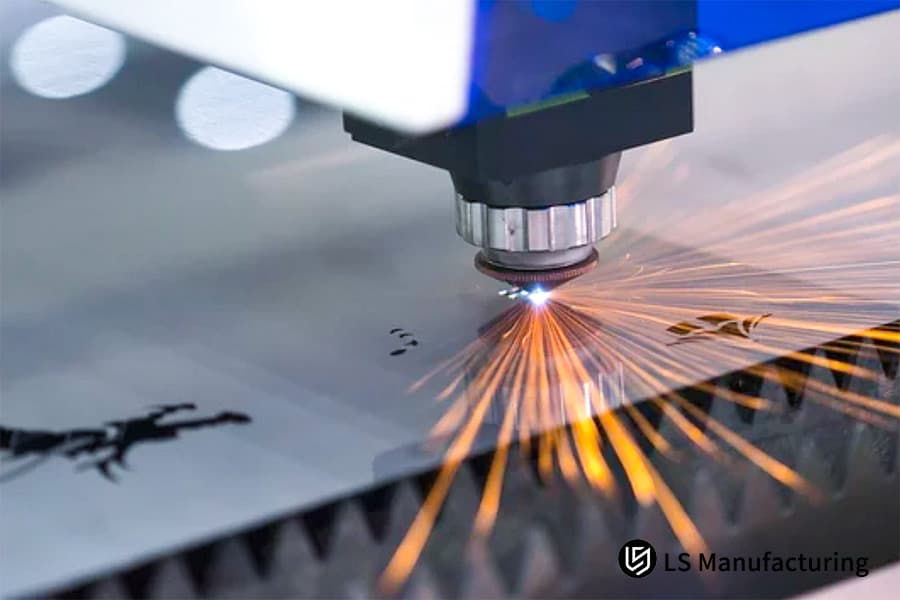
Figure 1: CNC laser cutting machine in action with sparks flying.
Why Must Mitigate Laser Cut Part Assembly Fit Errors Induced by Thermal Stress and Material Springback?
Laser cut part assembly fit deviations are mainly due to the accumulation of material springback and thermal stress. There is no need for external force for forced correction, pre-compensation with 3D GD&T tolerance accumulation analysis software alone can reach a 99.8% one-time assembly hole alignment rate.
Material Properties Affecting Assembly Precision
- Cold Rolling Anisotropy: Different rolling directions of the same batch of sheets may cause the bending springback variations up to 8%-12% that will directly affect the coaxiality of hole positions.
- Material Springback Differences: When bent with a radius equal to 1.5 times the material thickness, SUS304 stainless steel springback amounts to about 3°-5°, while 5052 aluminum alloy springback is approximately 1.5°-3°.
- Thermal Stress Superposition: When the cutting residual stress and bending stress are overlapped, the deviations of shape and location of the part in its free state will be increased 2-3 times.
Pre-parameter correction allows laser cutting bend springback compensation, which is the biggest reason influencing laser cut part assembly fit precision.
Tolerance Absorption and Pre-compensation Plan
- Structural Design Improvement: Floating pin holes and elongated slots are implemented at the assembly points to absorb cumulative tolerances up to 0.8mm.
- Process Linkage Control: The laser online angle detection system and CNC bending machine are connected in real time to automatically adjust the bending parameters, thereby ensuring the batch-to-batch angle deviation ≤±0.15°.
- Troubleshooting Methods: In case of one-sided hole misalignment, the main focus should be on verifying if the rolling direction of the sheet metal is parallel to the bending line rather than immediately modifying the bending parameters.
Directional parameter calibration allows laser cutting material anisotropy adaptation by aligning the different rolling directions' characteristic differences.
Just as a major box build quality control, this pre-compensation system, like pre-assembled building blocks, enables alignment without forced bending, this way avoiding internal damage and greatly enhancing the first-pass yield of precision assembly service.
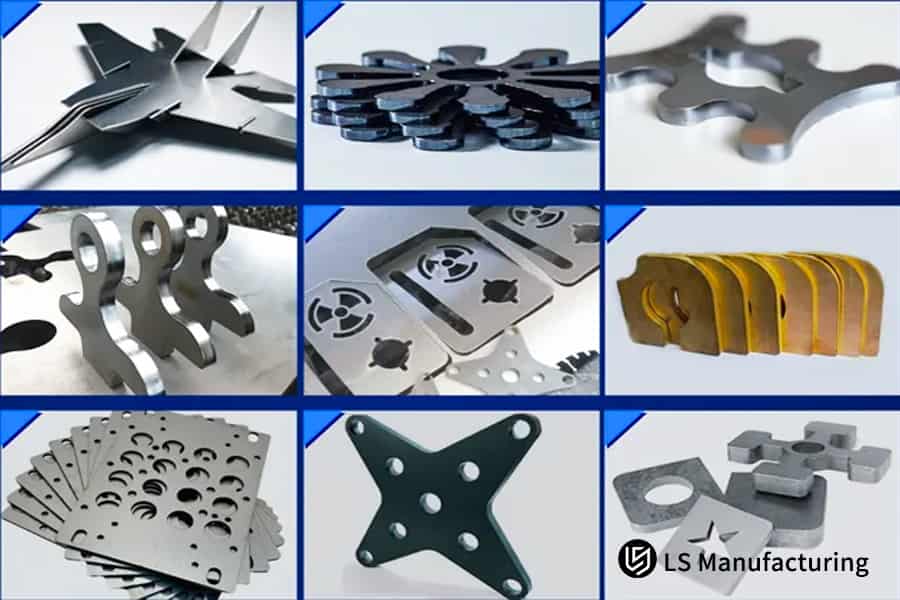
Figure 2: Various metal parts including gears and brackets arranged on white surface.
How Can Custom Enclosure Assembly Service Prevent Electromagnetic Interference via Advanced Grounding and Shielding Mechanisms?
The electromagnetic shielding performance of a custom enclosure assembly service is accomplished by a multi-point common ground bus design and automated pneumatic riveting technology. This guarantees that the grounding point contact resistance is below 1.5mΩ, which helps to minimize the risk of interference to sensitive electronic components.
Factors Affecting Joint Shielding Effectiveness
- Screw spacing: A screw spacing of 25mm at 100MHz will provide more than 15dB higher shielding effectiveness compared to that of 50mm, at 1GHz, the difference will be even greater (22dB).
- Surface Coating: Anodized and sprayed coatings are considered to be layers of insulation. If the joints are not treated, this will result in a break of conductivity continuity and a decrease in shielding effectiveness by more than 60%.
Before lasers can be used to produce seams with optimal conductivity, joints must be pretreated. This is one of the major areas of focus of electromagnetic shielding design in custom enclosure assembly service.
The IEC 61587-3:2022 standard states that the shielding effectiveness test of industrial chassis must cover the 100MHz to 1GHz frequency band, and the conductivity continuity of the joints must be verifiable throughout the process.
To comply with this standard, all shielding projects incorporate joint pretreatment and a complete conductivity continuity inspection process.
Conductive Sealing and Grounding Process Specifications
- Surface Pretreatment: Local laser cleaning is employed at the joints to eliminate the insulating coating and reveal the highly conductive base metal.
- Gap Sealing: Beryllium copper springs or FIP automatically applied conductive rubber are chosen as frequency band requirements to ensure that joints are in full conductive contact.
- Grounding Verification: Each finished product undergoes testing with a low-impedance continuity tester, the grounding resistance between all structural components is ≤1.5mΩ.
Standard joint gaps are a basic requirement for controlling laser-cut shielding gaps. The full-process shielding control, which is at the heart of box build quality control and electrical performance assurance, can greatly enhance the electromagnetic compatibility performance of precision assembly service.
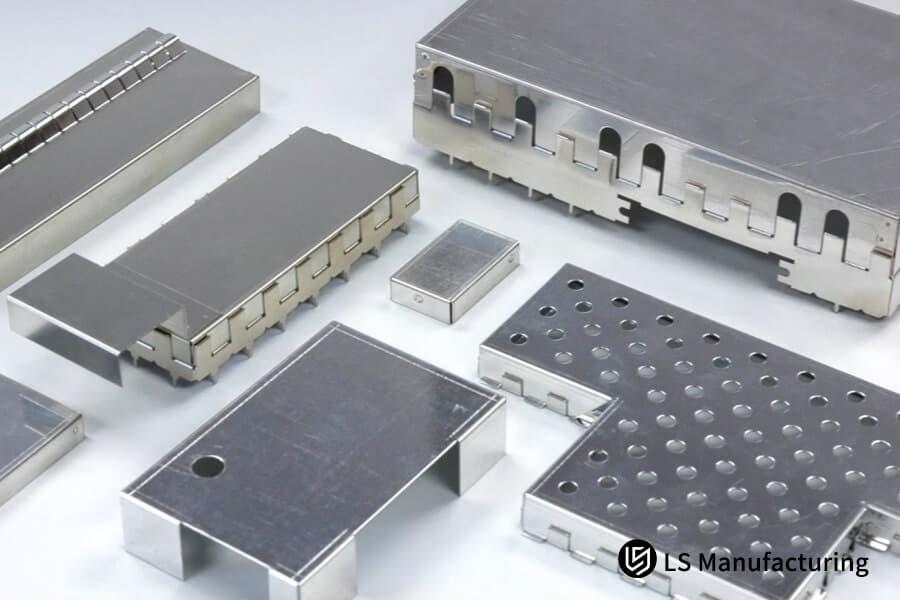
Figure 3: Stainless steel electronic enclosures with various cutouts and mounting holes.
What Rigid Fastening and Torque Specifications Safeguard Component Mounting Stability from Structural Joint Failures?
To ensure the reliability of threaded joints in precision assembly service, a digital display intelligent electric screwdriver implementing a five-step symmetrical pre-tightening sub-sequence is employed. The tightening torque error of press-fit nuts and hexagonal bolts is controllable within 3% by this method.
Common Fastener Mechanical Parameter Standards
Installation and Release Force Parameters for Common Press-fit Fasteners (PEM Standard)
| Fastener Specifications | Applicable Plate Material | Rated Push Force (kN) | Minimum Push-out Force (kN) | Recommended Tightening Torque (N·m) |
| M3 Press-fit Nut | 1.0mm Steel Plate | 8.9 | 6.7 | 0.8 |
| M3 Press-fit Nut | 1.5mm Aluminum Plate | 7.1 | 5.3 | 0.6 |
| M4 Press-fit Nut | 1.5mm Steel Plate | 13.3 | 10.2 | 1.5 |
| M4 Press-fit Nut | 2.0mm Aluminum Plate | 10.7 | 8.1 | 1.2 |
| M5 Press-fit Nut | 2.0mm Steel Plate | 18.7 | 14.6 | 2.5 |
| M5 Press-fit Nut | 2.5mm Aluminum Plate | 15.2 | 11.9 | 2.0 |
Tightening Process and Quality Monitoring Methods
- Pre-tightening Sequence: A star-shaped, cross-progressive tightening technique is applied so that the rated torque can be reached in 5 steps to prevent sheet metal deformation resulting from concentrated stress at a single point.
- Online monitoring: with Torque-angle dual monitoring algorithm, sure quality defects as mis-threading, insufficient tightening and over-tightening are automatically intercepted by 100%.
- Failure Elimination: For vibration condition, the techniques of thread-locking adhesive, anti-loosening washer are applied again to improve the looseness level.
Controllable hole wall roughness can enhance the laser cutting thread joint reliability, and will allow box build thread to utilize smoothly.
In essence, it is just the same as tightening the car's tyre bolts diagonally sequentially, if the tyre bolt are all tightened at the same time, deformation will be occurred by the uneven force, and result in air leakage. This can enhance the long-term reliability of box build assembly service.
The tightening process directly determines the long-term reliability of the entire machine, improper parameter selection can easily lead to later failures. To obtain a free DFM fastening solution evaluation that accompanies the precision assembly service, simply submit your design documents to receive targeted optimization suggestions from our engineering team.
How Does Automated Box Build Quality Control Prevent Short Circuits and Maintain Thermal Dissipation Paths?
The box build quality control system uses 3D visual inspection and digital airtightness testing to accurately control spatial gaps and heat dissipation paths. This guarantees not only that the power electronic components have the required thermal conductivity but also that there is absolutely no risk of short circuits.
Quantitative Control of Thermal Conductivity Interfaces
- Medium Thickness Control: The interface compression rate of the thermally conductive medium is controlled within the range of 30%-50% through the use of an automated precision dispensing machine. This method helps to eliminate the presence of internal air bubbles.
- Impact of Thermal Resistance: Every 0.1mm increase in the thickness of the thermally conductive medium leads to an 8%-10% rise in total thermal resistance which in turn, changes the full-load operating temperature of the components.
- Inspection Standards: The heat dissipation path of the finished product is checked using a thermal imager to make sure that the temperature rise of components under full-load conditions is following design requirements.
Thanks to its flat mounting surface, laser cutting thermal interface matching effectively lessens interface thermal resistance, which is the key to ensuring thermal performance in box build quality control.
Wiring Harness Safety and Airflow Optimization Solutions
- Edge Protection: Every laser-cut hole and edge goes through an automatic deburring process and 100% chamfering inspection. At the points where wires are present, composite material protective sleeves are installed.
- Wiring Harness Isolation: A physical separation of the high and low voltage wiring harnesses with a spacing of 20mm is maintained to avoid electromagnetic coupling interference and short circuits caused by insulation wear.
- Airflow Design: Wiring harness binding density and routing paths must be arranged in such a way as to avoid main airflow ducts, with the increase in flow resistance controlled within 10% to ensure effective heat dissipation.
The risk of laser cut sharp edges is eliminated by full-circumference chamfering, so preventing wire harness scratches. A well-thought-out wiring harness and airflow system works as a center to electrical safety in custom enclosure assembly service.
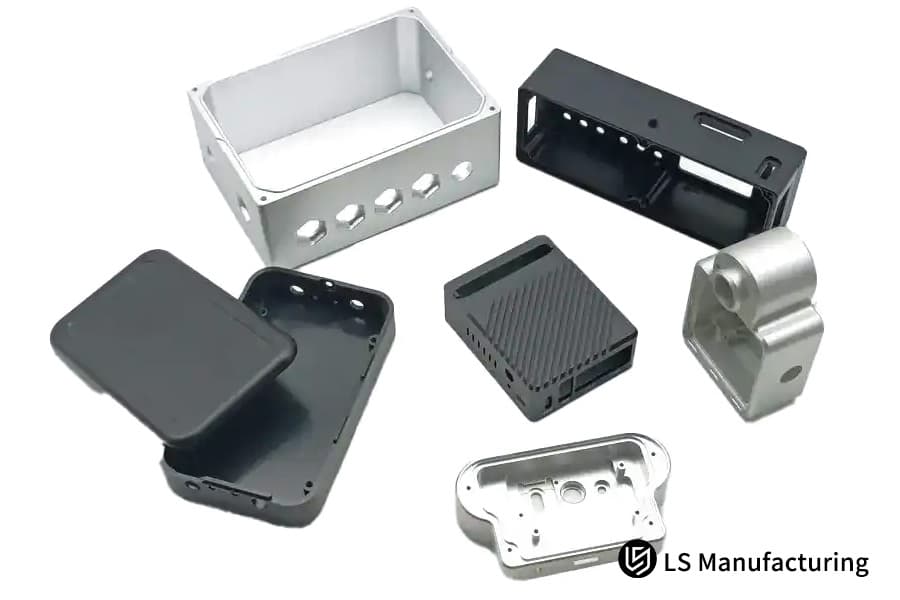
Figure 4: Automated robotic assembly line with electronic components and quality control systems.
How Does Hybrid Fastening and Welding Control the Dimensional Chain Stability to Limit Structural Displacements?
Box build quality control is based on managing the stability of the dimensional chain in hybrid assemblies. Overall 3D displacement can be controlled within 0.08mm by inter-process 3D coordinate detection and rigid fixture constraints.
Effect of Welding Thermal Stress on the Dimensional Chain
- Thermal deformation is temporary: With laser welding, localized temperatures can be as high as 1500℃, and the instant thermal expansion of the neighboring components can be as much as 0.15mm, resulting in residual stress after cooling and contraction.
- Fixing method comparison: Post-weld shrinkage of welding with fully constrained fixtures decreased by 65%-75% relative to the welding of free state, and the dimensional consistency has been greatly improved.
- Inspection nodes: 3D coordinate sampling is performed after every welding process. Defective parts are directly isolated and prevented from advancing to the next process.
Welding shrinkage control is enabled through the use of rigid fixture constraints, which stabilize dimensional accuracy after welding. Inter-process dimensional detection is a key assurance for the stability of the dimensional chain in precision assembly service.
Comparison of Post-Weld Shrinkage under Different Welding Fixing Methods
| Welding Method | Sheet Material | Sheet Thickness | Free Shrinkage (mm/m) | Fully Constrained Fixture Shrinkage (mm/m) | Dimensional Accuracy Improvement Rate |
| Continuous Laser Welding | SUS304 | 2.0mm | 0.32 | 0.08 | 75% |
| Continuous Laser Welding | 6061-T6 | 2.0mm | 0.45 | 0.14 | 69% |
| Spot Welding Fixing | SUS304 | 2.0mm | 0.18 | 0.05 | 72% |
| Spot Welding Fixing | 6061-T6 | 2.0mm | 0.26 | 0.09 | 65% |
How well the heat deformation control is managed will have a significant impact on the final precision of laser cutting service.
Process Optimization Strategy for Hybrid Assembly
- Process Sequencing: Initially, complete positioning weld point fixation, then install the press-fit fasteners to prevent weld point cracking due to riveting extrusion stress.
- Anti-deformation design: The welding fixture is pre-set with anti-deformation compensation which helps to counteract the shrinkage after welding and cooling. This ensures the product dimensions will still be within tolerance limits.
- Stress balance: By regulating the nature of elastic and plastic deformations, the system is capable of removing misalignments of holes and deviations of a dimensional chain caused by stress superposition among processes.
With an efficient process layout the laser cutting dimensional chain can be kept stable and the structural displacement can be limited, which is the principal means of box build quality control for dimensional deviations.
Case Study of LS Manufacturing Custom Heavy Industrial Machinery Enclosure Precision Laser Cut Part Assembly Fit Optimization
By full-process optimization, this project achieved reduction of overall assembly tolerance from ±1.2mm to within ±0.15mm, which was the core pain point of the customer's mass production stagnation.
Customer Dilemma
This heavy industrial equipment manufacturer of power control box, which had 128 laser cut parts, faced trouble when the previous supplier wrongly calculated the sheet metal springback and thermal stress. Apart from that, the cumulative assembly tolerance reached ±1.2mm, the whole machine base got warped and contactor was misaligned, weld cracking occurred in vibration testing and mass production was completely stopped. The root cause was the ineffective implementation of laser cutting residual stress elimination process resulting in structural deformation due to stress release.
LS Manufacturing Solutions:
- 3D dynamic tolerance chain analysis was first introduced and then the bending springback compensation factor (K-Factor) was adjusted to 0.42.
- A precision bidirectional rolling leveling process was added after laser cutting to release residual stress.
- Custom-design of assembly anti-deformation positioning welding fixture was done to counter welding shrinkage.
- A laser cleaning and self-forming conductive rubber (FIP) triaxial dispensing process at assembly joints was deployed.
Such thorough process optimization will, in a methodical way, improve the laser cutting hole position accuracy, because of this ensuring that assembly hole positions will be consistent.
Results and Value
Comparison of Core Indicators Before and After Project Optimization
| Core Indicator | Before Optimization | After Optimization | Improvement Amount |
| Overall Assembly Tolerance | ±1.2mm | ±0.15mm | 87.5% |
| Hole Alignment Rate | 72% | 99.8% | 27.8 percentage points |
| Vibration Test Pass Rate | 35% | 100% | 65 percentage points |
| Protection Level | IP54 | IP65 | Improved by 2 levels |
| Single Unit Assembly Time | 12 hours | 7.5 hours | 37.5% |
The structural stress distribution of the project was even. Successfully experienced high frequency vibration and fatigue testing, so got the IP65 protection grade. These work for the client was also precision manufacturing project realized by LS Manufacturing.
Similar challenges such as multi-component complex chassis laser cut part assembly fit can be solved through end-to-end process optimization. For customized solutions and accurate quotations, after uploading 3D drawings, our engineering team will provide a complete evaluation result within 24 hours.

Why Choose LS Manufacturing for Your Next High-Precision Custom Enclosure Assembly Service to Ensure On-Time Assembly Delivery?
With its end-to-end manufacturing capabilities and closed-loop management system, the custom enclosure assembly service can guarantee high precision while stablely meeting delivery dates, so matching the mass production demands of industrial clients.
End-to-End Manufacturing Capabilities:
- Processing Equipment: The plant is outfitted with high-power fiber laser cutting machines, CNC bending centers, and automated riveting and welding units.
- Process Coverage: From the procurement of raw materials, to laser cutting, deburring, and stress leveling, up to surface coating, precision riveting, and functional testing of the whole machine, internal control is maintained at every stage of the process.
- Flexible Production: There are flexible assembly units for product diversification and small batch production that allow combining the adherence to high precision standards with tooling cost control.
The entire equipment matrix guarantees laser cutting enclosure processing capacity, which can be adapted to different chassis specifications. This end-to-end capacity layout that means is the main pillar supporting the custom enclosure assembly service's ability to flexibly respond to demand.
Delivery Assurance System and Certifications:
- Certifications: The quality management system is IATF 16949 certified, and every process is in line with international industrial manufacturing standards.
- Scheduling Management: Through the ERP system and supply chain forecasting mechanisms, coupled with raw material inventory, we control the supply chain cycle.
- Quality Closed-Loop: From the reception of raw materials to the production of finished goods, the whole procedure is traceable, and each batch inspection reports are fully retained.
Our fully self-operated supply chain effectively reduces intermediate costs and guarantees on-time assembly delivery. To calculate project assembly costs, please provide product specifications and annual demand, we will provide a transparent USD quote and delivery timeline.
FAQs
Q1: What is the maximum thickness of aluminum sheet that LS Manufacturing can process through its laser cutting service, and what level of tolerance can be achieved?
LS Manufacturing is capable of laser cutting about 25mm thick aluminum sheets. It can control the positioning accuracy of laser cutting to within 0.03mm, so the cut edges are neat and without slag. The parts can be directly used for precision riveting and bending making sure the assembly standards of high-precision industrial chassis are met.
Q2: How does LS Manufacturing control the overall cumulative tolerance for complex multi-component box build assembly services?
We rely on the 3D tolerance accumulation analysis software and then combine it with customized modular assembly fixtures to perform an extremely strict control on the overall tolerance level of each component not to exceed ±0.1mm. After uploading the designs, customers can get a detailed tolerance plan fitting their projects.
Q3: Why is mechanical leveling necessary after laser cutting for high-strength steel chassis panels?
Heat from the laser can bring high-strength steel plates having residual internal stresses. If these are not removed before the assembly, such stresses will be released over time and cause structural deformations. More than 92% of the residual stress can be eliminated by automated roll leveling which in turn reduces the chance of assembly deformations.
Q4: Does your custom enclosure assembly service support IP65 or IP67 protection ratings for outdoor industrial use?
Yes, it can. The use of three-axis automatic dispensing machine helps us to apply molded silicone rubber (FIP) gasket. Besides this high-precision torque control and full-circumference clamping processes are used, it is a guarantee that enclosure joints can regularly pass the IP67 waterproof and dustproof test and so be able to withstand various outdoor industrial conditions.
Q5: During box build quality control, what measures are taken to eliminate the wear of laser-cut sharp edges on the wire harness insulation layer?
As a routine, laser-cut holes and edges are cleaned by automatic deburring then 100% checked for being chamfered. In some cases the protective sleeves of combined materials are also introduced at the wire locations. These provide additional protection this way ensuring that the risk of the sharp edge of the wire harness insulation layer is completely removed.
Q6: How does your precision assembly service confirm the real effectiveness of electrical grounding before shipping?
We carry out full-point testing on each assembled chassis with a low-impedance continuity tester, making sure the grounding resistance between all structural metal components is less than 1.5mΩ. Shipment includes test data, which brings traceability and verifiability of the grounding effect.
Q7: Do your box build assembly services cater to flexible manufacturing requirements for multi-variety, small-batch configurations?
Absolutely, we do. We have flexible assembly units exclusively dedicated to multi-variety, small-batch industrial products. Besides strictly adhering to high-precision standards, we A lot keep upfront tooling costs under control, because of this, can cater to R&D and small-batch mass production needs.
Q8: What measures does LS Manufacturing take to ensure on-time assembly delivery for international purchasing managers and engineers?
Our Dongguan Humen plant has full-chain manufacturing capabilities that we utilize together with a closed-loop ERP production scheduling system and ample raw material stock to accurately keep track of the supply chain cycle time at each link, this way, ensuring timely and high-quality delivery of orders from worldwide customers.
Summary
Highly efficient industrial chassis and component assembly hinges on accurate management of the process path. From controlling the heat-affected zone post-laser cutting and releasing residual metallographic stress in sheet metal, to quantitatively monitoring electromagnetic shielding impedance, symmetrical fastening torque, and thermal conductivity interfaces during assembly, all technical parameters have an immediate impact on the structural stability and the fatigue life of the equipment used in the industrial field.
Should your current industrial chassis or sheet metal assembly be experiencing technical flaws like excessive tolerance accumulation, assembly deformation, or inadequate protection levels, please feel free to send your 3D design drawings (STEP/IGS/DXF formats) to the LS Manufacturing technical assessment channel. The engineering department will conduct a technical feasibility study, propose a tolerance compensation plan, and provide a mass production cost quotation all within 24 hours to help you efficiently deliver your industrial products.
📞Tel: +86 185 6675 9667
📧Email: info@lsrpf.com
🌐Website: https://lsrpf.com/
📞Tel: +86 185 6675 9667
📧Email: info@lsrpf.com
🌐Website:https://lsrpf.com/
Disclaimer
The contents of this page are for informational purposes only.LS Manufacturing servicesThere are no representations or warranties, express or implied, as to the accuracy, completeness or validity of the information. It should not be inferred that a third-party supplier or manufacturer will provide performance parameters, geometric tolerances, specific design characteristics, material quality and type or workmanship through the LS Manufacturing network. It's the buyer's responsibility.Require partsquotation Identify specific requirements for these sections.Please contact us for more information.
LS Manufacturing Team
LS Manufacturing is an industry-leading company. Focus on custom manufacturing solutions. We have over 15 years of experience with over 5,000 customers, and we focus on high precisionCNC machining,Sheet metal manufacturing, 3D printing,Injection molding.Metal stamping,and other one-stop manufacturing services.
Our factory is equipped with over 100 state-of-the-art 5-axis machining centers, ISO 9001:2015 certified. We provide fast, efficient and high-quality manufacturing solutions to customers in more than 150 countries around the world. Whether it is small volume production or large-scale customization, we can meet your needs with the fastest delivery within 24 hours. choose LS Manufacturing. This means selection efficiency, quality and professionalism.
To learn more, visit our website:www.lsrpf.com