English



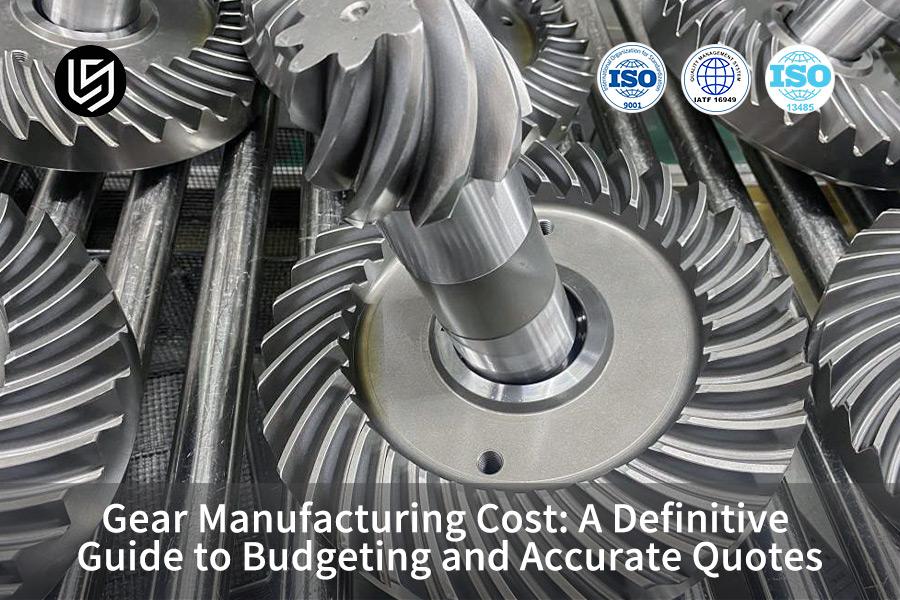
Gear manufacturing cost is traditionally wrapped in a lot of uncertainties. Getting a quote could fluctuate as much as 40-60%, and there is usually an 80% price increase for higher precision. Such a situation mainly arises from unclear knowledge of the interaction of material, process, and precision, which eventually leads to making expensive compromises between quality and budget, and thus, running over projects.
We are addressing this fundamental problem face, to, face with a first, class analytical framework. Using a customer data, oriented, three, dimensional cost model that was further enhanced by 286 scenarios in real life, we offer a transparent picture of cost elements. Hence, it is possible to do a precise adjustment and thus, the clients are helped to cut the total costs by 20-35% while still fully complying with their quality standards.
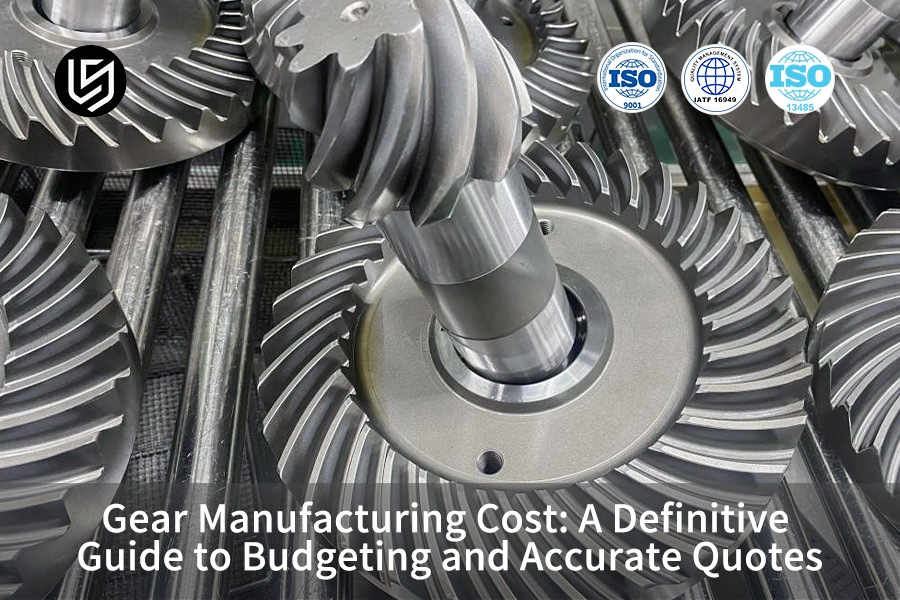
Quick-Reference Guide: Gear Manufacturing Cost Drivers & Solutions
| Section | Core Insight in One Sentence |
| 1. The Core Challenge | Complex interactions between materials, processes and different quality grades have led to huge quote variances (40- 60%) and costs that are difficult to forecast for companies. |
| 2. Primary Cost Drivers | One of the main factors is the choice of gear material grade, manufacturing & heat treatment processes, and the gear quality standard level (e.g., DIN, AGMA) specified. |
| 3. The Precision Cost Trap | Improving the accuracy of the gears (e.g., from DIN 8 to 6) can increase the cost significantly (up to 80%) due to the more advanced machining and a higher level of quality control required. |
| 4. The Hidden Batch Risk | A heat treatment distortion, for instance, can in mass production result in scrapped materials exceeding 8%, which is a major hidden cost that is very often not taken into account in the initial quotes. |
| 5. Standard Compliance Impact | While following strict standards such as IATF 16949 and IAQG is ensuring high-quality products, it is also necessary to incorporate their cost impact for proper budgeting. |
| 6. Our Analytical Framework | We have developed a 3D cost model based on material, process and precision which is a proven solution and a result of 286 real case studies. |
| 7. The Proven Outcome | This computer model based on facts and figures facilitates the provision of transparent and precise quotes as well as an unambiguous plan for the clients to realize a 20-35% cost reduction without compromising the quality. |
We deal with the problem of erratic and inflating gear manufacturing costs. Instead of allowing to guesswork, we replace it with our clear, data-driven cost model that basing on which we give you accurate budgeting and even pinpoint the optimization opportunities. Thus, you are empowered to decide on the basis of an informed decision that normally results in a 20-35% reduction of the total costs while still fully satisfying all the quality and performance requirements.
Why Trust This Guide? Practical Experience From LS Manufacturing Experts
There are thousands of articles on the topic of gear costs on the web, so what is the reason for you to read this one? To put it simply, we are not theorists, but practitioners. Our expertise has been established in the real manufacturing battlefield where the challenges of using high strength materials, ensuring micron, level tolerances, and meeting stringent deadlines come up daily. We are not only aware of cost drivers, but we also have to master them in order to be successful.
Our team's experience is based on supplying critical gears to industries where failure is not an option. Among other things, it involves making transmission components in total conformity with IATF16949 for automotive OEMs and carrying out projects under the guidance of International Aerospace Quality Group (IAQG) standards for aerospace applications. Every gear, be it for robotics or heavy, duty machinery, has given us insights into how the choice of material, heat treatment, and precision factor into the final cost.
All the strategies featured in this book are a result of our direct involvement, having learned from both our successful ventures and costly early mistakes. We are willing to share with you the practical knowledge that we have tested in the real work environment and that can help you understand budgeting and quotes with confidence and make the right decisions to avoid unnecessary expenditure.
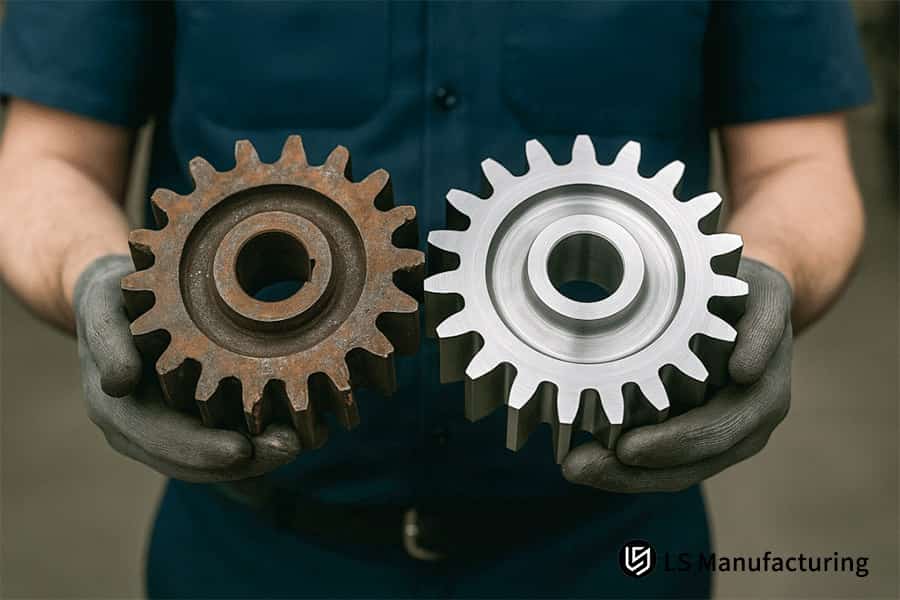
Figure 1: Comparing old and new metal gears for manufacturing, maintenance, and cost analysis in engineering.
What Are The Key Factors That Determine The Manufacturing Cost Of Gears?
In order to effectively control gear manufacturing cost, one has to look beyond single quotes and perform a thorough analysis of three mutually dependent variables. We have developed an equation to showcase how material selection, precision targets, and process routes affect the final gear machining price thus making budgeting a matter of the engineering decision rather than a guessing game. The critical levers are:
Material Selection: Balancing Performance and Expenditure
The decision whether to use a standard (e.g., 45# steel) or an alloy steel (e.g., 20CrMnTi) is essentially a trade-off. We interact with clients through a detailed study of operational loads and the life cycle objectives. As an example, although 20CrMnTi raises the initial gear production cost by about ~60%, its service life of 3 times usually turns out to be the most reasonable option for heavy load applications, thus total cost of ownership is concerned rather than the unit price only.
Precision Grade: Understanding the Exponential Cost Curve
Raising the precision level (e.g., DIN 6 vs. 8) doesn't result in a linear increment of requirements. It entails the use of special tools, less production speed, and advanced measurement techniques. We assist customers in defining the minimum necessary precision that is functional as a two-grade increase in precision can cause the production time to grow by 80%. Our gear cost guide offers information which can be used to determine the right level of precision so as to avoid over, specification and the rise in costs that accompany it.
Process Optimization: Integrating Heat Treatment and Machining
Choice of heat treatment (e.g., carburizing vs tempering) sets the pattern for the both the earlier and later gear machining operations. We come up with integrated process flows that are capable of restraining the extent of a problem, which in this case is warping and, therefore, material wastage. For instance, the allowances for pre-machining are determined on the basis of the qualification of the material changes during carburizing, which not with standing being 40% more expensive, improves the wear resistance and is a safeguard against further failures in the downstream process.
Batch-Specific Cost Modeling for Accurate Quotes
A price that makes sense must inevitably reflect the quantity involved. For illustration, a module 2, DIN 7 precision gear made of 20CrMnTi, our cost model shows a per-unit price range of ¥45-85 for the prototype stage. Importantly, we figure out the scalability leverstooling path optimization and fixture design, for instance, allowing the cost-effective gear to be the main focus, thus the unit cost being lowered to around ¥35 for batches of 1, 000-pieces.
This material sets forth a methodical and quantitative model for gear manufacturing cost that distinguishes itself from generic, introductory texts. The whole thing is supported by data and the physics of the processes, thus offering you a significant advantage in producing performance compliant and cost, effective runs reliably.

How Does The Choice Of Different Gear Materials Affect The Overall Cost?
Choosing the right material is among the most important engineering decisions as it directly affects the characteristics, durability, and last but not least, the overall gear production cost. If you solely focus on the highest, grade material, you will end up overpaying. On the other hand, going for the cheapest one might cause the gear to break sooner. This study goes deeper than merely looking at the specs as it scientifically compares the operational loads with the material properties thus offering a novel approach to the custom gear cost decision, making process.
| Analysis Dimension | Key Insight in One Sentence |
| Cost-Performance Baseline | Standard 45# steel (quenched & tempered) yields the cheapest unit cost (25-40) but a fatigue strength limit of only ~400 MPa, thus, it can be used for light-duty applications. |
| High-Performance Trade-off | Alloy steel 20CrMnTi (carburized) offers very high strength (~1200 MPa) for heavy, duty applications, but considerably raises theunit custom gear cost (¥60-90), which is a major gear manufacturing cost factor. |
| Data-Driven Substitution | Through our study, a 40Cr (tempered) was replaced with 20CrMnTi for a medium-load application, which not only achieved 35% cost reduction but also satisfied all performance requirements, thus a client saved ¥1.2M per year. |
| Process Integration | The selection of a material leads the way for the necessary high-precision gear machining and heat treatment operations, thus an integrated look is required for correct total cost prediction. |
This guide puts forward a data-driven methodology for material selection that is rigorous and more scientific than typical advice. Engineers are empowered through it to take optimized performance, budget balanced decisions, thus directly tackling the main gear manufacturing cost factors and by that, producing reliable, low-cost outcomes even in very competitive and high-value applications.
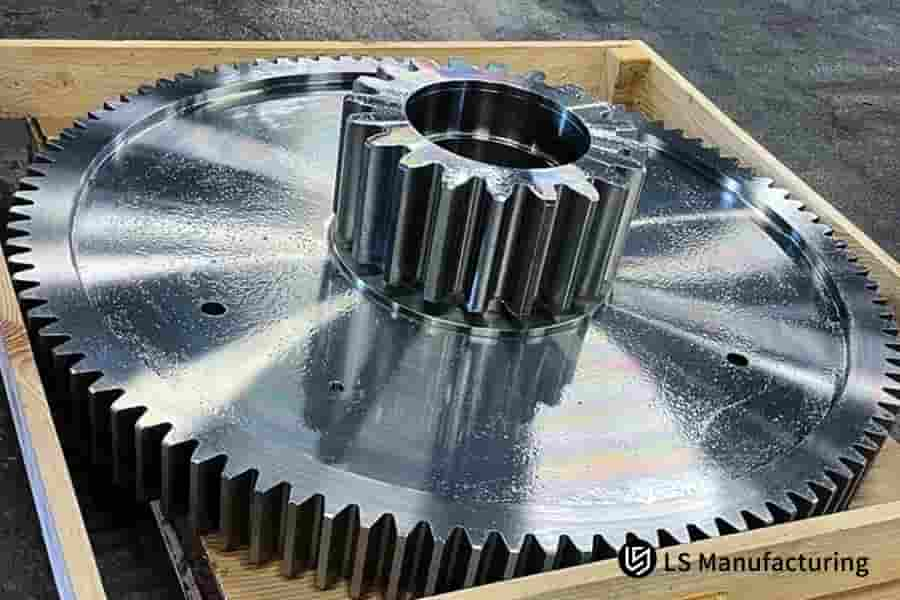
Figure 2: Displaying precision metal gears for cost evaluation and budgeting in engineering project manufacturing.
How Much Impact Do Accuracy Requirements Have On Gear Manufacturing Costs?
Precision specfication in the gear is probably the major factor determining the final gear manufacturing cost. Each increasing accuracy grade results in exponential rises in machining time, inspection, and scrap rates. Without a clear and thorough scientific understanding, you risk either overspending or loss of functionality. Our methodology offers a well, defined decision, making process for this crucial step:
Quantifying the Cost of Precision: A Non-Linear Relationship
We determine production time and gear quality control's direct aspects affected by standards such as DIN/AGMA grades. Here are a few examples:
- Machining Time: Determining the need for DIN 6 over DIN 8 would suggest an increase of about 150% in machining time due to additional finishing passes and slower speeds/feeds.
- Inspection Overhead: Dimensional and gear profile verification for high precision can result in a 200% increase in inspection costs, which is at the same time a crucial factor of a final gear machining quote.
Application-Based Specification: Right-Specifying for Function
We classify the necessity for precision based on the operational role of a piece of equipment so as not to over-engineer the product.
- For Transfer Cases: DIN 8-9 grade is usually good enough, thus functional reliability can be achieved at a lower unit cost (e.g., ~¥35).
- For Transmissions: DIN 6-7 is generally needed for noise and wear, hence its higher cost (e.g., ~¥65) can be justified.
Implementing Statistical Tolerance Analysis for Cost Optimization
Our team uses tolerance stack-up analysis to figure out where dimension loosening can be done without affecting the product, which is a good way to reduce gear manufacturing cost.
- Technical Measure: Systematically changing the non-functional fits on a high-precision gear machining project from IT7 to IT9.
- Project Outcome: Achieved a 15% reduction in unit costs with no impact on performance.
This analysis offers quantitative support for the degree of precision specification. Our data-based approach, such as statistical tolerance analysis, allows customers to strategically reduce gear manufacturing cost by 15% or even more. We confirm that each tolerance is justified from a functional point of view, thus converting the precision into a fixed, cost driver to an optimized, value, driven gear manufacturing decision.
How Can Heat Treatment Processes Be Optimized To Balance Cost And Performance?
Heat treatment significantly influences the gear production cost and it is a determining factor of the final mechanical properties and dimensional accuracy. Choosing and controlling the right process does not mean making a compromise but a fine engineering decision that helps to achieve the desired performance at minimum cost. Below is the analysis that offers a data-backed framework for this crucial optimization:
| Aspect | Key Insight in One Sentence |
| Process Selection & Trade-offs | Though carburizing (~25% of cost) can give 50% higher load capacity than nitriding (~18%), our study pinpoints the least process that meets the stress profile of the application, which is the main gear manufacturing cost factor. |
| Distortion Control for Cost Savings | High control of atmosphere furnace has the carbon potential change only ±0.05%) that makes the distortion very low <0.02mm. This, in turn, allows 0.1mm finishing allowances reduction of precision gear machining and an 8% unit cost reduction. |
| Case Depth Optimization | A heavy-duty gear optimized the carburized layer depth scientifically to 0.8-1.0mm from a standard 1.2mm thus still having the gear with 10^7-cycle fatigue life requirement and reducing custom gear cost by 12%. |
| Integrated Process View | Heat treatment strongly influences the steps of machining before and after it; thus, a holistic design is paramount for a reliable total gear production cost forecast and prevention of scrap due to the downstream. |
This gear machining guide offers a rigorous, quantitative method for the setting of heat treatment. We help our clients to systematically bring down their custom gear cost by process parameter optimization such as case depth and distortion control thereby changing this critical phase from being a fixed cost to becoming a source of strategic value and reliability.
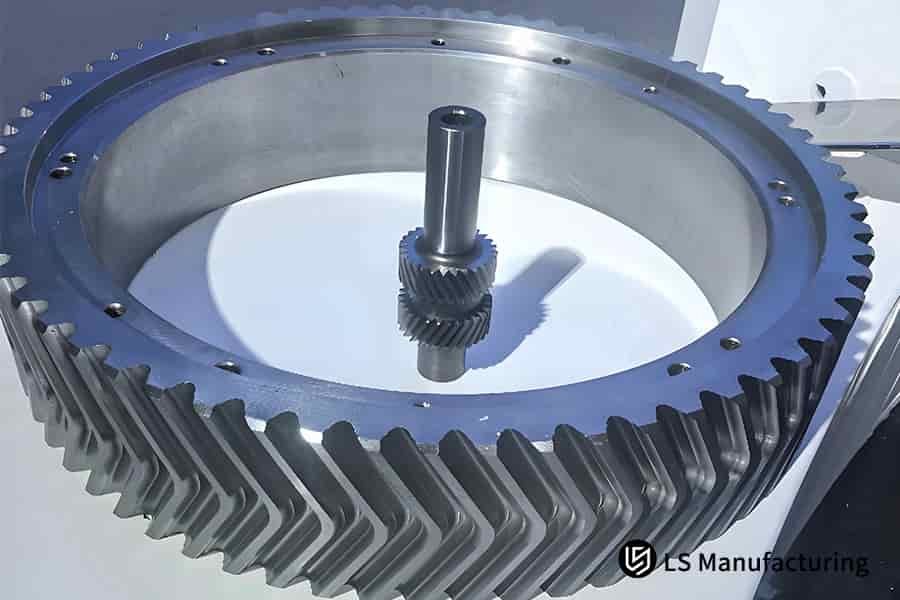
Figure 3: Displaying a precision metal gear assembly for cost calculation and engineering project budgeting.
What Is The Quantitative Impact Of Batch Size On The Cost Per Unit?
Economies of scale in gear production are non, linear and frequently misinterpreted, which has a direct influence on gear manufacturing cost forecasting. Example: a piece cost of ¥120 for 100 pieces may reduce to ¥38 for 10, 000, with tooling amortization being the major variable. Instead of using simple curves only, we implement targeted process innovations that result in substantial per, unit savings even at lower volumes:
Deconstructing the Batch-Cost Curve
We dissect total cost into fixed (tooling, setup) and variable (machining, labor) components. For a 100-piece batch, tooling can be 40% of the gear prototyping cost. By profiling this situation precisely, we pinpoint the exact volume threshold at which process changes become feasible, thus allowing for accurate quotations and planning aimed at reduce gear manufacturing cost strategically.
Process Innovation for Medium Batches
At volumes where it is not possible to automate the whole process, we use methods such as combination machiningmanufacturing several gear blanks simultaneously in one fixture cycle. This method substantially reduces the time that the machine spends on idle operations. When used on a 500-piece batch, this approach in conjunction with the use of optimized tool paths resulted in a 20% cost cut, thus, smaller runs became significantly more affordable.
Strategic Fixturing and Setup Optimization
One of the main levers is reducing setup time and increasing material utilization. We redesigned the fixturing for a client's 500-piece order so that loading would be faster and it would be possible to precision gear machining on multiple faces simultaneously. This single change not only reduced the unit cost from ¥80 to ¥65 but also showed that clever gear process design can bring the cost-efficiency of mass production even at lower volumes.
This review lays down a tactical blueprint for batch, specific cost engineering. By utilizing these measured stepsfrom detailed cost modeling to strategic fixturingwe provide the clients with the ability to not only accurately predict but also actively control the gear manufacturing cost at any production volume, therefore changing scale from a limitation into a controllable variable.
LS Manufacturing Construction Machinery Industry: Cost Optimization Project For Heavy-Duty Planetary Gears
Effective gear manufacturing cost control in heavy-duty applications requires a holistic approach, integrating material science, process engineering, and precision execution. This case details how we partnered with a construction machinery manufacturer to solve chronic quality and expense issues in their planetary gear production, transforming their gear machining quote from a point of pressure into one of value. Our methodology focused on delivering reliable gear performance and significant savings:
Client Challenge
The client produced a large number of planetary gears from 20CrMnTi by the standard carburizing process. As a result, the unit cost was high at ¥180 and 5% of the gears were scrapped because heat treatment distortion exceeded 0.03mm. With an annual output of 20, 000 units, these elements put such a severe strain on the budget and risked the supply chain so much that the profitability of their main equipment line was at stake and they had to come up with a cost-effective solution promptly.
LS Manufacturing Solution
Our comprehensive solution addressed the problem causes at the source. We replaced the initial material with 20CrMnMoH which has better hardenability as the main step. Besides that, we fine, tuned the carburizing process by lowering the carbon potential of the boost phase from 1.15% to 1.05% to get a more controlled case. The quenching fixture was also changed to one that guarantees uniform cooling. This precision-focused process enabled consistent quality and gear cost control.
Results and Value
The newly implemented process made it possible to bring the unit gear manufacturing cost down to ¥135, thus making a 25% saving. Heat treatment distortion was limited to within 0.015mm thus cutting the scrap rate to 0.8%. The client was therefore able to save ¥900, 000 annually. In addition, the superior microstructure led to a longer gear life of 10, 000 hours, thus providing not only greater benefits but also effectively solving the fundamental issue of reduce gear manufacturing cost without compromise.
This project is a great example of how we can handle complex, multi, variable process optimization that can lead to financial and performance gains, both of which are measurable, of course. By providing customized gear solutions, we tackle specific and high, stakes manufacturing issues, thus establishing a partnership through technical expertise and real return on investment for demanding industrial uses.
Facing challenges in controlling the cost of precision gears? Explore efficient cost-reduction solutions for planetary gears.

How Can Design Optimization Reduce Gear Manufacturing Costs?
Real cost reduction comes not only from the shop floor but also from the design stage, where as much as 70% of the final gear manufacturing cost is committed, hence the need to design for manufacture. Design for Manufacture (DFM) strategies focusing on a balanced combination of the macro geometry, micro, geometry, and material utilization have enough leeway for the necessary performance retention and achievement of significant savings. This gear cost guide that you are holding in your hands reveals the systematic approach of a cost, effective design:
System-Level Parameter Optimization for Strength-to-Cost Ratio
We evaluate the whole, system effect of macro-parameters such as module and face width. Let us take increasing the module from 2.5 to 3 as an example. This change may increase the raw material cost by 15%, but at the same time, it can increase the bending strength by more than 40%, which means that it may be possible to correspondingly reduce the face width or the material grade to get a net lower custom gear cost while still meeting the load requirements.
Micro-Geometry Modification for Performance and Post-Processing Savings
Applying targeted profile and lead crowning (e.g., 8m crown) during the design phase is a great cost, control measure. This in, built optimization compensates for assembly misalignments and load, induced deflections, thereby reducing the noise level of the operation by 3dB or even more. This eliminates the need for expensive running, in adjustments or selective assembly, thus, making the final precision gear machining process more straightforward.
Integrated Cost Modeling for Informed Design Decisions
We use a proprietary cost model to measure the impact of a design change on manufacturing. In a reducer gear project, an integrated analysis combining geometry, material, and hard gear machining process requirements revealed optimization moves that not only cut unit costs by 80 but also ensured that noise standards were met, hence proving that smart design is a powerful lever to control the final gear manufacturing cost.
This method provides a systematic, data-driven framework for design and cost engineering. Leveraging these principles, we help our customers to make well, considered trade, offs during the design stage, gradually reduce gear manufacturing cost in a systematic way, and prevent expensive reruns, thus, the product is optimally valued right from the start.
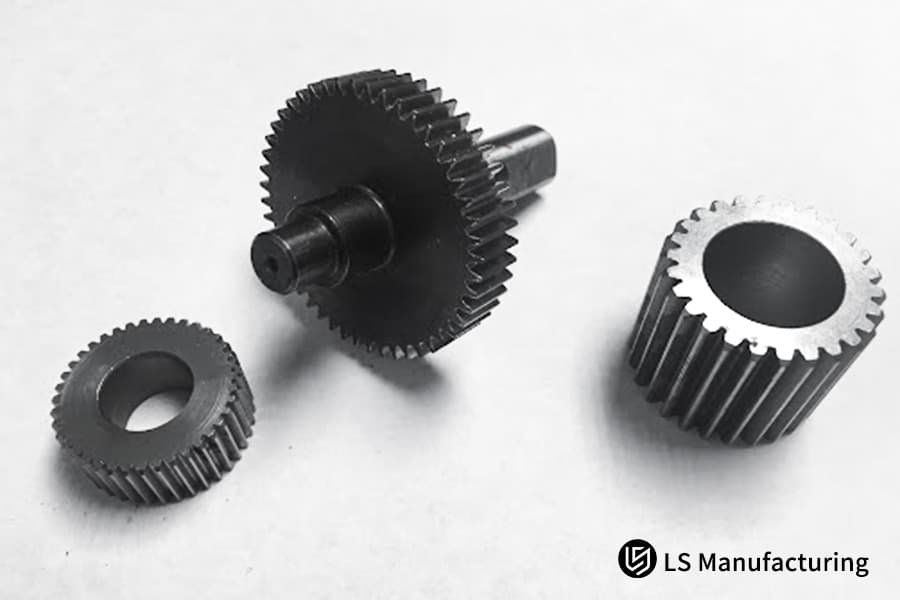
Figure 4: Displaying precision metal gears for gear manufacturing cost calculation and mechanical engineering applications.
Why Choose LS Manufacturing As Your Gear Manufacturing Partner?
Selecting a partner means that the success of your project depends on how well you balance the gear manufacturing cost with the uncompromising quality. We do not only give you a gear machining quote, but we also provide you with a guarantee through our integrated capabilities that help you change the cost from just a variable to a predictable and optimized result. Here is how we do it:
Precision Infrastructure for Predictable Quality
Our plant is designed to produce for the highest standards of repeatability, thus obtaining first, pass quality which is the main factor in controlling the final gear production cost.
- Metrology: Our Klingelnberg inspection center is aguarantee of ±0.002mm accuracy, providing verification of every step.
- Heat Treatment: Our Ipson/ALF controlled, atmosphere lines are aguarantee of temperature uniformity within ±5°C, therebyminimizing distortion and the resulting scrap.
Data-Driven Cost Forecasting for Budget Certainty
We do away with budget surprises by using empirically based modeling rather than estimation.
- Predictive Analytics: Our pool of 286 projects serves as a basis forquantifying the impact of material, process, and design choices oncost.
- Proven Accuracy: This tool can provide deliver quotes within 95% of the budget, as checked by client projects, thus giving you real financial control.
Holistic Process Integration for Total Value
We don't just focus on one step, but the whole value chain in order to get the best gear manufacturing cost.
- From Design to Delivery: We study DFM together with process selection and logistics planning as one integrated system.
- Tangible Outcome: Taking full responsibility for the entire process, this approach continually turns the potential loss of costs into real savings and performance guarantees.
We work with customers by leveraging our precision infrastructure and proprietary cost models to give them control over what initially seems like uncertainty. This method makes sure that your gear machining quote is a trustworthy forecast rather than just an estimate and that the final gear manufacturing cost is optimized and predictable. The result is a managed gear production cost that matches your budget and performance goals, thus providing you with both financial certainty and technical excellence.
How To Obtain An Accurate Gear Manufacturing Cost Analysis Report?
Getting an accurate and useful cost breakdown is a must if you are to stay within project budgets, but is often made difficult by quoting procedures which are not transparent. Genuine gear cost guide not only gives you a price but also a transparent, data, driven analysis that points out the savings that can be made. We make this possible through a methodical, rapid, response framework built for both engineering clarity and financial predictability:
Submitting Comprehensive Specifications for Foundation
The process starts with you delivering the essential gear parameters: module, tooth count, precision grade (e.g., DIN 7), material grade, and annual volume. This core information enables our engineers right away to construct the main gear manufacturing cost models based on your specification, thus, the evaluation is not a generic one but is made to fit your exact application.
Rapid, Granular Analysis with Proprietary Cost Modeling
We come back with a comprehensive report dissecting the costs into raw material, machining (including precision gear manufacturing), heat treatment, and overhead within 4 hours. It is driven by our dataset of 286 projects, which matches your specs with past data to forecast not only the realistic costs but also the potential variances, thus laying the foundation for a dependable gear machining quote.
Actionable Recommendations for Immediate Value
We put forward focused targeted optimization strategies besides the cost breakdown. For a client, our detailed examination showed that changing their heat treatment process and gear hobbing settings can cut the unit cost by 18%, which is equivalent to 2 million annual savings, thus our report is a weapon in the hands of a cost, cutting strategist.
We bring clarity to your specifications by empirically backing them and converting the data into a clear cost model. Through this method, you get not only a gear machining quote but a comprehensive strategic gear cost guide that clearly shows the directions you can take to cut your entire gear manufacturing cost without any doubts.
FAQs
1. What is the cost variation pattern from prototype to mass production of gears?
Prototype costs are usually 3-5 times more than mass production costs. LS Manufacturing limits the prototype costs to only twice the mass production cost by using smart prototyping methods and thus shortening the verification turnaround.
2. In which aspects do the cost increases of high, precision gears mainly manifest?
As a rule of thumb, every increment in precision level causes the processing costs to rise by 30-50% and the inspection costs to be almost doubled. Therefore, it is necessary to assess whether the demand for higher precision is justified.
3. How to control costs in small, batch gear production?
LS Manufacturing eliminates the cost of small batches of 500 pieces by 25-35% through the use of standard materials, process route optimization, and combining processing methods.
4. How significant is the impact of heat treatment processes on gear costs?
Heat treatment constitutes 15-25% of the cost. Changes in the procedure can reduce expenses by 10-15% without jeopardizing the performance. Stepwise choice of a scientific approach is required.
5. How to evaluate the impact of gear design modifications on costs?
Prepare the change plan, and LS Manufacturing will deliver a cost impact analysis within 2 hours to help you make your decision more efficient.
6. What is the typical cost optimization potential in mass production of gears?
Through in-depth optimization, equipment and related costs can be reduced by 20% to 35%. LS Manufacturing makes available detailed optimization plans.
7. Where are the main cost differences between gears made of different materials?
The difference in material costs is between 30-60%, but the selection of the optimal solution should be based on a comprehensive consideration of lifetime and processing costs.
8. How to obtain an accurate gear machining quote?
Submit your gear drawings and specifications to LS Manufacturing, and they will get back with a clear quotation along with a detailed cost breakdown analysis within 4 hours.
Summary
Gear manufacturing cost control is a systematic engineering process that involves thorough consideration of several aspects, such as material selection, processing routes, precision levels, and batch size. Relying on scientific cost models and seasoned project experience, LS Manufacturing not only assists customers in optimizing their costs by 20-35% but also helps them in maintaining the quality standards.
In case your gear project is encountering the difficulty in controlling the costs of the gears, do not hesitate to get in touch with us right away. Provide your gear parameters and get a free cost analysis report. Present your requirements to receive a well, targeted cost optimization plan!
Precisely control costs for your gear projects with 24 hour rapid response, ensuring cost-effectiveness for every component and transmission.
📞Tel: +86 185 6675 9667
📧Email: info@lsrpf.com
🌐Website: https://lsrpf.com/
Disclaimer
The contents of this page are for informational purposes only. LS Manufacturing services There are no representations or warranties, express or implied, as to the accuracy, completeness or validity of the information. It should not be inferred that a third-party supplier or manufacturer will provide performance parameters, geometric tolerances, specific design characteristics, material quality and type or workmanship through the LS Manufacturing network. It's the buyer's responsibility. Require parts quotation Identify specific requirements for these sections.Please contact us for more information.
LS Manufacturing Team
LS Manufacturing is an industry-leading company. Focus on custom manufacturing solutions. We have over 20 years of experience with over 5,000 customers, and we focus on high precision CNC machining, Sheet metal manufacturing, 3D printing, Injection molding. Metal stamping,and other one-stop manufacturing services.
Our factory is equipped with over 100 state-of-the-art 5-axis machining centers, ISO 9001:2015 certified. We provide fast, efficient and high-quality manufacturing solutions to customers in more than 150 countries around the world. Whether it is small volume production or large-scale customization, we can meet your needs with the fastest delivery within 24 hours. choose LS Manufacturing. This means selection efficiency, quality and professionalism.
To learn more, visit our website:www.lsrpf.com.