English



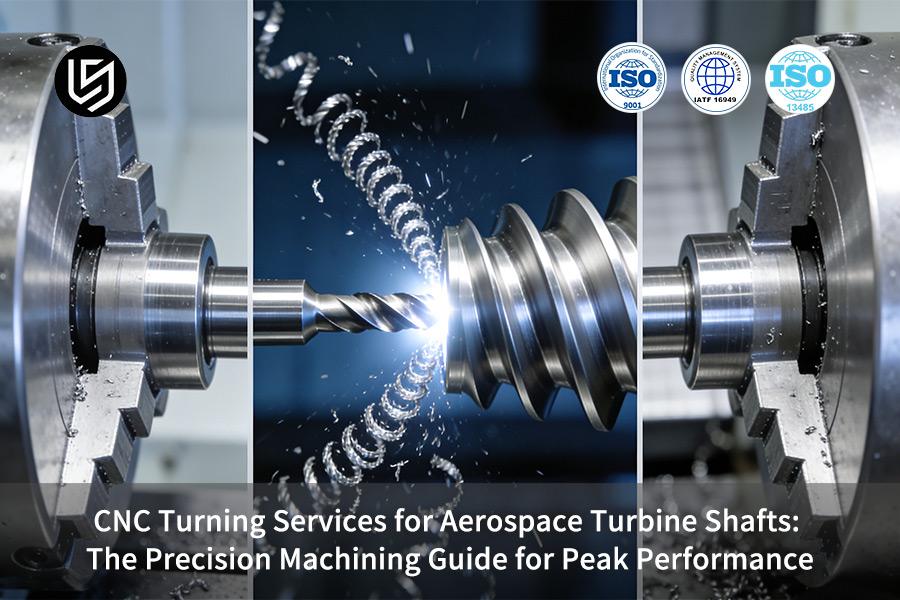
Aerospace turbine shaft CNC turning must advance from static geometric accuracy to overcome performance cliffs such as HCF failure of Inconel 718 during testing. The performance-driven system of LS Manufacturing introduces reliability into performance by optimizing subsurface integrity, linking turning parameters directly with residual stress gradients and life through S-N curve data, thereby effectively transforming traditional CNC turning into performance engineering tailored to operating conditions requiring extreme dynamic performance.
Dynamic problems such as imbalance and deformation are overcome through methods such as "pre-stress machining" based on FEA deformation comparisons. The results of this approach increased the dynamic balance yield of a low-pressure turbine shaft from 78% to 99.5%, effectively turning not only a product but an insurance policy for performance and reliability into the material itself.
CNC Turning For Aerospace Turbine Shafts: A Technical Guide
| Critical Parameter | Manufacturing Imperative |
| Extreme Concentricity & Runout Control | Bearing journals, as well as sealing diameters, require near-zero runout to eliminate vibration at high RPMs, mandating sub-micron lathe accuracy. |
| Surface Integrity for Fatigue Resistance | Surface integrity is critical, as tears, micro-cracks, or tensile residual stresses may cause failure; this is addressed with special tooling. |
| Heat-Resistant Alloy Machinability | Working with Inconel 718, the CNC turning material resists heat, work-hardens quickly, and requires high-pressure coolant, ceramic/carbide tools, as well as speed/feeds. |
| Complex Profile & Undercut Features | Complex shafts may feature intricate profiles, grooves, undercuts, etc., which require the precise synchronizing of multiple axes. |
| Our Certified Process Protocol | We operate under an AS9100 protocol, utilizing temperature-controlled turning cells, in-process gaging, as well as post-process NDT inspection, such as FPI, to validate every dimension. |
| Dynamic Balancing Integration | Our CNC turning process is optimized to minimize initial mass imbalance, with precision balancing services available to meet the balance grade requirements of flight-critical applications. |
| Result: Uncompromised Reliability | Delivers shafts that meet the extreme demands of turbine operation, providing smooth and vibration-free performance and long life under thermal and centrifugal stress. |
| Result: Certified Airworthiness | Provides complete material and process traceability with documentation that proves the part is fully compliant with all specifications required by CNC turning aerospace OEMs for performance and safety. |
We address the critical manufacturing problem of creating perfectly balanced, dimensionally exact, and metallurgically correct turbine shafts. Our precision CNC turning and validation process will guarantee your shafts achieve the dependable, high-performance rotational capability demanded for aerospace propulsion, completely certified for airworthiness. Our comprehensive process from start to finish will guarantee your components meet the highest performance and safety criteria.
Why Trust This Guide? Practical Experience From LS Manufacturing Experts
There are countless articles out there that write about the subject of aerospace machining. The difference is that this is not a theory-based document. We are not academics. We are machinists. For more than fifteen years, our shop floor has been a battlefront against Inconel 718’s machinability, dynamic balance problems, and thin wall deformities. The cost of one failed turbine shaft is not acceptable. The reliability of our machining process, as closely aligned with National Institute of Standards and Technology (NIST) guidelines as possible, is a result of having survived all these tough challenges on a day-to-day basis.
The knowledge we impart is based on hard-won experience. We know exactly how turning parameters influence subsurface residual stresses in Udimet 720, how to compensate for stress release in thin walls, and what tool path techniques ensure G1.0 balance. We do not recommend anything that has not been tested under the toughest conditions imaginable. We are not just sustainable, but we also adhere to guidelines set by the Environmental Protection Agency (EPA).
Thousands of test hours and production runs are condensed into valuable information in this guide. We’re revealing the data-driven techniques that enable us to not only predict but also control performance outcomes, taking a raw forging and transforming it into a reliable spinning heart of an engine. It’s not just an engine part that meets the print; it’s an engine part that’s filled with assured integrity, ready for its final test: powered flight.
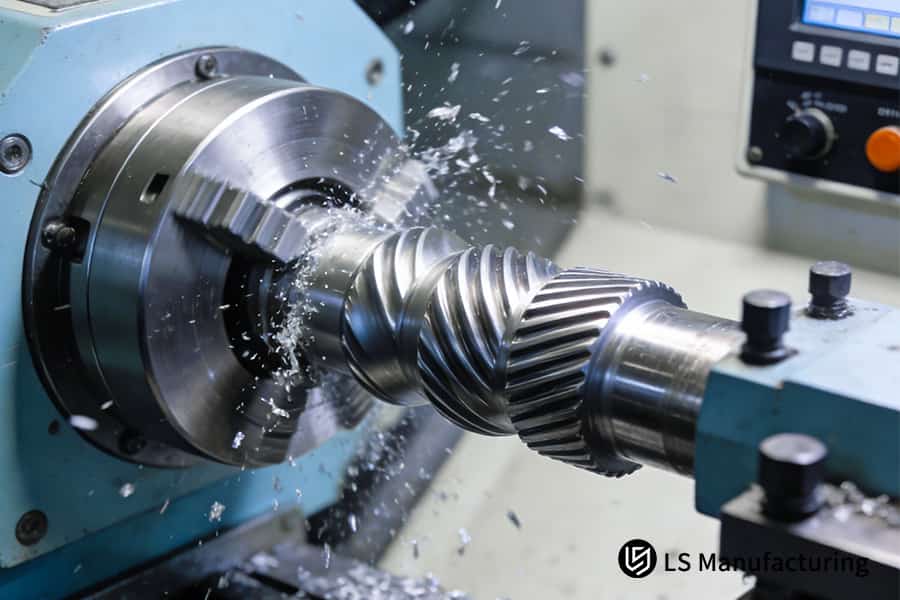
Figure 1: Turning a high-tolerance high-temperature alloy turbine shaft for custom aerospace propulsion solutions.
What Are The Fundamental Manufacturing Causes Leading To High-Cycle Fatigue And Creep Failure In Aero Turboshafts?
High-cycle fatigue and creep failure in the most critical rotating components of an engine are often initiated during the manufacturing process. This document outlines the specialized engineering methodology that eliminates these manufacturing induced defects at the root cause. The methodology transforms the aerospace turbine shaft CNC turning process for the engine shaft from a geometric operation to a performance-defining operation through the following pillars:
Eliminating Surface Flaws via Physics-Based Machining
We eliminate micro-tears and white layers, key failure modes in turbine shaft failure analysis, by moving beyond conventional parameters. For Inconel 718 alloys, we use defect mapping to optimize the correlation of particular tool types with microsurface integrity. This controlled CNC turning process provides a surface roughness of less than 0.4µm and microstructure with excellent resistance to crack initiation, thus improving fatigue life.
Engineering Compressive Residual Stress Fields
We replace the tensile residual stresses of conventional precision CNC turning with Pre-stress Machining. This process controls the thermal-mechanical input during the finishing operations to create a deep compressive residual stress field in key fillets and cross-sections of the component. This compressive residual stress field resists tensile stresses during service life, thus significantly improving the life of the component.
Preserving Critical Microstructure During Machining
In order to maintain high-temperature performance, the machining thermal zone is carefully managed. Temperature-modulated machining cycles are employed for the machining of materials like Waspaloy, with the inclusion of in-process monitoring to restrict the input of heat within the ranges that cause grain growth. This high-stability CNC turning operation maintains the creep-resistant microstructure of the alloy, which is necessary to ensure predictability in extreme thermal environments.
Closed-Loop Validation with Digital Twin Integration
Our solution is also validated through a closed-loop process. Non-destructive residual stress analysis and micro-etching are carried out on every critical shaft that is machined by us. This information is then used to refine the parameters of the digital twin-based CNC turning operation. This system, which is informed by the insights of direct turbine shaft failure analysis, is self-correcting in nature and prevents failure modes from occurring.
This brief outlines what we mean by our technical differentiation: we provide components with a certified pedigree of performance. By understanding the metallurgical and stress state results of the aerospace turbine shaft CNC turning operation, we remove the root causes of manufacturing induced defects from the system. Our solutions, rooted in materials science, provide inherent reliability for the most demanding flight critical applications.

How To Optimize Turborotor Material Selection For Strength, Toughness, And Heat Resistance?
The final result of a rotating part is determined by the underlying material, with heat treatment optimization being the key catalyst for performance. The appropriate high-temperature alloy selection and determination of its processing route are key enablers for success in precision turbine shaft manufacturing. This document outlines a concise methodology for these determinations in response to application-specific mechanical and thermal requirements.
| Application Scenario | Primary Material Candidates | Key Optimization Focus | Data-Driven Objective |
| High-Load, Low-Temp Drive Shaft | AISI 9310 (Case-Hardening Steel) | Accurate carburization to obtain a progressive case depth (0.030 inches to 0.040 inches) with a tough core (36-40 HRC). | Bending & contact fatigue strength > 1200 MPa with a tough core having impact resistance. |
| High-Pressure Turbine Shaft | Inconel 718, Waspaloy (High-temperature alloy selection) | Two-stage aging with sequencing followed by precision CNC turning to lock in stability. | > 1000 hours creep rupture life under operating stress with minimal distortion due to residual stresses. |
| Complex Geometry/Lightweight Shaft | Ti-6Al-4V (STA Condition) | Strategic application of post-heat treatment machining to manage residual stress levels from complex contour turning. | Ensure achievement of target 10^7 cycle fatigue life through integrity of surfaces machined in thin wall sections. |
| Process Integration Mandate | All Material Classes | Synchronization of final finish turning with specific material states after post-heat treatment. | Ensure integrity of dimensions and surfaces from machining through assembly. |
This guide offers the decision process to guarantee that the chosen alloy realizes its full potential. We close the important gap between specification and performance by providing integrated process roadmaps, where predictive data confirms every high-temperature alloy selection and corresponding heat treatment optimization and final strategy, ensuring reliability in CNC turning services.
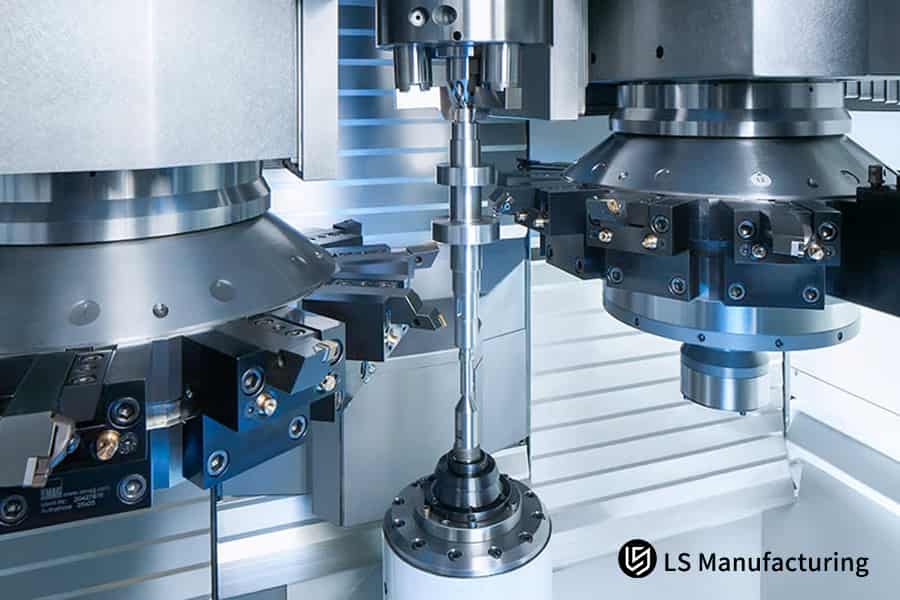
Figure 2: Producing high-tolerance nickel-alloy shafts for custom aerospace propulsion systems and services.
Which Advanced Turning Processes Can Directly Enhance The Fatigue Life And Deformation Resistance Of Shafts?
The traditional precision turbine shaft machining, as a secondary effect, leads to the unintentional creation of precisely the types of stress concentrators that cause premature failure under dynamic loading conditions. The proposed methodology overcomes this by turning the last machining process into one where performance is defined by actively seeking to improve durability and stability. The following basic processes are integral to our turning for fatigue life strategy:
High-Performance Integrity Turning
- Method: High-speed shear cutting with optimum conditions.
- Outcome: Surface roughness < 0.4 μm Ra with good compressive residual stresses.
Pre-Stress Turning & Roller Burnishing
- Method: Axial pre-load fixturing during the final precision CNC turning process.
- Enhancement: Followed by hard turning and roller burnishing of key surfaces.
- Result: >300 MPa deep compressive stresses are induced, resulting in fatigue life extension by 50-200%.
Hard Turning & Ultrasonic Assistance
- For Hard Materials: Hard-state CNC turning with CBN tools replaces grinding.
- For Challenges: Ultrasonic assistance helps to minimize forces and heat for brittle alloys.
- Goal: To obtain perfect surfaces during the most demanding precision turbine shaft machining.
We provide a process package solution to distortion and fatigue failure modes, moving beyond just geometry correction. We control the component’s stress state and surface integrity through performance-driven turning and adaptive CNC turning techniques to embed quantifiable performance improvements, delivering unparalleled reliability to meet even the most stringent life cycle requirements.
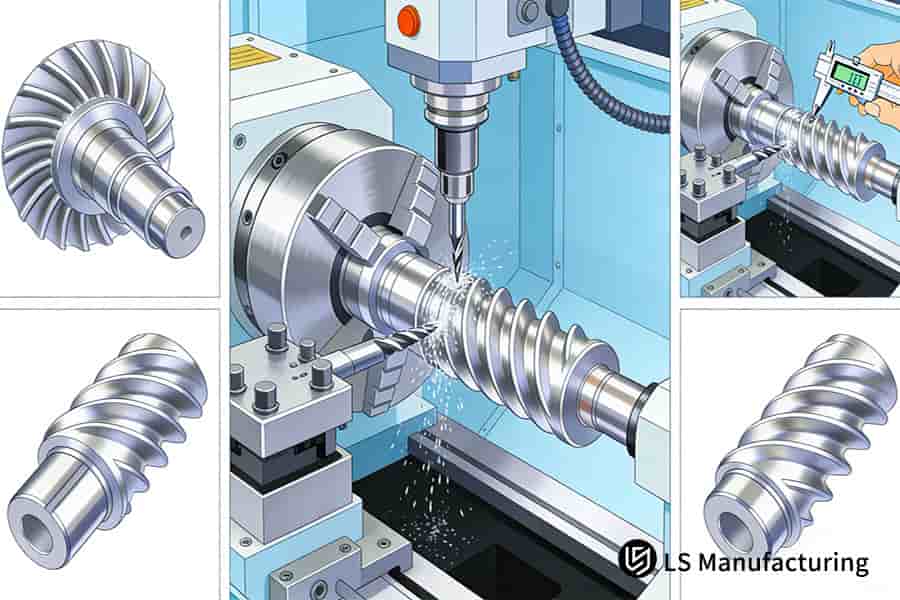
Figure 3: CNC turning processes high-tolerance titanium alloy turbine shaft manufacturing for aerospace propulsion systems.
How To Machine A Turbine Shaft Fully In One Setup With Turn-Mill And In-Process Measurement?
The main cause of errors is re-fixturing, which is a significant problem in complex shaft part production. The solution is complete machining of all features in one clamping operation by using turn-mill complete machining on advanced multitasking turning centers. The "zero reference" philosophy in manufacturing, with the addition of in-process measurement, yields unprecedented accuracy and repeatability in CNC turning for aerospace shafts.
Eliminating Error Stack-Up Through Single-Setup Machining
We are using B axis and Y axis turn mill machines, which enable us to complete all the operations involved in the machining of the shaft from the initial rough CNC turning of the shaft to the machining of complex milling/drilling operations without the need to unclamp the shaft. This avoids the possibility of error occurring due to the re-establishment of the datum. We are able to control the cumulative error in the coaxiality and perpendicularity of the shafts to within 0.005 mm and are able to produce a geometrically correct part that is as originally programmed with all the relationships between the various features of the shaft correct as per the design intent.
Implementing Closed-Loop Control with On-Machine Measurement
A precision touch trigger probe and scanner is also integrated within the workspace of the machine, which allows for the in-process measurement of critical diameters as well as lengths after the rough operation but prior to the finish CNC turning operation. The information that is collected by this system automatically accounts for tool wear as well as micro-deflections, thereby creating a 'machine-measure-compensate' cycle that results in a reduction of dimension variation by more than 60%.
Machining Complex Geometries with 5-Axis Capability
In situations that involve integrated blisks or hubs with complex asymmetry, the requirement for 5-axis simultaneous milling that is offered by our machine centers assumes absolute necessity. The complex machining of complex surfaces as well as undercuts, which were impossible or inefficient with conventional lathes, is accomplished within the same operation as turning the shafts. The complex CNC turning and milling that is accomplished by our machine eliminates the need for several operations on different machines, several fixtures, as well as the possibility of errors during the entire process.
This approach addresses the basic problem of precision loss as well as process variation. We provide our near-net shape forgings as the "True Done-in-One Solution," with the benefits of precision CNC turning, milling, drilling, and measuring combined in one process. The key to our competitive advantage is our closed-loop, zero baseline solution, not only providing the component but also the integrity of dimensions and precision in the most demanding CNC turning of aerospace shafts.
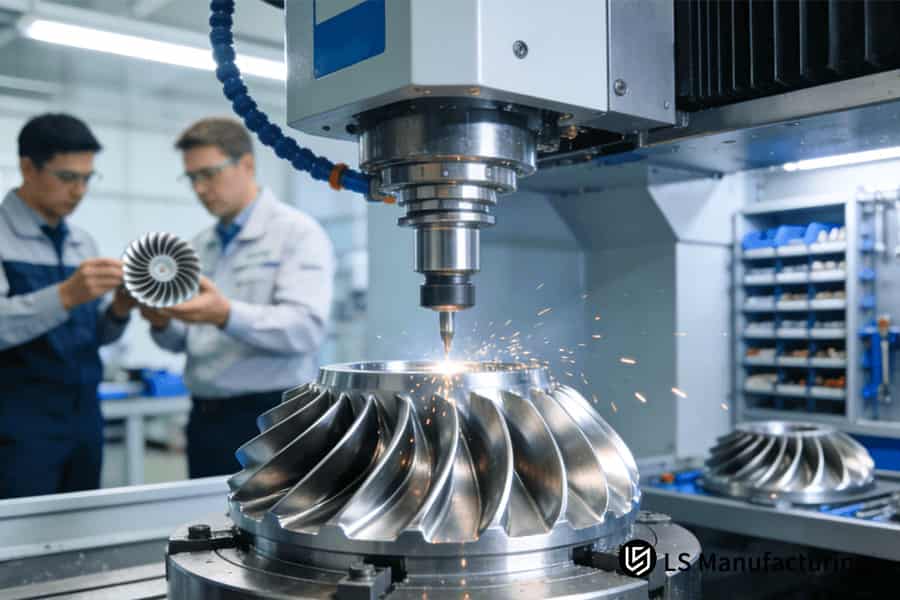
Figure 4: Operating CNC turning on high-temperature alloy shafts for precision aerospace propulsion manufacturing.
LS Manufacturing Aerospace — High-Reliability Project For Helicopter Main Gearbox Titanium Alloy Input Shafts
This technical case study details how LS Manufacturing engineered a definitive solution for a critical fatigue issue in a helicopter transmission system, moving beyond standard machining. The project centered on a Ti-6Al-4V ELI helicopter input shaft, where early cracks at the spline root threatened flight safety. Our precision machining approach integrated advanced CNC turning with post-process treatment to address subsurface integrity, establishing a new reliability benchmark.
Client Challenge
The client was experiencing unpredictable high-cycle fatigue failures that were consistently initiating at the spline tooth roots of their titanium input shafts. The incumbent supplier's process, which was predominantly rolling with some standard finishing, was causing an inconsistent surface integrity with a negative effect on the material's tensile residual stress state. This was causing high scatter in the performance of the parts, with some failing below the design life, creating a major reliability concern for the helicopter fleet.
LS Manufacturing Solution
The answer we provided was based on changing the basic process. We changed the conventional spline rolling with a new multi-stage precision CNC turning and milling strategy that would ensure optimal geometry with minimal thermal damage. Finally, after machining, we suggested using laser shock peening technology on the entire spline root area to produce a deep compressive residual stress field, -400 MPa/0.5 mm, to prevent crack initiation. The proposed solution has been achieved through a strict statistical process control methodology to ensure that all batches are successful.
Results and Value
The proposed solution has been able to achieve outstanding results with hard evidence to support this. The fatigue life of the input shafts has been extended by more than 200% compared to the original design specification. The process capability (Cpk) has been maintained at a level greater than 1.67, indicating outstanding batch consistency. The LS Manufacturing aerospace case has been able to eliminate this critical reliability risk, enabling the launch of the treated input shafts into production immediately. Moreover, this has established LS Manufacturing as the sole qualified supplier with a strategic partnership.
This case study is the very embodiment of our philosophy of tackling systemic reliability issues by controlling the operation of the component at its very essence. The capacity of our company to combine the latest in CNC turning solutions with special processes such as laser shock peening represents the very essence of performance guarantees for the most demanding high-integrity aerospace components, turning the manufacturing challenge into a competitive advantage.
Leveraging Laser Shock Peening and SPC control, we deliver a threefold increase in fatigue life and batch consistency with a CPK > 1.67 for your titanium alloy drive shafts.

How To Achieve Full-Dimensional Digital Inspection And Traceability Of Turbine Shafts, From Raw Billet To Finished Product?
In the high-precision aerospace machining business, the final inspection report represents the ultimate performance guarantee. While the basic inspection report is the minimum required by the aerospace supply chain, we employ a three-tiered digital inspection and archival system that represents irrefutable proof of quality, allowing us to achieve complete lifecycle digital traceability of every CNC turning finished shaft.
| Inspection Tier | Method & Tools | Key Deliverable / Data Point | Standard / Output |
| Full-Dimensional Metrology | High-accuracy CMM (≤ 0.9 + L/350 µm) | 100% inspection of all critical diameters, lengths, and geometric tolerances. | 3D PDF report with color-coded deviation map, indicating any non-conformance. |
| Surface Integrity Analysis | White Light Interferometry / SEM on sample areas | Quantification of surface roughness (Ra, Rz) and micro-topography on critical CNC turning surfaces. | Confirmation report indicating the absence of any machining issues such as tearing, white layer, and burns on the surfaces. |
| Material & Process Traceability | Integrated MES & ERP data capture | Forging lot charts, heat treat charts, hardness charts linked with the part using a unique QR code. | A digital twin passport indicating complete digital traceability from raw material to finished part. |
This structured, full-dimensional inspection is specifically designed to address the key need of undeniable performance verification and analysis. Instead of just the part itself, we provide the client with the entire digital dossier of the finishing process, allowing us to validate the entire process itself. This degree of integrity in the overall documentation and traceability is necessary if we are to achieve high-reliability components, meet the needs of the most demanding standards such as AS9100.
How Do You Evaluate A CNC Turning Supplier's Qualifications For Aerospace Turbine Shafts?
To find the right supplier for aerospace CNC machining services, it is necessary to go beyond the basic qualifications of the company, as well as their overall depth as a company, their culture of quality, what makes them a qualified company versus what makes them a potential partner, is their ability to prove their process, their methodology, their problem-solving skills, etc. This document is meant to provide the basic areas that need to be addressed in a supplier qualification audit:
Validated Special Process Certifications
- Foundational Credential: Maintaining Nadcap accreditation on key special processes such as heat treatment and NDT.
- Our Practice: We are Nadcap audited on a regular basis with the findings incorporated into our quality management system for CNC turning.
- Client Assurance: This provides assurance to the client that our processes are tightly controlled and are verified to the highest accredited level within the industry.
Statistical Process Control & Capability Data
- Beyond Single-Piece Inspection: Providing long-term Statistical Process Control (SPC) charts as well as Process Capability (Cpk) data on key characteristics.
- Our Practice: We monitor the Cpk on key characteristics such as journal runout on our precision CNC turning operations with the goal of achieving a minimum Cpk ≥ 1.67.
- Client Assurance: This data-based approach provides evidence of the processes’ performance and consistency from batch-to-batch, not just the level of conformance.
Systematic Root-Cause Analysis Methodology
- Framework for Problem-Solving: Using a closed-loop interdisciplinary methodology (such as 8D or A3) to address any Non-Conformance.
- Our Practice: In a case such as an imbalance beyond standard, we check the entire process, which starts with the properties of the material, followed by previous CNC turning and milling stress, and lastly, the method of measurement.
- Client Assurance: The scientific method in correcting the problem not only removes future problems but also increases the overall manufacturing process.
We assist our clients in reducing risk throughout their supply chain by providing them with transparent validation of our capabilities. This is done in one of two ways: we have an "open book" policy in which we share our audit reports and SPC with our partners. This is what makes us a true strategic partner in addressing the complexities of procurement requirements for critical aerospace shaft turning services, not just a part, but a guarantee.
Why Must LS Manufacturing Be Chosen In The Aviation Sector, Where Absolute Safety Is Paramount?
In an industry where failure is not an option, to become a supplier is not just to obtain a part, but to become a co-responsible aerospace reliability partner. The question of why choose LS Manufacturing is answered by our engineering philosophy of starting with failure modes in service and then working our way back to develop a manufacturing process to eliminate that failure mode.
From Service Conditions to Manufacturing Specifications
We don't begin with a print, we begin with your performance requirements. Our engineers will evaluate the service loads, temperature conditions, and failure modes of your particular service conditions. This front-end analysis will allow us to specify the material, heat treatment, and most importantly, the CNC turning parameters required to meet the target performance criteria, thus providing our custom turbine shaft solutions.
Predictive Engineering Through Multi-Physics Simulation
Prior to the actual cutting of the metal, we use multi-physics Finite Element Analysis simulation of the process of manufacture itself. This allows us to predict the residual stress state induced by the machining process, distortion of thin sections of the wall, as well as the outcome of the dynamic balancing process. This is what we mean by reliable performance CNC turning, where we actually design the process to create the desired properties, inoculating the component against known failure modes.
Data-Backed Performance Guarantees and Traceability
We offer this with statistical performance guarantees, not just tolerancing of the component's dimensions. This includes minimum fatigue life guarantees, Cpk values for balance, and so forth. Included with every component is the complete digital pedigree of all the steps of manufacture, from the sources of the original material through all of the validated CNC turning operations and inspections.
Our reputation is directly linked to the end safety and performance of your engine. We are a company that has a value proposition that is based on the engineered performance advantage in component reliability that is achieved through our proprietary manufacturing methodology. We are not just another vendor but rather the essential erospace reliability partner for your mission-critical rotating equipment.
FAQs
1. How long does it take to manufacture a typical aerospace turbine shaft?
From raw forging to finished product, including all machining steps, heat treatment, inspection, and special processing, the typical lead time is 8 to 12 weeks. If we are dealing with a complex hollow shaft or one that requires special coatings such as DLC, then we will extend that timeframe accordingly.
2. What levels of dimensional precision and dynamic balance can you typically guarantee for aerospace turbine shafts?
We can guarantee the following dimensional accuracy: diameter tolerance of ±0.005 mm (IT6 grade), roundness/cylindricity of ≤0.003 mm, and runout of ≤0.01 mm at critical locations. As far as dynamic balance is concerned, G1.0 can be achieved as required by the aerospace industry for most aircraft engines; however, special requirements can also be met at higher balance levels.
3. How do you ensure absolute consistency in the performance of mass-produced turbine shafts?
We do this through our three-part approach of AS9100 quality management system, Statistical Process Control, and First Article Inspection. The same process specification is used for all parts of each batch, and SPC is used for critical characteristics to ensure that CPK values are adequate. The first article of each batch is inspected and tested for all dimensions and performance, and production does not begin until approval of this first article.
4. Will you point out potential manufacturability issues or performance risks in my design?
Yes, we will. We offer a free "Manufacturability and Design Optimization" review. In less than 48 hours, we will provide you with a comprehensive written DFM (Design for Manufacturability) report and optimization recommendations for potential stress concentrations, structural features detrimental to fatigue life, uneconomical tolerances, and potential problems with distortion from heat treatment.
5. Do you provide end-to-end services, from raw forging to final coating?
We provide full-service turnkey project management. While some specialized processes (such as specialized forging or vacuum heat treating) may be done by one or more of our strategic partners, the primary supply relationship rests with LS Manufacturing.
6. How do you protect the highly sensitive intellectual property associated with our aerospace engine designs?
We employ the most secure information security protocols available—consistent with the "spirit" of the ITAR regulations—to protect your IP. We have segregated production lines for sensitive projects, conduct extensive background checks on all employees, and negotiate comprehensive confidentiality and data security agreements with our clients to assure the complete security of your IP.
7. What is the Minimum Order Quantity (MOQ)? Do you support prototyping and pilot production?
We strongly advocate for prototyping, pilot production, and small batch production, all of which are essential for the validation of aerospace parts. The MOQ may vary from as low as 1 to 5 pieces based on the nature of the materials used.
8. How do I initiate an evaluation for a new aerospace turboshaft project?
Please provide your preliminary performance requirements, conditions of operation, material preferences, and any available designs. We will begin a preliminary feasibility study of the project within five business days and arrange a confidential technical meeting to discuss potential implementation strategies. You can also directly submit your RFQ and design files through our online get a quote page to speed up the engineering review process.
Summary
In aerospace propulsion, turboshaft manufacturing is a complex science of programming material properties microscopically and sculpting dynamic precision macroscopically. A true peak-performance guide provides a systemic engineering philosophy to ensure every shaft delivers reliable output under extreme conditions. This demands a partner who is an expert in material behavior, rotor dynamics, and failure physics, with the execution capability to translate this into an aerospace-grade quality system.
To get your partner to set the boundaries of turboshaft performance for your next-generation system, simply present your challenges or design specifications to the Aerospace Performance Engineering Team at LS Manufacturing, and we will perform an in-depth failure mode and feasibility analysis, poring over the details through the filter of flight safety concerns. Or, hold your own private workshop with our CNC turning chief experts to create your entire scope of work necessary for the ultimate performance guarantee.
Elevate your turboshaft reliability from 78% to 99.5%—LS Manufacturing's CNC turning process controls are your ultimate guarantee of performance.
📞Tel: +86 185 6675 9667
📧Email: info@lsrpf.com
🌐Website: https://lsrpf.com/
Disclaimer
The contents of this page are for informational purposes only. LS Manufacturing services There are no representations or warranties, express or implied, as to the accuracy, completeness or validity of the information. It should not be inferred that a third-party supplier or manufacturer will provide performance parameters, geometric tolerances, specific design characteristics, material quality and type or workmanship through the LS Manufacturing network. It's the buyer's responsibility. Require parts quotation Identify specific requirements for these sections.Please contact us for more information.
LS Manufacturing Team
LS Manufacturing is an industry-leading company. Focus on custom manufacturing solutions. We have over 20 years of experience with over 5,000 customers, and we focus on high precision CNC machining, Sheet metal manufacturing, 3D printing, Injection molding. Metal stamping,and other one-stop manufacturing services.
Our factory is equipped with over 100 state-of-the-art 5-axis machining centers, ISO 9001:2015 certified. We provide fast, efficient and high-quality manufacturing solutions to customers in more than 150 countries around the world. Whether it is small volume production or large-scale customization, we can meet your needs with the fastest delivery within 24 hours. choose LS Manufacturing. This means selection efficiency, quality and professionalism.
To learn more, visit our website:www.lsrpf.com.