English




CNC turning parts quotes can vary by 40-70% which makes it difficult to understand whether winning a low bid means efficiency or cheap quality. The real issue is total non, disclosure of the fact that most quotes only provide a total price and therefore it is impossible to know how the cost of material, labor, and profit have been accounted for. This lack of transparency regularly causes the initial winning bid to be far exceeded by unexpected cost overruns.
We fix that by giving you a quote decoding framework that clarifies your sourcing decisions through transparent quotes. Our approach exposes the whole cost reasoning, from up to the minute material pricing to machining time evaluation based on complexity, thus giving you the ability to spot red flags and utilize our comparison checklist to select suppliers based on Total Cost of Ownership rather than just price instinct.
CNC Turning Parts Quotes: Clarity Checklist
| Quote Element | What It Reveals |
| The Low-Price Trap | Sometimes, a very low price compared to the market can be a hint of hidden risks such as poor, quality materials, skipped quality control steps, or a lack of experience with complex CNC turning parts. |
| The Missing Breakdown | A single combined price makes it difficult to understand the main drivers of the costs (e.g., material, setup, machine time, secondary ops) which in turn prevents accurate comparison and negotiation. |
| Assumption vs. Clarification | If assumptions about tolerances, surface finish, or material certifications are not communicated, then the result will be costly change orders and production delays. |
| Our Transparent Quoting | We offer a fully detailed quote that specifies the material cost, setup time, cycle time per part, tooling, and all secondary operations. |
| Design-for-Manufacture (DFM) Feedback | As standard practice, we provide an option of free suggestions to change non-critical features for significant cost saving without compromising the function. |
| Capability Validation | We support our quote with a process plan that describes how our production will achieve the required precise tolerances, thereby making our price not only realistic but trustworthy. |
| Result: True Cost Comparison | This makes it possible to compare suppliers on an apples-to-apples basis, thus focusing on value rather than just price. |
| Result: Predictable Outcome | By establishing a clear and mutual understanding of requirements and processes right from the start, you can avoid surprise costs and delays. |
We eliminate the annoyance of puzzling and inconsistent CNC turning quotes. The transparent, thoroughly detailed breakdowns and proactive DFM feedback that we provide clarify costs, disclose hidden risks, and reaffirm the manufacturability. As a result, you will be provided with a reliable, fair price and a project outcome that can be predicted, without the need for costly surprises.
Why Trust This Guide? Practical Experience From LS Manufacturing Experts
There are plenty of articles about CNC turning quotes on the internet. However, this guide is different because we are not just theorists but also practitioners. For the past 15 years at LS Manufacturing, we have been engaged in the daily struggle against the use of high, strength alloys and very tight tolerances. Our reflections on clearly laid, out RFQs and wise choices are the result of the real shop floor, giving the readers steps for getting things done which have been derived from practical experience rather than theory only.
We have learnt from every essential part that we have machined, be it aerospace fittings or medical implants, the cost drivers. We therefore take it to the quotes, ensuring we make them transparent by following such standards as those set by the Environmental Protection Agency (EPA) for sustainability and ASTM International for material quality. Hence, the unclear pricing becomes a transparent, accountable system for evaluating the total cost.
Our guide imparts to you the lessons learned through the wins and expensive mistakes: identifying risky quotes, optimizing processes, and making decisions based on total cost of ownership. We have made mistakes forking to different traps and have let you down. You can rely on this knowledge figured out in actual production to enable you to make wiser and more confident decisions about your CNC turning projects.
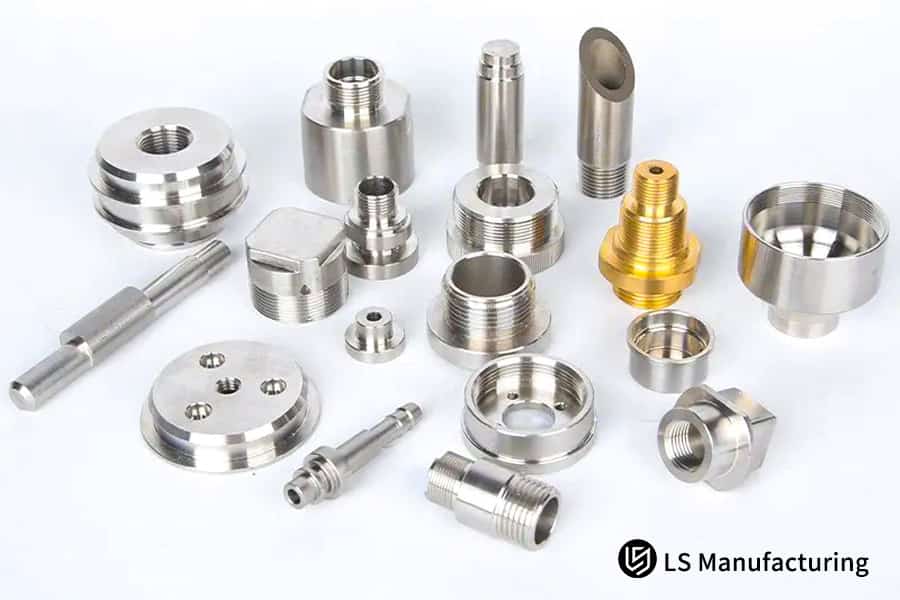
Figure 1: Displaying various CNC turned metal and plastic parts for quote cost estimation and custom RFQ services.
What Are The Core Cost Genes In A Truly Transparent CNC Turning Quote?
Getting cost clarity in CNC turning parts quotes is absolutely necessary for a well, thought, out procurement strategy. The trustworthy quote should break down the final price into the cost of each component, just like a bill of materials. In this paper, the four mandatory cost genomes are listed to provide a scheme for the credit side of the quote props for technical validity, fairness, and comprehensive cost breakdown, thus ignoring the figures from opaque lump-sum.
| Cost Genome | Core Description & Quantification |
| Material Cost | This is a completely blank specification that only makes note of the nature of the material (e.g., Ø50x100mm 6061 bar), grade, a real-time price (e.g., $XX/kg), and a utilization rate (e.g., 35% for part, 65% scrap), thus determining the cost of the entire raw stock. |
| Programming & Machining Time | It is a programming vs. machine run, time separation, with programming hours (2-8 hours for complex parts) being totally different from the machine run-time. Different hourly rates are used for different equipment (e.g., $400/hour for a Swiss-type, $250/hour for a standard CNC turning center). |
| Tooling & Fixturing | Breaks down the dedicated fixture into a separate LINE ITEM, stating clearly if the cost is a one-time capital investment or the amortization per batch. |
| Overhead, Margin & QA | Explains the percentage adder transparently (usually 15-25% of the previous costs) as a way of management, profit, and quality assurance, instead of absorbing it within other line items. |
A real transparent CNC quote helps buyers to see and understand the technical and commercial justification for each cost component. They are thus able to make use of data for decisions based on the Total Cost of Ownership (TCO) rather than merely the net price. For customers who are handling high-value precision CNC turning projects, this model is essential in pinpointing errors, confirming safety, and generating supplier pacts that are based on the responsibility and both parties' understanding.

How To Scientically Evaluate Turning Time Rationality Based On Part Geometry?
Highly accurate machining time estimation is the main contributor to the variable part of any CNC turning cost guide. Such an appraisal should be measurable and not merely supposed. Our technique scientifically relates different features of the part to time increases that are expected thus part complexity is directly addressed. Below are the core assessment principles:
Managing High L/D Ratios in Slender Parts
For parts whose length-to-diameter ratio is more than 10, the usual parameters are no longer valid. We require a reduced RPM/feed to control the chatter and a follow rest is needed which adds up to the setup and synchronized toolpath time. The whole thing often leads to a justified 40%+ increase in the CNC turning cycle time of the component when compared to a standard one.
Accounting for Deep-Hole Drilling Operations
Very deep or blind holes (depth-to-diameter >5) necessitate gun drilling or slow pecking with frequent withdrawal for chip removal. The nature of this low, feed method is that it is very different from standard drilling. Our system incorporates a 50-100% time premium to these features to be in line with the physical and toolpath limitations.
Factoring in Stringent Tolerances and Finishes
Extremely tight geometrical tolerances (e.g., 0.005mm roundness) will inevitably require that additional process steps be taken. We still assign separate, slower finishing passes and usually in-process verification. In the case of precision CNC turning, this means that the final-most critical operations (rest of the final OK cycle) are explicitly 20-30% more time consuming than the roughing cycle.
Programming for Complex Profiles and Forms
Unusual features such as Acme thread forms or previous, very complicated grooves require special form tools that also have lower cutting parameters. The programming of these complex CNC turning profiles entails carefully collision-avoidance pathing. Each different form is separately considered, based on the fact that the part complexity and that has a direct influence on the cycle.
This feature-driven analysis settles unpredictable quotes by converting your part's geometry into reliable time data. We give your procurement decision an objective, technical benchmark for cost assessment, thus changing machining time estimation from a variable into a verifiable standard for CNC turning parts evaluation.
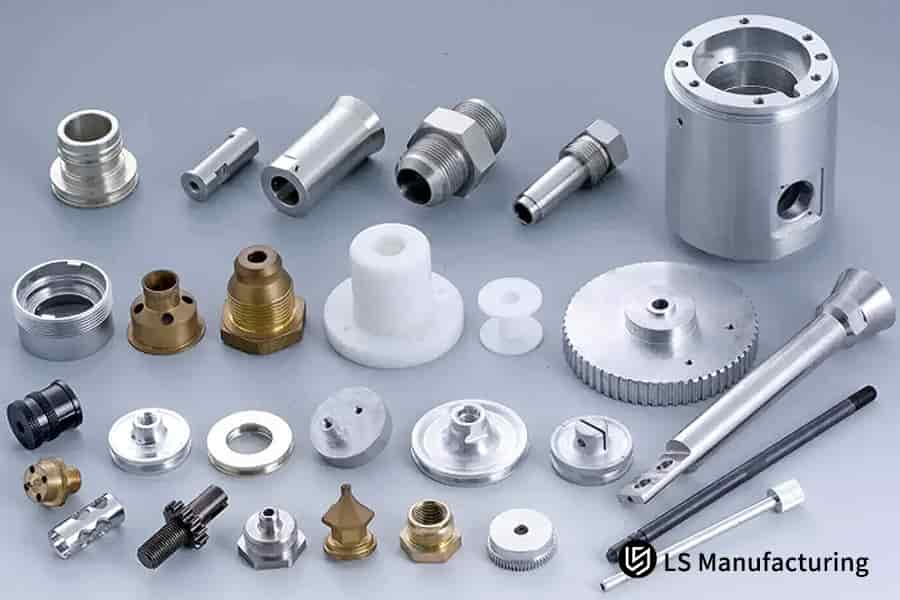
Figure 2: Arranging precision CNC turned fasteners and housings for procurement evaluation and tailored pricing solutions.
How Much Do The Turning Costs Differ For Different Materials (Aluminum, Steel, Titanium)?
Material selection is basically the financial foundation of any precision CNC turning project, as it largely determines the raw cost, machinability, and tool wear. A well thought out material cost comparison based on facts is a must if you want to have an accurate budget and be able to evaluate custom CNC turning parts pricing. The analysis provided here shows how much the common alloy cost factors compare to 6061 aluminum taken as the baseline.
| Material | Relative Material Cost (vs. 6061 Al) | Primary Machining Challenge | Typical Total Cost Multiplier (vs 6061 Al) |
| 6061 Aluminum | 1.0x (Baseline) | Great machinability enables very high speeds/feeds leading to short cycle time and low tool wear. | 1.0x |
| 304 Stainless Steel | 2 - 2.5x | Due to work-hardening, you can only use about ~1/3 speed of aluminum which results in a significant increase of cycle time and tool consumption. | 3 - 4x |
| Ti-6Al-4V Titanium | 5 -8x | Very poor thermal conductivity is the main reason for low speeds and special tooling requirement, thus processing time is greatly increased. | 6 - 10x |
This material cost comparison unveils that the final part cost is influenced by many factors besides just the price of the raw stock. We offer a definitive, data-supported model to help you navigate your complex CNC turning material selection, ensuring your performance requirements match the real Total Cost of Ownership (TCO) and thus avoid budget overruns in high, value applications.
From 1 Piece To 1000 Pieces, What Is The Pattern Of How Batch Effect Affects The Unit Cost?
A key problem in procurement is figuring out the non-linear connection between order quantity and unit price. A CNC machining quote comparison for different volumes shows huge variations, which are caused by the ways fixed and variable costs are allocated. This study explains the economics of batch production and its impact on volume pricing:
Prototype & Small Batch (1-10 pcs): High Fixed Cost Dominance
- Cost Driver: Amortization of one-time setup costs.
- Key Activities: Dedicated programming, fixture design/procurement, first-article inspection.
- Impact on Unit Cost: Unit cost is typically 3-5x higher than at 1000-piece volume.
Pilot & Pre-Production (10-100 pcs): Significant Cost Dilution
- Cost Driver: Spreading fixed costs across more units, initial CNC turning process optimization.
- Key Activities: Fixed costs are spread over more units; initial toolpath refinement can also lead to shorter cycle times.
- Impact on Unit Cost: Due to lower unit costs, the decline is quite steep, and it is not uncommon for the unit cost to fall by 30-50% from that of prototype batch.
Production Batch (100-1000 pcs): Achieving Cost Plateau
- Cost Driver: Efficiency gains through the operations and exploiting the basics of economies of scale.
- Key Activities: Material bulk discounts, production flow optimization, and tool life fully utilized.
- Impact on Unit Cost: The shape of the cost reduction curve becomes almost a straight line. The next cost savings come from supply chain and lean manufacturing optimizations.
This model makes volume pricing no longer a puzzle, but rather a measurable game plan. We leverage this cost-breakdown rationale to offer a clear multi-level CNC machining quote comparison, thereby allowing you to accurately plan your procurement strategies and budgets, guaranteeing the most cost efficiency for your production CNC turning projects.
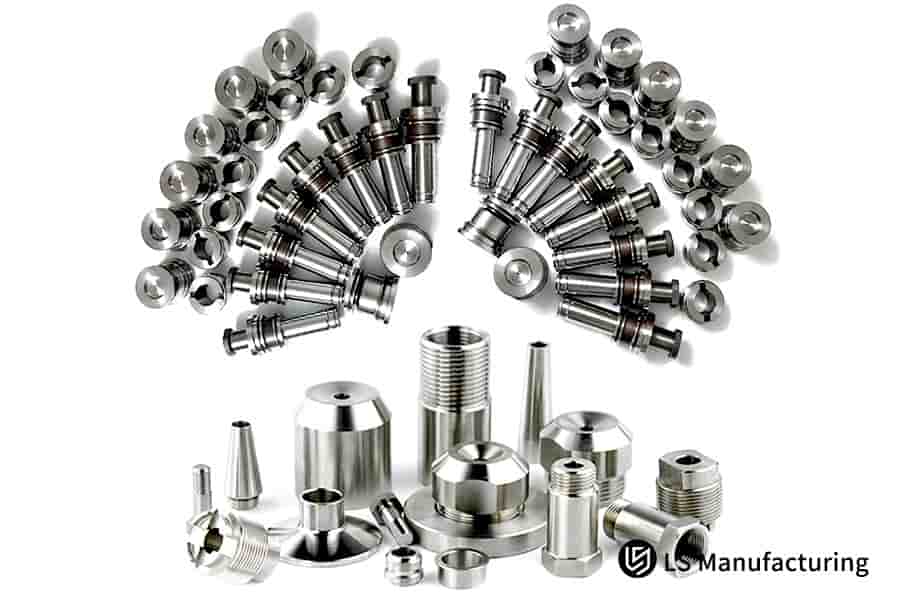
Figure 3: Presenting an array of high-tolerance metal parts for transparent CNC turning RFQ and customized pricing services.
How To Directly Reduce The Price Of Machined Parts Through Design Optimization (DFM)?
Design determines up to 80% of a part's final cost. Proactive design for manufacturability is the biggest lever to cost reduction that directly reflects your how to get CNC turning quote in savings from design decisions. The below optimizations focus on the areas with the biggest impact on reducing machining time and complexity:
Standardize Hole and Thread Sizes
A component with multiple, similar-but-different hole diameters will cause a tool change for each hole, thus, cycle time is lost. We study your design to find ways to consolidate non-critical holes sizes to enable a single tool to be used for multiple operations. The result of this optimization may be a direct 10-15% reduction in machining time for CNC turning parts having multiple bore features.
Design for Standard Tool Geometry
Special undercuts or non-standard radii need form tools, which lead to extra cost and delay. We suggest changing relief grooves, chamfers, and fillets so that they correspond to our standard insert radii (e.g., R0.5mm, R0.8mm) library. This gets rid of special tooling costs and helps the us of optimized, high-efficiency cutting parameters.
Rationalize Tolerances and Finishes
Unnecessary tight tolerances on non-working surfaces require slower finishing passes and detailed inspections. We locate areas in decorative or non-mating surfaces where machining tolerances can be relaxed from ±0.05mm to ±0.1mm. This cost reduction strategy allows for quicker feed rates and less complicated QA, thus significantly decreasing the cost for precision CNC turning without affecting the function.
This is a real actionable design for manufacturability analysis. It uses your 3D design and implements precise, quantifiable rules to identify the savings without ever creating a quote. We offer this expert service to make certain your design is optimized for manufacturability, resulting in a more competitive and predictable how to get a CNC turning quote according to efficient production reality, not design geometry.
LS Manufacturing Automotive Parts Industry: Steering Knuckle Arm Turning Quotation Optimization Project
The LS Manufacturing case study examines a transparent quoting project for a critical automotive steering knuckle to demonstrate how clear communication and innovation in the process, through working together, can clarify pricing uncertainty and establish trust in a high-stakes procurement environment:
Client Challenge
A Tier 1 supplier was seeking quotes for a SAE 4140 Steel Steering arm, and the customer required a ±0.025mm bore tolerance. By asking a few questions, the customer received quotes of vastly different prices: ¥85, ¥120, and ¥150, without any clear or specific technical reasons behind these quotes. The quotes themselves were a risk to the customer, as the lowest quote may indicate a chance of cost reduction in the indispensable heat treatment, and the highest quote may indicate a very complicated 5-axis CNC turning strategy, in which the customers may have to pay extra money because of uncertain guesses about the stability of the products and efficiency of the processing.
LS Manufacturing Solution
Rather than immediately presenting an offer, we provided a transparent quoting analysis. We identified the opportunity to stop the traditional approach of "turn and mill" and instead use a one-setup Swiss-type machining process. This significant change in machining processes eliminated the need for secondary operations, reducing overall process time by 40% and increasing material utilization rates by 85%. The report also included an itemized cost verification process. This included the costs of Material (¥35), Machining (¥40), Tooling (¥5), and Overhead/Margin (¥15). The total came out to ¥95/part.
Results and Value
The ¥95 offer that we supported with cost breakdown had been selected. The customer used our analytical structure for the other components and was successful in saving over 1million RMB annually on procurement costs. This project reinforced our view that technical accuracy and transparency are not just activities, but the very essence of partnership, and a simple CNC turning quote was turned into a strategic and long-term value creator for complex automotive components.
This example demonstrates that a supplier needs to have process knowledge and cost knowledge to be competitive on high-value precision CNC turning. We believe that there is no grey area – just the facts – and our customers get not just a part, but information to make an educated purchasing decision.
Confused by widely varying quotes for the same part? Let us provide a transparent cost analysis for clarity and value.

When Evaluating Supplier Quotes, What "Hard Metrics" Beyond Price Should Be The Focus?
A successful response to a CNC turning RFQ, particularly within a competitive environment, requires looking past the final price tag. Real supplier evaluation requires looking past the surface of the quote itself, as this is where the definition of success, risk, and cost are determined. Some of the key areas to examine, which can help reveal the true capabilities of a potential supplier, are:
Process Plan Rationale & Detail
A credible quote should also justify the method used. Does the quote justify the gun drilling method versus conventional drills for a deep bore? A detailed process roadmap is an excellent way to demonstrate problem-solving ability, which relates to quality and feasibility, moving beyond price comparison.
Total Lead Time Breakdown & Transparency
This quoted lead time must include a detailed schedule, not only for the build process, but also for ordering, inspection, and shipping. This is necessary for supplier evaluation of the project management and integration into your production timelines.
Quality Assurance & Data Commitment
When it comes to something as important as your precision CNC turning parts, you want to make sure that you are receiving what you paid for. Ask for a First Article Inspection Report (FAIR) and Statistical Process Control (SPC) data on critical dimensions. With this information, you can rest assured that you are not just taking their word for it.
Clear Commercial & Liability Terms
Read the small print. The quotation should clearly outline conditions for quality issues, late shipments and engineering changes. A quotation without these provisions shifts all the risks of the program to you. A low initial price may become a burden to your CNC turning parts program.
A strong supplier evaluation framework safeguards your project against unforeseen costs and failures. We help you secure your procurement process through the provision and advocacy of such detailed and transparent documentation, allowing you to make supplier selections based on total capability and risk management, not just the initial price of the CNC turning RFQ.
Why Is LS Manufacturing's "Transparent Pricing" Model The Best Choice For Controlling Total Costs?
By choosing the LS Manufacturing transparent pricing model, you are choosing the certainty of costs and the management of risk. This is done by moving beyond the traditional price comparison model and instead providing a data-driven approach to the total cost of ownership, eliminating surprise costs and building the partnership through the following three pillars:
Dynamic Cost Modeling for Predictive Accuracy
- Basis: Quotes derived from real-time material databases and historical cycle time libraries.
- Result: Removes guesswork, providing consistent, accurate, and predictable CNC turning services pricing, not estimates.
Proactive Value Engineering Analysis
- Process: Our engineers automatically offer alternative materials or processes during quote generation.
- Example: Offering 4140 vs 4340 steel for equal performance at 15% lower price, which directly reduces your input price.
Firm Pricing with Locked-In Scope
- Commitment: The price we quote is locked in for the scope, process, and specifications.
- Benefit: This removes the threat of price increases in the middle of a project due to "unforeseen circumstances." This provides budget certainty for your precision CNC turning projects.
This model removes the uncertainty that is inherent in the traditional procurement process. We offer the definitive data and relationship necessary for strategic sourcing, which is why choose LS Manufacturing for your complex CNC turning projects. We provide the clarity and reliability necessary for you to optimize your total cost of ownership and minimize program risk.
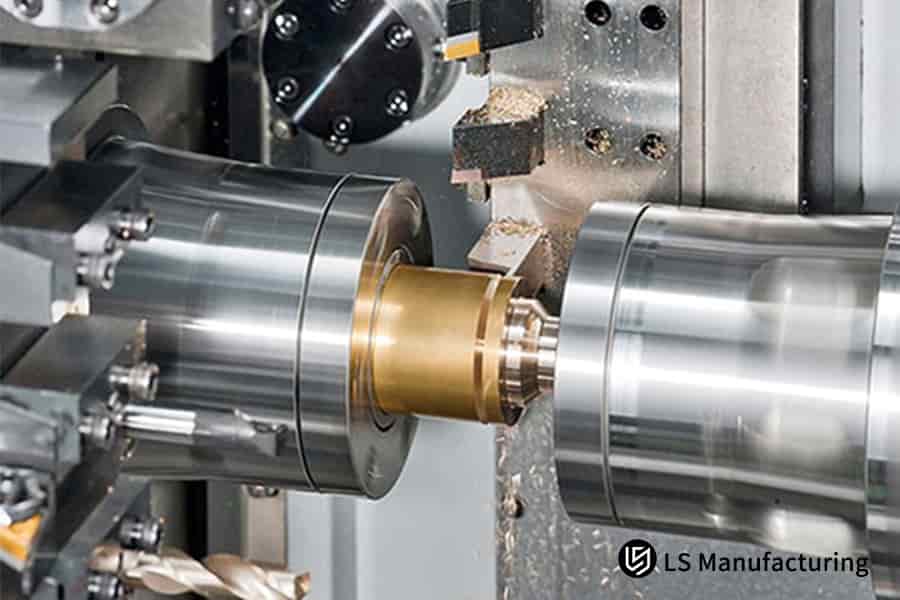
Figure 4: Processing a metal alloy workpiece for precise manufacturing cost estimation and quote services.
How Do I Begin To Obtain A Transparent, Actionable CNC Turning Quote Tailored To My Needs?
A precise and accurate quote starts with a quote that includes all necessary information. This is because supplying all necessary information allows our engineering staff to make a meaningful analysis without any assumptions, thus creating a definitive how to get CNC turning quote that is accurate. The necessary information required for a quote is as follows:
Provide Complete Technical Documentation
Provide a completely detailed 2D drawing (PDF/DWG) with all the dimensions, tolerance, and specifications, along with a 3D model (STEP/IGES). This would enable DFM analysis, as well as virtual toolpath simulation, which would be the bedrock for an accurate precision CNC turning cost estimate.
Define Volume and Timeline Requirements
Please provide your desired quantity and desired delivery date. This information is vital for our request for quotation process, as it would determine the appropriate batch strategy, which would be directly linked with the cost and time factor.
Engage Our Structured Quotation Workflow
Within two hours of your complete submission, the process begins. A cost engineer works with dynamic models, while the process planner creates the route. The result is an overall package with a complete cost breakdown, process descriptions, and an exact timeline. Your CNC turning RFQ is now an executable process.
This structured request for CNC turning quotation process converts your data into a strategic tool. We have addressed the issue of unclear and unfinished RFQs by requiring clarity in the first place. We offer unparalleled depth in the proposal. This is the firm foundation you need for your CNC turning parts procurement.
FAQs
1. How long does it typically take to obtain a detailed quotation?
LS Manufacturing pledges to deliver a detailed quotation within 4 hours for standard parts. For complex parts, the time taken can range from 8-24 hours.
2. How long is the quotation valid?
The quotation is valid for 30 days. The quotation is mainly influenced by the change in the prices of raw materials in the market. However, if you are undertaking a long-term project, you can consider having a price fluctuation agreement.
3. Quotes from different suppliers vary significantly; how do I determine which is more reasonable?
Don’t just look at the price. Ask all the suppliers to give you a breakdown of the costs incurred. The quotation which has the most reasonable explanation is the one you can trust. If you need an immediate benchmark, you can request a transparent CNC turning quote from us to compare line items.
4. How will the price be adjusted if there are design changes mid-process?
We will determine the effect of the change on the materials, programming, and processing. We will then issue an ECN (Engineering Change Notice) which outlines the increase and decrease in costs. This is done after getting your confirmation. There are absolutely no hidden price increases.
5. How do you protect the security of our drawings and designs?
A legally binding NDA (Non-Disclosure Agreement) is a necessity before any cooperation. We have encrypted servers which are used for storage. We also have rigorous training for our employees on the issue of confidentiality.
6. Can I get a competitive price for small batch orders (e.g., 20 pieces)?
Yes. By optimizing the process and combining production, we can control the costs of small batches within a certain range. Although the price of each piece is relatively higher than that of large batches, you can clearly see where your money is being used.
7. Does the quotation include quality inspection and reporting fees?
In the quotations of LS Manufacturing, full-size first article inspections (FAI) and outgoing inspections are included in the management and quality inspections fees, which means you don't need to pay any additional costs.
8. In addition to machining, do you provide one-stop services such as heat treatment and surface treatment?
Yes. We can provide a 'turnkey' quotation by combining outsourced services such as heat treatment, electroplating, and spraying, which makes your management process much easier.
Summary
The secret to controlling the costs of your CNC turning parts is turning vague quotes into clear decisions based on data rather than assumptions. With a full understanding of the costs, time, and materials, you'll move from passive price comparison to active total cost optimization. By selecting LS Manufacturing for transparent pricing, you'll know your costs are certain, your risks are reduced, and your supply chain is healthy.
Uploading your turning parts drawings is simple. You'll experience the transparent CNC turning pricing process of LS Manufacturing immediately. You'll receive a detailed report on your "Cost Structure and Process Analysis Report" within 4 hours, where you'll clearly see where every penny is going.
Stop guessing with black-box quotes. Get a transparent, line-item breakdown for your next CNC turning project.
📞Tel: +86 185 6675 9667
📧Email: info@lsrpf.com
🌐Website: https://lsrpf.com/
Disclaimer
The contents of this page are for informational purposes only. LS Manufacturing services There are no representations or warranties, express or implied, as to the accuracy, completeness or validity of the information. It should not be inferred that a third-party supplier or manufacturer will provide performance parameters, geometric tolerances, specific design characteristics, material quality and type or workmanship through the LS Manufacturing network. It's the buyer's responsibility. Require parts quotation Identify specific requirements for these sections.Please contact us for more information.
LS Manufacturing Team
LS Manufacturing is an industry-leading company. Focus on custom manufacturing solutions. We have over 20 years of experience with over 5,000 customers, and we focus on high precision CNC machining, Sheet metal manufacturing, 3D printing, Injection molding. Metal stamping,and other one-stop manufacturing services.
Our factory is equipped with over 100 state-of-the-art 5-axis machining centers, ISO 9001:2015 certified. We provide fast, efficient and high-quality manufacturing solutions to customers in more than 150 countries around the world. Whether it is small volume production or large-scale customization, we can meet your needs with the fastest delivery within 24 hours. choose LS Manufacturing. This means selection efficiency, quality and professionalism.
To learn more, visit our website:www.lsrpf.com.