English



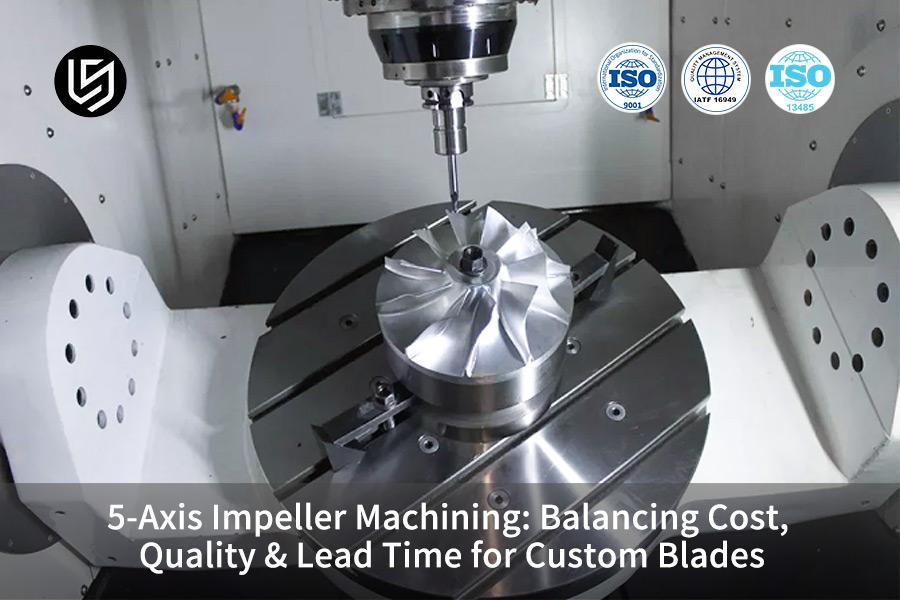
5-axis impeller machining usually requires a difficult compromise in terms of cost, quality, and time. For example, low-cost suppliers may provide parts with only a G6.3 balance quality, which results in high levels of vibration, while high-precision G2.5 balance quality requires high prices and long delivery times of 12 weeks. The problem is more critical for closed impellers in challenging alloys, where uncontrollable chatter and distortion result in scrap rates of over 30%, leaving all the risks with you.
We overcome these challenges by replacing the trade-off with a deterministic manufacturing system. Our proprietary database and simulation ensure that chatter and distortion are eliminated during the manufacturing process, and in-process adaptive compensation provides first-pass quality with G2.5 balance quality. Optimized strategies for variable feed machining result in a 20% reduction in titanium impeller processing time while maintaining high surface integrity and providing a global optimized solution for performance, cost, and time.
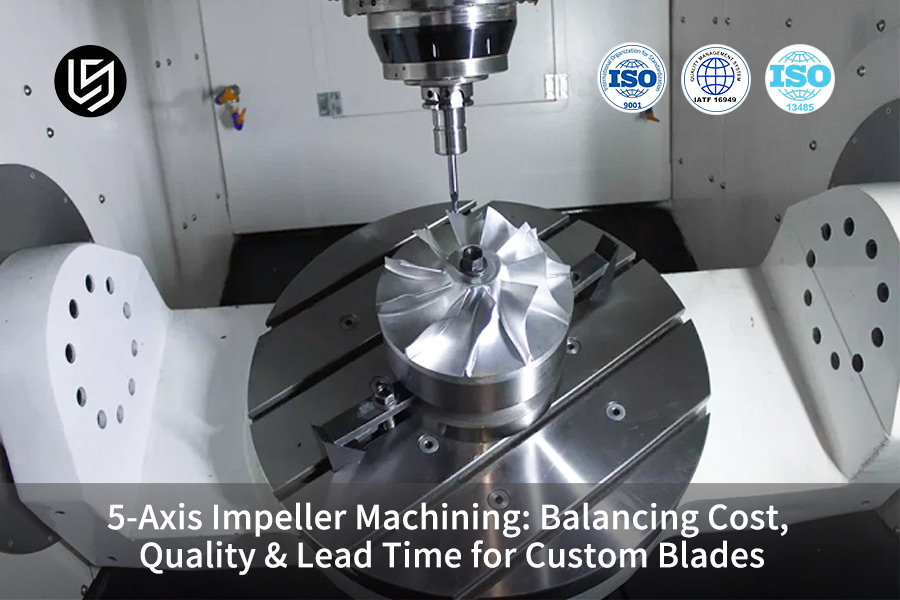
5-Axis Impeller Machining: Technical Checklist
| Technical Focus | Implementation Strategy |
| Complex, Interference-Prone Geometry | Machining deep, narrow flow channels between thin, twisted blades requires specialized tool paths to avoid interference with other surfaces. |
| Maintaining Blade Uniformity | Same thickness, surface finish, and profile accuracy must be achieved on all blades for balanced aerodynamic performance and minimized vibration. |
| Tool Access & Rigidity Challenge | Long-reach, small-diameter tools required for deep channels are susceptible to deflection and chatter, which degrades precision and finish. |
| High-Speed Machining (HSM) Demands | Material removal of hard alloys (like titanium) must be accomplished at high spindle speeds to minimize tool wear and heat generation. |
| Our Process-Centric Solution | We utilize advanced CAM technology and provide uninterrupted 5-axis tool paths, using tapered tools and simulating the machining process to ensure interference-free machining. |
| Blade-by-Blade Adaptive Machining | Machining programs are designed to provide the same cutting conditions for every blade, and probing can be used to accommodate material and fixture differences. |
| Result: Aerodynamic Fidelity | Delivers impellers with precise hydrodynamic or aerodynamic shape, exceeding design criteria. |
| Result: Operational Integrity | Offers superior dynamic balance, low noise, and high life in harsh environments at high speeds. |
We have successfully overcome the daunting challenge of manufacturing high-performance monolithic impellers. Our experience in sophisticated 5-axis programming, specialized tooling, and process control ensures precise blade geometry, fine surface finish, and balance. This ensures that your impeller will perform at maximum efficiency, reliability, and meet your critical aerodynamic performance criteria.
Why Trust This Guide? Practical Experience From LS Manufacturing Experts
The internet is replete with information about 5-axis impeller machining. What differentiates us is that our information is not just book knowledge. Our experience is from the field itself. We live in the real world, not the theoretical one. Machining an impeller out of titanium for an aerospace application or out of biocompatible materials for medical devices has no tolerance for failure. Every technique that is discussed is from the necessity to perform under pressure with no room for failure.
Our approach is rigorously informed by the National Association for Surface Finishing (NASF) standards and incorporates well-established engineering principles as defined on Wikipedia. This is the basis of our deterministic approach. Our simulation of the process, combined with in-machine adaptive compensation, ensures that we attain high dynamic balance (G2.5) in every job, thus breaking the cost/quality/lead time trade-offs.
The knowledge that is being shared here is the same knowledge that is guaranteeing our success, the same knowledge that we have honed from thousands of custom blades that we have made. We have honed the specific techniques that address chatter in Inconel, thin wall distortion, feeds for speed and surface stress. This is the application of real-world knowledge, battle-tested and validated part by part, that is being made available here for you to ensure the level of assurance that you require for your most critical projects.
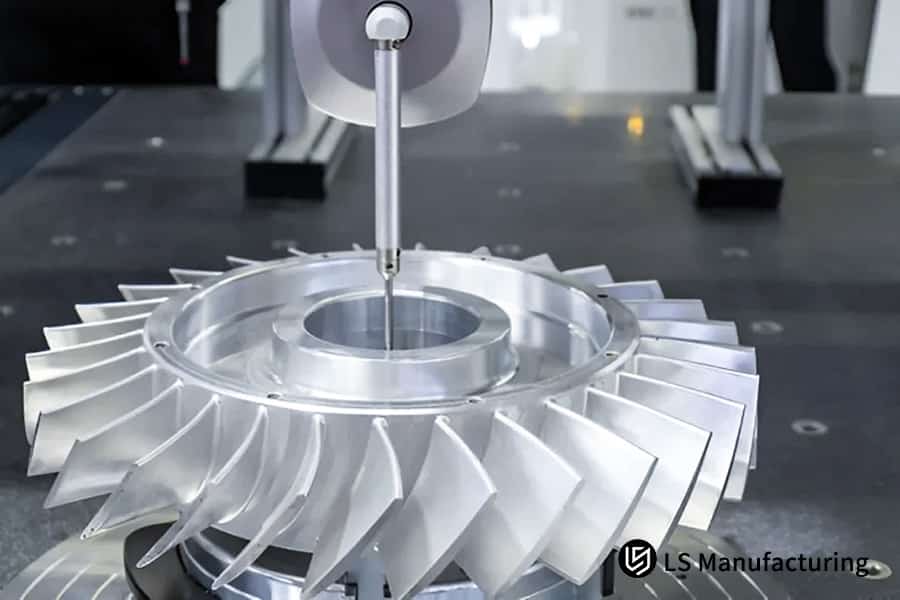
Figure 1: Verifying the machining quality of a metal alloy impeller to ensure precision for aerospace fluid systems.
What Are The Key Variables Driving The Manufacturing Cost Of Custom Impellers?
Effective cost drivers analysis is a critical activity in the budgeting process that goes beyond the general quote and analyzes the actual impeller machining cost. The variables that drive the cost of the impellers are the material strategy, the efficiency of the 5-axis impeller machining, and the validation costs that are usually ignored. Our strategy optimizes this through technical intervention:
Material Strategy: Optimizing High-Value Stock
The cost of the titanium or Inconel blank is considerable, but more waste occurs due to the high buy-to-fly ratios. Advanced 5-axis programming is used to determine tool paths that are optimized for near-net-shape roughing. The strategic 5-axis milling technique greatly minimizes expensive material waste, which directly reduces the raw material costs.
Adaptive Machining for Cycle Time Reduction
In the case of complex blisks, the time required is the most significant cost driver. Process simulation is used to determine the stability of the part and generate 5-axis tool paths that adjust feed rates according to the stability of the part. The feed rates are reduced in fragile areas to avoid chatter and increased in rigid areas. The variable feed rates are an integral part of optimized 5-axis process and have the potential to reduce the total time required by as much as 25%, which is the most significant cost driver.
Integrated Metrology Eliminates Secondary Operations
The cost of attaining such precision balance grades like G1.0 is the offline validation and correction. Our solution includes an on-machine laser scan after the final cut. The system uses the scan results to predict unbalance and sometimes performs a final finishing pass for micro-adjustment correction. The closed-loop correction results in balance grades like G2.5 without the expense of secondary balancing, thus eliminating cost overruns.
This document describes the detailed methodologies that allow us to decouple costs from complexity. Our competitive edge is our deterministic system for manufacturing, enabled by our proprietary process database and adaptive control, converting these cost drivers into predictable and optimized results for high-performance custom 5-axis impellers.

How To Define And Test The Key Quality Indicators Of An Impeller?
True impeller machining quality goes beyond the mere fulfillment of dimensions to require quantifiable performance criteria that directly relate to the component’s function and lifetime. The triumvirate of surface profile, material integrity, and balance is the critical factor to be measured, with a process tailored to the task to provide a solution for the fundamental issue. Our methodology for the task is to provide a combination of measurement and adaptive machining to tackle the fundamental issue:
Surface Profile & Geometric Accuracy
- Defining the Standard: We define the standard for precision as the contour tolerance for the pressure and suction surfaces, which is typically within ±0.05mm.
- Our Measurement Method: We utilize the 5-axis scanning feature on a high-end CMM to produce a colormap deviation report for traceability.
- Our Proactive Solution: This information will be directly fed into the tool compensation stage for the 5-axis milling process.
Surface Integrity for Performance
- The Critical Parameter: In addition to surface roughness (Ra), we also inspect the surface for the presence of micro-cracks or white layers that can degrade fatigue performance.
- Our Measurement Method: White light interferometry is the technology used for the nano-scale surface topography measurements.
- Our Proactive Solution: This approach is used for the optimization of cutting parameters for precision blade machining.
Dynamic Balance Performance
- The Core Metric: We adhere to ISO 21940 standards, targeting dynamic balancing grade G2.5 for pumps or G1.0 for high-speed turbomachinery.
- Our Measurement Method: The measurement of mass eccentricity is done on the 5-axis machine tool.
- Our Proactive Solution: Mass compensation is done during the final finishing pass, resulting in "balance-as-machined."
This framework would be a new quality assurance paradigm that would move upstream to the manufacturing process. Our competitive differentiation comes from the fact that we have a combination of precision metrology and adaptive 5-axis CNC machining. Therefore, we have a closed-loop system that not only inspects quality but also engineers quality into each component. This ensures quality and avoids costly delays and uncertainties associated with rework and correction after the machining process.
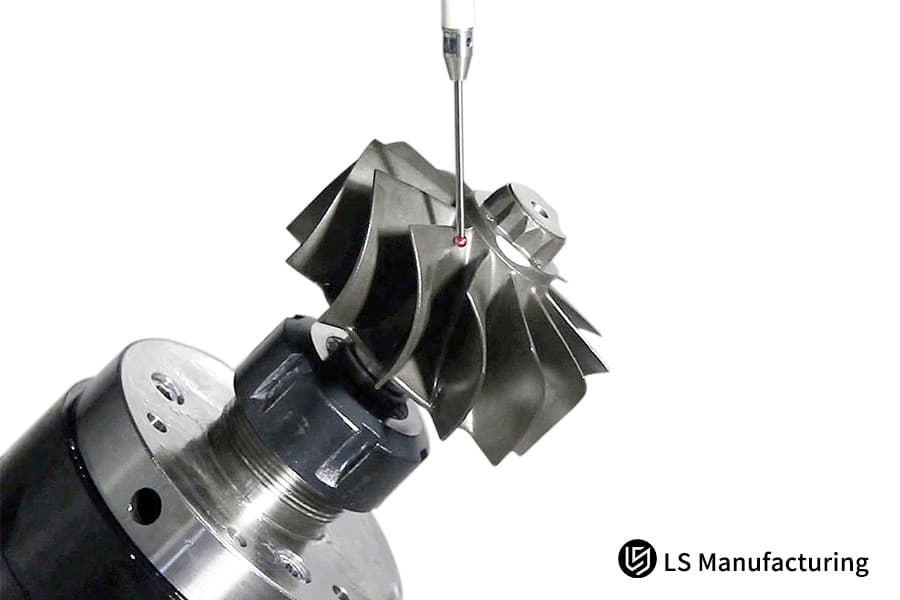
Figure 2: Precision machining custom titanium alloy impeller blades to enhance performance and efficiency in aerospace applications.
Which Process Strategies Can Significantly Reduce The Impeller Delivery Time?
Achieving a competitive impeller lead time requires a paradigm shift: the primary battlefield is production flow optimization and intelligent planning, not merely increasing spindle speeds. Solely focusing on raw cutting time, which often constitutes less than 30% of the total cycle, yields diminishing returns. True compression comes from systematically eliminating non-value-added time in programming, setup, and validation. This document details the key strategic levers for how to optimize impeller machining holistically:
| Strategy | Our Action | Quantified Outcome |
| Concurrent Engineering | Our CAM engineers are able to simulate and optimize the finishing toolpaths during the part's rough machining operation on the 5-axis machining cell. | Eliminates idle time in the program; reduces total process planning time by ~40%. |
| Modular Quick-Change | Fixturing Implementation of hydraulic expansion mandrels and standardization of the base plates for our 5-axis CNC machining centers. | Significant reduction of part loading/fixturing alignment from ~2 hours to under 20 minutes. |
| Condition-Based Predictive Maintenance | Our system monitors the spindle and rotary table health for the scheduled maintenance during the planned downtime. | Increases machine availability for the 5-axis milling process; eliminates unplanned downtime. |
| Adaptive In-Process Metrology | Our system performs the laser scanning after the finishing operation; immediate correction eliminates the need for inspection and correction of the part's balance. | Eliminates the queue time for the CMM inspection and the associated rework for the part's balancing. |
Compressing the impeller lead time is a matter of 5-axis process optimization, focusing on those 70% of the cycle that is not spent cutting. Our competitive advantage is our capacity to leverage these methodologies, integrating data-driven techniques to compress our industry-standard lead time of 8 weeks into a predictable flow of 4-5 weeks, providing certainty, not just speed, to our high-value clients in a competitive industry.
How To Balance Tool Cost And Part Quality When Machining Impellers Made Of Difficult-To-Machine Materials?
Machining custom impeller blades made of superalloys like Inconel 718 is a fundamentally conflicting problem. An aggressive tooling strategy is needed to drive down tooling costs, but it risks tool failure, as well as damaging the part. On the other hand, an overly conservative tooling strategy risks damaging profitability. The solution is to leverage a sophisticated, data-driven tooling strategy that balances these two variables. The following is our systematic approach to machining difficult materials:
Optimized Tool Geometry for Reduced Stress
We choose to bypass generic tools in favor of specific geometry. For our use of titanium and nickel alloys, we utilize solid carbide end mills with high positive rake angles and polished chip flutes. This is part of our proprietary 5-axis machining process, ensuring minimal cutting forces and heat generation at the point of cut, protecting the metallurgical integrity of our workpieces, as well as maximizing tool life compared to generic tools.
Zoned Machining Parameters for Localized Control
One specific cutting parameter is inadequate for our complex blade. Our tooling strategy involve developing a comprehensive tooling parameter chart. For example, at the fragile blade tip, we utilize high rpm, low axial depth of cut, and high feed in a shear cutting mode. For the robust area of the blade, we utilize high-efficiency 5-axis milling in stable 5-axis tool paths.
Real-Time Tool Condition Monitoring
To avoid a slightly worn tool from ruining a finished part, we've integrated acoustic emission sensors directly into our 5-axis CNC machining centers. This detects the high-frequency stress waves emitted when cutting the material. It can identify micro-chipping or any unusual tool wear in real-time, sending an automatic tool change signal before the tool catastrophically fails and affects the surface finish quality of the custom impeller blade.
This methodology moves beyond tool selection to incorporate 5-axis impeller machining cost and quality control into the process itself. Our competitive advantage is a tooling strategy that is informed by the laws of physics to consider tool life and part integrity as a singular entity to be optimized for tool life benefits of 40% greater than the industry averages for machining difficult materials.
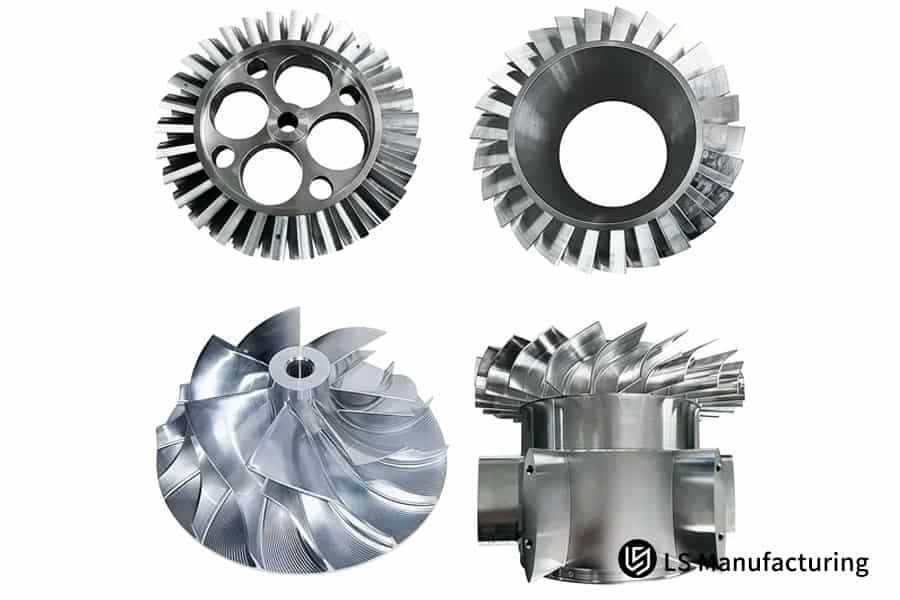
Figure 3: Showcase high-tolerance metal alloys to demonstrate the service and quality of custom impeller blades.
LS Manufacturing Energy Industry: Large High-Speed Compressor Titanium Alloy Closed Impeller Project
The LS Manufacturing energy sector case serves as an example where a critical manufacturing deadlock was overcome by applying advanced process engineering instead of standard approaches. In the face of a stalled project for a high-performance titanium compressor impeller, we adopted a deterministic system that combines simulation, innovation in tooling design, and in-process control to attain a first-time-right result:
Client Challenge
Our energy sector OEM client needed a third-stage closed impeller for their air separation compressor. The Ti-6Al-4V impeller had a diameter of 420mm and blades as thin as 0.6mm. The original supplier had deemed the part unmanufacturable since they had nearly total failure in their first batches due to chatter in their machining processes. The other sources the client could find either could not guarantee the thin-wall geometry or would charge over ¥2 million with no guaranteed delivery time.
LS Manufacturing Solution
Our quick and efficient methodology started with digital twin simulation-based predictive flutter suppression and identification of key resonant modes. This was then used to design a bespoke damped tool and develop a zoned and adaptive 5-axis milling strategy with unique parameters for the blade tips and roots. The implementation was carried out on our 5-axis CNC machining centers with 10MPa high pressure coolant and force monitoring. The final step was the implementation of an on-machine laser scan to make a bespoke compensation cut to correct the micro-deflections and ensure perfect conformance.
Results and Value
The result was the successful completion of the titanium compressor impeller in one attempt. All blades were within the required 0.6mm tolerance, and dynamic balancing was achieved at G1.6, which is better than the required G2.5. The project was completed in 9 weeks and within budget. The impeller was tested at 115% overspeed and has now run over 8,000 hours with no issues, saving our client's program and providing them with a custom solution that others had failed to deliver.
This case shows that complex problems in machining difficult 5-axis impeller machining materials can be solved with a knowledge-driven approach. We turn prototypes from high-risk to low-risk components by pre-empting failure with simulation and maintaining control with adaptive 5-axis processes, bringing certainty to our clients' most critical projects.
Conquer the challenges of thin-wall, high-performance impellers with our simulation-driven, precision 5-axis machining expertise.

What Are The Fundamental Differences In Manufacturing Strategies Between Open And Closed Impellers?
To select the best impeller machining services, it is necessary to understand the fundamental difference in philosophy between open and closed impeller manufacturing. The fundamental difference lies in the nature of the machining problem. The machining of free-form blade surfaces is fundamentally different from the closed channels machining. The following document presents the fundamental difference in manufacturing strategy.
| Aspect | Open Impeller Strategy | Closed Impeller Strategy |
| Primary Challenge | Machining individual cantilevered blades with sufficient rigidity to prevent chatter in a 5-axis machining operation. | Removing large amounts of material in confined flow channels without deflection of the tool. |
| Roughing Focus | Efficiently removing material in the region near the hub and root of each blade with good tool accessibility. | Using long-reach tools for 5-axis milling or trochoidal milling to remove material in the confined flow channels. |
| Finishing Focus | 5-axis milling of the blade airfoil sections with blending of the root area. | Simultaneous 5-axis contouring of the confined flow channels and blade surfaces. |
| Key Quality Metric | Dimensional accuracy and finish on the blade airfoil surfaces that will be exposed. | Surface finish and dimensional accuracy on the confined flow channels. |
| Typical Application | The application is in high flow pumps, ventilators, and compressors where a shroud is not required. The application would greatly benefit from flexibility in the process. | The application is in high pressure pumps, turbochargers, and closed compressors that require precise custom fluid dynamics. |
Knowledge of the open vs closed impeller paradigm is critical to success. Our 5-axis impeller machining services directly apply this critical understanding. For the open impellers, stability is assured through the adaptive processes. For the closed impellers, safe and effective channel machining is applied through the well-known 5-axis machining.
How To Assess The Impeller Expertise Of A 5-Axis Machining Supplier?
When selecting a high-performance 5-axis impellers supplier, there is a need to go beyond the basics of machine capabilities and into an in-depth evaluation of their know-how. The true technical capability assessment of how to choose an impeller machining supplier is an in-depth evaluation of their overall system for preventing and solving problems, not just doing a specific task. The following is an evaluation framework:
CAM & Process Simulation: Proving Predictability
- Software Specialization: Do they use specialized blade machining software modules like "hyperMILL Blade," which can perform collision-free 5-axis toolpath generation?
- Digital Validation: Do they have the capability of providing videos of the machining simulations that validate the stability of the toolpath and the absence of any sudden direction change that may cause tool vibrations?
- Our Practice: We make use of physics-based 5-axis process simulation for pre-validation of the program, eliminating chatter and tool deflections before the start of the machining process.
Closed-Loop Metrology & Compensation: Ensuring Right-First-Time Quality
- In-Process Measurement: Do they make use of in-process measurement techniques like probing or scanning the part, or do they have to resort to inefficient CMM measurement techniques?
- Adaptive Correction: Is the approach linear in the "machine-measure-adjust-remachine" fashion, or is the approach adaptive in the "machine-scan-compensate" fashion?
- Our Practice: Our in-process laser scan option provides the opportunity to have automated micro-adjustment finishing passes. Our closed-loop 5-axis machining process will account for any error in the part in one setup, providing conformance without rework.
Proprietary Process Database: Leveraging Cumulative Knowledge
- Historical Data Access: Can they access historical parameters, tool life, and inspection reports from past projects with similar complexities?
- Knowledge Application: Is their process development based on generic recommendations or is it from a proprietary knowledge base that is constantly improving?
- Our Practice: Our proprietary impeller process database provides our customers with the opportunity to audit our entire digital thread for over 500 successful 5-axis impeller machining projects. This provides us with the opportunity to utilize validated 5-axis strategies right from the start, saving us and our customer weeks of time in developing our process.
This technical capability assessment methodology provides you with a clear and actionable checklist of how to choose an impeller machining supplier. Our differentiation from the competition is the integration of these three pillars of predictive simulation, adaptive in-process control, and cumulative knowledge bases into a single system that provides you with certainty for your most complex and mission-critical impellers.
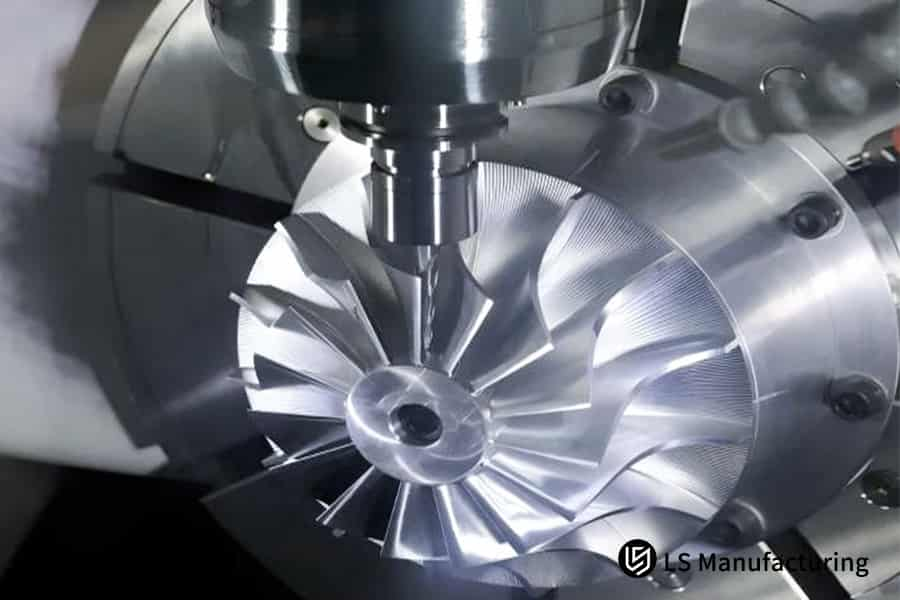
Figure 4: Machining a high-tolerance aluminum alloy turbine impeller to optimize aerodynamic performance in aviation systems.
Why Does Choosing LS Manufacturing Maximize The Overall Value Of The Impeller Project?
By choosing LS Manufacturing, you will be able to transcend the traditional vendor relationship and achieve a true engineering partnership that seeks the total value optimization. We will be your dedicated risk reduction partner, and we will take ownership of the systemic balance of performance, cost, and schedule. Our value will be represented through a deterministic engineering methodology that pre-empts failure and optimizes every variable. Here is how we achieve this.
Risk Elimination Through Predictive Simulation
The highest program risks are addressed prior to cutting any metal. Our team of engineers uses the best available technology in the form of 5-axis process simulation technology for dynamic modal and chatter stability calculations during the programming phase. As a result, we are able to identify problems associated with toolpaths that cause vibrations, collision, and thermal distortions in the virtual world prior to the start of the actual 5-axis machining process.
Data-Driven Certainty Across the Entire Workflow
Our machining process is done using a closed-loop feedback system that utilizes both set parameters and real-time measurements. Every step of the machining process, from the roughing operation to the inspection operation, is monitored and compared against our proprietary process models. This is achieved through the integration of sensors and on-machine metrology for the 5-axis finishing operation. As a result, there is total predictability, and there are no surprises along the way. The final result is one that meets your needs perfectly.
Holistic Total Cost of Ownership (TCO) Optimization
Our aim is not only to minimize the unit price of your project; rather, our aim is to minimize the total cost of your project. We design the total value optimization in such a way that we carefully study the complex relationship between the time taken for the machining process, the tooling materials, and the quality assurance costs. By using various techniques such as 5-axis toolpath optimization, we are able to attain the summit of global efficiency that meets your performance requirements while ensuring the longevity of the tooling and the absence of any defects, thus offering the most cost-effective solution for the product lifecycle.
Why choose LS Manufacturing? The answer is quite simple: our approach. Our approach is founded on the concept of certainty, where complex projects involving impellers are no longer the risky propositions they once were, but instead are optimized for maximum value with success as the expected outcome, not the objective. We are your risk reduction partner, utilizing simulation, data, and TCO-driven process design to guarantee success.
FAQs
1. What is the minimum order quantity (MOQ) and typical lead time for impeller machining?
We can provide single-piece customization without any limit on the MOQ. The normal lead time from drawing freeze to delivery is 3-4 weeks for moderately complex aluminum alloy impellers, while for titanium alloys or difficult-to-machine materials, the lead time is 5-7 weeks.
2. What level of dynamic balance and surface accuracy can you typically achieve?
We can provide G2.5 level dynamic balance, which can cover most of the industry's demands. By using special processes, G1.0 level dynamic balance can be obtained. For surface accuracy, the accuracy of the blades can be controlled at ±0.05mm, and the surface roughness of the flow channels can be 0.8-1.6μm.
3. If my design has potential manufacturability issues, will you provide feedback?
Yes. We offer free DFM services. With your drawings, we will provide written suggestions regarding design features that might affect machining costs, quality, or manufacturability within 24 hours.
4. Do you provide a complete inspection report after machining?
Yes. Each impeller is provided with a comprehensive inspection report package, including a 3D scan deviation chromatogram, critical dimensions report, dynamic balancing test report, and material quality certificate (if applicable).
5. What software do you use for impeller CAM programming?
We mainly use the professional impeller module of high-end CAM system brands like HyperMILL and PowerMILL, and VERICUT for full-process collision and overcutting simulation during impeller programming.
6. How do you ensure the rigidity of the thin-walled blades of the impeller during machining?
We use various techniques: flexible fixtures for supporting the impeller blades, a machining sequence for staged stress release, and a "low cutting force" parameter package for the thin-walled area of the impeller blades.
7. Do you provide dynamic balancing services from the impeller to the entire rotor assembly?
Yes. We can perform high-speed dynamic balancing of individual impellers, as well as assemble and dynamically balance the entire rotor in accordance with the provided drawings of the shaft system. Thus, we can provide ready-to-install rotor parts.
8. How to Initiate an Impeller Project Inquiry and Evaluation?
We require the provision of the 3D model of the impeller in the STEP format. We also require the provision of the 2D drawings of the impeller. The material, balance quality, quantity, and date of receipt are also required. You can submit these details directly through our online instant quote platform. Our application engineers will get back to you after the evaluation of the project within 4 hours.
Summary
Finding the balance between costs, quality, and time in the machining of the impeller using 5-axis machining is a system engineering problem. It requires profound knowledge of the machining processes, simulation technology, and real-time control. It is a challenge that requires thinking in terms of risks and optimization. The success factor is the optimization of the entire system, transforming the impeller into an important component for efficient operation within the expected quality, budget, and time.
To get high-performance, reliable, and cost-optimized 5-axis impeller design solutions for the next generation of fluid equipment, simply submit your design requirements. Our experts will send you a "Project Initiation Analysis Brief" within 24 hours of receiving your request. The brief will include "Manufacturability Analysis," "Preliminary Process Route and Risk Assessment," and "Budget Range Estimation."
Achieve the perfect balance of cost, quality, and lead time for your critical impeller projects with our engineered 5-axis machining solutions.
📞Tel: +86 185 6675 9667
📧Email: info@lsrpf.com
🌐Website: https://lsrpf.com/
Disclaimer
The contents of this page are for informational purposes only. LS Manufacturing services There are no representations or warranties, express or implied, as to the accuracy, completeness or validity of the information. It should not be inferred that a third-party supplier or manufacturer will provide performance parameters, geometric tolerances, specific design characteristics, material quality and type or workmanship through the LS Manufacturing network. It's the buyer's responsibility. Require parts quotation Identify specific requirements for these sections.Please contact us for more information.
LS Manufacturing Team
LS Manufacturing is an industry-leading company. Focus on custom manufacturing solutions. We have over 20 years of experience with over 5,000 customers, and we focus on high precision CNC machining, Sheet metal manufacturing, 3D printing, Injection molding. Metal stamping,and other one-stop manufacturing services.
Our factory is equipped with over 100 state-of-the-art 5-axis machining centers, ISO 9001:2015 certified. We provide fast, efficient and high-quality manufacturing solutions to customers in more than 150 countries around the world. Whether it is small volume production or large-scale customization, we can meet your needs with the fastest delivery within 24 hours. choose LS Manufacturing. This means selection efficiency, quality and professionalism.
To learn more, visit our website:www.lsrpf.com.