English



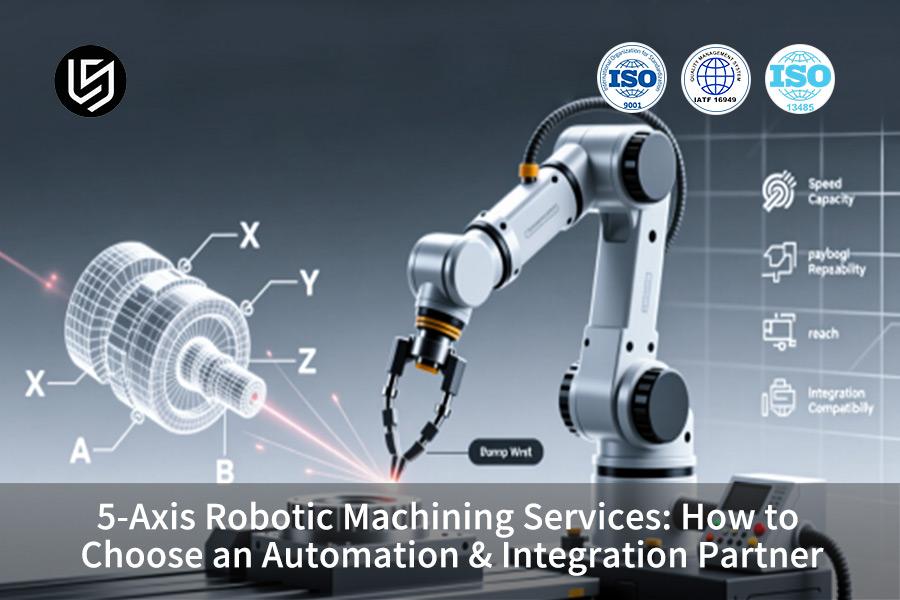
5-axis robotic machining services cannot be met, as the usual systems offer ±0.1mm variance with less than 15% OEE improvements, which are locked into integration silos. The problem lies within the fact that robots are considered to be mere machines, rather than a combination of kinematics, sensing, and process control. Our solution, based on the real-world experience of LS Manufacturing, provides a distinction between the two to establish a proper basis for evaluation.
We solve this challenge by offering an accuracy of ±0.05mm through sophisticated laser tracking and dynamic force compensation, along with intelligent ROI analysis and comprehensive support checklists. This is not just about integrating the solutions but about offering true turnkey productivity, so you can rest assured your investment is giving you stable high-mix precision machining. Our solution is designed for ultimate reliability and longevity, transforming complex challenges into high-quality output.
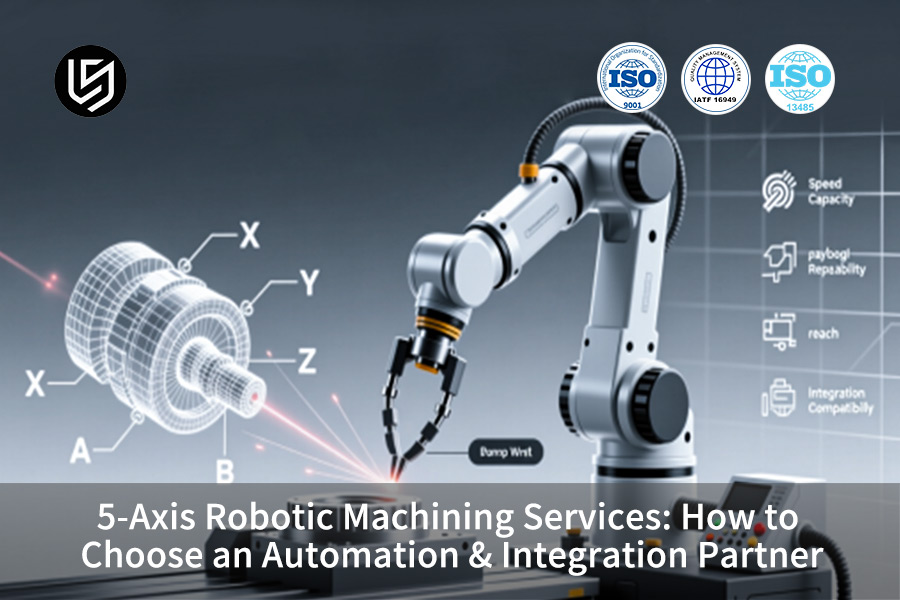
5-Axis Robotic Machining: A Practical Guide
| Consideration | Key Insight |
| Fundamental Strength | Blends the large work envelope flexibility of an industrial robot with 5-axis machining capabilities for oversized or complex workpieces. |
| Primary Application Fit | Designed for machining large workpieces of low- to medium-precision parts (e.g., molds, composites, sculptures) where absolute micron accuracy is a secondary requirement compared to workpiece size/form. |
| Core Challenge: Absolute Accuracy | Industrial robotic systems are characterized by a relatively low level of static stiffness and repeatability compared to CNC machine tools. |
| Critical Success Factor | Success is heavily dependent on sophisticated real-time path compensation, force control, as well as sophisticated calibration techniques to compensate for robot deflection and thermal drift. |
| Our Technical Approach | High spindle power robots are combined with in-process metrology and adaptive tool control to dynamically compensate for tool path deflections. |
| Software & Programming Edge | Using sophisticated computer-aided manufacturing software is a given to optimize tool direction, avert singularity, and ensure collision-free tool movement. |
| Result: Unmatched Flexibility | Allows for the machining of large parts that cannot be accommodated by conventional 5-axis CNC machines, often in a single setup. |
| Result: Cost-Effective Scaling | Offers a significantly lower cost-per-envelope solution for large part machining compared to a giant gantry floor-type mill. |
We address the issue of machining large and possibly uniquely shaped products that exceed the capabilities of traditional CNC technology. By harnessing and dominating 5-axis robotic technology with advanced compensation, we offer an accessible and cost-effective solution to accomplish complex shapes on an enormous scale, where ultra-precision is not the main concern.
Why Trust This Guide? Practical Experience From LS Manufacturing Experts
While there is an abundance of information online about 5-axis robotic machining services, what makes us different? We don’t just talk the talk. We walk the walk. We don’t just have theories; we have hands-on experience integrating 5-axis technology, as per SAE International and National Association for Surface Finishing (NASF) guidelines.
We’ve provided precision components to the aerospace and medical industries, where robotic precision is essential. Each project has helped us refine our process, including the optimization of paths for difficult alloys, managing thermal drift, and ensuring surface quality according to NASF guidelines. Our recommendations are based on lessons learned from the shop floor, not the classroom.
Our recommendations come from lessons learned from overcoming integration challenges to achieve repeatable ±0.05mm accuracy. We follow SAE International specifications for rigorous validation. Apply our hard-won knowledge to prevent costly mistakes and find a partner who delivers true turnkey productivity.
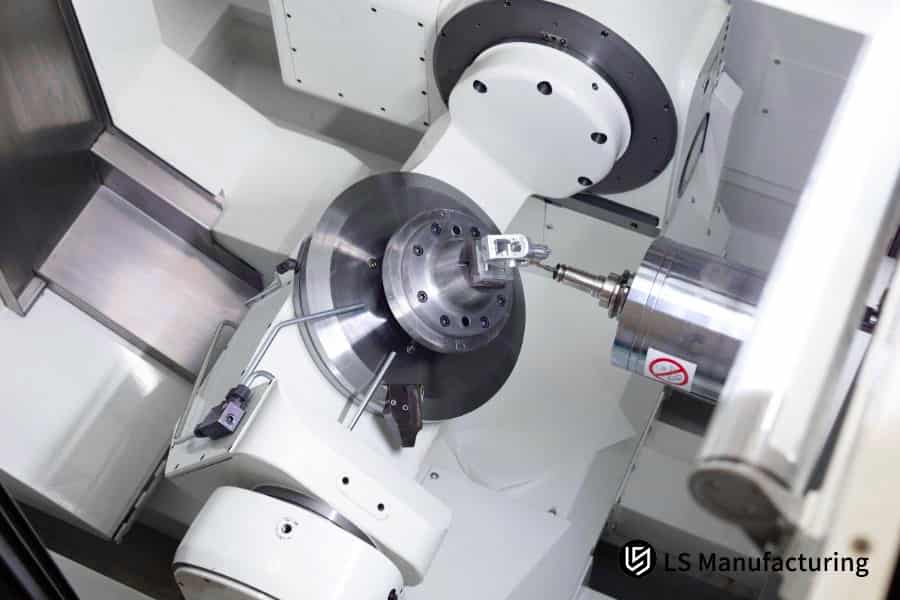
Figure 1: Integrating high-tolerance alloy machining with robotic automation for manufacturing partner selection.
Differences Between A 5-Axis Robotic Machining Unit, A CNC Machining Center, And Traditional Automation?
The choice of the best machine to meet core business needs requires a strategic balance of flexibility, precision, and total operational cost. This document presents a detailed analysis of the fundamental differences between conventional 5-axis CNC machining centers, traditional automation solutions, and modern 5-axis robotic machining services, providing the critical insights needed for an informed investment.
| Aspect | Traditional CNC Machining Center | Traditional Dedicated Automation (Gantry/Special Machine) | 5-Axis Robotic Machining Cell |
| Flexibility & Changeover | Low flexibility, as changes involve the creation of new fixturing. | Extremely low, as changes involve a high degree of physical retooling. | High flexibility, as a single robot unit performs multiple parts with quick tool changes. |
| Positioning Accuracy (Typical) | Highest accuracy, ±0.005 mm, owing to the rigid nature. | High accuracy for a fixed operation, but inflexibility in aligning the tool. | Lower base accuracy at ±0.05 to ±0.1 mm, but achieves stable ±0.05 mm using robotic CNC automation with online compensation. |
| Key Advantage & Cost-Benefit | Unrivaled accuracy and rigidity for applications requiring high precision. | Highest speed for the ultra-high volume manufacture of a single part. | High cost/volume for large components, as multiple 5-axis machining processes are accomplished by a single cell. |
| Typical Application Scenario | Precision components, molds, and dies requiring micron-level tolerance. | Mass production of simple components for the automotive industry or consumer electronics. | Large part machining, weld preparation, and finishing, which can be facilitated by the 5-axis robotic machining services. |
| Work Envelope & Integration | Fixed work volume, normally a single station configuration. | Linear work volume, possibly for a particular process sequence. | Very large, flexible work volume, possibly for multiple fixtures, or for a single massive workpiece. |
Automated 5-axis machining via robotic cells offers optimal cost flexibility for large and complex parts with medium accuracy at up to 50% savings. This analysis offers the justification for implementing 5-axis robotic machining services to address high-mix large-scale production challenges, proving its worth for technically complex competitive manufacturing.

When Evaluating A Robot Integrator, What Technological "Soft Power" That Goes Beyond Brand Reputation Must Be Examined?
Selecting a system provider is a strategic decision extending beyond robot brands. True differentiation lies in the integrator's applied engineering methodologies, which de-risk projects and guarantee performance—the core of a rigorous technical capability assessment. This document details the essential, beyond-hardware capabilities:
Virtual Commissioning via Offline Programming & Simulation
We construct a full digital twin for 100% collision-free validation and 5-axis path planning. This enables complete cycle-time and reachability analysis offline before installation. Our approach, fundamental to expert robotic machining integration, reduces on-site commissioning by over 70%, ensuring a predictable deployment.
An Advanced Accuracy Compensation Stack
We go beyond addressing the simple repeatability challenge with our advanced closed-loop technical stack, which integrates real-time laser tracker calibration. This technological edge is a decisive factor in how to choose a robotic machining partner, enabling even standard robotic systems to achieve and maintain ±0.05mm accuracy. This performance level decisively makes a 5-axis robotic cell a viable, high-precision solution for demanding milling and trimming tasks.
Deploying Applied Process-Specific Knowledge
Achieving the highest quality of machined parts requires a detailed and profound knowledge of the entire machining process. We utilize comprehensive, proprietary parameter databases tailored to specific materials to determine and optimize the best strategies for complex 5-axis machining operations. This rigorous, data-driven approach evolves into a truly reliable solution, establishing itself as a key differentiating factor in any technical capability assessment.
This process addresses the fundamental challenges faced when evaluating a system’s predictability, part accuracy, and process quality. It’s a methodology suited to the high-value manufacturing industry, where technical risk needs to be eliminated. It’s a process that guarantees a successful robotic machining integration.
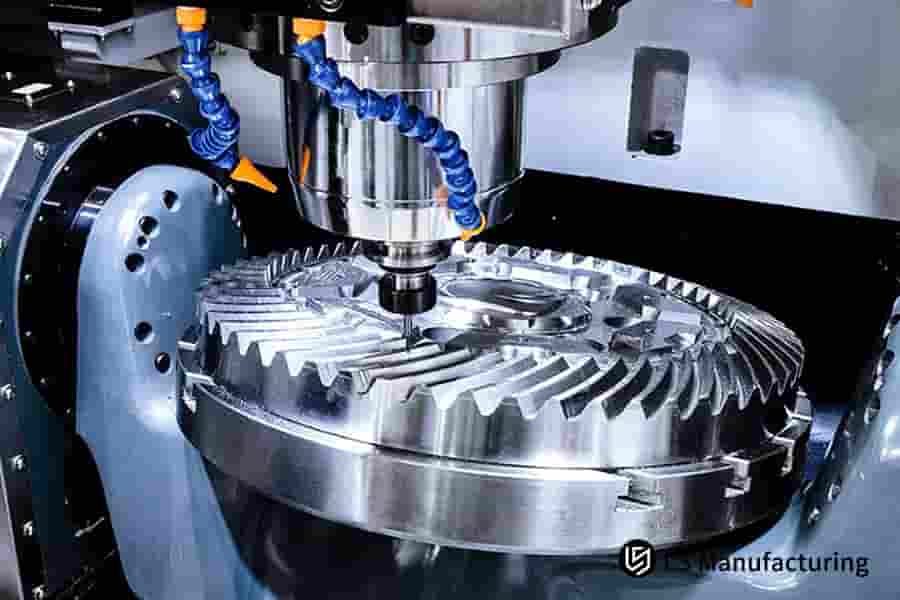
Figure 2: Integrating robotic 5-axis CNC machining for high-tolerance metal parts in automation manufacturing services.
How To Quantitatively Evaluate The True Return On Investment Of A Robotic Processing Unit?
In order to properly and comprehensively assess the ROI of a robotic work cell, one must adopt a rigorous overall lifecycle analysis. This is because a simplistic ROI calculation based solely on the elimination of direct labor costs fails to represent the true, multi-dimensional value delivered. Our proven assessment model captures this full value by quantifying gains across the following three main areas of strategic value creation:
Direct Cost Savings & Avoidance
- Labor Substitution: A robotic machining cell can substitute 3-6 operators across multiple shifts, creating significant labor avoidance costs.
- Fixturing Rationalization: The robotic work cell replaces costly dedicated hard tooling with flexible fixtures, greatly reducing the overall fixture costs associated with the machining process.
- Increased Machine Utilization: CNC automation services relieve high-value machine tools; the robot performs secondary operations, leaving your 5-axis milling center for high-tolerance primary machining.
Efficiency & Asset Utilization Gains
- Reduced Handling: Consolidating processes into one cell minimizes handling and setups, resulting in a drastic reduction of non-cut times.
- Lights-Out Operation: Enables lights-out operation, which can boost overall equipment effectiveness from 50% to over 75%.
- Enhanced Throughput: High duty cycle operation can accelerate output compared to manual or semi-automated processes, providing a cost justification.
The Quantifiable Value of Flexibility
- Rapid Changeover: Switch products in as little as 30 minutes with program recall and quick change tooling, providing value in high mix, low volume operations.
- Demand Volatility Buffer: The system’s flexibility to accommodate different parts is an essential strategic risk buffer for uncertainty in forecasts, an essential component of total ROI analysis.
- Future-Proofing: The 5-axis robotic cell can be leveraged for new products, thus protecting the capital investment against obsolescence compared to a dedicated solution.
With our data-driven model, based on successful implementations like the ones described above in LS Manufacturing, an achievable 18-30 month payback model is provided for CNC machining of aluminum parts and other applications. This quantifies the flexibility of the solution, thereby allowing for a strategic cost justification of the value of the high-value CNC automation services.
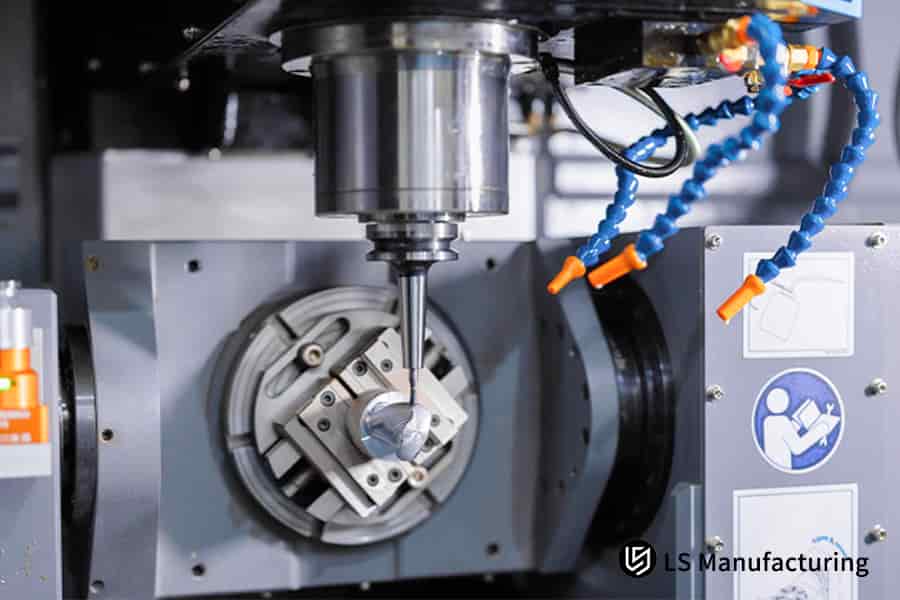
Figure 3: Actively machining a high-tolerance metal alloy workpiece to evaluate robotic automation integration services.
What Is The Actual Precision That The Robotic Machining Unit Can Achieve? How Is Its Stability Guaranteed?
The actual precision of a 5-axis robotic machining part is not solely determined by the robot's static repeatability specification. True precision in robotic machining is achieved by actively identifying and compensating for dynamic effects such as vibration, thermal changes, and tooling variations. The advanced methodologies enabling these closed-loop, real-time compensation approaches are detailed and described within this document.
Force Control & Vibration Damping for Surface Finish
The vibrations that occur during the machining process, which affects the surface finish and tool life, are counteracted by our solutions. This is achieved by incorporating an active force control algorithm and directly attaching the tuned mass damper to the spindle. This minimizes vibrations with a reduction of more than 60%, which is essential for maintaining stability during 5-axis CNC machining operations, particularly when working with materials like aluminum or composites.
Thermal Compensation for Geometric Consistency
Thermal drift, which is a major contributor to errors, is compensated for in a critical way by monitoring the temperature changes in the joints in real-time and feeding it into a thermal expansion model in the controller of the robot, which allows for constant positional compensation. This ensures geometric consistency, which is a cornerstone for process stability in a 5-axis robotic cell.
Closed-Loop Tool Management
We have included tool setters which use lasers for automation in the post-changeover measurements. This process enables instant measurements and compensations for tool length and diameter changes after every changeover. This process for 5-axis accuracy assurance eliminates one of the main error-causing processes, which often occurs through manual processes, ensuring the accuracy of the programmed path and the cutting tool geometry.
Our solution is an amalgamation of these processes, which results in an overall accuracy assurance process. This enables processes like the machining of composite materials like carbon fiber for aircraft-grade milling of aircraft brackets with contour accuracy within ±0.08mm. This overall solution for precision in robotic machining is what differentiates our custom robotic machining solutions.
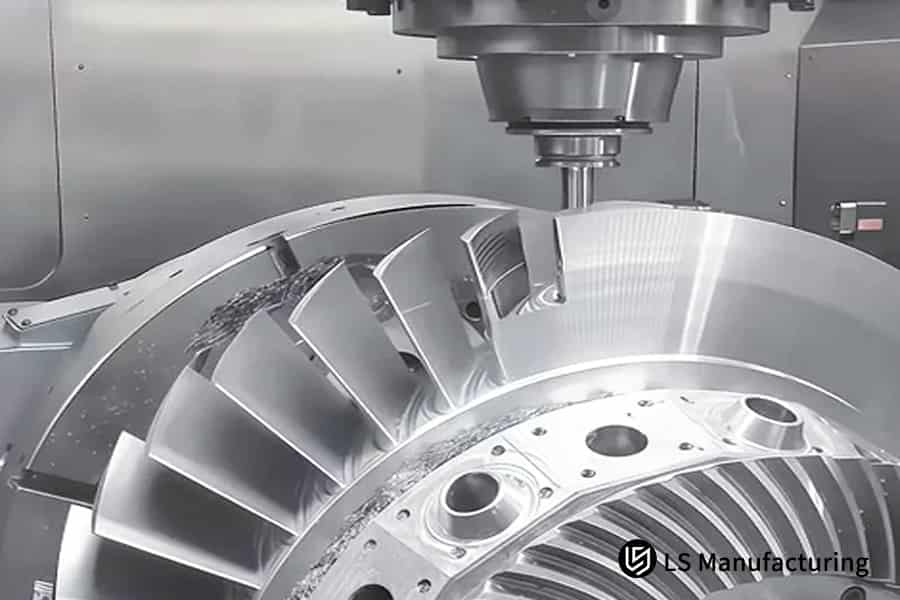
Figure 4: Evaluating high-precision metal alloy machining for robotic integration partner selection and automated 5-axis machining services.
How Can Successful Automation Integration Seamlessly Connect With Existing Production Systems And Supply Chains?
The true potential of the new 5-axis robotic cell can only be achieved by integrating it into the overall manufacturing environment. The selection of the right automation integration partner is critical, as the overall approach taken by the automation integration partner in the process of holistic system integration is the key driver. This document outlines the technical interfaces that are deemed necessary for the successful integration of the latest 5-axis automation solutions.
| Integration Dimension | Core Capability & Delivered Value |
| IT/OT Convergence with MES/ERP | The cell should be able to communicate with the plant systems, for example, via OPC-UA, to receive work orders, report the status of the jobs/tool usage, etc., which would allow for a real 5-axis process control concept. |
| Physical Material Flow Integration | The system should be able to communicate with AGVs, conveyors, or warehouses, for example, to allow for the automatic input of raw materials and output of finished products, creating a material flow. |
| Quality Data & Traceability Integration | The cell should be able to create and upload a comprehensive "digital part passport" to the central Quality Management System. |
Successful system integration, however, is dependent upon an open architecture, a modular design, and the ability to integrate new equipment as a "plug and play" component of your digital factory. We address the critical challenge of IT/OT convergence, ensuring your investment provides maximum benefits to enhance production transparency without introducing any bottlenecks in the process. This is critical to maximize the benefits of 5-axis robotic systems in a high-value, highly competitive manufacturing environment.
LS Manufacturing Engineering Machinery Industry: Large Boom Welding Beveling Robot Milling Unit Integration Project
The LS Manufacturing heavy equipment case describes the solution to deliver precise weld preparations on oversized, variable components. In a situation where conventional automation solutions were not working, the customer required a highly sophisticated robotic milling cell to deliver adaptive machining for quality welds and automated welding.
Client Challenge
Manual grinding of 6-meter steel dipper sticks resulted in variable groove geometry, with a variance of ±1.5mm. This negatively impacted weld quality. The large size, intricate shape, and distortion of the part after welding made it impossible for traditional, pre-programmed 5-axis automation solutions, which were available at that time, to address the problem, thereby bringing the manufacturer’s productivity and smart manufacturing dream to a complete halt.
LS Manufacturing Solution
We have come up with a highly innovative 7-axis track-mounted robotic milling cell solution with 3D scanning technology, which provides a solution for true adaptive 5-axis machining, scanning the actual part, comparing it with the CAD design, and then creating a compensated tool path in real time. This technology has enabled us to robotically mill the part with precision, considering all the dimensional changes for a first-time-right solution.
Results and Value
The solution has ensured that the groove is accurate within ±0.3mm, and the processing time has come down dramatically from 4 hours to 45 minutes per part. The reliable 5-axis process has achieved 85% OEE, eliminated safety hazards with manual grinding, and created a highly efficient and quality benchmark for production, justifying the solution with adaptive machining.
This project illustrates our capabilities to deliver custom 5-axis systems to unusual complex applications. We have utilized real-time sensing and path generation to convert an imprecise manual procedure to an accurate and precise procedure. We have illustrated our definite capabilities to solve complex issues with the production of heavy equipment.
Contact us to leverage adaptive robotic machining solutions for high-precision, high-efficiency machining of the most challenging large, variable parts.

What Full Lifecycle Support Should Integrators Provide, From Project Delivery To Long-Term Operation?
The ultimate measure of the success of an integration project is the increase in the system’s performance. We go beyond the project to be your true partner and trusted advisor, committed to unlocking your organization's full potential. Our mission is to provide end-to-end lifecycle support, ensuring sustained excellence and preventing any degradation of your system’s performance over time.
Deep-Domain Knowledge Transfer & Empowerment
- Actionable Documentation: We provide fault trees for your system, not just a manual.
- Ownership Training: We focus on the principles of 5-axis toolpath optimization and the logic.
- Architecture Maps: We provide diagrams to aid in better understanding of all interactions within the system.
Proactive Remote Diagnostics & Resolution
- Secure, Monitored Access: We use a client-audited VPN portal for real-time diagnostics by our engineers.
- Predictive Alerting: We write scripts to identify unusual events such as abnormal servo loads.
- Swift Collaborative Repair: We offer on-site service with direct data to accelerate replacement of parts.
Data-Driven Continuous Process Optimization
- Performance Benchmarking: We use data to eliminate bottlenecks and optimize 5-axis dynamic milling.
- Advisory for Predictive Maintenance: Correlate data to predict equipment life to maximize the value of a service agreement.
- Technology Updates: Offer recommendations for retrofits such as a post-processor update to take advantage of new technologies.
This framework reveals the unique methodology we follow to transform service into a true performance accelerator. The high level of technical sophistication embedded within our execution process forms the very essence of a durable, long-term partnership. We are committed to ensuring that your performance curve will always maintain a strong and steady upward trajectory.
Why Choose LS Manufacturing As Your Robotics And Automation Integration Partner?
Choosing a partner to assist with your automation journey represents a strategic business move to mitigate the risks associated with increasing your manufacturing capacity. LS Manufacturing sets itself apart from the competition by providing end-to-end solution where cutting-edge robotics meets accountability. We solve the big issues of ensuring precision under less-than-ideal conditions with a sole technical responsibility. We achieve this through the following technical disciplines:
Process-Led Feasibility & Simulation
We begin with manufacturability analysis based on shop floor constraints. For machining large composite panels, standard paths caused vibration. We engineered a custom weighted end-effector and pre-validated the entire 5-axis robotic milling process via simulation, effectively turning risk into a data-driven plan, which is why choose LS Manufacturing.
From Turnkey Delivery to Sustained Capability Transfer
Our 'teach the key' methodology is implemented through hands-on knowledge transfer. After deploying a cell for 5-axis machining applications, we undertook joint debugging activities along with annotated code toolkits. This helps the client teams to introduce new parts as well as carry out diagnostics on their own, thus ensuring long-term flexibility as a true robotic machining partner.
Unified Technical Ownership Through Integration
We remove interface ambiguities through the ownership of the entire integrated solution. This meant developing a proprietary force compliance algorithm and finding an appropriate spindle for the high tolerance deburring application. This holistic end-to-end solution ensures the communication of the entire subsystem and the sole accountability for all 5-axis robotic cells.
This document presents an engineering-based partnership model. Our authority comes from addressing particular, non-standard robotic machining partner challenges. We are not satisfied with the specification level; instead, we are focused on results. We compete based on the depth of the technical approach and the certainty engineered into every end-to-end solution.
FAQs
1. What types of parts are best suited for robotic machining?
Suitable for large size parts (>1m), with some complexity and precision requirement up to ±0.1mm, e.g., molds, welded structural parts, composite material parts, and cleaning and grinding of large castings. Unsuitable for small size, ultra-high precision parts (<±0.02mm).
2. What is the investment threshold for robotic machining?
The initial investment of a full function standard system, including a robot, spindle, fixture, protection, and programming, is estimated to be between 500,000 RMB and 1,500,000 RMB. The investment is determined by the robot's loading capacity, spindle power, sensors, and degree of automation. LS Manufacturing can provide modular system solutions to facilitate phased investment. You can request a custom instant manufacturing quote to get precise pricing tailored to your technical requirements.
3. What is the typical delivery cycle from project initiation to acceptance?
For normal cases, it normally takes 4-6 months from project initiation to system acceptance. For non-standard and complex system integration, it may take 6-9 months. Deep simulation and verification in the early stages of the project can significantly shorten the on-site commissioning cycle.
4. Is programming the robot cell difficult? Is a dedicated programmer required?
Our modern offline programming (OLP) solutions have made programming the robot cell much simpler. With our training, your process engineer or experienced CNC programmer can quickly become proficient in basic programming within 1-3 months. We offer technical support for the long term.
5. How do you ensure production safety during the machining process?
We follow the highest safety standards (PL d/SIL 2). Our solutions include physical safety barriers, safety light curtains, area scanners, and safety controllers. These are designed for the absolute separation of people, machines, and materials. Our solutions are accompanied by safety assessment reports.
6. Can the robot cell adapt if the product is changed in the future?
This is the main advantage of using robot cells. By changing the fixtures and reprogramming the robot (usually taking only a few hours or days), the same robot cell can quickly be adapted for new products. Flexible fixtures and standardized interfaces are important in the initial design.
7. Do you provide trial machining or feasibility verification services?
Yes. We welcome you to send us your representative parts or 3D data, and we will perform a free verification analysis and production trial on our internal demonstration machine to validate the reliability of your solution with real data.
8. How to start our first robotic automation project assessment?
Please share your standard part drawings, current process bottlenecks, and production capacity demands with us. Our automation experts will get started with a preliminary concept design and send you a Preliminary Project Assessment Report within two weeks, which includes the technology roadmap, layout, investment, and ROI estimates.
Summary
Selecting the 5-axis robot automation company is an important decision for future competitiveness. It is necessary to assess the overall capability of the robot integrator in process, integration, accuracy, and overall support. A true partner can turn the robot into a stable, flexible, and evolving "intelligent production node" to unlock the true potential of automation.
Please submit your part and production capacity challenges now. Schedule your free online consultation with LS Manufacturing automation experts, and receive your "Preliminary Automation Upgrade Path Analysis and Value Pre-Assessment". Apply professional expertise to begin your journey toward intelligent transformation.
Demand a proven robotic machining solution that delivers precision, productivity, and a clear return on investment.
📞Tel: +86 185 6675 9667
📧Email: info@lsrpf.com
🌐Website: https://lsrpf.com/
Disclaimer
The contents of this page are for informational purposes only. LS Manufacturing services There are no representations or warranties, express or implied, as to the accuracy, completeness or validity of the information. It should not be inferred that a third-party supplier or manufacturer will provide performance parameters, geometric tolerances, specific design characteristics, material quality and type or workmanship through the LS Manufacturing network. It's the buyer's responsibility. Require parts quotation Identify specific requirements for these sections.Please contact us for more information.
LS Manufacturing Team
LS Manufacturing is an industry-leading company. Focus on custom manufacturing solutions. We have over 20 years of experience with over 5,000 customers, and we focus on high precision CNC machining, Sheet metal manufacturing, 3D printing, Injection molding. Metal stamping,and other one-stop manufacturing services.
Our factory is equipped with over 100 state-of-the-art 5-axis machining centers, ISO 9001:2015 certified. We provide fast, efficient and high-quality manufacturing solutions to customers in more than 150 countries around the world. Whether it is small volume production or large-scale customization, we can meet your needs with the fastest delivery within 24 hours. choose LS Manufacturing. This means selection efficiency, quality and professionalism.
To learn more, visit our website:www.lsrpf.com.