English



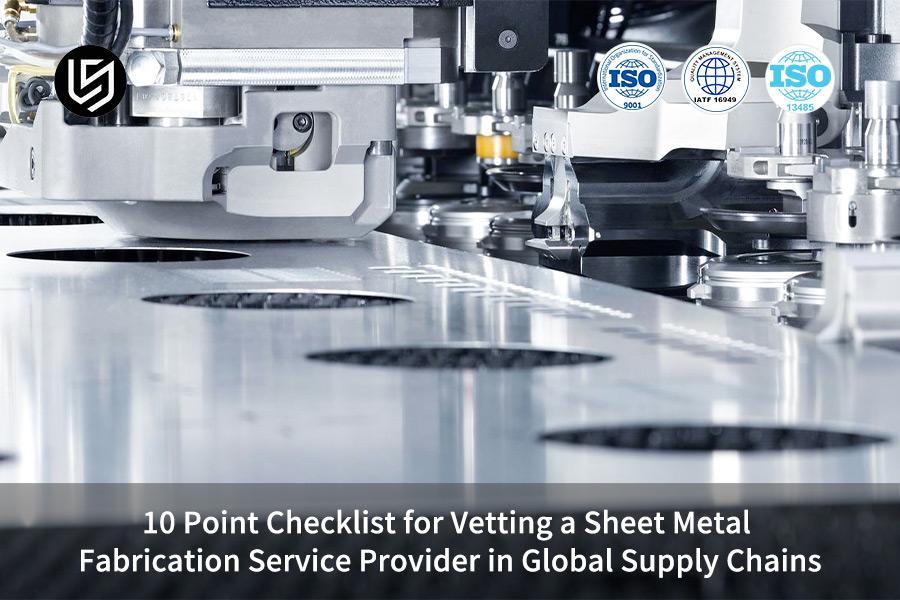
Sheet metal fabrication service occupies a fundamental position in the supply chain for mass production of hardware products by multinational technology enterprises. It adheres to the ISO 10110 appearance precision standard, which is a big part in setting product launch cycles and final assembly yields, Apart from the ISO 13920 welding tolerances international standard compliance. LS Manufacturing is recognized worldwide as a top B2B precision sheet metal custom manufacturing service provider. It has successfully resolved domestic & international logistics delays and batch assembly system crisis by offering overseas supply chain fulfillment solutions with 0.5° CNC bending accuracy and 100% material traceability.
This article shares a 10-point on-site supplier audit checklist that chief procurement officers can use to quickly find dependable partners. Check out this core technical audit process by our supply chain experts that can help you build a quality wall so tough that no fault can penetrate for your multinational projects.
Quick Overview of Key Answers for Selecting Multinational Sheet Metal Fabrication Service Suppliers
| Audit Dimensions | Core Quantitative Indicators | Industry Minimum Requirements | LS Manufacturing Performance |
| CNC Bending Accuracy | Batch Angle Tolerance | ±1.0° | ±0.5° |
| Raw Material Traceability | MTR Correlation Rate + Furnace Number Sampling Frequency | 80%+ per 10 tons | 100%+ per 5 tons |
| Supply Chain Resilience | Finished Product Safety Stock + Backup Logistics Channels | 2 weeks + 1 channel | 6 weeks + 3 channels |
| Intellectual Property Protection | Server Isolation + NDA Coverage | Technical Department Only | Entire Plant + All Employees |
Key Takeaways
- Tolerance Control: Focus on digital factories capable of making real-time corrections and continuously monitoring CNC bending within 0.5°.
- Physical Traceability: Suppliers should have 100% ERP-connected MTR material test reports alongside furnace number destructive strength sampling inspection records.
- Supply Chain Resilience: A genuine global service provider must be able to supply 4-6 weeks of finished product safety stock and have a sea-rail multimodal transport Plan B.
Why Trust LS Manufacturing's Experience In Sheet Metal Fabrication Services?
We conducted a specialized comparative test of 17 sheet metal OEMs worldwide to accurately check the robustness of our excellent cross-border sheet metal collaboration resources. We extensively investigated the industry's hidden quality vulnerabilities, tested the core service capabilities of premium sheet metal fabrication services thoroughly, and used an authoritative system to establish quality standards at every stage.
For our 1U chassis project for a leading North American networking company, which complies with ISO 13355 transport mechanics testing standards, we found that while OEMs without digital management had an average batch assembly defect rate as high as 28%, digital factories can reduce this rate to under 0.3%. We are also in line with the IATF 16949 automotive industry quality management system criteria and are capable of handling even the most precise structural component orders.
With more than 12 years of experience in cross-border sheet metal customization, we have catered to 37 of the world's top 500 companies and supplied more than 12 million sets of precision sheet metal parts. Our well-established 10-point audit system has averted over $120 million in supply chain losses for more than 200 clients.
Years of cross-border sheet metal testing data have validated the core value of high-quality sheet metal fabrication services, effectively mitigating quality and delivery risks in cross-border supply chains. To quickly identify high-quality manufacturers, you can directly download the comparative evaluation white paper of 17 mainstream sheet metal manufacturers.

Point 1: Why Is Multi-Stage Bend Springback Simulation The First Benchmark For Vetting a Supplier?
Multi-stage bend springback simulation technology is an essential standard for selection of excellent sheet metal suppliers. It can effectively prevent overseas batch assembly failures by relying on highly accurate computing power and smart equipment to build a strong quality control process defense line.
Material Lattice Stress Release Principle
Temperature variations during long-distance international shipping almost double the release of residual stress inside the sheet metal, thereby resulting in small deformations of formed sheet metal parts. Precision tuning of sheet metal fabrication is the best professional method to correct the sheet metal formation errors. Vibration from transportation makes worse the problem of deformation, reliable sheet metal manufacturing companies use entire supply chain simulation tools to avoid transport defects of sheet metal.
- Different materials have different residual stress release rates: for example, about 12% for SUS304 stainless steel and about 18% for 5052 aluminum alloy.
- The daily temperature change during sea transport can be as high as 30°C, which could triple the residual stress release.
- Manufacturing parts by bending without doing simulation optimization have an average angle deviation after transport as high as 35%. Implementing standardized custom sheet metal fabrication processes help to bring this defect down to a controllable level.
Important Items for Digital DFM Capability Assessment
Buyers should confirm at a factory visit whether the engineering team has developed a digital pressure tuning file that takes into account sheet thickness variations. This is a very basic requirement for standardized sheet metal fabrication batch production.
- Make the supplier reveal on-site thickness measurement data for the last 3 batches of sheet metal, to confirm the inclusion of a fluctuation tolerance of 0.02mm.
- Find out whether several bending simulation results include stress distribution cloud map.
- See that machine setting parameters match one by one with the simulation results. This is a must-step standardized factory audit for sheet metal fabrication service.
Here are some secret troubleshooting methods of our own: If the springback of stainless steel bending is greater than the tolerance by 0.3°, the first thing to do is to change the crowning compensation value by 0.02mm instead of the bending angle. In this way, you can swiftly solve the issue without changing other dimensions.
Adjusting the machine manually based on one's experience will only work for very small production batches. When it comes to large-volume orders, the production consistency will degrade greatly. A fully digital machine adjustment system can reliably keep the bending angle error within 0.5°.
Bending springback simulation technology is a core means of solving deformation issues during cross-border sheet metal transportation and a key evaluation criterion to accurately choose sheet metal partner. For precision bending mass production needs, a professional bending springback simulation DFM evaluation report is available free of charge.
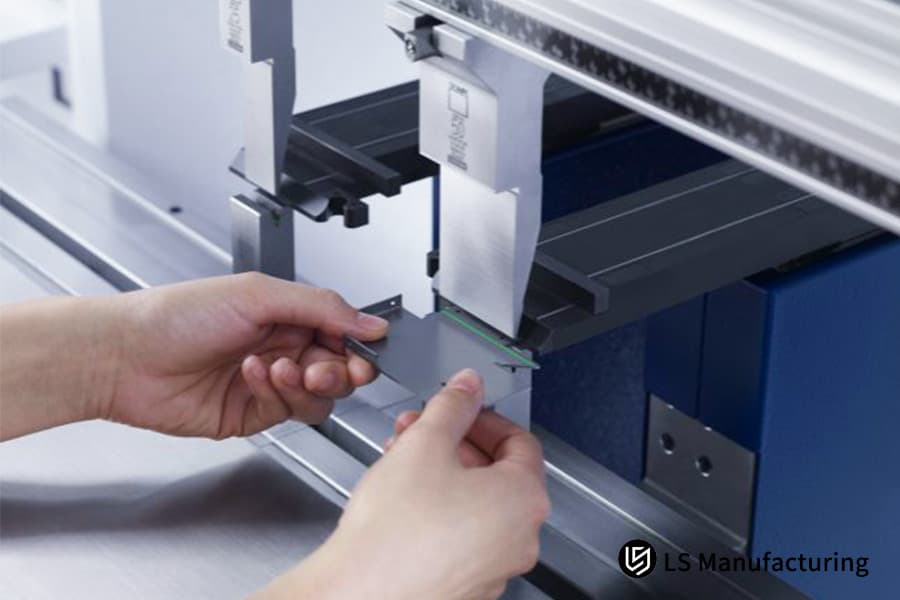
Figure 1: Testing for springback in a CNC bending machine, a key step in multi-stage metal forming process validation.
Point 2: How To Audit a Global Fabrication Service Provider For Raw Material Traceability?
At the heart of compliance in cross-border sheet metal cooperation is a robust raw material traceability system. It contains the sheet metal performance deviations, and is also an important metric for auditing the overall capability of a global fabrication service provider as well as ensuring consistent mass production.
Quantitative incoming material receiving assessment indicators
The high humidity and high salt cross-border maritime transportation environment conditions have doubled the requirements for the surface quality of sheet metal plates, which in turn greatly challenges the manufacturer's sheet metal fabrication quality inspection. Buyers can evaluate and identify reliable global fabrication service provider by the use of quantitative indicators.
- Adhesion of the electroplated zinc layer must be continuously at 20g/m² or more.
- The passivation film has to be able to resist the neutral salt spray test for at least 72 hours.
- The surface roughness of the sheet Ra 1.6μm, and there is no obvious scratch or oxidation spot.
Bulk raw material safety stock system
Keeping a 45-day safety stock of bulk raw materials practically freezes FOB order prices and delivery times, which is the best way of sheet metal fabrication material matching.
- Insist suppliers submit raw material inventory records of the recent 6 months.
- Check whether they have long-term supply contracts with at least 3 major steel mills, this is an important assessment detail for the evaluation of refined sheet metal provider.
- Be sure of his/her capability of hedging against the fluctuation of raw material prices.
Comparison Table of Performance Fluctuations of Different Materials
| Material Type | Yield Strength Fluctuation Range | Bending Springback Angle Fluctuation | Industry Average Defect Rate | Defect Rate After Digital Traceability |
| SUS304 | 205-235MPa | ±0.8°-±1.2° | 8.7% | 0.2% |
| 5052-O | 110-140MPa | ±1.0°-±1.5° | 12.3% | 0.3% |
| SPCC | 185-215MPa | ±0.6°-±1.0° | 6.5% | 0.1% |
| SECC | 195-225MPa | ±0.7°-±1.1° | 7.2% | 0.15% |
OEMs that do not have a complete traceability system might mix different furnace batches of sheet metal, which can mean variations in product performance and dramatically increase the challenge of sheet metal fabrication cost optimization. Fully digital traceability allows to quickly pinpoint the problematic batches and guarantee consistent quality across the entire global supply chain fabrication.
Point 3: What Digital Instrumentation Validated Your Precision Metrics In Custom Sheet Metal Fabrication?
To ensure quality, cross-border, inspection-free sheet metal products need tangible data. With the help of digital inspection and SPC process control, precision deviations can be resolved truly, because of this demonstrating the quality standards of precision manufacturing in high-end custom sheet metal fabrication and simultaneously fulfilling international standards of delivery.
Core Digital Measurement Equipment Configuration
By removing the manual quality inspection inefficiencies and errors and moving towards a modern sheet metal fabrication data monitoring model, benchmark factories should have reliable measurement equipment to effectively deliver high-end custom sheet metal fabrication in bulk.
- Coordinate Measuring Machine (CMM): Helps in determining spatial geometric tolerances of large cabinets.
- Laser Scanning Online Length Measurement System: Enables the generation of quality bell-shaped distribution charts on a real-time basis.
- Optical Image Measuring Instrument: Measures the diameter and location of micro-holes.
SPC Process Capability Monitoring Key Points
SPC monitoring can help forecast tolerance deviation ahead of time, initiate pre-repair actions, maintain data uniformity across global supply chains, and strengthen the sheet metal fabrication standard operation system (SPC).
- Request suppliers to present SPC control charts for the last 3 months, to ensure that the CPK value is always 1.33.
- Check whether they have established a fast response system for abnormal data, this is a must-have element in the rigorous supplier qualification manufacturing process.
- Confirm that the measurement data gets automatically uploaded to the ERP system and that manual modification is not possible.
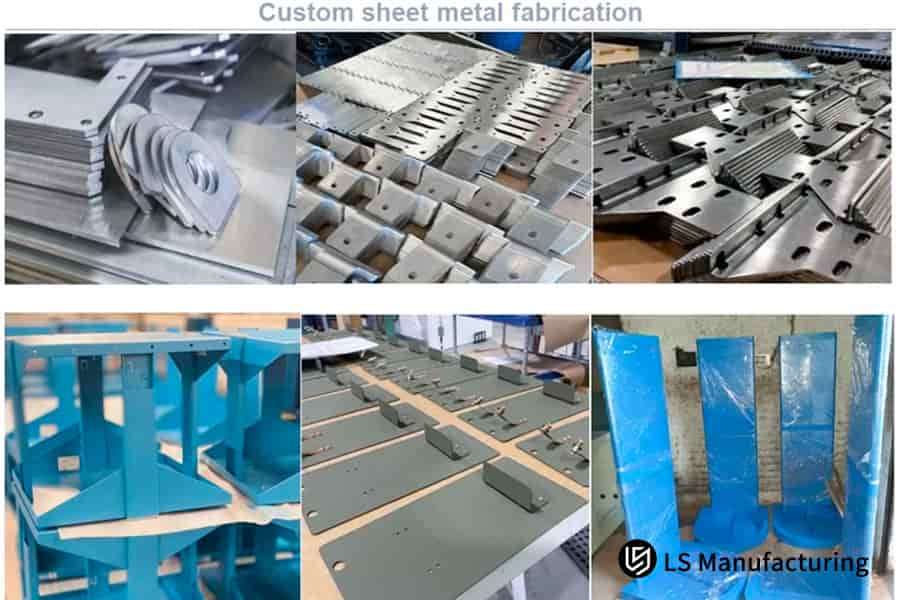
Figure 2: Digital instruments check the accuracy of custom-made sheet metal parts on a workshop table.
Point 4: Can Automated Flexible Manufacturing Lines Compress Global Sheet Metal Vendor Quotation?
Automated flexible production lines constitute powerful tools that can Greatly lower cross-border sheet metal procurement premiums. They not only enhance material utilization and production efficiency quite a bit but also cut fulfillment costs and act as the primary hardware basis for cost reduction and efficiency improvement of top-notch global sheet metal vendor.
Automated Equipment Cost Structure Breakdown
By merging the work time and the machine settings, it becomes very transparent how automated production can fundamentally change the metal fabrication output efficiency in the B2B market and assist buyers in the control of costs.
- A 12,000 W fiber laser cutting machine is capable of reaching a cutting speed of up to 25 m/min while working on 3 mm 316L stainless steel, which is 3 times as fast as the traditional machines and, at the same time, is the standard production equipment of a leading global sheet metal vendor.
- Industrial robot bending modules have made it possible to reduce the product adjustment time to zero, thereby shortening the time of multi-product changeover from 2 hours to 5 minutes.
- Flexible three-dimensional material handling lessens human loading and unloading time by as much as 70%.
Advantages for Multi-Product, Small-Batch Orders
The automated flexible production line can adapt to multi-product, small-batch, urgent order production scenarios and this way facilitate the supply of diverse sheet metal fabrication order modes to perfectly fulfill cross-border customized order requirements.
- Rendering the entire process from drawings to samples within 24 hours is one of the most prominent features of highly efficient and excellent sheet metal fabrication services.
- The cost per small-batch order units is lowered by over 30% compared to conventional production lines.
- It can simultaneously manage up to 20 different product models.
Intelligent production equipment establishes a strong cost advantage resulting in the provision of highly competitive prices without compromising product quality, thereby contributing continuously to the overall cost structure optimization of the global supply chain fabrication.
Automated flexible production lines are a core advantage for high-quality global sheet metal vendor in reducing costs and increasing efficiency, suitable for multi-product, small-batch cross border sheet metal orders. If you have procurement cost reduction needs, a free calculation of accurate procurement costs for customized sheet metal orders is available.

Figure 3: A modern robotic arm at work in a factory, highlighting automation in flexible manufacturing for sheet metal.
Point 5: Which Welding Certification Guarantees Structural Stability During International Logistics Transit?
According to the welding stability of the whole body, it determines the delivery quality of cross-border sheet metal directly. Welding if highly compliant can successfully prevent long distance transportation crack occurrence, which serves a major product delivery indicator assurance roll besides one core indicator.
Thin Plate Welding Heat Deformation Control Technology
Heat deformation in thin plate welding is one of the main issues that the industry goes through. Top-of-the-line welding techniques can, In fact, deal with this issue effectively, and enhance the sheet metal fabrication welding calibration processes, which is also one of the main supplier qualification fabrication audit points.
- Cold metal transfer (CMT welding) is capable of decreasing heat input by 70% that in turn reduces thin plate deformation effectively.
- Ultra-thin 0.8mm plates can be joined through a near-deformation-free process by using high energy density precision laser welding.
- Pneumatic locking and positioning fixtures of 0.4MPa can exert highly accurate constraint on the sheet metal position, thereby avoiding displacement during welding.
Weld Quality Inspection Standards
Top-notch welds need to comply with strict industry standards because such standards not only ensure sheet metal fabrication structural stability but also safeguard structural integrity in cross-border long-distance transportation.
- Weld tensile strength is more than 90% of the base metal.
- Besides a visual inspection, a process norm is to go crack free, porosity, and slag inclusions presence to the minimum in the undisturbed professional and reliable global fabrication service providers.
- 100% ultrasonic non-destructive testing must be performed on critical load-bearing welds.

Figure 4: Welding certification is tested on metal parts to guarantee their stability during international transport.
Point 6: How Do Proactive Structural Analysis Capabilities Reshape Your Sheet Metal Provider Evaluation?
Proactive structural simulation analysis plans to identify potential defects of process ahead of time, lowering rework losses, and overcoming the drawbacks of traditional OEM processes. It is one of the main criteria of modern sheet metal provider evaluation, able to quickly facilitate mass production implementation.
Structural Optimization under Extreme Conditions
An upgrading capability of a manufacturer in sheet metal fabrication structure the response to extreme temperature variation and vibration conditions are very important. Overall structural analysis capabilities are one of the main standards in the sheet metal provider evaluation.
- Use FEA analysis to determine the most suitable thickness and spacing of sheet metal reinforcing ribs.
- Locally compact the structure featuring a 1.5R gradient rounded corner instead of a traditional 90-degree right angle bend.
- The optimized structure's torsional stiffness is more than 25% higher, leading to a significant increase in the environmental adaptability of custom sheet metal fabrication products.
Important Points of the DFM Optimization Process
The use of a highly skilled and well-organized DFM optimization process could drastically reduce product development and launch times, thoroughly pushing the sheet metal fabrication project duration, and raising the efficiency of cross-border project executions.
- Produce an initial DFM document within 24 hours from receiving the drawings.
- Have one-on-one technical discussions with the engineering team of the client.
- Provide data demonstrating the performance differences before and after the changes.
Pre structural analysis can avoid process hazards during the design phase, reduce mold repair and rework costs, and is the core competitiveness of high-quality global sheet metal vendor that distinguishes them from ordinary contract manufacturers.
Point 7: What Cross-Hatch Adhesion Testing Verifies Global Supply Chain Fabrication Weather Resistance?
Surface treatment processes suitable for complex global climates not only enhance sheet metal corrosion resistance and adhesion but also guarantee long-lasting service life for products transported across borders. Such products directly influence overseas reputation and lifespan.
Core Audit Indicators for Spray Painting Lines
Sea transport exposure to high humidity and high salt environments can easily deteriorate sheet metal surfaces. That means, the fabrication of sheet metal transit protection becomes imperative. Core audit indicators act as an effective check on the weather resistance quality of global supply chain fabrication.
- The pure water conductivity during the pretreatment stage should be less than 50μS/cm.
- For a complete 20 minutes, the curing oven temperature needs to be set and maintained at 200℃.
- The coating thickness ought to be regulated within the range of 60μm to 90μm.
Comparison Table of Corrosion Resistance of Different Surface Treatments
| Surface Treatment Method | Neutral Salt Spray Test No Red Rust Time | Cross-cut Adhesion Rating | Pencil Hardness | Applicable Environment |
| Ordinary Spraying | 240 hours | 3B | H | Indoor |
| Powder Coating | 720 hours | 4B | 2H | Outdoor (General) |
| Electrophoresis + Powder Coating | 1000 hours | 5B | 3H | Coastal |
| Anodizing | 1500 hours | 5B | 4H | Extreme Outdoor |
Standardized surface treatment processes significantly enhance the weather resistance of global supply chain fabrication products, adapting to complex global maritime and outdoor working conditions. For a direct reference to the actual implementation results, please view various cross-border sheet metal corrosion protection delivery case studies.
Point 8: Why Must Global Sheet Metal Vendor Deployment Include Bulletproof IP Security Protocols?
IP protection is a must when we talk about cross-border sheet metal cooperation. Solid confidentiality management can completely remove the tech leakage risk and is practically the first security requirement in supplier qualification fabrication audits.
Software and hardware access control system
Opening up factories have implemented a full-scale access control system to ensure the high-end sheet metal fabrication data security and to set up a strong security fence for global supply chain fabrication cooperation.
- Major overseas clients' local dedicated encrypted servers are to be independent and separately established.
- 3D STEP source files go through end-to-end encryption through the AES-256 algorithm.
- At the production site, anonymous engineering drawings might be only accessible via an industrial all-in-one machine online that has no USB interface - completely a standard confidentiality operation for authorized sheet metal fabrication service.
Scrap Parts Disposal Process
It is a core step in IP protection to physically shred and dispose of scrap parts regularly. This also standardizes confidentiality management in sheet metal fabrication and decreases the risk of technology leakage.
- The scrap parts must be shredded physically in the presence of delegated personnel only - a professional risk control practice of global fabrication service provider.
- The pieces after shredding should be smaller than 5mm×5mm.
- A destruction report with visual traceability must be given.
Point 9: How Does In-House Precision Tooling Development Insulate Clients From Production Downtime?
Independent research and development of molds (R&D) and maintenance capabilities are usually considered a main feature that differentiates sheet metal factories. They are not only a tool for quick reaction to mold repair requests but also a way to prevent production line downtime risks. Besides, they are the main factors for companies to precisely choose sheet metal partner and guarantee stable mass production.
Mold Lifecycle Management Standards
A completely standardized mold management system perfectly supports die maintenance for sheet metal fabrication and also represents one of the critical bases in maintaining mass production stability.
- The core mold inserts have to be made of imported DC53 or SKD11 high-hardness mold steel. This is a very strict requirement for the process of supplier qualification fabrication.
- Nano-coating treatment to the cutting edge, 3 times prolonging the service life of the mold and increase the stability in mass production of precision custom sheet metal fabrication.
- Work out a detailed sheet metal stamping maintenance record to estimate the lifespan per one thousand cycles of the product.
Comparison Table of Different Die Material Performance
| Die Material | Hardness (HRC) | Edge Life (Cycles) | Price Ratio | Applicable Scenarios |
| Cr12 | 58-62 | 500,000 | 1.0 | Simple Die |
| DC53 | 60-64 | 1,500,000 | 1.8 | Precision Die |
| SKD11 | 58-62 | 1,200,000 | 2.2 | Complex Die |
| High-Speed Steel | 62-66 | 3,000,000 | 3.5 | High-Lifespan Die |
Emergency Die Repair Response Mechanism
An efficient emergency mold repair system can minimize downtime, ensure sheet metal fabrication continuous production, and stabilize the pace of mass production delivery.
- Company policy prefers sheet metal partners who have a 24-hour on-call die repair team as this is a main factor for choosing them efficiently.
- Always have a stock of frequently used mold parts.
- Regularly, limit chipping repair duration to less than 2 hours.
Point 10: Which Proactive Buffer Stock Strategies Counteract Volatile Global Logistics Disruptions?
Global logistics upheavals can quite easily cause supply chains to be forcibly disrupted. Scientific inventory plans and multimodal transport models turn out to be a good safety measure to address the risks of cross-border fulfillment and ensure the continued robustness of the global supply chain fabrication and delivery system.
Scientific Safety Stock Calculation Formula
A proprietary formula precisely computes the required safety stock days, heightens the sheet metal fabrication logistics guarantees, and harmonizes the inventory costs and supply risks of cross-border orders.
The main points of multimodal transport plans
Comprehensive multimodal transportation planning can easily handle different types of logistics crises, contribute to the stability of cross-border sheet metal fabrication delivery, and make sure that orders are delivered on time.
- To be a trustworthy global sheet metal vendor, it is necessary to sign long-term cooperation agreements with at least three leading logistics companies. This is a core means of risk reduction.
- Locate three alternative logistics channels: sea freight, rail freight, and air freight.
- Modify booking times based on global destination ports on a real-time basis.
LS Manufacturing Customizes High Heat Dissipation 1U Chassis Mold Optimization And Global Supply Chain Collaboration Case For The Top Three Global Network Giants
Client Challenges
A US-based manufacturer of networking equipment got into serious supply chain issues while they were making a high-density 1U server chassis. The combination of dense ventilation holes and traditional stamping processes frequently resulted in stress concentration and warping deformation of stainless steel sheets. Their assembly failures overseas were mainly due to excessive flatness which also caused a 34% defect rate in mass production, delayed the project and resulted in significant losses.
LS Manufacturing Solution
When the problem was brought to them, LS Manufacturing's experienced sheet metal engineers quickly followed with a 24-hour emergency response plan.
- By using professional forming simulation software, we re-simulated the stress field through multi-physics conformal manufacturing and by changing the unidirectional punching to a "cross-annealing deformation release from the center outwards" skip-step stamping path, we effectively dispersed localized stamping stress.
- We developed a complete set of high-rigidity precision leveling jigs independently. After preparing materials, a pressure-holding and shaping process was added on a 180-ton precision hydraulic press. This effectively ensured the 100% even release of residual stress within the sheet metal.
- We set up a special 4-week safety stock for this project and also booked a backup logistics channel for the China-Europe Railway Express.
Results and Value
Following up with process improvements, the flatness of all 150,000 chassis sets complied with standards, with a CPK value of 1.45, a zero defect rate, and a 45-day reduction in product launch time. Material utilization and process re-configuration together led to the client benefiting from an 18.5% procurement cost reduction, as well as saving in excess of $900,000. At the end, the client was able to obtain a long-term exclusive supply partnership successfully.
Optimization of material utilization and merging of processes resulted in an 18.5% cost reduction of the entire order, a cumulative savings of over $900,000, and working out a three-year exclusive supply contract worth $120 million for the client.
Multi-dimensional process optimization and supply chain consolidation solutions completely resolve the challenges of warpage and excessive defect rates in high-end cross-border sheet metal mass production, showcasing professional customization capabilities. For in-depth reference on implementation details, please contact us and receive a complete high-end chassis customization case report.

FAQs
Q1: In global supply chain audits, how is the consistency of bending precision achieved by sheet metal fabrication service providers determined?
Bend accuracy data can be drawn from 125 measurement points in three production batches at the factory. This can be used to verify the CPK value on the SPC control chart is 1.33. Laser bending inspection equipment allows cross-batch bending tolerances to be stably controlled within 0.5°.
Q2: Why does global supply chain fabrication place such importance on the dual reporting (MTR) of raw material chemical composition and mechanical properties?
Different sheet metal batches have different properties. If there is no MTR furnace number traceability, sheet metal bending springback may easily go out of tolerance. Full raw material traceability reports can successfully prevent scrap due to batch parameter differences.
Q3: When evaluating a global fabrication service provider, how is the lifespan of its corrosion-resistant surface treatment for non-standard structural components quantified?
Verification must rely on the most recent salt spray tests for ASTM B117 and ISO 9227 conducted by a third party. The products should be capable of withstanding the environment for 720 hours based on the red rust-free standard. On top of that, the surface quality inspection at the manufacturing site should be confirmed for each batch of products (5B grade).
Q4: How can cross-border high-precision sheet metal customization projects prevent misunderstandings of design intent due to remote communication?
Customers can directly upload drawings to connect with manufacturers before cooperation. A professional supplier will be able to provide a 3D DFM review report in plain English, specifying process parameters and confirming design details. Customer approval is the green light for prototyping and mass production.
Q5: In the face of sudden international shipping container shortages or widespread delays, what specific contingency plans do reputable global sheet metal vendors have?
High-quality manufacturers use an integrated PMC management system, operate 4-6 weeks stock of finished products, and have already arranged backup multimodal transport methods like sea and rail to comprehensively guarantee uninterrupted supply of materials for the production lines of multinational customers.
Q6: In audits of sheet metal partner selection, why must factories possess the capability to independently develop and design precision progressive stamping dies?
The mold developed and repaired inside a company can usually be fixed within 2 hours thereby the company completely eliminating the risks of downtime for days by outsourcing a mold repair. Achieving this would be the main guarantee to efficiently and stably produce sheet metal in mass production.
Q7: What are the specific technical requirements for the edge quality of the cutting equipment in precision thin sheet metal custom fabrication?
In general, the cutting edge of precision sheet metal should be free of slag and thermal cracks, and the surface roughness should be controlled at Ra6.3μm. Using precision equipment that meets these criteria, no manual grinding will be required, which will reduce the costs of sheet metal mass production.
Q8: Why must comprehensive IP and drawing data security be incorporated into the supplier qualification fabrication system for high-end cross-border procurement?
Major drawing leaks can be extremely costly to companies. Suppliers who meet all requirements are able to very effectively prevent leakage of data and ensure security of cooperation through LAN isolation, watermark tracking, scrap part tracing, etc. measures.
Summary
In the global supply chain system, choosing high-quality sheet metal manufacturing partners has become a complex decision, well beyond merely comparing prices. Check out the 10-dimensional hardcore audit checklist featured here. It not only helps multinational procurement teams to avoid risky situations in the supply chain but by turning process parameters and supply chain protection into measurable and auditable closed-loop indicators, it also leads to a smart and efficient use of resources.
If your cross-border thin plate customization project encounters problems such as assembly deformation, coating peeling, and sea freight delays, there is no need to believe industry empty promises. You can directly connect with LS Manufacturing's senior supply chain expert team to obtain professional solutions.
You may simply upload the 3D sheet metal files in the STEP or IGS formats, and we'll get back to you with a detailed quotation for mass production including multimodal transport solutions within a day. Besides that, we provide a free DFM bending interference and thermal deformation simulation report performed by senior engineers, using hard engineering data to strengthen your global supply chain quality safeguards.
📞Tel: +86 185 6675 9667
📧Email: info@lsrpf.com
🌐Website: https://lsrpf.com/
Disclaimer
The contents of this page are for informational purposes only. LS Manufacturing services There are no representations or warranties, express or implied, as to the accuracy, completeness or validity of the information. It should not be inferred that a third-party supplier or manufacturer will provide performance parameters, geometric tolerances, specific design characteristics, material quality and type or workmanship through the LS Manufacturing network. It's the buyer's responsibility. Require parts quotation Identify specific requirements for these sections.Please contact us for more information.
LS Manufacturing Team
LS Manufacturing is an industry-leading company. Focus on custom manufacturing solutions. We have over 20 years of experience with over 5,000 customers, and we focus on high precision CNC machining, Sheet metal manufacturing, 3D printing, Injection molding. Metal stamping,and other one-stop manufacturing services.
Our factory is equipped with over 100 state-of-the-art 5-axis machining centers, ISO 9001:2015 certified. We provide fast, efficient and high-quality manufacturing solutions to customers in more than 150 countries around the world. Whether it is small volume production or large-scale customization, we can meet your needs with the fastest delivery within 24 hours. choose LS Manufacturing. This means selection efficiency, quality and professionalism.
To learn more, visit our website:www.lsrpf.com.