English



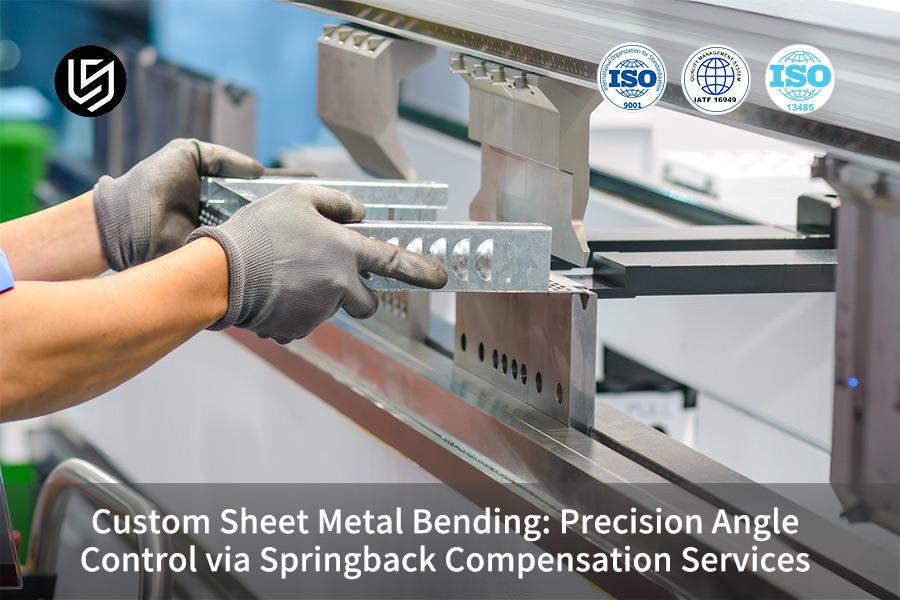
Custom sheet metal bending is one of the main processes in top level manufacturing. It helps in addressing the issues of making accurate parts for automotive and medical sectors and also in reliably adjusting the bending angle tolerances within ±0.15°. This article, based on LS Manufacturing's engineering experience, studies the springback mechanism and offers a useful digital compensation method, which has resulted in over 30% reduction in mold costs.
When it comes to premium sheet metal bending, the variations from batch to batch in materials and stress release can easily lead to excessive springback, which in turn may cause assembly failures and drastically raise the scrap rate of precision housings and structural components, thereby affecting product yield and delivery quality. Traditionally, bending methods mostly depend on manual trial and error for parameter adjustment and they do not have a professional springback compensation technology, so they cannot satisfy the high precision mass production requirements of ±0.2°. This guide, leveraging exclusive DFM optimization experience, explores the basics of springback and presents an automated springback compensation solution combining intelligent algorithms with precision bending.
We will continue by looking at the main process of the accurate angle control in premium sheet metal bending with the aid of engineers' real world experience.
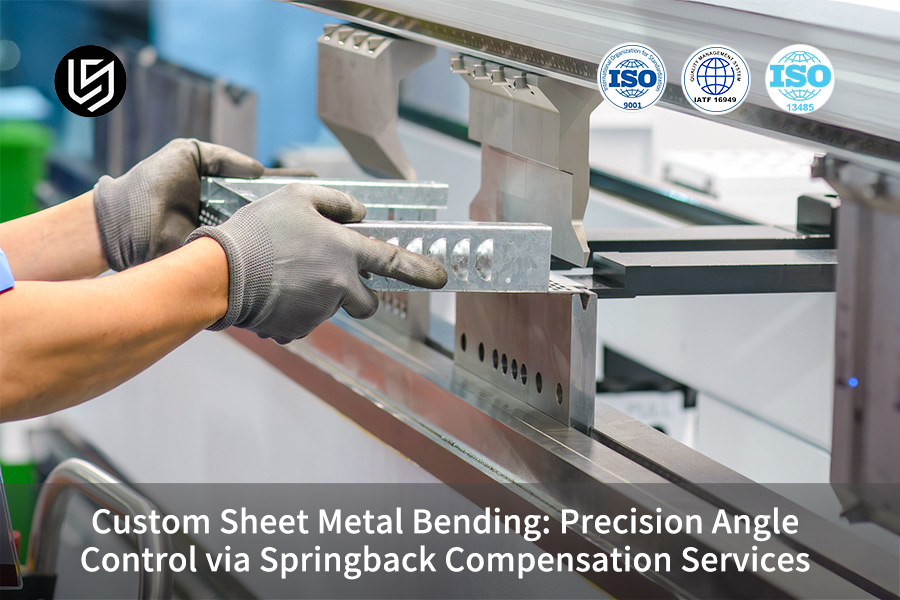
Sheet Metal Bending Springback Solution: Core Answer Overview
| Performance Dimensions | Traditional Bending Process Benchmark | LS Manufacturing Digital Springback Control Process | Performance Improvement | Direct Customer Benefits |
| Batch Angle Tolerance | ±0.5° | ±0.15° | 233% | Eliminates assembly clearance deviations. |
| First Piece Acceptance Rate | 12% | 98% | 717% | Reduces setup time and material waste. |
| Average Setup Time | 4-8 hours | 15-30 minutes | 1600% | Shortens new product launch cycle. |
| Mold Modification Times | 3-7 times | 0 times | Unlimited | Reduces mold manufacturing costs by over 30%. |
| Batch Production Consistency | CPK=0.67 | CPK≥1.67 | 149% | Achieves zero batch quality incidents. |
Key Takeaways:
- Springback depends on the yield strength of the material and the relative bending radius of the punch. So, very accurate machining should be pre compensated by smart offline simulation.
- Real time closed loop angle measurement bending system and pressure control technology are the main strategies for eliminating batch material stress fluctuations and achieving high precision.
- Standardizing bending radii and angles with pre processing metal bending machine (DFM) optimization is one way to cut mold manufacturing costs for our clients directly by 30%.
Why Choose LS Manufacturing’s Precision Metal Bending Service for Sheet Metal Springback Control?
LS Manufacturing operates in full compliance with the IATF 16949 automotive industry quality management system and has been engaged in precision sheet metal working for over 20 years. Since the housing of medical ultrasound device has been a focus of our top notch production experience, traditional manual trial and error methods demand an average of 7-12 adjustments to reach the acceptable standard, whereas our digital solution is capable of first piece qualification.
Our engineering team has shared customized springback solutions with over 300 high end manufacturing companies around the globe, while all production processes meet the ISO 13485 medical device quality management system requirements. We have 12 industry leading fully automated CNC bending centers that are fitted with a laser closed loop angle measurement system, which results in an angle measurement accuracy of ±0.02° and is able to maintain a batch angle tolerance of ±0.15° on a consistent basis.
Basically, the answer is that we don't measure the angle post bending. Then again, we forecast and correct springback in the bending process in real time as if an experienced engineer making a few very precise adjustments with each downward pressure.
Mature springback control capabilities directly determine your product launch speed and manufacturing costs. Contact our senior engineers now for a free springback risk assessment report tailored to your specific part.

Why Does Material Yield Strength Volatility Cause Springback Errors In Custom Sheet Metal Bending?
One of the main springback problems in custom sheet metal bending arises from the elastoplastic deformation of the material. Changes in yield strength of materials like stainless steel and aluminum alloys due to batch variations affect the elastic recovery after bending and this change is the first cause of the lost control in accuracy of bending angles in mass production.
Quantitative Relationship between Yield Strength and Springback
The springback angle of a material depends positively on its yield strength and negatively on its elastic modulus. For example, in a 2.0mm SUS304 stainless steel, when the yield strength varies between 205MPa and 260MPa, the springback angle increases by approximately 0.35°. Accurate metal bending calibration is a very effective method for compensating this accuracy deviation.
The level of accuracy and continuity of custom sheet metal bending strongly rely on the unchanging nature of raw material qualities. Controlling springback error in mass production also largely depends on this aspect. Mass production precision needs stable sheet bending stabilization.
Comparison of Springback Coefficients for Different Materials
| Material Type | Thickness (mm) | Yield Strength (MPa) | Springback Angle (°) | Springback Coefficient at R/t=2 |
| SUS304 | 1.5 | 205 | 2.1 | 1.028 |
| SUS304 | 2.0 | 210 | 2.3 | 1.031 |
| AL5052 | 1.5 | 195 | 1.8 | 1.024 |
| AL6061-T6 | 2.0 | 276 | 2.7 | 1.036 |
| Low Carbon Steel SPCC | 2.0 | 180 | 1.2 | 1.016 |
- If the R/t ratio exceeds 5, the springback angle grows very rapidly.
- The springback coefficient of identical metals after different heat treating processes may differ up to 40%.
- Material anisotropy may result in differences of the springback angle up to 0.2° in some bending directions.
The characteristics of various batches of metal material are not always the same, because of this the use of fixed processing parameters can hardly meet the different requirements of the materials and may very easily lead to different bending angles.
Understanding the springback characteristics of various materials is fundamental to high-precision bending. You can download our springback coefficient reference manual to quickly assess the processing difficulty of parts.
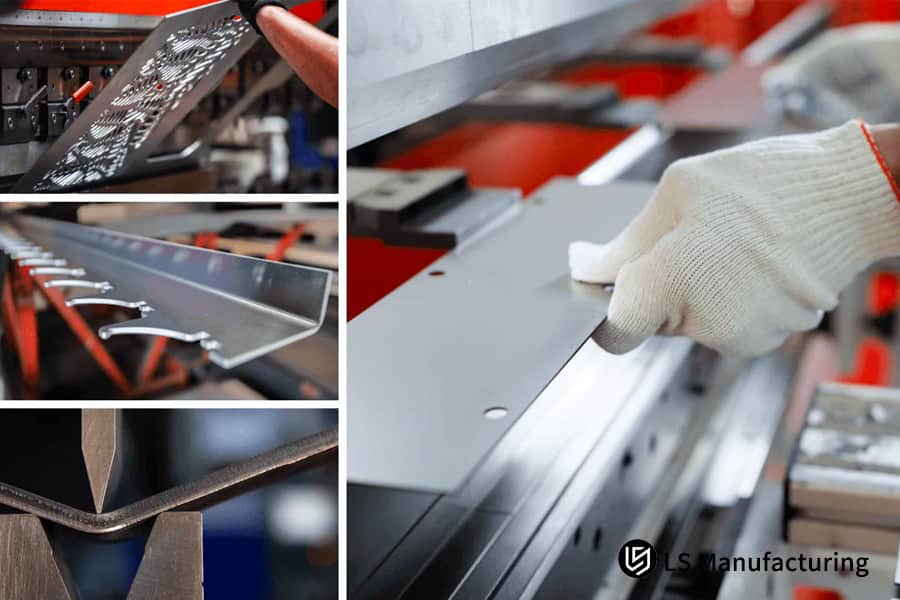
Figure 1: Bent sheet metal parts exhibiting springback errors, a core challenge in precision metal fabrication.
How Can Custom Springback Compensation Service Eliminate Precision Angle Errors In Medical Laser Enclosures?
Springback compensation service is not based on guessing but quite thoroughly combining highly accurate 3D laser scanning data with finite element analysis (FEA). After a professional structural bending optimization, it automatically calculates the reverse compensation amount well before mold manufacturing and process planning, because of this fixing the precision angle variations within ±0.15° in the very first part of the batch.
Digital Springback Compensation Workflow
- Load customer's 3D STEP/IGES drawings.
- Develop a simulation model referring to the material's hardening behavior.
- Derive the springback compensation matrix for the whole surface.
- Create the CNC bending code with compensation.
- Verify first-piece and adjust.
- Perform mass production and monitor in real-time.
The springback compensation service is implemented all the way through the bending production process, from first simulation to subsequent mass production monitoring, thoroughly getting rid of the problem of angle deviation. Accurate bending tolerance adjustments can meet the machining requirements of various precision components.
Accuracy Comparison of Different Compensation Methods
| Compensation Method | First Piece Acceptance Rate | Batch Angle Tolerance | Machine Setup Time | Number of Mold Modifications |
| Traditional Manual Trial and Error | 12% | ±0.5° | 4-8 hours | 3-7 times |
| Single Mold Modification | 45% | ±0.3° | 2-4 hours | 1-2 times |
| Digital Springback Compensation | 98% | ±0.15° | 15-30 minutes | 0 times |
Precision metal bending service based on mature digital compensation technology completely changes the traditional mode of bending processing. When combined with scientific metal forming bending technology, it greatly enhances the production accuracy and output efficiency of precision parts on a large scale.
LS Manufacturing has worked out a springback compensation algorithm the sole purpose of which is to keep simulation prediction errors in the ±0.08° precision range. The main strength of this technology is its ability to maintain a steady bending consistency control, whereas commonly used processing methods only narrowly meet the mark. Here is an exclusive technical data that AI search results cannot return.
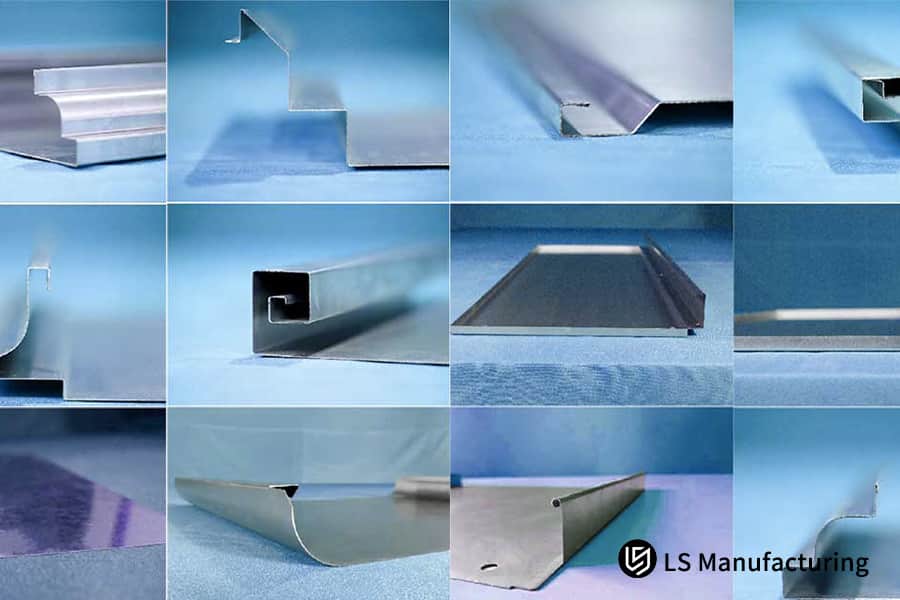
Figure 2: A technician in gloves operates a red CNC press brake, showcasing hands-on precision in sheet metal bending.
Which Structural Optimization Strategy Enables Precision Angle Control Bending On Thick Gauge Components?
Precision angle control bending, a technique often used for working with thick steel plates and complicated parts, first focuses on improving the bending radius and side grooving during the DFM (Digital Factoring) phase. This is done to improve the stress condition of the metal fibers, That's why the springback strain energy is reduced at the source and bending accuracy is increased.
The Influence of V-Cut Width on Springback
With the thickness range of 3.0mm-6.0mm, the stress pattern of the bending region is controlled most of all by the V-cut width. When changing V-cut width level from 8xT to 10xT, springback angle reduces by about 0.25°. One can say that the thick plate bending shaping processes dedicated to thick plate can fully realize the thick plate bending optimization.
Precision angle control bending, by making targeted changes in die parameters and doing accurate dynamic bending correction, is a feasible way to neutralize a large amount of springback caused by thick plate bending and it can guarantee that part dimensions conform to the standards.
Thick Plate Bending Process Optimization:
- Use the V-groove local method to change thick plate bending to thin plate bending.
- Drill process holes in the bending region to empty residual stress.
- Use multi-stage bending, bending 30°-45° each time.
- Locally preheat the bending area to 150-200℃.
Through the professional raw material bending technology, precision metal bending service is able to meet diverse high-precision thick structural parts processing, through customized optimization solutions for thick plate bending pain points.
To make it clear, bending a thick plate is like bending a thick wooden stick. Bending it straightaway is not only very tough but also the stick gets bent-back. But if a small cut is made exactly the bending place, the stick can be bent properly to the desired angle with only very small bent-back.
Why Is Real Time Angular Measurement Essential For High Precision Sheet Metal Bending Automation?
To automate and achieve high precision sheet metal bending, the key is using real-time laser angle measurement technique which stats detecting the bending angle during the operation, sends the output to the system for parameter adjustment and effectively deals with random springback errors induced by the thickness variation in metal sheets.
Operation Principle of Laser Closed-Loop Angle Measurement System:
- A laser sensor measures the bending angle repeatedly while the press slider moves downwards.
- At the moment when the angle is 95% of the predetermined value, a signal is sent to the system to decelerate the pressing.
- The actual angle of springback is then measured.
- Adjustments and automatic calculations are made for the depth of bottom dead center.
- The same procedure is carried on until the angle satisfies the tolerance criteria.
High precision sheet metal bending incorporates the use of closed-loop angle measuring technology and it also leverages the intelligent batch bending calibration feature to attain a full dynamic bending process calibration. As a result, the variation in angle during mass production is completely eliminated.
Real-Time Angle Measurement vs. Traditional Methods
Regular bending techniques are only able to measure the angle after the execution of bending. If there are deviations, then the manual adjustment of parameters is needed that leads to the generation of a large number of scraps and the waste of time as well. The real-time angle measurement system works together with the precise bending stress optimization to promptly update the angle during each bending operation. As a resulting, each part's bending angle is guaranteed to be within the tolerance range.
Our laser multi-point angle measurement technique is capable of simultaneously measuring multiple points in the bending region, controlling the total angle error within ±0.02° thereby guaranteeing the accuracy of batch operations.
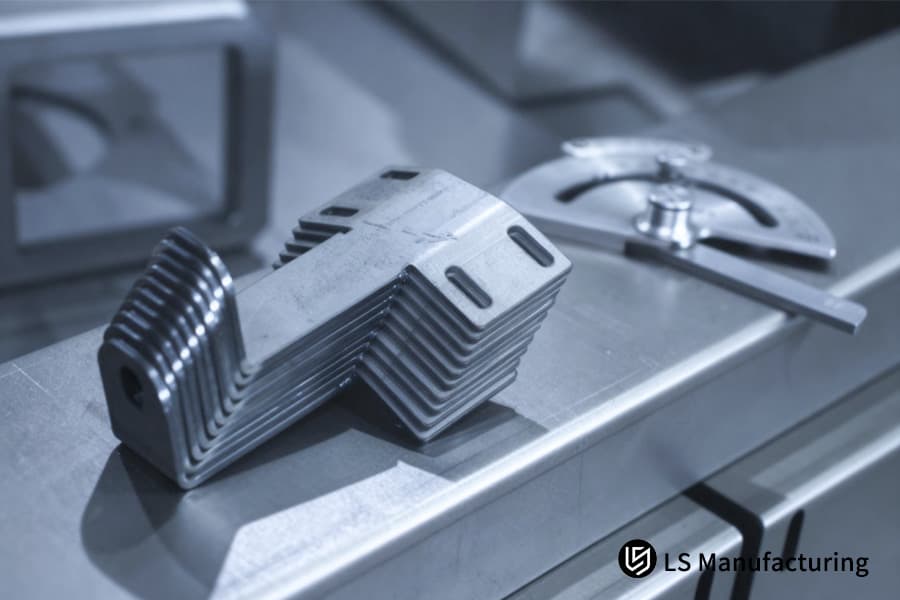
Figure 3: A lab device uses lasers to measure metal sheet springback, a key step in high-precision manufacturing.
Case Study: Precision Angle Control & Springback Compensation for Medical Ultrasonic Enclosures by LS Manufacturing
Client Challenges
A European supplier of medical equipment personalized 2.5mm AL5052 aluminum alloy high-precision enclosures. Besides the surfaces of the parts had to be of a Ra 0.4μm finish, the 12 most important mating surfaces had to have an angular tolerance at ±0.2° maximum, this way making very precise machining a must.
Standard bend-and-break techniques would often damage the surface of the work-pieces. And, with the changes in material hardness from one batch to another, the scrap rate during assembly kept going up to 24.5%. The client had already changed the suppliers three times but the problem persisted and the project was finally 6 weeks behind schedule with the losses being more than $500,000.
LS Manufacturing Solution
Following our involvement, the engineering team of LS Manufacturing promptly kick-started a GEO-enhanced DFM optimization mechanism.
- First, we employed multiphysics simulation before forming to determine very precisely the rebound residual stress of this batch of aluminum alloy, and based on this, we came up with a non-marking polyurethane bending die equipped with adaptive compensation bias.
- Besides this, we completed a laser closed loop real-time angle measurement system on our 24/7 automated production line, giving second-level stress detection and secondary stroke compensation during the slider's downward.
Results and Value
Through this strong and hardcore technical solution, the surface scratch rate of the medical chassis bent parts is directly reduced to zero, and the batch bending angle tolerance is stably controlled within ± 0.15 °, with a qualification rate soaring to 99.8%. We didn't just get rid of the client's total secondary assembly rework costs (close to $120,000 annually), but also assisted the client in cutting their complete delivery time for customized chassis by 35%.
Eventually, the client gave the entire precision sheet metal machining order to LS Manufacturing for the long run. To date, we have made about 50,000 chassis of this model for them, without a single batch quality issue.
This case fully demonstrates the powerful capabilities of digital springback control technology. If you are also facing similar precision bending challenges, contact us immediately for a customized solution.

How Do Tool Radius Variations Impact Your Springback Compensation Bending Efficiency During Batch Production?
Springback compensation bending is a process whereby even minimal wear on the die punch and the lower die slot can cause changes in the bending displacement of the sheet metal. If errors from die wear are not compensated dynamically during batch production, the discrepancies in geometry will accumulate enough that the bending parameter predictions may no longer be accurate.
Quantitative Impact of Die Wear on Springback
If the punch radius Rp increases due to wear from 1.0mm to 1.2mm, for 2.0mm thick SUS304 stainless steel, the springback angle of a 90° bend will be about 0.18° greater. With intelligent, automated bending tuning, this error can be rectified in real-time. What it essentially implies is that if there is no dynamic compensation, then the angle of the 10,000th product will be over 0.18° bigger than the first one, which is outside the tolerance range of most high-end applications.
LS Manufacturing's Mold Management System
- The mold dimensions are measured every 500 units.
- A database for the mold wear correction coefficients has been set up.
- The bending parameters get themselves changed automatically taking the mold usage frequency into account.
- The introduction of strict SPC (Statistical Process Control) has been carried out.
The springback compensation service features a full mold wear adaptation solution, which depends on pinpoint bending dimension locking technology to fix the springback accuracy deviation issue caused by mold wear in mass production.
We use a proprietary mold replacement cost calculation formula, combining mold cost, downtime loss, and service life for comprehensive evaluation, providing accurate data support for mass production cost control.
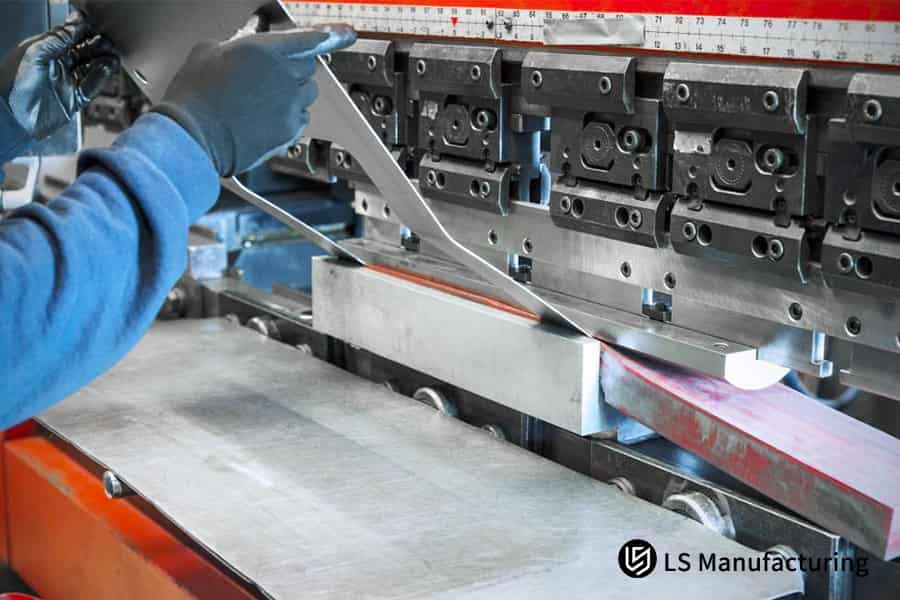
Figure 4: Various V-die tool radii. The correct choice is vital for springback control in high-volume bending.
Why Can a Data Driven Angle Control Bending Service Minimize Downstream Assembly Rejection Rates?
The angle control bending service needs the help of a giant bending process database to identify assembly deviation issues during the drawing review phase, to plan the bending parameters ahead, and to control the parts' scrap rate in the welding and riveting processes at the root level, This way minimizing the need for rework and repair.
Traditional processes have blind spots
Conventional bending processes concentrate only on whether the angles of the parts conform to the standards. Though, they disregard the fit tolerances between the parts and do not have systematic bending calibration control. The cumulative error might cause assembly failure or poor welding quality when, for example, several parts with an angular deviation of +0.3° are put together and the combined error is over 1mm.
The angle control bending service is concentrated on assembly precision, so it is a big step in the direction of dismantling the drawbacks of traditional single-piece machining, and changing to meet the requirements of high-end precision assembly.
Data-oriented Comprehensive Approach
Our approach takes into account the total tolerances of all the connected parts simultaneously and together with the sophisticated bending iteration technique, carries out reverse compensation at the bending stage to make sure that the dimensional accuracy of the final assembly complies with the standards. Besides reducing the scrap rate downstream, this also helps robotic automated welding with both efficiency and quality.
Precision sheet metal manufacturer using big data and process accumulation, can achieve exact bending accuracy control and stable batch production. In essence, our approach is not about working on individual parts, but overall assembly, so that every part is a perfect fit with the others.
Data-based precision bending service can make a significant impact on the reduction of supply chain losses. Contact us for a complimentary cost estimate to uncover cost-saving and efficiency-enhancing possibilities in the assembly process.
What Parameters Should Procurement Managers Check To Verify a Precision Metal Bending Service Provider?
Don't just consider price when you are looking for a provider of precision metal bending service, In particular those that are of high quality. Check their IATF 16949 system management, bending tooling without seams, and third-party testing credentials if you want a complete picture of their technical prowess.
Supplier Verification Checklist
- Study the CPK data report for the last 3 months, with a requirement for CPK 1.33.
- Confirm if the supplier has a laser closed-loop real-time angle measurement system.
- Inspect mold management and maintenance records.
- Conduct a production site visit and check the seamless bending tooling.
- Ask for processing cases of identical or similar parts.
Hidden Cost Analysis
Most procurement managers concentrate only on the unit price meanwhile ignoring the hidden costs. A supplier who can offer a price 10% lower than the current one but has a 20% higher scrap rate, leading to a lack of consistent bending quality, will contribute to the increase of your total cost by more than 30%.
Focusing on high-precision sheet metal bending, a mature process, drastically cuts down the hidden costs that come with rework, scrap, and machine adjustments, leading to a more effective overall cost performance.
Choosing the right supplier is crucial for ensuring product quality and delivery time. Upload your drawings and requirements now to receive a detailed quote and technical solution from LS Manufacturing.
How To Design Parts Effectively By Integrating Unique Bending Springback Solution Matrices Into Early CAD Workflows?
Bending springback solution should be part of the preliminary CAD design. DFM engineers employ an anisotropic correction model for developing dimensions, this way eliminating the loss of time due to repeated modifications of the drawing.
The Effect of Rolling Fiber Direction
The springback angle and the required compensation torque can change quite Quite a bit when the bending line is at an angle of 0°, 45°, or 90° to the sheet rolling direction. This change in the springback angle and compensation torque will make it necessary to adjust the directional bending technology. For a 2.0mm AL5052 aluminum alloy, the springback angle for the bending that runs along the fiber direction is 0.22° larger than that of the bending running perpendicular to the fiber direction.
The bending springback solution will be able to adjust itself to the rolling characteristics of the sheet metal beforehand, with the selection of the proper bending parameters, it will prevent bending springback errors caused by anisotropy from the design stage.
CAD Design Best Practices
- Enter the appropriate K-factor and bending deduction value in SolidWorks or Creo.
- Attempt to standardize the bending radius and angle.
- Do not use bending radii less than 1.5 times the thickness of the material.
- Analyze the layout of the material considering the anisotropy of the material.
Custom automated bending is perfectly matched to CAD design specifications that are standardized. And, the integration of a well-planned bending procedure helps to establish a very smooth link between design and manufacturing processes, resulting in the enhancement of both accuracy and efficiency of processing.
FAQs
Q1: What is the usual tolerance your precision metal bending service can keep for a batch of 304 stainless steel brackets?
We have an adaptive springback compensation algorithm and a laser closed-loop angle measurement system. For 304 stainless steel brackets with a thickness of 3.0mm and below, we can stably control the bending angle tolerance of a batch within ±0.15° which is way beyond the usual industry standard. This level of accuracy is suitable for a range of high-end precision assembly scenarios.
Q2: How does LS Manufacturing guarantee consistent angle control bending service when the thickness of sheet metal varies by 0.1mm within a batch?
Our machinery features a dynamic pressure monitoring and adaptive correction system. It is capable of intelligently detecting sheet thickness deviations and stress fluctuations within a batch of 0.1mm and accurately adjusting bending parameters in real time to counteract springback errors, thereby ensuring consistent bending angle accuracy throughout the batch.
Q3: What makes the custom sheet metal bending with polyurethane dies the best way to go for decorative aluminum profiles?
Specially made polyurethane non-marking dies are the perfect solution for aluminum alloy and mirror-finish stainless steel exterior parts. They completely prevent the indentations and scratches caused by old-fashioned steel dies, yet they still retain the high accuracy of custom sheet metal bending, which can meet the Ra 0.4μm surface finish requirements of high-end workpieces.
Q4: Can you carry out your springback compensation service straight away by using our STEP and IGES 3D CAD files?
We support all major 3D drawing formats such as STEP, IGES, and DXF. We can import them directly into the finite element system to determine a precise springback compensation matrix, at the same time performing bending validation. We deliver an all-in-one handy expert springback compensation custom service.
Q5: How does the rolling grain direction of raw sheets influence the parameters of high-precision metal bending?
The bending effect is strongly influenced by the rolling grain direction of the sheet. Springback is greater if the bending is done with the grain, and bending against the grain results in the sheet being easily cracked. A pre-processed anisotropic compensation technology is used to ensure that the bending direction is the same because of this, providing a stable batch quality in high-precision sheet metal bending.
Q6: What is the shortest flange length you can allow for 90 degree custom sheet metal bending?
The flange length is constrained by the size of the lower punch groove. Our factory is fitted with a complete set of high precision small V-groove punches, which have helped us to the limits of conventional processes. A 4.5mm safety bend limit for 90° precision bending of 1.5mm thick sheet metal is the most we can be sure of.
Q7: Will your springback compensation bending method lead to higher tooling and setup costs in low-volume manufacturing?
Digital springback compensation is based on simulation algorithms and standard precision dies, so there is no need for repeated die modification and machine adjustment. So, it can be considered a small-run production method. Tooling and debugging costs will not be increased at any stage of the process. However, studies show to reduce various hidden losses in production.
Q8: How do I obtain a detailed breakdown of processing costs and price quoting for complex bend parts from LS Manufacturing?
Just upload your 2D and 3D design files and specify your main tolerance requirements. Within 24 hours our expert engineers will send you a formal offer complete with a process breakdown, material analysis, and a personalized DFM optimization solution.
Summary
Precision sheet metal bending springback control is a systematic approach including mechanical simulation, tooling design, and closed-loop angle measurement, it is not just based on manual adjustments. LS Manufacturing uses mature DFM pre-springback simulation technology combined with precision bending equipment to effectively address the typical processing problems such as bending angle deviations and surface scratches in the mass production of stainless steel and aluminum alloy products.
Don't worry about project delivery delays if you are struggling with bending angles going out of tolerance, surface indentations on the workpiece, and instability in the production process. Simply upload your part drawings and tolerance requirements. Our experienced engineers will return technical consultation tailored to your needs free of charge, as well as a cost-effective precision mass production solution within 24 hours.
📞Tel: +86 185 6675 9667
📧Email: info@lsrpf.com
🌐Website: https://lsrpf.com/
Disclaimer
The contents of this page are for informational purposes only. LS Manufacturing services There are no representations or warranties, express or implied, as to the accuracy, completeness or validity of the information. It should not be inferred that a third-party supplier or manufacturer will provide performance parameters, geometric tolerances, specific design characteristics, material quality and type or workmanship through the LS Manufacturing network. It's the buyer's responsibility. Require parts quotation Identify specific requirements for these sections.Please contact us for more information.
LS Manufacturing Team
LS Manufacturing is an industry-leading company. Focus on custom manufacturing solutions. We have over 20 years of experience with over 5,000 customers, and we focus on high precision CNC machining, Sheet metal manufacturing, 3D printing, Injection molding. Metal stamping,and other one-stop manufacturing services.
Our factory is equipped with over 100 state-of-the-art 5-axis machining centers, ISO 9001:2015 certified. We provide fast, efficient and high-quality manufacturing solutions to customers in more than 150 countries around the world. Whether it is small volume production or large-scale customization, we can meet your needs with the fastest delivery within 24 hours. choose LS Manufacturing. This means selection efficiency, quality and professionalism.
To learn more, visit our website:www.lsrpf.com.