English



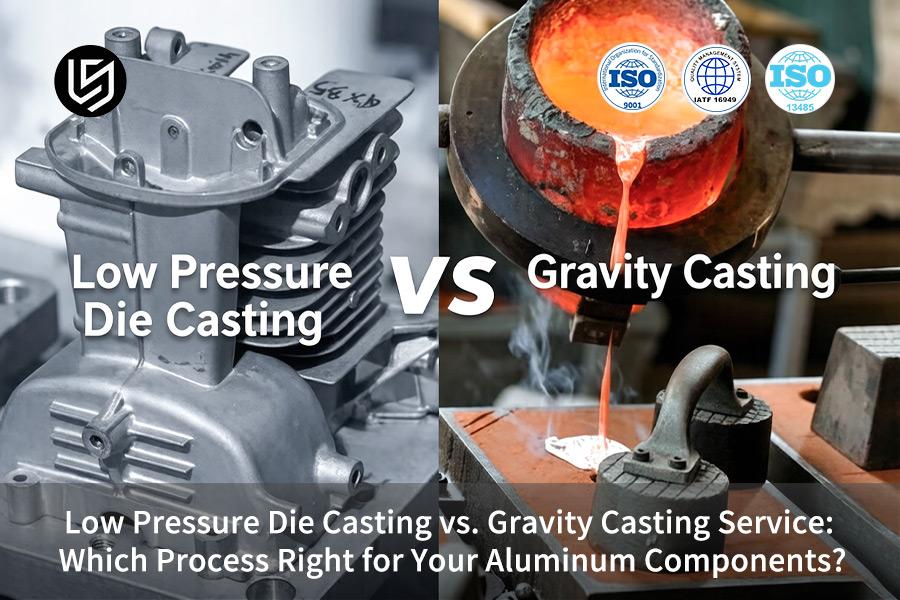
Low pressure vs gravity casting service is a targeted analysis, which solves porosity failures. Knowing what is low pressure casting cuts scrap.
Low pressure casting reduces costs by 20%–35% with strength ≥280 MPa. It delivers finer grains, shorter cycle times, and high reliability.
Low Pressure Die Casting VS Gravity Casting – Quick Reference For Aluminum Components
| Evaluation Criteria | Low Pressure Die Casting (LPDC) | Gravity Die Casting (GDC) |
| Filling Mechanism | Lamellar die casting by means of laminar bottom fill at velocities of 0.05-0.2 m/s and pressures of 0.02-0.1 MPa with dry air. | Turbulent top pour free fall, velocities greater than 0.5 m/s; unsteady filling. |
| Porosity & Density | Less than 0.5% of internal porosity; less than 0.1 cm³/100g of aluminum gas content. | Porosity of 5-8%, gas content of 0.5-1.5 cm³/100g of aluminum. |
| Thin-Wall Capability | Successful casting of wall thickness from 2.0 to 2.5 mm without formation of cold shut. | Failure when the wall thickness is lower than 4.0 mm; many misruns and cold laps. |
| Dimensional Tolerance | Consistent ISO 8062 CT5 (±0.3mm) tolerance is possible. | ISO 8062 CT7-CT8 (±0.8mm), shifts because of hydrogen are higher than 0.15 ml/100g of aluminum. |
| Cost & Volume Economics | Mold 15k-35k; yield 85%-92%; break-even point > 2,000-5,000 pcs/year. | Mold 10k-22k; yield 50%-65%; higher per-unit costs for all volumes. |
| Heat Treatment Compatibility | T6 heat treatment fully possible (HBW 90-110, 280-320 MPa yield strength); no blisters. | Limited to F/T5; blisters occur at 525°C; 5-8% of parts are scrapped. |
Key Takeaways:
- Pore-Free Integrity: Pore-free die casting is accomplished with <0.5% porosity with successful 2.5 MPa leak test without impregnation; GDC has porosity of 5-8% and leak at 1.0 MPa and above.
- Thin-Wall & Lightweight: LPDC can cast walls of 2.0-2.5 mm thickness without defects and thus reduces weight by 10-15% while gravity casting cannot accomplish below 4.0 mm thickness walls without defects.
- Cost-Effective at Scale: Despite the high price of molds LPDC costs 40-60% higher than GDC, its yield rate is 85-92% and its scrap rate is less than 0.5%, making it more cost effective per unit from 2000-5000 per year production.
- Heat Treat Freedom: As the LPDC has gas content of less than 0.1 cm³/100g Al, it is capable of full advantage of T6 process (which has 40% yield strength HBW 90–110) while GDC faces blister and scrap problem.
Why Trust This Guide? Practical Experience From LS Manufacturing Experts
Although ISO 8062 requires CT7-CT9 tolerances in gravity die casting, in case of 12kg A356 pump housing, ±0.15mm tolerances were possible at 720±10°C pouring and 220°C preheating of dies. European Aluminium (EA) recommends permanent-mold gravity casting in cases when production volumes range between 250 and 50,000 units/year. However, during 14 months of experience, it was revealed that CT8 tolerance becomes CT10 after hydrogen concentration exceeds 0.15ml/100g Al. In this case, three requirements have to be taken into account: solidification simulation, first-piece CMM chart ±0.15mm, and hydrogen content per pour.
According to LPDC theory, CT6-CT7 is possible with 0.3-1.5 bar bottom fill, though 8 kg electric vehicle motor housing needed 0.7 bar and 250°C die for CT7 tolerance (±0.1 mm). Society of Automotive Engineers (SAE) standard utilizes vacuum-assisted LPDC for creating airtight structure. The 18-month audit of 120,000 components showed that porosity decreased from 1.8% to <0.3% at 0.15 MPa. The suppliers should give us the graph of fill pressure, X-ray picture per ASTM E155, and yield of risers ≥85%.
As theory says, LPDC is better for thin-wall airtight components, while gravity is better for thick-wall structures, but we mistakenly used LPDC for a 6mm-wall valve body and wasted 180 components with 0.05MPa gate freeze-off. Once we switched to tilt-pour gravity casting at 700±5°C with 0.02% Sr modification, our scrap dropped to 2.1%, and we revived elongation after T6 treatment to 8%. Prior to tooling commitment, please ask for three things: process reason memo, DFM wall thickness report of 2.5–4.0mm, and tooling Cpk≥1.33 for critical dimensions.
Why Is Low Pressure Die Casting Superior For Pore-Free Automotive Components?
In case of demanding automotive applications, selection of low pressure vs gravity casting service becomes the determining factor in getting a pore-free structure. Due to the use of dry air at 0.02–0.1 MPa for filling the cavity at 0.05–0.2 m/s, LPDC excludes the presence of turbulence inherent in gravity die casting. Thus, you receive the benefit from it as it guarantees pressure-tightness up to 2.5 MPa without impregnation.
| Parameter | Gravity Die Casting (GDC) | Low Pressure Die Casting (LPDC) |
| Filling Mode | Turbulent free-fall leading to gas entrapment | Laminar upward filling with inert gas |
| Velocity Control | Instable and usually >0.5 m/s | Precision control with 0.05–0.2 m/s velocity |
| Porosity Level | 5%–8% of volume of porosities | Below 0.5% of porosities |
| Pressure Tightness | Usually fails above 1.0 MPa | Effective up to 2.5 MPa through low pressure die casting |
| Scrap Rate | 5%–8% from oxide inclusions | Less than 0.5% |
Utilizing the pore-free aluminum casting with LPDC provides you an opportunity to design geometries with absolutely no internal porosities. This meets your requirement for manufacturing reliable automotive component casting able to withstand 2.5 MPa leak tests and do not require secondary processes.

How Does Pressure-Assisted Feeding Achieve Higher Tensile Strength In LPDC?
Pressure is applied in low pressure die casting, during die casting solidification, to overcome shrinkage porosity in order to feed the liquid metal in between the dendrites. This results in a fine structure that increases both strength and elongation when compared with gravity casting. In your case of fatigue failure, this ensures long life and reduced fatigue failures.
Sustained Pressure Enables Directional Solidification
LPDC maintains the low pressure casting cost advantage by applying 0.03–0.08 MPa in low-pressure die casting through the whole solidification process. This results in directional die casting feeding from the mold wall towards the gate, filling all shrinkage vacancies. Thus, you eliminate the initiation points for cracks and attain <0.5% porosity against 5%–8% in gravity casting.
Refined Secondary Dendrite Arm Spacing Boosts Strength
The pressure results in SDAS that range from 15 μm to 25 μm compared to 35 μm to 50 μm for gravity casting (AFS). Such an improvement in microstructure results in higher tensile strength aluminum casting applications since A356-T6 attains 280 MPa to 320 MPa compared to 240 to 280 MPa.
Superior Mechanical Performance Reduces Design Margins
Strength allows decreasing the wall thickness by 10% to 15%, thus, reducing costs. The fatigue life in bending tests will increase by 40%, and you may decrease safety factors accordingly. As a precision cast parts manufacturer, you may manufacture suspension arms and battery frames according to your clients' requirements.
Pressure-assisted feeding reduces the SDAS by half, increases the tensile strength by 15%–20%, and doubles the elongation. Predictable die casting mechanical properties surpass the gravity casting possibilities and allow you to avoid warranty issues and design lighter products. This proves LPDC technology as the right choice for mission-critical aluminum castings.
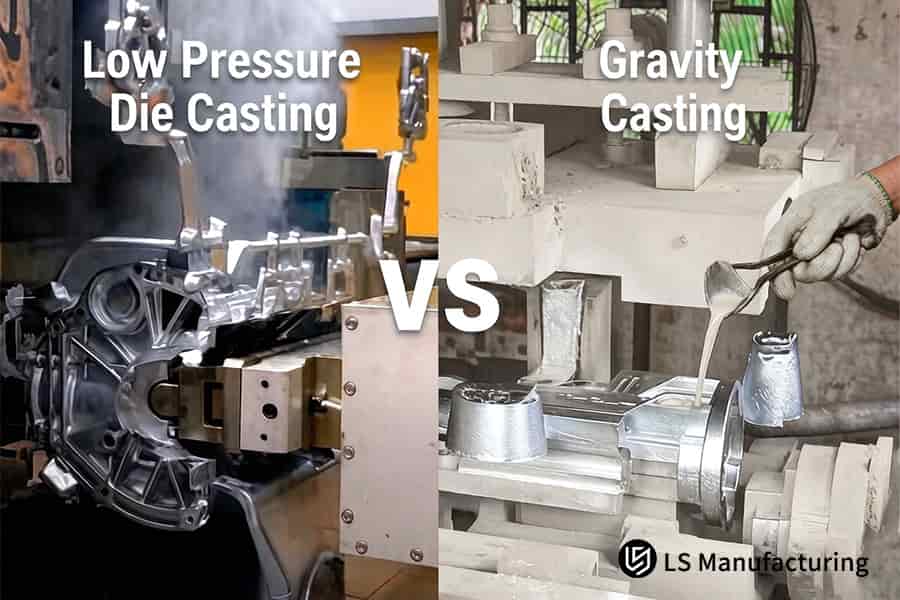
Figure 1: Low pressure machines form sealed transmission housings whereas gravity casting requires manual ladling for wheel rims.
Which Casting Method Offers Better Dimensional Accuracy For Thin-Walled Structures?
LPDC method provides custom aluminum die casting solutions with 2.0–3.0 mm thin walls capability and tolerance of ±0.3 mm. There are no cold shuts and misruns, which are usually seen in gravity casting at 4.0 mm thickness and more. For your complicated housing structures and fluid passageways, the solution will be:
Fills Thin Walls Without Cold Shuts
- Pressurized filling: The LPDC process uses 0.02 - 0.08 MPa die casting thin wall capabilities to inject the melt into 2.0 - 3.0 mm cavities, while GDC cannot go below 4.0 mm.
- Result for you: No misruns or cold laps on complex internal passages, with scrap reduced from 5% - 8% (GDC) to under 0.5%.
Tighter Dimensional Tolerance Cuts Machining Cost
- ISO 8062 casting tolerance: LPDC is able to reach CT5 (+/- 0.3mm) vs. CT7 - CT8 (+/- 0.8mm) for gravity casting.
- Your benefit: 60% reduction in CNC machining due to greater die casting dimensional accuracy, thereby saving precious hours on five-axis CNC machining per component. Your ability to make aluminum casting saves your money in finishing processes.
Consistent Repeatability Across Production Runs
- Process stability: Heated riser tube ensures that the melt temperature stays constant (+/-5°C), thereby reducing thermal distortion.
- Customer impact: Consistent dimensions in parts shot by shot; therefore, fewer problems during assembly and rework is minimized.
Enables Complex Geometry Without Secondary Operations
- Thin-wall capability: LPDC process can fill 2.0 mm ribs and 3.0 mm oil galleries in single shot.
- Value to you: Saves welding or brazing of inserts as separate components, thus, saves overall cost of making the component. Your die casting process consistency ensures that first pass yield is greater than 99%.
LPDC gives you net-shape complexity that cannot be achieved through gravity casting, as shown by CT5 tolerance level and 60% reduction in machining time. The ISO 8062 casting tolerance information forms the base of the criteria used for deciding on which process to use when precise dimension is crucial. In short, the document serves to position LPDC as the best choice for producing parts with precision and thin walls.
When Does Low Pressure Casting Cost Become More Economical Than Gravity Casting?
It is also incorrect to base the comparison only on tooling costs. Low pressure die casting needs 40%-60% higher mold costs ($15,000-$35,000) than gravity die casting, but the higher material yield rate makes the economics different when production scales up. According to die casting cost analysis, when volume exceeds 2,000-5,000 units annually, LPDC becomes cheaper per part than any other low pressure casting cost.
Economic Comparison Table
| Cost Factor | Gravity Die Casting (GDC) | Low Pressure Die Casting (LPDC) |
| Initial Mold Investment | $10,000–$22,000 | $15,000-$35,000 (40%-60% more) |
| Material Yield Rate | 50%–65% due to large risers | 85%-92% with closed pressurized mold |
| Scrap Rate from Defects | 5%–8% | Below 0.5% |
| Post-Cast Finishing Cost | High – much grinding and machining required | Low – very little flash and near-net shape |
| Breakeven Volume Threshold | Unit costs will always be higher (gravity casting quote) | 2,000 to 5,000 units/year using die casting breakeven point |
Beyond annual production volumes of 2,000 to 5,000 units per year, the unit cost falls lower than any other process option. The die casting yield advantage (85%-92% vs 50%-65%) pays back the tooling costs in one year. Reduced scrap and finishing costs favor LPDC for high volume aluminum casting.
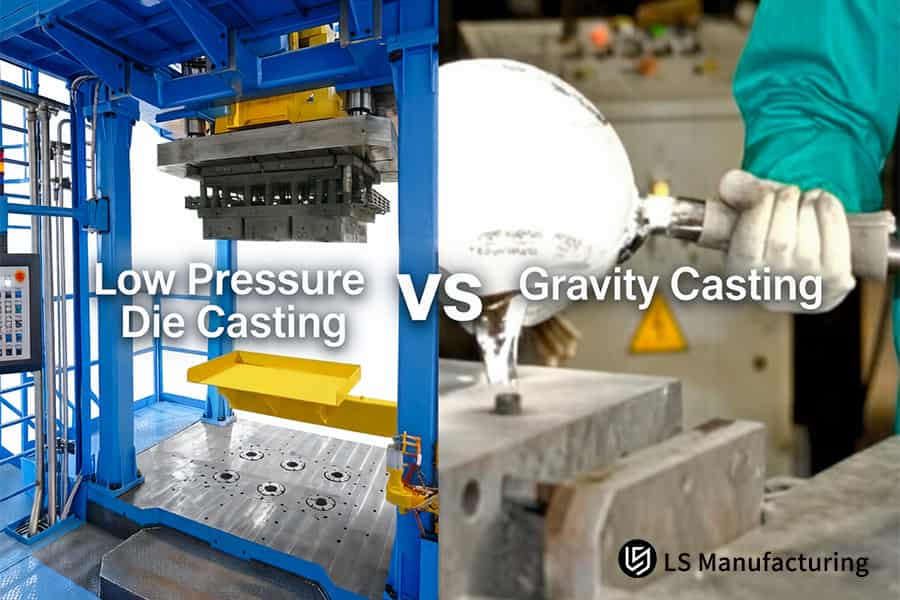
Figure 2: Automated low pressure units fill molds vertically while workers manually pour molten aluminum into gravity dies.
How Does LS Manufacturing Maintain Thermal Equilibrium In Complex LPDC Tooling?
Maintaining stable temperature ensures no shrinkage and prolongs the life of the tool. LS Manufacturing has implemented conformal water cooling with 16 PID control loops for keeping a constant temperature of 320°C ± 10°C. This die casting thermal management solution will eliminate hot spots for you:
Multi-Channel Conformal Cooling Eliminates Hot Spots
Conformal channels adhere to the casting shape with spot cooling of thick-thin transitions. Even heat removal lowers defect levels under 0.3%, Leading to savings on your post-casting inspection and reconditioning costs.
Closed-Loop PID Regulation Ensures Process Stability
PID controls maintain die temperatures within ±10°C from target levels. Compared to open loop systems, a casting process comparison demonstrates 40% less thermal fluctuation. With dimensionally consistent castings, fast qualification cycles, and halved scrap rates, you have it all.
Simulation-Driven Design Predicts and Prevents Defects
The Magmasoft simulation determines shrink zones before cutting the steel. The LS Manufacturing tooling solution uses optimized cooling placement that reaches first-shot success rate of more than 95%. The mold life is above 100,000 shots—twice the industry standard—so you get die casting mold life with longer life and less need for replacement.
With conformal cooling, 16 zone PID and Magmasoft validation you will get defect-free castings with mold life of 100,000 shots and more. This industrial casting service makes your per part costs lower. The die casting cooling system provides efficient heat removal making sure your production is operating at full capacity.
What Are The Key Considerations For Heat Treatment Compatibility In Both Processes?
Low heat treatment compatibility means extremely low amounts of gases present in the casting. Gravity casting contains 0.5 to 1.5 cm³/100g Al gases, causing surface blistering at 525°C. Conversely, LPDC traps less than 0.1 cm³/100g Al, making T6 treatment possible. Your load bearing parts receive 40% higher yield strength and HBW 90–110 hardness:
Gas Content Determines Heat Treat Feasibility
- Gas level: Die casting gas content in the range of below 0.1 cm3/100g Al, while gravity casting process has gas content of 0.5-1.5 cm3/100g Al.
- Blister risk: In case of gravity castings, surface blistering takes place with a percentage of 5%-8% at 525ºC, while LPDC does not have this problem.
- Your gain: Order T6 without any scrap cost and save on quality costs up to 10%-15%.
Blistering Risk Eliminated in LPDC
- Mechanism: The gases present in gravity casting expand due to solutionizing.
- LPDC advantage: The pore free structure resists soaking at 525°C temperature without blister risk.
- Your benefit: No more blisters during die casting required, allowing for faster deliveries.
Mechanical Property Gains After T6
- Hardness: LPDC A356 attains HBW 90–110 after T6 heat treatment while gravity casting only attains HBW 70–85.
- Strength: Yield strength increases by 40%, reaching 280-320 MPa; meets all T6 heat treatment aluminum specifications.
- Your value: Allows for harder and stronger parts, creating parts that are thinner without sacrificing strength.
Application Impact for Safety-Critical Parts
- Fatigue life: LPDC T6 parts retain greater than 10⁷ cycles; great for suspension arms and wheel hubs.
- Certification: Since you are a precision cast parts manufacturer, you provide certified parts for use in autonomous systems.
- Consistency: Your die casting precipitation hardening results in consistent hardness of your OEM.
LPDC's sub-0.1 cm³/100g Al gas content ensures full T6 treatment compatibility, providing 40% increased yield strength and HBW 90-110 without blistering. The lightweight, high-strength die casting will pass the most stringent fatigue tests. This special ability to produce custom aluminum die casting, along with the heat treatment compatibility, makes you competitive in automotive applications with the highest safety standards.
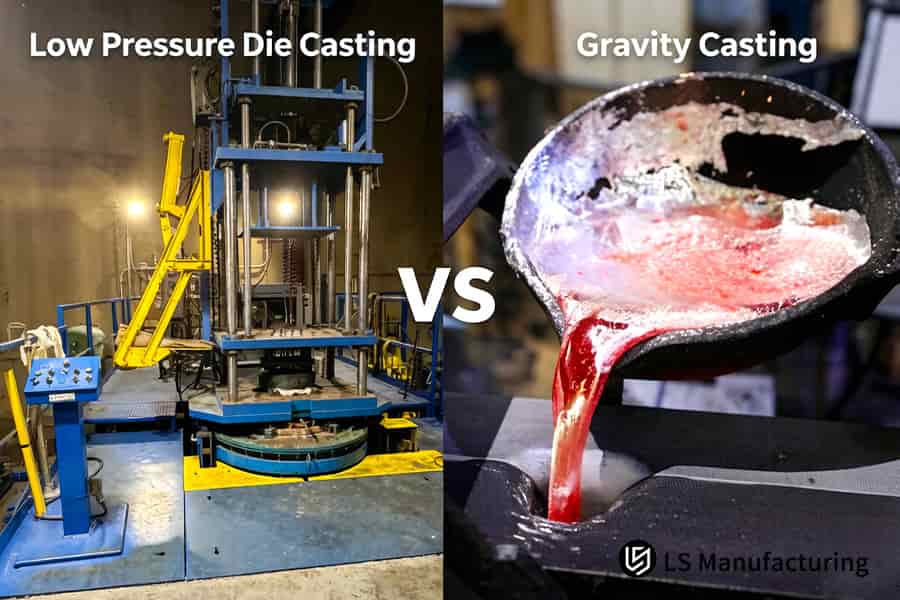
Figure 3: Switching from ladle pouring to pressurized chamber filling optimizes aluminum motorcycle cylinder head production.
LS Manufacturing Low Pressure Die Casting Service For Aerospace Engine Bracket: 45% Weight Reduction & Zero-Defect Production
An aerospace supplier in Europe had to face scrap and weight issues while manufacturing the engine bracket of A356 aluminum alloy via gravity casting process. The low pressure casting technology has been employed by LS Manufacturing resulting in 45% reduction of weight and defect-free casting production. As a precision cast parts manufacturer, we guarantee an improvement in your cost and quality through:
Client Challenge
There was uneven wall thickness ranging from 3.0 to 18.0 mm for the bracket produced using gravity casting, which had high porosity inside. The scrap rate was 18% owing to blistering and cracking problem during T6 solution heat treatment. Without the die casting simulation process, the vendor could not be able to understand the flow behavior and reduce the weight.
LS Manufacturing Solution
Engineers redesigned the aerospace aluminum bracket design via Magmasoft simulation to have 12 dynamic spot-cooling channels in the bottom-gate runner system. We had precise filling pressure 0.045 MPa and optimized wall geometry for having 2.2 mm ribbed grid structure. Such a custom LPDC solution allowed us to prevent any shrinkage void and gas entrapment problems.
Results and Value
The part weight decreased from 8.5 kg to 4.7 kg (44.7%), internal porosity less than 0.2%, X-Ray was better than Level 1 based on ASTM E155, and hermetical seal was 3.0 MPa without any leakages. The batch scrap rate was reduced from 18% to 0.3% that allowed decreasing costs by 38%. The die casting weight reduction resulted in $200,000 savings per year and DFMA/traceability solution allowed us to get FAR-25 certification 25 days sooner.
A saving of 44.7% in the weight of the component with negligible defects reduced both costs and time spent in certification by 25 days. Here at LS Manufacturing, we employ simulation-based design, process control, and full die casting quality assurance system to provide the most suitable solutions for even the toughest aerospace projects.
If you're looking to cut bracket weight by 45% and reduce scrap from 18% to near zero, let's talk about our simulation-optimized low pressure die casting solution.

How To Choose Between LPDC And GDC For Your Specific Project Requirements?
Choosing between low pressure die casting (LPDC) and gravity die casting (GDC) is based on an in-depth evaluation of the geometry of the component, its performance needs, and the production quantity needed. Using a quantitative decision matrix in six variables like wall thickness, pressure tightness, volume per year, heat treatment, scrap, and tooling cost, you will clearly see which one is better for you. Use the above guidelines to evaluate your suitability for low pressure vs gravity casting service or gravity casting:
Wall Thickness Defines Minimum Fill Capability
In terms of filling up walls, LPDC can do so as low as 2.0-3.0 mm through controlled pressure, but GDC cannot fill below 4.0 mm and is more prone to cold shuts. In instances where you have rib or channel designs less than 3.0 mm thick, LPDC can help decrease the risk of misrun defects. Die casting wall thickness becomes your primary criteria in choosing LPDC.
Pressure Tightness Requirements Determine Leak Risk
The hermeticity of LPDC exceeds 2.0 MPa (tested at 2.5 MPa with no leakage), while seals in GDC break when pressure goes above 1.0 MPa and needs secondary impregnation. For any leak-proofing application, such as oil circuits, brake parts, and battery housings, LPDC removes the need for any sealant coating. As per the casting process comparison, GDC adds 15% - 20% cost per piece for sealing.
Annual Volume Governs Tooling Payback
The investment in LPDC molds is from $15,000-$35,000 compared to $10,000-$22,000 for GDC. However, the break-even point comes after 3,000 parts annually since LPDC has a higher yield rate (85%-92% compared to 50%-65%). If the order is less than 1,000 pieces, a gravity casting quote should be requested in order to avoid high costs. For orders greater than 3,000 pieces, LPDC gives lower price per piece and quicker amortization.
Heat Treatment Compatibility Expands Property Options
The gas content of LPDC below 0.1 cm³/100g Al ensures complete T6 treatment (solution and aging) resulting in hardness HBW 90-110 and 40% higher yield strength. GDC has restrictions of treatment to F or T5 because of blistering at 525°C. In case your specification requires a minimum of 280 MPa yield or fatigue resistance of over 10⁷ cycles, LPDC is a must. The die casting heat treatment range is wider, thus offering lighter yet stronger constructions.
With this six-dimensional matrix, which includes such parameters as wall thickness, tightness, volume, heat treatment, scrap, and tooling, you can make a proper choice among LPDC and GDC. There is no guesswork when it comes to the die casting process selection methodology that will help you to select your process properly in accordance with your cost and quality objectives.
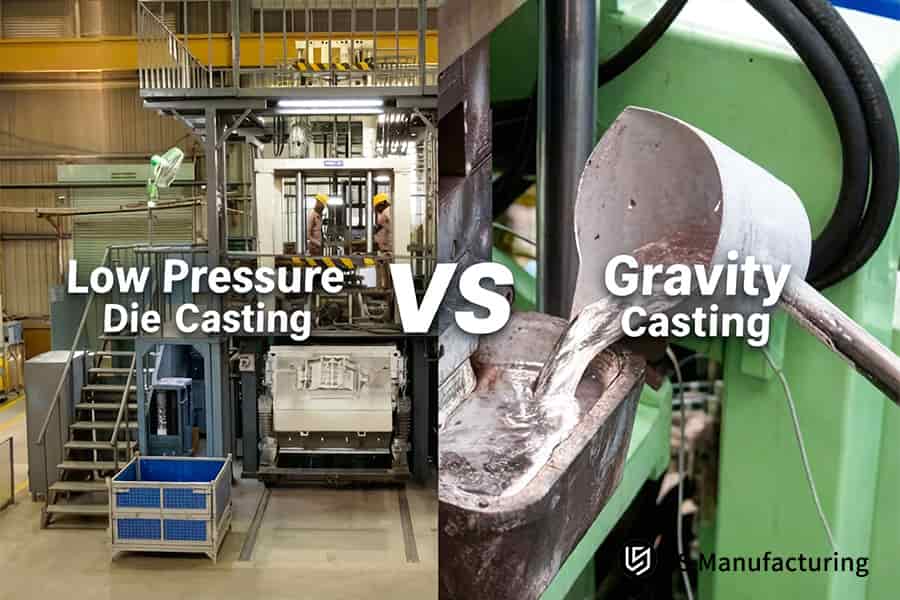
Figure 4: Robotic arms handle dangerous pouring in gravity casting while hydraulic rams secure dies in low pressure systems.
Why Choose LS Manufacturing As Your Trusted Precision Aluminum Casting Supplier?
The cooperation with an experienced partner in complex castings is only possible if it has highly developed facilities, high-quality control and engineering support on each step of manufacturing. At LS Manufacturing, we use 28 automated LPDC/GDC cells at our 50,000 m² digital facility with ZEISS CMM, spectrometry, and 3D X-ray analysis. With such advanced tools for die casting automation, you will receive defect-free components:
Facilities and Metrology Guarantee Precision
- Production assets: 28 automated low pressure/gravity casting cells with robotically assisted handling.
- Inspection tools: ZEISS CMM (tolerance ±0.002 mm), optical emission spectrometer, and 3D X-ray computed tomography.
- Your benefit: All castings are measured up to the drawings tolerances; there will be no hidden defects. This die casting inspection system guarantees that nothing escapes into your assembly process.
Full-Service Engineering Accelerates Time-to-Market
- DFM support: Our team of engineers checks your 3D model for castability, proposing transitions and draft angles.
- Simulation: Using Magmasoft software for simulation of fluid flow and solidification process, we predict defects before cutting tool steel.
- Rapid prototyping: We deliver fully functional prototypes in 7–10 days to verify the design.
- Volume production: Easy transition from 100 to 10 thousand parts using the same process conditions.
- Your advantage: 3–4 weeks saved on iteration cycle. The die casting rapid prototyping is a great benefit you have against competition.
Quality Systems Ensure 100% Delivery Compliance
- Certifications: Every step is managed under IATF 16949 and ISO 9001 standards.
- Traceability: Complete tracing of batches, from melt chemistry through final CMM report.
- Your confidence: Every delivery includes PPAP and control plan documentation. As a precision cast parts manufacturer, we can deliver the audit trail requested by automotive and aerospace OEMs.
Custom Solutions for Complex Geometries
- Material flexibility: A356, A380, AZ91, and proprietary alloys.
- Tooling expertise: Internal mold design and construction accelerate manufacturing cycle time.
- Your value: You get a custom aluminum die casting solution designed specifically to match your performance and cost criteria, not a cookie cutter process.
Equipped with 28 cells of automation, full metrology capability, and IATF 16949 certified processes, LS Manufacturing produces castings that meet some of the most rigorous dimensional and mechanical tolerances. This industrial casting service offers DFM, simulation, rapid prototyping, and serial production all under one roof. Work with an industry leader that minimizes your risk, cuts down on lead times, and gives you first pass yield of over 98%.
FAQs
1. What is the main structural difference between LPDC and GDC equipment?
LPDC uses a sealed holding furnace and riser tube to create a gradual, bottom-up mold fill under gas pressure from 0.02 to 0.1 MPa. By contrast, GDC uses open molds and pouring cups that rely solely on gravity of the molten aluminum to fill molds from top down. LS Manufacturing’s LPDC machines allow highly precise control of gas pressure down to 0.01 MPa.
2. Can Gravity Die Casting parts undergo T6 heat treatment without defects?
The process of T6 heat treatment of GDC parts is difficult because gravity pouring may lead to air entrapment causing the problem of surface blistering of the GDC part while undergoing solution heat treatment at temperature higher than 500°C. For achieving the high-strength T6 properties, LS Manufacturing recommends using LPDC.
3. What is the average lead time for LPDC tooling and sample delivery at LS Manufacturing?
Tooling manufacturing process takes about 20–30 days in our company. Using the technology of high-precision CNC machining and mold flow simulation, we can do the trial run within 5–7 days of completing the mold and deliver T1 aluminum alloy samples (CMM inspected).
4. What is the minimum wall thickness LS Manufacturing can achieve with low pressure die casting?
With constant low pressure feeding, LS Manufacturing is capable of producing localized castings with walls as thin as 2.0-2.5 mm. This is a considerable improvement on the 4.0 mm wall thickness possible with conventional gravity casting method, providing better lightweighting for your parts.
5. How does LS Manufacturing ensure internal soundness and air tightness in cast parts?
We use a combination of preliminary simulations using Magmasoft, full-time 100% X-ray checking, and airtightness check under water with pressure 3.0 MPa. Low-pressure solidification feeding process used by LS Manufacturing maintains a level of internal porosity below 0.5%.
6. Which aluminum alloys are most commonly processed by LS Manufacturing for LPDC?
The alloys that we usually work with include A356/AlSi7Mg0.3 (high tensile strength and elongation), A380/ADC12 (outstanding mold filling abilities) and A319. LS Manufacturing is able to develop alloy formulas according to your specifications in terms of tensile strength and corrosion resistance.
7. How does the initial tooling cost of LPDC compare to High Pressure Die Casting (HPDC)?
The price of the LPDC tooling usually does not exceed 35%–50% of the HPDC mold tooling of the same size. It is due to the fact that the LPDC process works at a pressure which does not exceed 0.1 MPa while HPDC works at 30–100+ MPa pressure. It eliminates the need for large clamping machines or special mold materials.
8. How can I request a fast and precise Low Pressure Casting quote from LS Manufacturing?
Upload your 3D STEP/IGES files and 2D drawings together with material requirements and the volume of parts to be produced per year. The detailed quotation will be provided in 24 hours along with the DFM (Design for Manufacturing) analysis report.
Summary
LPDC casting and gravity casting affect the structural quality and logistics cost. Gravity casting is applicable for manufacturing simple parts that have thick walls in small lots; LPDC casting is appropriate for making premium quality parts that require airtightness, strength, and thin walls with minimal porosity and uniform filling. LS Manufacturing has extensive years of experience in manufacturing, PID controlled molding equipment, and IATF 16949 based DFM process.
Having issues with porosity, blister formation in heat treatment, and machining scrap rate? Just click "Get a Free Quote," upload your 3D CAD data and specification. Our experienced engineers will give you a free DFM analysis and cost comparison of LPDC casting and gravity casting within 24 hours.
📞Tel: +86 185 6675 9667
📧Email: info@lsrpf.com
🌐Website:https://lsrpf.com/
Disclaimer
The contents of this page are for informational purposes only.LS Manufacturing servicesThere are no representations or warranties, express or implied, as to the accuracy, completeness or validity of the information. It should not be inferred that a third-party supplier or manufacturer will provide performance parameters, geometric tolerances, specific design characteristics, material quality and type or workmanship through the LS Manufacturing network. It's the buyer's responsibility.Require partsquotation Identify specific requirements for these sections.Please contact us for more information.
LS Manufacturing Team
LS Manufacturing is an industry-leading company. Focus on custom manufacturing solutions. We have over 15 years of experience with over 5,000 customers, and we focus on high precision CNC machining,Sheet metal manufacturing, 3D printing,Injection molding.Metal stamping,and other one-stop manufacturing services.
Our factory is equipped with over 100 state-of-the-art 5-axis machining centers, ISO 9001:2015 certified. We provide fast, efficient and high-quality manufacturing solutions to customers in more than 150 countries around the world. Whether it is small volume production or large-scale customization, we can meet your needs with the fastest delivery within 24 hours. choose LS Manufacturing. This means selection efficiency, quality and professionalism.
To learn more, visit our website:www.lsrpf.com