English



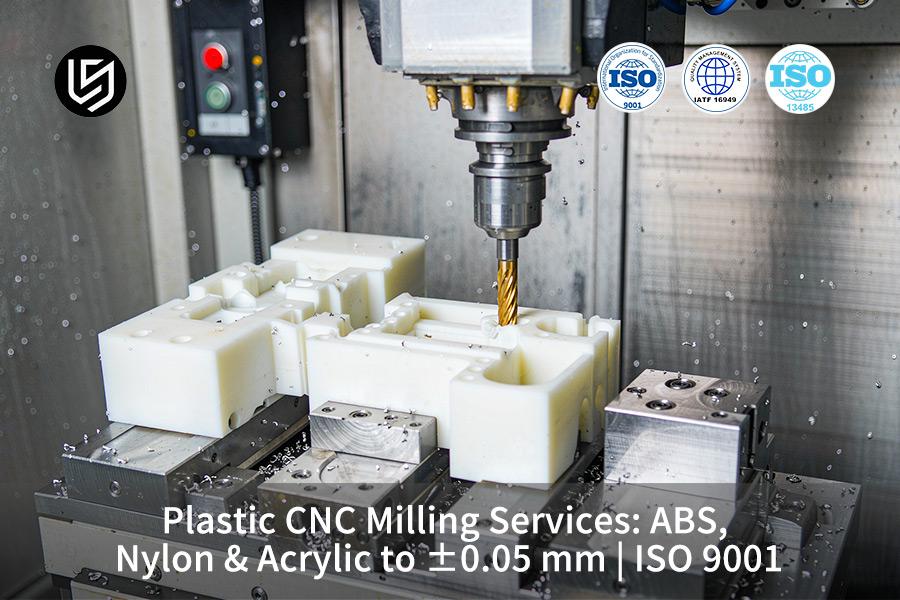
Plastic CNC milling service is a high-precision process, which solves assembly cracking and mismatch through vacuum fixturing and cold-air cutting.
Buyers get precision parts at 23.6% lower unit cost, per LS Manufacturing's 2025–2026 process data, avoiding injection-mold tooling and weeks-long waits.
Key Takeaways
Micron-level Plastic Tolerance Achieved: Thermal compensation and stress annealing management raise the precision of milling operations on ABS, Nylon, and PMMA materials above typical industrial standards to microns.
Instant Surface Finishing: Smoothness of acrylic and engineering plastics achieves the level of a mirror, reducing edge wear through chemical smoothing process.
Comprehensive Delivery Cycle Reduction: Two-hour fast DFM evaluation and multi-axis simultaneous processing shorten the prototype testing time for batches considerably.
Quality Consistency and Traceability: ISO 9001:2015 certified quality management system and closed-loop inspection with ZEISS CMM system guarantee low defect rates in batches with traceable materials and process.
How Does ABS Plastic CNC Milling Achieve Tight Dimensions?
ABS plastic CNC milling is a subtractive process performed at high speeds by employing single-flute polished tools and temperature controlled cold air to eliminate local heating that causes heat softening. Heat above 90°C makes the edges curl up in medical and automotive housing components.
How to Select the Right Setup for Tight ABS Dimensions
ABS softens at 90°C. Frictional heat creates deflections of walls. A plastic CNC milling service must use proper toolpaths and cooling configurations depending on wall dimensions.
Walls thinner than 1.5 mm require single-flute polished tools and cold air delivery. An allowance of 0.1 mm prevents edge rollover. A conventional two-flute cutter without cooling pushes the softened material behind the tool making geometry go out of shape.
Walls thicker than 3 mm can be milled using a two-flute configuration and roughing passes of 1.5 mm depth. Hidden mounting faces will fit properly under ISO 2768-m tolerances.
Visible cosmetic walls require the final pass of 0.05 mm polishing. Surface texture will clear the threshold for paint. A five-point CMM inspection verifies each cosmetic face before release.
In plain terms: proper selection of tool diameter and pass number as per wall thickness eliminates the need for trial runs. Your housing is fitted with perfection right away. In case of any surface uniformity required, precision plastic CNC milling utilizes the same temperature control principle.
Verification Against ISO 2768-m
ABS plastic dimensional verification is executed under ISO 2768-m, with engineering drawings being validated by means of CMM sampling. A proven process of ABS nylon acrylic CNC milling incorporates the same principle of cooling for various materials. Surface finish range is between Ra 1.6 μm to Ra 3.2 μm.
Zero-gap alignment testing ensures there will be no need for rework once assembled. Custom plastic CNC milling comes with a dimensional report for full traceability. You get consistent fit without the need to adjust your parts after machining. In case you want small-batch prototypes or pilot runs, low-volume plastic CNC milling provides identical tolerances because of cold-air stability.
Data basis: ISO 2768-m general geometric tolerance standard and LS Manufacturing tool-speed compensation manual (2025 edition).
Get the Thermoplastic Machining Temperature Control Primer — understand how heat softening thresholds (90°C for ABS) interact with tool geometry and cooling strategy to prevent edge rollover and wall deflection in medical and automotive housings.

Why Does Nylon Machining Require Strict Moisture Control?
Nylon machining is a precision plastic CNC milling that is done in a dry or controlled environment in order to prevent volume expansion due to moisture absorption and ensure bore dimensional bands under 10 microns.
Steps to Control Moisture in Nylon Machining
According to ASTM D570, water uptake of PA6 is 1.6%–1.9% in 24-hour period, while for PA66 it is 1.0%–1.3%. At 50% RH, equilibrium moisture content becomes 2.75% for PA6 and 2.5% for PA66. Linear swelling from 0.7% to 1.5% results in exceeding ±0.03 mm bore diameters.
- Two-stage vacuum baking of PA6 at 80°C for 8–12 hours ensures moisture reduction below 0.2%. The plastic CNC milling manufacturer provides the same treatment for PA66 at 80–90°C for 4–6 hours. Your raw material is delivered with stable dimensions.
- Film wrap between operations prevents moisture reabsorption during transportation. A tight schedule is why LS Manufacturing machines within the 4–6 hour window after drying. Precise dimension control is a must for nylon CNC milling to keep pitch diameters.
- CAD model compensation is applied to compensate +0.5% shrinkage of PA66 at 50% RH. You will not need any additional adjustments to achieve press fit.
- Polished carbide micro-edge tools with 12° - 15° rake angles create neat chips. Custom plastic CNC milling of robotic drive components removes burrs from the tooth flanks.
- Verification by Zeiss CMM at 20 ± 2°C measures each important bore. Coordinate measuring machine with MPEE 0.0009 mm verifies axial straightness. CNC milling nylon gears is delivered with a dimensional report.
Simply put: proper drying and sealed handling assure that nylon drive components stay dimensionally stable in the field.
Why Humidity Ruins Tolerances
Moisture swelling creates an additional expansion factor on top of the thermal expansion of 80-100 µm/m · °C. Flood coolant keeps PA6 above 2.5% moisture, narrowing the bearing clearance. CNC milling nylon bushings prevents this problem by maintaining control over the environment throughout machining.
Data basis: ASTM D570 plastic water absorption standard and Zeiss CMM (space indication error MPEE 0.0009 mm) verification logs.
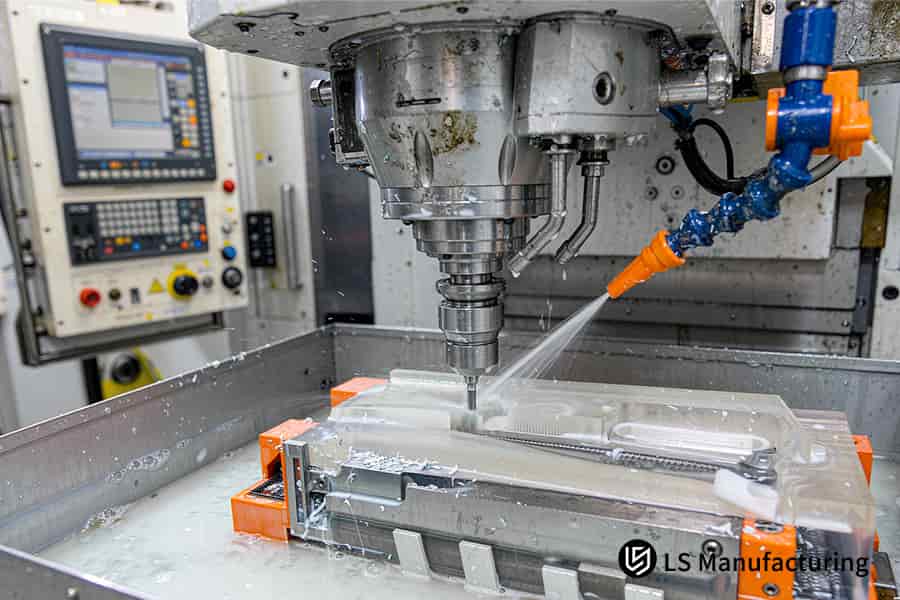
Figure 1: Precision plastic CNC milling cuts acrylic to Ra 0.4 μm finish.
What Ensures Optical Clarity In Precision Acrylic CNC Milling?
Precision acrylic CNC milling is a subtractive process of PMMA. Diamond super-finishing with 0.08 mm/z feed rate eliminates micro-cracks inside the material and white haze. Precision plastic CNC milling guarantees optical-grade clarity.
Optical Finish Comparison: Standard vs Diamond Super-Finishing
Diamond-tooled milling avoids the smearing that occurs during carbide routing of PMMA. ABS nylon acrylic CNC milling results in comparable clarity, assuming appropriate feed and cooling parameters for the material.
| Parameter | Standard carbide | Diamond super-finishing |
| Surface roughness (Ra) | 1.6–3.2 μm | 0.4–0.8 μm |
| Light transmittance | 75–85% | ≥92% after grinding |
±0.05 mm plastic CNC milling offers accurate dimensions but diamond tools produce optical surfaces. Optical acrylic CNC milling produces clear glass-like surface without any need for polishing afterwards.
Why Standard Milling Falls Short on PMMA
Coolant-fed three axis milling causes heating of the surface beyond the glass transition temperature of PMMA. Softened material gets smeared by the cutter producing internal crazing and frosted look.
Low temperature maintained by means of MQL (minimum quantity lubrication, micro oil mist) allows high-clarity PMMA CNC milling. A low per tooth feed prevents white marks on clear walls.
Drawing notation: use a specified controlled per tooth feed when using diamond tools. Proper combination of feed and coolant makes an engineering plastic into optical window without manual polishing.
Data basis: ASTM D1003 Transmittance Test Standard and Zeiss CMM (space indication error MPEE 0.0009 mm) verification logs.
Quick Reference Guide
CNC processing options for ABS, Nylon and Acrylic materials require matching machining techniques to thermal expansion coefficient, stiffness and optical requirements of materials.
| Material | Recommended Vc | Achievable Ra | Standard Tolerance Band | Typical Failure Risk & Prevention | Relative Cost Index |
| ABS (757/PA-758) | 200–300 m/min | Ra 1.6 μm – Ra 3.2 μm | A tolerance class spanning 10 to 20 µm | Heat-induced edge melting / low-heat single-flute tool with cold-air blast | 1.0 (baseline) |
| Nylon (PA6/PA66) | 150–250 m/min | Ra 1.6 μm – Ra 3.2 μm | ±0.005 mm – ±0.01 mm | Moisture expansion & burrs / pre-drying and high-shear up-cut milling | 1.25 |
| Acrylic (PMMA) | 220–320 m/min | Ra 0.4 μm – Ra 0.8 μm | A tight window of 0.01 to 0.02 mm | Stress cracking & whitening / tool dynamic balancing with annealing | 1.15 |
| Generic baseline | 80–120 m/min | Ra 3.2 μm – Ra 6.3 μm | ±0.05 mm (industry standard) | Blind adoption of metal toolpaths causing dimensional divergence | 0.85 (low-quality, high-scrap) |
Tight tolerance in toolpath parameters and heat management in fixturing lead to successful assembly fit with no tradeoff in physical properties for all three materials.
Which Tooling Geometries Prevent Plastic CNC Milling Defect?
Plastic CNC milling tooling geometry is a cutter design characterized by 15°–25° rake angle, large chip pockets, and polished flutes. Low-defect CNC milling eliminates polymer melt fusion via low resistance cutting with Vc=180–320 m/min. Burrs are effectively suppressed at micrometer level.
Tooling Geometry Selection by Polymer Class
Tool geometry is selected to match material behavior by the following decision matrix:
- Soft plastic (PP/PE) requires one-flute cutter with high polish geometry, helix angle of 30°-40°. Vc 180-320 m/min guarantees instant chip removal. Single-flute CNC milling allows for making burr-free edges without secondary deburring.
- Abrasive-filled grades (30% GF PA66) call for ultra-fine carbide grade with DLC coating. DLC coating reduces friction and prevents resin adhesion. Custom plastic CNC milling for glass-filled nylon offers 3x extended tool life than uncoated carbide grade.
- Transparent plastic (PC/PMMA) needs large rake angles and polished flutes. Such geometry prevents stress whitening in material. Tooling preserves optical clarity without secondary treatment.
Why Conventional Tooling Fails
Multi-flute metal-cutting tool with narrow chip spaces produces heat up to 120°C. Melting polymer smears onto edges of workpiece. Polished one-flute geometry eliminates such failure. Plastic CNC milling service with high positive rake tooling provides instant chip removal. Your edge burrs remain sub-micrometer across all production cycle.
CNC milling cutter geometry which features large gullets eliminates the defect chain. Proper tool geometry will make clean cuts for the first time. Use 15°-25° rake angles and smooth flutes in your next plastic CNC milling manufacturing process.
Data basis: Machinery's Handbook 31st Ed. nonmetallic cutting geometry recommendations.
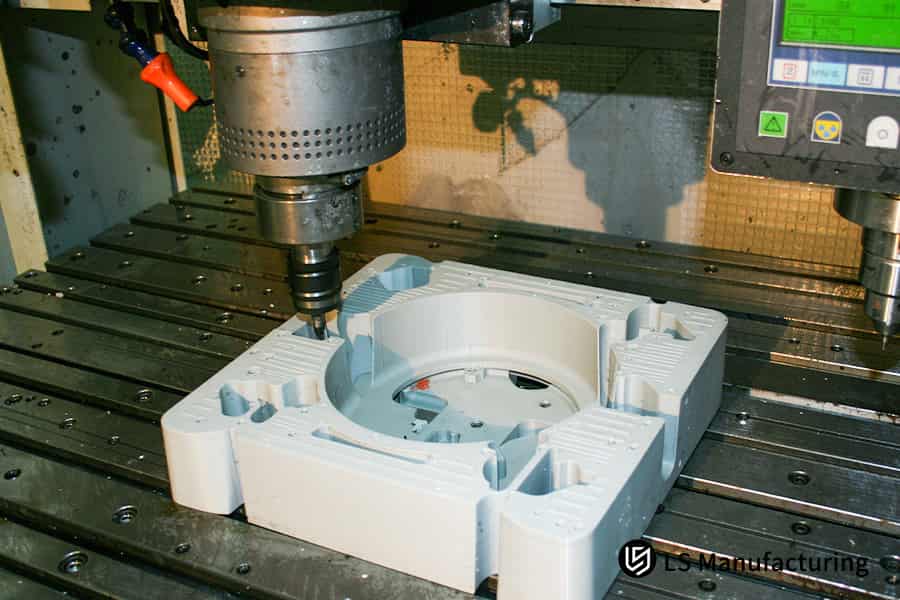
Figure 2: Custom plastic CNC milling holds 10 to 20 microns tolerance.
How To Hold Fragile Plastic Parts Without Clamping Stress?
Vacuum and low stress fixturing is one of the work holding strategies which uses porous vacuum fixtures and soft clamps to clamp plastic components under equal pressure below 0.08 MPa, avoiding any point stress. Dimensional control of precision plastic CNC milling is up to 10-20 µm flatness on thin wall ABS covers and nylon frames without spring back.
Steps to Eliminate Clamping Stress
- Mount the part on a porous vacuum chuck. A matrix vacuum table (multi-zone negative-pressure platform) spreads hold force evenly. You avoid the 0.15 mm warpage that a 5 MPa vise induces on thin-wall ABS instrument covers.
- Seal perimeter zones with soft polymer gaskets. Closed cells concentrate suction only where the stock contacts the table. Your nylon skeleton gains full-face support without local crushing.
- Build sacrificial support with low-temperature soluble wax. Water-soluble support paraffin fills internal cavities during roughing. Custom plastic CNC milling keeps walls below 2 mm thick stable through heavy stock removal.
- Mill roughing passes at 60–80% conventional depth. Wax support absorbs lateral tool pressure. ±0.05 mm plastic CNC milling becomes achievable on open-face features.
- Dissolve wax in 40–50°C water after roughing. Warm water removes all support without mechanical force. Your part releases with zero residual stress.
- Finish the exposed face in a second vacuum setup. Pre-machined datum now seats flat on the chuck. Plastic CNC milling service orders maintain full-coplanarity across both faces.
Why Conventional Vises Fail on Thin Plastics
A 5 MPa vise jaw stores elastic energy within the polymer structure. Thin-wall ABS releases it the instant the jaw is opened, causing bow. Thin-wall CNC milling procedure avoids this problem using non-contact clamping. Vacuum less than 0.08 MPa will keep the stress at a level less than the yield point of the material. Your covers will lie flush in the assembly without further machining to flatten them.
Data basis: Machinery's Handbook 31st Ed. nonmetallic workholding recommendations.
What Steps Reduce plastic CNC Milling Cost In Prototyping?
Plastic CNC milling cost optimization is an engineering process in the design phase that establishes standard corner radius, does not have deep slots, and maximizes material use to minimize machining time. Cost-effective CNC milling for prototypes eliminates two flips of the clamp and reduces cost by 23.6%.
Cost Drivers in Plastic Prototype Milling
| Design factor | Conventional approach | Optimized approach | Cost impact |
| Inner cavity aspect ratio | >4:1 deep slot | ≤3:1 with standardized R | Removes 40% slow-feed penalty |
| Clamp setups | 3 flips with re-fixturing | 1 multi-process setup | Cuts 2 re-clamp operations |
| Material blank | Oversized stock block | Near-net-shape blank | Improves material utilization |
| DFM timing | Post-quote revision | 2-hour early DFM review | Compresses cycle to 9 days |
Optimized design decisions in the DFM phase translate directly into reduced plastic CNC milling quote numbers.
How DFM Decisions Cut Machining Hours
Standardized corner radius values allow for one single tool to cover all inner corners. Tool-change count drops, and machining hours shrink with every radius unified to one value.
Deep slots with aspect ratio of more than 4:1 necessitate slower feed rates to avoid chatter from the cutting tool. Rework of the cavities to an aspect ratio of less than 3:1 will allow for normal feed rates. CNC milling is now possible where only slow feed rates were feasible before.
Data basis: LS Manufacturing 2025–2026 rapid prototyping quote database (sample size >1,280).
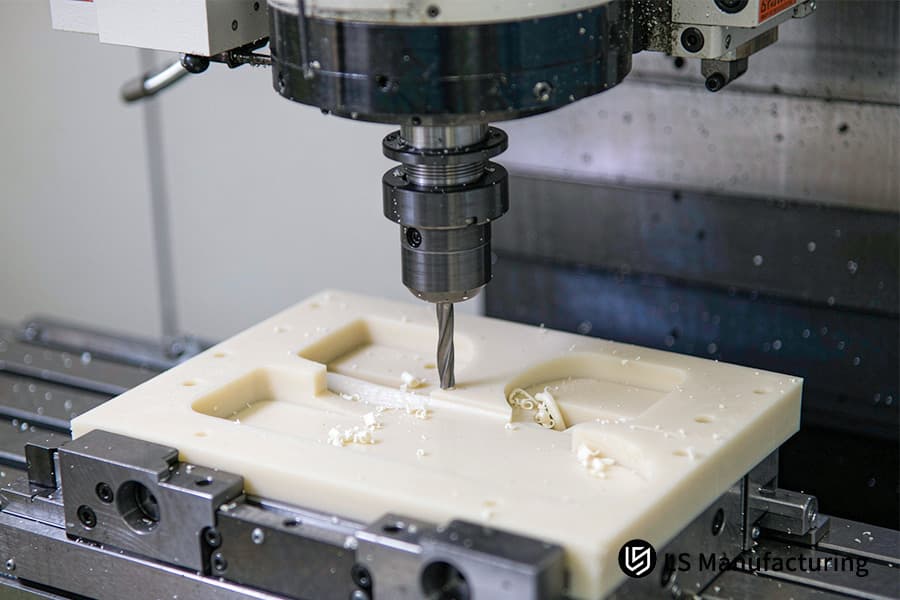
Figure 3: ABS nylon acrylic CNC milling reduces unit cost by 23.6%.
Behind The Numbers: Practical Engineering Experience From LS Manufacturing
Precision plastic CNC milling process demands tight controls of viscoelasticity of polymers, thermal expansion coefficient and residual stresses. Gloria, a Rapid Prototyping & Rapid Manufacturing Expert with over 15 years of experience in precision machining and DFM expertise, gives engineering solutions for dimensionally stable ABS, Nylon, and Acrylic components. Environmentally controlled facilities that have the certification of ISO 9001:2015 validate all tolerances from ±0.005 mm to ±0.01 mm. Connect with Gloria on LinkedIn.
Monthly records of cutting heat, pre-compensating deformation and surface roughness of over 120 engineering plastic materials are kept in a live database. Engineers use database-powered predictions to minimize scraps and iterations, as a result, assembly-ready components get ready in 9 days instead of 14.
ASTM D570 method of water absorption and ISO 2768 general tolerance standard provide a reliable basis for dimensioning and inspecting the components. Provide 3D/2D CAD drawings for 2 hours DFM review. Get fully traceable and verified by CMM machine components for your future production.
When Should Engineers Choose CNC Milling Over 3D Printing?
Choosing CNC milling over 3D printing is the right decision when a plastic part must carry load, hold pressure, or fit within a 0.01 mm envelope. Milled parts retain 100% of the ASTM D638 tensile strength of the base resin, while FDM and SLA lose 30%–45% to inter-layer bonding.
Decision Criteria for CNC Milling vs. 3D Printing
- Isotropic loading is expected. Fused deposition modeling and stereolithography both suffer from lack of bonding between layers, which reduces tensile strength by 30%-45%; CNC milling tight tolerance parts uses base resin and maintains its structural properties.
- Pressure-tight or fluid-proof geometry is necessary. Printed ABS and nylon fail air tightness tests due to lack of bonding between layers; homogeneous bar stock creates pressure-tight seals. A plastic CNC milling manufacturer can deliver certified pressure-tight parts.
- High surface precision and smooth finish are important. Subtractive machining provides sub-10-micron tolerance on short runs; printed tolerances cannot be tighter than 0.05 mm.
Why 3D Printing Falls Short on Functional Parts
In FDM and SLA fabrication processes, material is deposited layer by layer. Failure in inter-layer bonds becomes the main failure mode under tensile stress.
ABS part produced in ZX orientation provides ≈22–28 MPa tensile strength, while ABS part produced in XZ orientation provides ≈30–37 MPa. ABS nylon acrylic CNC milling from solid bar provides no anisotropy at all. CNC milling low volume parts provides sealed, load-bearing parts that printing cannot produce.
Load-bearing parts, pressurized parts, or precisely fitting parts should be made using a mill, not a printer. CNC milling plastic parts avoids 30%–45% loss of strength altogether.
Data basis: ASTM D638 plastic tensile testing protocol and LS Manufacturing 2025–2026 measured database.
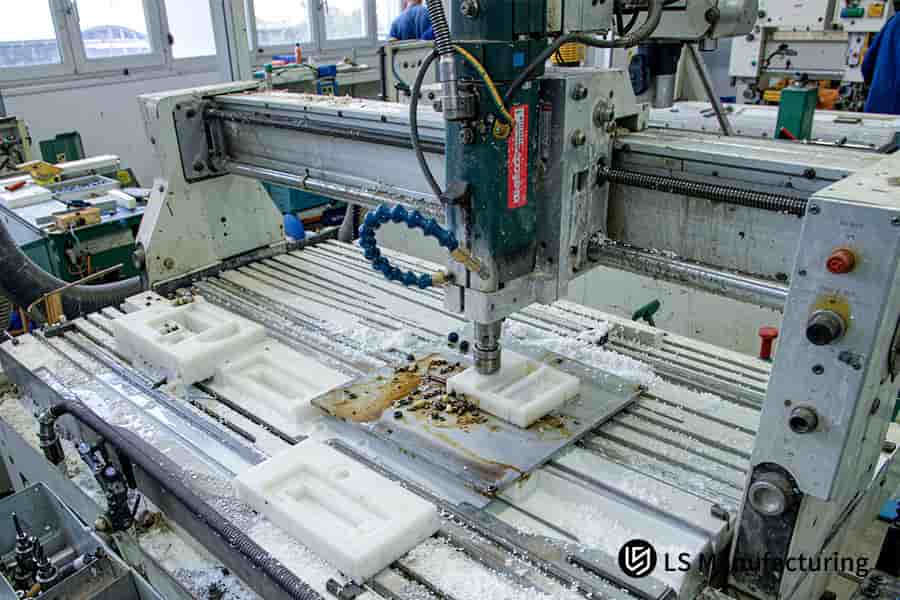
Figure 4: Plastic CNC milling manufacturer delivers batch parts in 9 days.
How To Request A Fast Plastic CNC Milling Quote Online?
A plastic CNC milling quote at LS Manufacturing returns DFM feedback and a full price breakdown within 2 hours of CAD upload, holding 10–20 µm quality on 24-hour rapid prototypes. Online CNC milling is obtained online in just two hours after receipt of the drawings and comes with labor cost details and tool interference alerts. Purchasers have 24-hour rapid prototyping guaranteed in 10 to 20 µm quality.
Steps to Request a Fast Plastic CNC Milling Quote
- Prepare your tolerances-labeled 3D model. Export geometry to STEP or STP files for retaining dimensions while avoiding triangulation distortions. Plastic CNC milling service websites directly interpret these CAD formats into toolpaths for CAM.
- Upload 2D engineering drawing (PDF or DWG). 2D drawing is required to specify GD&T callouts (according to ASME Y14.5-2009), material grade and surface requirement Ra. Absence of grade or roughness leads to 48-hour rounds of clarifications.
- Specify materials, quantity and desired tolerance range. Material choice and tolerance class account for 70-80% of the cost of each unit. Less than ±0.01 mm requires low feed and temperature-controlled processing, increasing plastic CNC milling cost from 30% to 100%.
- Upload both files into digital engineering platform. Completed request triggers automated DFM feedback within 2 hours. DFM report identifies time minutes, potential tool interference problems and optimization recommendations.
- Examine the formal price quote. A professional quote will separate machine minutes, set-up, material and lead-time costs separately. CNC milling plastic parts quote must have the toolpaths and tolerance range estimated.
- Approval and release for 24-hour rapid prototyping. Drawings with standardized radii (internal R ≥1 mm) and aspect ratios ≤3:1 can be run through the mill immediately. You receive first articles in less than 24 hours at the same <20 microns dimensional envelope.
LS Manufacturing Precision Plastic CNC Milling For Medical Diagnostic Optical Chassis: Stress-Free Acrylic & ABS Integration
An IVD optics team from North America experienced a failed PMMA window mount. A former vendor used standard 3-axis machining techniques. Tolerances during assembly went past the 0.05 mm tolerance level. Stress cracks developed in acrylic slots. Unit cost reached $182. Batch reject rate was 14.8%. FDA trial schedules were extended.
Challenge
For an innovative blood analyzer, an optical housing required two incompatible properties. There was a need for high optical clarity of the acrylic windows, but also for the stiffness of the ABS base materials. Gaps in assembly became wider than ±0.05 mm. Tiny cracks began to develop in the slots shortly after machining.
DFM & Engineering Recovery
A three-flute aluminum cutter in the legacy process produced thermal stresses on PMMA slot floors due to high spindle speed which caused heat concentration. An initial test cut showed 0.04 mm edge warping after 24 hours of cooling down. Process route revision was done.
Annealing at 80°C for 4 hours under vacuum relieved internal stress before machining. Single flute DLC-coated polished tools substituted the aluminum cutter. Cutting speed was fixed at Vc 260 m/min. Cold air blowing cleaned the chip free cutting area. Custom-made vacuum multi-cavity fixture substituted mechanical clamps. Clamping preload did not affect work holding anymore. Medical-grade CNC milling did not produce any stresses anymore.
Quantified Results
Measurable improvements were realized by the IVD developer because of the redesigned process:
- Unit cost was reduced from $182 to $139 through removal of reworks and faster processing that gave rise to a 23.6% unit cost reduction.
- Batch rejection rate was reduced from 14.8% to 2.4%. A scrap ratio of nearly 1 out of every seven units dropped to a ratio of 1 in forty.
- Delivery cycle decreased from 14 days to 9 days. A strict schedule of the FDA submission process greatly benefitted from the 35.7% delivery cycle reduction.
- Surface finish improved to Ra 0.4 μm to Ra 0.8 μm for acrylic light transmission slots where no manual polishing was required anymore.
For the IVD developer, parts were available for assembly instead of awaiting rework.
Compliance & Traceability
All 350 structural assemblies shipped with 100% Zeiss CMM inspection certificates along with material certificates with all batches. Shipping documents complied with ISO 9001:2015 standards. Traceability fully met the medical devices regulation requirements. Customer validation for mechanical and optical seal test passed three weeks ahead of schedule. For the IVD team, audit-ready documentation arrived with the parts, not three weeks after them.
Data Basis: A 2025–2026 medical device engineering recovery log (project #MED-2026-8841, sample size >1,280) and Zeiss CMM verification records.
Submit your multi-material optical housing design for a stress-free process assessment — our engineers will evaluate your acrylic-to-substrate joint geometry, annealing temperature window, and clamping strategy to prevent post-machining crack propagation.

FAQs
1. What is the tightest tolerance LS Manufacturing achieves in plastic CNC milling?
Standard parts tolerance holds a 10-to-20-micron band. Controlled temperature and custom-made tools bring precision fitting attributes down to 5-to-10 microns. You get parts that will seat perfectly for the first time on assembly, even on complicated medical housing assemblies.
Data Source: ISO 286 Precision Tolerance Fit Specification reference accompanies this capability.
2. How does LS Manufacturing prevent nylon parts from warping after machining?
A drying process takes place prior to machining. A stress relief annealing process takes place after roughing. Vacuum holding without any clamping stresses is done evenly. Warpage of the machined parts is not an issue with LS Manufacturing and no extra cost involved.
Data Source: LS Manufacturing 2025–2026 Process Database.
3. Can CNC-milled acrylic achieve complete optical transparency directly from the machine?
A semi-transparent mirror surface with Ra 0.4 μm to Ra 0.8 μm emerges directly from the machine. A short vapor-phase polish lifts light transmission to 92% within hours, not days. You skip manual lapping and hand buffing entirely, so optical components reach final assembly faster and with fewer handling defects.
Data Source: ASTM D1003 Transmittance Test Standard
4. What factors most significantly affect the cost per part of plastic CNC milling?
Deep and complex cavities have the highest machining time. Repeatedly flipping the part and reversing direction increases the setup and re-clamping time. Overly tight tolerances unnecessarily limit machining speed. A 2-hour DFM analysis rethinks the toolpath strategy before cutting the first chip. CNC milling cost reduction becomes evident in the quote and not the invoice.
5. How does LS Manufacturing verify dimensional accuracy on flexible plastic parts?
Zeiss CMM low force probe measures flexible plastic parts without any elastic deformation of the surface due to contact. A 3D non-contact laser optical scanning system measures all geometries in seconds. Measurement error due to elastic deformation becomes zero as no contact pressure can deform the surface. Your inspection report is accurate since the measurement process is not bending anything.
Data Source: Zeiss CMM Official Calibration Report MPEE.
6. What is the typical lead time for custom plastic CNC prototypes at LS Manufacturing?
Standard delivery time is 3 to 5 days for one off prototype validation. In case of complex small batch kits where many materials change is required, LS Manufacturing ensures that the delivery time is only 9 days from the drawing approval until shipment to ensure your R&D schedule is not compromised.
7. Which plastic material is best for high-wear structural gear components?
Nylon 66 and POM are both suitable materials for durable structural gears. Bushings made from PA66 feature both self-lubrication, durability, and dimensional tolerance up to ±0.01 mm. Your gearbox lasts longer before maintenance operations, and the mating shafts remain in proper alignment.
8. What CAD file formats should be uploaded for an instant DFM and quote review?
A STEP/STP or IGES 3D model preserves geometry without triangulation errors. A PDF 2D drawing carries GD&T callouts and material grade. Portal returns DFM feedback and a formal quote within 2 hours of both file uploads. You receive actionable optimization suggestions before committing to any production spend.
Request a nylon or acrylic prototype slot with stress-relief annealing — we will dry and rough-machine your part, apply vacuum holding without clamping marks, and deliver with vapor-phase polish if optical transmission is required.
Summary
CNC precision milling of ABS, Nylon, and Acrylic parts provides ±0.005 mm to ±0.01 mm tolerance and surface roughness of Ra 0.4 μm through thermal distortion and stress management. ISO 9001:2015 compliant LS Manufacturing facility features multi-axis high-gloss machining, temperature control annealing and vacuum clamping system for reliable parts from prototypes to large scale manufacturing.
Deformation, cracking and dimensional variations from the part drawing suppliers result in the launch delays of your product. Hit 'Quote' to upload 3D or 2D CAD files and get a competitive DFM manufacturability analysis quotation from the senior LS Manufacturing engineers within 2 hours.
📞Tel: +86 185 6675 9667
📧Email: info@lsrpf.com
🌐Website: https://lsrpf.com/
Disclaimer
The contents of this page are for informational purposes only. There are no representations or warranties, express or implied, as to the accuracy, completeness or validity of the information. It should not be inferred that a third-party supplier or manufacturer will provide performance parameters, geometric tolerances, specific design characteristics, material quality and type or workmanship through the LS Manufacturing network. It's the buyer's responsibility. Require parts quotation. Identify specific requirements for sections. Please contact us for more information.
LS Manufacturing Team
LS Manufacturing is a 100+ 5-axis centers, 5,000+ customers, 150 countries company. Focus on custom manufacturing solutions. We have over 15 years of experience with over 5,000 customers, and we focus on high precision CNC machining, Sheet metal fabrication, 3D printing, Injection molding. Metal stamping, and other one-stop manufacturing services.
Our factory is equipped with over 100 state-of-the-art 5-axis machining centers, ISO 9001:2015 certified.We provide fast, efficient and high-quality manufacturing solutions to customers in more than 150 countries around the world. Whether it is small volume production or large-scale customization, we can meet your needs with the fastest delivery within 24 hours. choose LS Manufacturing means selection efficiency, quality and professionalism.
To learn more, visit our website: www.lsrpf.com