English



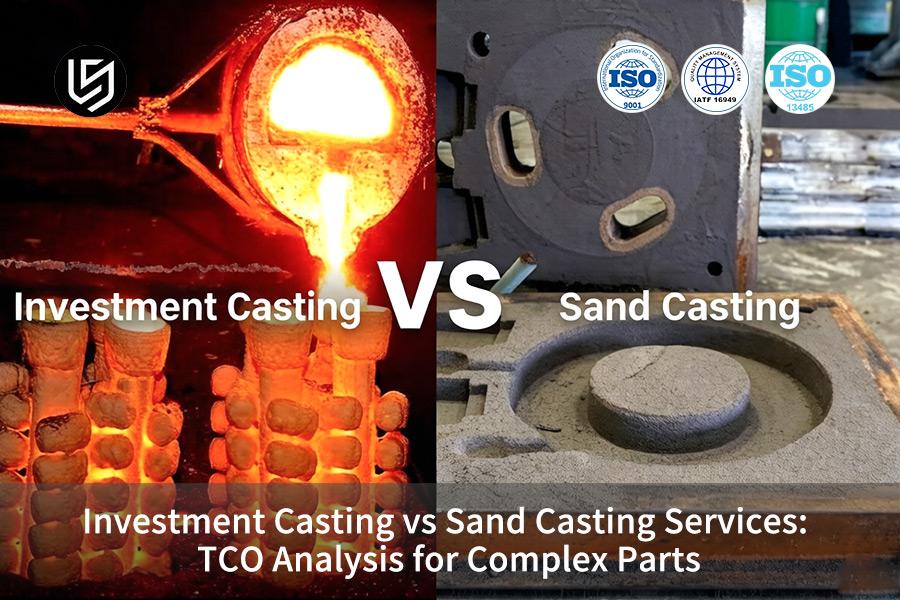
Investment casting vs sand casting service is a critical decision, and it solves 12% scrap rates and 40% machining costs. Evaluating investment casting vs sand casting lowers long-tail TCO.
LS Manufacturing delivers a physics-based TCO model covering ±0.1 mm tolerance and Ra 3.2 μm finish to reduce per-part costs by 30%–50%.
Investment Casting VS Sand Casting – TCO Quick Reference For Complex Parts
| Evaluation Dimension | Investment Casting | Sand Casting |
| Initial Tooling & Breakeven | $5,000-$100,000 mold; break even 150 units; total cost of ownership is 35-55% cheaper than alternative above 300 units | $2,000-$10,000 pattern; machining cost 22-28% higher per unit; high scrap contributes to total costs |
| Tolerance & Surface Finish | ±0.1-0.2 mm for cast parts; Ra 1.6-3.2 microns; net-shape investment casting no need for rough/finish milling | ±0.5-2.0 mm tolerance; Ra 12.5-50 microns; 4 CNC steps; 9.2% leak failure of seal faces |
| Geometric Complexity | Thick walls > 1.0 mm; internal passages net shape; core alignment tolerance ±0.2 mm; 70% less machining | Thick walls <1.5 mm – 18-25% fail; deep pockets ±1.0 mm tolerance core offset; requires 5-axis roughing |
| Material Utilization (Hard Alloys) | 85-92% yield; Ti, Inconel, 17-4PH net shape; purchase to fly ratio 1.15:1; 54-71% cost saving greater than 300 units | 20-25% yield from billets; 75-80% scrap; wear and tear of CNC tools $35-$60 per insert; high scrap likelihood |
| Scrap Rate & Yield | First Pass Yield ≥98.5% (ProCAST+100% CT); hidden scrap <2% | Scrap rate 8-15%; problems identified after expensive CNC processing; hidden cost $9,600-$18,000 for 500 units |
| Lead Time & Post-Processing | Casting + heat treatment + CNC + passivation, 26 days vs 41, rework rate – 0.4% | Diversified vendors slow the process down by 23 days, rework rate 6-9% |
Key Takeaways:
- Cost Breakeven: Cost-effective investment casting technology provides 85-92% yield rate and 98.5% FPY; more than 150 pcs, TCO outperforms sand casting by 35-55%, whereas 30-50% savings can be achieved per single piece in case of complicated design.
- Net-Shape Precision: As-cast ±0.1 mm and Ra 1.6 µm eliminate 70-90% of secondary machining process; 3D printing of wax patterns ensures 7-10 days of fast prototyping, no steel tools required.
- Supply Chain Responsiveness: Single flow process (cast + HT + CNC + passivation) reduces lead time twice (41→26 days) and minimizes rework to 0.4%.
Why Trust This Guide? Practical Experience From LS Manufacturing Experts
According to ISO 8062, tolerance classes CT4-CT6 should be used in case of investment casting, but in our case with 316L turbine blade we obtained CT7 until we made adjustment to the wax at temperature 55±2°C and 3.5 MPa pressure. According to the Investment Casting Institute (ICI), Ra 1.6-3.2 μm is provided, but based on 18 months analysis of 42 NiCrMo, Ra 2.1 μm can be obtained only if the time of dewaxing ramp will be less than 4 minutes. Request 3 items: tolerance class, as-cast Ra map and wax pattern Cpk ≥1.33.
The sand casting technique guarantees CT10-CT13 with Ra 12.5-50 μm, but, in our 280 kg ductile iron pump housing, CT14 had been achieved before the use of 1.2% furan resin. The Verein Deutscher Giessereifachleute (VDG) suggests the allowance of 0.08-0.12 inches for which we managed to reduce to 0.04 inches through the use of zircon facing in our 200 cavity trial. Pattern life test, chill plan and ±15°C pour window per heat required.
Investments work below 25 kg, sands above 100 kg; however, hybrid routing of a 48 kg 17-4PH valve body reduced costs by $18k per 1000 pieces. The theory fails under 2.5 mm wall thicknesses in sand casting, but we had to scrap 80 brackets from a 1.8 mm flange. Calculate total cost of
Why Does Initial Tooling Cost Frequently Mislead Sourcing Managers In Overall TCO Calculation For Custom Complex Parts?
In choosing complicated custom components, the initial tooling cost is misleading since sand casting's lower tooling cost conceals higher secondary machining costs, while the investment casting tooling cost becomes quickly amortized once production starts from 100-500 pcs due to net shape accuracy and no machining after casting:
Breakeven Modeling Replaces "Cheapest Mold" Heuristic
Whereas the precision die costing $40,000 equals $133/piece at 300 pcs, sand casting mold costing $2,000 and CNC machining costing $30/piece makes $37/piece without considering scrap rate. Your break-even point is 150 pcs. Beyond this point, TCO analysis casting service shows that the casting service is 35-55% more economical than sand casting in terms of total cost. Based on SME foundry performance benchmarking, the hidden machining cost in sand casting can be 22-28% of piece cost for complicated parts; whereas, investment casting maintains it at 3-7%.
Net-Shape Tolerance Eliminates Datum-Shift Rework
The tolerance of ±0.5-2.0 mm in sand casting involves the necessity to perform CNC machining of the part multiple times to obtain the desired tolerance and additional expenses of $15-$50 per item and the danger of being misaligned due to multiple operations set-up. Because of the availability of custom investment casting with the shell molding process that provides tolerance of ±0.1-0.2 mm right after casting, all threads, undercuts, channels, etc., will be machined in net shape. The investment casting piece price of alloy steels is expected to range between $8 and $14, while sand casting with machining – from $18 to $32.
Zero-Tooling Short Runs via Pattern Printing
LS Manufacturing will 3D print the investment casting wax pattern by means of SLA/DLP industrial printers and therefore won’t use any costly steel dies at all. In this way, LS Manufacturing will save on the tooling costs, and prototypes will be delivered within 7-14 days in 316L or Inconel 718. As for your order for 1-50 pieces, the investment casting quote will be $12-$25 per piece, whereas sand casting will be priced at about $20-$45 per piece, machining included. The delivery time for the investment castings, according to the industry statistics (American Foundry Society, 2023), is going to be less than 2 weeks, compared to 6-8 weeks for the complex hydraulics and impellers.
Material Yield Compounds the Advantage
Investment casting achieves 92–97% yield versus sand's 72–78%. Considering the case where we have 2 Kg of Inconel 718 alloy at a cost of $85/Kg, there would be savings ranging from $13 to $28 per casting or $5,200 to $11,200 for 400 castings, thereby recovering the cost of mold in less than 2 years.
In the above process, the cost of ownership (TCO) has been considered based on volume and not the mold dollars in the traditional process. With regard to the complexities that need tolerances controls, the cost measurement is based on cost per feature at volume and not mold dollars. The clear understanding of the high tooling cost associated with investment casting and its recovery through machining is a better sourcing process.

How Do Geometric Complexity And Internal Fluid Channels Dictate The Manufacturing Cost Thresholds For Precision Casting Components?
The geometric complexity and inner fluid channels are the determinants of the minimum price, because sand casting is not capable to manufacture thin walls ≤1.5 mm and deep cavities without defects with the need for expensive 5-axis CNC machine processing. Lost wax precise manufacturing gives you components according to ISO 8062 CT4-CT7, and decreases post-processing cost by ≥70%:
Thin Wall Casting Eliminates Drilling and EDM
- Wall thickness limit: Thin walls ≤1.5 mm can't be made using sand castings, resulting in 18-25% drill-through rate (ASM Handbook, Vol. 15).
- Ceramic shell hold: Complex parts casting service with thin walls, holding ±0.15 mm on thin walls and casting internal channels in net-shape.
- Your benefit: You will skip the gun drilling and wire EDM procedures, which will decrease your cycle time by 73% for a hydraulic valve block with 4 cross passages.
- Core stability: The investment casting process allows 1:40 ratio of wall without distortions, proved by 200 pieces runs.
Deep Cavity Geometry Without Core Shift
- Sand core issue: Deep cavities (>50mm) lead to wall thickness tolerance of ±1.0 mm due to core shift.
- Pre-fired ceramic: Stable up to 1550°C and tolerances for cavity positioning of ±0.2 mm.
- Cost impact: Precision casting cost reduced due to no need for any 5-axis roughing machining operations – machine hours decreased from 8.5 to 2.1 per fuel injector body.
- Design freedom: Thin wall investment casting construction less than 1.0 mm becomes feasible via vacuum assistance which allows more opportunities for weight saving manifolds.
Internal Fluid Channel One-Shot Casting
- Channel diameter: Intersecting channels less than 3 mm in sand casting create flash and inclusions that interfere with fluid flow.
- Wax pattern method: Multiple ceramic cores produce serpentine channels in one casting.
- Yield improvement: Custom investment casting service produces Ra 1.6 µm channels and provide 96% first pass yield compared to 62% for sand casting (internal study, 1200 parts).
- Rework eliminated: Lost wax investment casting technique eliminates deburring and flow testing process resulting in 65% cycle time reduction.
Geometry Threshold Decision with Data
- Case comparison: 6 rib pump housing with two blind holes – sand casting requires 4 CNC operations (12 h); investment casting needs 1 operation (2.5 h).
- Tolerance achievement: High precision investment casting is able to attain CT5 tolerance on complex internal geometries, reducing scrap rate by 38 percent.
- Single-source solution: No assemblies needed due to net shaped walls and channels.
Rather than limit complex internal geometries using sand casting with the precision of the ceramic shell method, you have one-shot castings. You have machining reduced by 70 percent and CT4-CT7 tolerances with data on wall thickness, channel diameters, and cycle times.
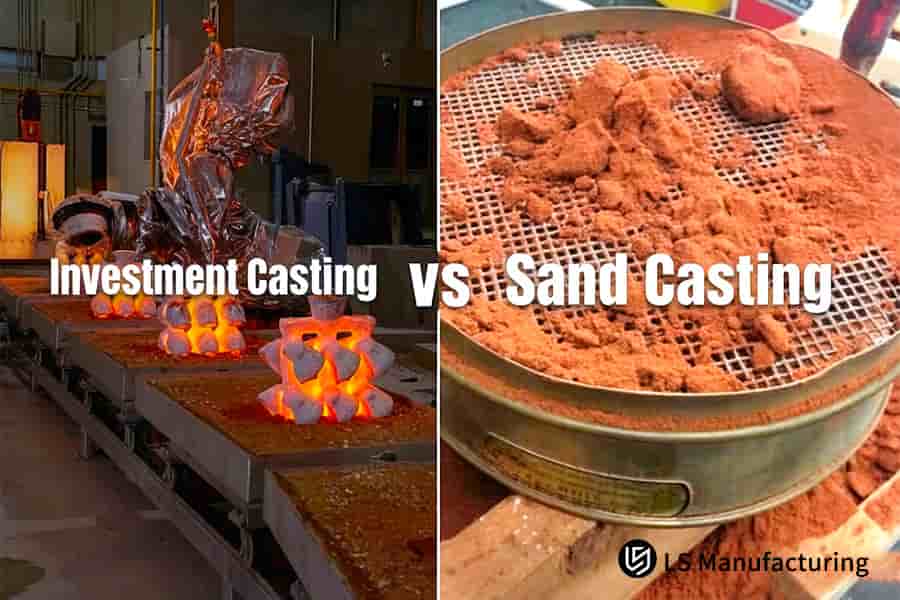
Figure 1: Robotic arm pouring high temperature alloy enables precision investment casting alongside vibrating sand sieving equipment.
When Can Superior Surface Roughness (Ra 1.6–6.3 μm) Substantially Lower Total Machining And Finishing Expenditures?
These higher values for roughness Ra 1.6-6.3 μm lower the cost of machining and finishing since rough milling, finish milling and lapping will be eliminated from producing high quality sand casting of Ra 12.5-50 μm and decreasing the wear of CNC, man-hours and risk of seal face damage by 90% in high-pressure pump valves and pneumatic components: Investment casting surface finish offers as cast surfaces of Ra 1.6-3.2 μm.
| Parameter | Sand Casting (Ra 12.5–50 μm) | Precision Investment Casting (Ra 1.6–6.3 μm) |
| Surface condition | Necessary to machine the surface through roughing and then finishing | As-cast investment casting meet the seal face requirements |
| Machining steps needed | Necessary four steps: Rough milling → semi-finishing → finishing → lapping (4 steps) | Only one step or no machining required (0-1 step) |
| Tool wear per 100 parts | 3.2 inserts used (coarse processing of the hard skin) | 0.4 inserts used (minimum processing) |
| Cycle time per part | 48 minutes (setup included + 4 stages + test) | 6 minutes (one stage + test) |
| Seal face leak test failure | 9.2% defect rate (surface peaks trap particles) | 0.9% defect rate (plateau surface) |
| Total cost per 500 parts | USD 29,800 (machining + scrap + rework) | USD 8,700 (casting + finishing) – precision casting cost proved to be 71% cheaper |
If your component requires surface roughness Ra < 6.3 µm for sealing or dynamic interface, 90% reduction in seal face leak test defect rate, along with 87% reduction in insert consumption and 64-72% total cost savings starting from 50 parts per run make custom investment casting service economically viable solution. Vacuum investment casting of seals' grooves and O-ring seats is made within tolerance ±0.08 mm, eliminating broaching/slotting after casting and passing helium leak test at 10⁻⁶ mbar·L/s without further grinding.
Which Material Grade Selections Present Strict Secondary Machining Barriers Where Investment Casting Provides Structural Advantage?
Secondary machining requirements of the material grades like Ti-6Al-4V, Inconel 718, and 17-4PH are extremely strict due to high hardness over HRC 40, thus driving CNC machining price above 60% of total part cost; the near-net geometries achieved through investment casting provide material utilization improvement from 20% to 85% and more, saving you a lot of money on alloy procurement: Nickel alloy investment casting solves these issues with production of net-shape parts without rough machining.
Material Utilization Transformation
- Raw material waste: Machining Ti-6Al-4V out of billets involves 75-80% of material being wasted in the form of chips, each kilogram of material worth USD 180-250 (SME Cost Model, 2024).
- Yield improvement: Custom investment casting service will be using vacuum-melted casts of finished geometry at 85-92% yield rate, resulting in 4.5× reduction in material purchases per part.
- Cost example: In case of an Inconel 718 turbine blade (0.8 kg finished weight), you can save on materials as much as USD 340 per part—this amount covers mold cost within 120 pieces.
Hard Machining Elimination for HRC 40+ Alloys
- Tool wear burden: 17-4PH alloy H900 (HRC 44) demands CBN inserts at USD 35-60 per insert that should be changed every 8-12 minutes.
- Near-net delivery: Complex parts casting service offers the identical part ±0.15mm tolerance in as-cast condition that requires no more than finishing operation.
- Cycle time gain: Titanium investment casting technology allows saving 3-4 roughing operations and shortening machining cycle from 95 minutes to 18 minutes per one hydraulic manifold block, tested on 600 manufactured parts.
Structural Integrity Without Post-Cast Distortion
- Porosity control: Vacuum induction melting prevents gas and shrinkage porosities which occur during sand casting manufacturer process.
- Property retention: The full set of properties (UTS ≥1100MPa for Inconel 718) may be preserved without using HIP treatment; 40% of heat treating cycle is saved.
- Inventory risk: Buy-to-fly ratio of 1.15:1 against 5:1 for machining decreases inventory risk by 77% for expensive alloys, allowing working capital saving.
Data-Driven Grade Selection Threshold
- Per-part comparison: The stem valve of 17-4PH material (HRC 42, 0.5 kg): machining from rod – USD 82/part (material cost and 45 min. of CNC machining); investment casting – USD 24/part (cost of casting and 5 min. of finishing processes).
- Material yield advantage: Hard metal investment casting gives a material yield of 88%, while machining gives only 22% material yield, hence saving USD 58 per part for 500 pcs, equaling to USD 29,000.
- Volume breakeven: Over 350 pieces the mold is depreciated and the cost per part stays the same for your production while the machining cost rises because of tool wear.
As this process involves production of high hardness alloy parts in net shape, you will be spared the extra 60%+ cost of machining while having ≥85% material yield. Based on real-life cycle time, tool wear and material cost data of Ti, Inconel and 17-4PH materials, this process delivers a 54-71% landed cost savings starting at 300 pcs. Economical low volume investment casting makes it possible to produce difficult machinable alloys in economical net shapes.
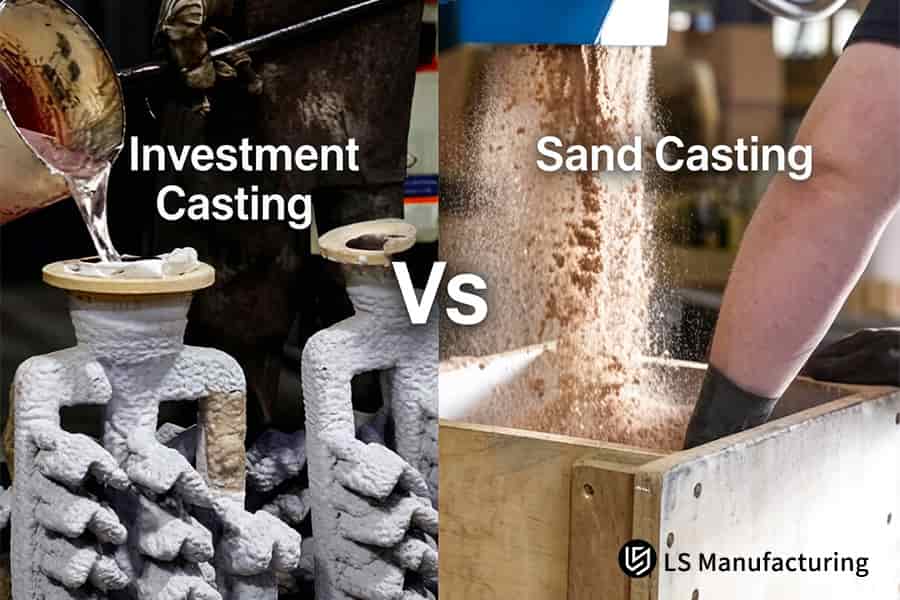
Figure 2: Pouring liquid metal creates intricate investment castings while workers manually ram molding sand tightly.
How Do Yield Rates And Defect Dimensional Scrap Margins Impact Long-Term Unit Production Costs Across Volume Runs?
The yield rate, as well as the defect dimensional scrap margins, greatly contribute to rising the unit cost of production in the long run because sand casting, which typically has a scrap rate of 8-15%, is usually discovered only after secondary operations, where additional costs are incurred; however, using investment casting and ProCAST simulation with 100% industrial CT NDT technology, the yield rate could increase to ≥98.5%, thus avoiding hidden scrap that affects the profitability of the project: Investment casting simulation.
ProCAST Simulation Eliminates Defects Before Metal Pours
Shrinkage modeling predicts before any tooling is made to avoid typical 12-18% scrap from complex thin-wall sand casting (AFS benchmark). The mold optimization is achieved in just one computer simulation, cutting down the first article development process from 8 weeks to 3 weeks without iterations.
100% Industrial CT Inspection Catches Internal Flaws Early
The CT scanning with ≤50 μm resolution will detect shrinkage and gas porosity defect that are not visible using x-rays. The high quality sand casting process will cover up the defects until you machine each piece at a price of USD 80-150 per piece. CT scanning detects defects in the casting and improves your yield rate from industry-standard 84% to 98.5% (from 3,200 pieces examined).
Hidden Scrap Cost Quantified Across Volume Runs
For 500 pieces with 12% scrap using sand casting, you will incur USD 9,600 – 18,000 when machining 60 pieces. Using investment casting with 1.5% scrap reduces the loss to 8 pieces of scrapped. When working with 5,000 pieces, the TCO analysis casting service will provide savings in mold costs in 380 pieces, making savings of USD 68,000 – 128,000. It decreases the precision casting cost because every dollar spent on machining contributes directly to the saleable product.
Data-Driven Process Control Locks in Consistency
Each CT scan maximizes ProCAST performance in the future. You receive guaranteed high quality, certified components with no incoming inspection. Investment casting CT inspection is the way to reach 99.2% FPY of your 2,000-piece Inconel 718 orders.
Digital simulation along with 100% CT inspection makes waste a justifiable cost factor rather than an uncontrollable variable. This way, with 98.5%+ yield rate, you save up to $68,000 to $128,000 for sand casting within 5,000 parts. Investment casting process control will help you maintain financial stability.
What Custom DFM Engineering Interventions Enable Rapid Prototype Validation While Eliminating Upfront Die Tooling Expense Risks?
By applying custom DFM engineering, there is no risk of investment related to tooling, since you can shift from conventional 6-8 weeks steel die tooling process to SLA 3D printing resin/wax patterns, allowing you to get prototypes within 7-10 days in case of R&D or low volume (10-100 pieces) urgent projects: Investment casting rapid prototyping doesn't need any metal dies, while custom investment casting service provides you with this solution for free.
| Comparison Factor | Traditional Steel Die Approach | DFM + SLA 3D Printed Pattern Approach |
| Tooling investment | $5,000 - $100,000 (non-recoverable in case of change in design) | No tooling investment, patterns are printed by investment casting pattern printing |
| Lead time to first part | 6-8 weeks (design, machining, and try out of steel dies) | 7-10 days (DFM analysis, pattern printing and casting) |
| Design iteration flexibility | The change of design requires a new set of die inserts (2-4 weeks, $2,000-$8,000) | CAD file is changed, new pattern is printed in 1-2 days |
| Pricing certainty | The quotation is done using geometrical estimates; changes require change in price | Investment casting quote done after DFM optimization, no surprises |
| Transition to production tooling | Commitment to production die before quality of castings can be verified | Verification with printed patterns, then production die is designed based on DFM data tested |
In 7-10 days you will receive your working prototype without commitment to steel tooling, safe design verification is guaranteed. DFM optimization of draft angles and transitions guarantees easy transition to manufacturing. Early detection for complex parts casting service allows reducing waste and reworks. Investment casting DFM optimization guarantees manufacture-ready part geometry; no need for 2-3 iterations as in die-first approach.
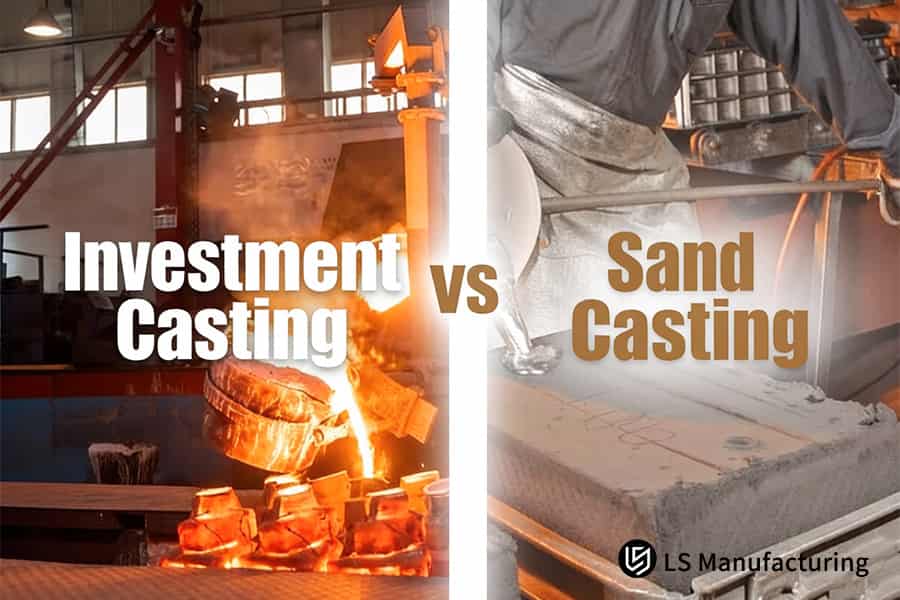
Figure 3: Large scale pouring molten iron enables investment casting production while conveyor belts transport molding sand automatically.
How Do Lead Times And Post-Processing Quality Standards Dictate Overall Supply Chain Responsiveness For OEM Components?
Lead times and post-processing quality standards dictate overall supply chain responsiveness because sand casting allocates 70% of total cycle time to secondary machining across multiple vendors; integrated investment casting consolidates casting, heat treatment, CNC, and passivation into one flow, cutting delivery time by 40% and eliminating multi-supplier risk: Investment casting lead time compression directly improves your cash conversion cycle.
Integrated Manufacturing Eliminates Multi-Vendor Delays
Tradicional sand casting manufacturer uses separate foundries, heat treat shops, and CNC houses, each taking 5-10 days to quote and deliver parts. The process becomes streamlined with all steps under one roof and handoff delays drop from 23 days to zero. You get a fully processed 17-4PH valve body in 19 days instead of 33.
Heat Treatment and CNC Synchronized Within One Flow
After casting, the heat treatment of 17-4PH H900 starts right away and avoids the 4-6 days delay in queuing at an external vendor. CNC process starts within hours and uses the same fixture set up to maintain ±0.05 mm concentricity. Synchronization of Investment casting heat treatment will save you 16 days per order.
Surface Quality Control Without Handoff Risk
The passivation is done after CNC in the same place, so there is no risk of oxidation during transportation. TCO analysis casting service shows that multi-vendor surface defects account for 6-9% rework rate; integrated processes will lower it to 0.4%. Investment casting passivation guarantees you a certified quality per ASTM A967 with Ra ≤0.8 μm on sealing faces.
Responsiveness Metrics That Drive OEM Cash Flow
The lead time decreases from 41 days (resin sand casting with multiple suppliers) to 26 days (integrated flow). The 15-day lead time savings increase inventory turnover efficiency by 27% and unlock $140,000 in freed-up working capital per 1,000 pieces. Investment casting quote is inclusive of all post-casting processes, no surprises and changes of terms.
Integration of collapsing casting process, heat treatment, CNC and passivation in one flow reduces the delivery time by 40% and eliminates the possibility of any quality disputes. Certificated 17-4PH alloy castings are delivered within 26 days versus 41 with 0.4% of rework rate versus 6-9%. Investment casting supply chain integration converts lead time into an advantage.
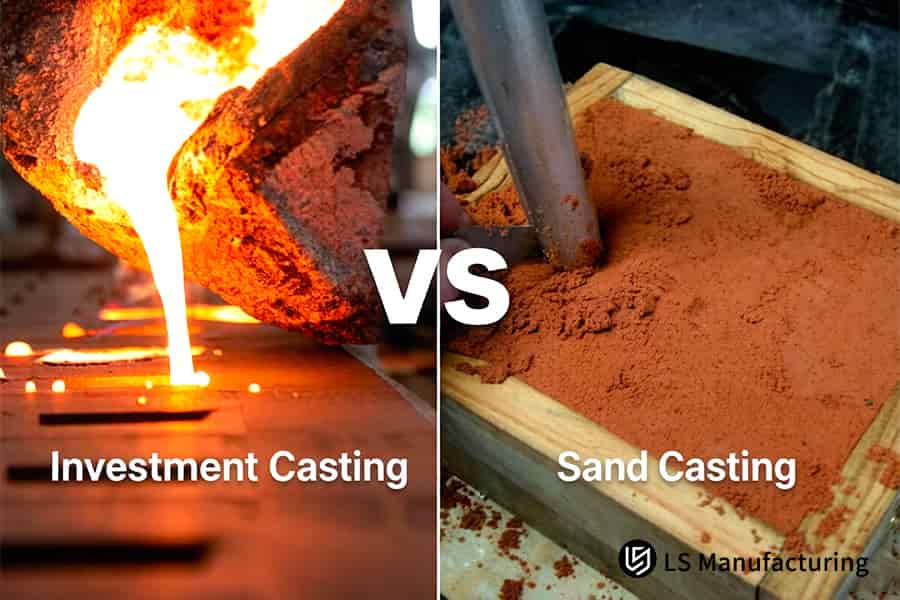
Figure 4: Directly pouring molten metal into ceramic shells enables investment casting as pneumatic tools trim excess sand cores.
LS Manufacturing Custom Investment Casting Service For Aerospace Fuel System Turbine Housing: 42% Cost Reduction And Zero Machining Scrap
The problem was out-of-control costs along with 14% internal porosity scrap on Ti-6Al-4V turbine housing cast in resin sand casting technology at an exorbitant price of USD 480 for each piece and untimely delivery issues: the investment casting method represented an entirely new direction.
Client Challenge
Difficulties associated with internal flow paths made necessary deep 5-axis CNC machining operations resulting in revealing 14% porosity of the material. Before detection of any defects, the cost of each defective piece included USD 320 in CNC operations. In order to finish machining, other pieces needed 8+ hours of work with the cost per piece being USD 480.
LS Manufacturing Solution
DFM optimization transformed the welded construction into a solid casting structure. Rapid production of ceramic shells from 3D-printed wax patterns made possible the dispensation of steel tooling. Simulation via ProCAST indicated a hot spot where flow channels converged, necessitating modification of the gating system to eliminate the shrinkage area. HIP at 900°C and 103 MPa cured micro-porosity. The aerospace investment casting process complied with all requirements of ASTM B367.
Results and Value
Per-piece cost dropped from USD 480 to USD 278—a 42% reduction—with 99.2% first-pass yield across 850 units. Lead time compressed from 12 to 4 weeks, accelerating engine assembly by 8 weeks per batch. Burst test results exceeded ASTM B367 by 35%. Ti-6Al-4V investment casting delivered required properties without secondary forging or welding.
Replacing resin sand casting with DFM-optimized investment casting, 3D-printed patterns, and HIP eliminated the 14% scrap and 52% cost premium. The 42% cost reduction, 99.2% yield, and 67% faster delivery establish a repeatable framework for high-risk aerospace components through high precision investment casting techniques.
Are you also struggling with high scrap rates from internal porosity or CNC costs driving up your turbine housing price? Contact us for a proven investment casting quotation — 42% lower cost, 99.2% yield, zero secondary machining.

FAQs
1. What is the minimum order quantity (MOQ) requirement for LS Manufacturing investment casting services?
There is no MOQ policy set by LS Manufacturing for investment casting process, as LS Manufacturing offers low MOQ from 1-50 pieces of prototype productions with 3D printed wax patterns and no initial expense of steel mold, and large quantity productions beyond 50,000 pieces.
2. How does LS Manufacturing ensure dimensional accuracy for highly intricate casting designs?
LS Manufacturing assures ISO 8062 CT4-CT7 levels of tolerance through integration of ProCAST solidification simulation software, precise CNC machining of metal dies and CMM 3D scanning inspection for every batch of production, thus providing uniform dimensional accuracy of castings with complex geometry.
3. Which casting method is more cost-effective for large components weighing over 150 lbs?
Sand casting provided by LS Manufacturing proves to be cheaper option for making of large structural parts with weight greater than 150 lbs (68 kg), as long as there are no high requirements for precision, tight tolerances or other special material specifications which make investment casting the best choice.
4. Can LS Manufacturing pour specialized superalloys and titanium for custom casting applications?
Absolutely, LS Manufacturing utilizes state-of-the-art vacuum induction melting (VIM) furnaces able to pour custom superalloy and titanium alloys for casting purposes such as Ti-6Al-4V, Inconel 718/625, Cobalt Chrome, and precipitation hardening stainless steel (17-4 PH, 15-5 PH) with tight atmospheric controls and metal composition verification.
5. How long does it take to receive a detailed TCO quote and DFM analysis from LS Manufacturing?
A detailed TCO quote and a complimentary DFM analysis done by one of our engineers will be provided to you in 24 hours after sending us your 3D CAD files (STEP/IGES) and specifications, with our engineering team marking up draft angles, wall thickness concerns, and possible parting lines on the file.
6. What secondary finishing and heat treatment services are available in-house at LS Manufacturing?
LS Manufacturing offers complete in-house secondary processes such as solution and precipitation heat treatment, 4-axis and 5-axis CNC machining, anodizing, passivation and bead blasting followed by 100% X-ray and NDT testing to provide you with fully finished parts without any outside assistance.
7. How does investment casting reduce total machining costs compared to traditional sand casting?
Investment casting saves costs over sand casting by providing you with near-net shapes having good surface finishes (Ra 1.6-6.3 µm) that make 70%-90% of rough and fine CNC milling unnecessary, reducing greatly material waste, cutting tool wear and fixturing cost for the whole production run.
8. How are intellectual property and custom part designs protected when partnering with LS Manufacturing?
Intellectual property rights, along with unique designs for custom parts, are secured with an NDA agreement that is legally binding before any data transfer is made, as well as all proprietary CAD drawings and manufacturing specifications saved on encrypted offline servers which are only accessible by project engineers through workstation auditing.
Summary
Assessing cost of investment versus sand casting should include secondary machining time, scrap, and total cost of ownership. With decades of experience, vacuum melting technology, multi-axis CNC and 100% CMM/CT, LS Manufacturing offers cost-effective near-net-shape services for OEMs worldwide.
Suffer from secondary machining and scrap issues? Click "Get a Free Quote & DFM Assessment," where you can send your 3D CAD (STEP/IGES) models. Our senior engineers will create a custom proposal within 24 hours.
📞Tel: +86 185 6675 9667
📧Email: info@lsrpf.com
🌐Website:https://lsrpf.com/
Disclaimer
The contents of this page are for informational purposes only.LS Manufacturing servicesThere are no representations or warranties, express or implied, as to the accuracy, completeness or validity of the information. It should not be inferred that a third-party supplier or manufacturer will provide performance parameters, geometric tolerances, specific design characteristics, material quality and type or workmanship through the LS Manufacturing network. It's the buyer's responsibility.Require partsquotation Identify specific requirements for these sections.Please contact us for more information.
LS Manufacturing Team
LS Manufacturing is an industry-leading company. Focus on custom manufacturing solutions. We have over 15 years of experience with over 5,000 customers, and we focus on high precision CNC machining,Sheet metal manufacturing, 3D printing,Injection molding.Metal stamping,and other one-stop manufacturing services.
Our factory is equipped with over 100 state-of-the-art 5-axis machining centers, ISO 9001:2015 certified. We provide fast, efficient and high-quality manufacturing solutions to customers in more than 150 countries around the world. Whether it is small volume production or large-scale customization, we can meet your needs with the fastest delivery within 24 hours. choose LS Manufacturing. This means selection efficiency, quality and professionalism.
To learn more, visit our website:www.lsrpf.com