English



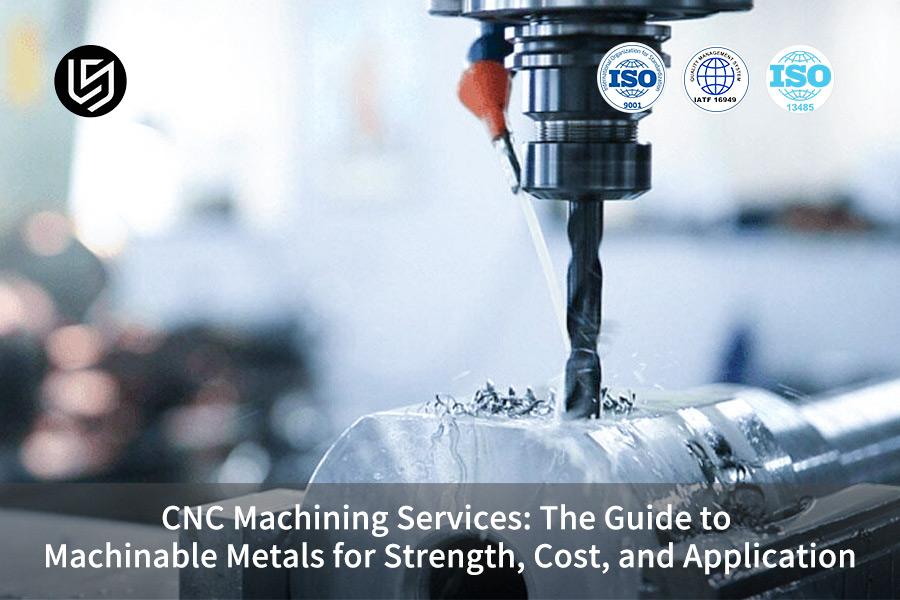
CNC machining services are of critical importance and are often faced with the triple dilemma of material selection. This is where engineers and procurement managers are often caught between the need for strength and budget, the need for material performance and manufacturability, and the need for short-term costs and long-term reliability.
The answer to this fundamental question by the LS Manufacturing is our methodology. By utilizing our 15 years history, our database of 368 materials, and our 127 case studies, we have developed a model that quantitatively solves the problems of performance, processing, and cost, and thus solves the fundamental question of the cause of the material selection problem.
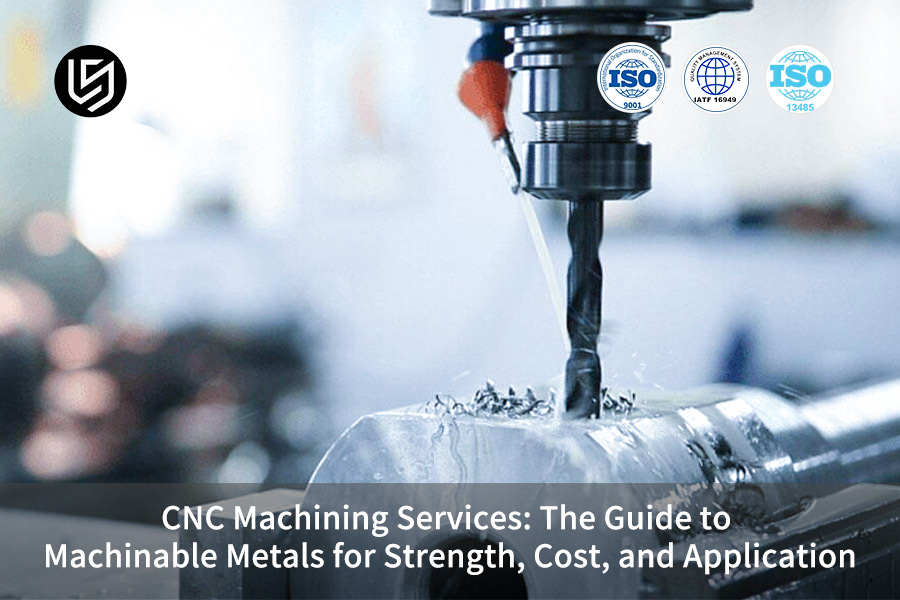
CNC Machining Services: Complete Overview
| Module | Key Content |
| Core Services | We offer precision CNC milling, CNC turning, and multi-axis machining services, including prototypes and production parts. |
| Material Expertise | We have expertise in working with various materials, including metals, plastics, and other advanced engineering materials. |
| Pain Points Solved | We solve the pain points that you might be facing in material selection, cost, and performance issues. |
| Our Methodology | It is based on our 15 years machining industry expertise and is based on our performance process cost model. |
| Proven Results | Our clients have seen cost savings, reduced turn-around time, and longer product life. |
| Value Proposition | We change the way you think about CNC machining material selection and turn it into an opportunity. |
We are here to assist our clients in successfully managing the main challenges of material choice in CNC machining. We are doing this by providing a logical and fact-based approach that eliminates the trade-offs between cost, performance, and manufacturability. This ensures that projects are completed within budget, to specifications, and with the best possible reliability. We are assisting our clients in making material choice a key success factor for their projects.
Why Trust This Guide? Practical Experience From LS Manufacturing Experts
There are many online articles that discuss CNC machining services, but why trust this one? We are not theorists; we are practitioners. Our shop is not a sterile environment; we are a real-world war zone of working with Inconel, tolerances, and geometry, as mentioned in material talks on Wikipedia. We don't just know the theory; we know the reality.
Our experience in working with industries such as aerospace and medical implants means that failure is simply not an option. Every thread, every curve, every surface we create is of ultimate performance and safety. This is the kind of direct and unrelenting experience we bring to every single piece of advice contained within this document, and we know it for a fact.
Every single piece of advice contained within this document has been tempered by years of experience on the floor, learned the hard way, and thousands of successful parts. We have already worked through the challenges of working with difficult materials and designs, and you don’t have to. This is the kind of experience we trust every day, proven by the principles outlined by the experts at 3D Systems' advanced manufacturing insights.
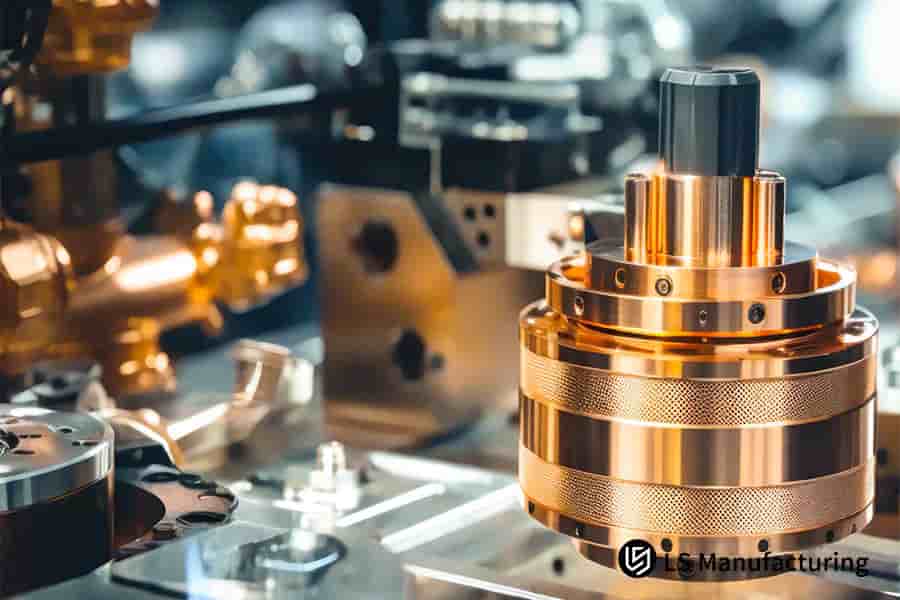
Figure 1: Complex brass part designed for manufacturing machinery uses by LS Manufacturing
How To Scientifically Select Metal Materials For Structural Components Based On Strength-To-Weight Ratio?
The selection of the right metal is all about finding the right balance between theoretical performance and actual manufacturing capabilities. The challenge is not just about finding a CNC machining material, but it is also about finding a good material that can be machined economically and effectively. The purpose of this document is to present a methodology for making this important selection decision by leveraging the expertise we have in CNC machining services:
Translate Design Requirements into Material Criteria
We begin by translating application-specific loads, safety factors, and environmental conditions into specific and quantifiable performance criteria. This gives us a clear material selection space, going beyond a list to identify possible strong metals for CNC that satisfy the actual functional criteria of the part.
Quantify the Machinability and Cost Impact
High strength-to-weight ratios may also have a negative effect on machinability. We will review the data available on tool wear, parameters, and possible tolerances of the material under consideration. This will provide a measure of the actual cost difference of production, which will further help in ascertaining the feasibility of using different machinable metals.
Execute a Holistic Lifecycle Cost Analysis
The last choice involves evaluating the entire life cycle of the product. We use scenarios to evaluate the initial CNC machining cost process against the long-term benefits of using the material, for instance, fuel savings as a result of weight reduction. This is to ensure that the selected material offers the best possible properties and cost of ownership.
Validate Through Prototyping and Process Refinement
Practical testing will aid in the validation of the theoretical analysis. We will conduct prototyping runs to improve the CNC machining method, tool path, and performance of the chosen material. This will reduce the risk of failing to deliver a product that is both high-performance and scalable in production.
This guide represents a comprehensive methodology that ensures critical material selections are made, as learned from real-world CNC machining experiences. It represents our capability in solving the weight-strength-cost equation, utilizing the theoretical benefits of the material to deliver optimized products via real-world CNC machining services.

How Can The Machinability Index Of Different Metal Materials Be Quantitatively Compared?
Quantification of the machinable metals is essential in order to predict the cost and efficiency of metal machining. This document will outline the application of a standardized system of materialprocessability Index (MPI) that enables direct comparison and provides crucial insights to CNC metal machining process planning and strategic material selection.
| Material | MPI (6061 Al = 100) | Key Machinability Implication |
| 6061 Aluminum | 100 (Baseline) | It serves as a baseline for cost-effective CNC metals, which provides the fastest rates and longest tool life. |
| 304 Stainless Steel | 45 | Machining this material takes approximately 2.2 times longer than machining 6061 Al, and tool wear is significantly higher. |
| Ti6Al4V Titanium | 22 | This material is hard to machine, taking approximately 4.5 times longer than the machining time of the baseline material and incurring excessive tool wear. |
| Inconel 718 | 15 |
It represents one of the most difficult CNC machining materials, with cycle times over 6.6x longer than aluminum and extreme tool wear. |
The MPI should be used as an essential tool in decision-making processes for high-value CNC machining processes. The strategic substitution of materials for cost-effective CNC metals like 6061 aluminum instead of 304 stainless steel is a well-established and successful strategic decision that instantly reduces the cost and time associated with CNC machining processes. This decision-making tool is essential in competitive and technologically complex situations.
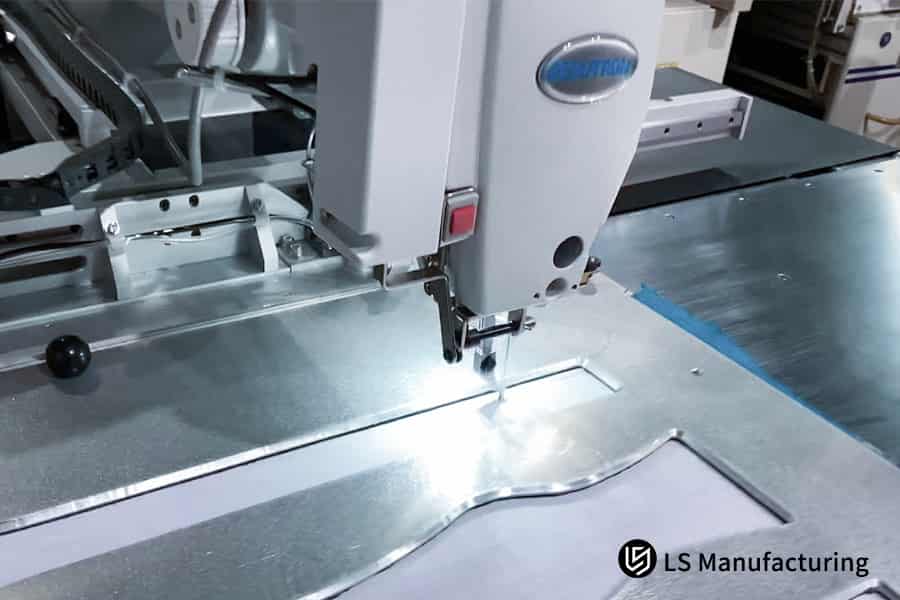
Figure 2: Accurate metal stitching for manufacturing and production processes by LS Manufacturing
How Can Cost Optimization Be Achieved Through Material Selection In Mass Production?
In volume manufacturing, the cost of the material is also dependent on the volume and machinability of the metal, rather than the cost of the metal per piece. To optimize the selection of the material, a strategy needs to be formulated that takes into account the specification of the material in relation to the batch size in order to achieve CNC machining cost benefits. The basic methodology is as follows:
Align Material Strategy with Batch Size
In situations where the batch size is less than 100 pieces, cost-effective CNC metals available in standard inventory can be chosen to avoid issues of minimum order quantity and lead time. For batch sizes greater than 1000 pieces, even if the cost of the metal is on the higher side, the cost benefit will be high in the long term.
Leverage Standard Materials for Scale
In high volume environments, substituting a particular material with a standard grade material can result in maximum cost savings. The cost savings achieved through the purchase of standard stock in high volumes and the use of standard machining parameters for the material have a substantial effect on minimizing material and processing costs. This is why an accurate CNC metal quote for standard materials is a key objective.
Achieve Performance via Post-Processing
It is noteworthy that the properties of materials are not fixed, and in some instances, it is possible to achieve equivalent properties with a high-end alloy through a process of heat treatment, for example, quenching and tempering, of a standard, more easily machinable metal.
Partner for a Holistic View
A collaborative metal machining supplier industry performs an analysis on the entire value chain. In an example case, the material selection for a 5000 piece requirement for a hydraulic valve body changed from a special alloy to standard 4140 steel and then precise heat treat, which gave a 28% cost savings per piece without any compromise in mechanical properties.
This framework is a technically rigorous decision matrix for strategic procurement. It is for a competitive high volume market where expertise and a partnership approach to CNC machining solutions are critical to deliver material strategy into a definitive cost advantage. Contact us to analyze your volume production need.
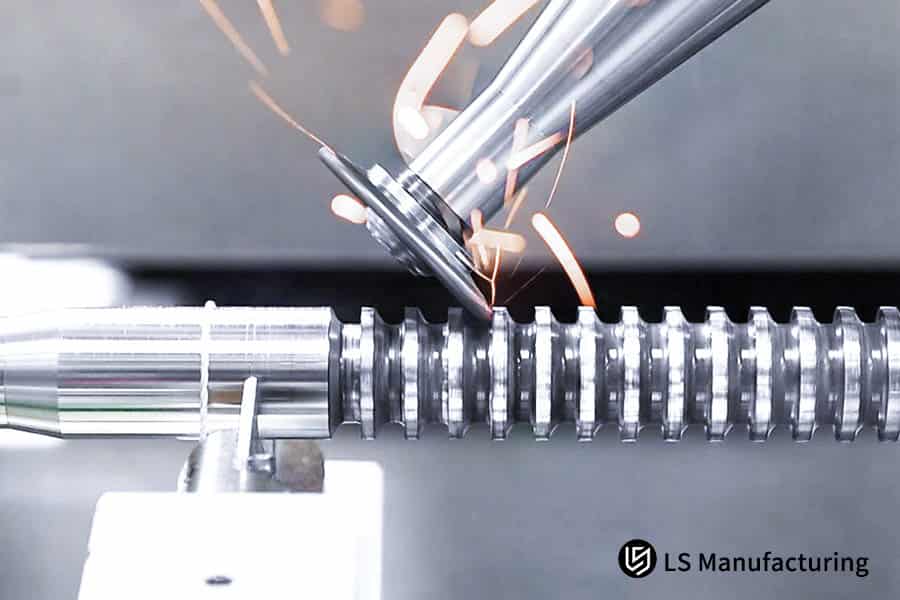
Figure 3: Machine tool emitting bright sparks while cutting metal components by LS Manufacturing
How Does High-Temperature Performance Retention Affect Metal Material Selection?
It should be mentioned here that when we design the metals for high temperature CNC machining applications, the room temperature strength is not a major point to be considered, but the retained strength should be the point to be focused on. The tendency of loss in strength is widely different depending on the kind of metals, and our solution to this key issue is:
Quantifying High-Temperature Strength Attenuation
We start by plotting the strength retention versus the operating temperature range of the selected metal including temperatures beyond the maximum operating temperature as per the specification documents.
- Aluminum Alloys: The strength retention is as low as less than 50% when the temperature is over 150℃; hence these metals are not suitable for high, temperature service although they are also used as CNC machining materials.
- Titanium Alloys: These are good to ~400℃. In addition to offering 80% strength retention, they also have a very high strength, to, weight ratio that is highly desirable for CNC applications.
- High-Temperature Alloys (e.g., Inconel): These materials retain most of their properties. They are capable of providing >90% strength even at 800℃ which makes them the category of strong metals for CNC parts in harsh environments.
Application-Backwards Decision Pathway
The service temperature, life, and other requirements are set, and then the alloy with the lowest cost that meets these requirements is chosen.
- Define Boundary Conditions: Define maximum temperature, stress, and life demands.
- Screen for Retention: Select candidate alloys from the known strength retention at service temperature.
- Analyze Total Cost: Calculate the total cost of ownership, including the cost of material and the risk of failure during the material's life.
Validating Through Lifecycle Cost Analysis
The best decision is one that weighs the cost of the top, notch material against the benefit of the operation.
- Case Example - Aero-Engine Bracket: The client decided on a different material from aluminum to inconel 718.
- Result: The service temperature went up from 200℃ to 700℃, and the lifetime was extended by 5x.
- Trade-off: Even though the cost of the raw material went up 3x, the increase in reliability and the resulting decrease in downtime gave a positive return on investment.
This is a scientific methodology that leans heavily on data and consequently, it is best suited for engineers working in aerospace, energy and automotive industries. This approach essentially transforms the risk of a material choice in high temperature applications into a science of maximising performance, through our knowledge of high, end metal CNC services.
How Do Corrosion Resistance Requirements Influence Material Selection And Surface Treatment Strategies?
Corrosion protection should be one of the factors in the development of the system which also considers the properties of base materials besides surface engineering. This is a major aspect in the creation of durable materials. The materials selection matrix given below is a data, driven one and has been prepared with the help of the mentioned CNC metal guide.
| Environment / Requirement | Primary Material Choice | Key Technical Rationale & Performance Data |
| Marine / Chloride Exposure | 316L Stainless Steel | PREN 35 for very good pitting resistance with >3000 hours of salt spray testing without red rust. |
| Chemical / Acidic Media | Nickel Alloys (e.g., Hastelloy) | Passive layers offering resistance to most corrosive acids and oxidizers, even at very high temperatures. |
| Mild / Atmospheric | Aluminum + Anodizing | Anodized surface finish for hard, insulating films on machinable metals. |
| High-Strength, Moderate Exposure | Carbon Steel + Plating | Sacrificial protection from electroplating, although with a limited and labor, intensive lifespan. |
The exact corrosive conditions and its lifetime have to be first determined and then the easiest material finish combination that simply exceeds this has to be found. This will enable to avoid over, engineering the product resulting in unnecessary costs. To do so, it is necessary to cooperate with CNC machining services that are able to provide the required corrosion, resistant CNC machining as well as precision CNC machining so that the finished product quality is ensured.
How To Balance The Initial Cost Of Materials With The Ease Of Processing?
Determining materials from the initial cost of materials only is a very serious mistake, because the ease of processing is one of the major determinants of the final price. Here, we have given a report showing a logical flow to get the best cost by analyzing the relationship between the cost of materials and the ease of processing. The following system allows to select cost-effective CNC metals in the most efficient way:
Implementing a Total Cost of Ownership Model
Our approach is to go beyond the cost per kilo, and our process involves calculating the cost of the raw material, the calculated hours required in the CNC machining process, the cost of tool wear, and other processes involved. We have found that in many cases, the higher the cost of the raw material, the lower the cost of the final part in the CNC machining process. This is important in preparing a correct CNC metal quote.
Translating Machinability into Financial Metrics
We put a price tag on the machinability of the material. A material that enables the complex CNC machining with fewer hours means cost savings to the company. A reduction of 60% in tool wear means that the cost of the tools is reduced significantly.
Validating Through Strategic Substitution
We highlight areas where the criterion for performance is not strength but rather manufacturability. In the case of an optical equipment bracket for a client, we reduced weight by 30% by using aluminum instead of steel in CNC machining. More significantly, the substantial reduction in machining cost, in spite of the higher price of aluminum material, resulted in a 20% cost savings.
Partnering for Integrated Optimization
A genuine metal machining supplier should have process-driven analysis capabilities. We recommend the most machinable alloy grade that meets specifications and tailor CNC milling services strategies to maximize its workability to extract the full value from the process.
This technical framework provides the decision logic to utilize material selection as a tool in value engineering. This framework is intended to be used by engineers in competitive volume-based industries who require data-driven proof. We provide the analytical rigor to prove the most machinable option, often the most cost-effective CNC metals, delivers the lowest total cost when utilizing expert CNC machining services.
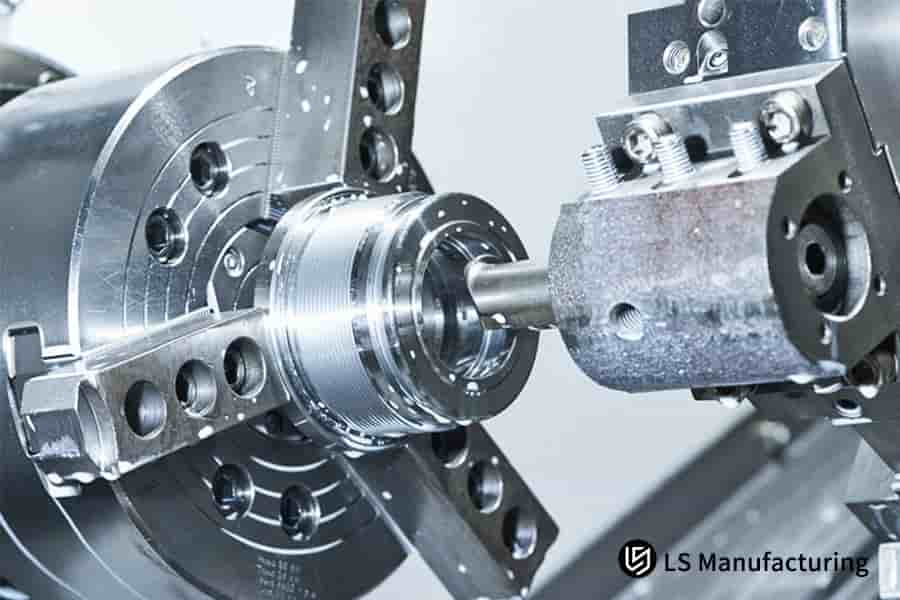
Figure 4: Precision CNC machining of metallic components with drill tool by LS Manufacturing
LS Manufacturing Medical Devices Industry: Orthopedic Implants Titanium Alloy Precision Machining Project
Precision metal machining of orthopedic devices requires exceptional surface integrity and dimensional accuracy. This project outlines how LS Manufacturing's expert CNC metal machining services solved critical manufacturing challenges for a titanium alloy spinal fusion implant:
Client Challenge
A manufacturer of a medical device had issues with machining Ti-6Al-4V ELI spinal fusion cages. Medical device machining tolerances (±0.025mm) and surface finish (Ra < 0.4µm) with conventional high-speed CNC machining methods resulted in excessive tool wear (15-minute tool life), low first-pass yield (70% yield), and project delays that jeopardized regulatory approval schedules.
LS Manufacturing Solution
We applied a precision cooling and monitoring system. The system included a -50°C cryogenic air-coolant and special tool geometry, with optimal 60 m/min cutting speed and 0.08 mm/tooth feed rate. This closed-loop system controlled heat and vibrations in the cutting edge, which are the primary sources of tool wear and surface finish problems during machining of titanium.
Results and Value
The tool life was extended to 2 hours, surface finish was achieved to an Ra 0.2µm, and a first pass yield of 99.5% was achieved. The stability of our production process resulted in a 45% reduction in the cost of medical device machining per piece for our client, a step that was necessary in securing FDA 510(k) clearance for our client's medical implant device with our accurate and reliable data package.
This project example demonstrates that to overcome complex materials, there needs to be a combination of precision metal machining and process innovation. With our expertise in machining critical components, medical device manufacturers need a partner to make complex designs a reality.
Contact our engineering team for a validated solution to your complex medical component.

Why Choose LS Manufacturing As Your Metal Fabrication Partner?
It is vital for a metal machining supplier to be proficient in material science and advanced CNC machining techniques. LS Manufacturing provides a systematic partnership for assured performance and cost efficiency, which is a critical factor for a metal machining project. Our methodology is distinguished by the following:
Data-Driven Material Selection & Advisory
We employ our own database of 368 alloys to enable comparative analysis, exceeding typical grades.
- Process: Our engineers identify the machinable metals that best meet your mechanical and environmental specifications.
- Outcome: This helps ensure your project is not over-engineered, as demonstrated in our case study with an aerospace client, where our input resulted in a 30% decrease in total project costs while meeting all specifications, ensuring an accurate CNC metal quote.
Precision Process Engineering & Optimization
We mitigate risk for your project by offering precision CNC machining solutions instead of typical solutions.
- Capability: We achieve tolerances of ±0.01mm and optimize machining parameters to maximize tool life and surface finish.
- Value: This optimized approach to CNC machining services allows you to capitalize on an average 25% cost savings, allowing you to turn your original quote into a more favorable cost of ownership.
Integrated Supply Chain & Quality Assurance
We manage the entire spectrum from material purchase to final inspection.
- System: Our optimized manufacturing process encompasses certified material sourcing.
- Guarantee: This comprehensive management enables traceability and guaranteed delivery, allowing you to turn your supplier into a true CNC machining partner.
Our partnership approach is intended to offer you proven results, not just parts. We employ a data-driven model for material and process choices to ensure your project satisfies optimal performance and cost-of-efficiency requirements. Partner with us to turn your CNC metal quote into a guaranteed high-value manufacturing solution.
What Specialized Equipment And Technical Support Are Required For Processing Special Alloy Materials?
Not just specialized equipment is required to machine these exotic materials like inconel or titanium, but also expertise in the processes that make these materials so difficult to machine. It is a combination of specialized equipment and advanced process know-how that achieves success in reliability, accuracy, and cost-effectiveness. The basic capabilities required to perform these processes are:
High-Power, High-Stability Machining Platforms
Regular equipment is neither sufficiently stiff nor strong to accommodate specialized metal machining. We have high torque, 24,000 RPM spindle equipment on thermally stable platforms. This is necessary to perform CNC metal machining on these super alloys at rates that are both productive, such as 40 m/min on Inconel 718, versus the standard rate limit of 25 m/min.
Advanced Thermal Management & Toolpath Strategy
The temperature control during cutting is of primary importance. We use a cryogenic cutting system that operates at -50°C. This system directly targets the tool-workpiece interface rather than the chip itself. This eliminates the work hardening effect, thus maintaining the tool's integrity and enabling aggressive cutting that maintains dimensional stability and quality (Ra <0.4µm).
In-Process Monitoring for Guaranteed Outcomes
We conclude our portfolio with in-process monitoring and control. Our tool wear and chatter detection through vibration and acoustic emission sensors enable automatic adjustments. This is critical in the complex part CNC machining, which could result in the scrappage of expensive components. This is exemplified by our achievement of a 40% reduction in cycle time in the project involving the machining of a turbine disk.
Our metal CNC services turn your material challenges into production advantages. We provide the integrated hardware, thermal, and real-time solution sets that deliver a predictable and high-quality CNC machining solution to complex materials. This technical expertise is used to evaluate the viability of projects for complex aerospace and energy projects.
FAQs
1. How to choose between aluminum alloy and steel in terms of strength and cost?
Aluminum alloy has a good strength-to-density ratio, which is suitable for lightweight structures. Steel, on the other hand, has good absolute strength and a relatively low cost. We at LS Manufacturing will provide you the best selection recommendations according to your scenario.
2. Is it more economical to choose standard materials or custom materials for small-batch production?
For batch production less than 500 pieces, it is recommended to use standard materials to avoid extra costs. We currently have more than 300 standard specifications.
3. What is the best material choice for high-temperature environments (300℃)?
Titanium alloy is the best material selection at 300℃, as it can maintain 80% of its original strength. Moreover, LS Manufacturing has a 99% pass rate in processing materials at high temperatures.
4. How to evaluate the total material cost, including processing losses?
By submitting part drawings, LS Manufacturing can provide a comprehensive cost assessment within 2 hours. You can easily request a CNC metal quote to get a detailed breakdown.
5. Which metal materials are most suitable for medical device implants?
Titanium alloy and cobalt-chromium alloy are the most biocompatible materials. Moreover, LS Manufacturing's medical processing is ISO 13485 certified.
6. How to choose corrosion-resistant materials for marine environments?
316L stainless steel and titanium alloy can resist corrosion when exposed to seawater. Moreover, LS Manufacturing's salt spray test results show no corrosion after 3000 hours.
7. How to control costs for difficult-to-machine materials such as Inconel 718?
By using special tools and optimum processes, the cost of processing high-temperature alloys at LS Manufacturing is 30% less than the industry average.
8. How to obtain accurate material selection recommendations and processing quotes?
By providing the operating conditions and requirements, the expert team at LS Manufacturing will provide the complete solution within 4 hours.
Summary
CNC machining material selection for metals is a multi-objective optimization problem with conflicting criteria like mechanical properties, processing costs, life, and special specifications. LS Manufacturing, with its scientific approach to material selection and processing experience, helps customers find the best material solution.
If you are having trouble with material selection and processing for your project, please do not hesitate to contact our LS Manufacturing material expert team immediately. By uploading your part drawings and usage requirements, you will receive a free material selection analysis and an accurate processing quote. Contact our material experts today to get the best solution! Our professional team will provide you with a technical solution within 24 hours to ensure the success of your project.
Unlock the perfect balance of strength, cost, and performance for your project with our expert CNC machining services.
📞Tel: +86 185 6675 9667
📧Email: info@lsrpf.com
🌐Website: https://lsrpf.com/
Disclaimer
The contents of this page are for informational purposes only. LS Manufacturing services There are no representations or warranties, express or implied, as to the accuracy, completeness or validity of the information. It should not be inferred that a third-party supplier or manufacturer will provide performance parameters, geometric tolerances, specific design characteristics, material quality and type or workmanship through the LS Manufacturing network. It's the buyer's responsibility. Require parts quotation Identify specific requirements for these sections.Please contact us for more information.
LS Manufacturing Team
LS Manufacturing is an industry-leading company. Focus on custom manufacturing solutions. We have over 20 years of experience with over 5,000 customers, and we focus on high precision CNC machining, Sheet metal manufacturing, 3D printing, Injection molding. Metal stamping,and other one-stop manufacturing services.
Our factory is equipped with over 100 state-of-the-art 5-axis machining centers, ISO 9001:2015 certified. We provide fast, efficient and high-quality manufacturing solutions to customers in more than 150 countries around the world. Whether it is small volume production or large-scale customization, we can meet your needs with the fastest delivery within 24 hours. choose LS Manufacturing. This means selection efficiency, quality and professionalism.
To learn more, visit our website:www.lsrpf.com.