English



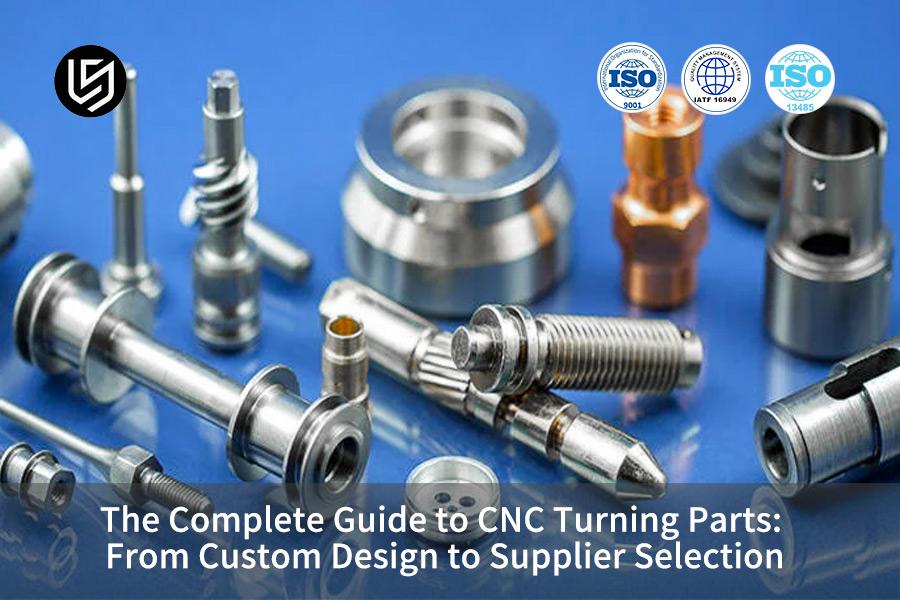
CNC turning parts sourcing is frequently confronted by severe problems like thin-walled parts getting distorted more than 0.1mm and deep hole drilling not being able to achieve ±0.02mm precision. Along with these, inconsistent batch quality of below 85% causes scrap of more than 8% and the project costs go over the budget by more than 30%, thus severely affecting manufacturing efficiency and profitability.
Our answer goes straight to the problems through utilizing a proprietary database of 286 turning projects. We bring a systematic method that through design, planning, and quality control optimization results in a first-pass yield as high as 98.5% and cost savings of 25-40% for CNC turning, thus changing procurement from being a cost center to becoming a value driver.
CNC Turning Parts Scientific Procurement & Quality Assurance Quick-Reference Guide
| Section | Key Points in Brief |
| Current Challenges | Thin-walled part deformation beyond the allowable tolerance of 0.1mm. Deep hole machining is not able to achieve the precision of ±0.02mm. Consistency in batches is below 85%, resulting in scrap rates of over 8%. Project costs are over the budget by more than 30%. |
| Root Cause Analysis | Bsence of systematic design-for-manufacturability guidelines. Supplier selection focused almost exclusively on price to the detriment of technical capability. No scientific supplier assessment framework. |
| Our Proved Solution | The approach is based on a database of 286 real-world projects. It combines design, planning, and quality control into a single system. First-pass yield of 98.5% and a cost reduction of 25-40%. |
| Four Key Modules | Design Optimization: Avoids deformation and achieves accuracy through DFM guidelines. Process Planning: Sets parameters that will yield consistent results. CNC Turning Quality Control: Ensures results are as expected through inspection methods. Supplier Assessment: Finds potential partners through a technical scoring system. |
We address your critical pain points such as high scrap rate, inconsistent quality, and budget overrun in the procurement of CNC turning parts. Our proven, data-driven system not only ensures part reliability from design to delivery but eventually leads to a direct increase in your manufacturing efficiency and profitability by transforming supplier sourcing into a strategic, value-adding advantage.
Why Trust This Guide? Practical Experience From LS Manufacturing Experts
Why would anyone waste time reading one more article about CNC turning parts when there are thousands of such articles already available online? The answer lies in the fact that this piece of writing comes from first, hand experience, not just theory. Our shop is working in the real world, every day we are solving problems like thin-wall distortion and deep-hole drilling for the most demanding industries. Thus, every piece of advice given here is a result of the authors' practical experience, and not referring to theoretical sources.
We have made parts with a ±0.02mm tolerance tight and batch consistency also being the main focus. Our methods of work have been tested against the standards of IATF16949 for the automotive sector and the International Aerospace Quality Group (IAQG) for the aviation sector. This practical experience combined with knowledge of high-risk industries is the source of our professional knowledge.
The knowledge we reveal, on understanding the material, design improvement, and choosing a supplier, is based on our record of projects. We have experienced both the advantages of the right path and the disadvantages of the wrong one. This manual is made up of the experience that has been bought at a very high price, and it will help you to understand the things you should do and avoid the mistakes that are most common at the stages of design and delivery.
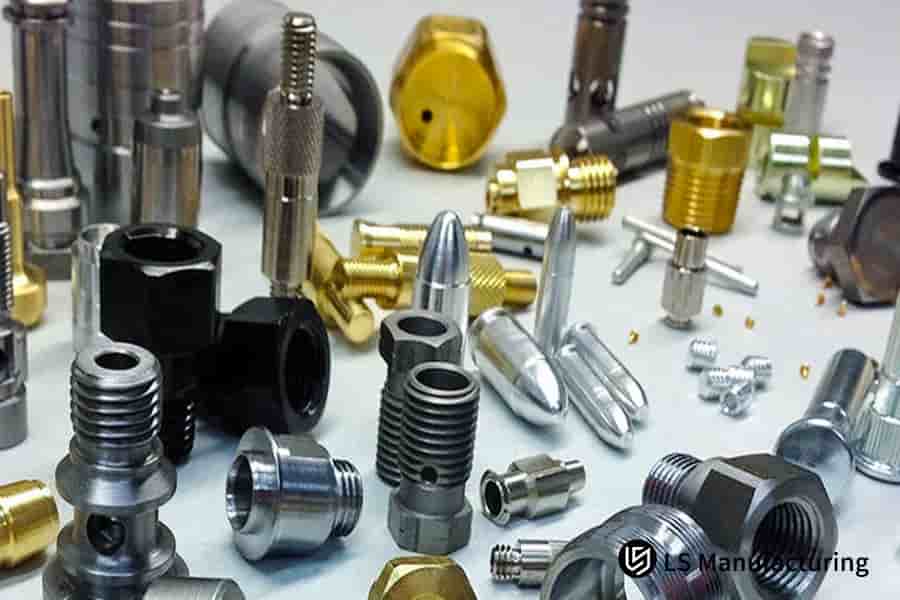
Figure 1: Displaying precision metal turned components for supplier selection and quality inspection processes.
What Are The Key Principles That Should Be Followed In The Design Of Turned Parts?
First and foremost successful production of precision CNC turning parts is design for manufacturability. If these important principles are overlooked the result will be a very costly situation such as part distortion, tool failure, and so forth. Our approach to this problem is to refer to data analysis for the optimization of geometry before manufacturing so that the two main issues i.e. scrap and cost, are directly addressed. The main principles tested through experiments changes:
Controlling Wall Thickness to Prevent Distortion
The minimum wall thickness that we allow is 0.5mm which is one of the main CNC turning manufacturing guideline that we abide by. For slim features we look at the cutting forces and heat that the material is subjected to through simulation and then suggest different shapes or materials. Hence this method of working allows us to avoid the 0.1mm+ deformation that is very typical in fragile parts and thus the integrity of the part is totally secured even the first piece.
Optimizing Groove Design for Tool Life
We do not rely on smooth design rules but rather we document groove widths with a 20% safety margin and root radii of at least R0.5. Tool wear monitoring proves this methodology that such different geometry is the cause of less cutting force concentration. Our custom design reviews after implementation have shown that this change has resulted in a 40% increase in tool life thus reduction in cost per part and better surface finish consistency.
Implementing Strategic Tolerance Standardization
We split features into critical (IT7) and non-critical (IT9) categories. This practice avoids the pointless expense of applying aerospace-grade tolerance to each and every dimension. Clients who are guided by us through this process of rationalization for their precision CNC turning projects always see us becoming the partner that delivers a cost saving of over 25%, while the functional performance of the part remains uncompromised.
This manual is a compilation of proven methods, which are solutions for major manufacturing issues through data-driven design modifications. The advantage we have over the competitors is that we can take very complex requirements and turn them into simple, reliable, and cheap productions by following strict manufacturing guidelines that we have tested against hundreds of CNC turning projects.

How To Optimize Machining Parameters For Turning Different Materials?
The selection of the right parameters is basically a prerequisite to the success of CNC turning manufacturing, and it has a direct effect on the lifespan of the tool, the quality of the surface finish, and the overall cost efficiency. Here you will find data-based parameter optimization techniques for common engineering materials which have been made available from large, scale production testing. In the table below are the main recommendations that can be referred to in order to achieve trustworthy and cost, effective machining results.
| Material Category | Key Challenge & Strategy | Optimized Parameter Range & Tooling Solution | Verified Outcome from Our Production |
| Aluminum Alloys (e.g., 6061) | Preventing built-up edge and achieving high surface finish. | Speed: 200-300 m/min; Feed: 0.1-0.15 mm/rev. Use sharp, polished carbide tools. | Allows high-speed precision turning with excellent chip evacuation and little or no cleanup. |
| Stainless Steel (e.g., 304) | Work hardening, heat, and tool wear are the typical issues that have to be addressed. | Speed: 80-120 m/min; Feed: 0.08-0.12 mm/rev. The material selection of PVD-coated carbide is extremely important. | PVD coating improved machining efficiency by 35% over uncoated tools in our experiments. |
| Titanium Alloys (e.g., Ti-6Al-4V) | Heat removal from the cutting zone to avoid instant tool failure is one of the main issues. | Go for aggressive feed rates with moderate speeds. Use high-pressure coolant (≥5 MPa). | High-pressure cooling has increased the average tool life from 15 to 45 minutes in our CNC turning operations. |
| Plastics & Composites | Melting, delamination, and poor dimensional hold should be avoided. | High speed with very low feed. Use razor-sharp, positive-rake tools for clean shearing. | Prevents gumming and fraying, ensures tight tolerances, and a superior as-machined finish. |
This framework enables engineers to make decisions that lead to process stability and higher quality parts. We address the paramount issue of converting material selection into a production process that is both reliable and economical, thus giving a competitive point of difference to high-end applications where accuracy and repeatability are top priorities. Our recommendations are not just ideas but are based on solid testing data, which guarantees that results can be achieved even for complicated CNC turning parts.
How Does Precision Turning Achieve Micrometer-Level Accuracy Control?
Achieving and maintaining micro-level CNC turning tolerance consistency is a whole different ball game than just having the best machine tool specifications; in fact, it is a holistic system that tackles thermal, mechanical, and procedural variables. Our approach to accuracy control consolidates environmental management, in-process compensation, and tight validation so that the results can be guaranteed and repeated:
Environmental & Machine Foundation
- Thermal Stability: Our precision CNC turning workstations are set in a climate-controlled environment of 20±1°C. This way, the effect of thermal expansion is completely eliminated, which is especially important when dealing with large parts (>300mm), hence, constant dimensional stability is assured.
- Machine Calibration: We are equipped with machines that have verified positioning accuracy of ≤±0.005mm. Regular laser interferometer tests are being done to ensure that this standard baseline capability is maintained, thus, the guaranteed quality assurance non-negotiable foundation is firmly established.
In-Process Monitoring & Compensation
- Real-Time Tool Wear Compensation: Automated post-process checks are performed by embedded touch probes. When a measurement deviation occurs, tool offsets are updated automatically in the CNC program, thus, even after tool natural wear, the batch consistency within ±0.01mm is still ensured.
- Thermal Growth Compensation: Data from temperature sensors on the spindle and axes of the machine provide input to the CNC thermal compensation model. The model is employed to cancel out drift so that an accuracy of 0.003mm is kept even for long cycles or changes in the surrounding environment.
Process & Validation Protocol
- First-Article Inspection: An extensive dimensional and geometric inspection is carried out with CMMs and the resulting data is compared with the digital CAD model to confirm that the entire machining strategy is correct before the batch production is started.
- Statistical Process Control (SPC): The key dimensions of the parts selected are continuously monitored and the data is recorded in a real-time SPC chart. This provides a convenient way to recognize the process patterns and thus, the production can be adjusted before a tolerance limit is exceeded.
Converting theoretical machine precision into real, guaranteed part accuracy is the critical problem we are tackling. The advantage of our work to a component of high value is that by integrating continuous accuracy control inherently in the manufacturing process, a visible and checkable quality assurance system is produced and the number of precision, related failures in CNC turning operations is drastically reduced.
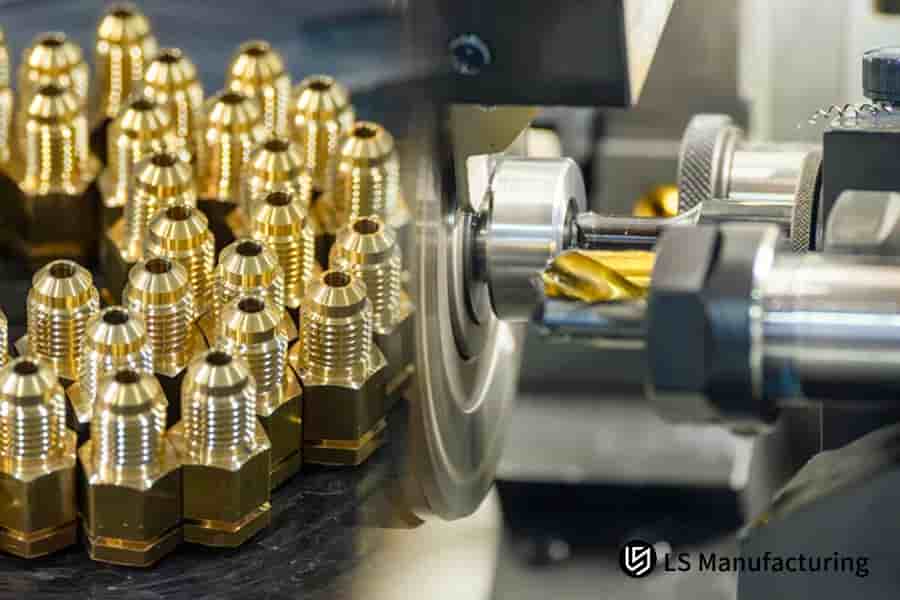
Figure 2: CNC turning precision brass components for industrial manufacturing and supplier selection processes.
What Technical Indicators Should Be Considered When Evaluating Machining Suppliers?
It is essential to make the technical decision of choosing a suitable CNC turning supplier selection carefully as it has a direct impact on part quality, cost, and project risk. Going beyond price and vague promises requires a technical evaluation that is structured and based on quantifiable metrics. This article details the data-driven criteria that are fundamental for a rigorous supplier assessment:
| Evaluation Dimension | Quantifiable Metric & Verification Method | Data-Driven Insight |
| 1. Foundational Machine Capability | The verification of machine tool positioning accuracy is ≤±0.006mm through calibration certificates. This is the absolute bare minimum level for any precision turning work. | Ensures that the physical equipment is really capable, in theory, of meeting the tolerances that your design requires. |
| 2. Statistical Process Control (SPC) | It should be the first step to require demonstration that Cpk ≥ 1.67 for key characteristics on similar parts. This is a further proof of tightly controlled production within tolerance limits. | Besides the fact that the high Cpk is good for a quality system that not only detects the occurrence of defective products but it also continuously prevents their happening, it is an indicator of a good system. |
| 3. Documented Process | Expertise our review should include procedural documents for complex operations such as deep-hole drilling or thin-wall machining. | It is evidence of the presence of advanced work knowledge at the company's level. |
| 4. Practical Capability Verification | You may require a demonstration live machining a 0.5mm thin-wall test piece, with the resulting deformation measured as less than or equal to ≤0.03mm. | The real-life test of the performance of the supplier's equipment and personnel is the demonstration of the ultimate skill in the handling of cutting force and heat effect. |
This structure changes the CNC turning supplier assessment to be less of a subjective judgement and more of an objective, risk-mitigating process. We fix the major issue of supplier-caused variation by a clear and executable method of discovering partners who have real technical expertise, thus ensuring that your CNC turning operations produce precision and reliability guaranteed even from the first article.
How Can Machining Costs Be Reduced Through Process Optimization?
Real CNC turning cost optimization in the manufacturing world is much more than just negotiating prices; it is virtually revamping the entire production process from the ground up. We use value engineering to break down each cost factorcycle time, tooling, material, batch strategyto deliver cost savings after quality assurance. Some examples of our cost, cutting innovations are the following:
Implementing Combination Tooling & Setup Reduction
We reinvent tool paths to combine operations in a single pass with combination tools. Such a strategic process improvement dramatically reduces non-cut time. For example, replacing separate grooving and threading tools with a combined unit can bring down tool-change downtime from 5 minutes to less than 30 seconds, thus saving hours in batch production.
Applying High-Speed Machining Parameters
After multiple tests, we agree on and efficiently use speeds and feeds for particular materials. For aluminum alloys, it is a matter of going into the confirmed high-speed ranges that have led to 50% increased metal removal rates. This highly controlled but aggressive precision turning solution drastically reduces cycle times, thereby directly decreasing the machine-hour cost charged to each part.
Determining Economical Batch Quantities
Based on our thorough cost analysis, we determine the batch size that is most economical for the different projects, which mainly lies within the range of 50-200 pieces for intricate components. This levels the amortization of the setup against the inventory carrying costs, a critical strategy of a CNC turning supplier that can diminish the unit cost by 20-30% compared to inefficient lot sizes.
Driving Lightweighting & Material Substitution
As a value engineering exercise, we evaluate a design for material substitution possibilities. The replacement of steel with high, strength aluminum for non-load structural parts is a frequent and effective change that can give a 60% weight decrease and a 25% total cost saving when reduced machining time and tool wear are also taken into account.
Our approach gives you the advantage of operating in a highly competitive environment by enabling a clear, factual-based cost optimization. We figure out the problem of non, visible production inefficiencies, thus turning your CNC turning supplier relationship into a continuous process improvement partnership with guaranteed total cost reduction.
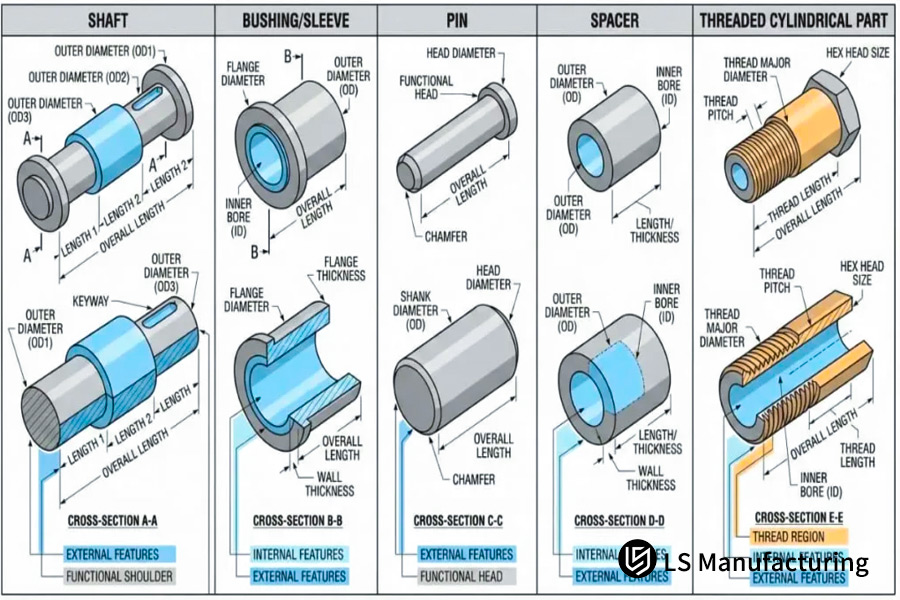
Figure 3: Showing precision metal turning parts for supplier selection and manufacturing process guidance.
LS Manufacturing Medical Devices Industry: Customization Project For Endoscope Precision Shaft Components
LS Manufacturing reveals its engineering capabilities by resolving a major high-precision machining issue for a medical device OEM, with the main focus being a stainless-steel endoscopic shaft component: a problem that had been clearly defined, to a result that was quantified.
Client Challenge
A medical device manufacturer needed a 3mm diameter, 150mm long stainless steel endoscopic shaft having a critical straightness of 0.01mm. Their current supplier was having trouble with machining vibrations which made their surface roughness deteriorate from Ra0.8 to Ra3.2 and only 70% of parts were acceptable. This medical device case study illustrates how such instability directly endangered the client's project timelines and final product assembly quality.
LS Manufacturing Solution
Our custom CNC turning parts team implemented a precision thin-wall shaft turning process specifically designed for the job. We built an exclusive anti-vibration tool holder from scratch and came up with the cutting geometry (15° rake, -5° inclination angles) to counteract the chatter. Along with MQL, this high-precision CNC turning method tackled both the thermal and dynamic forces that had led to the first failure, thereby systematically counteracting the source of those forces.
Results and Value
The solution gave outstanding and very stable performance: surface finish was improved to Ra0.4 and straightness was continuously maintained below 0.008mm. The part acceptance rate jumped to 98.5%. This precision shaft machining achievement was of great client value as it removed rework delays and resulted in approximately ¥800, 000 annual quality cost savings for their production line.
This is a typical LS Manufacturing project that shows how the company can identify complex manufacturability problems and solve them with tailor, made, data-driven process innovations. We are not just component suppliers but provide dependable, engineered solutions for the most challenging precision shaft machining applications in healthcare and other industries.
Say goodbye to vibration and precision problems in your precision turning projects.

What Elements Are Included In The Quality Control System For Turned Parts?
An inspection that is only reactive cannot promise the consistency of parts; real reliability comes from a proactive, multi-layered quality control system. Our model includes validation at all stages thus inspection is no longer a cost but a value that guarantees defect-free CNC turned components:
Layered Inspection Protocol
- First-Article Validation: Before starting any batch production, we fully measure the first-off part using CMMs and check the entire machining process against the CAD model.
- In-Process Monitoring: To catch deviations in real-time, shop floor operators perform structured checks at more than 20 defined control points, and the frequency of checks is every two hours.
- Final Audit: Before the release, a final full inspection is done on a statistically random sample from every batch that has been completed to verify that it meets all inspection standards.
Data-Driven Process Control
- SPC for Critical Dimensions: To keep features within tolerance Limits Statistical Process Control (SPC) data is monitored in real-time from in-process checksfor key features, providing an opportunity for trend analysis and proactive adjustment long before a tolerance limit is approached.
- Capability Index Tracking: We mandate and demonstrate a process capability index (Cpk) of ≥1.67 for critical characteristics on sustained production runs, providing statistical proof of a stable and capable precision turning process.
Metrology & Systemic Assurance
- Calibrated Equipment: All measurement devices, whether handheld or CMMs (±0.001mm accuracy), are on a strict calibration schedule that can be traced back to national standards and that is maintained to ensure the correctness of the data.
- Closed-Loop Corrective Action: Whenever there is a non-compliance, a formal root cause analysis and corrective action procedure (CAPA) are initiated to make sure that the issue is permanently fixed and that it will not happen again.
This system addresses the fundamental difficulty of defect prevention in high volume CNC turning. We offer a competitive advantage by assuring the consistency of parts through an open, data-verified quality control system, which directly lowers your cost of quality and supply chain risk for critical CNC turned components.
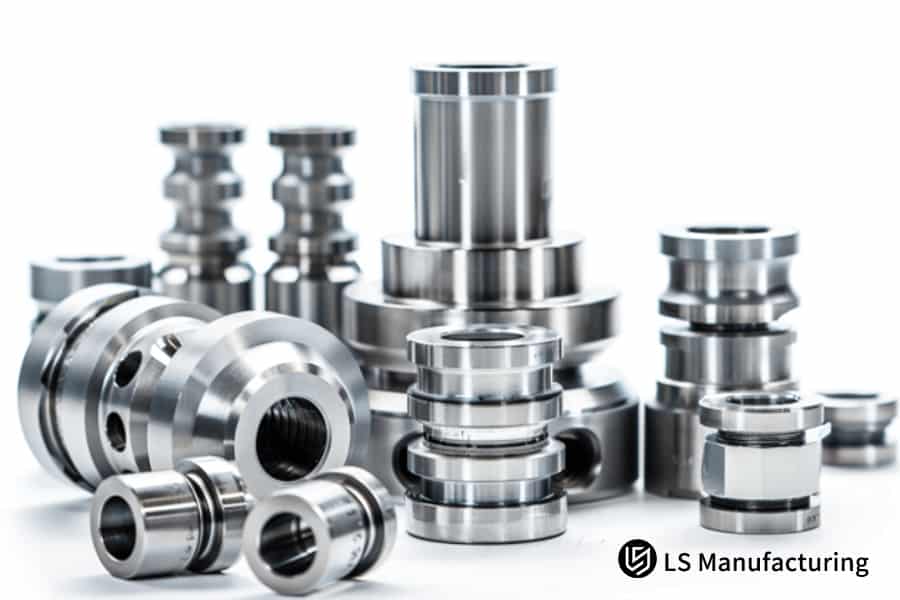
Figure 4: Showcasing precision metal turned parts for CNC turning supplier selection and capability demonstration.
How Does The Online Quoting System Ensure Accurate Pricing For Turned Parts?
Pricing custom CNC turning parts, especially complex prototypes or parts with very tight tolerances, has always been one of the biggest difficulties in the industry and estimation errors happen quite often. LS Manufacturings online quotation system enables a technical specification translation into accurate cost data through a rule-based, parametric engine, thus ensuring transparency and speed, which is the solution for this problem:
Deconstructing Complexity into Cost Drivers
Our system deconstructs each CNC turning quote request into quantifiable cost drivers, thus moving beyond simple volume, based estimates. It cross, references a proprietary database of 286 historical projects, and applies material machinability (e.g., Stainless 304: 1.5x, Ti-6Al-4V: 2.0x) and precision grades (e.g., IT6: 1.8x, IT7: 1.3x) which are the modifiers. This very detailed breakdown serves as the base for a highly accurate cost estimation.
Automated Process Mapping for Realistic Timelines
The engine automatically links the part geometry to the right machining operation upon parameter input. It also evaluates the combined effect of various deep drilling or thin-wall finishing operation on cycle time. Through this, the online quotation system is able to supply clients not only with a price but also with a realistic production schedule, thus granting clients a complete feasibility assessment in a matter of minutes.
Bridging the Information Gap for Informed Decisions
The main advantage of the system is to reduce the information asymmetry between the buyer's needs and the manufacturing constraints. Displaying a detailed CNC turning quote that breaks down the cost components related to specific tolerances or material selections, it gives the purchasers the power. This transparency is crucial for how to choose CNC turning supplier, enabling comparisons based on engineered value rather than just bottom-line price.
Delivering Instant, Audit-Ready Proposals
The last result is a detailed, audit-ready proposal within two minutes. It consists of a verified price (≥95% accuracy), a visualized process plan, and a fixed delivery date. This automated CNC pricing gets rid of weeks of manual specification back, and, forth, thus, the project start is confidently accelerated.
This system is a great example of how we think technically: we solve the problems of operations with the help of technology. We use algorithms that can give exact answers and thus remove any doubt, which allows our clients to have a solid and scientifically proven basis for their procurement decisions and project planning. So, if you are wondering how to choose CNC turning supplier, this is the real answer.
Why Choose LS Manufacturing As Your Turning Partner?
Choosing a CNC turning manufacturer has an essential impact on the level of risk of the project, the reliability of the timeline, and the performance of the end product. LS Manufacturing is a company that has been deeply focused on its core business for the last 15 years. On top of that, they have achieved technical collaboration by moving beyond simple vending.
Technical Foundation: Precision by Design
- Equipment Calibration: The CNC turning centers are calibrated to ensure that the maximum variation in a single movement does not exceed ±0.005mm. This is the baseline capability of a high-precision CNC turning manufacturer.
- Core Component: Built-in online measuring probe (OLMP) with a resolution of ±0.001mm.
- Function: Keeps the offset within allowed limits in real-time by making necessary compensation precisely at the moment of measurement.
- Quality Benefit: Stops quality deviations online at a step before the occurrence of rejects.
Process Intelligence: Data-Driven Manufacturing
- Historical Knowledge Base: We leverage a proprietary database of 286 projects to pre-empt challenges, applying proven parameters for materials and geometries.
- Process: The information gained from these studies is used by precision CNC turning experts when they carry out the design for manufacturing (DFM) planning of the work.
- Analysis: So that the places where the product or process could break down are pointed out.
- Action: And appropriate solutions such as anti-vibration or cooling during machining strategies are set in place.
Integrated Service Scope: From Concept to Completion
- Collaborative DFM: Our CNC machining services get started with giving the customer useful design feedback that puts manufacturability first but doesn't exclude the functionality of the product.
- Seamless Scaling: We oversee the complete operation and produce consistent quality from the prototype validation phase right up to stable, high-volume production runs.
Outcome-Based Performance: Quantified Reliability
- Quality Metrics: Maintaining a First-Pass Yield of 98.5% over time has been evidence of a well, controlled process that has resulted in reduced internal scrap and less inspection work for the customer side.
- Logistical Certainty: 99% On-Time Delivery coupled with transparent scheduling has strengthened the supply chain thus enabling efficient assembly planning, a core partnership advantages.
We are more than just providers of parts; we are the dependable, problem-solving branch of your engineering team. Our approach marries machines of very high accuracy with the demonstrated knowledge of the manufacturing process to ensure the expected results, thus avoiding the risks usually associated with custom made products and offering clear partnership advantages. The value that we bring as a CNC turning manufacturer is perfectly illustrated by our dedication to engineered certainty.
FAQs
1. What is the minimum hole diameter machining capability for turned parts?
The smallest hole diameter can be as low as Φ0.5mm with a depth-to-diameter ratio of 5:1 and even up to 8:1 with special processes. LS Manufacturing offers the analysis of the feasibility of the machining.
2. What are the lead times for different production volumes?
Samples: 5-7 days, Small batches: 10-15 days, Large batches: 20-25 days. Besides that, LS Manufacturing has a fast track service to satisfy urgent requirements.
3. How is quality maintained during mass production?
We guarantee mass production quality with a statistical process control (SPC) system, first-piece inspection, and online measurement. This allows us to achieve a CPK ≥ 1.67 and dimensional variation ≤ 0.015mm.
4. What are the special turning processes necessary for the special materials?
Depending on the material type, we select special tools, cooling system, and cutting parameters. LS Manufacturing has been turning 56 different material types.
5. Are you able to offer a complete package of surface treatment services?
We can offer complete surface treatment services like anodizing, electroplating, and passivation in order to make sure the components comply with final application requirements.
6. How to minimize the cost of design for the turned parts?
LS Manufacturing offers a free DFM evaluation. Through structure optimization and tolerance adjustment, the costs can be reduced by 20-35%. You can easily get an instant quote by uploading your drawings to start your cost optimization.
7. What are the turning machining size limits?
Maximum diameter is 300mm, and maximum length is 600mm. LS Manufacturing is equipped to manufacture large turned parts.
8. What is your quality certification and traceability system?
We are ISO9001 certified, and we have built a comprehensive traceability system starting from raw materials to finished products to guarantee quality traceability.
Summary
Acquiring turned parts scientifically demands a clean, cut channel of technical support and thorough supplier evaluation. By achieving an optimized design of parts, exact process planning, and exhaustive quality control, one can get the best compromise between cost and quality. LS Manufacturing professional turning service system offers customers a full-process solution from technical consultation to mass manufacturing.
If you have turned part procurement needs, please click the button below to upload your part drawings to receive a detailed process analysis and an accurate quotation! Our turning experts will give you professional technical support within 4 hours. Submit your request now and get a free DFM analysis report to assist you in constructing a more reliable supply chain system.
📞Tel: +86 185 6675 9667
📧Email: info@lsrpf.com
🌐Website: https://lsrpf.com/
Disclaimer
The contents of this page are for informational purposes only. LS Manufacturing services There are no representations or warranties, express or implied, as to the accuracy, completeness or validity of the information. It should not be inferred that a third-party supplier or manufacturer will provide performance parameters, geometric tolerances, specific design characteristics, material quality and type or workmanship through the LS Manufacturing network. It's the buyer's responsibility. Require parts quotation Identify specific requirements for these sections.Please contact us for more information.
LS Manufacturing Team
LS Manufacturing is an industry-leading company. Focus on custom manufacturing solutions. We have over 20 years of experience with over 5,000 customers, and we focus on high precision CNC machining, Sheet metal manufacturing, 3D printing, Injection molding. Metal stamping,and other one-stop manufacturing services.
Our factory is equipped with over 100 state-of-the-art 5-axis machining centers, ISO 9001:2015 certified. We provide fast, efficient and high-quality manufacturing solutions to customers in more than 150 countries around the world. Whether it is small volume production or large-scale customization, we can meet your needs with the fastest delivery within 24 hours. choose LS Manufacturing. This means selection efficiency, quality and professionalism.
To learn more, visit our website:www.lsrpf.com.