English



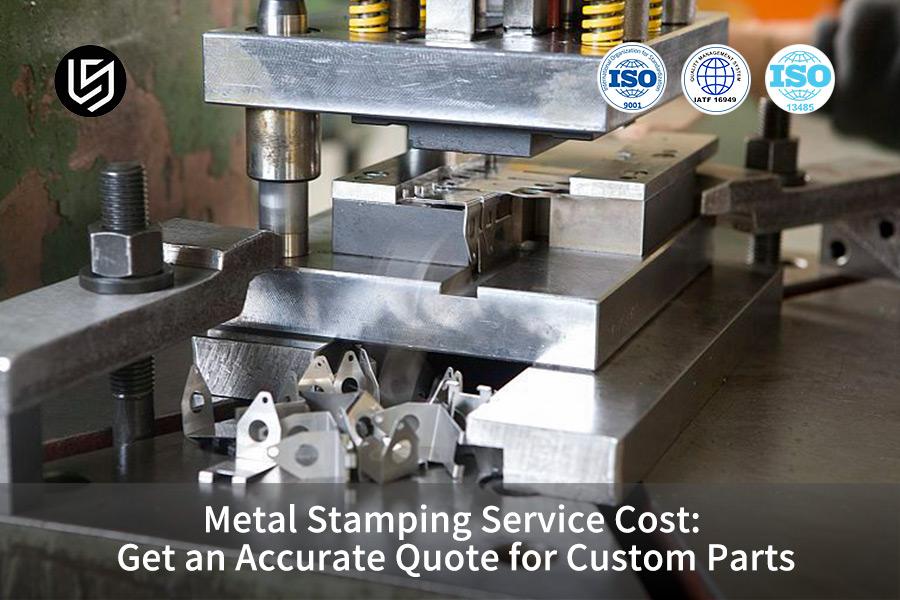
Metal stamping service is a professional service that mainly uses progressive dies, fine stamping and other methods to produce mass of customized metal parts with good quality. It helps to solve the problems in industrial buying like unclear price, uncontrolled cost and low quality. In the hardware component market with tight competition, procurement departments still get into trouble like price gap over 300% among different suppliers, expensive costs for engineering changes, lack of die longevity. The major factor is the absence of thorough DFM (Designed Manufacturing) audits by manufacturers in general.
This article will explain the cost elements from the point of engineering so that procurement can see where the price is exaggerated and choose the manufacturing solutions that give the highest ROI.
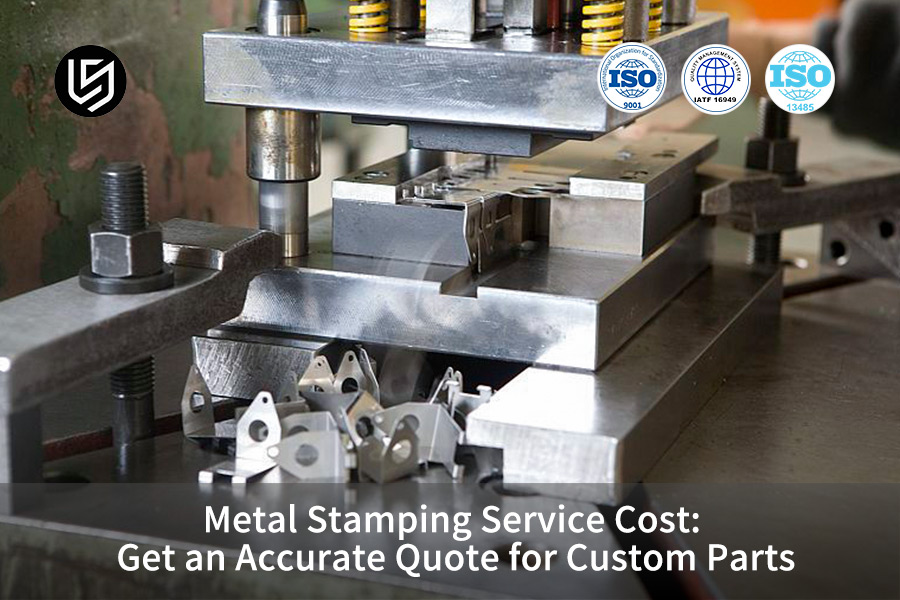
Metal Stamping Service Cost Optimization Benefit Comparison
| Cost Dimensions | Percentage of Total Cost | Core Optimization Solution | Unit Cost Reduction |
| Material Utilization | 60%-70% | Cross-nested layout + narrow overlap design | 5%-8% |
| Die Amortization Cost | 15%-25% | High-life progressive die + cutting edge coating | 10%-15% |
| Equipment Rental Cost | 8%-12% | Precise tonnage calculation + dispersed workstations | 12%-20% |
| Post-Processing Cost | 5%-10% | In-mold integration + integrated fine stamping | 30%-90% |
Key Takeaways
- Material utilization is the fundamental factor driving price:
60%-70% of the stamped parts cost consists of the raw materials. By optimizing the strip layout, the utilization can be increased by 5%, which will directly lower the unit cost by as much as 8%.
- Die life is the factor that drives the ROI eventually:
When it comes to projects with an annual output of more than 100,000 pieces, progressive dies made of SKD11 or DC53 steel have drastically lower long-term amortized costs than single-operation dies which are often repaired.
- Accurately tonnage matching will get rid of the equipment premiums:
Simply selecting large-tonnage punch presses will unreasonably raise the equipment rental costs. The key to receiving a reasonable quote is to correctly figure the blanking and punching forces per the material shear strength.
Why Choose LS Manufacturing's Metal Stamping Service?
Relying on the industry's standard and prior successful project experience, LS Manufacturing's engineering team always works out their designs with the thought that will minimize the customer's lifecycle cost. Our implementation experience shows that a thorough DFM intervention in a new energy electric copper busbar project can bring a 30% reduction in mold modification costs later on and prevent cost issues during mass production.
Our plant production system strictly follow IATF 16949:2016 quality management standards. This guarantees traceability of process data at all times from raw materials being received to the delivery of the final product.
We have a separate mold research and development center and through it, we have been able to build up several exclusive optimization solutions for industry problems like springback of ultra-high-strength steel and precision blanking of thin materials. For instance, based on our internal testing, if the blanking clearance is exactly 8% of the material thickness, the burr height can be kept at 0.03mm consistently, which is way better that the industry average of 0.08mm.
For parts for premium industries, such as medical and automotive, our clean production workshops and thorough testing system throughout the process can easily meet very high quality requirements. All of our medical part manufacture is following ISO 13485:2016 for clean production. And, it is in line with the demand for high-end medical instruments free of burrs and scratches.
If you are troubled by cost fluctuations and quality instability in your stamping projects, you can submit your existing drawings and required parameters. Our engineering team will provide you with a free DFM feasibility analysis to help you quickly identify areas for optimization in metal stamping service costs.

How Does Raw Material Utilization Rate Direct Impact Your Metal Stamping Service Cost?
Raw material price is the biggest contributor to overall pricing of metal stamping parts, making up around 60% or more. One of the main aspects determining the metal stamping service cost is the ability of suppliers to keep scrap finish rate within 25%, which can be achieved by very efficient strip layout operations.
Effect of Layout Design on Material Utilization
The percentage of scrap depends on cutting methods that are used and the layout of the stamping strip. It is known that traditional single-row layouts have substantial overlaps and large pitches, which lead to the material utilization level of only about 60%. At the same time, cross-nesting layouts act as a key technique for stamping strip layout optimization by using complementary part shapes to reduce overlap width and Because of this quite a bit better utilization can be foreseen.
In other words, this is a kind of tight layout in fabric cutting, the same quantity of raw material will produce more good parts, this way naturally lowering the unit price.
- SPCC Cold-Rolled Steel: Overlap width set at 1.5 times the material thickness. The pitch accuracy control is set within 0.02mm.
- SUS304 Stainless Steel: Overlap width set at 1.8 times the material thickness, material stretching should be allowed.
- Aluminum Alloy Sheet: Overlap width can go as low as 1.2 times the material thickness if a high-precision feeding with servo feeder is used.
The Price-Quality Ratio of High-Precision Feeding Device
The high-precision servo feeder is the core equipment for achieving stamping feed precision control. Thanks to the servo feeder, the pitch error can be regulated within 0.02mm, greatly benefiting the feeding process and avoiding the necessity of overlap allowance, which would have resulted in loss of material. Good feeding precision enables the layout designer to consider the possibility of overlap reduction, providing a direct effect on material utilization. The finest metal stamping service start with layout design, from where it makes great strides towards cost reduction for customers.
Material Utilization Rate Comparison Table for Different Layout Schemes
| Layout Method | Applicable Material | Overlap Width (1.0mm Material Thickness) | Material Utilization Rate | Scrap Rate |
| Single Row Straight Layout | General Plate Material | 2.0mm | 62% | 38% |
| Cross-row Single Layout | Symmetrical Parts | 1.5mm | 71% | 29% |
| Cross-row Double Layout | Small Parts | 1.2mm | 78% | 22% |
| Nested Layout | Irregularly Shaped Parts | 1.0mm | 82% | 18% |
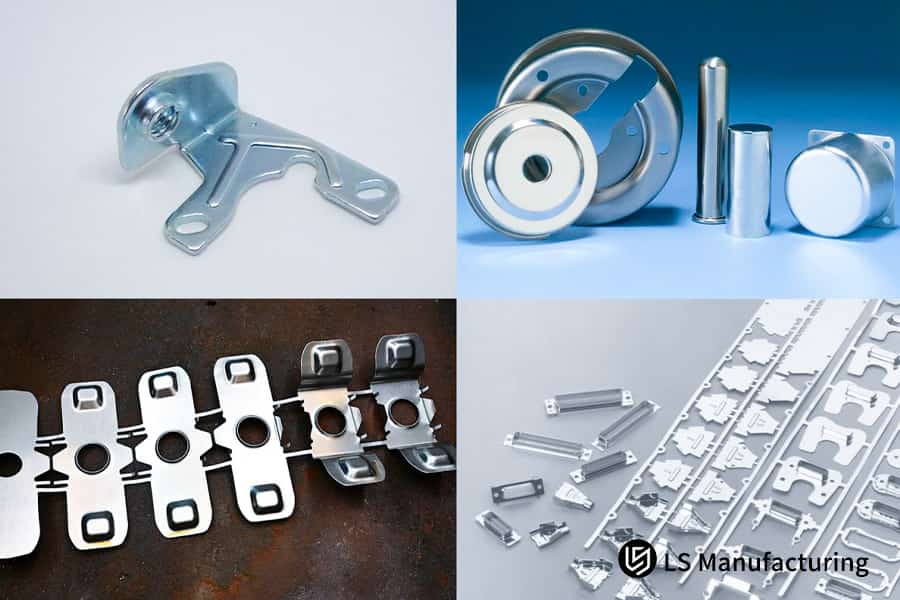
Figure 1: A collage of precision-stamped metal brackets, clips, and custom sheet metal components.
Which Tooling Structural Design Strategy Best Maximizes Stamping Tooling Amortization for High-Volume Production?
Progressive dies made of high wear-resistant die steel offer an effective way of reducing the stamping tooling amortization for projects with an annual production volume over 100,000 pieces, thanks to their ultra-long die life.
Cost Cycle Comparison of Three Types of Stamping Die Structures
One has to take into account the mass production scale of the project to determine the most suitable stamping die structure scientifically. Single-operation dies have minimal initial investments but low durability and frequent repairs. So, they are only suitable for small-batch prototyping. Transfer dies are suitable for manufacturing large, deep-drawn parts. Yet, the equipment costs are high, whereas progressive dies are perfect for high-speed mass production of small and medium parts, having the lowest long-term amortization cost.
- Calculate the total die investment: including design fees, material costs, processing fees, and initial trial die fees.
- Estimate the total die lifespan: determine the total number of stamping cycles based on steel material, stamping material, and coating process.
- Add maintenance costs: estimate the total lifespan cost of die repair and wear parts at 15% of the total die investment.
- Calculate the amortization cost per piece: Amortization cost per piece = (Total die investment + Maintenance cost) Estimated total number of stamping cycles.
Effect of Edge Coating on Extending the Die Repair Cycle
When stamping high-hardness materials, edge coating is the main way of achieving edge wear reduction. It greatly helps in lowering the wear rate. TICN coating can increase cutting edge hardness by more than 30%, and TD coating treatment can extend die repair cycles by 2-3 times, that means, much lowering downtime and maintenance costs. For high-volume stamping service projects, progressive dies combined with coatings are the best value for money.
Comparison Table of Performance Parameters for Different Die Steels
| Die Steel | Hardness (HRC) | Conventional Life (10,000 cycles) | Applicable Materials | Die Repair Cycle (10,000 cycles) |
| Cr12 | 58-60 | 30-50 | Ordinary Cold-Rolled Steel | 8-10 |
| SKD11 | 59-61 | 80-120 | Stainless Steel, Copper | 15-20 |
| DC53 | 60-62 | 120-180 | Spring Steel, High-Strength Steel | 25-30 |
| Tungsten Steel | 72-75 | 500-800 | High-Precision Thin Material | 80-100 |
Choosing the right die can reduce costs. If you have a large-scale stamping project in the planning stages, please provide your annual production volume and basic part parameters. We will provide you with detailed calculations of stamping tooling amortization for different die options, helping you determine the manufacturing path with the optimal long-term cost.
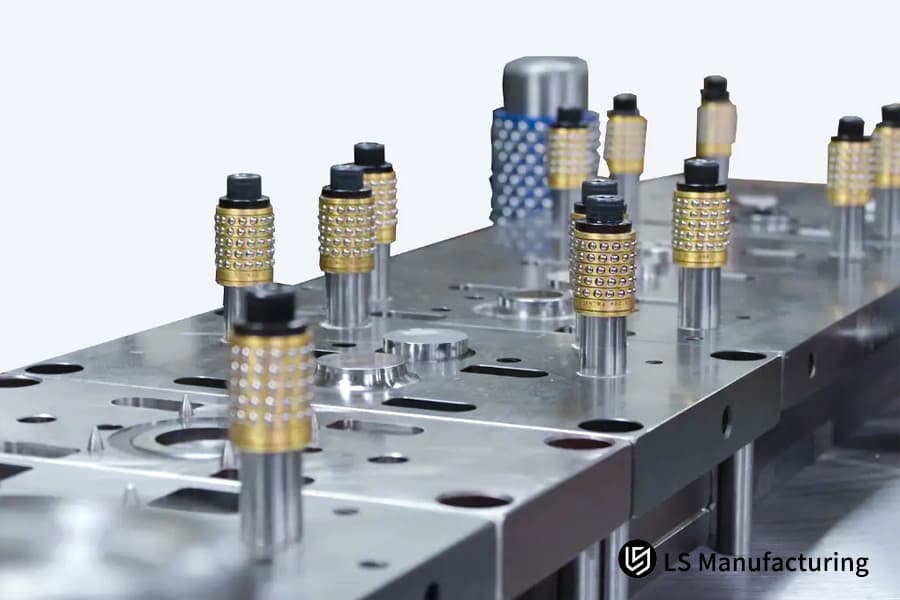
Figure 2: Precision-engineered stamping dies and punches for high-volume production tooling.
How to Calculate Press Tonnage Requirements to Avoid Equipment Over-Pricing on Your Metal Stamping Quote?
Calculating the exact press tonnage helps keep suppliers from just picking the equipment with the highest tonnage, which in turn saves you from paying extra for equipment rental unnecessarily and also leads to a cheaper metal stamping quote.
The Most Commonly Used Formula for Press Tonnage Calculation
Without precise stamping blanking force calculation, there is no way to avoid excess equipment charges. The main blanking force calculation formula is P = Lt, where L is the length of the shearing path, t is the thickness of the material, and is the shear strength of the material. On top of that, in actual equipment choosing, it is necessary to consider 25% unloading force and safety factor for steady press operation.
- Determine the overall shearing length of all edges for the part, double-checking the thickness and shear strength of the material.
- Figure out the basic stamping force and then multiply it by a safety factor between 1.25 and 1.3 to get the total target tonnage.
- Pick the stamping press based on the closest tonnage and verify if the shut height and the stroke are still sufficient for the die installation.
- Locate the station splitting strategy for the work pieces, assign the total stamping force to different stations, and finally, decrease equipment needs.
Advantages of Station Splitting Design about Costs Reduction
With a proper implementation of stamping station splitting design, you are able to divide the total required stamping force among different stations of the progressive die in such a way that the peak stamping force of only one station can be minimized.
For instance, a rather small part that needs a high capacity stamping press of 200 tons can be done in a 110-ton stamping press after splitting the stations, that means, directly hitting the equipment rental costs reduction. These kinds of metal stamping companies specializing in custom work can be of great assistance to their clients in getting rid of equipment premiums via the station layout.
Why Does Fine Blanking Deliver Unmatched Dimensional Tolerance Over Traditional Cost for Custom Stamped Parts?
Traditional stamping creates many fracture zones in the cross-section, what leads to the necessity of machining correction later. Fine blanking but results in a fully bright cross-section and so the total cost for custom stamped parts is lowered.
Differences in Quality between Fine Blanking and Conventional Stamping
The stamping shear surface quality produced by ordinary stamping is generally low, with about one-third of the cross-section being shear bands and two-thirds being fracture bands. Dimensional tolerances are usually above ±0.1mm, and corner collapses and burrs are obvious. With the help of a powerful geared pressure plate and a counter-pressure ejection system, fine blanking is able to deliver a 100% fully bright cross-section and strict dimensional tolerance 0.01mm control.
In other words, using scissors to cut sheet metalrough edges, fine blanking is like a clean die pressing for a smooth and flat cross-section that does not need extra polishing.
- V-shaped toothed ring pressure: 30%-40% of the metal thickness to stop the material from flowing during shearing.
- Reverse ejection force: 20%-30% of the blanking force to achieve a smooth cross-section.
- Collapse angle control: Stable to within 0.05mm, quite a bit less than ordinary stamping.
- Ratio of bright band on the cross-section: 100%, no fracture bands or tear defects.
Cost-Benefit Analysis of Fine Blanking
Fine blanking removes secondary stamping processes. The price of the mold is 40% higher than that of a regular stamping one, but it completely removes the need for CNC scraping, double-end grinding, and deburring processes later. For parts requiring very high precision, the price of fine blanking is even less than that of normal stamping plus the subsequent processes. High-end metal stamping service will determine the best process per the accuracy level of the part instead of just reducing the initial quote blindly.
Cost Comparison of Fine Blanking and Conventional Stamping (4.0mm Automotive Gear Part)
| Cost Item | Conventional Stamping + Post-Processing | Fine Blanking Integration | Cost Reduction |
| Stamping Fee | $0.12/piece | $0.18/piece | -50% |
| Deburring/Grinding Fee | $0.15/piece | $0 | 100% |
| Quality Inspection Fee | $0.03/piece | $0.01/piece | 66.7% |
| Total Cost per Part | $0.30/piece | $0.19/piece | 36.7% |
If you would like to gain a deeper understanding of the applicable scenarios and cost reduction logic of fine blanking technology, please contact us to obtain the fine blanking process white paper and fully grasp the optimization methods for cost for custom stamped parts under different precision requirements.
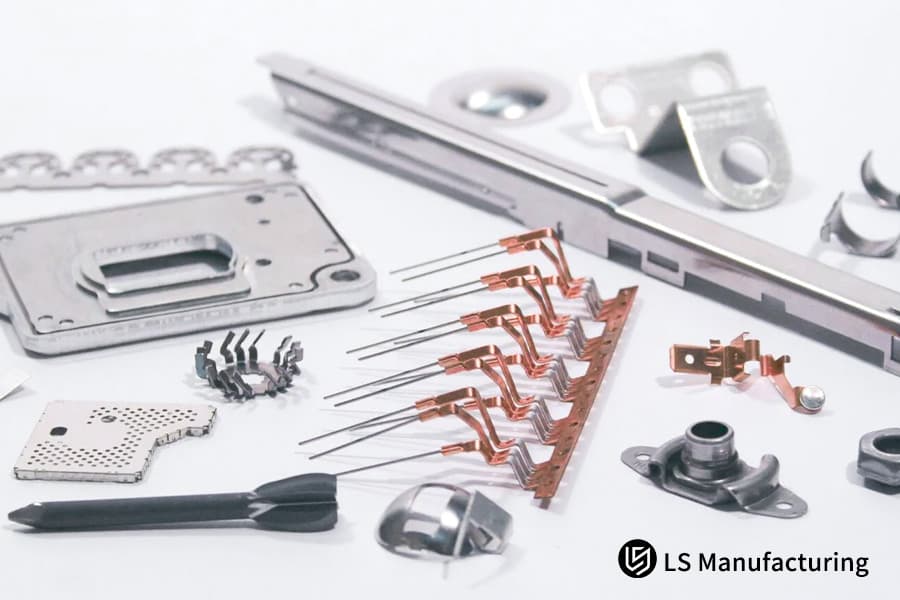
Figure 3: Intricate fine-blanked metal parts, including contact pins, copper terminals, and custom components.
How Can Strict Elastic Rebound Control Reduce Part Defect Rates in Civilian Custom Metal Stamping Service?
Material springback remains a fundamental quality issue in precision stamping. Mastering springback control is not only capable of slashing the defect rate of the parts but also enhancing the production stability of custom metal stamping service.
The mechanism and consequences of springback
A thorough exploration into the mechanism of springback in stamping is the key measure to achieve effective precision control. Metal will rebound to a certain angle due to the elasticity of the metal after bending. Neglecting proper control results in dimension errors and eventual assembly faults. A springback angle of 3°-5° is typical for materials that have high work hardening coefficients such as ultra-high-strength steel and stainless steel, this impacts the accuracy of the parts much.
- Reading the system-bending: that is, the manual of over-bending 1.5 times the target degree angle to offset springback.
- Processing through Multi-Pass: locking the bend degree by secondary shaping at the next workstations.
- Design of Local Ribs: local ribs placed bending radius to change the stress in the materials.
- Finite Element Simulation: predicts springback beforehand with the help of software and performs compensation during mold designing phase.
Role of pre-compensation by using simulation techniques
Stemming from an advanced stamping simulation compensation technology can help to avert the dimensional risk in the future scenario. Springback is one of the potential causes of deviation in metal stamping, one can efficiently predict and compensate it for 100% accuracy right at the mold designing phase by employing PAM-STAMP or AutoForm finite element simulation software.
LS Manufacturing's only first batch sample delivers CPK value ≥1.33 which is fully validated through the springback simulation of all precision bent parts. So, allowing the reduction of significant mold modification costs. As well, efficient springback control a lot declines rework and scrap, because of this quite a bit reducing metal stamping service cost in the long run.
What Advanced In-Die Assembly Technologies Can Exponentially Cut Post-Processing Cost for Custom Stamped Parts?
In-mold integrated assembly technology can integrate multiple post-processing steps into the stamping process, greatly reducing manual labor and secondary positioning errors, and significantly reducing the cost for custom stamped parts.
Mainstream In-Die Process Integration Types
Stimulation of in-die process integration is one of the main pillars of lean stamping manufacturing. In-die assembly technology covers a great variety of types, like in-die tapping, in-die riveting, and in-die press-fitting. It can simultaneously finish thread machining, contact riveting, and bushing press-fitting one stroke in stamping, so there's no longer a requirement for secondary transfer and positioning.
- In-mold tapping: It is capable of supporting thread sizes up to M12 and hole production can reach up to 80 holes/minute for M3-M6 specifications.
- In-mold riveting: It supports automatic supplying and accurate riveting of parts like silver contacts and bushings.
- Error prevention detection: It is furnished with photoelectric sensors, ensuring 100% detection of missing and defective parts.
- Fault response: If a wire breakage or material jamming occurs, the system triggers an emergency stop within 0.05 seconds.
Value of In-Mold Integrated Supply Chain
Conventionally, stamping needs manual secondary processing that is not only expensive but also brings secondary positioning errors. This process can decrease the stamping supply chain gross floor area costs, totally remove manual post-processing, lower unit assembly costs by 90%, and increase product uniformity. The cost-cutting impact of in-mold integration is really outstanding for high-volume stamping service projects.
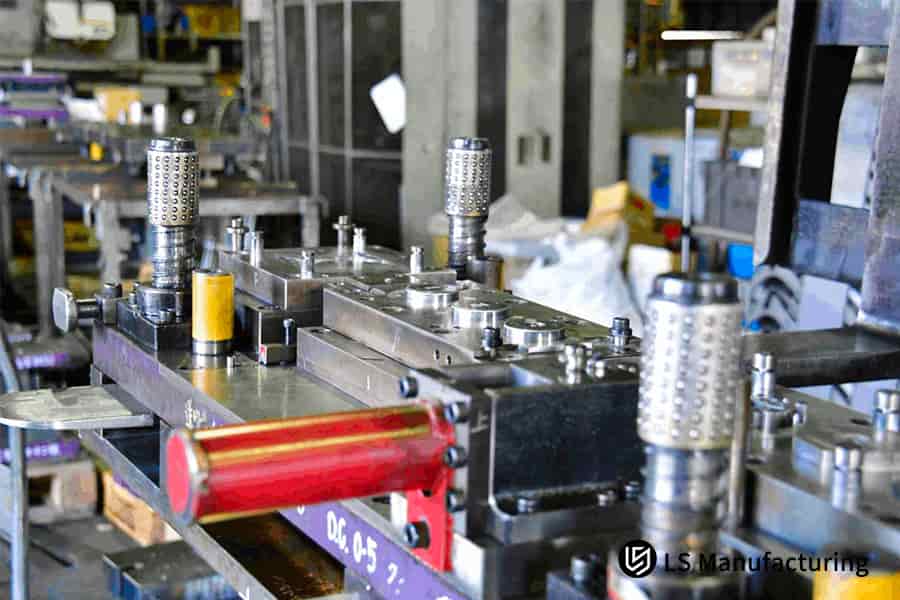
Figure 4: Complex progressive stamping dies performing advanced in-die assembly to reduce post-processing.
Case Study: How LS Manufacturing Saved a Medical Device Client 35 Percent in Production Cost Through Optimization
Client Challenges
An established medical logistics equipment company faced a major problem in the procurement of a 1.5mm thick 316L stainless steel multi-cavity locking assembly for a smart medicine cabinet. The former supplier had a low mold layout rate, a scrap rate that went up to 42%, while the average punching burr height was 0.12mm. The parts of each batch were manually ground for a long time, with the consequence of high procurement costs per unit, and yet not meeting medical-grade, non-destructive, scratch-resistant assembly standards.
LS Manufacturing Solution
- After receiving the original 3D drawings, LS Manufacturing's engineering team carried out deep DFM digital modeling and reconstruction around stamping medical part precision control.
- Being aware that the traditional single-row process mold scheme was no longer suitable, we came up with an 18-station precision progressive mold strip layout scheme. The cross-and-side nested design allowed them to cut the scrap rate down to 18%.
- The cutting edge is made of Austrian Bhler K340 isostatic powder steel, and the double-sided punching clearance is tightly controlled to 8% of the material thickness. A precision leveling and deburring station is the last feature of the progressive die.
- As we understand from our experience with this medical latch project, the in-die deburring for the surface requirements of medical-grade parts is very good, and has more consistency.
Results and Value
After the installation of the solution, the mold was effectively handed over at the first time, with a T1 first-inspection pass rate of 99.4%, no longer requiring the manual deburring and polishing processes. The product surface roughness is consistently kept under Ra 0.4, and the dimensional tolerance is in line with the 0.01mm requirement. This solution has, through direct and indirect effects, assisted the client in reducing overall production costs by 35%, and the project delivery lead time has been cut down from 6 weeks to 18 days, which fully comes out as the effectiveness of technology-driven manufacturing solutions.
If you also have similar needs for cost reduction in precision stamping, please send your 3D drawings and mass production plans directly. We will provide you with a complete DFM analysis and accurate metal stamping quote within 24 hours to help you quickly implement cost reduction solutions.

Why Choosing a Top-Tier Metal Stamping Supplier China Is the Most Reliable Route for Cost-Efficient Manufacturing?
Fully utilizing the complete industrial cluster and mature quality system, selecting a great metal stamping supplier China can be considered a trustworthy way to get the best value of precision manufacturing.
Cost and Efficiency Advantages of Industrial Clusters
One of the most outstanding features of the Chinese stamping industrial cluster is the core competitive advantage for the manufacturers in the country. The best stamping factories in China have complete upstream and downstream supply chains. They can procure raw materials directly from Baosteel, Taiyuan Iron & Steel, etc. and also enjoy the support of the industries like heat treatment and surface treatment which are capable of providing quick services. Mold construction costs here are only one-third of those in Europe and America, and delivery times are shorter.
- Raw Material Costs: Direct supply from steel mills, which leads to prices 20%-30% lower than Europe and America.
- Mold Costs: Manufacturing costs for molds with the same precision are more than 60% lower than those in Europe and America.
- Supporting Efficiency: Heat treatment, surface treatment, and other processes can be done on the very same day.
- Labor Costs: Skillful workers' wages constitute only one-fourth of those in Europe and America on average.
Digital Services Remove Obstacles to Cross-Border Purchasing
Complete stamping quality traceability systems remove doubts about quality that are linked to cross-border procurement. The best Chinese stamping suppliers offer fully digital project coordination services, among them DFM and quotation within 24 hours, weekly video progress reports, and comprehensive factory inspection reports. LS Manufacturing also offers VCI vapor phase corrosion protection packaging solutions to make sure that parts do not get rusty during long-distance transportation. Trusted suppliers give metal stamping quotes that are clear, transparent, and without a hidden markup.
FAQs
Q1: What is the minimum order quantity (MOQ) requirement for custom metal stamping service?
We specialize in high-volume, high-efficiency manufacturing. The initial order quantity for progressive die parts is typically 5000 pieces. For high-value, highly complex precision electronic and sensor components, the initial order quantity can be increased to 1000 pieces, depending on the die investment budget. You can upload your drawings to receive a quote, and we will simultaneously provide a suitable minimum order quantity.
Q2: How long does it typically take to complete stamping tooling design and sample delivery?
After the customer approves DFM (Design for Manufacturing), we will produce a full progressive die structure drawing within 3 working days. Normally, the whole time needed for die making and delivering the first batch of T1 physical samples (including the full dimensional inspection report) is 21 to 28 days.
Q3: How does material thickness tolerance affect the accuracy of the final metal stamping quote?
If the thickness tolerance of precision sheet metal is changed from the industry standard 0.05mm to a precision-grade 0.01mm, it involves using imported high-flatness coiled material, which increases the cost of raw material purchase by 15%-25% so directly increasing the final price of a single stamped part.
Q4: What primary international standards does LS Manufacturing enforce to ensure the quality of precision stamped parts?
Our production and manufacturing base strictly adheres to the dual global quality standards of ISO 9001:2015 and IATF 16949:2016. During the mass production stage, all key dimensions are continuously monitored by an online photoelectric sensing system and precision SPC software to ensure stable and traceable mass production quality.
Q5: Can we amortize the stamping tooling fee entirely into the price of our custom stamped parts piece-wise?
Definitely. Should your project be stable and yearly procurement volume predictable, and the demand per year exceed 50,000 units, we can grant the entire mold-making fee for free at the front, meaning we will distribute this fixed cost in the unit price of the first batch of mass production orders in the first two years.
Q6: How do you prevent internal thread damage during your advanced in-die tapping process?
Our in-die tapping system basically includes a very accurate torque sensor as well as a wire breakage photoelectric detector. If tap wear or abnormal resistance during high-speed stamping, the press will perform an emergency stop within 0.05 seconds, and defective products will be prevented from being released.
Q7: Who has exclusive intellectual property rights of the stamping tools custom made by LS Manufacturing?
All stamping dies, 2D strip layout drawings, and 3D station structure solutions funded by the customer or amortized through orders are 100% permanently owned by the customer. We strictly adhere to commercial confidentiality agreements and will not disclose related information to any third party without authorization.
Q8: What is your method of ensuring the total life expectancy of the molds used in a high-volume stamping service?
We make an unconditional promise to each and every mold that we produce and handle in our workshop throughout the entire mass production for a lifetime that we would offer unlimited free maintenance, re-sharpening by modern techniques, and change of the parts that become weak during the project without any hidden or extra costs.
Summary
Controlling costs in precision metal stamping is far more than simply reducing quotations. It is a methodical project that encompasses everything right down to the initial DFM design, material layout, mold matching, and process integration. A top-notch B2B procurement team should be capable of uncovering the technological rationale behind unit prices. LS Manufacturing, with its long history in the precision hardware manufacturing industry, is committed to transparent tonnage calculations, rigorous 0.01mm tolerance control, and offering one-stop progressive die solutions to our global customers to help them overcome cost barriers, thereby making premium quality precision stamping both controllable and accessible.
Don't allow unreasonable, broadly priced quotations to hold up your product launch. Send your 2D/3D engineering drawings now and LS Manufacturing's senior engineering professionals will get back to you within 24 hours with a comprehensive DFM analysis, strip layout diagram, and a clear quotation without any hidden charges. Grab your free DFM report and precise stamping quote now.
📞Tel: +86 185 6675 9667
📧Email: info@lsrpf.com
🌐Website: https://lsrpf.com/
Disclaimer
The contents of this page are for informational purposes only. LS Manufacturing services There are no representations or warranties, express or implied, as to the accuracy, completeness or validity of the information. It should not be inferred that a third-party supplier or manufacturer will provide performance parameters, geometric tolerances, specific design characteristics, material quality and type or workmanship through the LS Manufacturing network. It's the buyer's responsibility. Require parts quotation Identify specific requirements for these sections.Please contact us for more information.
LS Manufacturing Team
LS Manufacturing is an industry-leading company. Focus on custom manufacturing solutions. We have over 20 years of experience with over 5,000 customers, and we focus on high precision CNC machining, Sheet metal manufacturing, 3D printing, Injection molding. Metal stamping,and other one-stop manufacturing services.
Our factory is equipped with over 100 state-of-the-art 5-axis machining centers, ISO 9001:2015 certified. We provide fast, efficient and high-quality manufacturing solutions to customers in more than 150 countries around the world. Whether it is small volume production or large-scale customization, we can meet your needs with the fastest delivery within 24 hours. choose LS Manufacturing. This means selection efficiency, quality and professionalism.
To learn more, visit our website:www.lsrpf.com.