English



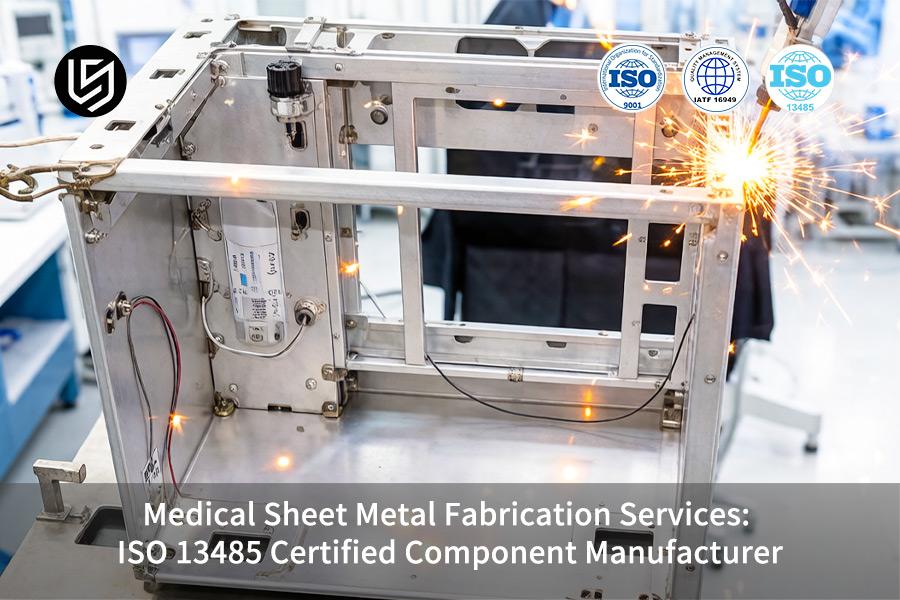
Medical sheet metal fabrication service is crucial for the surgical robot, IVD, and imaging device's structure, but its manufacturers rarely have ISO 13485 expertise and material traceability, creating assembly problems due to the springback phenomenon. The root cause of the issue lies in the lack of internal stress calculation for 316L-VM alloy and controlled clean rooms, resulting in post-shipment contamination, size variation, and increased FDA audit and life cycle cost risks.
LS Manufacturing, an ISO 13485 certified company, provides solutions through the closed-loop servo press brake and 3-stage ultrasonic cleaning process, ensuring accuracy up to ±0.05mm without any assembly and contamination hazards. To address manufacturing uncertainty, it is important to comprehend how this technological measurement alters compliance requirements.
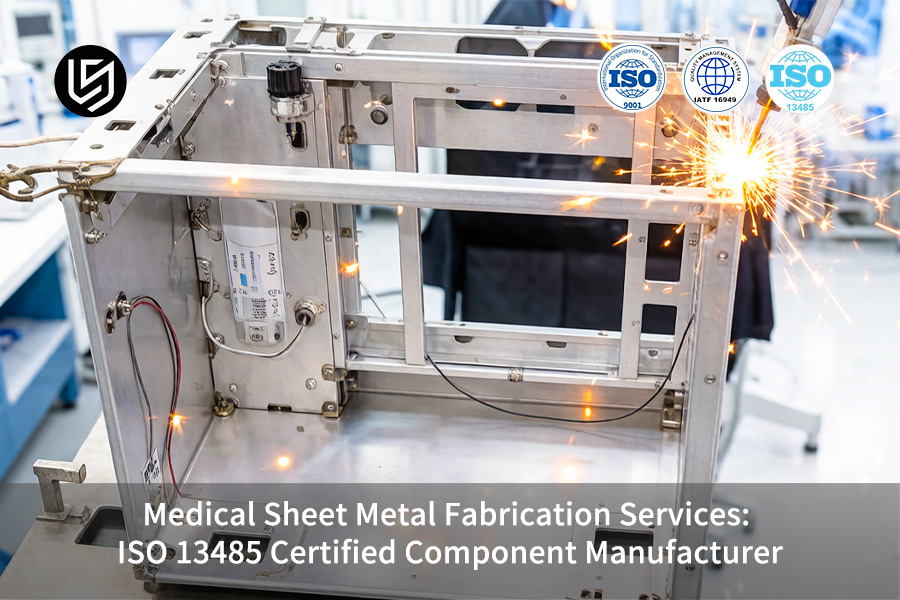
Medical Sheet Metal Fabrication: ISO 13485 Quick-Reference
| Critical Requirement | Certified Manufacturing Protocol |
| Full Material Traceability | We source only certified materials (for example, 316LVM) with total traceability through Mill Test Reports up until the end of manufacturing. |
| Biocompatible Surface Finish | We ensure compliance with the required surface roughness Ra values and execute the passivation/electropolishing procedure. |
| Cleanroom Fabrication & Handling | Our sheet metal fabrication process uses the cleanroom environment to minimize any risk of contaminants. |
| Documentation & Device Master Record | Every order is supplied with all DHR (Device History Record) for FDA 21 CFR part 820 & MDR compliance. |
| Our Validated Quality System | ISO 13485 quality system that controls, monitors and verifies all processes including laser cutting, welding etc. |
| Result: Regulatory Submission Ready | Supply parts with full technical documents; helps fast track your 510(K) / CE Mark process. |
| Result: Sterilizable & Reliable Performance | Provides parts that can go through multiple sterilization process cycles (autoclave, e-beam, ETO and gamma irradiation) without deterioration. |
We address the issues of compliance and quality management that are associated with the production of medical devices. We provide you with compliant sheet metal parts that have been manufactured according to the standards of ISO 13485. As a result, your devices will be safe to use in medical settings and will help you get on the market fast and safe. We guarantee the provision of the necessary information in case an inspection takes place.
Why Trust This Guide? Practical Experience From LS Manufacturing Experts
Many articles talk about medical sheet metal parts, but this particular guide has been created based on practical experience in our ISO 13485-certified workshop. In it, we address the problems associated with the creation of frames for surgical robots and chassis for IVD analyzers, such as dealing with the stress that is present in 316L-VM stainless steel or attaining optical-grade flatness.
Our processes are refined by producing components for imaging machines and supporting devices used for highly sensitive diagnostics where one poor weld or burr could contaminate the entire process. Every job we do gives us more insight into what works and what doesn’t, whether it’s forming parts in a press brake or performing cleaning procedures that have been validated according to the Robotic Industries Association and Machine Design.
It is precisely this invaluable practical knowledge which we share with you in order to minimize any risks and delays associated with compliance. This will guarantee not only the dependability of the structural elements of your devices, but will also simplify the assembly process and make the approval process easier. It converts complicated production into a reliable base for your medical invention.
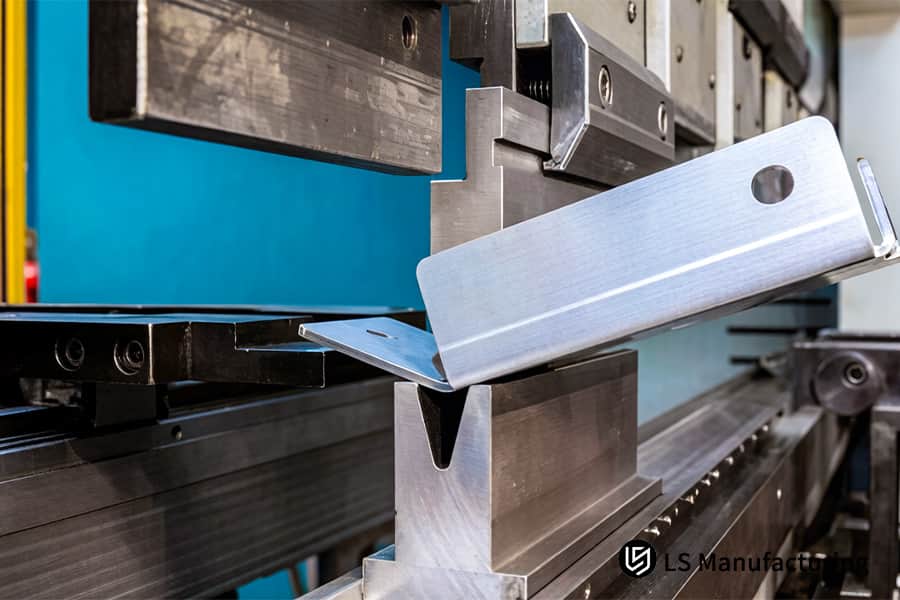
Figure 1: Bending a medical-grade aluminum sheet on a press brake is a precision sheet metal for medical device fabrication.
Why Is An ISO 13485 Certified Sheet Metal Provider Critical For High Risk Class III Medical Devices?
In the case of Class III medical devices, patient safety is not only about following regulations; it is based on the manufacturer's capability of implementing effective technical controls. The solution provided herein addresses the problem by introducing a closed loop concept for material sciences, statistics, and traceability of all processes digitally. The following section provides an explanation of how these three disciplines help to minimize risks associated with compliance and safety:
Validating Material Integrity Upon Receipt
Our method allows us to circumvent dependency solely on the certificates by conducting positive material identification (PMI) on all lots. Optical emission spectroscopy is applied to validate the chemical composition of the ISO 13485 certified sheet metal we receive, ensuring that they comply with 316L specifications. This avoids any trace elemental variances that would compromise their corrosion resistance properties and set the groundwork for the component’s paper trail, providing medical sheet metal fabrication service quality assurance.
Ensuring Digital Traceability for Every Unit
Traceability in the digital world is compulsory. Every batch produced will have a unique number. Further processing, including laser cutting, precision sheet metal fabrication, bending, and finishing, will be recorded in our system, depending on the unique number assigned. This will ensure a permanent record of the process used in producing each custom sheet metal enclosure.
Qualifying Processes with Statistical Evidence
To prove our qualification, we use statistics. Regarding vital stainless steel sheet metal parts, we perform process validation (IQ/OQ/PQ). The process capability index (Cpk) of the batches produced during PQ is computed. Only if we achieve Cpk values of at least 1.33, we can claim our qualification in medical device sheet metal forming.
These control techniques represent the theory behind ISO 13485 sheet metal manufacturers regarding engineering controls. It is important to note that this particular area focuses on the implementation of the control systems through the application of materials science, digital traceability, and process validation, which enables us to build an unassailable data set needed in the manufacturing process of medical devices. Our document serves as a template as to how we minimize risks in order to meet the required standard.

How Can A Professional Sheet Metal Fabrication Service Ensure Zero Clearance Assembly For Robotic Consoles?
The realization of zero-clearance assemblies for robot consoles needs to surpass the use of conventional tolerance levels and employ a more deterministic and data-led method of production. The following technical methodology provides a solution to achieve zero clearance by actively controlling thermal inputs, anticipating material responses, and ensuring precise assembly geometries. We have developed an approach that guarantees structural stability and exactness from the initial prototype, essential for the provision of a sheet metal fabrication service:
Mitigating Thermal Distortion for Optimal Edge Quality
- High-Power Laser Strategy: Laser beam of 15kW and above through pulses designed to minimize HAZ to less than 0.1mm while retaining mechanical properties.
- Cutting Path Optimization: Paths of the laser beams can be optimized to prevent thermal effects from causing distortion, which would otherwise affect edge flatness needed in the manufacture of sheet metal fabrication service.
- Direct Outcome: The manufactured parts for precision sheet metal assembly feature sharp and perfect edges, thereby forming perfect bases for bonding.
Achieving Predictive, Compensated Bending
- Material-Specific Database: Our company has created its database for spring back for different grades and tempers of aluminum, using run-off experiments.
- Closed-Loop Servo Control: Our press brakes utilize the database to bend beyond a particular angle to counteract spring back, resulting in ±0.2° net angle tolerance.
- Direct Outcome: The repeatability of this outcome is necessary for an ISO 13485 metal component manufacturer because the formed brackets and housings will mate together in a predictable manner without requiring any force for insertion, which enables robotic console metal housing fit.
Ensuring Dimensional Fidelity Through Controlled Assembly
- Process-Oriented Tooling: Use of fixtures and weld jigs qualified for specific sub-assemblies that eliminate human variation from the locating and joining process.
- In-Process Verification: Utilizing phased inspection points utilizing CMM or laser scanning technology to verify critical interfaces prior to final assembly, enabling assembly precision.
- Direct Outcome: The precise approach toward making high-tolerance sheet metal parts results in a +40% gain in first time assembly rate, without having to manually shim or file.
With our approach, there is a definite path towards achieving zero clearance in the manufacturing process. Through the process of outlining how it can be done, including the use of laser parameter calculations, spring back prediction, and the use of fixtures during assembly, we show you that precision is not a dream but a reality.
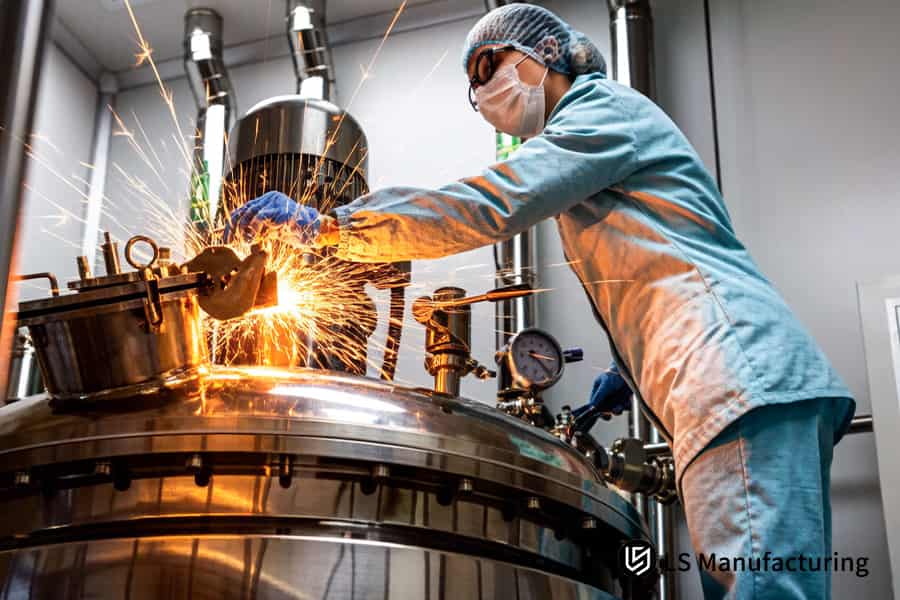
Figure 2: A technician grinds 316L stainless steel clamp edges for an ISO 13485 certified sheet metal medical system.
What Defines The Excellence Of Custom Medical Sheet Metal Components In Diagnostic Equipment Chassis?
IVD equipment chassis demand exceptional geometric stability to support sensitive fluidic and optical systems. This document details a fabrication methodology for medical grade metal fabrication, focused on ensuring dimensional integrity and preventing stress-related failure in custom medical sheet metal components. This secures the precise alignments critical for reliable diagnostic chassis performance, forming the foundation of complex precision sheet metal fabrication.
| Focus Area | Technical Action & Measurable Outcome |
| Material Integrity & Preparation | Enforcing controlled blanking and stress-relieving practices in certified metal material in order to create a solid basis for subsequent sheet metal manufacturing procedures. |
| Complex Forming Strategy | Merging deep drawing process with multi-step press brake processing in order to manufacture highly complicated fluidic cavities and mountings in one flow of complex sheet metal fabrication. |
| Large-Part Flatness Control | Applying laser projection system along with real-time measurement devices to ensure that deflection is compensated by the welding procedure in order to reach required flatness for large (1 m+ in diameter) mounting planes. |
| Geometry Validation & Stress | Management Using CMM technology to check the important interface geometry and employing certain processing steps in order to fix the geometry and eliminate post assembly drift, which is extremely important for advanced sheet metal fabrication. |
In this methodology, the notion of excellence is achieved by eliminating the underlying issues associated with structural drift. The methodology includes a clear technical process from material preparation to online flatness control that guarantees that your diagnostic chassis will be entirely passive and structurally sound to ensure the optimal operation of its complex support systems. Thus, you can always be sure that your custom medical sheet metal components function reliably.
Why Should OEMs Prioritize Precision Sheet Metal For Medical Applications With Controlled HAZ?
In medical equipment manufacturing, the lack of control over the Heat-Affected Zone (HAZ) in thermal cutting severely undermines the corrosion resistance of the 304 stainless steel, posing a direct challenge to durability optimization. The following is a presentation of the techniques used at our facility to reduce the impact of HAZ, enabling our products to survive the rigorous and repeatable sterilization process via controlled energy input in our certified medical sheet metal service:
Implementing Advanced Pulse Modulation Cutting
We employ high-quality fiber lasers that incorporate special pulse modulation techniques instead of CW techniques. Through pulse frequency, pulse width, and peak power control, our system can deliver energy in controlled pulses. As such, it significantly constrains the accumulation of heat conduction within the material, leading to a reduction of the HAZ depth to below 30%, which is an important standard in high-precision sheet metal fabrication.
Preserving Base Material Metallurgy
The ultimate goal is to preserve the natural chromium oxide layer present in the stainless steel. The ideal laser conditions are intended to ablate the material without significant lateral heat diffusion. This will help prevent the formation of carbides and structural modifications in the base metal, which are the main factors responsible for causing pitting and stress corrosion cracks in precision sheet metal for medical.
Validating Performance with Metallographic Analysis
Verification is supported by actual data, not theory. We conduct cross-sectional tests and hardness testing on each batch of samples produced. This step helps us determine the extent of the HAZ and verify the microstructure that remains intact, which demonstrates that our medical-grade sheet metal fabrication process produces components capable of undergoing multiple autoclave sterilizations.
The approach that we adopt is one that shifts the definition of precision itself through an active control of thermal damage in laser cutting processes. The key issue that has plagued laser cutting in its ability to provide durability optimization solutions—the problem of material degradation on the edges of the cut—is addressed in our solution through the explanation of how it can be done.
How Does A Certified Medical Sheet Metal Service Manage Contamination Control In Manufacturing?
For any medical grade metal fabrication, there should be strict measures in place for contamination prevention, which will have a direct bearing on the safety and biocompatibility of the device. Below are some of the practical steps taken in our certified medical sheet metal service to prevent any particulates, ions, or biological contaminants from compromising the parts:
Establishing a Controlled Manufacturing Environment
- Dedicated Cleanroom Zones: Fabrication occurs in a clean room environment having class ISO 7 (10,000) or better to avoid particulate contamination.
- Tooling and Material Segregation: Use of special materials that do not contain iron along with specific tooling to ensure there is no contamination caused by iron. This is a fundamental requirement in the cleanroom sheet metal fabrication.
- Direct Outcome: These environments ensure there are no chances of contamination with the components ensuring medical sheet metal fabrication process.
Executing a Validated Cleaning & Rinsing Process
- Multi-Stage Ultrasonic Cleaning: Applying an established procedure that entails the multi-stage process of ultrasonic cleaning baths where rinses become progressively cleaner (e.g., aqueous detergent, DI water, rinse).
- Process Parameter Control: Exercise strict control over time, temperature, and concentration of chemicals involved in each stage.
- Direct Outcome: It is a necessary step in ensuring that all residues from manufacturing (such as oils, particles) are removed in order to achieve the goals of contamination control for critical assemblies in prototype sheet metal fabrication and production.
Implementing Clean Packaging & Handling Protocols
- Cleanroom Packaging: Final assembly and packing of parts within the cleanroom using packing materials that are antistatic and have minimal levels of particles.
- AQL Inspection for Packaging: Implementing an Acceptable Quality Level (AQL) sampling plan to visually inspect packaged parts for cleanliness before release.
- Direct Outcome: These procedures help maintain the level of cleanliness attained during storage and transportation, which is an extremely important final stage in the certified medical sheet metal service chain for custom sheet metal fabrication.
Verifying Cleanliness with Quantitative Data
- Non-Volatile Residue (NVR) Testing: Periodic testing of sample coupons from each production run according to a pre-established schedule, and surface residues never exceeding 5 mg/m².
- Particle Count Analysis: Performing particle count analysis via rinse fluids as an objective measure to demonstrate the efficacy of the cleaning process on vital components.
- Direct Outcome: The evidence-based validation is a form of objective proof of cleanliness, transcending the conventional eye test to meet stringent quality requirements necessary for reliable sheet metal fabrication.
The way we handle contamination control can be described by its strict protocols and measurable outcomes. The threat of compromising the biocompatibility of our product is mitigated by outlining the process through environmental controls, cleaning processes, and objective validations. Such transparency allows us to offer OEMs documentation of our commitment to ensuring that components produced in our medical grade metal fabrication facility are not only precise but also contamination-free.
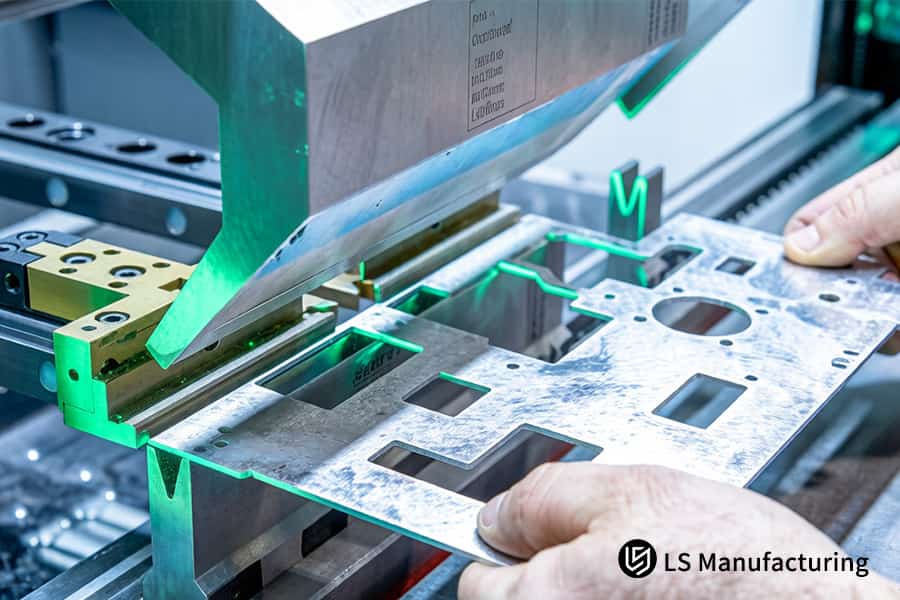
Figure 3: Bending 6061 aluminum for a device bracket enables a certified medical sheet metal service for surgical equipment.
Why Is LS Manufacturing The Leading ISO 13485 Metal Component Manufacturer For Rapid Prototyping?
To speed up the development of new gadgets, quick iterations of prototype models may increase validation speed and accelerate certification time. This is a summary of a technique aimed at delivering high-quality components within the shortest time possible, following the necessary production standards. The proposed approach uses accelerated techniques, coupled with DFM, to deliver accurate prototypes provided by an ISO 13485 metal component manufacturer, utilizing rapid prototyping.
| Focus Area | Technical Action & Measurable Outcome |
| Accelerating Forming Without Hard Tooling | Using modern forming technologies using no tooling or soft-tool forming technologies, combined with digital laser cutting for the formation of the first prototype in 72 hours in fast-turn sheet metal fabrication. |
| Proactive Design for Manufacturability (DFM) | Running DFM analysis during the quote process, providing data-driven design suggestions that may help decrease welds by 20% or make any other comparable improvement to help speed up manufacturing. |
| Maintaining Production-Equivalent Quality | The performance of comprehensive material certification, process verification, and documentation management on all prototype parts fabricated to serve as functional and material representations of production quality from a medical sheet metal fabrication service. |
| Enabling Seamless Production Ramp-up | Using the prototype data for process parameter and fixture definition, ensuring a seamless and de-risked approach in moving from proven prototype to volume manufacturing certification through low-volume sheet metal fabrication framework. |
Our approach ensures rapid time-to-market with incorporation of production discipline during prototype design. We address the critical issue of reduced timelines without compromising on manufacturability and validation processes. Through our emphasis on the how, including tool-less forming, concurrent DFM, and continuous traceability, we establish an open system approach that converts prototypes into validated precursors of complex sheet metal fabrication.
What Engineering Data Supports The Superior Performance Of Medical Grade Metal Fabrication?
Excellent performance in medical grade metal fabrication is based on facts and empirical evidence. The following section describes the process through which the performance of components can be validated using engineering validation techniques that prove the integrity and robustness of a design under extreme conditions:
Validating Structural Integrity Through Destructive Analysis
We perform in-house metallographic examination of weld cross-sections to verify fusion quality and absence of defects. This is followed by tensile testing, where we validate weld joint strength consistently meets or exceeds 95% of the base material's ultimate tensile strength. This data provides foundational proof for the reliability of our structural sheet metal fabrication, ensuring precision sheet metal for medical meets critical load-bearing requirements and delivers essential technical validation.
Substantiating Long-Term Environmental Performance
Theoretical assertions regarding corrosion resistance alone do not suffice. Components fabricated through the use of the selected materials are subjected to accelerated environmental testing according to ISO 9227 (Neutral Salt Spray). Components should endure for at least 720 hours without displaying signs of red rust and pitting corrosion. The above test proves the effectiveness of our material choices and fabrication method regarding corrosion-resistant sheet metal fabrication.
Ensuring Surface Safety and Biocompatibility
Final product safety relies on confirmation of surface condition. In addition to welding and corrosion test results, we also measure non-volatile residue (NVR) quantitatively to ensure clean levels are less than 5 mg/m2. We verify integrity and chemistry of passivation. The surface analysis ensures proof that the parts are both clean and bio-inert, which is an essential delivery of true biocompatible sheet metal fabrication and medical grade metal fabrication.
Our approach allows us to translate quality assurance to predictive engineering. Safety problems associated with performance are eliminated through our ability to prove the empirical how, in terms of destructive weld and corrosion tests and surface chemistry analyses. Our information-based approach supplies the necessary documentation to ensure our component's safety and eliminate liability issues through its regulatory risk file.
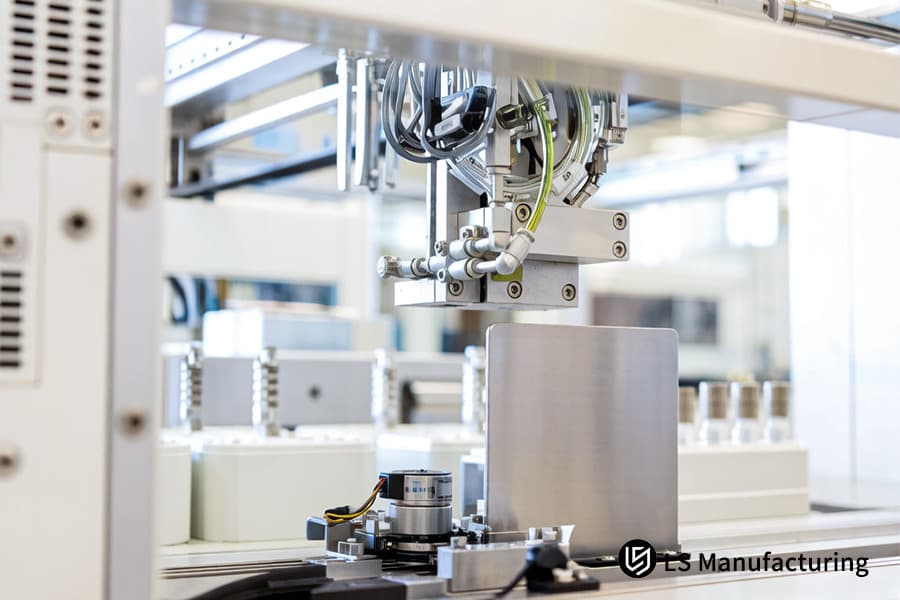
Figure 4: A technician processes 316L stainless steel sheets for a custom medical sheet metal components manufacturing line.
Case Study: LS Manufacturing Medical Imaging System Stainless Steel Support Precision Custom Solution
This case study is an account of how LS Manufacturing addressed the problem of dimensional instability for a medical imaging OEM client. We were able to address a post-weld distortion problem in an ultrasonic probe support frame made from 316L stainless steel, eliminating residual stress by innovating in the medical grade metal fabrication:
Client Challenge
Prior to choosing our services, the client relied on a different company to fabricate their transducer support frame using a welded sheet metal fabrication process. Residual stress generated by the welding procedure led to a positional drift of 0.8 mm at the mounting locations after three months of service. As such, the problem resulted in a 40% longer calibration time with only an 85% first pass yield rate.
LS Manufacturing Solution
Our intervention began with a foundational DFM analysis, recommending a tighter material hardness (HRB) range of ±5% for consistency. We redesigned the component, replacing welded assemblies with a unitary structure using high-precision, segmented bending. This was followed by applying laser stress relieving, a localized thermal process that selectively relieves internal stresses without distorting the part, creating a stable unitary sheet metal fabrication for the critical custom medical sheet metal components.
Results and Value
The end products exhibited remarkable stability. Tolerance levels were maintained at ±0.05 mm, and there were no reports of failures related to dimensional control in 18 months. This was a significant accomplishment in high-tolerance sheet metal fabrication and resulted in a 35% decrease in calibration time and savings of $150 per unit due to reduced rework.
This is one such case that demonstrates how we can use an engineering-based approach to overcome inherent problems associated with the manufacturing process. The use of an engineering design process that takes into consideration material selection, proper forming, and stress relief results in more than just parts; we give you predictable and reliable performance over time. This capability to provide engineered solutions for critical custom medical sheet metal components defines our value in precision medical imaging and other high-stakes applications.
Cut calibration time by 35% and save $150 per unit. Solve post-weld drift with our engineered sheet metal solution.

FAQs
1. Why choose LS Manufacturing as your medical sheet metal fabrication service partner?
Having worked for over two decades in the healthcare sector, we have obtained the ISO 13485 certification, and we are committed to adhering to ±0.05mm tolerance precision.
2. What is the maximum material thickness LS Manufacturing can process?
We are able to fabricate a variety of medical-grade materials, such as stainless steel, aluminum, and titanium alloys, with a thickness of between 0.5mm and 12mm, while providing geometric tolerances that conform to ASME guidelines.
3. How fast can I get a quotation for an ISO 13485 certified sheet metal project?
All you need to do is click on the "Get a Quote" button below and upload your STEP and PDF files, and our engineering team will give you a complete quotation within 12 to 24 hours.
4. Does LS Manufacturing provide surface finish services for medical parts?
Yes, we offer an extensive list of surface finish treatments, including electropolishing, anodizing, and electrostatic powder coating that conforms to antimicrobial requirements, giving you the best surface finish, which exceeds an Ra value of 0.4μm.
5. How do you manage supply chain transparency and material traceability?
For every batch, we provide 3.1b material certificates and digital process records, enabling our clients to conduct on-site audits or remote quality traceability checks at any time.
6. Why is precision sheet metal fabrication for medical parts more expensive than standard sheet metal fabrication?
Medical components require strictly controlled raw material selection, higher-precision equipment compensation, and rigorous cleaning and inspection protocols—measures that effectively help you mitigate potentially costly quality risks down the line.
7. Can LS Manufacturing assist with the DFM optimization of my medical component?
Absolutely. We provide a complimentary DFM report during the inquiry stage; by optimizing the process chain, we can help you save up to 20% on manufacturing costs.
8. What is your typical lead time for complex, custom medical sheet metal components?
Prototype delivery typically takes just 5 to 7 business days. Lead times for mass production batches are dynamically adjusted based on process complexity, and we provide real-time progress updates to you via our ERP system.
Summary
In the field of precision medical manufacturing, every micron of deviation can translate into significant clinical risks or commercial losses. Through this analysis of LS Manufacturing’s core processes, we have demonstrated how—by combining ISO 13485-level management depth with unparalleled sheet metal fabrication precision—we solve the most complex challenges, ranging from intricate imaging components to robust chassis assemblies. We are more than just your manufacturer; we are your strategic partner, leveraging "Medical-Grade Metal Fabrication" technologies to provide you with both peace of mind and enhanced profitability.
Don't let inconsistent supplier quality slow down your FDA certification process any longer. Your precision medical designs deserve to be realized through the most rigorous manufacturing processes available. Click the "Get Instant Quote" button below now to upload your design drawings. LS Manufacturing’s medical-grade engineers are standing by to provide you with a complimentary, one-on-one Design for Manufacturability (DFM) review, helping you secure a highly competitive, direct-from-manufacturer quote within just 24 hours.
Solve 0.8mm post-weld drift and pass audits with confidence. Request your ISO 13485-compliant sheet metal fabrication quote.
📞Tel: +86 185 6675 9667
📧Email: info@lsrpf.com
🌐Website: https://lsrpf.com/
Disclaimer
The contents of this page are for informational purposes only. LS Manufacturing services There are no representations or warranties, express or implied, as to the accuracy, completeness or validity of the information. It should not be inferred that a third-party supplier or manufacturer will provide performance parameters, geometric tolerances, specific design characteristics, material quality and type or workmanship through the LS Manufacturing network. It's the buyer's responsibility. Require parts quotation Identify specific requirements for these sections.Please contact us for more information.
LS Manufacturing Team
LS Manufacturing is an industry-leading company. Focus on custom manufacturing solutions. We have over 20 years of experience with over 5,000 customers, and we focus on high precision CNC machining, Sheet metal manufacturing, 3D printing, Injection molding. Metal stamping,and other one-stop manufacturing services.
Our factory is equipped with over 100 state-of-the-art 5-axis machining centers, ISO 9001:2015 certified. We provide fast, efficient and high-quality manufacturing solutions to customers in more than 150 countries around the world. Whether it is small volume production or large-scale customization, we can meet your needs with the fastest delivery within 24 hours. choose LS Manufacturing. This means selection efficiency, quality and professionalism.
To learn more, visit our website:www.lsrpf.com.