English



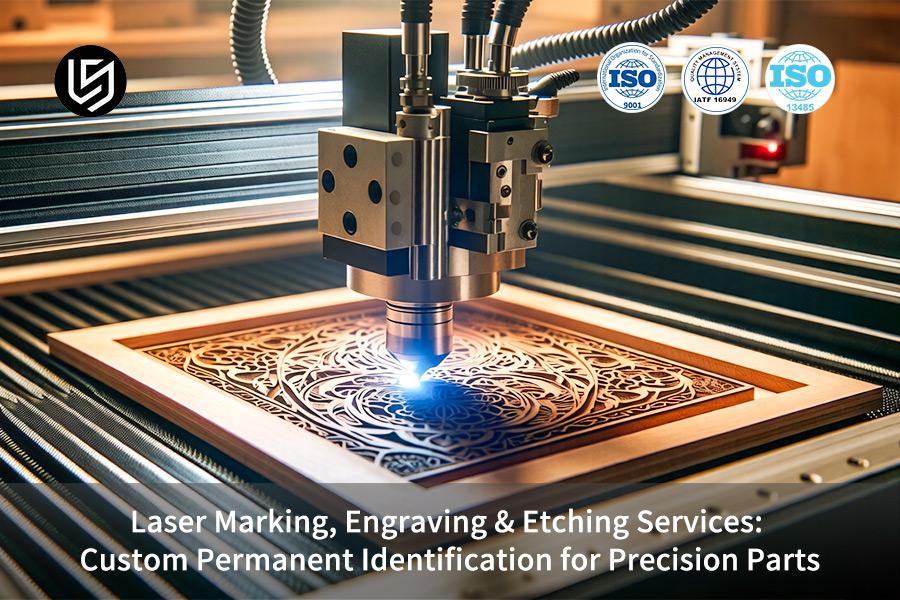
Laser cutting services within vital industries such as aerospace and medical equipment frequently experience wear on part codes such as serial numbers and UDI barcodes due to exposure to heat or corrosive substances. This is due to conventional laser cutting techniques that do not allow for the proper modification of materials on a microscopic level regarding changes in fluence and pulse width within long chains of processes.
LS Manufacturing addresses this challenge by implementing a solution based on the use of nanosecond and picosecond lasers to mark parts permanently. By modifying the HAZ, we are able to achieve more than 40 dB contrast and ±1.5 μm depth control. We have developed unique methods in laser marking, and we will discuss the depth of the process in the following section.
Laser Marking, Engraving & Etching: Permanent ID Quick-Reference
| Process Type | Key Characteristics & Applications |
| Laser Marking (Annealing/Discoloration) | Changes the structure of the surface oxide film, leaving dark/discolored marks. Best for surgery instruments, stainless products. |
| Laser Engraving (Deep Etching) | The material surface undergoes laser cutting to form grooves. The cutting depth is sufficient to ensure the durability of the mold and the serial number plate. |
| Laser Etching (Surface Ablation) | Excavates a thin layer of the material surface. Creates sharp contrast markings on anodized aluminum, coatings, plastics. |
| Our Material & Process Matching | We align the laser type (fiber, UV), power output, and processing speed with materials for optimum results. |
| Mark Permanence & Legibility | Durable markings that are abrasion, chemical, and heat-resistant; we guarantee compliance according to industry standards. |
| High-Resolution & Complex Graphics | Capable of creating detailed graphics, high-resolution 2D bar codes, and tiny text up to 0.2 mm. |
| Result: Traceable & Compliant Parts | Ensure lasting marking on the part that will guarantee traceability according to the standards (ISO, AS9100, FDA UDI). |
| Result: Aesthetic & Functional Branding | Create permanent logos, instructions or warnings that will not negatively impact performance and appearance of the parts. |
We deliver permanent solutions in identifying precision parts used in various industries. By providing you with laser services with durable high-definition marks, ranging from annealed to engraved, we help you create parts that can be traced back, ensuring compliance and branding. The result is your well-documented parts ready to assemble and use.
Why Trust This Guide? Practical Experience From LS Manufacturing Experts
Many articles about laser marking can be found in the internet, but this guide is based on constant practical work experience. Working in LS Manufacturing, our workshop is faced with different kinds of practical difficulties like ensuring permanent traceability despite high temperatures, making the mark readable after sterilization, creating precise marks on miniature parts. Laser parameters are essential here.
Our knowledge and understanding of laser marking are built on direct interaction with the materials used—from titanium to specially treated alloys. This is based on our understanding of requirements put forth by SAE International and the Aluminum Association (AAC). It ensures that the best possible contrast and wear resistance are reached without affecting the material's structure or finish. Our goal is to ensure that every mark stays legible permanently.
All of these recommendations come from years of successful implementation. We've learned how to mark at high speed while maintaining high contrast and how to work with delicate materials without stressing them out. Here, we provide you with the information that we gained through practical experience—with every laser pulse and every mark inspection.
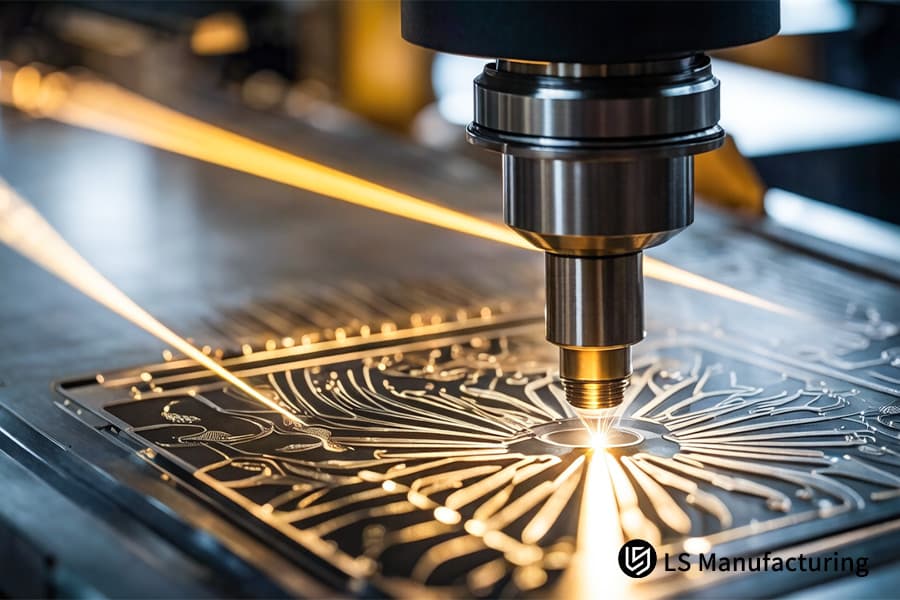
Figure 1: A focused laser beam cuts a carbon steel plate, creating bright sparks on the factory floor at LS Manufacturing.
Why Integrate Laser Cutting With Permanent Laser Marking For UDI Compliance?
Precision machining facilities couple laser cutting services and permanent marking operations in order to address the critical issue of part identifier matching. This is accomplished through the generation of an uninterrupted digital thread in one operation that ensures no handling mistakes occur and 100% accuracy is achieved in all parts produced from the start to finish of the process.
Unified Platform for Error Elimination
Our solution employs a single CNC workstation, performing both high-tolerance fiber laser cutting and immediate permanent laser marking services without reclamping. This direct linkage between cutting and marking data forms a closed digital loop, guaranteeing perfect part-to-identifier matching. The elimination of manual intervention enables true precision manufacturing integration and virtually eradicates the root cause of UDI tagging errors.
Adaptive Marking on Complex Surfaces
Parts after precision laser cutting, such as complex blanks offer surfaces that are not conducive for any reliable identification mark, our solution involves the use of a 5-axis laser head capable of dynamic focusing and optical surface mapping. As a result, this technique ensures automated real-time control of beam path and fluency to achieve a consistently high-resolution mark along complex contour lines, edges, and thin walls.
Synchronized Process for Material Integrity and Efficiency
Since controlling the consecutive thermal impacts of two different operations is essential for achieving high-quality parts, we have developed an intelligent solution that allows for an automated change of laser parameters from a high-energy cut mode to a low-heat input mark mode during one single process. Thus, the microstructure integrity of fine laser cut profiles can be secured.
This end-to-end precision laser cutting integration effectively addresses all the technological challenges involved in traceability because it does not involve process segmentation. We offer an extremely technologically sound, seamless process for ensuring the integrity of identification and compliance, thus completely removing risk from the production of vital parts.

How Can Laser Marking Ensure Permanent Marks On Medical-Grade Surgical Instruments?
We understand that surgical devices require long-lasting identification without any biocompatibility compromises despite undergoing thousands of cycles within the autoclave. Specialized laser marking services effectively accomplish this through the formation of a permanent oxide layer that serves as an identifier. Below is how we go about it:
Subsurface Annealing for Biocompatible Permanence
- Process: Use of controlled laser annealing ("black marking") process.
- Action: The precise heating of stainless steel to create a rich layer of chromium oxide underneath the surface without any ablation of materials.
- Outcome: Creation of high contrast and permanent marks, maintaining the original surface finish and biocompatibility, which is necessary for medical-grade durability.
Rigorous Validation for Sterilization & Corrosion Resistance
- Testing Protocol: Stringent verification of sterilization and corrosion resistance of the marks according to medical standards.
- Method: Extended neutral salt spray test (ASTM B117) and autoclave cycle.
- Guarantee: Custom laser identification services ensure that marks withstand the entire lifespan of devices, including laser-cut components.
Precision Marking on Complex Contoured Geometries
- Challenge: Achieving consistent mark depth, contrast, and legibility on slender shafts, textured handles, and intricate laser-cut profiles.
- Solution: Using 5-axis laser systems with dynamic focusing and optical surface profiling.
- Result: Consistent mark depth, contrast, and legibility across the whole contour shape of surgical tools.
The solution guarantees technical certainty in terms of traceability in medicine. Solving such important issues as longevity, biocompatibility, and geometry is possible by means of the use of laser marking services. Thus, not only the marker but also its validity are guaranteed, and this will be the key to ensuring maximum safety in the medical environment.
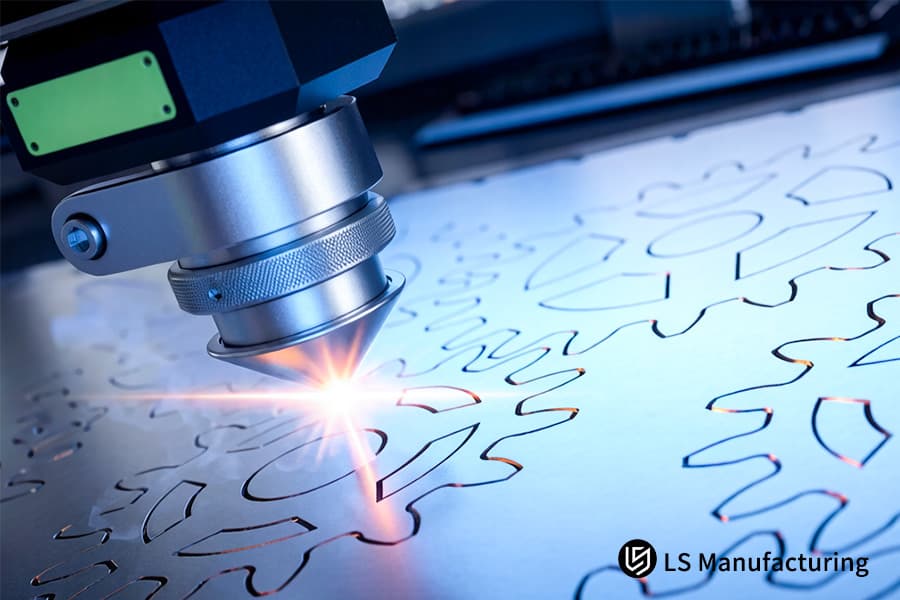
Figure 2: Laser etching services are creating intricate gear patterns on a metal sheet with a focused orange laser beam at LS Manufacturing.
What Are The Technical Benefits Of Laser Engraving For Heavy-Duty Aerospace Engine Components?
Permanent marking of high-strength aerospace parts must be able to withstand intense wear without compromising the structural integrity of the material. This paper outlines the key technical benefits offered by the latest laser engraving services that provide highly accurate and deep marks. A multi-pass scanning algorithm is suggested to reduce slag formation, based on experimental results that confirm superb engraving depth accuracy.
| Aspect | Key Data / Mechanism |
| Application Challenge | Permanent markings on the engine part should achieve an engraving depth of 0.1 to 0.5 mm to endure intensive wear as well as laser cutting engraving operations. |
| Primary Solution | Adoption of multi-pass scanning technology in our precision laser marking services helps significantly reduce slagging effects at the edges of the material. |
| Technical Implementation | The utilization of 100W MOPA lasers with titanium substrates allows for extremely precise ablation in the context of deep laser cutting engraving. |
| Result & Validation | Delivered engraving depth accuracy is <0.02mm; this level of precision prevents stress concentrators and provides 100% structural design integrity during fatigue testing. |
This analysis provides proof that the use of algorithms in laser engraving services can achieve the required depth in order to avoid stress risers and preserve component integrity. The reason for this choice is evident from the data provided as sub-0.02mm depth deviation in titanium. This document provides the means to tackle the problem of placing durable yet legible markings on aerospace parts using advanced laser cutting system.
Why Choose Laser Etching To Minimize Heat-Affected Zones On Thin-Walled Metal Parts?
For thin metal parts that measure less than 0.2mm in thickness, conventional methods of marking may result in thermal distortion. The present document explains how laser etching services allow the use of a quasi-cold ablation method, where the key benefit is that the laser etching process will provide an accurate thermal management to eliminate the heat-affected zone:
Targeted Thermal Management Strategy
This is achieved through use of high frequency pulse lasers. This is a process that forms the foundation of the laser cutting services carried out in the process. It results in delivery of energy in micro-second pulses. This is useful in enabling rapid vaporization of material with reduced thermal conductivity to neighboring substrate, thereby achieving the concept of cold processing that is necessary in this particular case.
Process Optimization for HAZ Control
It is accomplished by fine-tuning the laser PRF above 500 kHz such that the pulse intervals become less than the thermal diffusion time, hence minimizing heat accumulation. The resultant accuracy in high-quality laser cutting materials ensures that HAZ remains below 5 µm to minimize chances of any thermal stress or metallurgy change in the wall thickness.
Validation Through Measured Outcomes
The viability of this optimization process is evident through the final quality of the product. When considering precision electronic cases, it is necessary to have post-marking flatness within Ra 0.8 µm. We accomplish this through our laser engraving services because we ensure minimal heat-affected zone, which means no micro-stress development or localized melting to cause distortion of the surface finish. This result proves the technical capability of our precision laser cutting system.
We solve this by precisely controlling energy delivery to confine the HAZ to <5µm, directly ensuring post-marking surface integrity. This technical insight is designed for engineers in competitive, high-precision manufacturing scenarios where verifiable process control and a deep understanding of material interaction, including thermal management in high-frequency laser cutting, are critical for success.
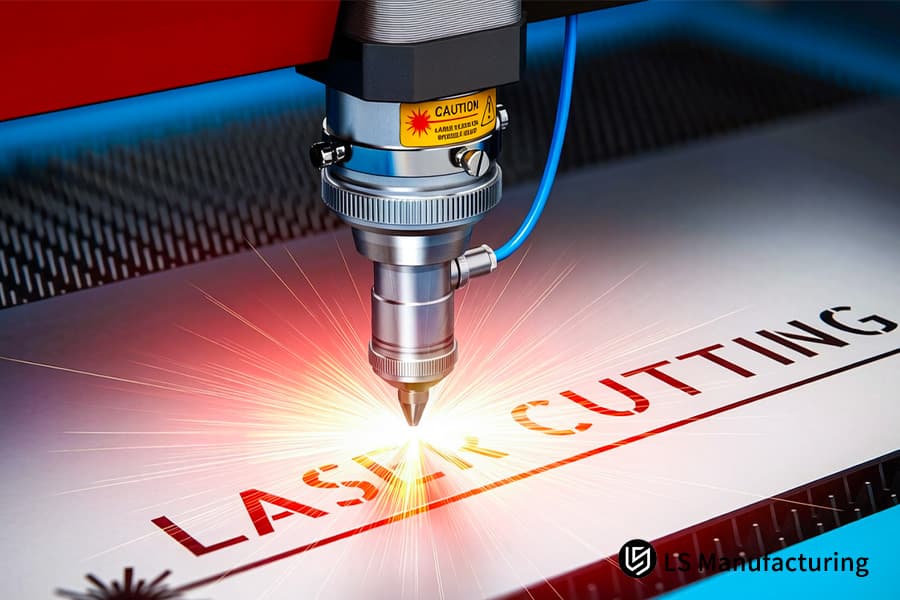
Figure 3: Etching permanent identification text on a metal surface for industrial part identification and traceability.
How Do Custom Laser Identification Services Improve Inventory Transparency For High-Volume Automotive Suppliers?
Large-scale automotive suppliers have two main issues, namely that of mass production and customization, wherein tracing individual parts becomes essential. Conventional marking systems, which rely on manual operations or batching, leave many data gaps and cause inventory mistakes. We address the issue through our advanced custom laser identification services, which provide an automated data chain from production to the actual part. The process involves the following steps:
Vision-Guided Automation for Precise Part Handling
- Challenge: To accurately mark variably positioned parts on a fast-paced line.
- Our Method: Incorporating a machine vision system (CCD camera), which will automatically identify the location and orientation of the part.
- Result: The system captures the exact coordinates, allowing the laser marking services to apply a perfectly positioned and aligned Data Matrix code to every single component, regardless of its placement on the conveyor.
Dynamic Data Integration for Unique Identification
- Challenge: Creating a unique identification tag with lots of information for every component.
- Our Method: Connecting the laser marking equipment to the plant MES/ERP through an interface.
- Result: Every laser-cut bracket or other part will receive a unique identification tag in form of a 2D barcode based on unique data related to the part itself.
Enabling End-to-End Supply Chain Traceability
- Challenge: Preserving identity and traceability throughout the entire production and assembly process.
- Our Method: The durable, scannable ID number acts like a digital passport for the component.
- Result: It ensures smooth tracking from end to end—storage, assembly, completion—with minimal discrepancies and complete traceability throughout the intricate automotive supply chain.
We have revolutionized inventory management through our ability to make the part the holder of its data in physical form. The issue of disconnect between the two has been solved through our laser marking technical implementation of the part receiving its unique ID automatically at the point of creation. Our vision, dynamic data, and laser marking services provide real results in terms of increased transparency and reduced mistakes in inventory handling.
Can Precision Laser Marking Services Maintain Barcode Readability Under Abrasive Sandblasting Conditions?
As abrasive operations such as sandblasting often remove any trace of marks, rendering them unreadable, this document provides information on our technical solution which factors in the need for finishing operations down the line in order to preserve the barcode's readability. In fact, this document explains the parameters of our precision laser marking services required to withstand 80-grit aluminum oxide blasting operations.
| Technical Parameter / Challenge | Our Method / Specification | Rationale & Decision Basis |
| Mark Depth for Durability | Depth of at least 0.10-0.15mm is achieved. | Accounted for in advance in relation to material removal through abrasive blasting, roughly 0.05-0.08mm thick. |
| Achieving Post-Blast Contrast | Takes advantage of laser etching services that apply high-power and slow speed to produce a deep frosty cavity. | Creates a micro-roughened cavity that traps the blast media to ensure a highly contrasting, permanently white mark on the cleaned base material. |
| Material-Specific Parameters | Based on the alloy grade and hardness (for example, 304SS, Al 6061). | Different alloys have different melt and recast tendencies that call for specific energy settings. |
| Validation & Acceptance Criteria | Involves post-blast verification using the DPM scanner based on the ISO/IEC 15415 B-grade level standard. | This data-driven validation on laser cutting steel substrates ensures functional readability, not just visual inspection, guaranteeing process durability. |
The following protocol illustrates how identification after blasting is an engineered capability, and not simply a hope. The specification of pre-compensation for depth, contrast formation with specified laser marking techniques, and rigorous verification resolves the critical issue facing our clients of maintaining traceability through severe finishes. The following document will provide the proof of our technical worth in the highly competitive environment of manufacturing using combined laser cutting and marking.
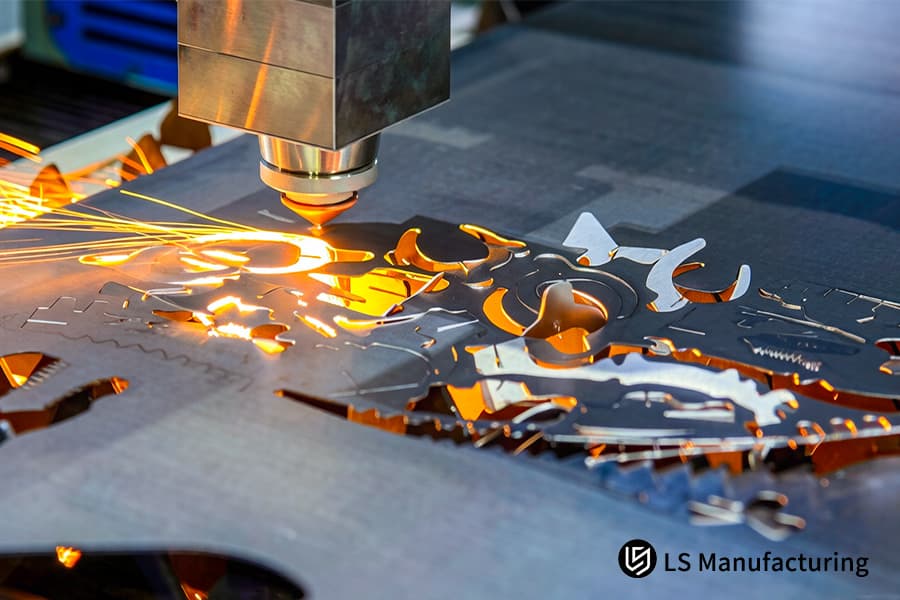
Figure 4: Etching intricate patterns on stainless steel for decorative panels or precision filter components.
Case Study: LS Manufacturing Medical Device Stainless Steel Scalpels Custom Laser Identification Project
In the following case, we show how LS Manufacturing solved the critical traceability and compliance issue faced by one of our clients, a European maker of high-precision surgical tools. In dealing with the difficult issue of obtaining reliable identification on intricate parts, our client needed an identification system that was both sterile and permanent, which was provided by custom laser identification services.
Client Challenge
A high-grade stainless steel scalpel needed a durable and readable marker that is 0.3mm high. Etching had resulted in inconsistent depths, leading to two crucial defects: first-pass yield under 75% because of low readability and surface roughness that trapped sterilant material. These problems threatened to jeopardize the regulatory approval and market launch of the product. Therefore, a reliable laser cutting process that assured a clean and highly readable marking was urgently needed.
LS Manufacturing Solution
Our engineers used a dynamic focus laser system mounted on a 4-axis platform. The critical component was the creation of a unique energy compensation curve using DFM analysis, which allowed adjusting the parameters of the laser in real-time based on the curve of the handle. This solution was then combined with an inline AOI system for full inspection. The process started by obtaining laser-cut blanks, allowing optimal preparation of the surface before marking.
Results and Value
The result was an initial yield of 99.8% of the clarity of the markings on the curvy surface. The most important outcome is that the markings survived more than 2,000 autoclave sterilizations without degrading or capturing any debris. Thanks to the identification's durability, the customer complied with all regulations, gained substantial benefits, and consolidated their worldwide supply chain, choosing LS Manufacturing to be their exclusive yearly partner in providing laser cutting and marking services.
This is an example of how we use our technical skills to solve real and challenging manufacturing problems with data-validated processes. Our work went well beyond basic laser cutting services and included designing an application that utilized motion control and DFM techniques along with 100% inspection.
Unlock flawless traceability and medical-grade permanence with our precision laser marking solution.

Why Is LS Manufacturing's Laser Cutting And Marking A Long-Term Investment?
When it comes to manufacturing, there's more to true cost than price per unit. The real issue is to minimize the total cost of ownership by getting rid of any extra costs associated with reworking, handling, and quality problems. At LS Manufacturing, we do this by utilizing an integrated manufacturing cell that combines the processes of laser cutting and marking services into one automated process. The following is a technical breakdown that explains how we save 12% of total laser marking costs:
Integrated Process Design: Eliminating Secondary Fixturing
- Unified Workholding Solution: One custom tool holds the blank throughout both the contour cutting process and after that, through the custom laser identification services.
- Datum Consistency: There is no change in the machine coordinate datum throughout the entire operation, ensuring precise positioning.
- Direct Result: No additional tolerance from repeated set-ups affects the quality of fiber laser cutting.
In-Process Quality Assurance Automation
- Integrated Vision System: Camera checks the part presence and orientation after laser cutting operation, essential for successful sheet metal laser cutting.
- Post-Mark Verification: Same camera reads and inspects the quality of marked label on the part (e.g. Data Matrix).
- Automated Disposition: Automated software sorts out parts without the need for manual inspection.
Optimized Cell Utilization & Cycle Time Reduction
- Automated Material Handling: Robotic gantry handles raw materials loading and finished parts unloading process, keeping spindle utilization high.
- Concurrent Operations: Program loading occurs while the last cutting line is being executed, reducing waiting time for the best laser cutting automation.
- Performance Tracking: We allow continuous data-driven cost-efficiency analysis of spindle-on time compared to total cycle time, thus removing all non-value-added periods.
Data-Backbone for Continuous Precision
- Closed-Loop Calibration: Information gathered from machine vision adjusts the laser focus and the cutting head location.
- Process Signature Monitoring: All critical parameters (such as laser power level) will be monitored and recorded for each particular piece, providing a fully digitized process trace for every precision laser cutting procedure.
- Predictive Maintenance: Analysis of the drift in parameter values initiates maintenance when quality still can be sustained.
The information provided above clearly shows how the proposed solution is technically sound and is not aimed at marketing purposes. It proves our competitive position through a detailed explanation of hardware/software/process integration providing us with a measurable financial and quality benefit. The core of the solution is the ability to provide reliability and traceability at lower costs.
How To Evaluate A Manufacturer For High Precision Laser Etching And Identification Needs?
A selection of partners for critical laser etching services requires a technical audit, not an inventory check of capabilities. The key issue here is establishing that a company can control its entire marking process systematically, to guarantee permanent traceability and dependability under difficult circumstances. This is what a thorough laser marking manufacturer evaluation needs to achieve:
Auditing Systemic Process Controls
Don't just stop with checking certifications. We audit the integration of a company's quality management system (such as ISO 13485) into its day-to-day laser processes. This includes evaluating written processes used to validate and manage changes in laser marking services parameter per material grade, making sure that repeatability is guaranteed by systems, not people.
Verifying Advanced Technology Deployment
The overcoming of a heat-affected zone on difficult-to-process materials will necessarily require certain hardware. Our assessment dictates the use of ultrafast lasers (picoseconds), examining samples of metallurgical cross sections, which prove the minimum heat effect. This is a mandatory requirement in order to ensure the micron-scale laser cutting of complex identifiers and micro features without damaging the substrate.
Requiring Objective Performance Data
Marks must be durable in their environment. The report will be comprehensive; that is, not only a certificate, but also a description of the results of life tests (adhesion according to ASTM D3359, additional salt spray test). Such objectively measurable parameters are needed in order to avoid field failures due to lack of life tests.
Ensuring Complete Parameter Traceability
Parametric drift cannot be identified during the manufacturing process with final inspection alone. The suggested approach demands an active MES/ERP connection to the laser source, allowing logging of its parameters (power, velocity, and frequency) on a per-workpiece basis. Thus, traceability and statistical process control become possible, ensuring that all parts comply with laser cutting tolerances while documenting the process.
The concept of this model is based on a competitive approach that provides criteria for partner selection based on a shift from capabilities to process verification. The process will involve ways of ensuring control over the multitude of parameters in ultrashort laser cutting and engraving.
FAQs
1. Why does LS Manufacturing prefer fiber lasers for permanent laser marking services on metals?
Fiber lasers provide high beam quality and stability to create highly contrasting markings on stainless steel, titanium, and aluminum that will remain visible and readable for decades to come.
2. What is the smallest font size achievable with your laser marking services?
Using our highly accurate scanning galvanometers, it is possible to make markings containing clear characters as small as 0.1mm in height in small spaces such as on medical instruments without producing any burrs.
3. How does LS Manufacturing ensure that laser cutting services do not compromise marking precision?
LS Manufacturing uses advanced multi-axis coordinated control. After the laser cutting, the system automatically shifts to the marking mode without moving its position since it relies on the same coordinates system.
4. Can your custom laser identification services handle serialization for high-volume production?
Yes, our systems allow importing data streams from Excel/ERP systems, making it easy to update serial numbers and QR codes as required for the automation of production processes, where output is expected in millions.
5. Are your laser engraving services suitable for all types of industrial plastics?
No, but LS Manufacturing uses UV lasers, which facilitate cold processing and hence prevent charring of plastic surfaces, giving a smooth and aesthetically pleasing surface finish.
6. How do you verify the contrast of the results produced by your precision laser marking services?
Our bar code readers adhere to the ISO/IEC 15415 specification to check each batch, which guarantees a contrast ratio of more than 40 dB. Consequently, 100% readability using the scanning device can be guaranteed.
7. Do LS Manufacturing’s laser cutting and marking services include material surface pre-treatment?
Yes. If the material surface is dirty with grease, we carry out ultrasonic cleaning to obtain maximum adhesion with clear legibility of laser engraving marks.
8. What information should I provide to receive a quotation for laser etching services?
Please share your 3D/2D drawing, material grade, marking content, and any requirement for corrosion resistance. You will receive our quotation within 24 hours.
Summary
In manufacturing, where absolute precision is paramount, component markings symbolize identity and quality. By integrating laser cutting with advanced marking technologies, LS Manufacturing solves critical pain points like label detachment and illegibility. It also provides "indestructible" support for global traceability through data-driven monitoring.
Are your precision parts at risk of returns due to illegible markings? Avoid unprofessional marking as a hidden supply chain landmine. LS Manufacturing offers a complimentary laser marking sample and performance test report. Upload designs or ship a sample immediately; within 48 hours, receive a flawless sample with a detailed analysis report. Get your free technical proposal and quote now, or consult online with a senior engineer. LS Manufacturing laser cutting services ensure your precision parts carry authoritative endorsements that stand the test of time.
Ensure permanent identification and compliance with precision laser marking services integrated with your fabrication.
📞Tel: +86 185 6675 9667
📧Email: info@lsrpf.com
🌐Website: https://lsrpf.com/
Disclaimer
The contents of this page are for informational purposes only. LS Manufacturing services There are no representations or warranties, express or implied, as to the accuracy, completeness or validity of the information. It should not be inferred that a third-party supplier or manufacturer will provide performance parameters, geometric tolerances, specific design characteristics, material quality and type or workmanship through the LS Manufacturing network. It's the buyer's responsibility. Require parts quotation Identify specific requirements for these sections.Please contact us for more information.
LS Manufacturing Team
LS Manufacturing is an industry-leading company. Focus on custom manufacturing solutions. We have over 20 years of experience with over 5,000 customers, and we focus on high precision CNC machining, Sheet metal manufacturing, 3D printing, Injection molding. Metal stamping,and other one-stop manufacturing services.
Our factory is equipped with over 100 state-of-the-art 5-axis machining centers, ISO 9001:2015 certified. We provide fast, efficient and high-quality manufacturing solutions to customers in more than 150 countries around the world. Whether it is small volume production or large-scale customization, we can meet your needs with the fastest delivery within 24 hours. choose LS Manufacturing. This means selection efficiency, quality and professionalism.
To learn more, visit our website:www.lsrpf.com.