English



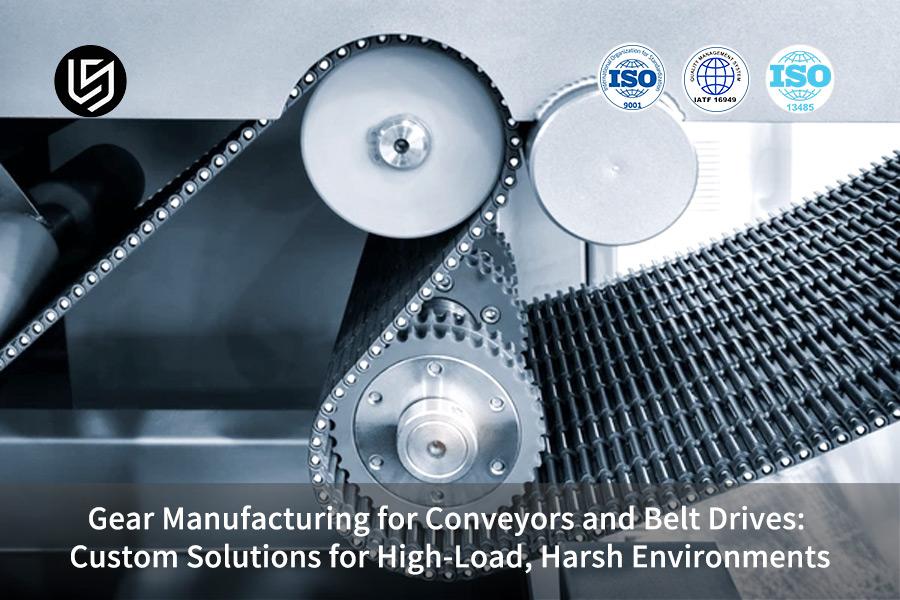
Gear manufacturing in the unforgiving environments of mining, ports, and cement is characterized by an expensive process of premature failure, in which gearboxes are immediately subjected to severe pitting and fracture. However, this costly and unforeseen process of increasing vibration and power loss, in which the cost of the failure is orders of magnitude higher than the cost of the gear, is the direct outcome of the application of the generic gear designs, which are used in the severe and very specific service cycles in which they are used.
The application adaptive gear manufacturing solution developed by LS Manufacturing, based on 15 years of experience and 100,000+ custom gear designs, eliminates this costly and unforeseen process of premature gear failure by the application of your exact failure physics, leading to measurable reliability benefits, in which the service life of the open gears in the corrosive environment of salt spray in the ports is increased from 18 months to over 5 years, and the vibration in the crusher gears is reduced by 40% over its entire service life, effectively ending the cycle of gear failure.
Gear Manufacturing For Conveyors & Belt Drives: Key Guide
| Aspect | Industry-Driven Approach |
| Demanding Operating Environment | Custom gears must function in a challenging environment, which includes high torque, shock loading, dust/debris, and misalignment. |
| Wear & Noise Mitigation | Insufficient profile accuracy, surface finish, and/or heat treat quality leads to excessive wear, pitting, and high noise levels. |
| Cost-Effective Volume Production | High unit count gears, as is typical in these applications, require a process that is optimized for cost and quality. |
| Our Focus on Durability | We focus on materials/processes like case harden steel and processes like hobbing, shot peening, and grinding to maximize gear life. |
| Process-Oriented Quality Control | We control profile, pitch, and runout to assure consistency through large gear sets, which is imperative for long-term mesh performance. |
| Customization for System Integration | We create our gears to fit your system’s exact speed ratios, center distance, and mounting requirements. |
| Outcome: Extended Service Life |
We deliver a gear machining system that transmits power with reliability, requiring little or no maintenance, resulting in reduced system downtime and overall cost of ownership. |
| Outcome: Optimized System Efficiency | We guarantee smooth, efficient, and quiet power transmission with zero energy loss due to friction or vibration, thus optimizing the performance of your conveyor system. |
We overcome the durability and reliability problems associated with gear machining systems in harsh operating conditions. Our gear machining system is built on strong material science, precision manufacturing, and quality assurance, resulting in a gear system that operates quietly, efficiently, and with long life, thus maximizing system uptime.
Why Trust This Guide? Practical Experience From LS Manufacturing Experts
There is already an abundance of literature written on gear manufacturing, so what is new here? We are practitioners, and our domain is the harsh world of conveyor gear sets and belt drives, which see gear sets fail early from extreme abrasion and shock loading. We have been solving these unique, costly problems where theoretical knowledge ends.
We have 15 years of experience, and our solutions have been tested in the field. We have improved open gear life in salt spray conditions from 18 months to 5+ years, reduced crusher vibration by 40%, and used our knowledge of materials science and tooth geometry. We have state-of-the-art manufacturing technology, including Additive Manufacturing (AM) for prototyping, and have followed best practices from industry leaders such as 3D Systems to provide optimal performance in your unique application.
Each and every one of these guidelines has been validated in over 100,000 custom gear delivery situations. In the following pages, you will learn what type of alloy is used with certain abrasives, the proper way to profile the teeth of the gear to help alleviate the startup torque, and the proper way to coat the gears. This is knowledge learned through metal, failure, and success, allowing you to bypass the trial and error process to achieve the highest level of drive system uptime.
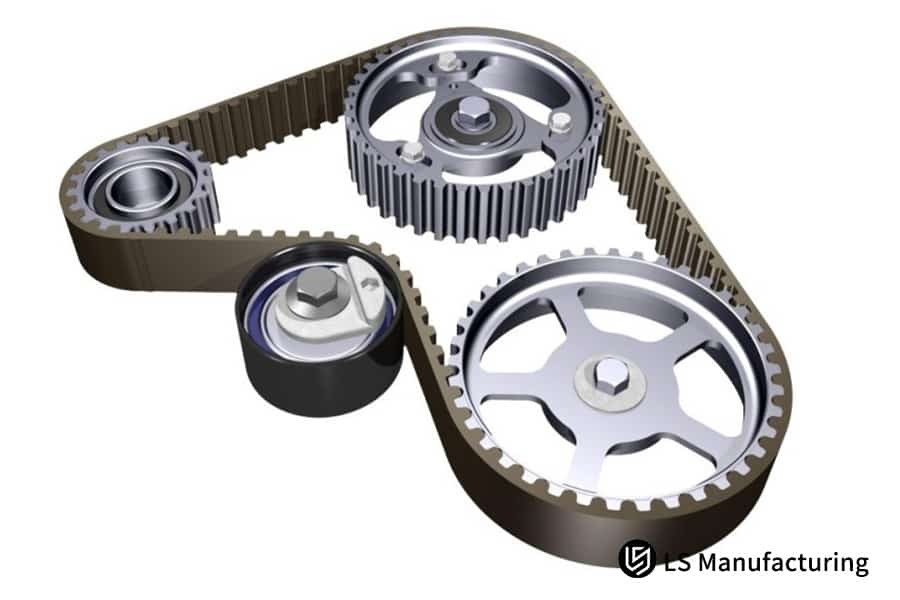
Figure 1: Gear machining heavy-duty steel alloy belt drive gears for harsh environment conveyor systems and custom solutions.
What Are The Main Failure Modes And Root Causes Of Gears In Harsh Environments?
In order to properly address the gear reliability in extreme environments, a scientific approach is required, which is achieved through a proper gear failure analysis to ensure the root cause is correctly determined, followed by the implementation of these synergized countermeasures. This document will outline our protocol to properly alleviate these compounded issues:
Diagnostic Analysis: Identifying the Dominant Failure Mode
We analyze the failures through metallographic examination, which also helps us differentiate the modes of failure, like abrasive wear, corrosion fatigue, etc. In the case of the gear in the slurry pump, we have identified the modes of failure, and it is due to abrasive wear caused by silica, but the sites of initiation are due to corrosion pits. Such precise analysis has a direct bearing on the choice of the material used in the replacement part.
Targeted Surface Engineering & Precision Machining
The surface treatment is the direct answer to the diagnosis. In the case of severe abrasion, we recommend the use of sophisticated surface treatment, like vanadium carbide coating, which imparts hardness to the surfaces that is higher than the ingested particles. Even the entire gear machining process is adapted, like the pre-machining dimensions may have to be altered based on the coating, and the gear grinding precision is also critical.
Material Synergy for Harsh Applications
We are able to select the most suitable material, e.g., case hardening steels, to produce the best combination of a tough core with a hard, durable case. The entire process is fully synchronized, with the parameters set to produce the optimal result in the final precision gear machining, post-heat treatment. In the case of the conveyor gear manufacturing, the most suitable steel alloy was selected, with a view to providing the level of impact resistance, achieved by a combination of deep case hardening and shot peening, to produce a robust structure for conveyor gear manufacturing.
Systems Integration for Operational Reality
The solution is not limited to the gear in isolation; it is the gear in its system. We look at the reality of its operation, including shock events, and specify the system to produce the level of dynamic stress. We also specify the ancillary systems, e.g., high-efficiency filtration systems with Beta₃ ≥ 200 to produce the level of abrasive contamination, and the level of corrosive environments to produce the level of corrosion, to ensure the gear is operating within a robust system.
The following document presents an engineering methodology whereby the results of the diagnostic analysis achieve a synthesized, multi-dimensional response. Our competitive advantage is the ability to achieve a problem-solving solution whereby our expertise is transferred into performance rather than parts, designed to overcome the complex problems of your most demanding applications.

How To Select And Heat Treat Gear Materials For High-Load Impact Conditions?
Success in high-impact, high-load gearing applications requires that the materials solution achieve the impossible: an engineered solution that overcomes the basic contradiction between surface hardness and core toughness. The following document presents a failure mode led methodology whereby the materials composition and thermal treatment are specified to achieve a deterministic performance gradient, beyond materials grades, into the realm of engineering prediction:
Core Strategy: Arresting Impact Fracture
- Failure Mode: Catastrophic brittle fracture under shock loading.
- Our Action: Tough alloy carburizing steels such as 17CrNiMo6 are selected with deep case hardening.
- Result: A hard surface (HRC 58-62) over a tough, ductile core (HRC 35-45) that yields to absorb energy, essential for reliable heavy duty gear manufacturing.
Core Strategy: Defeating Abrasive Wear
- Failure Mode: Severe degradation of the gear material’s surface.
- Our Action: Austempered ductile iron or high vanadium steels are selected for isothermal quenching.
- Result: This will result in an ADI matrix with high hardness of 55 HRC, with good fatigue and work-hardening characteristics for the highest wear resistance.
Core Strategy: Predictive Material-Process Pairing
- Challenge: The risk of either over-engineering or under-engineering the gear material for the particular duty cycle.
- Our Action: FEA is used to simulate the load spectra and detect areas of stress concentration, which may lead to gear material failure.
- Result: This will validate the recommendation for the best alloy-process pairing, thus streamlining the efficient gear material selection with precision gear machining.
Core Strategy: Integrating Manufacturability
- Goal: Minimize total cost and lead time.
- Our Action: Design heat treatment to control distortion, simplify final gear grinding operations, and finish gear machining.
- Validation: To use NDT techniques such as micro-hardness mapping to validate the integrity of the core material and the case material of the gear for gear assembly.
This shows our technological authority by showing how our knowledge of material science relates to gear failure in the real world. Our approach is differentiated in the market by our ability to analyze the load spectra and validate our approach to the microstructure problem, ensuring gear life in the most demanding high load gears, from design to machining completion.
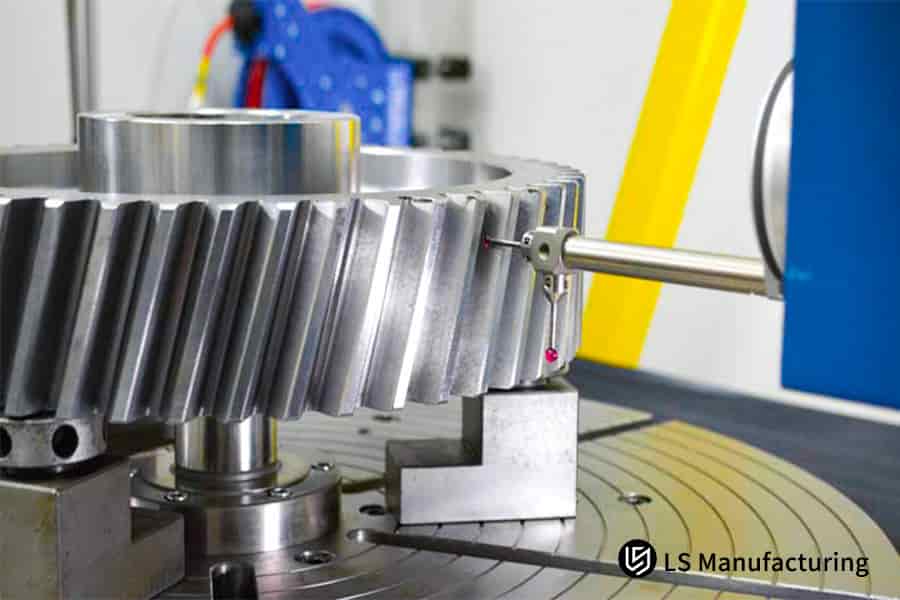
Figure 2: Measuring a high-strength alloy helical gear for harsh-environment conveyor drive solutions and services.
Which Surface Strengthening Techniques Can Significantly Enhance The Wear Resistance And Fatigue Life Of Gears?
The gear life is largely dependent on the surface integrity of the gear. The selection of the gear surface hardening technologies is a critical engineering decision to minimize gear failures such as pitting, wear, and bending fatigue. In this document, a comparative analysis of the gear surface hardening techniques will be presented, providing a guideline for definitive gear life extension.
| Technology | Core Mechanism | Key Performance Outcome | Optimal Application Context |
| Carburizing & Quenching | Insertion of carbon into the gear, followed by quench hardening. | Produces a hard gear surface and a tough core, with 58-62 HRC. Used as a basis for manufacturing high-strength custom industrial gears. | General high load gear applications, where gear surface and core materials optimization is required. |
| Carbonitriding | Carbon and nitrogen are diffused into the gear surface. | Increases gear surface hardness (≥750 HV) and resists scuffing and wear. | Low-speed, high load, or poorly lubricated gears, prior to gear grinding operations. |
| Induction Hardening | Utilizes high-frequency electric current to rapidly heat the gear surface. | Increases bending fatigue resistance up to 30%. | Large module gear applications where gear surface hardening minimizes custom industrial gears distortion. |
| Laser Cladding | Material is fused to the gear surface, providing extreme abrasion resistance. | Produces extreme gear surface abrasion resistance (60-65 HRC) as a gear armor coating. | Severe gear surface abrasion, special finish gear machining necessary. |
Our methodology meets the client’s basic needs by providing a validated, optimum process specification from a defined failure risk. We provide technical authority by prescribing engineered combinations, e.g., carbonitriding with peening, which has been proven to extend contact fatigue life 2.5x, ensuring predictability and quantifiability for gear life extension in high-value, competitive applications.
How Can The Load Distribution And Stress Concentration Of Heavy-Duty Gears Be Optimized Through Shape Design?
The involute profile, when subjected to high loads, shows deformation, resulting in severe edge stress concentration, leading to premature failure. In this document, a systematic approach has been provided to load distribution optimization using precision gear tooth modifications, transforming the design from an ideal profile to a performance-optimized profile, capable of withstanding deformation and errors. The theoretical approach has been provided by the following steps:
Precise Tooth Profile Modification to Mitigate Edge Contact
In order to compensate for the deflection-caused interference in the mesh, small amounts of tip and root relief (5 to 15 μm) will also be provided. The gear tooth modification is design-calculated depending on the loading conditions and material properties, ensuring the elimination of the impact at the start and the end of the mesh cycle. This will ensure a smoother loading and reduction of dynamic loads up to 20%, resulting in a reduction of bending stresses at the critical tooth root fillet, as per our precision gear machining standards.
Drum-Shaped Lead Crowning for Uniform Load Distribution
In order to reduce the effects of bending in the shaft and inaccuracy in the alignment, a controlled barrel profile, also called crowning, is introduced on the face of the tooth (0.01 to 0.03 mm). This gear machining ensures the load is centralized on the gear, thus avoiding any destructive edge loading and pitting, especially in wide face width belts used in belt drive gears. The amount of crowning is calculated using FEA simulation under worst deflection conditions.
Load-Adaptive Modification via Integrated Simulation
For critical applications, a closed-loop system is used, where the FEA and actual gear machining process data are included. The proprietary load spectrum is then used to simulate the exact deformation of the mating gear set under operating conditions. The software then creates a compensated modification curve, which is then executed through the CNC-controlled gear machining. This data-based approach has the potential to reduce the maximum contact stress levels by 15 to 25 percent compared to conventional modifications.
The documentation is a clear example of the solution-oriented approach of the engineer, from the general theory to the deployable calculation-based approach to the solution. The fusion of prediction and precise manufacturing techniques is the essence of our competitive advantage, ensuring durability and performance in the most demanding power transmission applications.
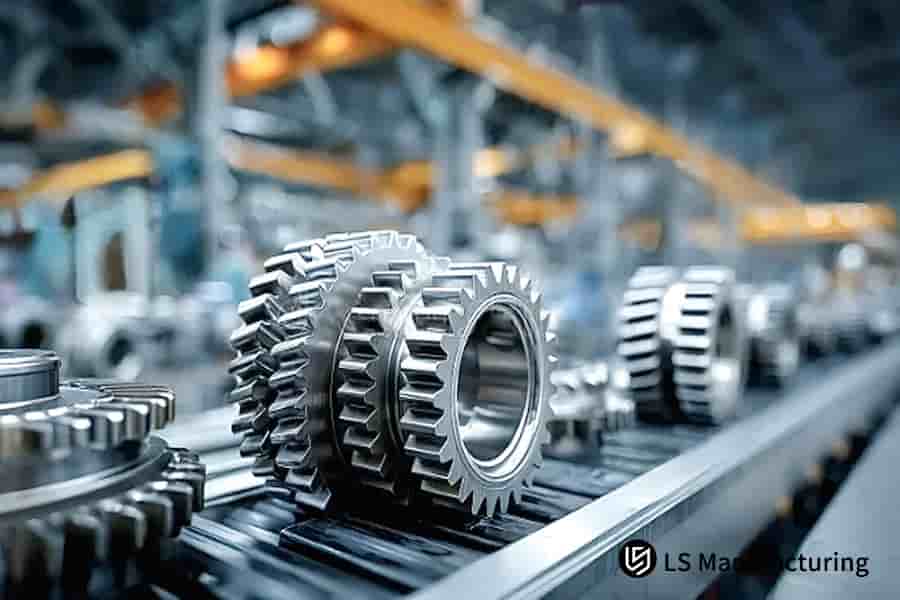
Figure 3: Fabricating high-load precision steel gears for industrial conveyor drive solutions in harsh environments.
LS Manufacturing Mining Industry: Customized Project For Anti-Particle Wear Of Drive Gears For Large Mining Conveyor Machines
In the environment of the open pit mining, the consequence of the failure of the components is quite large. This particular document will discuss the specifics of the particular high-value LS Manufacturing mining conveyor case, in which we were able to provide a solution to the client in the mining industry for the critical component of the conveyor system, which has significantly increased the life of the particular component.
Client Challenge
The challenge for the client was the issues associated with the failure of the custom drive gear, module 22, 2.4m diameter, which is part of the main conveyor system. In the environment of the coal dust with the high humidity, the original gear was experiencing extreme wear, in excess of tolerance, after 8 months in service. Every time the gear is replaced, the production line is down for 36 hours.
LS Manufacturing Solution
Our fast precise analysis played an essential role in the development of the engineered solution for the abrasive wear solution, which involved the improvement of the material using the 17CrNiMo6H material, deep carbonitriding with a case depth of 2.2mm, and the HVOF-sprayed tungsten carbide coating, with a hardness of more than HV1100, as the key element of the engineered solution. The precision gear machining and gear fabrication capabilities enabled us to optimize the substrate for coating adhesion and reliability.
Results and Value
The new gear has been in operation for over 36 months, and the gear is experiencing only 15% of the original gear’s wear rates. This has resulted in a savings of 120 hours of downtime per year for this particular line and a savings of 70% of spare parts costs for this particular line. The project has resulted in a rapid return on investment, establishing a new benchmark for maintenance.
This case illustrates our ability to address complex, costly problems in the industrial sector with deeply analyzed, custom engineering solutions. By combining advanced heat treatment, state-of-the-art surface solutions, and high-tolerance gear machining, we provide precision solutions that set the standard for performance and total cost of ownership in the most demanding markets.
Stop replacing gears every few months. Our engineered solutions fight extreme abrasion to deliver years of reliable service.

What Unique Challenges And Protective Strategies Do Open Gear Transmissions Face In Harsh Environments?
Open gearing is used in the most severe industrial environments, where exposure to contaminants, poor heat dissipation, and lubricant wash-off cause rapid wear. This document outlines the methodical approach to solving the problem, which directly addresses the root cause of the problem through the integration of materials science and precise application, effectively converting the open gearing into a reliable component. The challenges that have been addressed in the problem solution include:
Tenacious Lubricant Formulation
- High-Adhesion Grease: Polymers and solid particles, such as MoS2, form a tenacious film.
- Extreme-Pressure Additives: Prevents welding of metal surfaces under shock load conditions, ensuring reliable harsh environment lubrication.
- Contaminant Tolerance: Formulation encapsulates contaminants, protecting the critical gear machining surfaces.
Precision Automated Lubrication
- Metered Dosage: Ensures a consistent and optimum level of supply, avoiding waste and deprivation.
- Active Purge Cycle: Cleans out old grease and wear particulate, which is vital in the open gearing protection.
- System Synchronization: Integrates with conveyor drive solutions for operational demand-based application.
Integrated Physical Barrier Design
- Custom Non-Metallic Guards: Protects against large contaminants and allows access for maintenance.
- Sealing & Alignment: Retains the lubricating film and gear tooth integrity.
- Synergistic Defense: Complements lubrication to form a complete protective system.
In the following documentation, the reader will learn about the description of a defense-in-depth solution. The technological foundation of the solution is the synergistic combination of uniquely developed materials, precise automated technology, and custom physical design. What differentiates us from the competition is the solution, which is a total and engineered answer to the issues of wear in the long-life precision gear machining investment.
How To Assess A Gear Supplier's Capability For Heavy-Load, Harsh Condition Problem-Solving?
A supplier capability assessment for the selection of key drivetrain gear machining component partners must look beyond the surface. This framework is meant to guide the evaluation of the key competency of the supplier in addressing complex, real-world failure modes under severe operating conditions. The evaluation must focus on the following three technical pillars, as indicated in the table below.
| Assessment Pillar | Key Verification Point (Stated as a Single, Direct Sentence) |
| Failure Analysis & Root Cause Capability | Obtain a metallurgical report on your failed component, including grain structure, hardness gradient, crack initiation, and accurate root cause. |
| Process Database & Simulation Proficiency | Assess available process packages for your application, including specific duty cycles such as shock, wear, and corrosion, and review FEA reports for tooth root bending or contact stresses. |
| Physical Testing & Validation Infrastructure | Ensure your partner owns gear fatigue test rigs with closed-loop power or pulsator test capabilities and access to similar application trials. |
The real value of a partner in the gear manufacturing services is best demonstrated through their systematic approach to problem-solving, from deep dive failure analysis through to empirical validation. This document focuses on verifiable evidence over claims, providing a pragmatic resource for high-risk procurements. The document helps ensure the best partners for engineering support and gear machining are chosen based on a culture of validation, reducing lifecycle risk in mission-critical applications.
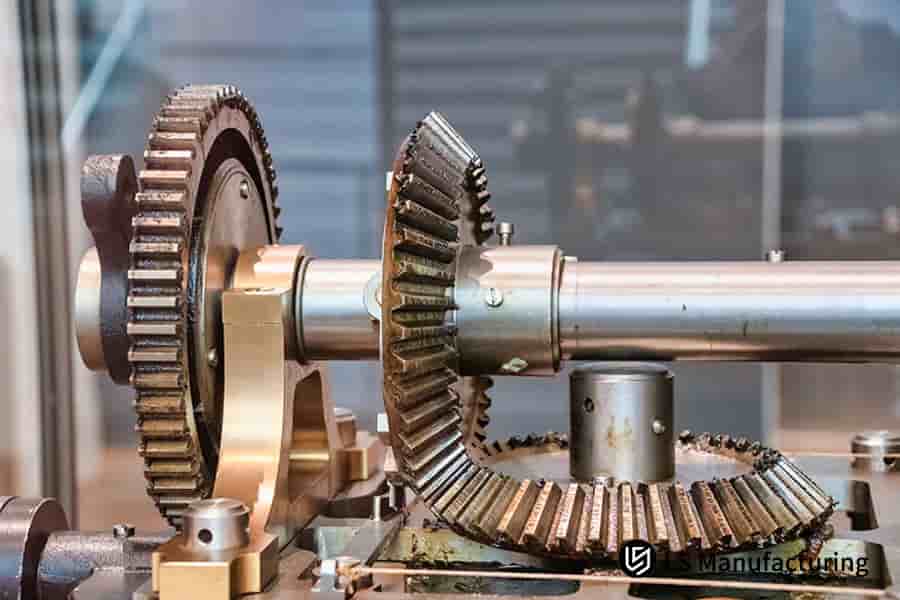
Figure 4: Precision machining high-load steel gears for harsh-environment conveyor drive solutions and services.
Why Is LS Manufacturing Regarded As The Solution To Reliability Issues In Extreme Conditions?
In selecting the appropriate partner for extreme-duty applications, the emphasis must now be placed upon integrated reliability engineering partnership rather than the simple provision of components. LS Manufacturing accomplishes this by "embedding" the concept of reliability into each step of the process, thereby changing the way in which performance risk is managed and eliminated. This is accomplished by the following three disciplines of our methodology:
Proactive Risk Mitigation Through a Living Failure Database
We maintain our own database of field failure analyses, which allows us to anticipate many common and uncommon failure modes even before the design stage. For example, the experience of subsurface-initiated pitting in a mining gearbox was directly informed a revised precision gear machining and heat-treatment specification for the new project, thereby avoiding one of the expected failure modes in the first place.
2. Controlled Quality Through Vertical Technical Integration
Critical quality parameters are controlled from inside, or through strategic alliances, from specification of materials through final finishing. This allows for tailoring of the process, for instance, to relate the carburization depth with the hard gear machining step to obtain optimal states of residual stress. The final result is quality that is traceable, with each step of the process engineered for the end application, as opposed to simply conforming to an average.
Performance-Based Partnership with Quantified Outcomes
We extend beyond traditional warranties to provide data-based commitments to performance criteria within the product life cycle, such as our B10 life or energy efficiency rating. This model aligns the success model with yours, sharing the benefit of increased performance gains with you. It incentivizes our team to deploy every technical resource—from advanced simulation to proprietary gear grinding services—to exceed targets, directly enabling significant lifecycle cost reduction.
The decision of why choose LS Manufacturing is ultimately a decision for a data-driven, risk-managed development pathway. Our position is based upon actual results, not claims. This document represents a concrete, action-oriented philosophy regarding how to achieve absolute reliability, making it a must-read document for the engineering executive concerned with performance and cost of a system operating in the most extreme conditions of operation.
FAQs
1. What is the typical lead time for a set of custom heavy-duty gears?
The general time frame, including material procurement, is 10 to 16 weeks, depending upon the intricacy of the gear, material availability, and the heat treatment process. In the case of replacement parts, there exists an emergency process.
2. What are the maximum gear machining dimensions and precision you can achieve?
We are capable of machining large gears up to 5 meters in diameter and module up to 40, with precision up to Quality 10 as per AGMA standards, equivalent to GB Class 7-8. For oversized gears, machining and repairing services are available on site.
3. How do you ensure perfect matching and installation of custom gears with existing equipment?
We require information from our clients with regard to the parameters of the mating gear, the drawings of the housing, etc. For critical applications, we also offer the capability for manufacturing the "matched gear pair." Inspection of the contact patterns is also possible, prior to shipment from our factory.
4. How can we evaluate costs more accurately during the quotation stage?
Please provide us with as much information as possible with regard to your application, such as load spectrum, environment, failure history, etc. Existing gear drawings or samples will also be useful for us to understand your application and evaluate costs more accurately when you request a quote.
5. Do you provide gear repair and remanufacturing services?
Yes. The repair methods we adopt, such as laser cladding and overlay welding, will make the gear drive performance almost at the same level or even better than the original, at only 30% to 60% of the cost of a new gear drive, which is a very cost-effective solution.
6. How do you protect the security of our equipment drawings and data?
The base of our collaboration is the legally binding NDA agreement. The data management system is a physically isolated system, and the data is encrypted. Only the key team has access to the information, thus ensuring the security of the business secrets.
7. Beyond the gear itself, do you provide improvement suggestions for the drive system?
Yes. We are solution experts in gear drives, and we can provide suggestions regarding the improvement of the lubrication system, the improvement of the seals, or even the condition monitoring system, along with the gear drive customization.
8. How do we initiate a custom gear project?
We have an application engineer who we would appreciate you to contact, and we will be happy to receive your application requirements. This will be followed by an in-depth interview, and we might request failed components for analysis. After this, we will be able to provide you with our Root Cause Failure Analysis and Preliminary Solution Proposal Report.
Summary
The manufacturing of reliable gears for harsh conditions, high loads, and conveyor systems is considered a systematic challenge that requires integrating multiple disciplines to solve specific failure modes. This requires a partner who is not only equipped with state-of-the-art manufacturing technology but is also sufficiently knowledgeable to learn from past failures, which must be translated into prevention design solutions.
If your conveying or drive system is having problems with frequent gear failures, unexpected downtime, and high replacement costs, then this is the best time to seriously tackle the improvement of the system. We would highly recommend that you immediately provide us with the information about your gear problems or failing components, and the drive reliability gear machining expert team at LS Manufacturing will provide you with a FREE Root Cause Failure Analysis and Preliminary Improvement Solution Assessment.
Conquer extreme wear and failure in harsh environments with engineered gear solutions designed for your specific operating conditions.
📞Tel: +86 185 6675 9667
📧Email: info@lsrpf.com
🌐Website: https://lsrpf.com/
Disclaimer
The contents of this page are for informational purposes only. LS Manufacturing services There are no representations or warranties, express or implied, as to the accuracy, completeness or validity of the information. It should not be inferred that a third-party supplier or manufacturer will provide performance parameters, geometric tolerances, specific design characteristics, material quality and type or workmanship through the LS Manufacturing network. It's the buyer's responsibility. Require parts quotation Identify specific requirements for these sections.Please contact us for more information.
LS Manufacturing Team
LS Manufacturing is an industry-leading company. Focus on custom manufacturing solutions. We have over 20 years of experience with over 5,000 customers, and we focus on high precision CNC machining, Sheet metal manufacturing, 3D printing, Injection molding. Metal stamping,and other one-stop manufacturing services.
Our factory is equipped with over 100 state-of-the-art 5-axis machining centers, ISO 9001:2015 certified. We provide fast, efficient and high-quality manufacturing solutions to customers in more than 150 countries around the world. Whether it is small volume production or large-scale customization, we can meet your needs with the fastest delivery within 24 hours. choose LS Manufacturing. This means selection efficiency, quality and professionalism.
To learn more, visit our website:www.lsrpf.com.