English



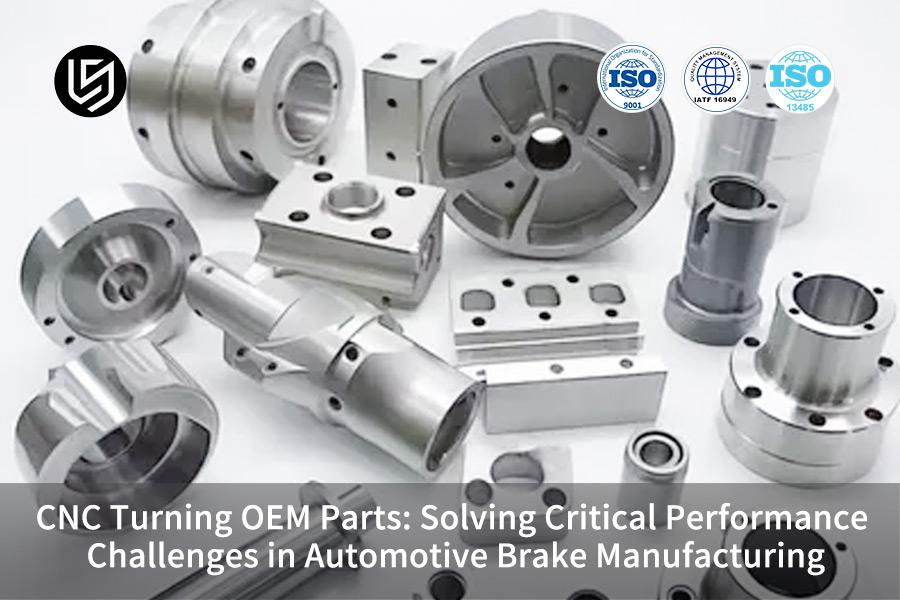
CNC turning OEM parts such as brake discs and calipers involves major challenges. These include thermal-induced thickness variation exceeding ±0.05mm, the contradiction between 30% weight reduction and the maintenance of ≥350MPa strength of aluminum, and seal groove tolerances as small as ±0.015mm that may result in fluid leakage and compromise vehicle safety.
We address these problems by adopting a holistic "material-process-inspection" approach. Our solution, which has been developed through over 200+ mass, production projects, applies proprietary thermal, managed turning and FEA-based strategies to guarantee that parts not only conform to print specifications but also continually surpass the demanding performance criteria of SAE J standards for ultimate reliability.
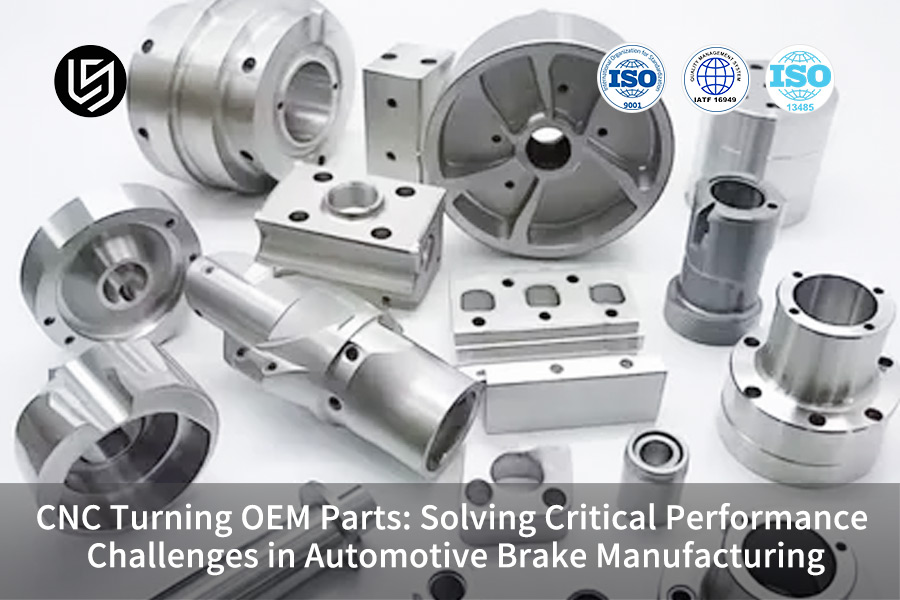
CNC Turning For OEM Production: Critical Factors
| Consideration | Expert Analysis |
| Volume-Cost Paradox | High-volume OEM orders fail to realize cost savings that were forecasted because of poor CNC turning process design and material waste. |
| Supply Chain Fragility | Depending on multiple vendors for turning, finishing and assembly causes quality issues and time delays. |
| Design-For-Manufacture Gap | OEMS' designs generally do not incorporate turning-specific improvements, thus continuing unnecessary cost and time cycle. |
| Our Integrated Solution | We are vertically integrated from raw material to finished product, including turning, milling, finishing, and assembly. |
| Process & Tooling Optimization | Engineering works specifically on every component to shorten cycle time, extend tool life, and increase material yield. |
| Quality & Consistency Protocol | Statistical process control (SPC) and automated inspection guarantee lot-to-lot consistency that is of paramount importance for OEM assembly lines. |
| Result: Total Cost of Ownership | Enables 15-30% lower total cost through combined logistics, less handling, and production efficiency optimization. |
| Result: Supply Chain Simplicity | It operates as a single responsible party, thus procurement is streamlined, quality traceability is enhanced and delivery schedules are secured. |
We solve the core challenges of cost, complexity, and consistency in outsourced CNC turning for OEMs. Our vertically integrated service streamlines your supply chain, optimizes CNC turning parts for manufacturability, and guarantees reliable volume production. This reduces your total cost, mitigates supply risk, and delivers the quality consistency required for seamless assembly line integration.
Why Trust This Guide? Practical Experience From LS Manufacturing Experts
There are many resources that talk about CNC turning OEM parts, but only a handful of them are based on actual shop floor experience. We are working where theoretical tolerances are challenged by the real situation of thermal fade in brake rotor turning and strength-weight conflicts in aluminum calipers. This is where knowledge is applied under pressure, a place where even a micron's deviation can be a matter of safety.
We followed the path to perfection through continuous application of our processes. We follow the best practices as supported by the Society of Manufacturing Engineers (SME) and, at the same time, apply eco, friendly methods that are in line with the Environmental Protection Agency (EPA) guidelines. Each venture, whether it is dealing with cast iron distortion or attaining Ra0.4μm finishes, helps us to build an empirical playbook for precision CNC turning.
This publication is a summary of the experience that the team had to endure through to gain that knowledge. We disclose the exact parameters and the problem-solving reasoning that have been proven by the manufacturing of thousands of critical brake components. The knowledge contained herecovering thermal management and material strategyare the ones used daily for performance and reliability.
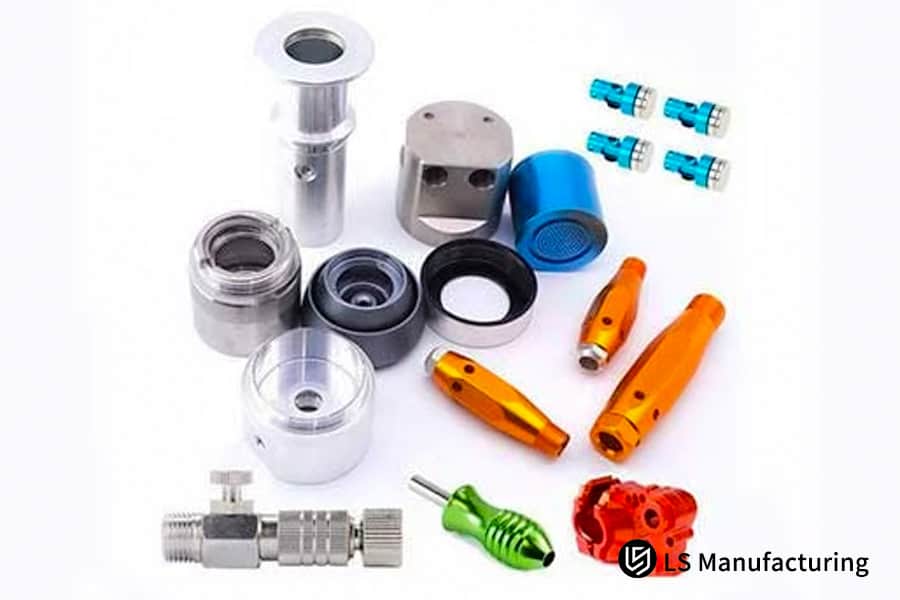
Figure 1: Turning multi-color high-precision metal brake components for OEM automotive parts manufacturing and assembly.
How To Control The Thermal Fade And Deformation Of Brake Discs Through CNC Turning Process?
Traditional machining alone has not been able to address metallurgical instability of brake rotors under extreme thermal cycling, therefore it results in degrading the performance. Our approach, however, takes fundamental contrition of the problem and therefore the solution involves the integration of the controlled machined stress and the optimized microstructure for the long-term stability:
Implementing High-Pressure Interrupted Cutting for Thermal Control
For brake rotor turning of GG25 grey iron, we use a high-pressure interrupted cutting strategy. Taking into account parameters such as a speed of 180 m/min and a feed of 0.15 mm/r with ≥7MPa internal coolant, this thermal management approach actively dissipates heat during the CNC turning process which prevented localized overheating that changes the material's metallurgy at the friction surface.
Inducing a Compressive Stress Layer for Enhanced Durability
The finishing pass makes use of a -5° negative land insert. This specific tool geometry is intended not only for cutting but also for plastically deforming, the surface layer in a very thin layer (about 0.05mm deep) induces a beneficial compressive residual stress. This layer is in opposition to the tensile stresses from the heat generated during braking and thus prevents thermal crack initiation and growth.
Validating Performance with Rigorous Bench Testing
The effectiveness of the precision CNC turning method described here can be measured. Internal dynamometer testing, which equates to over 150, 000 km of harsh usage, has shown TV (thickness variation) values lying in the range of ±0.02mm. This is 60% better than the common ±0.05mm tolerance, the result of which is less fade of pedal travel and twice the resistance to thermal cracks in everyday situations.
This method of producing CNC turning OEM parts is more than just about conforming to the basic shapes. Our proven, physics-based documented method of controlling stress from machining is an engineering solution that can be counted on for meeting the high-performance turning requirements. It offers safety and durability of brakes benefits that are measurable and a generic process cannot produce.

How To Achieve A Balance Between Lightweight And High Strength In Aluminum Alloy Brake Calipers?
The fundamental problem is how to make a big difference in weight reduction of A356-T6 aluminum brake calipers while keeping the structural strength and fatigue life of the caliper unchanged. LS Manufacturing solves this problem by a combination of CNC turning design optimization, precision manufacturing, and post-processing strengthening, which together make a perfect fit:
Topology-Driven Lightweight Design Optimization
- Simulation-First Approach: Perform topology optimization along with FEA based on the 3D model provided by the customer to find out the stress distribution under working loads.
- Strategic Material Removal: Through a load analysis, find the areas of the component that carry less load and can be easily subjected to thinning. The analysis suggested a local wall thickness reduction from 4mm to 2.8mm.
- Validated Performance: To achieve the automotive OEM parts manufacturing. requirements, the optimized geometry safety margin is in line with the basic certification standards.
Precision, Low-Stress Machining for Thin-Wall Structures
- Mitigating Machining Damage: One way is to use "low-stress" machining parameters during brake caliper machining i.e. the spindle should rotate very fast but the tool should have a very shallow depth of cut.
- Key Processes: It is really important that this approach is critical to CNC turning operations and milling to avoid work hardening and residual stress, especially in thin-walled sections.
- Ensuring Integrity: Precision CNC turning and milling ensure that the material's innate nature is maintained, which is a major factor for the next fatigue performance.
Localized Surface Enhancement Post-T6 Heat Treatment
- Targeted Strengthening: Micro-shot peening should be utilized selectively on the areas of highest stress concentration such as the edges of the piston diameter.
- Creating a Compressive Layer: The treatment creates a compressive residual stress layer within the material surface that significantly enhances its fatigue strength.
- Final Machining Step: After the strengthening phase in the final CNC turning and finishing operation, the product is brought to required dimensional standards.
Substantial Weight Reduction with Certified Strength
- Proven Results: The change, in, design offered a 28% drop in weight for a particular EV caliper.
- Rigorous Testing: The part was able to withstand very demanding proving tests i.e. ≥1 million pressure cycles for hydraulic fatigue and a 1.2x maximum brake pressure burst test.
This documentation highlights our technical expertise in addressing the fundamental contradiction between a lightweight design and durability. We offer value through a well, controlled, stepwise procedurefrom simulation, driven design and damage-controlled CNC turning and milling to targeted metallurgical enhancementthat results in verified, high-quality components capable of satisfying stringent automotive OEM parts manufacturing standards.
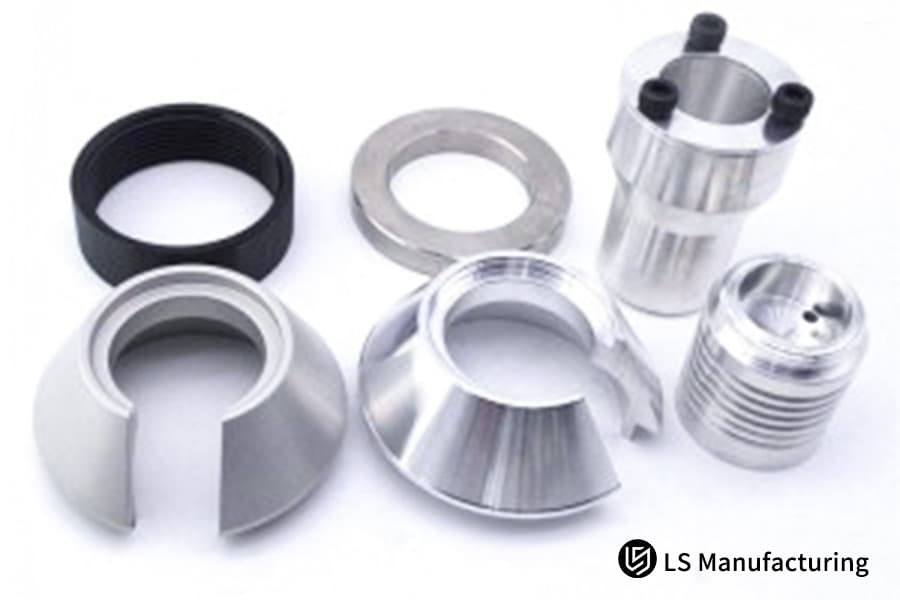
Figure 2: Turning precision alloy steel components for automotive brake system OEM manufacturing and quality control.
Why Is The Machining Of The Sealing Groove Of The Brake Piston A "Hotspot" For Leakage Risks?
The sealing groove in a brake piston is the most probable zone for a leakage origin after CNC machining brake components. This document explains the technical difficulties and the machining solution that we have designed, which allows us to achieve an excellent sealing surface quality and ensure long-lasting performance even in extreme conditions. We have also briefly covered the main hazards along with our risk prevention methodology:
| Risk Dimension | Technical Challenge | Our Machining Solution & Validation |
| Dimensional Accuracy | A groove width/depth tolerance within ±0.015mm is necessary to ensure proper seal fit and compression. | We come up with dimensionally accurate parts by using a precision turning sequence: rough turning, finishing with a custom PCD form tool, and final sizing. |
| Form/Geometric Accuracy | A sharp, clean root radius (R<0.1mm) is critical to avoid seal extrusion and nibbling. | To prevent deformation, a dedicated CNC turning process employing a sharp CBN scraping tool at an extremely low feed (0.02 mm/rev) is able to clean the groove root perfectly. |
| Surface Integrity | Micro-tears or inconsistent roughness (Ra) on groove flanks and base may contribute to leak paths. | After machining, we check sealing surface quality by white, light interferometry, confirming Ra remains stable at 0.3-0.4µm. |
| Performance Validation | It is vital that the groove remains intact through thermal cycling and exposure to fluid. | Temperature shock testing (-40°C to 140°C) results of our processed pistons confirm their leak rate to be less than 0.05 cc/hr. |
We address the critical leakage problem in brake component manufacturing by our unique blend of controlled multi-stage CNC machining, precision tooling, and metrology-validated surface finishing. This strategy not only ensures reliability of components used in the toughest automotive and aerospace environments but also sets a clear and final technical solution for critical sealing interfaces.
How Can 100% Quality Traceability And Consistency Be Guaranteed In The Mass Production Of Brake Components?
Maintaining the highest level of product consistency and implementing full traceability are the major technical and logistical challenges faced by a safety-critical automotive parts manufacturer over a period of high production volume. This paper describes a holistic approach adopted to ensure that every single piece is accounted for and made under a strict statistical process control environment:
Unique Digital Identity at Source
As a first step, permanent Data Matrix code marking (DPM) is carried out directly on the component right after the main precision CNC turning operations. This enables a unique digital passport of the item-level traceability far beyond traditional batch-level tracking from the very beginning of its value stream.
Integrated Data Architecture for Full Lifecycle History
The DPM code is connected to a detailed digital record that includes the entire material melt lot, each machining parameter (e.g., actual spindle speed, feed rate for each CNC turning operation), and the full final inspection report with 30+ key dimensions. In this way, a seamless data chain is formed.
Real-Time SPC for Proactive Quality Control
Our quality control system is able to carry out real, time Statistical Process Control (SPC) on the critical characteristics measured during automated CNC turning and post-process gauging. It is capable of recognizing trends and determining CpK values, and will automatically flag and quarantine the 50 most recent parts if the pre-set control limits (e.g., CpK ≥ 1.67) are in danger of being exceeded.
Forward and Backward Traceability to Satisfy Standards
The system features forward and backward traceability: backward to the raw material batch and forward to the specific vehicle identification number (VIN). The system thus serves as auditable compliance proof with IATF 16949 and other rigorous regulatory frameworks for automotive parts manufacturer requirements.
This practice elevates quality control from a sampling, insepection-based approach to a data-driven, preventative standard. It equips manufacturers in competitive, high-stakes segments with a surefire way to come up with traceability solutions and guarantee absolute production consistency, thus turning the compliance requirement into a definite competitive technical advantage.
How To Match Specific Turning Strategies With Different Braking Materials?
The unique properties of modern brake materials demand specialized machining approaches to ensure surface integrity, tool life, and cost efficiency. This document details our material-specific machining methodology for CNC machining for automotive components, translating material science into executable high-precision CNC turning strategies to solve common production challenges:
| Brake Component Material | Primary Machining Challenge | Our Specialized Machining | Strategy Validated Outcome |
| Compacted Graphite Iron (CGI) Brake Disc | Controlling thermal plastic deformation during finishing to preserve the surface integrity. | High-speed CNC turning (Vc=250 m/min) with SiAlON ceramic inserts takes advantage of their hot hardness. | Ensures the best surface finish and dimensional stability of components for high- performance automotive brake machining. |
| 30CrMo Alloy Steel Brake Drum | Trying to reduce built-up edge (BUE) due to toughness of the workpiece resulting in poor finish and high tool wear. | Using PVD AlTiN-coated carbide inserts combined with MQL (Minimum Quantity Lubrication) to prevent adhesion. | Successfully inhibits BUE generation, thus maintaining consistent precision turning quality and tool life elongation. |
| Aluminum Silicon Carbide (AlSiC) Composite Caliper | The main problem here is handling the severe abrasion caused by SiC particles, which wear out standard tools very quickly. | Using Polycrystalline Diamond (PCD) inserts with a controlled depth of cut > SiC particle size to prevent pull-out. | Tool life increases by 20 times compared to an 8 times higher insert cost, thus the overall CNC turning solutions cost per part is reduced. |
By leveraging our proprietary material database, we select the best tooling and parameters to address the critical problems of wear, adhesion, and surface quality in brake component manufacturing. Such a data-driven CNC process optimization gives confidence, cost-effectiveness, and faster time to market for the most demanding automotive and performance applications.
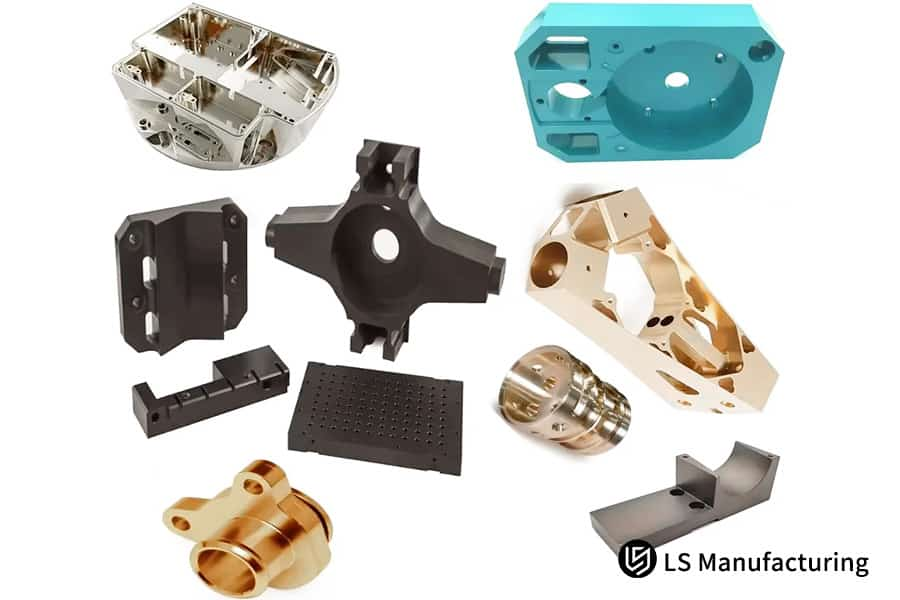
Figure 3: Machining high-tolerance alloy rotor and caliper components for automotive OEM manufacturing systems.
LS Manufacturing (NEV): Integrated Aluminum Brake Caliper Mass Production
This LS Manufacturing case study reflects our offering of an integrated machining solution for a flagship aluminum brake caliper of the leading EV manufacturer. It talks about how we faced the challenges of lightweighting, thin-wall machining, and hydraulic integrity on a hydraulic component, thus enabling agile prototyping and production:
Client Challenge
In order to achieve 35% weight reduction, the client wanted a monobloc rear brake caliper, forged out of 7075-T651 aluminum. The complicated internal oil gallery had a minimum wall thickness of 2.5mm. Traditional casting and machining could not guarantee gallery sealing; Furthermore, they couldn't achieve the weight target which made the vehicle performance and development timeline risky.
LS Manufacturing Solution
We suggested the manufacture of components from a solid forged billet. With the use of a 5-axis mill-turn center, we completed all precision CNC turning and milling operations in a single setting. To the thin-wall areas, we applied an active chatter suppression system based on piezoelectric sensors, which constantly changes RPM for the best result. A specially made internal-cooling fixture limited heat distortion, thus performance and geometric accuracy were dependable.
Results and Value
By the seamless integrated CNC turning and milling process, the final part passed all hydrostatic tests with no leakage and got 38% weight reduction. The customer's vehicle launch was facilitated as we brought the project to them 20% quicker than their initial schedule, and they now have a validated high-performance manufacturing solution for critical chassis components.
This case illustrates the scope of our capabilities, from material science to advanced process integration. We are committed to helping you break through normal engineering restrictions such as thin-wall instability and thermal problems, resulting in the creation of innovative manufacturing solutions for the stringent needs of automotive and mobility applications of the future.

How To Achieve A 15% Reduction In Unit Cost Through Production Line And Tooling Optimization?
For CNC turning OEM parts manufacturers, sustained competitiveness demands rigorous cost optimization without compromising quality or production efficiency. This report records a systematic and proven approach that was able to resolve these interconnected issues simultaneously and achieve a 15% cost decrease per single piece for a brake piston component that was being produced in high volumes. The resolution was based on 3 main areas of integrated technical intervention:
Integrated Manufacturing Cell Design
- Challenge & Objective: Eliminate the time and the handling that do not add value between the separate operations.
- Our Implementation: We changed the layout from a functional job-shop to a dedicated U-shaped cell.
- Process Integration: We pretty much combined CNC turning, automated deburring, washing, and laser measurement stations into one line.
- Material Flow: We used a programmable conveyance system to do a single-piece flow, which drastically reduced WIP.
- Result: Total production cycle time was cut down by 30%, and we saved a lot of space on the shop floor.
Data-Driven Tool Life and Process Management
- Challenge & Objective: We wanted to get rid of scrap caused by unexpected tool failure and make machining quality more stable.
- Our Implementation: Instead of fixed-interval tool changes, we put in a condition-based monitoring system.
- Data Foundation: Sensors which record spindle power, acoustic emission, and tool vibration were put in to gather real-time data.
- Wear Modeling: We made a set of exclusive algorithms that associate sensor data with actual flank wear for critical CNC turning precision parts.
- Control Integration: The system initiates a tool change or adjusts the process parameters automatically before a failure.
- Result: By reducing tool-related scrap rate to 0.1%, we were able to have consistent quality for high-volume CNC turning.
Closed-Loop Cutting Fluid Management System
- Challenge & Objective: We aimed to keep the coolant from deteriorating and lower the costs of hazardous waste disposal.
- Our Implementation: We dismantled the individual sumps and replaced them with a centralized, automated filtration and treatment system.
- Core Technology: Used a high-speed centrifugal separator to separate tramp oil with minimum contamination, and fine filtration (<10µm) was utilized to remove solid particulates.
- Condition Monitoring: Integrated pH and concentration sensors with automated dosing for precise fluid maintenance.
- Waste Minimization: The regeneration of the fluid kept the same fluid three times longer, thus, greatly decreasing the needs of procurement and disposal.
- Result: The fluid, waste management expenses and the costs of operation machine reliability, plus a better atmosphere in the factory floor were saved with the total savings of six figures annually.
This example point out that the real cost optimization are coming from a detailed, physics-based understanding of the whole machining ecosystem. Our capability lies not in formulating generic advice but in implementing a validated methodology from CNC turning automation and predictive tool algorithms to advanced fluid chemistry managementthat through accurate technical execution yields tangible, bottom-line results.
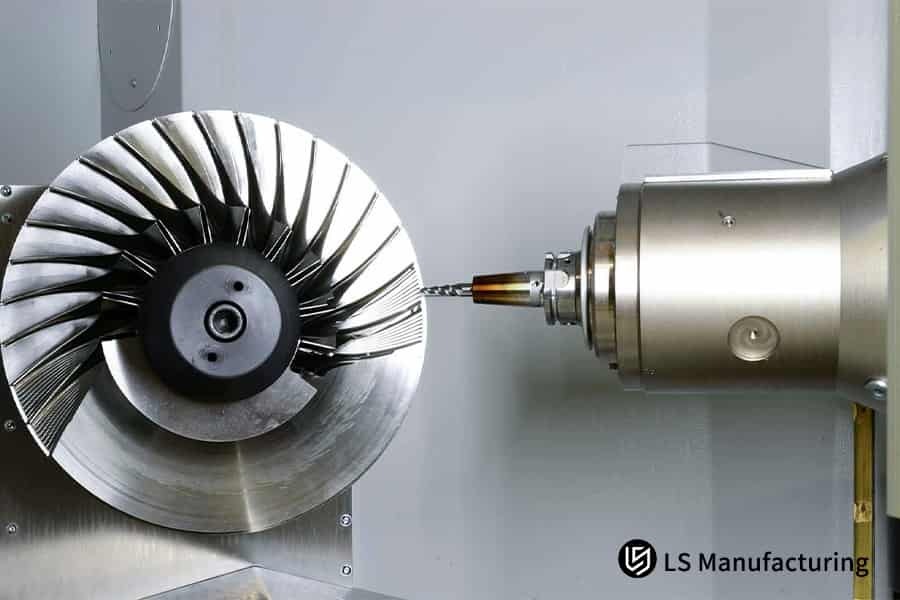
Figure 4: Machining high-tolerance alloy brake caliper components for automotive brake machining and assembly systems.
What Core Capabilities And Qualifications Are Required To Meet The IATF 16949 Standard?
Maintaining continual certification of the automotive standards IATF 16949 reflects more than ticking a box; it requires a thoroughly ingrained, leading, edge quality system. Being a safety-critical components partner supplier qualification means that the organization must have the capability to demonstrate preventive risk management, process control, and thorough internal product validation. We are characterized by a trio of operational pillars:
Proactive Process Auditing & Continuous Improvement
We use the VDA 6.3 standard as a continuous process health monitor rather than a periodic audit. Throughout the year, certified internal auditors evaluate all manufacturing and support processes (P1-P7) and score them. For example, in the CNC turning production, audit tool management, first-off validation, and responsiveness to SPC charts are some of the issues monitored. Any score less than 90% leads to a root cause analysis and corrective action plan, which is how we have managed to achieve our consistent >90% score in all modules for three consecutive years.
Systematic Application of Core Quality Tools
We put APQP tools to work in order to avoid the failure of our products. Cross, functional teams are involved in conducting Process FMEA for every new CNC-turned automotive safety part. Through the integration of in-process gauging and automated vision checks, this method has systematically reduced the average Detection (D) rating by two levels. Also, we require MSA for all critical characteristics, resulting in GR&R <10% by adopting calibrated artifact masters and controlled measurement procedures, thus, ensuring data integrity for decision-making.
In-House Laboratory for Design & Process Validation
We own a testing lab that connects the dots between design, manufacturing, and performance. We believe that it is the key to not outsourcing critical validation. For brake components, we do the salt spray testing (1000+ hours), thermal cycling (-40°C to 200°C), and hydraulic pulse fatigue testing. The results of these tests are used as the basis for CNC turning parameters and material selection, thus, getting a feedback loop that not only optimizes the component design but also its manufacturing process to ensure performance is guaranteed.
This paper presents a system that is live, not a static certificate. Our technical competence is established by rolling out the core toolkits to actively derisk the CNC turning process, carrying out top, notch processes through regular internal audits, and showcasing product performance through the tests in the home laboratory, thus, providing the true supplier qualification execution to automotive standards IATF 16949.
Why Do Top Global Brake Brands Choose LS Manufacturing As Their Strategic OEM Partner?
Leading brake brands want more than a component supplier; they need a strategic OEM partner who shares the responsibility for system performance and reliability. We address this through our partnership model by providing a verified performance guarantee, thus going beyond print conformance to assured function. Three integrated technical disciplines enable this:
Delivering a Certified Performance Data Package
- Beyond the Print: We provide not only the part but also its full validation dossier.
- Bench Testing: Extensive data is available from our in-house dynamometer, NVH, and endurance test rigs.
- Documentation: Complete PPAP packages, including all necessary design and process records, are delivered.
- Defined Limits: Clear performance thresholds (e.g., wear rates, fatigue cycles) are first defined and then ensured.
Early-Design Intervention via Co-Engineering
- Team Composition: Dedicated project teams with PhD metallurgists and CNC turning specialists.
- Design Review: We dive into concept phases to assess manufacturing feasibility.
- Optimization Focus: Suggest design changes for better CNC turning efficiency.
- Tangible Result: This pre-emptive collaboration has regularly resulted in lower costs of engineering changes downstream by around 10%.
Data-Driven Predictive Performance Analytics
- Leveraging Process Data: We delve into production data of CNC turning process and validation testing.
- Service Recommendations: Develop evidence, based maintenance advisories, e.g., optimal CNC turning service intervals.
- Lifecycle Insights: Equip organizers replacement scheduling with wear prediction models.
- Outcome: It changes the delivered parts into supported, long-lifecycle system components.
Our role changes from that of a passive executor to that of an active performance guarantor. This document highlights the real, technical steps of our partnershipfrom front-loaded co-engineering and certified validation to predictive analytics, that offer clients not only parts but a measurable decrease in performance risk and total lifecycle cost.
FAQs
1. How to balance high efficiency and low stress when machining brake discs?
Maintenance of high efficiency together with low stress during the machining of brake discs is achievable by implementing "high-pressure intermittent turning" with customized insert groove shapes. Surface compressive stresses, beneficial to fatigue life, can be introduced into the surface layer at the same time as efficiency is maintained. LS Manufacturing's technology allows them to control the thickness of the layer of beneficial stress to within 0.03-0.08mm.
2. Can the process for large-scale production be used for small-batch trial production of brake components?
No, it is not recommended. During the trial production stage, we employ more cautious parameters along with more frequent inspections. This approach allows us to fully uncover potential problems and ensure that the process is robust, which is essential for the success of mass production.
3. How to prevent common "abnormal noise" problems in brake components during the machining process?
Abnormal noise is mainly due to the component's modal characteristics and surface waviness. We reduce vibration noise at a specific frequency through a combination of techniques, such as tool path and frequency of turning optimization, and control of final surface waviness W value within 0.5μm.
4. How do you ensure the performance consistency of each batch of materials?
We request our suppliers to supply mechanical property and metallographic reports for each batch of materials, and we also carry out spot checks on a regular basis. When it comes to high, end projects, we run "first, piece full-performance testing" which comprises hardness gradient and microstructure analysis.
5. How long does it typically take from drawings to mass-production prototypes?
In the case of standard brake parts, we are able to supply an OTS (tooling prototype) for bench testing within 30 days after the final data has been received. The quotation covers process design, tooling preparation, and the first batch of prototype manufacturing. If you have any urgent requirements, please visit our online get an instant quote page to submit your details.
6. What special processes are used to address the new challenges brought by regenerative braking in electric vehicles?
Electrical vehicle brake discs being used less frequently is the main reason for surface corrosion that launch our innovative "passive corrosion protection" turning process. Moreover, the disc surface design was improved by adding grooves so that the initial braking response was upgraded. Test data can be provided.
7. What is the minimum order quantity (MOQ)? Can you support JIT (Just-In-Time) delivery?
We decide the MOQ for mass-production projects after discussion, mainly based on the complexity level of the component. We are JIT delivery capable and always maintain a delivery accuracy rate of more than 99.5% by means of an in, plant supermarket and FIFO (First-In-First-Out) management system.
8. In addition to processing, do you provide cleaning, rust prevention, and packaging services for parts?
Absolutely, we do provide a full 'off-line loading' service from ultrasonic cleaning, vapor phase corrosion inhibitor (VCI) packaging to OEM, compliant labeling and container delivery.
Summary
Manufacturing automotive brake parts involves a systems engineering challenge that integrates materials, dynamics, and thermal management. LS Manufacturing uses its deep knowledge, a comprehensive quality system (from FMEA to SPC), and a co, engineering model to guarantee that every disc, caliper, and piston works reliably and lasts long even under very tough conditions. Along with the parts, we also provide the assurance that comes with every brake application.
Submit your component drawings or performance specs for a complimentary "Preliminary Analysis Report on Manufacturing Feasibility & Performance Improvement", tailored by LS Manufacturing engineers. It assesses manufacturing challenges, optimization potential, and cost structure. CNC turning OEM projects in R&D can also schedule an in-depth technical meeting with our chief engineer.
📞Tel: +86 185 6675 9667
📧Email: info@lsrpf.com
🌐Website: https://lsrpf.com/
Disclaimer
The contents of this page are for informational purposes only. LS Manufacturing services There are no representations or warranties, express or implied, as to the accuracy, completeness or validity of the information. It should not be inferred that a third-party supplier or manufacturer will provide performance parameters, geometric tolerances, specific design characteristics, material quality and type or workmanship through the LS Manufacturing network. It's the buyer's responsibility. Require parts quotation Identify specific requirements for these sections.Please contact us for more information.
LS Manufacturing Team
LS Manufacturing is an industry-leading company. Focus on custom manufacturing solutions. We have over 20 years of experience with over 5,000 customers, and we focus on high precision CNC machining, Sheet metal manufacturing, 3D printing, Injection molding. Metal stamping,and other one-stop manufacturing services.
Our factory is equipped with over 100 state-of-the-art 5-axis machining centers, ISO 9001:2015 certified. We provide fast, efficient and high-quality manufacturing solutions to customers in more than 150 countries around the world. Whether it is small volume production or large-scale customization, we can meet your needs with the fastest delivery within 24 hours. choose LS Manufacturing. This means selection efficiency, quality and professionalism.
To learn more, visit our website:www.lsrpf.com.