English



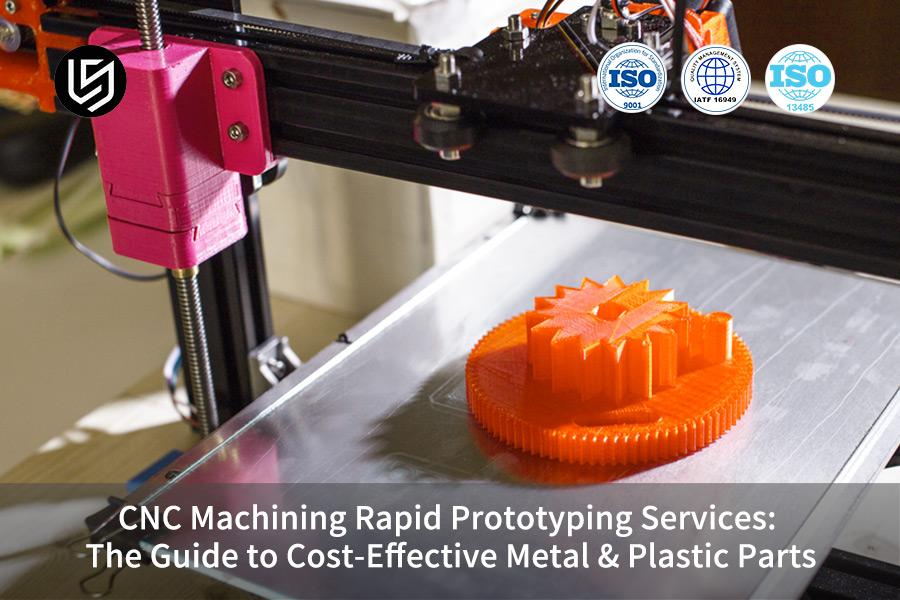
CNC machining rapid prototyping services tend to be understood in terms of "simple" solutions from CAD to finished part, which creates a costly cycle of over-specifying metals and under-specifying plastics. Not only is this wasteful of budget constraints within too few iterations, but it also creates prototypes that do not validate testing requirements and do not translate well into production. The mission is fundamentally one of attaining the highest level of validation data with the lowest cost and time, turning prototypes into strategic and risk-reducing investments.
To this end, we have created a data-driven approach to this problem, one which considers more than just the cost of materials and instead considers economics as a whole. This means that every dollar spent within prototypes is directly converted into valuable intelligence within a predictable and cost-effective path to production.
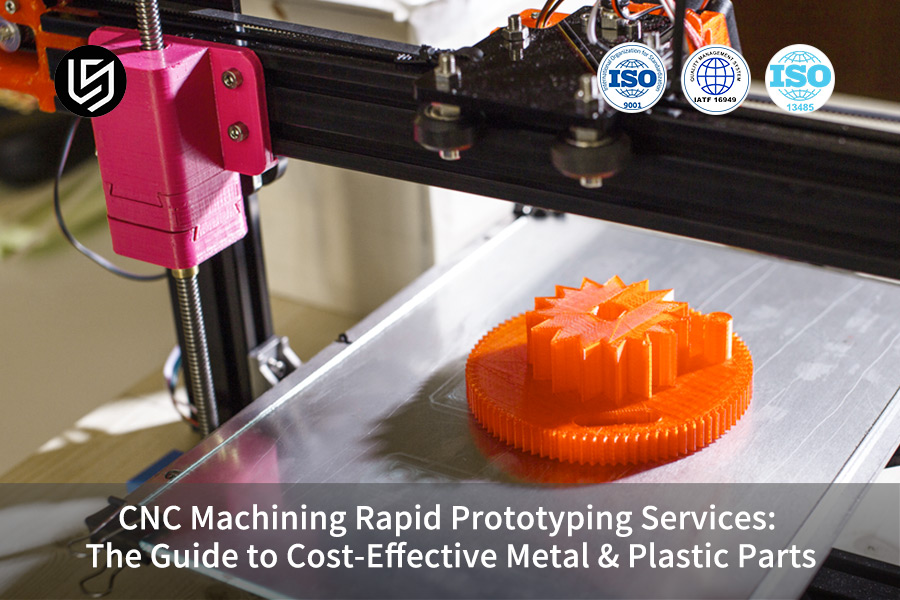
CNC Machining Rapid Prototyping: Essential Guide
| Critical Factor | Strategic Insight |
| Speed-Cost-Precision Triangle | The challenge is finding that balance between speed and cost with the level of accuracy and authenticity of materials required for functional testing. |
| Design Flaw Discovery | CNC prototypes help identify design for manufacturability (DFM) flaws, e.g., tolerances that cannot be met, features that cannot be reached. |
| Material & Process Fidelity | Leveraging production-level materials and processes is required to achieve the highest level of accuracy in terms of rapid prototyping functionality. |
| Post-Processing Integration | Time required for secondary processing (finishing, anodizing, etc.) must be considered in overall project schedules as it is often required for a functional prototype. |
| Our Rapid-Response Workflow | We have access to dedicated quick-turn machine capacity and leverage our relationships with materials vendors to minimize overall project timelines. |
| Proactive DFM Partnership | Identification of design for manufacturability flaws is immediate and actionable within our initial quote, where we identify recommended design changes to ensure optimal design for rapid prototypes manufacturing. |
| Outcome: De-risked Validation | Delivers a high-fidelity prototype with reliable data on form, fit, and function, thereby reducing risks before committing to production tooling. |
| Outcome: Accelerated Development | Enables faster design iterations and product development with accurate physical parts in days, not weeks, thereby shortening the product development lifecycle. |
We remove the key challenge of achieving production-quality parts with the development speed and cost of traditional prototypes. Our rapid-CNC technology produces functional, high-fidelity prototypes with real-world materials, which allow you to validate your designs, detect manufacturing problems, and get your product to market faster.
Why Trust This Guide? Practical Experience From LS Manufacturing Experts
The web has no shortage of information on theory. What we're providing is the practice, and the practice has been tested on the battlefield. Our shop works with real prototypes, and if the material or process fails, the impact is real. Our safe working practices are Occupational Safety and Health Administration (OSHA) compliant, which means success from the start.
The insights we're providing are based on thousands of prototypes. We know which plastics will pass the functional tests and how to design for future injection moldings. Our references for materials science are the official industry standards set forth by ASM International, and we've done the same with the process.
This is your strategic guide. We are here to help you select the material and process that optimize cost, speed, and validation assurance. We want to turn your prototype investments into high-value data, which will de-risk your journey to production. Let’s put our practical expertise to work to help build your success.
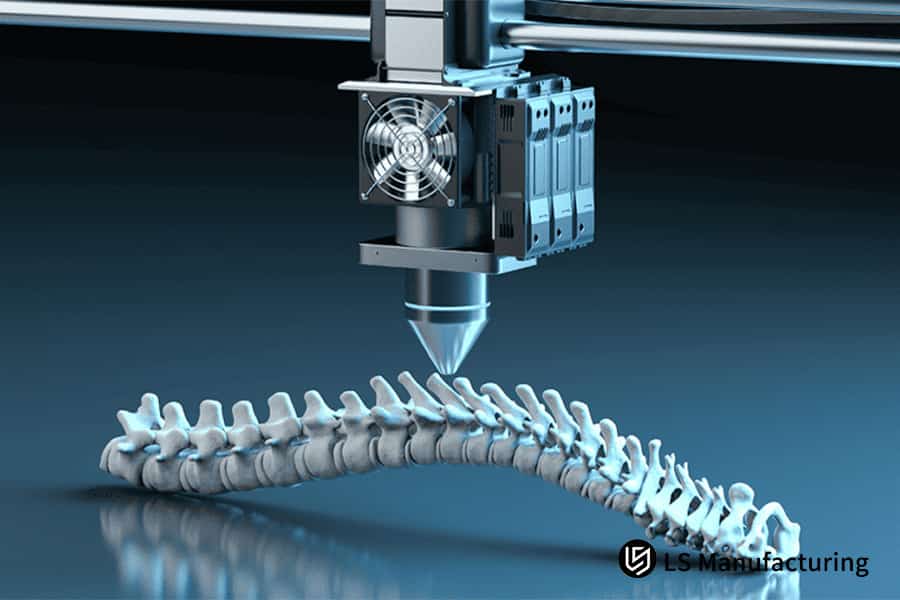
Figure 1: 3D printing a high-resolution polymer anatomical model for cost-effective surgical planning and CNC machining rapid prototyping services.
What Is The Breakdown Of The Actual Total Cost Per Unit For Metal And Plastic CNC Prototypes?
To move beyond material price labels and into the actual total cost of ownership is critical for effective decision-making for prototypes. We have developed a data-driven approach to dissect all cost factors, which reveals how efficiency in machining process can overcome material costs to deliver cost-effective CNC prototyping:
Total Cost Breakdown: Beyond Material Price
To determine the actual total cost, we have four factors to consider: material, programming and setup, machining time, and post-processing. In our example, aluminum plate is 3-5 times more expensive than ABS material per kilogram. However, that is just the start. The real opportunity is to maximize the other three factors, which is part of our total cost analysis for functional rapid prototyping.
The Efficiency Variable: Machining Throughput
Material removal rate is a major factor that affects this change in assumptions. First and foremost, it should be understood that aluminum alloys offer a prospect of achieving higher cutting and feed rates compared to many of the engineering plastics. For instance, it should be understood that machining time may be less than half when machining 6061 aluminum compared to machining time required when machining PEEK, assuming similar part geometries. This is a huge advantage that directly offsets raw material costs.
The Crossover Point: When Metal is More Economical
Our internal cost models, based on thousands of projects, have determined critical cost drivers. For a medium complexity part with a batch quantity of 5 to 10 pieces, the cost of machined aluminum can be within 10 to 15 percent of POM (Acetal), with this small premium being of immense value to any CNC machining rapid prototyping services that requires performance validation.
Designing for Efficient Fabrication
Our Strategic DFM (Design For Manufacture) is utilized during our iterative rapid prototyping process to control costs. This directly relates to our ability to reduce programming and machining hours to ensure we maximize validation confidence per dollar invested in material selection.
This is just another example of our ability to solve complex functional rapid prototyping problems through our use of technical data and strategic process optimization. We're able to provide our clients with a definite solution to material selection to ensure all investments made in prototypes have a direct impact on reducing costs through total cost analysis.

How To Select The Most Cost-Effective Materials Based On Functional Testing Objectives?
The selection of rapid prototyping materials for the prototypes must be guided by specific objectives for the validation process, rather than costs or tradition. Failure to do so would lead to useless results, hence the wastage of precious time and money. This material selection guide of the prototypes offers a direct and objective approach to guarantee that the principal objectives of the test are matched to the best materials, thus ensuring the value of the investment in CNC prototyping for plastic parts and metal delivers decisive insights.
| Primary Test Objective | Recommended Material | Key Rationale | Critical Consideration |
| Static Structural Load & Durability | POM (Acetal) or Nylon (PA66) | Offers best balance of high strength, toughness, and machinability at lowest cost. | For plastic parts, PA66 can provide 50%+ notched impact strength over ABS, which is necessary for snap fit and enclosures. |
| Thermal Management / EMI Shielding (≤120°C) | Aluminum 6061 | Today this material offers high thermal and electrical conductivity along with a wide range of finishes, including anodizing. | The high speeds at which aluminum can be machined provide this material with a significant cost advantage over plastics, adding considerable value. |
| Simulating Final Injection-Molded Performance | Production-grade plastics (ABS, PC ABS, etc.) | Today this material offers accurate information regarding mechanical, thermal, and chemical resistance. | Although it is more costly per part, it is a strategic choice that can avoid exponentially higher costs of changing molds, and thus represents the highest strategic choice. |
Our process is a disciplined and goal-oriented selection of a material that solves the fundamental problem of CNC prototyping for metal parts and plastics, and we offer comparative performance information, such as the quantified difference in impact strength, to prevent mistakes. This is an important part of high-fidelity rapid prototyping in a competitive environment, as it ensures that each and every one of your prototypes is an efficient means to mitigate one of the critical elements of your finished product’s performance and manufacturability.
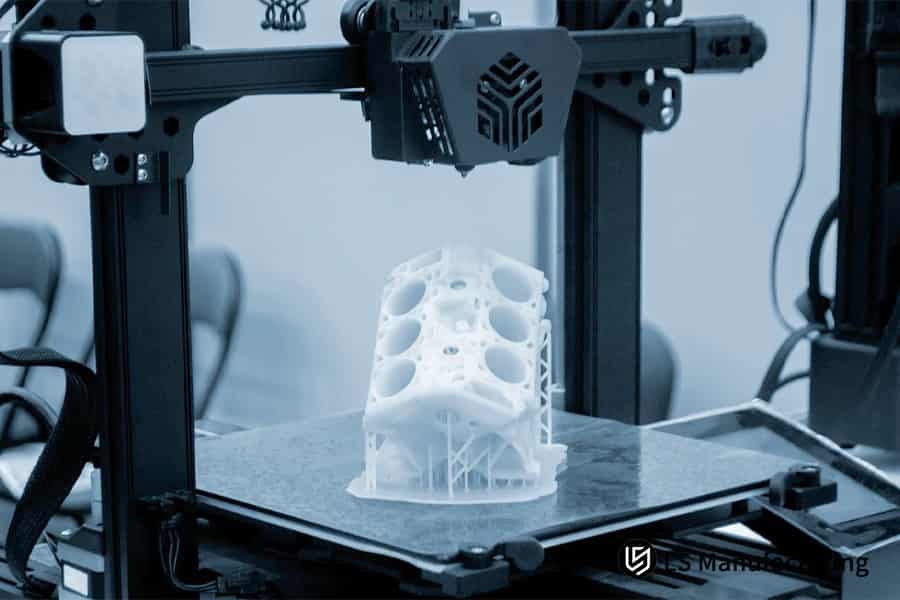
Figure 2: Printing an intricate polymer structure with high precision for cost-effective custom prototyping and manufacturing.
Which Design Optimizations Can Significantly Reduce The Machining Cost And Time Of CNC Prototypes?
The single most important cost and time factor for the machining of prototypes is Design for Manufactability (DFM), which, if executed, can allow for the reduction of machining complexities by over 30%. This CNC prototyping guide will identify the key changes to be made for immediate impact:
Standardize Internal Radii
- Action: Standardize all internal radii of non-critical internal corners to standard sizes (e.g., R3mm, R5mm).
- Result: No custom tools required; enables faster and more aggressive machining; essential for cost-effective rapid prototyping.
Optimize Cavity Depth-to-Width Ratios
- Action: Limit depth-to-width ratios of cavities and pockets to 4:1 or less.
- Result: No requirement for specialized and less rigid "long reach" tools; prevents slower speeds and potential deflection and vibration of tools that can impact part quality in high-fidelity rapid prototyping.
Minimize Precision Re-Fixturing
- Action: Design with unified datums to maximize features machinable in one setup.
- Result: A part completed in one 5-axis setup can be much more cost-effective than one requiring multiple 3-axis orientations, thereby directly accelerating the iterative rapid prototyping process.
Design for Standard Tool Geometry
- Action: Favor through-holes over blind holes and standard drill sizes.
- Result: Leverages existing tooling, eliminates non-value-added operations, and simplifies programming to accelerate functional rapid prototyping.
With our pre-quote design for manufacturability DFM analysis, these principles are methodically applied, turning geometric efficiency into direct cost savings. We effectively address the key challenge of unpredictability in prototype budgeting, providing actionable and data-driven design feedback. This engineering discipline ensures your investment in rapid prototyping parts delivers the greatest iterative value, thereby reducing time to market and total development risk.
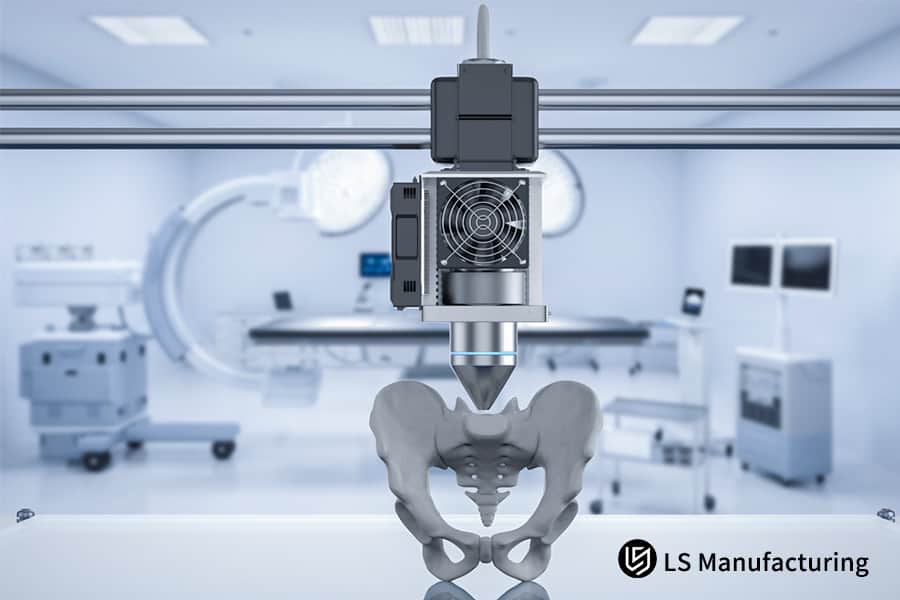
Figure 3: 3D printing a precise polymer pelvic bone model for surgical planning and medical applications.
How To Use CNC Prototyping To Pave The Way For Subsequent Mass Production Of Plastic Injection Molding Or Metal Die Casting?
The most strategic prototype investment is one that fulfills a two-fold purpose of validation, both in form and function, and de-risking the future mass production process. Our methodology redefines custom CNC prototyping as a critical step in the process, enabling a physical verification of manufacturability long before expensive tooling is committed to a process. This forward-thinking methodology creates a reliable bridge to production that proactively addresses possible manufacturing defects when it is still quick and affordable to fix them.
Proactively Validating Draft Angles for Mold Release
Although CNC does not require draft, we design and CNC prototypes with our desired draft angle to ensure release of our final product. We can then physically test and validate our design to ensure that our parts release easily and that there are no cosmetic consequences to our design on exposed areas. This step in our high-fidelity rapid prototyping process is a direct preventative measure against expensive rework of our molds in the future due to sticking or drag marks.
Auditing Wall Thickness for Manufacturing Integrity
Another significant part of our injection molding DFM analysis is our utilization of the CNC prototype to check for uniformity in wall thickness. We are able to determine areas that are more prone to sink marks, warpage, and fill problems, which may not be obvious through our CAD design. Determining and correcting a thin wall problem through our iterative rapid prototyping phase can save costly modifications and potential problems, guaranteeing both the quality and schedule of our parts.
Assessing Parting Lines and Ejection Systems
In our process, we simulate and visually represent the proposed parting lines and ejector pin placement on our physical prototype. This approach is beneficial for collaborative assessment and review of the proposed design for both aesthetics and functionality on the final part. This critical assessment ensures that our tool design is optimized for both manufacturability and quality before the final bridge to production to tooling is fabricated.
Our process is designed to deliver forward-thinking injection molding DFM discipline from the very first prototype. We overcome the critical challenge of late-stage tooling modifications through physical verification and data-driven design input during the functional rapid prototyping process. This ensures your prototype investment is working for you to deliver a streamlined, cost-effective, and predictable entry into high-volume rapid prototyping.
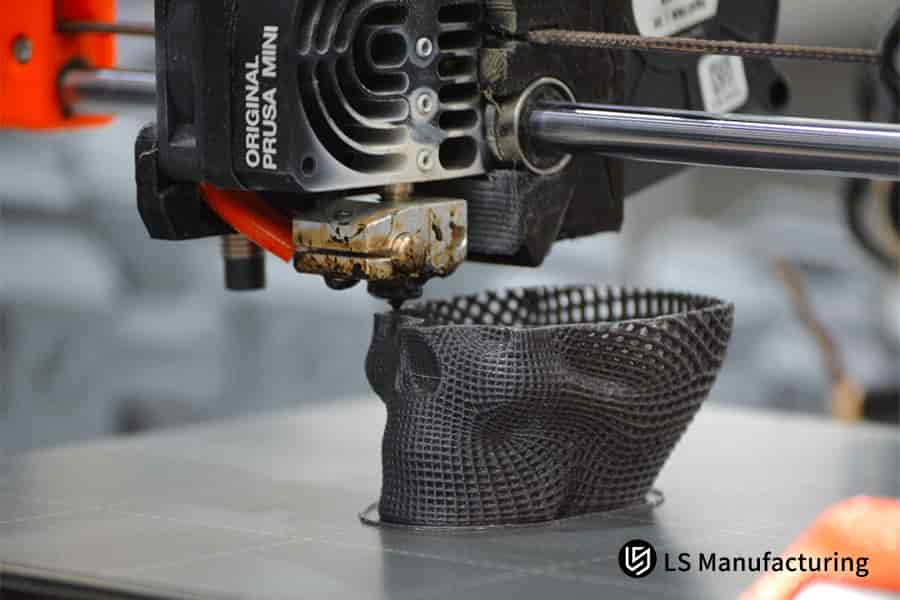
Figure 4: Depositing polymer filament with an FDM 3D printer to create a precise prototype for medical visualization.
LS Manufacturing Medical Device Industry: Prototype Project For Handheld Diagnostic Device With Integrated Metal-Plastic Housing
This LS Manufacturing medical device case highlights the challenge faced by medical device manufacturers looking to deliver a prototype for the next generation handheld analyzer used for medical testing and analysis. The design needed to deliver a rigid aluminum housing with a complex plastic housing, and our process has been shown to deliver the necessary breakthrough for metal-plastic hybrid prototyping.
Client Challenge
This necessitated the use of a 6061-T6 aluminum internal frame due to stiffness and thermal control requirements, encased in a complex PC/ABS shell. The client had adopted an earlier strategy of machining individual components separately within ±0.1mm tolerance and then bonding them together. This had resulted in a 30% failure rate due to improper alignment and bonding. This had brought their functional rapid prototyping process to a grinding halt, causing delays in essential clinical verification tests and resulting in over 20% over-spend on pre-production costs.
LS Manufacturing Solution
We developed our own proprietary process for single setup enclosure prototyping process. The process began with 5-axis machining of the aluminum case, which included locating features. The case was then mounted in place in a bespoke assembly, acting as a permanent part of that assembly. The plastic case was then machined around the permanent aluminum core in the same assembly. This integrated rapid prototyping method allowed a single, solid, mated part to be created, eliminating the need for post-processing mating and the inaccuracies associated with it.
Results and Value
The high-fidelity prototype developed and produced met all the structural, thermal, and clinical performance tests. Our metal-plastic hybrid prototyping solution enabled us to offer the client a faster turnaround, thereby reducing the cost of the prototype by 35% and delivering the prototype two weeks ahead of the scheduled time. It also served as the definitive proof of concept for us with the client, providing the much-needed interface data for the production tooling of the high-volume insert molding and thereby clinching the client relationship with us.
This is just one example of the unique expertise and capabilities of ours in solving the most complex integration problems with innovative process solutions. We don’t just offer prototypes; we offer verified rapid prototyping solutions, which don’t just save clients time, but also enable them to reach the market faster with the most complex and sophisticated medical devices.

How To Achieve The Optimal Cost Transition Between Small-Batch Prototypes And Pilot Production?
The process of moving from a single prototype to a pilot production run of 100 units is a non-linear process, and without sufficient planning, there is a high chance of erosion of the budget. The strategic process is of critical importance in ensuring an efficient and cost-effective transition from a single prototype to pilot run of 100 units. This guide has been created to assist you in effectively managing this critical transition process using data-driven methods, as outlined below:
| Strategic Lever | Implementation Method | Quantifiable Benefit |
| Process Consistency from Start | Utilize the same CNC machining services for both functional rapid prototyping and initial pilot production, i.e., use the same kind of equipment and fixing principle. | This ensures performance data can be compared directly, avoiding costly re-validation and creating a safe bridge to production. |
| Design Freeze & Modular Iteration | Freeze the core geometry after key validation, and then restrict further change to local, modular elements. | This enables 70-80% program reuse in the iterative rapid prototyping phase, greatly reducing the programming costs for subsequent batches. |
| Transparent Tiered Pricing & Capacity Lock | To negotiate explicit and up-front volume pricing against milestones (e.g., 5, 20, 50, 100 units), and lock capacity at critical nodes. | To achieve cost forecasting and prevent 20-40% cost escalations from last-minute scheduling, thereby enabling scalable rapid prototyping. |
This process is a disciplined approach to solve a critical problem of uncontrollable cost escalations in the process of scaling. We are able to provide our clients a clear and actionable roadmap and volume pricing, thereby providing budget predictability. We are transforming the prototype to pilot run process into a managed process, which is critical in this fast-paced and competitive environment of product development.
How To Assess The Actual Cost Control And Technical Capabilities Of A CNC Prototyping Supplier?
Engineering partnership, rather than mere basic machining service, is an essential factor for budget and schedule success. Only true cost control capability is evidenced, not in claims, but in methodology and decision-making process in the iterative rapid prototyping process. Following are the specific measures to be taken into account for determining how to choose a CNC prototyping supplier, as outlined in this guide:
Depth of Proactive DFM Feedback
- Action at Quote Stage: Quantifiable design improvements, not just feedback.
- Example Output: Providing a design improvement, for example, 15% reduction in machining time by increasing wall thickness to accommodate a larger tool.
- Client Benefit: Turning the initial quote into a collaborative cost-effective rapid prototyping review.
Strategic and Economical Process Planning
- Methodology Justification: We are providing our recommendation on the most efficient machining process to complete your design.
- Data-Driven Choice: For example, justifying 3+2 indexed machining over 5-axis machining to save 25% on programming time.
- Outcome: We are balancing accuracy with speed to prevent over-spending on unnecessary capability for functional rapid prototyping.
Transparent Value Engineering
- Open-Book Rationale: We are providing our clients with our rapid prototyping process documentation to prove our ability to reduce costs through using a fixture strategy for our toolpath.
- Proof of Capability: We are demonstrating our cost control capability through our process.
- Strategic Insight: We are providing our clients with insight into what is affecting costs and time for their project.
Integrated Supply Chain Stability
- Proactive Risk Mitigation: We are managing our supply chain for our material and tooling needs to mitigate risks associated with market volatility.
- Predictable Pricing: We are providing our clients with long-term contracts for rapid prototyping material costs to support machining phases.
- Reliable Output: Prevents schedule slippage and cost overruns from component leadtime or price increases.
Our evaluative framework is not based on sales promises but rather on actual and measurable engineering practices. We relieve our client of the burden of evaluating us through this transparent and methodology-based approach. Our approach is based on reliable budgeting and results, and this is critical to risk management and speed in these complex and high-stakes product development programs.
Why Should LS Manufacturing Be Chosen For Cost-Effective CNC Prototyping Projects?
To choose a rapid prototyping supplier for cost-effective rapid prototyping is not an exercise to compare quotes. Rather, it is to solve the fundamental selection problem of how to maximize the return on validation of every dollar invested. Partnering with LS Manufacturing is to choose a vendor who is engineered to solve this problem by making your cost of rapid prototypes an investment in strategic product de-risking:
Engineered for Full Lifecycle Cost (LCC) Efficiency
Our suggestions are made with consideration of the full lifecycle cost of your products, not just the cost of the prototype invoice. For instance, how will the selection of the material or process during the iterative rapid prototyping phase impact the cost of mold changes or assembly time? This forward-thinking approach at the beginning of your product development project ensures that your initial investment yields maximum prototyping ROI partner value and accelerates time-to-market.
Deep Collaboration for Co-Created Savings
We're with you from the beginning of your project as an extension of your team, and through proactive DFM analysis and process optimization, we're able to identify specific cost savings opportunities with measurable results, such as optimizing one of the dimensions to allow for faster machining. This solution-oriented, co-creative approach to creating value ensures that we're not just a reliable manufacturing partner, but a trusted ally in your product development process.
Deterministic Value Delivery on a Fixed Framework
We commit to deliver on a known cost, schedule, and quality model. Our robust project management and supply chain allow us to circumnavigate common pitfalls of cost and schedule overruns that are inherent in functional rapid prototyping. Such a level of dependability is vital in efficient and critical product development processes.
Why choose LS Manufacturing? We address the critical issue of undetermined results from prototypes with our ability to act as an integrated engineering partner. Our process guarantees that every dollar you invest in prototypes is a dollar that reduces your productization risk and speeds up your schedule, and that provides you a competitive advantage that is unmistakable to any client that cares about return on investment.
FAQs
1. What are the differences in precision and surface finish between CNC machining of plastics and metals?
Metals generally have a higher level of dimensional accuracy and a smoother finish (Ra 0.8μm, etc.). Plastics require consideration of their malleability and thermal expansion properties, but with optimal tooling and cutting parameters, engineering plastics like PEEK can be made to a tolerance of ±0.05mm. Both processes are suitable for extensive post-processing (anodizing, sanding, painting, etc.).
2. How long does it take to receive a CNC prototype from order placement?
For basic components with standard materials in stock, we can deliver in as little as 72 hours. On average, it takes 5-10 business days for a typical order to go from order receipt to completion. Expedited service is also possible.
3. How can I ensure the security of my design intellectual property?
We maintain a rigorous NDA policy. The files associated with a project are stored in an encrypted system, and physical access to production areas is strictly controlled. If you wish, we can delete all associated electronic files upon completion of a project.
4. Will the cost be high if design modifications are needed after prototype testing?
This depends on the extent of the modification. If the modification is simply dimensional and does not involve changing the main process, then the cost would be limited to the cost of reprogramming and the associated processing costs. This will be clearly compared before and after the modification.
5. Do you provide production conversion services from CNC prototypes to small-batch injection molding/die casting?
Yes. This is one of the main advantages of working with us. We can offer production-oriented DFM at the prototype stage and work with mold and injection molding factories to ensure the smooth transition of the product from prototype to production.
6. What is the minimum order quantity (MOQ)? Can we do single-piece production?
We allow single-piece prototype production with no MOQ restriction. However, we would recommend making 2 or 3 pieces to spread the one-time cost of the process and keep one aside as a spare, which would be cost-effective.
7. Do you provide material certification and performance test reports?
Yes. We can offer Original Material Quality Certificates (MTC) and also obtain test reports from third-party testing organizations for mechanical properties, dimensional accuracy, etc., which will meet the requirements of industries such as the medical and aerospace industries.
8. How to start a CNC prototyping project and obtain a competitive quote?
We need the 3D model (STEP) and 2D drawings (PDF) with the materials, quantities, key properties, and acceptance criteria. Our application engineers will start the analysis process within 4 hours, and the quote will be clear and include DFM suggestions.
Summary
The key to achieving the best cost-effectiveness of the CNC rapid prototyping process for metal and plastic parts is not to look for the best unit cost, which is the traditional way, but to transform each and every investment in the prototyping phase into high-value decision-making information, which will lead to the success of the product and the reduction of the total cost of manufacturing with the scientific material-process-design collaborative framework. This means the manufacturing partner must not only be good at the technology, i.e., machining, but also must have a product vision and strong collaborative capabilities.
If you're looking to find a rapid prototyping solution that is cost-effective, reliable, and forward-thinking for your next product development project, please upload your part drawings today! LS Manufacturing's strategy experts will send you a "Prototype Value Assessment Brief" within 4 hours of receiving your drawings, including a "Materials-Process Cost-Effectiveness Analysis," "Design for Manufacturability Optimization Recommendations," and "Tiered Pricing Preview."
📞Tel: +86 185 6675 9667
📧Email: info@lsrpf.com
🌐Website: https://lsrpf.com/
Disclaimer
The contents of this page are for informational purposes only. LS Manufacturing services There are no representations or warranties, express or implied, as to the accuracy, completeness or validity of the information. It should not be inferred that a third-party supplier or manufacturer will provide performance parameters, geometric tolerances, specific design characteristics, material quality and type or workmanship through the LS Manufacturing network. It's the buyer's responsibility. Require parts quotation Identify specific requirements for these sections.Please contact us for more information.
LS Manufacturing Team
LS Manufacturing is an industry-leading company. Focus on custom manufacturing solutions. We have over 20 years of experience with over 5,000 customers, and we focus on high precision CNC machining, Sheet metal manufacturing, 3D printing, Injection molding. Metal stamping,and other one-stop manufacturing services.
Our factory is equipped with over 100 state-of-the-art 5-axis machining centers, ISO 9001:2015 certified. We provide fast, efficient and high-quality manufacturing solutions to customers in more than 150 countries around the world. Whether it is small volume production or large-scale customization, we can meet your needs with the fastest delivery within 24 hours. choose LS Manufacturing. This means selection efficiency, quality and professionalism.
To learn more, visit our website:www.lsrpf.com.