English



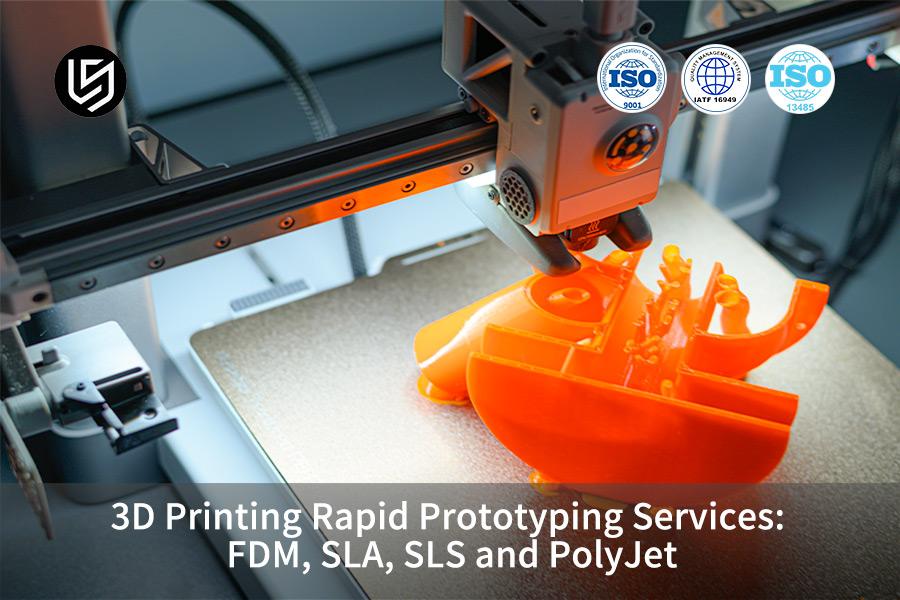
3D printing rapid prototyping services lead to a primary initial question: FDM, SLA, SLS, or PolyJet. The result is often a crude FDM part that jams in assembly or a precise SLA part that fails under stress. The biggest tragedy is discovering after the fact that a different technology could have done the same thing for half the cost and time.
Our solution is to move beyond the simplistic trade-off between accuracy and cost. Our data-driven solution, with 5 years' worth of data and 3000+ projects, maps the technology to your primary validation need: fit, function, form, or feel. Our solution delivers definitive results: a selection framework that begins with your primary purpose.
3D Printing Rapid Prototyping: Decision Checklist
| Key Factor | Practical Insight |
| Technology-Material-Application Fit | To identify the most appropriate technology for the job, the objective of the prototype has to be determined. The objective can be visual, functional, or master pattern. |
| Accuracy vs. Speed Trade-off | There is only so much accuracy and smoothness that can be obtained with layer-based technologies, particularly in curves. |
| Material Property Representation | Not all the properties of the materials used in 3D printing are the same as the properties of the final product, particularly if the product is meant for functional purposes. |
| Post-Processing Necessity | Most parts require post-processing, although this may not be necessary in the overall cost. |
| Our Advisory-Driven Service | Our team is dedicated to helping you identify the most appropriate technology and materials for your prototypes according to your specific needs. |
| Integrated Secondary Operations | Our team at Protolabs is dedicated to helping you create high-quality presentation models by providing professional finishing, painting, and casting of printed patterns. |
| Outcome: Accelerated Learning | Delivers physical parts in just days, allowing for fast form/fit/function validation, user feedback, and design iteration at the outset of the design process. |
| Outcome: Cost-Effective Exploration | To allow for the testing of various design ideas at small tooling costs, thereby reducing the risk of costly errors in the later stages of the manufacturing process. |
Our solution to the fundamental problem of using the best technology in the field of 3D printing that suits your particular needs for rapid prototyping is what we are here for. Our expertise and service guarantee you functional and excellent prototypes that meet the requirements for design validation, thereby enhancing the design process and reducing costs associated with the design process itself.
Why Trust This Guide? Practical Experience From LS Manufacturing Experts
There are many write-ups on 3D printing service providers, but not all are made in the factory. We do not simply operate the machine; we produce functional prototypes that must perform under real-world conditions like aerospace ducts, medical tooling, automotive parts for final use. All our case studies, from our warped FDM fixture to our flawless SLS assembly, helped us create our pragmatic, battle-tested approach to selecting between FDM, SLA, SLS, and PolyJet.
This is our reality, our basic selection process, focusing on results, not specifications. We know precisely how SLS nylon compares to SLA resin in terms of durability versus brittleness, or how a PolyJet multi-material prototype is justified. Our validation of materials and processes is strictly in line with those of the Environmental Protection Agency (EPA) and SAE International, ensuring our prototypes not only meet safety requirements, but also reliability and engineer-approval.
This distilled knowledge is what we're sharing with you, in the hopes that you'll think of us as your one-stop shop. The knowledge you're about to learn, about cost modeling, design rules, and technology limitations, is the same knowledge we use every day to avoid costly iterations for our clients. Our experience—5 years and counting, thousands of real-world prototypes built from real-world materials—should help ensure that your next prototype isn't simply a model, but a validation milestone.
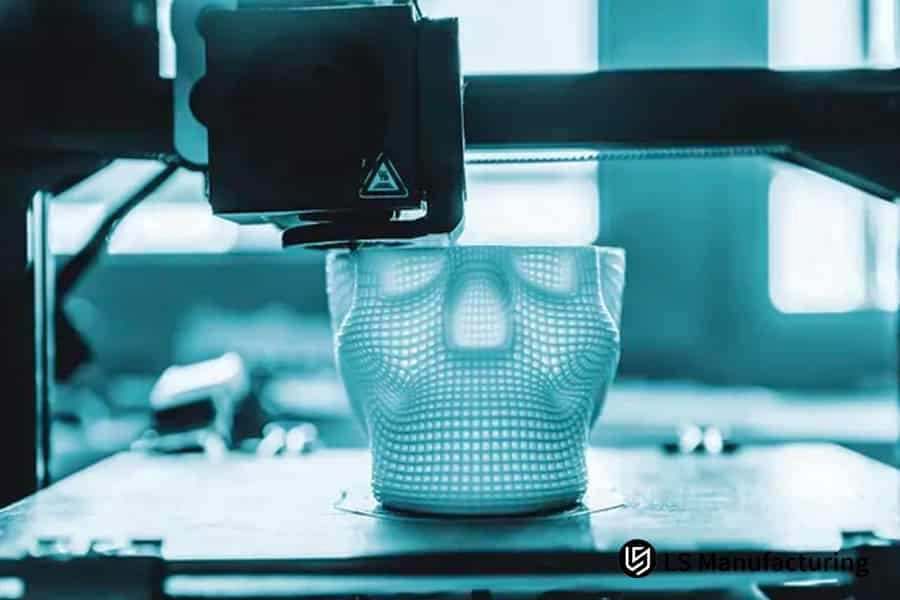
Figure 1: Fabricating a skull-shaped prototype with thermoplastic polymer filament for medical training and educational applications.
How To Determine The Preferred 3D Printing Process Based On The Core Objectives Of Prototype Verification?
The first major problem in 3D printing rapid prototyping services is the common failure of the selected technology to match the part's true validation potential. We're able to avoid this problem through the use of a data-driven selection process that has been informed by over 3,000 projects and precisely matches the selected technology's potential against the defined prototyping objectives:
Validating Form and Fit for Design Iteration
When the need is for rapid and cost-effective iteration in size and assembly, FDM is the chosen process for its speed and cost-effectiveness. We address the issue of layer lines and tolerances (typically within ±0.2mm) through compensatory measures in the digital model, ensuring that even cost-effective prototypes provide us with reliable data for fit check. This is the most suitable strategy for the streamlined rapid prototyping of conceptual parts and housing assemblies in the early stages of the design process.
Achieving High-Fidelity Surfaces for Aesthetic Validation
When prototypes need to have high aesthetic appeal, precision, and transparency, SLA/DLP is the chosen process. We use the high precision of this technology (layer height as small as 25μm), which allows for isotropic properties and the ability to achieve near injection molding surface finish (Ra < 1μm), thereby turning the prototype into a believable presentation piece.
Testing Functional Performance Under Stress
When the prototype has to endure mechanical stress, fatigue, or intricate assembly, SLS technology is the default option. Through the use of Nylon-based materials, full-density parts are created with isotropic properties, showing high toughness and thermal stability when compared to resin materials. This helps in the direct functional rapid prototyping of living hinges, snap fits, and ducting, which can be subjected to real-world conditions and provide the necessary functional results.
Navigating Multi-Material and Overmold Simulation
For parts requiring the integration of both rigid and flexible material properties, we make use of the PolyJet technology. The PolyJet technology provides us with the ability to create various materials with different shore A hardness values in a single print operation. The PolyJet technology is employed for the precise modeling of over-molded grip, seal, and dampener parts that provide a precise model for the ergonomic and functional evaluation well before any tooling investments are made in the design.
This structured approach to how to choose 3D printing technology is facilitated through a collaborative goal definition session, guaranteeing a perfect prototyping goal matching strategy. Our approach, based on empirical performance data rather than spec sheets, is the definitive and risk-mitigating roadmap for successful accelerated prototyping, ensuring your first article is a valid step toward production.

Where Are The True Performance And Cost Boundaries Of The Four Technologies: FDM, SLA, SLS, And PolyJet?
To make an informed decision between FDM vs SLA vs SLS, and PolyJet, for example, you must move beyond general claims and into specific, quantified data. The purpose of this analysis is to provide a quantified breakdown of the fundamental additive manufacturing services, allowing you to understand the true performance limits and economics of each technology in order to make critical accelerated prototyping decisions.
| Characteristic | FDM (PLA/ABS) | SLA (Standard Resin) | SLS (Nylon 12) | PolyJet (ABS-like) |
| Typical Accuracy | ±0.3% or ±0.3mm | ±0.1% or ±0.1mm | ±0.3% or ±0.3mm | ±0.1% or ±0.1mm |
| Surface Finish | Visible layer lines | Smooth, high detail | Slightly grainy | Excellent, molded-like |
| Material Toughness | Moderate | Brittle | Excellent, tough | Fair to good |
| Heat Resistance (HDT) | ~60°C (ABS) | ~50°C | ~170°C | ~50-70°C |
| Multi-Material | No | No | No | Yes |
| Post-Processing | Support removal | Wash & cure | Depowdering | Support removal |
| Relative Cost | ¥ (Low) | ¥¥ (Medium) | ¥¥ (Medium) | ¥¥¥ (High) |
This definitive 3D printing cost comparison technologies underscores the inherent trade-offs and proves that no technology is inherently better than another. We leverage this data to address your unique challenges, such as determining the most cost-effective FDM rapid prototyping strategy or specifying SLS prototyping for high-temp functional testing.
How To Select 3D Printing Materials With Acceptable Mechanical Properties For Functional Testing?
The selection of the right material for functional testing is a critical engineering decision, and the material classification of "resin" or "nylon," for example, is not adequate. We solve this critical engineering problem by using empirical data from our internal material properties testing, as opposed to material datasheets, to ensure that your prototypes will function correctly.
Quantifying Resin Performance Beyond "Brittleness"
- Challenge: Standard SLA resins are often too brittle for stressed parts.
- Our Solution: We test and categorize resins by tensile strength versus elongation. For a snap-fit, we specify a Toughor Durableresin (40%+ elongation), not a standard rigid type (6% elongation), even at a strength trade-off.
Engineering SLS Nylon for Specific Dynamic Loads
- Challenge: Not all nylons withstand repeated flexing.
- Our Solution: For living hinges or clips, we default to flexible PA12 for its superior fatigue resistance over stiffer PA11. This ensures reliable SLS prototyping for dynamic assemblies.
Matching FDM Material to Impact and Thermal Needs
- Challenge: PLA is brittle; ABS requires controlled printing.
- Our Solution: For FDM rapid prototyping of housings, we use ABS or PETG for impact resistance, employing enclosed chambers to prevent warping and ensure layer adhesion meets functional needs.
Validating Material Performance for Extreme Environments
- Challenge: Materials must perform under specific stress, temperature, or chemical exposure.
- Our Solution: We match your test criteria, such as load cycles or temperature, against our tensile, flexural, and HDT test results for materials like high-temp resins or chemically resistant nylons for your custom 3D printing parts.
This is the essence of successful functional prototyping materials development. We give you access to relative stress-strain diagrams for the materials you need, eliminating the gamble from the material selection process. Your prototype’s performance will now accurately indicate the performance of the final part, guaranteeing the successful transition from precision rapid prototyping to production.
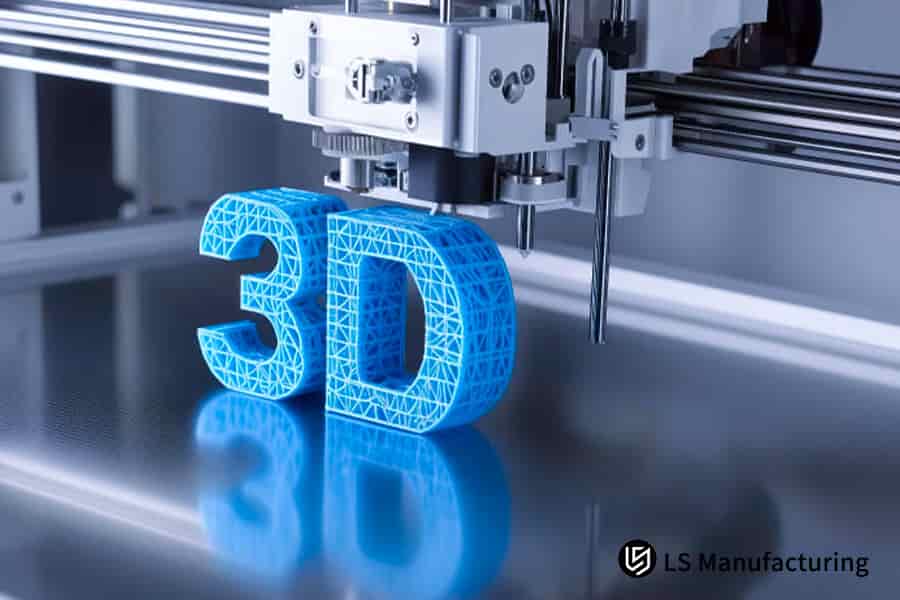
Figure 2: FDM rapid prototyping custom blue thermoplastic letters for industrial 3D printing and additive manufacturing services.
Why Is PolyJet Technology The Ultimate Weapon For Multi-Material And Transparent Prototyping?
PolyJet 3D printing technology is the ultimate solution for addressing two specific yet challenging needs for rapid prototyping: the creation of prototypes that require multiple material properties within the same part, and the creation of optically transparent prototypes. The objective of this document is to quantify the technology’s potential and highlight its ideal application for strategic use in the development process. The basic benefits of PolyJet technology are explained below:
| Attribute | Capability / Metric | Primary Application |
| Print Resolution | Resolution of 16 microns layer thickness. | Capturing of fine textures, micro-details, and smooth surface finish. |
| Multi-Material Fusion | Fusion of various materials that have different shore hardness values (A30 to D90). | Creating multi-material prototyping parts such as over-molded grip parts, seals, and flexible hinge parts. |
| Transparency Potential | Clear material can be made transparent after polishing. | Production of transparent prototypes for fluidics, light guide parts, and lens concept modeling. |
| Surface Finish | As-printed surface finish is smooth and requires no or minimum finishing for visual prototypes. | Ideal for high-fidelity rapid prototyping and presentation-grade models. |
| Key Consideration | Materials are prone to UV degradation over long periods and are not suitable for high-temperature applications. | For form, fit, and functional verification, not for functional application. |
This profile makes PolyJet particularly suitable for validating unibody designs that incorporate rigid and flexible materials. We use this technology to address particular complex rapid prototyping challenges, such as engineering a single-unit multi-material prototype or a high-gloss clear part for optical validation. This allows the unique strengths of the technology to be applied directly to the complex validation of product development issues.
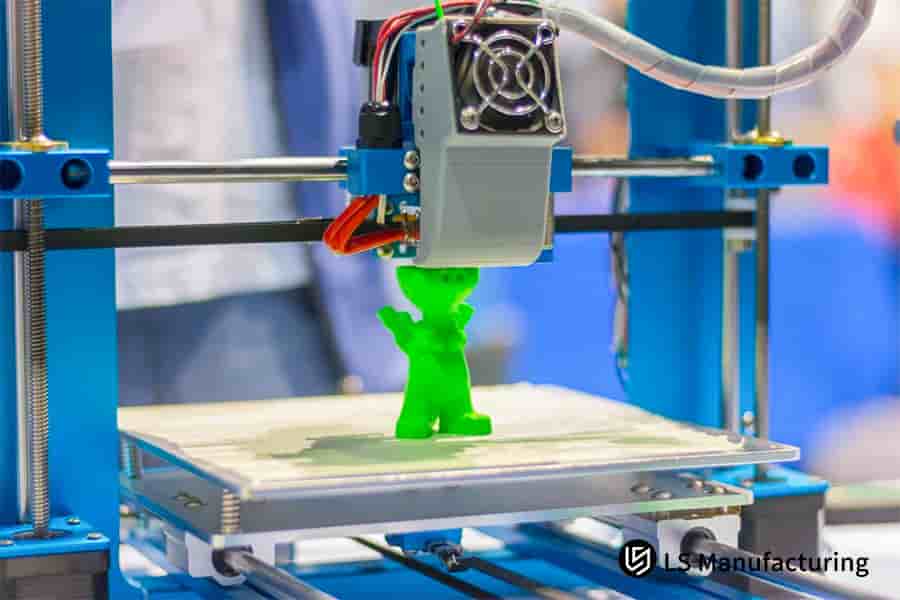
Figure 3: FDM 3D printing a precise green thermoplastic model for custom additive manufacturing services.
LS Manufacturing Medical Device Industry: Multi-material Functional Prototype Project For Endoscope Handles
This is an LS Manufacturing medical device case, presenting a strategic multi-process solution to a significant fast-track development challenge: developing a fully functional, multi-materialized prototype of a new endoscopic handle device to fully validate its ergonomics, assembly, and usage in a limited time frame.
Client Challenge
This developer needed a working prototype to validate a sophisticated handle design, including a rigid structural shell, a soft touch over-molded grip (Shore A70), internal mechanisms, and a transparent window. Conventional CNC machining was found to be costly, time-consuming, and unable to produce a seamless multi-material assembly necessary for accurate testing, halting the developer’s functional rapid prototyping process, as well as delaying critical human factors studies for this innovative device.
LS Manufacturing Solution
We designed a hybrid multi-material 3D printing solution. The main body of the part, including internal mechanisms, was created via high temp SLA 3D printing services, allowing for ±0.1mm accuracy. The soft touch over-molded grip was jetted directly onto it via PolyJet technology. The clear PolyJet window was assembled separately, with dedicated DfAM analysis being used to optimize this part of the process, focusing on this complex integrated prototyping in one cohesive process.
Results and Value
A fully assembled endoscopic handle prototype was given to the client in as little as three weeks. This is a fully integrated rapid prototyping, in which form, feel, and function are simultaneously validated, thereby reducing iteration time by as much as 60 percent, as well as reducing the cost of developing a prototype by over 40 percent when compared to traditional methods.
This case study is a singular instance of our capacity to strategically integrate disparate forms of precision rapid prototyping technologies into a singular, validated solution. We, by design, eliminate the inherent limitations of singular forms of rapid prototyping, thereby delivering fully functional prototypes that meet the exacting requirements of medical device development in terms of efficiency.
Need a prototype that integrates multiple materials and complex features? Let us engineer the perfect hybrid 3D printing solution.

How Can Design Optimization (DFAM) Significantly Improve The Quality Of 3D Printed Prototypes And Reduce Costs?
Merely transferring a CAD design for 3D printing can produce suboptimal results in terms of cost, time, and function. Design for additive manufacturing is a forward-thinking engineering discipline that optimizes parts to exploit the special strengths of the technology, directly attacking the very objectives of cost-effective rapid prototyping and function:
Strategic Part Orientation to Minimize Supports and Maximize Quality
We carry out an extensive build orientation study to significantly reduce support material and enhance critical surface finish. For a functional bracket, we might orient it to minimize supports on bearing surfaces, even if it means increasing height, to ensure the mechanical integrity of load-bearing faces for reliable functional rapid prototyping.
Integrating Self-Supporting Geometries for Complex Features
We redesign overhanging features to eliminate the need for fragile and hard-to-remove supports, and this is an important aspect of rapid prototyping DFM. By changing the overhang angles to 45 degrees or even integrating tapered corbel and bridging structures into the design, we are able to print complex internal channels and latches with ease and speed.
Applying Intelligent Hollowing and Lattice Infill Structures
For non-critical, closed volumes, we use controlled internal hollowing with optimized lattice or gyroid arrangements (10-20% density). This strategic approach can minimize material and print time by over 50%. The direct benefits include substantial reductions in 3D printing cost reduction.
Proactively Designing for Post-Processing and Assembly
We include necessary allowances (0.1-0.3mm) on surfaces that require machining or polishing, and design-in clear interference for press-fit parts. The design for additive manufacturing consideration ensures that the printed part will meet final dimensional tolerances after finishing and assemble correctly the first time, transforming the raw print into a high-fidelity, functional assembly for accelerated prototyping and testing.
We incorporate these principles into a structured, complimentary DFAM analysis for every project, which has a typical cost savings benefit of 15-30% and improved functionality of the resulting prototypes. This structured methodology takes a routine print job and makes it a strategic component of your project, ensuring your precision rapid prototyping investment provides the greatest return in terms of validation.
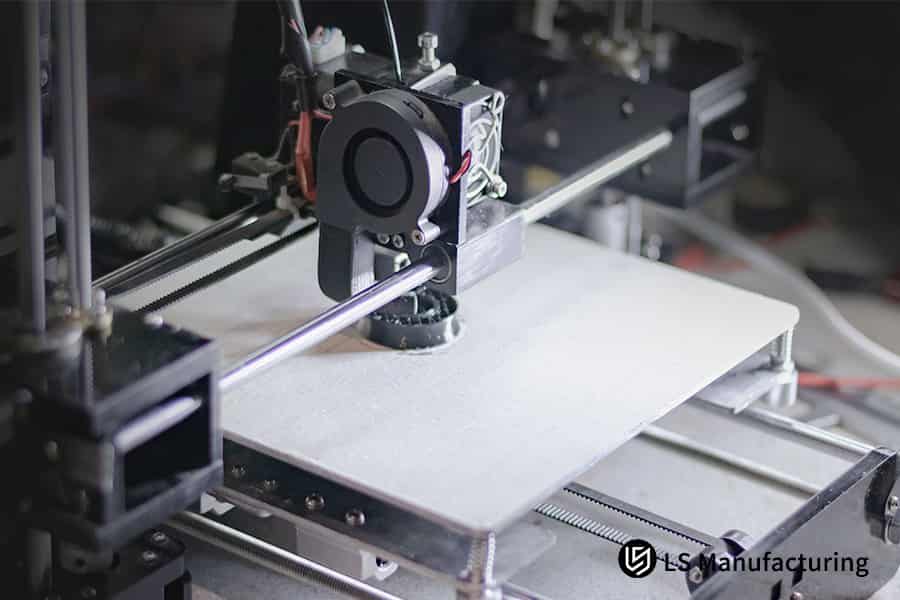
Figure 4: Extruding molten thermoplastic filament layer by layer for precise custom part fabrication in industrial manufacturing.
How To Assess The True Technical And Quality Control Capabilities Of A 3D Printing Service Provider?
To engage a service provider for your critical rapid prototyping services, it is necessary to move beyond the machine and explore the true potential of the service provider. The true potential of the service provider lies within the processes that guarantee quality and consistency. For this reason, we propose the following pillars for operation:
Meticulous Machine Calibration and Maintenance
- Critical Check: Regular calibration of the lasers, projectors, and nozzles.
- Our Practice: At our shop, we regularly calibrate the lasers daily to ensure first-part accuracy and adhesion critical for reliable precision rapid prototyping.
Stringent Material Management and Traceability
- Critical Check: Controlled storage (e.g., resin refrigeration, powder dehumidification) and usage logging.
- Our Practice: All materials are stored in accordance with the manufacturer's specifications with expiration dates entered into our system, thus maintaining performance level. This is an important part of our 3D printing quality control.
Standardized In-Process Verification and Testing
- Critical Check: Standardized test coupons to verify mechanical properties and dimensional accuracy.
- Our Practice: Benchmark parts are printed and measured with each run of the machine to create a statistical process control record to ensure capability, an important component in our thorough supplier assessment.
Comprehensive Post-Processing and Final Inspection Protocols
- Critical Check: The use of test coupons for validation of mechanical properties and dimensional accuracy on a per build or batch basis.
- Our Practice: Every part receives an established inspection checklist for critical dimensions and surface requirements, ensuring the final product delivered meets the needs of the accelerated prototyping project from a functional and aesthetic standpoint.
A thorough supplier assessment of these processes must be made. At LS Manufacturing, we provide our clients with access to calibration reports, material documentation, and SPC reports, providing them with transparent access to the quality processes that make the average 3D printing service not just average, but an extension of your engineering team, ensuring the integrity of the prototype delivered.
Why Does LS Manufacturing Offer The Best Overall Value For Complex Prototype Requirements?
For projects that need prototypes that validate intricate form, complex function, and manufacturability, the average service bureau is not sufficient. By partnering with LS Manufacturing, you are not simply hiring another service provider; you are working with a true product development partner that solves your most complex challenges with a comprehensive approach that eliminates all the risks of the entire process from concept validation all the way through production readiness, ensuring that all prototypes produced have significant value beyond just being a part.
Unbiased Technology Selection Based on Your Goal
We first analyze your main validation goal from a formal point of view. Our access to technology allows us to make objective proposals, for example, selecting SLA 3D printing services for a part with an accuracy level of ±0.1mm or selecting SLS for a part with high thermal resistance. Our goal-oriented approach ensures that the selected technology is the most efficient for the specific stage of your project.
Engineered Hybrid Manufacturing for Unified Models
This allows us to provide integrated prototyping solutions through the strategic combination of processes such as 3D printing, CNC machining, and urethane casting. This allows us to create a single part that represents the end product in terms of look and feel, thereby providing complex rapid prototyping that no single technology can achieve.
Proactive DFM Bridging Prototype and Production
The engineering analysis that we provide is designed to ensure the success of the prototypes that we create, as well as the manufacturability of the end product. During the accelerated prototyping design phase, we provide a proactive DFM review that takes into consideration the draft and wall thickness of the part, which is critical in the future injection molding of the part.
This is our overall approach in defining the fundamental reasons why choose LS Manufacturing in your challenging design cycle. At LS Manufacturing, we understand that we are an extension of your engineering team. Our knowledge is multi-disciplinary in relation to ensuring that our prototype is maximized in relation to validation. However, more importantly, our knowledge is designed in relation to ensuring that our prototype is more easily manufactured, thereby saving us money in the long term.
FAQs
1. How long does it take from submitting documents to receiving a 3D printed sample?
For online orders, simple parts can be shipped within 24 hours after document confirmation. Complex assemblies or parts requiring post-processing may take 2-5 business days. The actual real-time lead time can be found on our website.
2. What are the minimum detail features and maximum dimensions of 3D printed parts?
Depending on the technology used, SLA/Polyjet can achieve details down to 0.2mm. The maximum dimensions of a part we can produce would be 800x800x500mm for large FDM machines. The details of the part will be assessed based on your design. An manufacturability check can be done after uploading your documents.
3. How can I ensure the security of my 3D design files?
We sign a legally binding NDA. The security of your intellectual property is ensured by uploading your documents via an encrypted link. The documents will be automatically and permanently deleted from the server at a time interval after the project has been completed.
4. Can 3D printed parts undergo further processing (such as painting or electroplating)?
Yes. We provide one-stop post-processing services such as grinding, sandblasting, spraying, vacuum coating, screen printing, and even soft sleeve wrapping for SLA parts to satisfy various display and test needs.
5. How do I choose the most suitable 3D printing material?
Tell us your prototype's essential needs: do you need strength, ductility, heat resistance, accuracy, or aesthetic appearance? Our material experts will recommend 2-3 of the most suitable 3D printing materials for you based on your specific application scenario, along with data comparison for each material.
6. Which 3D file formats do you support? What are the file requirements?
We support most 3D file formats such as STL, OBJ, and 3MF. The file should be a closed mesh, watertight, and have no flipped triangles. The system will automatically detect geometric errors after you upload your file and ask you to correct them.
7. What if the printed part does not meet expectations?
If the reason for not meeting the specifications is because of errors in our process or material, we will remake the part for you at no extra charge. We also encourage open communication prior to the start of the job and provide free DFAM analysis to help minimize these kinds of problems.
8. How do I get an accurate 3D printing quote?
You can get an accurate quote for 3D printing from the "3D Printing Instant Quote" section of the LS Manufacturing. You can upload your 3D file, and the system will provide you with an accurate quote within 60 seconds.
Summary
To make intelligent decisions in 3D printing, it is important to think about prototype validation objectives like form, function, assembly, or UX without technical jargon. One must have extensive tech, cross-process knowledge, data comparison, and a product success consulting approach. Rapid prototyping is a deterministic investment, thanks to scientific selection, quantified data, and manufacturability analysis, which reduces risks and increases innovation.
If you're looking to transform your design from paper to reality, our expert team at LS Manufacturing can intelligently validate your design's feasibility. Just upload your 3D file, and we'll generate a personalized report, "Rapid Prototyping Technology Path and Value Analysis Report," within one hour. The report will include: two optimal process comparisons, DFAM recommendations for key structure, and evaluation of trial production or molding.
📞Tel: +86 185 6675 9667
📧Email: info@lsrpf.com
🌐Website: https://lsrpf.com/
Disclaimer
The contents of this page are for informational purposes only. LS Manufacturing services There are no representations or warranties, express or implied, as to the accuracy, completeness or validity of the information. It should not be inferred that a third-party supplier or manufacturer will provide performance parameters, geometric tolerances, specific design characteristics, material quality and type or workmanship through the LS Manufacturing network. It's the buyer's responsibility. Require parts quotation Identify specific requirements for these sections.Please contact us for more information.
LS Manufacturing Team
LS Manufacturing is an industry-leading company. Focus on custom manufacturing solutions. We have over 20 years of experience with over 5,000 customers, and we focus on high precision CNC machining, Sheet metal manufacturing, 3D printing, Injection molding. Metal stamping,and other one-stop manufacturing services.
Our factory is equipped with over 100 state-of-the-art 5-axis machining centers, ISO 9001:2015 certified. We provide fast, efficient and high-quality manufacturing solutions to customers in more than 150 countries around the world. Whether it is small volume production or large-scale customization, we can meet your needs with the fastest delivery within 24 hours. choose LS Manufacturing. This means selection efficiency, quality and professionalism.
To learn more, visit our website:www.lsrpf.com.