English



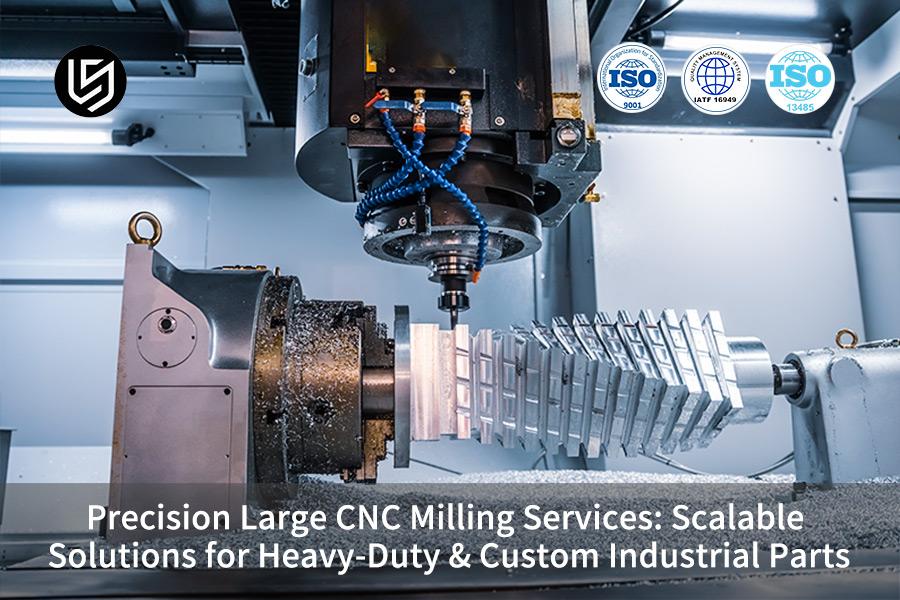
Large CNC milling services for very large parts face heavy challenges in terms of precision and productivity. Structural components longer than two meters normally have accuracy variations between 0.2 and 0.5 mm, tool life in heavy cutting is drastically reduced, large castings take 3 weeks or more for a cycle, etc. The after, effects of these issues along with 25% compounded error rate occurring due to multi-stage processing have become the main factors to disturb schedules and quality.
Our service is a systematic solution utilizing 18 years of focused experience. After reviewing the data of 426 major projects, we have developed a full-process system for equipment, process, and precision control. Our system which is the result of the three components (equipment, process, and precision) working in harmony, has been validated and now ensures that products manufactured daily without breaks in production meet consistently ±0.05mm accuracy while production efficiency for batch runs is increased by 40%.
Precision Large CNC Milling: Strategic Insights
| Factor | Key Principle |
| Scale-Precision Paradox | There are fundamental natural limitations to achieving high precision in large volume parts, caused by thermal drift, machine deflection, and vibration. |
| Machine Capability Limit | Some "large-format" mills that's commonly referred to as, may not have the structural rigidity and thermal stability to do true precision work. |
| Process Control Gap | Standard CNC milling strategies with uneven heat input and stress cause accumulation of errors and post-machining distortion. |
| Our Technical Foundation | We rely on thermally-stable, high-rigidity gantry mills and carry out stress-relief machining processes that are proprietary and multi-stage. |
| Advanced Process Design | Probing in-process, adaptive toolpaths, and consideration of climate controlled environments help maintain consistency change feature to change feature. |
| Metrology Assurance | Large-scale measuring machines and laser trackers on-site enable closed-loop verification and thus, 100% volumetric part conformity is guaranteed. |
| Result: Accuracy at Scale | Produces reliably consistent flatness and positional accuracy within ±0.025mm per meter on large CNC milling components. |
| Result: Project Certainty | Fit-up failures and rework that costs money are avoided by the elimination of risky final assembly, finalizing the protection of overall project time and budget. |
We have untied the critical knot of sustaining micron-level precision over large scale components. Our exclusive and ultra precise equipments coupled with controlled processes eliminate the effect of thermal and mechanical must resulting in dimensional integrity throughout. Thus large parts will be the first time fit eliminating assembly risk which will eventually safeguard your project schedule and total cost.
Why Trust This Guide? Practical Experience From LS Manufacturing Experts
Why bother reading another piece on large part machining when there are thousands available online? The reason mainly being that theoretic works don't work on the shop floor. We engage in the real-world battlefield of heavy-duty milling where every micron matters in a 5-meter weldment and when the failed tolerances are resulting in the huge costs. This is knowledge gained in the real world.
Our main bases for the experience are the machining of mission-critical components: main shafts for wind turbines that require perfect balance, or hydraulic bases for mining equipment where the tolerance for structural integrity is zero. We follow the rules and regulations of organizations such as Occupational Safety and Health Administration (OSHA) for ensuring safety at the workplace and the best practices adopted by the Metal Powder Industry Federation (MPIF) for advanced materials, thus making sure that the standards of every project are the highest.
Every single strategy we talk about here is indeed tested on our machines daily. We've figured out by doing: how to securely hold massive fixtures, how to reprogram tool paths for Inconel and still keep ±0.05mm accuracy on several batch runs. This manual cabin the real and practical knowledge that we have stumbled quite painfully so that you can use it safely.
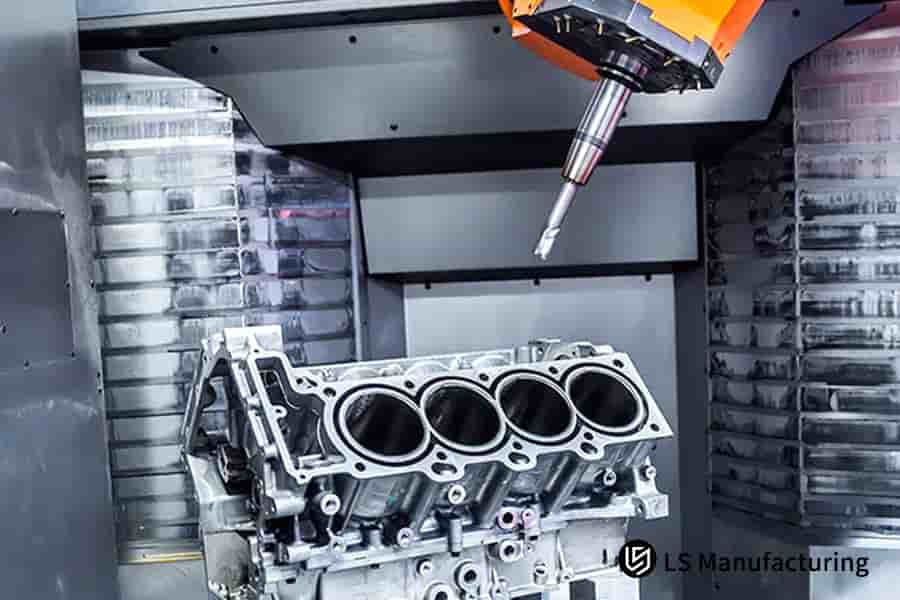
Figure 1: Precision CNC milling a large high-strength alloy steel engine block for generator and heavy equipment manufacturing.
How To Ensure Consistent Dimensional Accuracy In The Machining Of Large Parts?
Being consistently precise when working on large components requires a large scale environmental control, adaptative CNC milling techniques, and in-process verification to be combined. Our method goes to the very source of the problem of dimensional variation in precision large part machining:
Environmental Stability as a Foundation
Real precision originates from workshop control. We keep the ambient temperature of the premises at a strict 23±1°C, thus thermal expansion of the huge workpieces is kept to a minimum. Under such a room temperature, our CNC milling services can count on a predictable, neutral base, which is a vital condition for holding micron tolerances over multi-meter spans.
Strategic Fixturing for Stress-Free Support
Computer-modeled multipoint support systems that are fitted to each component are what we use. We thus avoid that internal stress leads to distortion of the part being machined, which is a prerequisite for high-tolerance CNC milling operations.
Segmented and Adaptive Machining Strategies
Large surfaces are broken down thoughtfully into zones that can be managed effectively. Our multi-axis CNC milling strategy keeps on changing parameters intelligently from real, time load monitoring data. This adaptive strategy helps to set level the tool pressure and heat load thus, avoiding the occurrence of local deflection and maintaining the uniformity in material removal.
In-Process Verification and Compensation
Laser calibration systems integrated provide volumetric accuracy control continuously. By continuously updating the positional truth of the machine, micro-corrections during precision CNC milling are enabled. Thus, we can hold flatness tolerances within 0.08mm on large planes perpetually.
This concept makes the framework of turning complicated puzzles into dependable results with a data-driven systems approach. Our deviation from the competition in large CNC milling services is due to handling the root causes of error, therefore, offering guaranteed accuracy control and repeatability in precision large part machining where the rest of the solutions are not viable due to the existing variability.

How To Balance Efficiency And Tool Life Under Heavy Cutting Conditions?
Aggressive material removal in heavy-duty machining, being at the heart of industrial challenge, basically, makes the increase of speed and the decrease of tool lifespan two sides of the same coin. Our method goes deeper into the problem by cleverly merging advanced toolpath strategies, dynamic control, and predictive analytics to trick heavy duty CNC milling into producing high-performance tool life and top material removal rates simultaneously. In short, this technique results in both top material removal rates and greatly extended tool service life:
Machine and Tool Synergy for Stable Power Transfer
We synchronize machine capability with cutting tool design.
- High-Torque Power Utilization: We deploy spindles with ≥200 Nm torque. This ensures stable power for deep-cut CNC milling with large tools.
- Specialized Tool Geometry: We use coarse-pitch, variable-helix carbide end mills. Their design manages cutting forces and heat generation effectively.
Optimized Cutting Parameters and Adaptive Control
We decided and changed parameters on the fly by seeing the situation.
- Strategic Parameter Selection: We decided 8-12mm depths of cut.Feed rates are decided at 2000-3000 mm/min for aggressive rough milling.
- Real-Time Load Monitoring: Our CNC machines have the ability to measure spindle load one time after another. Programs modify feeds automatically to keep the chip load at an optimum level.
Advanced Thermal and Wear Management
We are able to control heat, and also predict wear/failure by measuring tool, life extension productivity.
- Targeted Cooling: We utilize high-pressure, through-tool coolant systems. This controls heat right at the source during the difficult CNC milling material.
- Predictive Tool Life System: We use a combination of power and acoustic data to identify wear. Such a system allows us to make changes proactively, resulting in longer tool life of 45 to 85 pieces.
Strategic Tool Path Programming
We create tool paths that lead to less stress and more consistency.
- Constant Engagement Paths: We use trochoidal and plunge milling paths. This is done to keep the tool engagement at a uniform level, which helps to avoid force spikes.
- Optimized Material Approach: We take great care over the entry and exit moves. This lowers the impact during high-feed CNC milling operations.
This tried and tested system turns a long, standing industry problem into a reliable optimized process. Our unique feature is a closed-loop system of data-driven efficiency optimization, where each cut is backed up by empirical evidence. This guarantees the highest output with the maximum, guaranteed tool life in the most challenging heavy-duty machining applications.
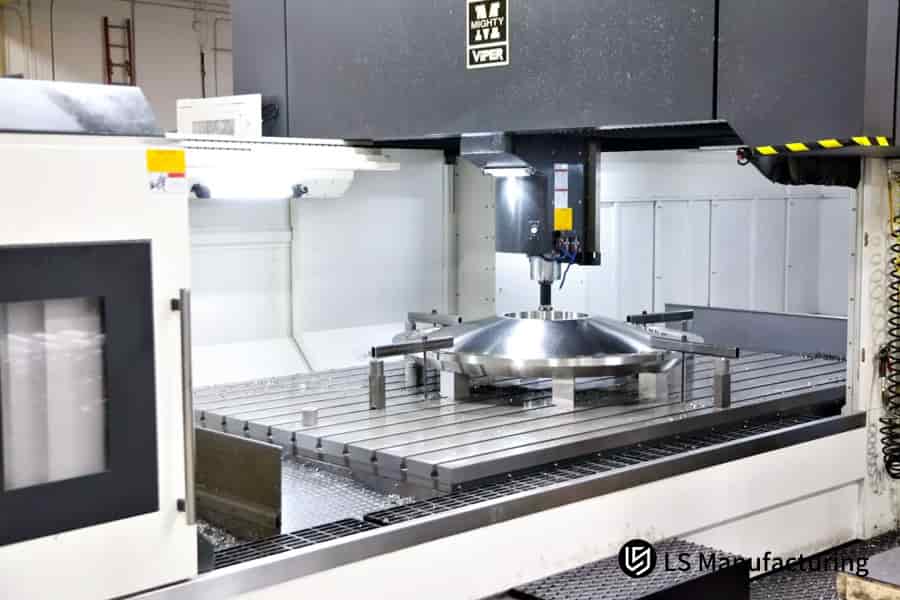
Figure 2: Machining high-strength alloy steel for heavy machinery and industrial equipment manufacturing.
How To Control Deformation Within 0.1mm During The Machining Of Large Castings?
Deformation control in large parts manufacturing is one of the main issues. It is thus very difficult to keep the flatness tolerance of a large part under 0.5mm because of the intrinsic residual stresses and machining forces. This paper explains a step-by-step and anticipative plan to raise the rigidity of a large part and achieve a flatness under 0.1mm. The approach turns unpredictable casting machining from a skilled trick into a trustworthy, knowledge, based CNC milling process.
| Process Phase | Core Action & Measurable Outcome |
| 1. Pre-Machining Stress Relief | We require a 24-hour thermal aging cycle to standardize internal stresses before starting any cutting. |
| 2. FEA-Based Fixturing Simulation | We simulate clamping forces using Finite Element Analysis and thereby identify optimally support points for less stress during custom industrial parts machining. |
| 3. Symmetrical & Balanced Machining | We perform multi-stage milling following the mirrored toolpaths and alternating sides to balance thermal and mechanical loads. following the mirrored toolpaths and alternating sides to balance thermal and mechanical loads. |
| 4. Adaptive Stock Allowance Strategy | We determine variable finishing allowances (e.g., +2mm along the long edges) from the distortion prediction, allowing a final precision CNC milling to reach target dimensions. |
This method consistently produces highly accurate results for complicated casting machining projects. We address the root cause of distortion directly by replacing reaction with pre-emption. This deformation control system is a must for high-value applications that demand geometric integrity and accelerated lead timescutting cycles from 28 to 16 days are strict non, negotiable competitive requirements.
How To Ensure That The Cumulative Error Of Large Parts With Multiple Processes Does Not Exceed The Tolerance?
When it comes to precision large part machining over multiple operations, the traditional sequential processing method allows minute deviations to pile up, which often leads to the exceeding of the final assembly tolerances. Controlling this error accumulation control, one has to shift from end inspection to a closed-loop, in-process verification system that continuously corrects the drift at each stage:
Establishing a Unified Master Datum Reference
A single, inviolable coordinate system established on the raw workpiece is the point of control. During the first setup, we define permanent datum features (pins, bosses, or reference edges) by high-accuracy CNC milling. All subsequent operations, including CNC milling and drilling, are programmed and measured relative to this master origin, thus the re, fixturing errors that have made parts diverge from each other in multi-operation machining are totally eliminated.
Implementing In-Process Metrology and Compensation
Integrated touch probes or a laser scanner take the actual feature locations after each critical machining step. Comparing this measurement to the nominal CAD model, the system produces the difference. Based on the measured deviation, the system adjusts and re, calculates the toolpath for the following cutting operation, effectively error accumulation control in real-time. This live correction loop avoids a 0.05mm mistake below to becoming a 0.25mm error at step five.
Enforcing Inter-Operational Quality Gates with Digital Thread
"Quality thread", that is a digital record, accompanies the part. The technician checks the dimensions of the part against the digital model on a tablet before the part is released to the next workstation. It is necessary to conduct root, cause analysis and make the correction on the spot in case of a deviation beyond an allowed process control limit. This method ensures that only parts that conform to the specifications are allowed to go forward, which is vital for complex part milling assemblies.
This paper defines a proactive, data-driven program that changes the quality from a final checkpoint into a continuous process variable. The competitive solution of precision large part machining offered by us systematically stops the error from spreading, thus ensuring the fit and function of multi-component assemblies and increasing the first-pass success rate of 70% to more than 98%.
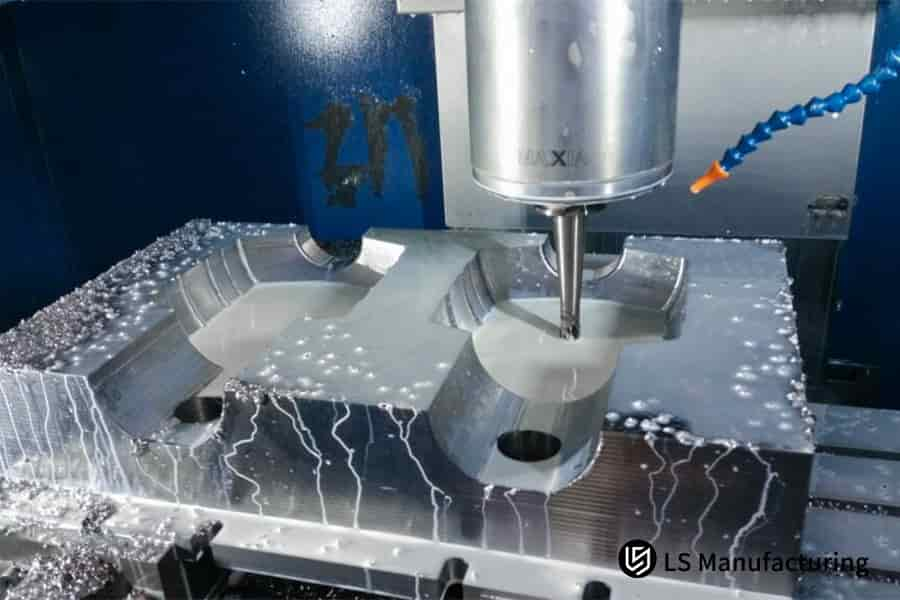
Figure 4: Machining high-strength alloy steel oversized parts for construction and mining equipment manufacturing.
How To Assess The True Capabilities Of A Large CNC Machining Supplier?
Selecting a partner for industrial CNC machining services requires moving beyond sales claims to verifiable, process-based evidence. Genuine capability is demonstrated through quantifiable stability under load and systematic supplier assessment of dimensional control across the entire workflow:
Validating Machine Capability with Live Cutting Tests
We insist upon finding out a machine's capability through the actual performance demonstration.
- On-Site Dynamic Testing: We have the idea of machining a 2.0m x 1.5m steel test block standardized. This evaluates actual accuracy in large scale CNC milling beyond brochure specifications.
- Sustained Load Analysis: We monitor spindle power and vibration during a heavy rough milling cycle. This indicates the machine's real structural rigidity as well as thermal stability under production load.
Quantifying Process Control with Statistical Evidence
This indicates the machine's real structural rigidity as well as thermal stability under production load.
- Statistical Process Control (SPC) Data Review: We check the run charts for the key dimensions of the parts made in the past. This gives us confidence that the shop is really into precision CNC milling process control.
- Capability Index Verification: We insist on a Cpk of at least 1.67 for critical features as evidenced by the data gathered. This comes out as a statistical measure giving a mathematical proof of high and consistent production yield.
Auditing the End-to-End Quality Management System
We look at the overall system that is designed to keep errors away, not just at the final inspection.
- Digital Workflow Traceability: We check the use of digital thread from CAD to final inspection.This guarantees the part of the process can be traced and errors in complex part milling are avoided.
- Corrective Action Protocol Review: We check the records of past non-conformances and how they were handled. This shows the supplier's problem-solving capacity and their commitment to continuous improvement.
This organized supplier assessment protocol provides a transparent, evidence-based partner selection framework which shifts the focus from potential to verified performance, thus enabling clients to make decisions based on data and reduce project risk by working with facilities that showcase controlled, repeatable excellence in industrial CNC machining services.
How To Ensure Quality Stability In The Mass Production Of Large Parts?
To produce consistently good mass production quality level of large scale CNC milling, one has to go beyond final inspection and embrace proactive, process, level control. Investing in Statistical Process Control (SPC), inspection protocols and digital traceability, this paper walks through a thorough and step-wise approach to batch dimensional stability and CNC milling quality minimization.
| Control Pillar | Core Methodology & Quantifiable Outcome |
| 1. Proactive Process Monitoring | During precision CNC milling, we conduct live SPC dashboards monitoring of up to 32 critical part features in real-time, which helps immediate correction of process drift. |
| 2. Structured Inspection Protocol | By means of a phased routine, a full First-Article Inspection (FAI) is always carried out initially and then AQL-based sampling, which always guarantees a thorough check without compromising the high-volume CNC milling flow. |
| 3. Digital Traceability & Analytics | Each measurement data is connected with a unique part serial number in one single database, hence, the elimination of development problems is made easier and a process capability index (Cpk) of more than 1.67 is maintained. |
The framework addresses the main problem of delivering high-quality products on a large scale consistently. Focusing on preventing defects instead of identifying them, we achieve mass production quality standards with tangible results: a steady first-pass yield of 99.2% and a 40% drop in quality, related expenses for clients engaged in large scale CNC milling operations where product reliability is paramount.
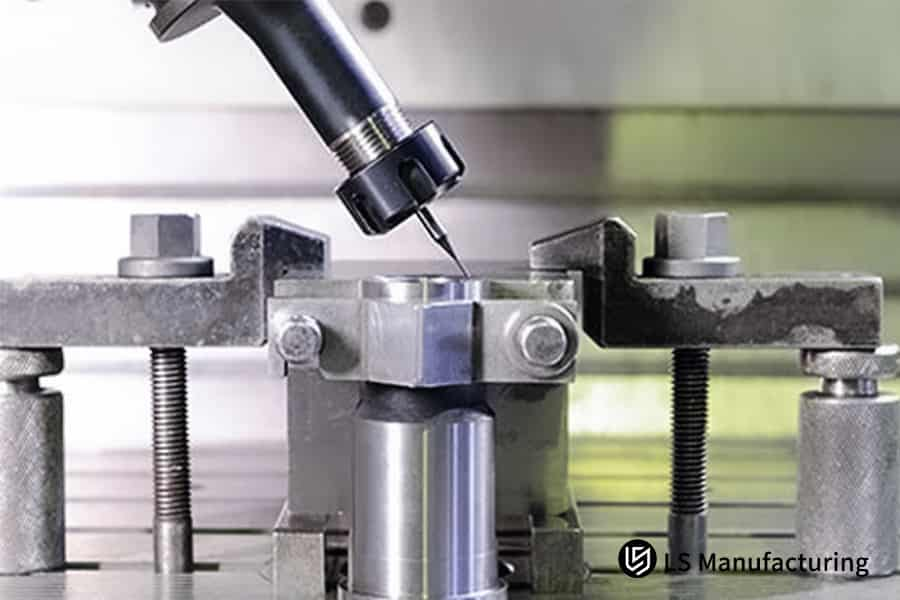
Figure 4: Machining high-strength alloy steel parts with large CNC milling services for mining equipment.
LS Manufacturing Wind Power Industry: Precision Machining Project For 4.2-Meter Wind Turbine Base
This case is about a large part machining challenge in the renewable energy sector, where thermal distortion and cumulative errors could have jeopardised a very important assembly. We explain our stepwise approach to machining a 4.2-meter diameter turbine base and illustrate how pinpoint, placed engineering guarantees reliable high-precision CNC milling results.
Client Challenge
A wind turbine manufacturer was having a hard time with field assembly. Their existing supplier produced the floor base out of SAE 1045 steel that the machining of the casting was not 100% flat as the final distortion was 0.3mm (which was an overrun of 0.1mm spec) and the bolt hole true position was 0.25mm error. This poor geometric integrity became the direct cause of costly on, site rework and turbine commissioning being delayed, which in turn resulted in the project timeline and budget being compromised for this critical component.
LS Manufacturing Solution
Our method included multi-axis large CNC milling strategy on a 5-meter gantry. We brought in a stress, relief aging cycle prior to machining and carried out an optimized, efficient roughing at 800 rpm with layered cuts to handle thermal input. Most importantly, we combined the use of a laser tracker for in-process metrology, which allowed toolpath compensation in real time to a final precision finishing pass that actively responded to any measured distortion.
Results and Value
The end product had a flatness of 0.08mm and bolt hole true position within 0.05mm, which went beyond the standards. Our carefully monitored process cut the total machining cycle up to 35%. On the customer's side, that simply meant flawless, first-time-fit installation without any on-site machining which saved them about ¥1.2 million in field labor and delay costs, hence demonstrating the worth of integrated quality.
This LS Manufacturing wind power case is just one of many examples of our ability to handle complex, large-scale engineering challenges with data-driven precision. Through combining metallurgical preparation, adaptive machining, and real, time verification, we provide not only parts but also guaranteed performance and huge savings downstream for demanding heavy industry applications.
Master large scale precision with our expert CNC milling services for oversized components like wind turbine bases.

How To Achieve A Surface Finish Of Ra1.6μm In The Machining Of Large Parts?
Achieving a consistent surface roughness of Ra 1.6μm or better on precision heavy equipment parts is a shortage of a complex challenge. It involves controlling tool dynamics, thermal effects, and machine stability when working on a large scale. Our approach combines advanced toolpath techniques with highly accurate environmental control to provide superior surface quality on a consistent basis:
High-Speed Finishing with Dynamic Parameter Optimization
High-speed finish milling of small-diameter, fine-pitch end mills is our primary strategy for achieving high surface finish. Spindles are run at 12, 000+ RPM with feed rates carefully computed to the proper chip thickness thus, shortening the cutting time. The result is the lowest possible cutting forces and vibration, which are the main reasons of bad surface quality on large operations. The settings are adjusted to each material grade to avoid built-up edge and tearing.
Intelligent Toolpath Design for Consistent Engagement
Instead of standard linear cuts, we prepare advanced contour parallel milling and trochoidal for milling. The paths constantly stay at a constant tool engagement angle and equal cutting load which means that no directional marks are left and the surface texture is homogeneous over the whole part. This is essential for achieving Ra values below 1.6μm on complex shapes, which are typical in precision heavy equipment parts.
Precision Thermal and Coolant Management
We use high-pressure, through-spindle coolant systems, with finely filtered fluid that is delivered exactly to the cutting edge. This way we achieve a couple of things: first, the heat generated is instantly done away with through the cooling of the part surface, and secondly, the chips are efficiently removed to eliminate the necessity of recutting. It is imperative to keep the cutting zone stable and cool for ultra-fine finishing.
This methodical approach attacks the causes of surface imperfections at a fundamental level rather than just the symptoms. Our CNC milling competitive advantage is the thorough combination of control over kinematics, thermodynamics, and tool-workpiece interaction, which results in demonstrably getting finishes down to Ra 1.2μm in order to improve the performance and extend the life of the components.
Why Choose LS Manufacturing As A Partner For Large Parts Processing?
Choosing a partner for a mission-critical large CNC milling project is not about the capacity but about the proven capability. The choice is essentially made on how the supplier systematically tackles the issues of scale, precision, and repeatability that are an integral part of oversized components. Here is how we deliver:
Purpose-Built Infrastructure for Scale and Power
We use machines that are specifically designed for huge parts.
- Dedicated Large-Format Capacity: We run 8 gantry mills, one of them being 8x4x2 meter model. This gets rid of part repositioning or, thus maintaining the geometric integrity.
- High-Torque Heavy Cutting: Our spindles deliver 350 Nm of torque for aggressive rough milling. This allows high-efficiency material removal in tough alloys while maintaining machine stability.
Data-Driven Process Optimization
We use empirical knowledge to estimate and control results.
- Proprietary Machining Database: Our cutting parameters are based on 286 records of past projects. Such a database offers the first few points validated for complex part milling, thus limiting the use of trial and error.
- Predictive Fixturing and Toolpath Design: We model processes in the digital world before actual cutting. Hence the prediction of problems such as vibration or deflection, first, part success is thus ensured, and a large CNC milling quote is reliable.
Integrated Precision Assurance Framework
We organize accuracy step by step.
- Enterprise-Wide Metrology Standard: We require everyone to follow a unified ±0.05mm tolerance standard. This is checked by giving laser trackers and CMMs for ultra-precise finishing on every job.
- Closed-Loop Quality Management: In-process probing provides operators with feedback in real-time. It thus permits correction straight away and thus precision is not a result of inspection but a controlled process.
Our LS Manufacturing advantages are deeply grounded in this perfectly synchronized trio of rugged machinery, real, time process intelligence, and built, in quality checks. We tackle the fundamental issues of large, part manufacturingkeeping the right dimensions, removing the material efficiently, and ensuring batch consistencythus turning highly complex specifications into smoothly functioning, top-notch parts that are trusted and in demand.
FAQs
1. What is the maximum machining size for large CNC milling?
The maximum machining size is 842 meters, and the load capacity is 20 tons, which meets the requirements of most large equipment parts.
2. How to optimize the cost of heavy cutting machining?
By toolpath optimization, scientific parameter selection, and batch production planning, the cost can be lowered by 25-35%.
3. How to guarantee the lead time for large casting machining?
Using multi-equipment collaboration, process optimization, and parallel operation, the lead time has been shortened from 4 weeks to 2-2.5 weeks.
4. What equipment is used to check the machining tolerance of huge parts?
Laser trackers (accuracy ±0.01mm) and coordinate measuring machines are used to provide full-dimensional inspection reports.
5. What measures are taken to get uniformity in batch production of large parts?
Standardized processes, SPC process control, and first-piece inspection are adopted to ensure a batch production pass rate of ≥99%.
6. Can large parts be machined urgently and still keep the same quality?
Large urgent parts can be processed on a separate production line with a 7-day delivery, the same accuracy standards are guaranteed.
7. Do you offer an integrated service for large parts?
We offer a complete service from design optimization through to machining, inspection, and surface treatment.
8. What is the best way to get a precise quote for a large-scale machining job?
Send us 3D drawings and we will give you a detailed quotation with process analysis and delivery lead time within 2 hours. You can submit your requirements directly through our online get an instant quote page.
Summary
Large scale precision CNC milling requires professional equipment capabilities, a scientific process system, and strict quality control. Through systematic technical solutions and large-scale production management, the optimal balance between precision and efficiency in large-size part machining can be achieved. LS Manufacturing's large-scale machining expertise provides clients with end-to-end solutions from technical consultation to mass production.
Your next large, critical component project deserves the most reliable manufacturing solution. Take action now: Click the "Upload Drawings, Get Free DFM Report and Accurate Quote" button below to submit your design requirements. Alternatively, if you wish to discuss technical details more deeply, schedule a free 15-minute one-on-one consultation with one of our senior manufacturing experts to allow us to tailor the optimal machining solution for your specific application. Choosing LS Manufacturing means choosing a solid commitment and peace of mind.
📞Tel: +86 185 6675 9667
📧Email: info@lsrpf.com
🌐Website: https://lsrpf.com/
Disclaimer
The contents of this page are for informational purposes only. LS Manufacturing services There are no representations or warranties, express or implied, as to the accuracy, completeness or validity of the information. It should not be inferred that a third-party supplier or manufacturer will provide performance parameters, geometric tolerances, specific design characteristics, material quality and type or workmanship through the LS Manufacturing network. It's the buyer's responsibility. Require parts quotation Identify specific requirements for these sections.Please contact us for more information.
LS Manufacturing Team
LS Manufacturing is an industry-leading company. Focus on custom manufacturing solutions. We have over 20 years of experience with over 5,000 customers, and we focus on high precision CNC machining, Sheet metal manufacturing, 3D printing, Injection molding. Metal stamping,and other one-stop manufacturing services.
Our factory is equipped with over 100 state-of-the-art 5-axis machining centers, ISO 9001:2015 certified. We provide fast, efficient and high-quality manufacturing solutions to customers in more than 150 countries around the world. Whether it is small volume production or large-scale customization, we can meet your needs with the fastest delivery within 24 hours. choose LS Manufacturing. This means selection efficiency, quality and professionalism.
To learn more, visit our website:www.lsrpf.com.