English



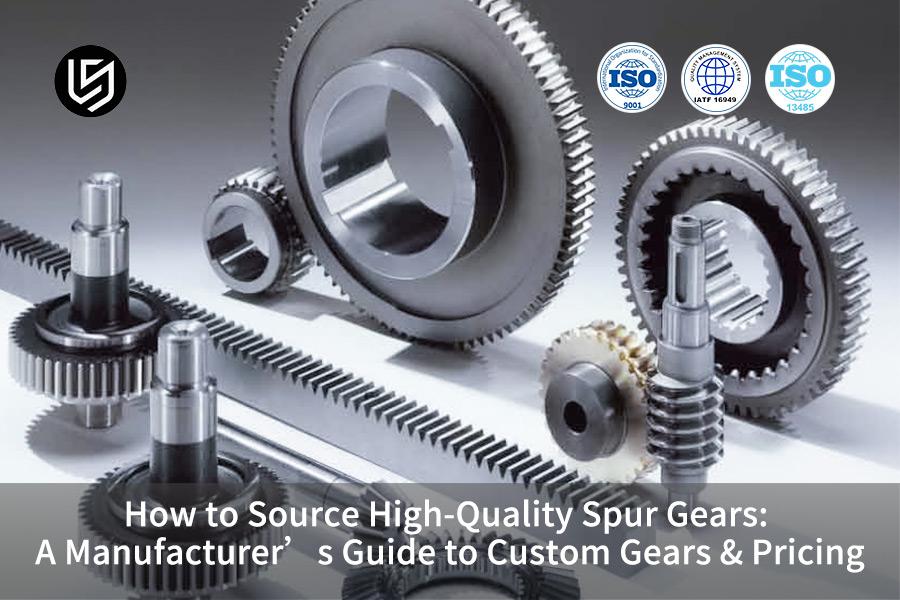
Spur gears take a leading role in systemic failures, especially when the purchasing decision is unit price, based without considering the performance. Compromising on specifications e.g., letting the precision level fall from AGMA 8 to 10 results in noise going up from 65dB to 78dB and the gear life being cut down by 70%. The root of these problems is the absence of a comprehensive framework to assess and manage the entire manufacturing process.
We remedied this by implementing a proven quality system derived from 286 projects. Our closed, loop methodology, starting from design for manufacturability to precision heat treatment and final verification, guarantees consistently AGMA Class 9+ level of precision. Hence measurable benefits are realized: service life is tripled, noise is controlled, and total cost is reduced by 25-40% through defect prevention and premature failure control.
High-Quality Spur Gear Sourcing Checklist: The Complete Procurement Roadmap
| Section | Core Content in One Sentence |
| Defining Your Needs | The more accurately you describe the gear parameters, the environment in which the gear will be used, and the desired performance, the easier it will be for the gear machining manufacturer to give you a correct price. |
| Material Selection | Depending on the required strength, wear resistance, and ability to be heat treated, select the best alloy or steel grade. |
| Precision & Tolerances | Become familiar with AGMA/ISO quality levels and determine which tolerances for pitch, profile, and runout will allow the gear to fit and work properly. |
| Key Manufacturing Steps | Confirm with your supplier that they are the one who perform critical processes like hobbing/shaping, heat treatment (including both case hardening and tempering), and finishing. |
| Quality Assurance | Check whether the supplier has agreed upon standards for dimensional checks, hardness testing, and surface finish measurement. |
| Cost Factors | Consider all components of the gear machining cost including the material, complexity, quantity, precision grade, and certifications required. |
| Red Flags in Sourcing | Don’t choose suppliers who neither control their processes nor have proper testing equipment. Also, suppliers who are not transparent about their heat treatment and quality documentation should be avoided. |
| Request for Quotation (RFQ) | When issuing an RFQ, it should be clear and complete, containing all the technical specifications, drawings, standards, and the delivery requirements. |
We address the fundamental issue of how to get the best deal in spur gear purchasing without sacrificing reliability in the long run. By following our structured approach, you can be assured that the spur gears you get will not only maintain top precision over time but also have a prolonged service life and use less energy, thus, saving you more in the long run. Simply put, you turn a troublesome part that has to be replaced frequently into a sturdy component.
Why Trust This Guide? Practical Experience From LS Manufacturing Experts
The web is full of purely theoretical posts about how to get spur gears. What sets this guide apart is that it is directly from the factory floor. We have been working for 15 years in the field, helping the clients to overcome their challenges. Besides being aware of gear standards, we use that knowledge in conjunction with other factors to ensure reliable and high-performing gears even in the most demanding cases.
We have real, life experience in industries where there is absolutely no room for failure. We have made tailor, made gears for aerospace systems, where precision ensures safety; for heavy machinery, where sturdiness decides the production capacity; and for robotics, where reliability results in efficiency. Each project has been a lesson on our part in how to choose the right materials, how to get the best from heat treatment, and how to check designs by applying very stringent criteria, among others, from TWI Global and Additive Manufacturing (AM).
The knowledge we share here is not theoretical. These are real lessons that we have learned through thousands of hours of facing the reality of production, solving problems and continually improving. We have a clear goal. We want to provide you with practical knowledge that will enable you to confidently source high-quality custom gears, avoid common pitfalls, and find the right balance of performance, durability, and cost.
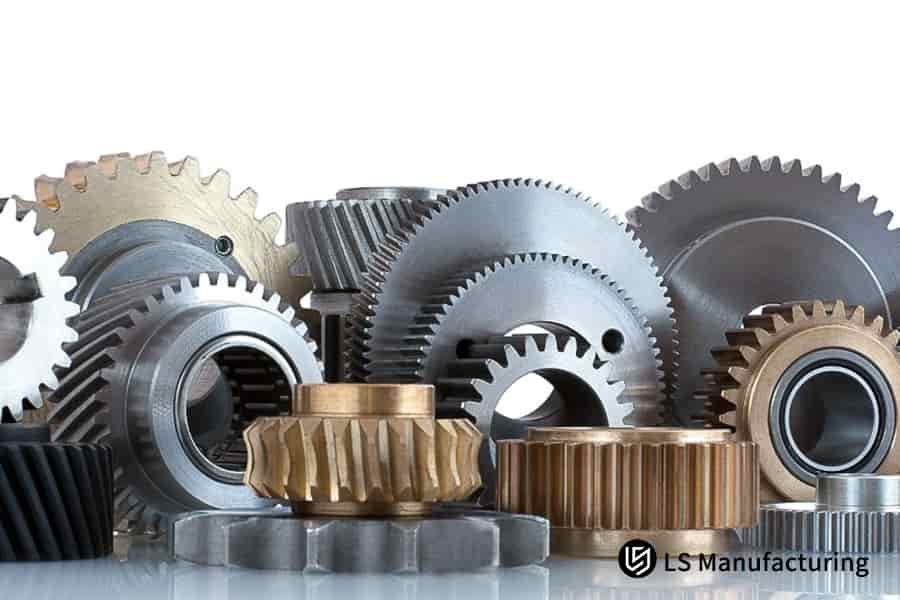
Figure 1: Machining custom steel and copper alloy spur gears for precision mechanical systems.
What Are The Key Technical Specifications That High-Precision Spur Gears Need To Meet?
There is a standard way of looking at the tolerance bands for the manufacturing of high quality spur gears but if you really want to get the most out of your gears then you need to go beyond such a simplistic approach. Here we share detailed targeted solutions for the specific cases of noise control, kinematic accuracy and dynamic meshing behavior that we have successfully handled by very precise manufacturing interventions.
Strategic Process Selection for Kinematic Accuracy
Resetting the bar on cumulative pitch error (≤0.025mm) is a call for a process with superior capabilities. In fulfilling this requirement precision form-grinding (IT5-6) is our usual choice of spur gear manufacturing services. This is the fundamental decision which directly limits kinematic transmission error thus it is reflected in a noise reduction of 8-10 dB as measured in gearbox assemblies at the baseline.
Predictive Modification for Dynamic Meshing
It is just the beginning that we do control the static profile error (≤0.01mm) only. We do apply the calculated tip and root relief (0.01-0.02mm) based on the load and speed parameters. This proactive modification will avoid the edge-loading impacts and thus be effective to a reduction of characteristic meshing noise in our precision spur gears from 72 dB down to below 65 dB.
Active Error Correction Through Metrology
We have integrated gear metrology as the main source of active process control instead of just final inspection. With the real-time data on lead error (controlled to ≤0.015mm) obtained during grinding it is possible to immediately compensate the machine axis. The inspection is converted into a stabilization tool through this closed, loop system, which is the main feature ensuring batch, to, batch consistency of high quality spur gears.
This approach goes beyond mere compliance by showing the integrated use of predictive modifications of the design, judicious process selection, and closed-loop control. Our detailed paper reveals extensive technical insights, emphasizing the demonstrable how to bring about solutions in the field of precision spur gears performance.

How Do Different Material Choices Affect The Performance And Cost Of Spur Gears?
The performance, durability, and overall cost of a spur gear are most essentially determined by the composition of the core material. Choosing the right alloy thus entails a delicate compromise between the mechanical properties, usages, and economic considerations of the lifecycle. We present here a spur gear material selection method that is based on data and thus allows turning the technical features into the most cost-effective and feasible solutions.
| Material & Treatment | Key Performance Characteristic | Economic & Application Insight |
| 20CrMnTi (Carburized) | Max. durability: bending strength ≥1500MPa, service life three times longer vs. tempered steel. | ~40% higher cost, justified for critical, high-stress custom spur gears. |
| 45# Steel (Quenched & Tempered) | Capable of handling moderate loads but wear resistance and fatigue life remain limited. | The most cost, effective metal baseline for general industrial usage. |
| 40Cr (Quenched & Tempered) | A balanced compromise between 45# steel and 40Cr for moderately higher loads. | Allows ~25% cost saving vs carburizing when full high-end properties are not critical. |
| Engineering Plastics (e.g., Nylon) | Ensures silent running, corrosion resistance and is speed limited to ≤1000 rpm. | Part cost ~70% lower than metal, thus ideal for light-duty, low-noise assemblies. |
This framework helps clients decide on the right level of performance investment versus budget trade-off. By pinpointing the most cost-effective material that still fulfills all functional criteria, we offer spur gear competitive pricing. Our fact-based approach, which is illustrated through the 40Cr example, gives clear, high-value directions on how to minimize the overall cost of owning a product in technically challenging competitive markets.
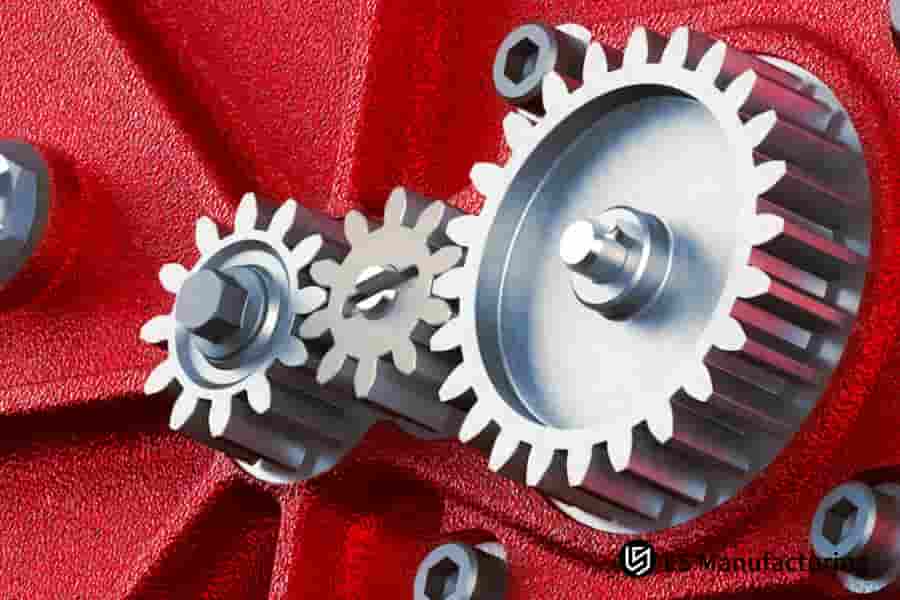
Figure 2: Machining heat-treated alloy steel precision custom spur gears for automotive and industrial transmission systems.
How Does The Heat Treatment Process Ensure The Durability Of Spur Gears?
The wear resistance and fault, free operation of a spur gear fundamentally depend on its metallurgical characteristics, which are a result of the heat treatment process. Stating merely hardness ranges is not enough; controlled precision is necessary at every step of the thermal cycle in order to get consistent, repeatable results. This paper explains in detail our methods for dealing with the main problems of spur gear heat treatment:
Precise Control of Case Depth and Hardness Profile
- Targeted Case Depth: For gears with modules 2-4, we use a case depth of 0.8-1.2mm. This is adjusted according to the gear shape to provide the bending strength at the limit of brittleness.
- Dual Hardness Management: Through the achievement of surface hardness HRC 58-62 for wear resistance, a tough core of HRC 30-40 capable of absorbing shock loads is maintained, thus ensuring the life of the gear ≥10^7 cycles of fatigue.
Minimizing Hardness Scatter via Atmosphere Control
- Technology Application: We use endothermic atmosphere generators and oxygen probes in our sealed-quench furnaces.
- Process Result: This unit keeps carbon potential within a fluctuation band of only ±0.05%. One of the immediate results is a uniform case chemistry, which limits hardness scatter to within HRC 1.5 across a production batch, thus, facilitating reliable spur gear production services.
Controlling Distortion with Press Quenching
- The Challenge: If quenching is done without any constraint, it results in uneven cooling, and thus distortion that compromises gear mesh accuracy.
- Our Solution: We use press-quenching fixtures with a single purpose. The press is used during the oil quench of the gear, and calibrated pressure is applied to counteract thermal stresses.
- Quantified Outcome: By following this controlled procedure, the post-heat-treatment distortion has been limited to less than 0.02mm, thus, the geometric integrity of the gear is maintained and the elimination of costly secondary machining is achieved for the spur gears quality control.
Through this approach, it is evident that robustness is the result of tight process control, rather than just from the specification sheet. We have the capability to turn a conventional heat treatment process into a highly precise and precision-driven process that uses our spur gears as the right performance assurance and extended service life for the most demanding applications.
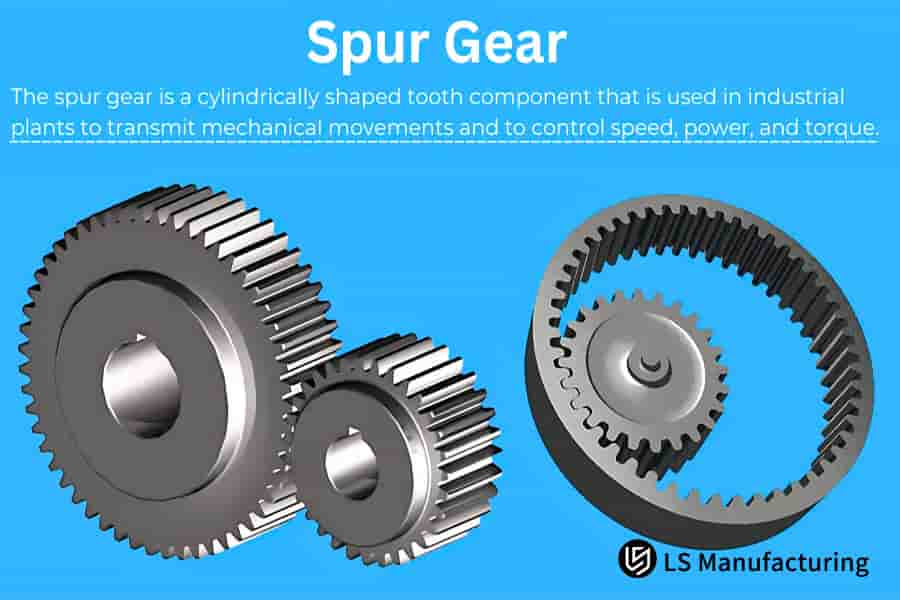
Figure 3: Presenting high precision metal spur gears for industrial mechanical power transmission systems.
How To Reduce The Manufacturing Cost Of Spur Gears Through DFM Optimization?
True cost optimization in manufacturing starts with the design stage. It is during this phase that as much as 70% of the final part cost gets locked in. Our spur gear DFM method continually audits gear designs to flag unnecessary manufacturing complexities and remove them, while performance remains intact. We deeply analyze and seek local engineer support to address the specific problem of how theoretical designs can be turned into economically efficient production-ready components:
Standardization of Design Parameters to Reduce Tooling Cost
We recommend standardizing (i.e., using the same module sizes and pressure angles) a product family or project. This means fewer custom and single-purpose cutting tools will be needed. For example, a standard module shared across three similar gear designs can bring down the specific tooling costs by around 30%. This design for manufacturing (DFM) principle is a major initial step towards spur gear standardization.
Functional Triage: Precision Allocation Based on Actual Load
We know that not every surface needs to be of high precision. Our spur gear DFM methodology efficiently identifies the ones that have to be at the highest grade and justifies the relaxation of tolerances where the little allowance is. We have extended the contact flank and bore tolerances from IT7 to IT9 where it is possible after a detailed analysis of our client's gear hub. This initiative has allowed us to save grinding time and inspection overhead, hence a direct 20% cost reduction, while all the functional requirements were fulfilled.
Batch Consolidation for Economical Small-Volume Production
Producing small orders separately is too expensive for the low volume component. We achieve this by combining orders with close material, module and diameter specification into shared production batches. In this way, the use of one bar stock for materials is maximized and the machine time is set in the most efficient way. Our research indicates that the above method would make the unit cost of small lots to be 35% lower and thus, would make batch production of spur gears viable for the market.
The report shows that a well, managed, knowledge-based design for manufacturing review process is the foundation of spectacular cost optimization. We give our clients not just DFM advice but also practical ways to reduce unit cost, shorten delivery, and improve manufacturability. Thus, gear designs in theory can be converted into competitively priced, production-optimized spur gear solutions.
How Can Consistent Quality Be Ensured In The Mass Production Of Spur Gears?
In high volume batch production, one of the most important issues is maintaining precise quality standards. Process drift and tool wear can be the cause of variation that if not controlled, will lead to the production of a defective lot therefore, increase costs. Our constant and systematic quality assurance gives consistency not only the attribute of a product after an inspection but also a process output that is controlled and predictable. This is the area of expertise in spur gear production services that we have to offer.
Statistical Process Control (SPC) for Proactive Variation Management
- Real-Time Monitoring: At critical machining stations, SPC is put in place for dimensional data collection at 2-hour intervals.
- Predictive Control: The trends are monitored through this data in real-time, and thus, action can be taken before the process specification is violated, resulting in a sustainable Cpk ≥ 1.67.
100% Inspection of Critical Functional Geometry
- Technology Application: A gear measuring center with CNC is used for the inspection of each gear in the batch.
- Guaranteed Outcome: Performing profile and lead deviation measurements 100% provides assurance that all functional meshing characteristics have been checked, limiting the batch size variation to ±0.015mm, thus ensuring reliable high volume spur gears.
Prescriptive Tool Life Management to Eliminate Wear-Based Defects
- The Challenge: Tool wear is randomly variable, thus, it is one of the most difficult causes of dimensional drift in production.
- Our Solution: Along with a protocol for switching tools is introduced, such as every 500 pieces, based on the historical data of the tool wear rather than the failure.
- Quantified Result: Such a preventive protocol is capable of removing the degradation of quality due to worn tools right from the source, thus stability for the entire spur gear batch starting from the first piece is assured.
This approach shows quite clearly that regular batch production quality is not a coincidental result but a well, engineered outcome of systemized process control, 100% verification of key characteristics, and strict tooling management. We offer our clients the assurance that each piece in any order, no matter the size, will comply with identical, documented performance specifications.
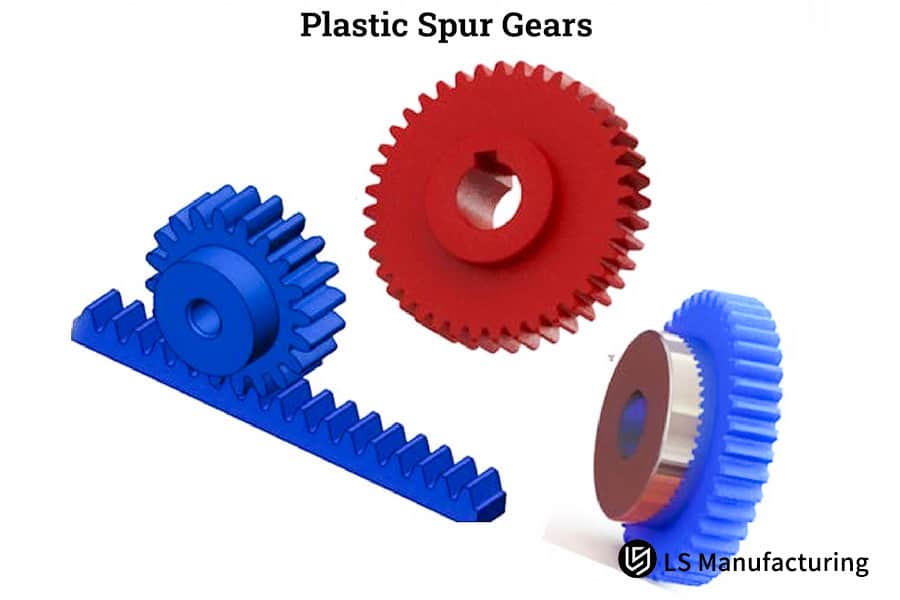
Figure 4: CNC machining engineering-grade plastic spur gears for precision industrial automation applications.
How To Assess The True Technical Capabilities Of A Spur Gear Supplier?
Picking a spur gear manufacturer involves you needing to move beyond simply general certifications and delve into the assessment of quantifiable technical competencies. A robust supplier assessment will verify precision equipment, tightly controlled processes, and execution capabilities as per documented work. The proposed framework sets out at a glance, data-driven criteria to assess a supplier's true technical capability and would give you the confidence that they are capable of meeting very strict performance requirements.
| Assessment Dimension | Key Verification Metric & Method | Rationale & Benchmark |
| Metrology & Inspection Capability | Ask for a CNC gear measuring center's gear measurement reports and check that the stated measurement uncertainty is ≤ ±0.001mm. | This must be a main priority when dealing with validating the accuracy of high-precision spur gears and issuing clear conformance data. |
| Process Control Documentation | Request and review a complete, traveler-tagged Process Control Plan (PCP) for a sample gear. | Controls points which are documented such as heat treat temp uniformity ±5°C prove that execution is systematic and not just a claimed ability. |
| Capability Validation via Test Sample | The company will be required to machine a small spur gear test sample (e.g., module 1.5) with a profile error not greater than ≤0.008mm. | This hands, on test is a direct measure of the level of their machining accuracy, how well they set up the equipment, and their capability to meet such a tight spur gears manufacturing tolerance. |
| Technical Support & Problem-Solving | Tell about a situation where they traced the root cause (for example, with SPC data) and managed to rectify the quality deviation. | Such an instance is a good demonstration of their intense engineering partnership and quality assurance commitment beyond the mere production level. |
This framework enables you to carry out a fact-based supplier assessment that helps in reducing supply chain risk. We assist clients in overcoming the vital issue of finding partners who have real, process-deep technical capability, therefore, your spur gear specifications are always met through manufacturing excellence verified by the third party, not just by the promise.
LS Manufacturing Automation Equipment Industry: Customized Precision Spur Gears For Robot Joints Project
The industrial robot joint mechanisms require very quiet and highly durable gears that can offer both precision and longevity. This precision spur gear case study outlines how LS Manufacturing after a thorough investigation and diagnosis of the situation, resolved a vital noise and failure problem for a top automation equipment application manufacturer by a single production process change:
Client Challenge
The client was in need of AGMA Class 10 precision spur gears (Module 2) for a robotic arm joint of their new robot. They stipulated strict targets of noise levels ≤65dB and running time ≥20, 000 hours. The clients previous supplier was having problems with inconsistent spur gear heat treatment that resulted in profile distortion exceeding 0.025mm. Consequently, the operating noise reaching 75dB and a scrap rate of 15% were two main factors that the product launch and field reliability were brought into question.
LS Manufacturing Solution
We devised a three-stage corrective action plan. Initially, the switch was made to vacuum carburizing that enabled the material to be heated more uniformly thus controlling distortion. Then, a series of modifications concerning the profile of the gear teeth was made to the meshing path to get an efficient mesh. Last but not least, precision grinding was used to set the final shape. A comprehensive process SPC system was used to monitor this integrated spur gears quality process for complete traceability and control.
Results and Value
The implemented changes resulted in gears that not only met but always exceeded AGMA Class 9 requirements by a large margin, with the reduction in operating noise to 62dB, and the tested lifetime to 30, 000 hours. By the changes made, the client had zero product failure in the field within a year and was able to save ¥800, 000 annually in warranty repairs and replacement parts that otherwise would have been a cost and simultaneously helped their product maintain a market reputation of a dependable robotic arm motion.
This case shows our ability to address the root issues of manufacturing problems especially those that result from data backed engineering. We offer custom spur gear solutions that come with a performance guarantee of the critical component reliability, which is turned from a risk into a competitive edge for a highly demanding automation equipment application.
Transform your robot performance with precision spur gear manufacturing for silent durable operation today.

What Are The Cost Components And Optimization Strategies For Spur Gears?
Achieving true spur gear competitive pricing requires an in, depth understanding of its cost structure. It involves going beyond just the part price to the materials, processing, and overhead elements of the price. Strategically intervening at these specific points makes it possible to save a lot without compromising the quality. Our methodology applies targeted optimization strategies to each key cost component:
Granular Cost Breakdown to Identify Leverage Points
- Analysis Framework: We break down the total cost into the major categories: Material (35-45%), Machining Labor (30-40%), and spur gear heat treatment (15-20%).
- Actionable Insight: This model clearly shows the areas with the highest potential for intervention by directing efforts to the areas where the greatest return is, which is the basis for the comprehensive spur gear quote.
Targeted Material & Process Efficiency Gains
- Material Strategy: We carry out "fitness-for-use" material selection, and as a result, we regularly replace premium alloys with low-cost materials that satisfy all mechanical requirements.
- Process Innovation: Installing a high-speed dry hobbing machine for the right batches can increase machining efficiency by as much as 40%, which in turn, directly lowers the biggest variable cost: machine time.
Strategic Batch Planning and Secondary Cost Reduction
- Batch Optimization: We work out and suggest Economic Order Quantities (EOQ) which are generally between 50 and 200 pieces, thereby reducing the cost of setup and tooling amortization per unit.
- Secondary Operations: We have simplified deburring and coating operations through the use of automated cells, which has led to a decrease in manual handling and consequently, the labor overhead.
Such a methodical approach addresses the main issue of producing a high-performance precision spur gear at a well, optimized cost. We furnish our customers with a clear and data-supported plan to lower their total cost by 25-35%, thus turning the cost structure from a constant input into a variable element controlled by the application of expert optimization strategies.
Why Choose LS Manufacturing As Your Spur Gear Manufacturing Partner?
Selecting a spur gear manufacturing partner is a strategic choice that influences product performance, supply chain risk, and the total cost. The main difference lies not in the declared capabilities, but in a proven, systematic approach to ensuring precision and consistency at scale. LS Manufacturing turns fifteen years of specialized experience into predictable, high-quality results for clients through clear technical systems:
Process-Driven Consistency via a Proprietary Knowledge Base
We overcome the problem of variability by using a continually updated process database from more than 286 projects. This factual knowledge enables us to pre-optimize parameters for spur gear machining services, thus obtaining a first-pass yield of 98.5% and maintaining AGMA Class 9+ precision stability right off the production line, thereby saving from trial runs that can be very expensive.
Quantifiable Quality Assurance through Advanced Metrology
Our quality commitment is measurement, based. We use gear measuring centers with 0.001mm accuracy to carry out 100% inspection of the critical profile and lead dimensions on the sample lot. This data-driven verification is a watertight conformance assurance that ensures the precision spur gears in every batch comply with the print specification documented.
Controlled Material Performance from Specialized Thermal Processing
Material integrity is not just a characteristic that is taken for granted, but one that is deliberately designed. Different from most general heat treatment facilities, our specialized units achieve furnace temperature uniformity control of within ±5°C, knife edge. Certified metallurgists handle this level of control, resulting in case depth and hardness (e.g., HRC 58-62) being so consistent from one batch to another that they are easily translated into predictable fatigue life and durability of reliable spur gears for operation even under tough conditions.
This paper is an operational manual for a technical expertise transformation into results which can be trusted and guaranteed. We address the core issue of partner selection by releasing information openly, backed by data-manufacturers' execution. Your supplier is guaranteed not only to provide you with the parts, but also with the certaintyjust as one would expect that the performance of a spur gear is a result that can be measured, not a risk factor that fluctuates.
FAQs
1. What is the highest precision grade achievable for spur gears?
Gear grinding can produce gears of very high precision up to AGMA 12 (ISO 3 equivalent) with pitch error of ≤0.005mm, which are suitable for high-precision transmissions.
2. Which batch size is economically viable for small-batch spur gear machining?
The economically viable batch size is 20-50 pieces. The cost per piece is 30-40% lower compared to smaller runs when using standard tools and processes.
3. How is dimensional stability ensured after gear heat treatment?
Resulting from a direct press quenching step following carburizing, the gear shape change is so well controlled to be within 0.02mm, thus enabling the stability of gear precision.
4. How to choose the most suitable gear material for different working conditions?
For heavy-duty applications, it is best to use 20CrMnTi carburizing steel; for medium-duty applications, 40Cr quenched and tempered steel; and for light-duty and corrosion-resistant applications, stainless steel. The decision should be made scientifically considering the operating conditions.
5. What are the key technologies for gear noise control?
In this way, the noise level of a gear can be decreased from around 75dB to less than 65dB by means of tooth profile modification, tooth direction modification as well as by precision improvement.
6. Do you provide gear design optimization services?
We offer free DFM analysis, and by optimizing the layout, the cost can be cut by 20-30%, and the gear performance can be improved.
7. How is quality consistency ensured in mass production of gears?
Through SPC process control, 100% inspection, and tool life management, we ensure a CPK ≥ 1.67 in mass production.
8. How to obtain an accurate gear machining quote?
If you give us your gear parameters (module, number of teeth, precision, etc.), you will get a detailed quotation within 2 hours, including process analysis.
Summary
High-quality spur gear procurement requires a systematic technical standards system and scientific quality assessment methods. By deeply understanding key gear technical parameters, optimizing design and manufacturing processes, the best balance between performance and cost can be achieved. LS Manufacturing's professional spur gear manufacturing system provides customers with a full-process solution from technical consulting to mass production.
Upload your gear parameters now to receive your personalized quote and DFM analysis. Please send us your gear drawings or technical requirements, and you will receive a transparent quote within 24 hours, including detailed pricing, delivery time, and optimization suggestions.
📞Tel: +86 185 6675 9667
📧Email: info@lsrpf.com
🌐Website: https://lsrpf.com/
Disclaimer
The contents of this page are for informational purposes only. LS Manufacturing services There are no representations or warranties, express or implied, as to the accuracy, completeness or validity of the information. It should not be inferred that a third-party supplier or manufacturer will provide performance parameters, geometric tolerances, specific design characteristics, material quality and type or workmanship through the LS Manufacturing network. It's the buyer's responsibility. Require parts quotation Identify specific requirements for these sections.Please contact us for more information.
LS Manufacturing Team
LS Manufacturing is an industry-leading company. Focus on custom manufacturing solutions. We have over 20 years of experience with over 5,000 customers, and we focus on high precision CNC machining, Sheet metal manufacturing, 3D printing, Injection molding. Metal stamping,and other one-stop manufacturing services.
Our factory is equipped with over 100 state-of-the-art 5-axis machining centers, ISO 9001:2015 certified. We provide fast, efficient and high-quality manufacturing solutions to customers in more than 150 countries around the world. Whether it is small volume production or large-scale customization, we can meet your needs with the fastest delivery within 24 hours. choose LS Manufacturing. This means selection efficiency, quality and professionalism.
To learn more, visit our website:www.lsrpf.com.