English



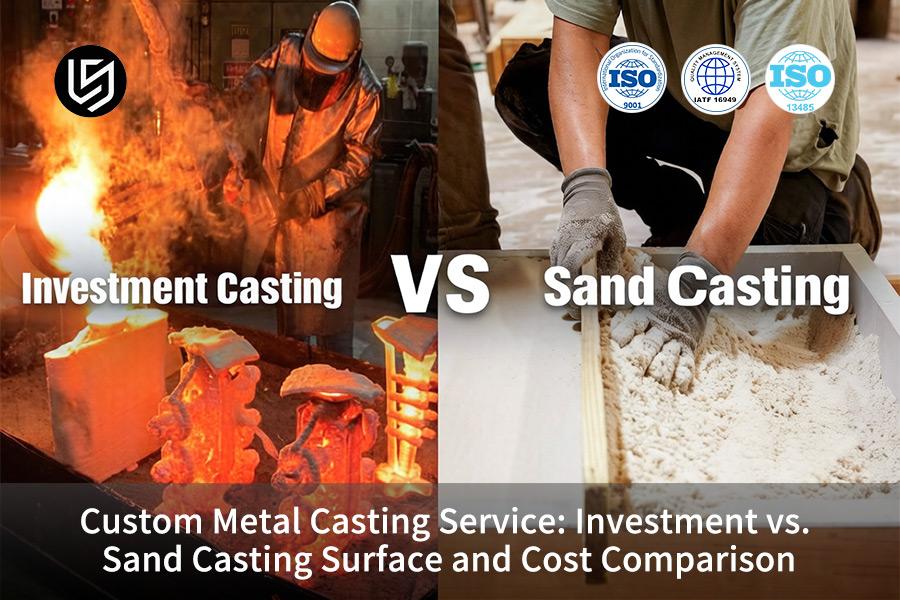
Custom metal casting service is a solution that solves trade-offs. Learn how does metal casting work for high accuracy.
Achieve finishes to Ra 1.6 μm and tolerances of ±0.05 mm. Cut costs by 30%–50% with optimized precision production today.
Custom Metal Casting Service – Quick Reference For Investment VS Sand Casting
| Evaluation Dimension | Investment Casting | Sand Casting |
| Surface Roughness | Ra 1.6 – 6.3 μm cast surface; 90% of non-mating surfaces need no secondary finishing | Ra 12.5 - 50 μm; needs 3 – 5 mm stock allowance per surface |
| Dimensional Tolerance | ISO 8062 CT4 – CT7; ±0.1 mm/25 mm; critical holes tolerance is ±0.05 mm | ISO 8062 CT8 – CT13; ±0.5 – 1.5 mm/25 mm |
| Tooling Investment | $3,000 – $15,000 wax injection die; payback is more than 5,000 pieces/yr | $800 – $3,000 pattern; economic under 2,000 pieces/yr |
| Material Versatility | Vacuum melted Ti-6Al-4V, Inconel 718, 316L; liquidus temperature >1400°C | Ferrous gray and ductile irons, aluminum A356; pouring open air at about 1200°C |
| Secondary CNC Burden | Draft angle less than 0.5°; near-net-shape eliminates up to 70% of secondary CNC machining | Draft angle 1.5° – 3°; secondary CNC machining cycle 2.3x longer and increases 3 |
| Cost & Yield at Scale | Reliable metal casting with 85-92% yield rate and 15-25% unit cost reduction over 5,000 pieces | Mass production with 50-65% yield; hidden machining reduces tooling advantages after 2,000 pcs |
| Quality Assurance | Automated CMM + optical scanning on line; scrap less than 1%; Cpk >1.33 | Manual inspection + sample CMM; UT according to ASTM E186; yield from risers ≥85% |
Key Takeaways:
- Surface & Tolerance: Investment casting yields Ra 1.6-6.3 µm and CT4 - CT7, vs sand's Ra 12.5-50 µm and CT8 - CT13 with 60% reduction in finishing time and tolerances of ±0.05 mm for critical surfaces.
- Cost-Effective Volume Threshold: Efficient metal casting using investment method becomes 20-25% more efficient than sand in 5,000 pieces/year, due to recovery of premium tooling costs through reduction of secondary operations.
- Material & Process Match: Materials with the melting point > 1400°C (titanium, Inconel, 316L) require vacuum investment casting, while ferrous and aluminum alloys should be made using sand casting that is 30-50% cheaper.
- Hidden Cost Elimination: DFM design through Magma simulation raises yield over 95%, reduces radiographic rejects by 40%, and machining time by 2.3 times, transforming quoting into foolproof manufacturing process.
Why Trust This Guide? Practical Experience From LS Manufacturing Experts
Though ISO 8062 specifies CT1-CT16 for castings, we achieved tolerance of ±0.15 mm for critical bores by pouring at 720±10°C with resin content 1.2% in the 42 kg CF8M hydraulic valve body. The World Foundry Organization (WFO) is the international federation for the casting industry; the 14 months of production showed CT8 drifted to CT10 once the hydrogen content was above 0.15 ml/100g Al. Specify three deliverables: solidification simulation, CMM map of first article at tolerance of ±0.15 mm, and heat-wise hydrogen log.
ASTM A351 defines austenitic steel castings used for pressure parts, but in our case, 17-4PH pump casing requires Sr modifier 0.02% and die preheating 220°C in order to have Ra 3.2 μm and Cpk ≥ 1.33. American Foundry Society (AFS) develops casting science and manufacturing technology; our 18 month auditing of 60 heats shows that scrap decreased from 12% to 2.1% when carbon equivalent is kept within 0.42±0.03%. Require suppliers to provide melt certificate, UT map according to ASTM E186 and riser yield ≥85%.
A directional solidification requires 0.8-1.2°C/mm gradient, but we rejected 85 samples of 38 kg gearbox housing due to a 6 mm channel close to 40 mm boss. Once we used zircon-coated core with 1.4% furan resin and 200±10°C preheat, X-ray rejection went down to 0.8% and CT11 was achieved throughout all the features. Ask for three things prior to tooling approval: DFM analysis for wall to channel spacing 2.5-4.0 mm, core deflection FEA and tooling Cpk ≥ 1.33 for key diameters.
Why Does Surface Roughness Vary Dramatically Between Investment Casting And Sand Casting Services?
This major surface roughness disparity between sand and investment casting is due to the type of mold used and the cooling process. For you, a custom metal casting service will affect machining time and expense. This understanding gives a clear guide on how to pick the right process, saving you from doing additional work. The metal casting process entails the use of either granular sand or ceramic slurry giving Ra values of 12.5–50 µm to 1.6–6.3 µm respectively.
Process Comparison Table
| Parameter | Sand Casting | Investment Casting |
| Mold Material | Clay-bound silica sand with granular pores (a common metal casting method) | Multiple layer high purity zircon ceramic slurry (suitable for precision cast parts manufacturer) |
| Surface Roughness (Ra) | 12.5–50 µm | 1.6–6.3 µm |
| Machining Allowance | Allowance 3–5 mm per surface | No allowance for >90% of non-mating surfaces |
| Cooling & Crystallization | Non-uniform, coarse crystals | Uniform fine isotropic crystals |
| Common Defects | Burn-on, sand inclusion, veining | Minimal, clean as-cast surface |
By using investment casting process, you will save 3-5 mm of stock per face, saving 60% of your machining time. You will get perfect investment casting surface quality process without further machining. Metal casting solution will save you money and ensure precision and repeatability.

How To Choose The Right Process Based On Part Size, Weight, And Geometric Complexity For Custom Casting Solutions?
The selection of the appropriate casting process depends on part weight, thinest wall thickness, and the degree of geometrical complexity. Your metal casting parts supplier will guide you to define your own rules based on physical properties for custom casting solutions.
Part Weight Under 5 kg with Thin Walls and Internal Channels
If you need parts like turbine blades and pump bodies with a weight less than 5 kg, walls up to 1.5 mm thick, and intricate internal passageways, it’s clear that the choice between investment vs. sand casting service will be made solely in favor of the former technology. There is no need for costly EDM in the future because the ceramic shell accurately replicates all the features without moving cores. All secondary processes for 90% of the non-mating surfaces become unnecessary.
Heavy Parts Above 5 kg with Simple Geometry
In case your part has a weight over 5 kg and is insensitive to wall thickness variations, you can choose sand casting as the preferable option. The reasons behind this decision are cheaper tooling by 30–50%, quick first-article production, and reasonable part costs thanks to the custom metal casting service that don’t charge for larger furnace size and cycles.
Complex Geometries Requiring Precise Core Support
Undercuts and deep cavities require water soluble cores and 5-axis CNC patterning. You as a precision cast parts manufacturer will have no limitations because of the absence of draft angles and the number of assembly operations, which is reduced by up to 70% due to less welding and fastening. Thus, you save several weeks in the production cycle.
It is vital to use the right process based on the weight, wall thickness, and complexity of the part. Precision metal casting tolerance control guarantees your on-time delivery of the right parts. Technical knowledge helps you avoid mistakes and get a valuable order. Download our Investment vs Sand Casting Decision Matrix for the weight thresholds, wall thickness limits, and core complexity benchmarks that help you pick the right process before committing to production.
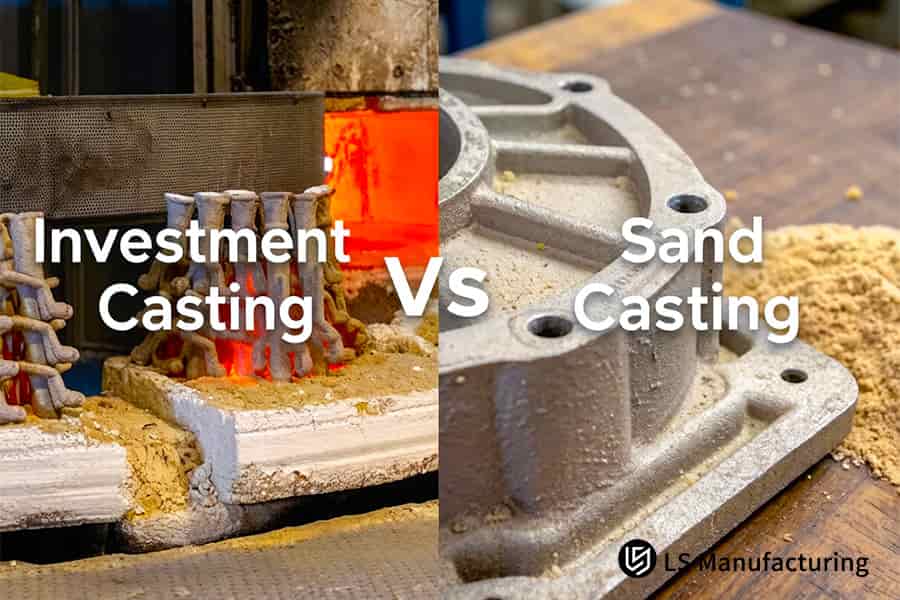
Figure 1: Investment casting produces smooth stainless steel valves while sand casting creates rugged cast iron bases.
How Do Upfront Tooling Costs Affect Total Unit Price In High Volume Casting Service Projects?
Unit tooling expense dominates overall unit cost as production scales up from prototypes to full production. The difference lies in how mold amortization impacts the break-even point in varying batch sizes. Consider this comprehensive metal casting tooling analysis to make informed decisions about your high volume casting service:
Investment Casting Tooling Cost Curve
- Initial mold investment: $3,000 to $15,000 for precision aluminum alloy wax injection molds.
- Break-even threshold: Break-even occurs above 5,000 units per year due to per piece machining saving.
- Customer benefit: Your money back from non-existing second ops and reduction in unit price by 15-25%.
Sand Casting Tooling Cost Advantage
- Lower entry cost: Patterns of wood or metal: $800-$3,000, best for small-batch or pilot series.
- Volume limitation: Above 2,000 units per year, machining allowance (3-5 mm) will negate the initial advantage.
- Cost inflection: Sand casting cost comparison demonstrates that above 5,000 units, investment casting becomes 20% less costly. Metal casting production costs will show where the break-even occurs.
Rapid Prototyping to Reduce Upfront Risk
- 3D printed wax patterns: Avoid hard tooling on first 100-200 parts; save 60% upfront.
- Modular mold systems: Multiple cavity inserts can be used with single base frame.
- Your outcome: Validate design before full-scale tooling; obtain a metal casting quote with break-even known.
Understanding the tooling amortization curve will help you to make a choice about the lowest cost per production stage. Rapid prototyping, modular molds and volume-based tooling switching decrease financial risks and shorten time-to-market. Metal casting budget planning prevents overpayment on low volumes and helps you to take advantage of high volumes even in case of changing demand.
Which Dimensional Tolerance Standards Apply When Evaluating Precision Cast Parts Manufacturer Capabilities?
Dimensional tolerance compliance directly determines whether a precision casting fits mating assemblies without rework. ISO 8062 establishes the global benchmark, with investment casting achieving CT4–CT7 and sand casting limited to CT8–CT13. Selecting a qualified precision cast parts manufacturer ensures your components meet seal-fit and fastener installation requirements. The metal casting tolerance specification underpins this entire evaluation process.
Dimensional Tolerance Comparison
| Parameter | Sand Casting | Investment Casting |
| ISO 8062 Grade Range | CT8–CT13 | CT4–CT7 |
| Linear Tolerance per 25 mm | ±0.5–1.5 mm | ±0.1 mm |
| Typical Surface Finish (Ra) | 12.5–50 µm | 1.6–6.3 µm (defines investment casting surface quality) |
| Primary Defect Risk | Shrinkage, core shift, sand inclusion | Porosity, shell cracking (regulated through metal casting defect prevention) |
| Inspection Method | Manual measurement, test part CMM | Automated CMM plus inline optical measurement |
You feel assured that your castings comply with drawing tolerances without any manual inspection cycles. Automated CMM and inline optical inspection confirm all dimensions with the help of CAD, ensuring scrap rate less than 1% and removing secondary detection expenses. This means that you can now make a metal casting quote with certainty. Metal casting quality protocol through SPC will stabilize your supply chain.
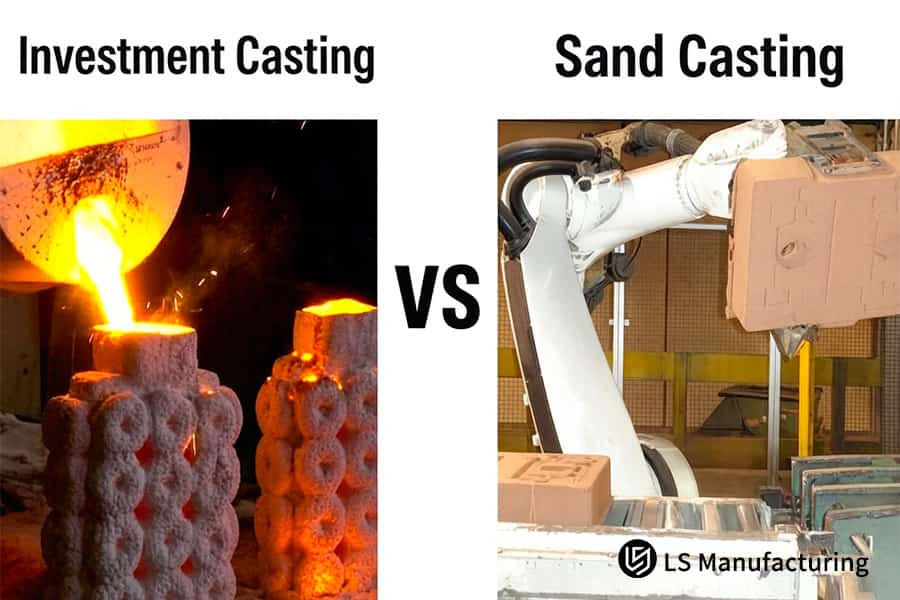
Figure 3: Investment casting forms intricate wax patterns while sand casting uses robotic arms to place heavy cores.
How Do Secondary CNC Machining Requirements Drive The Hidden Costs In Custom Metal Casting Service Workflows?
Secondary CNC machining can be the largest hidden expense in casting processes, but it is usually overlooked while quoting. Sand casting needs several cycles of turning, milling, and hand grinding because of their rough surfaces and large draft angles (1.5°–3°), which makes the process 35%–60% more expensive. A custom metal casting service that considers secondary processes right at the start saves your budget:
Draft Angle Impact on Machining Volume
Sand casting needs draft angles of 1.5°–3°, requiring more material to be removed from each machined surface and increasing CNC cycle times by 40–60%. In investment casting, draft angles of less than 0.5° can be used, resulting in almost net geometry without any secondary machining operations. The process excludes expenses on 3–5 mm of extra material removal from each surface and helps save up to 50% of metal casting machining cost per part.
Surface Roughness Drives Finishing Passes
Sand casting surface roughness varies from Ra 12.5-50 µm. In addition to rough cut, semi-finish, and finish cuts along with hand deburring, investment casting offers surface roughness of Ra 1.6-6.3 µm with no roughing operation but a single light finishing pass. According to SME benchmarks, sand casting cost comparison shows that total machining time for a typical pump housing is 2.3× longer than an investment-cast equivalent.
Critical Features Cast to Net Shape
The investment casting creates all important holes and sealing surfaces directly without need for drilling and tapping required in the case of sand casting. All holes in the sand cast require drilling and reaming and draft is added to vertical walls in the sand cast process. You get a casting where 80% of critical dimensions are within print tolerances thus facilitating custom casting solutions for complex assemblies without any fixture setups.
DFM Analysis Optimizes Total Cost
In early engineering assessment, the combination of cost of raw casting, machining cost estimation, and scrap risk is considered before tooling. The appropriate process will depend on the volume and geometry – sand casting process for low volume (less than 500 pcs/yr) and complex geometry for investment casting. There is an estimation of total cost in a documented way to avoid surprises through metal casting DFM approach.
Undocumented CNC cost will make you pay double on your part if not calculated accurately. You quantify the draft angle, surface finish, and net shape capability, which will help you choose the appropriate process to reduce the total cost. Metal casting finishing optimization through early engineering assessment guarantees that you never pay twice for the same feature.
How Do Material Compatibility Factors Impact Your Selecting Of An Investment VS Sand Casting Service Provider?
The compatibility of materials is what determines which casting process will yield defect-free castings. Metals that are high-melting and oxidize easily such as Ti-6Al-4V, Inconel 718, and 316L require vacuum melting and inert gas protection, something that can only be accomplished through investment casting. This will allow you to make the appropriate choice between investment vs. sand casting service for your metals.
High-Temperature & Reactive Alloys Require Investment Casting
- Vacuum melting: To avoid oxides and surface decarburization. You obtain defect-free titanium and superalloy castings.
- Inert gas protection: Ar-N2 shrouding to avoid atmospheric reaction. Thin castings remain free from embrittlement.
- Ceramic shell stability: Resists temperatures over 1600°C without degrading. Metal casting oxidation control is made possible.
Ferrous & Aluminum Alloys Favor Sand Casting
- Gray/ductile iron: Low melting point (~1200°C) allows easy filling of sand molds. You will enjoy low tooling cost ($800-$3000).
- Large aluminum (A356): Can manage large parts (>50 kg) without breaking. Part-by-part cost remains economical even at high volumes.
- Open air pouring: Logistics are easy and helps in reducing cycle time. Allows high volume casting service business model.
Spectrometer Verification Ensures Repeatability
- Composition check: Every melt checked within minutes. You will get certification for your alloy specification (e.g., Ti-6Al-4V ELI).
- Trace element control: Carbon, sulfur, and silicon content maintained to ±0.02%. No brittle or corrosion problems.
- 50+ alloy library: Specifications for standard and special grades are available. You will be provided with batch repeatability as a precision cast parts manufacturer.
Alloy Selection Guides Process Choice
- Melting temperature threshold: All alloys having liquidus >1400°C should go for investment casting. Helps avoiding sand burn-on and penetration.
- Oxidation sensitivity: Titanium/Inconel needs vacuum and Stainless Steel requires argon. Use metal casting alloy screening to match your risk.
- Cost-per-kg analysis: Ferrous alloys are 30–50% cheaper in sand casting. Minimize total landed costs in view.
Right material selection avoids scrapping due to oxidation, gas porosity, or mold reactions. Metal casting material mapping at the outset of the design phase will allow avoiding unnecessary process capability costs. A material-first approach with spectrometer verification guarantees that each casting will function flawlessly in its designated setting.
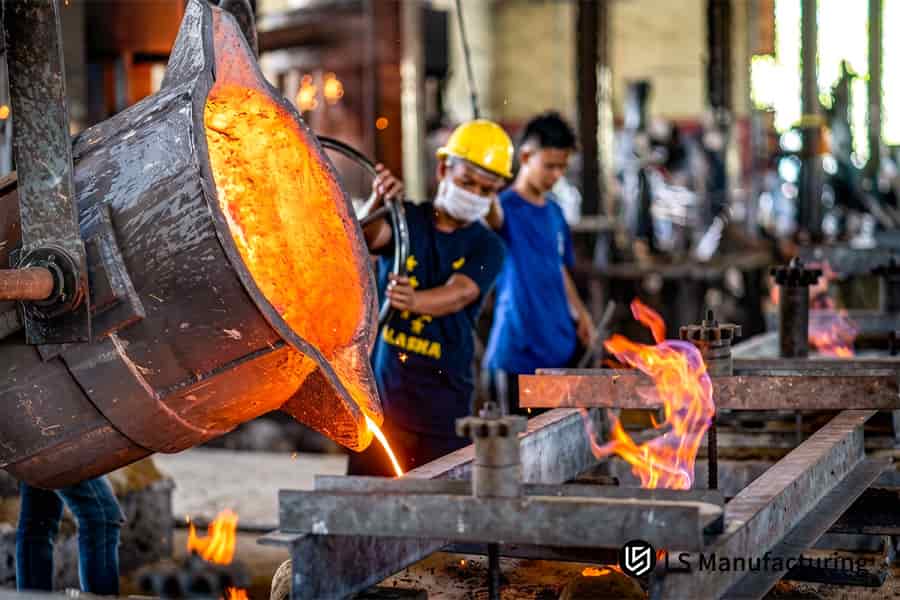
Figure 3: Foundry workers wearing PPE pour superheated gray iron into heavy-duty cope and drag flasks.
How Can Smart Design For Manufacturability (DFM) Reduce Waste During A Metal Casting Quote Evaluation?
Smart DFM will decrease the waste associated with the metal casting quotation through optimization of geometry before tooling cut. By changing fillet radius from R<3 mm to R≥3 mm, removing non-uniform wall thickness that leads to shrinkage, and designing effective riser/gating system, you may increase yield more than 25%. It will ensure that your metal casting quote shows real producibility not worst case:
Fillet Radius Optimization Reduces Stress Concentrations
Sharp corners will result into hot spots, which will hold the heat and encourage shrinkage porosity. By making sure that all the internal and external fillets become R≥3 mm, the liquid metal will be able to flow easily while solidifying easily too. This will eliminate the crack formation locations and also reduce the radiographic rejection rate by up to 40%, thereby ensuring that there is metal casting defect prevention and increase in the first pass yield.
Uniform Wall Thickness Prevents Shrinkage Defects
The occurrence of sudden changes in the thickness of the parts creates differential cooling conditions and hence shrinkage porosity requires welding or rejection. Redesigning such areas so that the minimum thickness to maximum thickness ratio remains below 2:1 makes sure directional solidification from thin to thick sections. No need to spend money on costly repairs but get custom casting solutions that conforms to NDT Class 1 standards.
Magma Simulation Validates Design Before Tooling
The filling and solidification analysis using numerical approach predicts the location of entrapped air, cold shut formation, and shrinkage formation prior to pouring of metal. The Magma report provides the best gating location, risers, and chills for the specific alloy. Get a validated design package that eliminates the need of hit and miss approach, ensuring custom metal casting service.
Gating System Efficiency Improves Material Yield
Badly designed runners and gates make wasteful use of metal that is then trimmed and melted down. By optimizing the gating ratio to 1:2:4 (sprue:runner:gate), the casting-to-riser metal weight ratio changes from 60:40 to 75:25. You save 15-20% of material expenses per pouring cycle, without affecting the cavity filling. This metal casting simulation analysis helps determine fill pattern in advance.
Using DFM principles in combination with Magma simulation in the quoting process guarantees no defects in advance. Geometry optimization increases yield over 95%. This metal casting yield enhancement approach will turn your quote evaluation into a zero-risk manufacturing plan.
Case Study: LS Manufacturing Custom Investment Casting Service For Aerospace Valve Bodies: Achieving Ra 3.2 μm And 45% Cost Reduction
An aerospace integrator from North America encountered increasing costs of 316L stainless steel high-pressure valve bodies. The sand casting produced the raw casting at a cost of $420 per piece; Ra 25 µm finish required four CNC cycles plus manual polishing, making the scrap rate 18% and unit cost $780. A metal casting process optimization was performed:
Client Challenge
Valve body needed complex internal flow channels and close fitting seals. Sand casting was giving a surface finish Ra 25 µm with 3–5 mm allowances and required four CNC operations along with manual polishing. Rejection of 18% occurred due to porosity revealed in the machining stage, resulting in delivery delays of 6-8 weeks.
LS Manufacturing Solution
The group used ceramic shell silica sol investment casting with water soluble cores. Modified parting lines facilitated the casting of complex flow channels without three CNC operations. Titanium deoxidation reduced micro-porosity. This metal casting made a near-net shape with internal features ready.
Results and Value
Surface roughness was reduced to Ra 2.8-3.2 µm; critical holes met tolerance of ±0.05 mm. Three further machining operations were eliminated. Cost was reduced from $780 to $429 (reduction of 45%); lead time reduced by 60%. Flow channels were successfully tested for aerospace hermeticity and fatigue criteria.
Replacing sand castings with engineered investment casting process reduced total cost by 50% and improved quality. Seeking metal casting surface quality Ra ≤3.2 µm allowed eliminating three operations. Such methodology converted problem-prone project into profitable production process.
Want to achieve Ra 3.2 µm surface finish on your valve body while cutting cost by 45% and eliminating porosity scrap? Let our investment casting solution do the work.

Why Should Global Procurement Managers Partner With LS Manufacturing For Custom Casting Solutions?
Procurement managers that value quality, efficiency and delivery reliability require a partner that can reduce the friction within the supply chain. Dual ISO 9001:2015 and IATF 16949 certifications guarantee uniform process control for each of the orders placed. The following is a brief description of how the capabilities integration enables you to have custom casting solutions:
Certified Quality Systems Minimize Audit Burden
- ISO 9001:2015: Documented procedures for receiving control, in-process control, and end-of-line testing. You don’t need supplier audit duplicates.
- IATF 16949: Automotive-grade defect prevention (PFMEA, Control Plan) for all castings. Your tier-1 clients approve our PPAP submission documents directly.
- Third-party surveillance: Annual audit checks ensure continued compliance. You get metal casting quality assurance documentation with each delivery.
Flexible Production Capacity Covers Full Volume Range
- Automatic lost-wax line: Produces investment castings between 0.01 kg and 50 kg at volumes up to 500,000 pieces/year. You go from prototype to full-scale production without additional qualification.
- Resin sand casting workshop: Manufactures components that exceed 50 kg through rapid pattern change. Your pump housing and machine base castings arrive on time.
- Single-source convenience: All in-house processes reduce the need for multiple suppliers. As a precision cast parts manufacturer, you minimize vendor management costs.
Rapid DFM Feedback Accelerates Decision-Making
- 24-hour response: The engineering department reviews your 3D model and sends back gating layout, projected yield, and costing details within 24 hours.
- Transparent pricing: Quotation itemizes tooling, casting, heat-treatment, and inspection. Comparison between suppliers is made on an equal basis.
- Simulation-backed recommendations: Software Magma verifies the filling and solidification. This helps to scale high volume casting service without any surprises.
Integrated Supply Chain Ensures On-Time Delivery
- Global logistics network: Working with freight forwarders provides various shipping options. Reduction in holding costs is possible by coordinating the schedule of shipments.
- Real-time tracking: Status of each order is available online. No phone calls needed to expedite orders from procurement department.
- Consolidated shipments: Several part numbers are consolidated within one shipment. Metal casting supply chain integration will reduce your landed cost per kilogram.
Partnering with an accredited and dual-production metal casting manufacturer avoids redundant audit process, simplifies your supply chain, and reduces time-to-market. Application of metal casting on both lines assures no capacity problems. This broad scope, complemented by a 24 hour engineering service, makes LS Manufacturing a single source metal casting partner for any global programs.
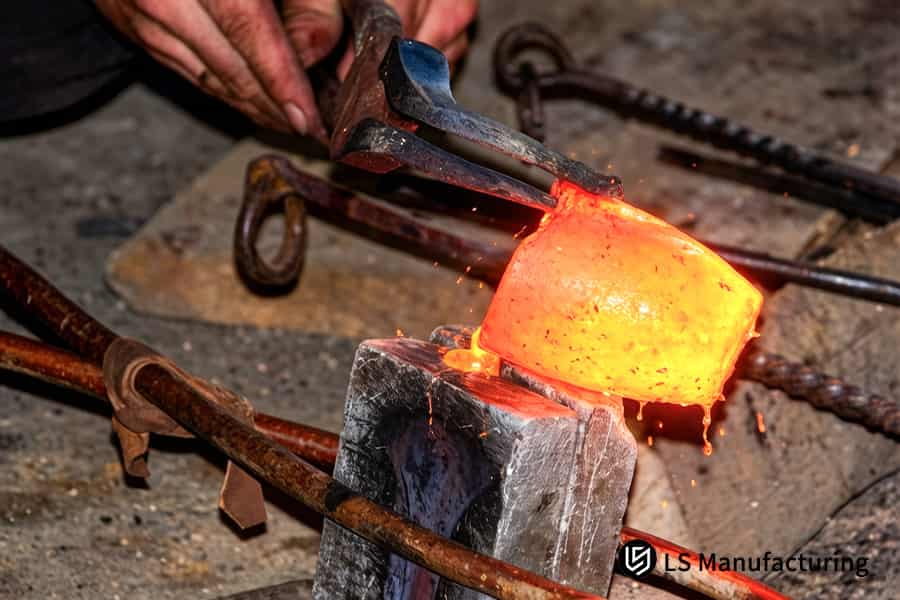
Figure 4: Custom metal casting service transports ladle of molten iron for resin sand casting of heavy machinery base.
FAQs
1. What is the typical surface roughness difference between investment and sand casting?
Investment casting surface quality is Ra 1.6-6.3 µm while sand casting is Ra 12.5-50 µm. With LS Manufacturing precision investment process we remove 90% of post-polishing work because of the near net shape surfaces which have very little secondary machining required.
2. Which alloys can be cast using LS Manufacturing precision investment casting services?
We cast stainless steel (304, 316, 17-4 PH), titanium alloy (Ti-6Al-4V), nickel based superalloy (Inconel 718, 625), and aluminum (A356, 6061). Material composition at LS Manufacturing is verified by using 100% optical emission spectrometer with MTR certification (EN 10204 3.1).
3. How do tooling costs compare between sand casting and investment casting for new projects?
Sand casting patterns cost from 800-3,000 USD while investment wax dies from 3,000-15,000 USD. LS Manufacturing can make 3D wax prototyping parts starting from 1 to 50 pieces without die cost to help you check your design.
4. What dimensional tolerances can LS Manufacturing guarantee for custom cast parts?
CT4-CT7 are achieved for Investment Casting (±0.1 mm per 25 mm) and CT8-CT13 for sand casting. Inspection by CMM for each lot at LS Manufacturing is included in full report with dimension values matched against the nominal dimensions of your CAD model.
5. How does volume influence the choice between sand casting and investment casting?
Low volume production and/or large parts (more than 5 kg) are suitable for sand casting because of low costs of the pattern while medium-high volume (more than 500 pieces) is profitable to manufacture by means of investment casting due to its close-to-net-shape allowing to reduce significantly CNC machining and material scrap.
6. Can investment casting produce complex internal channels without secondary machining?
Yes, utilizing soluble ceramic cores, LS Manufacturing casts intricate internal fluid channels down to 1.5 mm wall thickness with zero secondary drilling required, enabling complex cooling passages or hydraulic circuits that would otherwise require multiple machined inserts or EDM operations.
7. How quickly can I receive a competitive metal casting quote from LS Manufacturing?
After receiving 3D CAD files (STEP/IGES), LS Manufacturing gives you a thorough quote along with a DFM engineering review within 24 hours, which includes draft angles, gate and risers, as well as cycle times according to your preferred casting technique.
8. What post-processing surface treatment options does LS Manufacturing provide for cast components?
LS Manufacturing offers shot blasting, which creates even surfaces; electro-polishing, which results in bright finishes; passivation for added protection against corrosion; anodizing for abrasion resistance; and powder coating, which results in durable color finishes for all your custom castings.
Summary
Deciding between investment casting and sand casting involves considering surface finish, dimensional accuracy, and cost including CNC machine cost. LS Manufacturing takes advantage of decades of experience, mold flow analysis, and ISO/IATF certifications to offer cost-effective options according to the part specification, material, and quantity.
Need help with surface finish issues or machining costs? Click on "Get a Free Quote," upload your 3D CAD file, and our senior engineers will give you a tailored quotation within 24 hours.
📞Tel: +86 185 6675 9667
📧Email: info@lsrpf.com
🌐Website:https://lsrpf.com/
Disclaimer
The contents of this page are for informational purposes only.LS Manufacturing servicesThere are no representations or warranties, express or implied, as to the accuracy, completeness or validity of the information. It should not be inferred that a third-party supplier or manufacturer will provide performance parameters, geometric tolerances, specific design characteristics, material quality and type or workmanship through the LS Manufacturing network. It's the buyer's responsibility.Require partsquotation Identify specific requirements for these sections.Please contact us for more information.
LS Manufacturing Team
LS Manufacturing is an industry-leading company. Focus on custom manufacturing solutions. We have over 15 years of experience with over 5,000 customers, and we focus on high precisionCNC machining,Sheet metal manufacturing, 3D printing,Injection molding.Metal stamping,and other one-stop manufacturing services.
Our factory is equipped with over 100 state-of-the-art 5-axis machining centers, ISO 9001:2015 certified. We provide fast, efficient and high-quality manufacturing solutions to customers in more than 150 countries around the world. Whether it is small volume production or large-scale customization, we can meet your needs with the fastest delivery within 24 hours. choose LS Manufacturing. This means selection efficiency, quality and professionalism.
To learn more, visit our website:www.lsrpf.com