English




Custom metal stamping services usually face challenges with high scrap ratios due to high precision manufacturing, where selecting the wrong metal can lead to stress cracks, dimensional inconsistencies, and expensive errors when parts go through millions of repetitions. The fundamental problem is the failure of vendors to consider crucial elements such as springback and grain direction, which significantly influence the Total Cost of Ownership (TCO). Instead, manufacturers use generalized handbooks, which delay projects and increase costs.
LS Manufacturing tackles this issue by deciphering the particular formulating rules for each metal type and using statistical process control audit criteria to ensure an efficient and economical solution in the design stage. It is crucial to comprehend the behavior of materials subjected to stress to eliminate defects from production processes, starting here with LS Manufacturing’s customized decision-making guide for manufacturing.
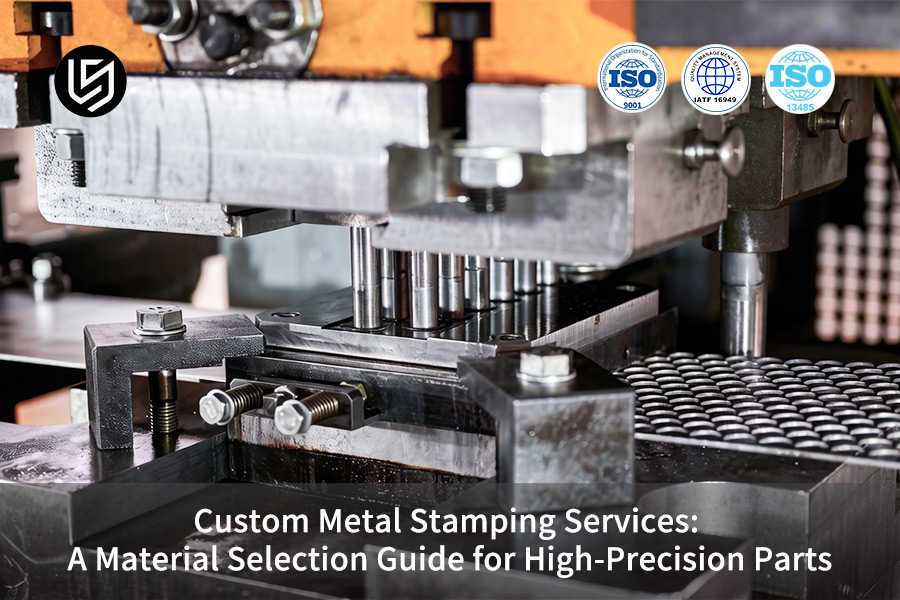
Custom Metal Stamping Services: A Complete Quick-Reference
| Key Consideration | Technical Specification & Application |
| Material Compatibility | Metal stamping materials such as HSLA steel or 5052 aluminum are selected based on the stamping forces that they can handle. |
| Tolerance & Precision Control | With tolerance rates of ±0.05 mm, precision stamping is essential; progressive dies and in-process controls achieve the desired consistency. |
| Tooling Design Impact | Part feasibility depends on the die design; our engineers ensure proper material flow, limiting stress and spring-back. |
| Surface Finish Requirements | Finishing of stamped parts may require additional treatment; we carefully choose the materials and methods used. |
| Volume vs Cost Optimization | High-volume runs justify progressive dies; low volumes use compound dies or laser-cut blanks with secondary forming. |
| Our Integrated Process | We combine material science, tooling design, and precision stamping to produce parts that meet exact specifications. |
| Result: High-Performance Parts | Stamps produce parts that have mechanical properties and dimensional accuracy for effective assembly. |
| Result: Supply Chain Efficiency | By incorporating the entire process in one step, we limit the number of parts produced. |
High-precision stamping is resolved through material engineering, innovative tools, and processes. We can assure you that our services will guarantee that your products have precise tolerance, maximum strength, and efficient manufacturing at an affordable price. We will provide you with parts that are easy to assemble and improve the performance of your metal stamping products.
Why Trust This Guide? Practical Experience From LS Manufacturing Experts
Custom metal stamping services play a vital role in precision engineering. However, material selection is one mistake most people make in their projects and results in a high percentage of scrap metal and failed products. Our guide provides you with proven expertise based on our years of experience resolving difficult cases such as springback and micro-cracking of high-strength alloys.
Inaccurate selection of materials may result in catastrophic failures, such as a faulty bracket in aerospace assemblies or a corroded component in medical devices. Our approach is based on stringent adherence to material specifications and empirical data provided by the Metal Powder Industries Federation (MPIF) and NIST Materials Data, which guarantees that all suggestions regarding alloys ranging from 301 stainless steel to titanium adhere to the strictest standards of quality, performance, and cost-effectiveness.
Every finding presented herein has been tested through thousands of manufacturing iterations. We provide details about what alloy stands up to tough fabrication requirements, how to tweak manufacturing procedures for difficult materials, and how to engineer designs for maximum manufacturability. This is the real-world experience gained each day through our work and delivered to you to ensure a smooth journey to defect-free manufacturing right from the design stage.
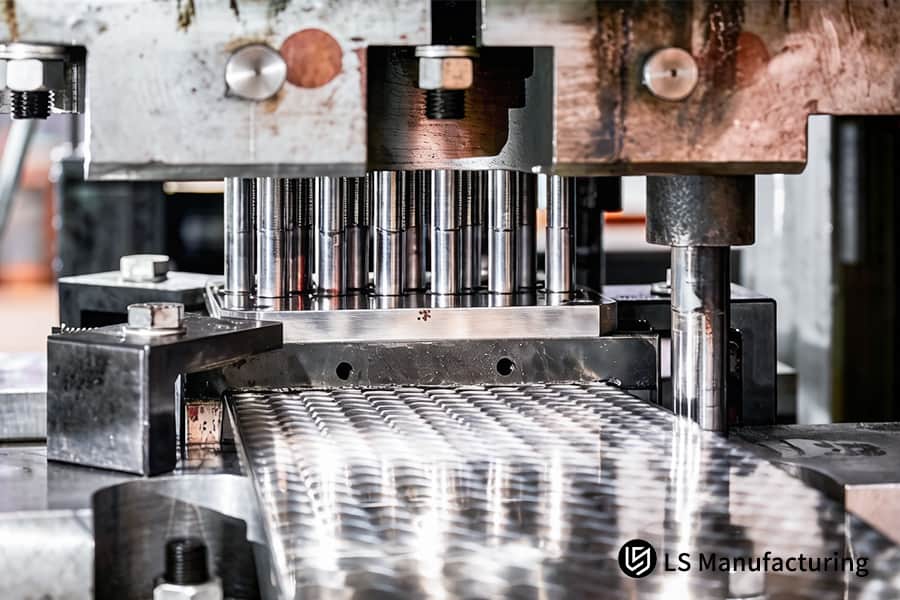
Figure 1: Multiple cylindrical punches stamp 6061 aluminum sheet into custom brackets for industrial automation equipment.
Why Is Understanding Metal Stamping Material Selection Essential For Project Budget Control?
When considering metal stamping material selection, the actual cost becomes a combination of the cost of the material, tooling costs, and efficiency during the process. The choice of the ideal alloy defines the total cost of the project and the expected ROI. Below is an analysis of factors involved in the process.
| Decision Factor | Impact on Budget & Performance |
| Alloy Grade Specification (e.g., 304 vs. 316L) | The difference in cost is largely attributed to differences in requirements when coating the tools and press speeds for maximizing the cost-effectiveness of production, rather than the initial material cost alone. |
| Optimized Material Hardness (HV) | Maintaining optimal material hardness results in more than a 20% increase in die life for large volume orders, hence minimizing the amortized tooling cost per unit. |
| Work-Hardening Rate | The work hardening rate defines how many annealing cycles would be necessary during production and therefore affects efficiency, cost, and energy usage. |
| Production Volume Scale | High-volume metal stamping jobs allow for efficient amortization of customized tools and high-grade materials. |
Strategic custom metal stamping services convert material properties into predictable financial outcomes. We enable cost-effective manufacturing by selecting alloys that ensure process stability and extended tool life for demanding stamping applications. This technical approach provides the rationale to transform precision metal stamping from a procurement cost into a source of reliable, long-term competitive advantage.

How Can Custom Metal Stamping Services Mitigate Springback Risks In High Strength Alloys?
The phenomenon of springback in high-strength materials is crucial when dealing with the proper fit of parts and automation. The following is an explanation of our approach, which relies on multiphysics modeling and dynamic process control in order to achieve reliable springback compensation. Our custom metal stamping services convert the randomness of this effect into a predictable result as follows:
Predictive Forming Analysis via CAE Simulation
Every single project starts with virtual forming via simulation software such as LS-DYNA. The multiphysics simulation captures the interaction between our high-strength metal stamping material and allows us to predict not only the geometry but also the residual stress that may emerge. In the early stages of designing the tooling we identify possible zones of springback, enabling us to optimize the tooling design prior to the trial run.
Dynamic Compensation in Tooling Design
In order to account for different yield strengths of the material lot, we apply a dynamic compensation method during the design stage. Critical bends of our tooling incorporate a special adjustment mechanism. According to the certified mechanical properties of the coils we receive, we compute the needed compensation angle. Thus we ensure maximum precision in our high precision metal stamping.
Closed-Loop Validation and Process Control
This is a feedback loop in which the first article components are inspected via high-definition optical scanners. The three-dimensional results are correlated with the predicted springback deformation, and any discrepancy between the two is assessed, allowing the compensation value for the metal stamping process control parameters to be refined. This empirical refinement, based on real-world results, is why we can deliver bending tolerances of ±0.5° during mass production.
This process, from simulation to tooling adjustments to empirical assessment, is the essence of our technical expertise. It goes beyond mere capability statements into a well-defined, physics-based metal stamping methodology. Not only will we deliver parts, but we'll also provide you with a metal stamping process control solution that addresses your top springback issue, allowing smooth integration into your automated assembly lines.
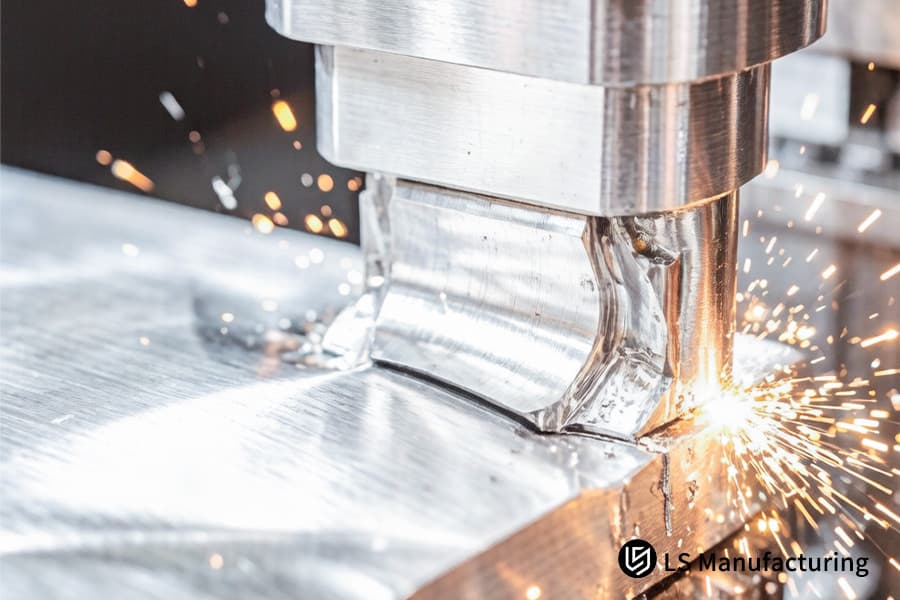
Figure 2: A stamping press forms aluminum alloy into a specific component shape for automotive assembly at LS Manufacturing.
What Parameters Define A High Precision Metal Stamping Matrix For Medical Grade Components?
High precision metal stamping of medical-grade parts calls for highly accurate techniques that will not result in any minute imperfections on surfaces that can serve as a breeding ground for microorganisms or cause part breakdown. The following No-mark Stamping approach has been developed to address the challenge through the specification of certain material, lubricating, and statistical parameters:
Engineered Lubrication for Microbial-Scale Cleanliness
Control of chemistry and application of the lubricant eliminates any remaining film.
- Specified Fluid Properties: Inert fluid, completely evaporative, synthetic lubricant with the property of leaving no trace.
- Targeted Micro-Deposition: A closed-loop, non-atomizing system applies nanoliter volumes directly to the tool-workpiece interface, a critical practice in quality metal stamping.
- Verification via Extraction: Post-stamping cleanliness is quantified per ISO 10993 protocols, ensuring compliance for medical device fabrication.
Substrate and Coating Strategies to Eliminate Defects
Material selection eliminates micro-fretting and stress marks.
- Pre-Plated Strip Stock: The use of ductile, pre-tinned strips serves as a sacrificial material, taking up the shear stresses to save the surface of the core alloy.
- Post-Form Selective Plating: Functional layers (e.g., gold) are applied after stamping, preventing fractures, an important distinction when comparing our metal stamping services for medical devices.
Statistical Process Assurance for Load-Cycle Reliability
A continuous CpK of ≥ 1.33 proves that the process capability is ensured for millions of cycles.
- Tooling with Active Alignment: Piloted dies with aligned pilots and thermal stable materials provide micron-level tolerances that are needed to achieve progressive die stamping of large quantities of metal parts.
- In-Line SPC and Control: In-line gauges feed live data into statistical process control (SPC) software in real-time enabling adjustments to keep the metal stamping process capability indices in line.
This parametric approach ranging from lubrication volatilities to real-time statistical analysis forms the required rigour for medical metal stamping. These solutions get to the core of the contamination issues by providing proven control measures rather than merely defining specifications. Such thorough engineering processes explain why we are considered specialized in handling components that require total reliability.
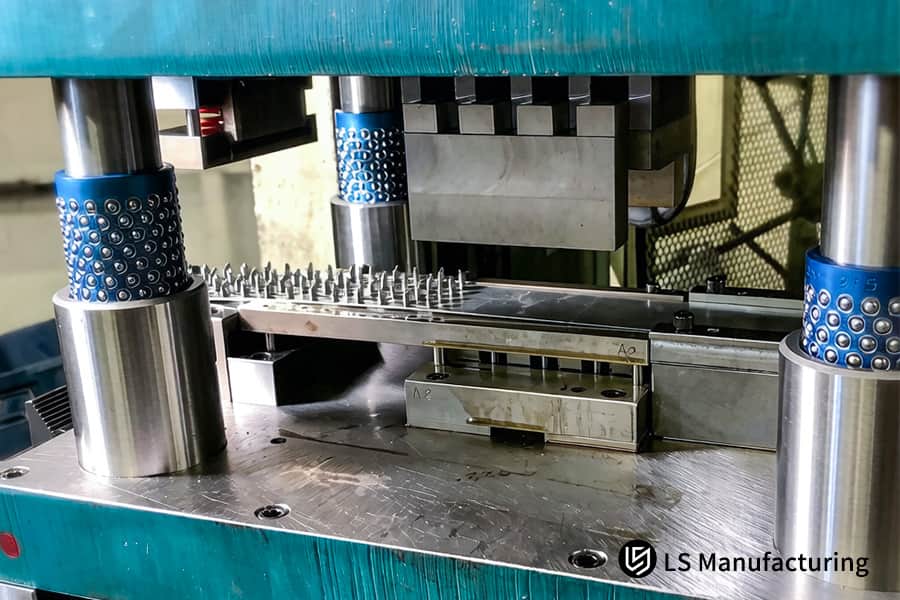
Figure 3: A large blue hydraulic press stamps A36 carbon steel plates with patterned surfaces for construction machinery.
Why Should Engineers Follow A Specialized Stamping Materials Guide To Avoid Tool Wear?
Unexpected tool wear results in inefficiencies during complex metal stamping. This specialized stamping materials guide makes data useful by drawing direct connections between certain materials and tool wear. Such processes allow engineers to make preemptive designs to maintain consistency in mass production scenarios.
| Factor | Measured Impact on Tool Wear | Proactive Engineering Adjustment |
| Nickel Content | A 5% increase increased the wear rate of punch material by 15% in bulk operations. | Specify use of more abrasion resistant alloy tool steel and die clearance adjustment. |
| Carbon Content | Medium carbon steel grades displayed an average 20% increase in flank wear of forming dies. | Increase frequency of lubrication and regular polishing. |
| Material Grain Direction | A 30% occurrence rate of edge tears was seen in close draw operations when working against the grain. | Nest parts such that the grain direction aligns with the major bending line. |
| Abrasive Inclusions | Complicated sulfide abrasive inclusions shortened tool life significantly by up to 40%. | Limit material usage to certain standards only; this is the core benefit of custom metal stamping services. |
This stamping materials guide will allow definitive tool life optimization, which will overcome any issue of premature failure and expensive maintenance. Such an approach will lead to guaranteed long-term production for demanding stamping applications through minimized total cost of ownership. This is the only way out for engineers in highly competitive manufacturing who seek consistent production.
How Do Precision Metal Stamping Services Achieve Microns Level Accuracy In Electronic Connectors?
The following is an explanation of the technical procedure that can be followed to achieve ±0.01mm tolerance positions in stamping extremely thin alloy materials such as phosphor bronze measuring 0.1mm. These processes involve process design, live adjustment, and full digital verification, which are all necessary for miniaturized electronics fabrication. The process is divided into three steps:
Material-Specific Process Design for Thin Alloys
The first step in achieving successful precision metal stamping services for electronics applications is stabilizing the materials. For phosphor bronze that has a thickness of 0.1mm, we have adopted a multi-stage progressive die stamping process using pilot pins and customized stripper plates to control the strip feed and ensure it does not wander. It ensures precise placement of the material before the formation phase, an essential step in micro-connector metal stamping.
In-Process Vision-Guided Correction
A micron level of tolerance needs closed loop feedback. The integrated inline CCD vision system analyzes the profile of each stamping as it appears in the strip and compares it with the digital template. Whenever there is a deviation of more than ±0.005mm, a correction factor is sent to the servo feeding device to ensure high precision stamping parts with exact dimensional specifications.
100% Digital Traceability and Reporting
Each batch produced goes through optical analysis, where key dimensions are captured on each cycle. It forms a full digital traceability report which is then made available to the client. Such a system is important to act as the last quality control measure for advanced automotive stamping parts.
The technique addresses the key issue of dimensional instability when machining ultra-fine metal stamping through constrained process design and real-time adaptive correction. Our commitment to ensuring the quality of connectors and productivity in manufacturing for our clients goes beyond just manufacturing the parts, providing proof of our commitment to data-driven precision and complete traceability of manufacturing.
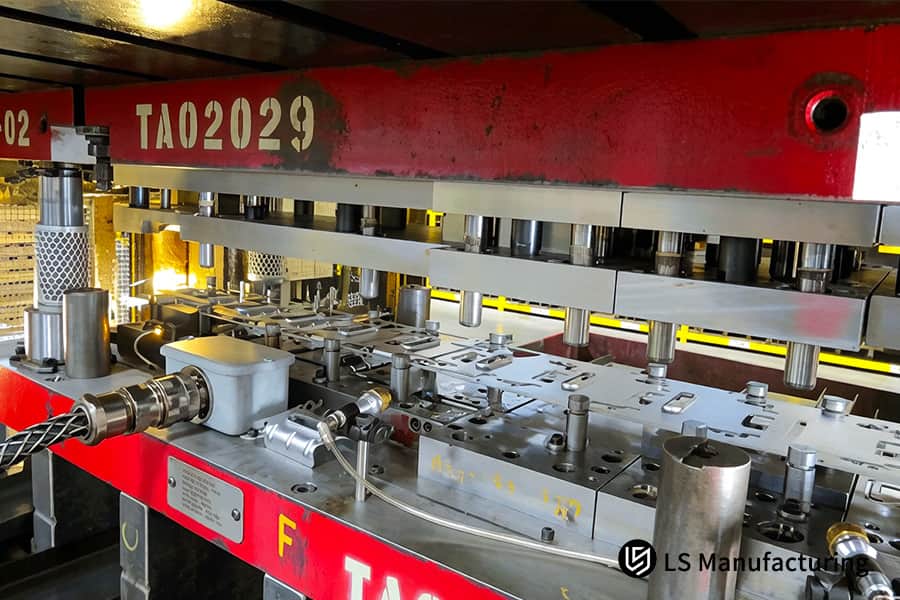
Figure 4: Fabricating carbon steel brackets for automotive assemblies with high-volume metal stamping services.
Why Choose Custom Stamping Services For Low Volume High Complexity Aerospace Assemblies?
The biggest problem for manufacturing low-volume and highly complex aerospace assemblies is how to satisfy the technical and financial criteria while avoiding expensive tooling investments. The following is a concise methodology that utilizes flexible tools and processes, which replace traditional progressive dies, to manufacture flight-critical parts meeting strict technical and financial criteria:
Flexible and Economical Tooling Strategy
- Solution: Modular Die Units: We employ modular, toughened tooling inserts inside a standard die assembly rather than an entirely new progressive die design.
- Solves: Significantly lowers initial expenses and lead times in prototype metal stamping development and short runs, making small-scale production possible.
Precision Thermal Management for Exotic Alloys
- Solution: Controlled-Temperature Forming: For titanium and other high-strength alloys, we integrate precise induction or radiant heating zones within the high precision metal stamping process.
- Solves: Maintains material ductility during forming, prevents cracking, and critically avoids hydrogen embrittlement risk, ensuring ultimate fatigue strength for demanding aerospace stamping components.
Process Customization for Material Integrity
- Solution: Alloy-Specific Process Design: Every parameter—from heating/cooling rates to press speed and lubrication—is engineered for the specific alloy's properties.
- Solves: Guarantees the final part's metallurgical integrity and mechanical performance in extreme operational environments, which is the core value of our custom stamping services.
This technique addresses the contradiction between economic feasibility and technical requirements of intricate and small-scale production. We offer aerospace assemblies that fly through the use of our proprietary methods, which include the design of a comprehensive process from raw material to final assembly. Such technical expertise is a clear competitive advantage in applications of utmost importance in terms of functionality, traceability, and cost-effectiveness.
Case Study: LS Manufacturing Medical Device Stainless Steel Sensor Housing Custom Stamping Project
The following is an example of how LS Manufacturing successfully solved a critical manufacturing problem related to yield for a global manufacturer of medical devices. It exemplifies our capabilities in high precision metal stamping. The task entailed the manufacture of an intricate and very thin housing using conventional processes, which resulted in a non-solvable manufacturing problem. The solution illustrates the paramount importance of application-oriented engineering in addressing critical production issues:
Client Challenge
In this project, the customer required a thin 0.15mm thick 316L stainless steel housing with ±0.025mm tolerance. The existing process experienced an 18% scrap rate due to micro cracks, a frequent problem in demanding metal stamping. This issue resulted in a launch delay of 4 weeks.
LS Manufacturing Solution
A full-scale design for manufacture (DFM) study was performed. Our solution consisted of two aspects. First, we opted to use material that had undergone vacuum re-melting as part of its process, which increased its ductility. Second, a unique multi-step metal stamping forming process was designed and integrated into the closed loop control system. It is essential in order to successful prototype metal stamping as standard techniques cause cracking of the components.
Results and Value
The implemented changes reduced the scrap rate to under 0.1% and improved material utilization by 15%. This enabled 100% on-schedule delivery of certified parts. For the client, this resulted in a 30% reduction in assembly labor and substantial overall cost savings. The success established a reliable production partnership, proving the capability of our metal stamping applications.
This case exemplifies our technical approach, where deep process innovation solves specific failure modes in custom metal stamping services. We deliver manufacturing stability and part integrity, enabling clients to de-risk complex projects in regulated, high-value sectors like medical devices.
Transform your high-risk medical stamping project into a zero-defect success with expert material and process solutions.

What Criteria Must You Verify When Selecting A Precision Metal Stamping Services Provider?
When it comes to choosing a capable service provider for mission-critical metal stamping operations, it is necessary to do more than assess their capabilities – one needs to audit the quality and stability management processes of the company in question. The document below describes the most important verification factors that protect against issues related to dimensional inconsistency, unscheduled interruptions, and supply failures. A comprehensive supplier audit checklist for the following qualities and competencies:
In-House Metallurgical Analysis Capability
The provider should have all the necessary lab equipment, such as a scanning electron microscope, which would enable them to conduct analysis and ensure the proper material structure before starting the high tolerance metal stamping process. This prevents any problems caused by the use of materials with unacceptable characteristics.
AI-Powered Predictive Tooling Maintenance
Outside of regular maintenance schedules, another key player uses vibration and temperature sensors combined with artificial intelligence to constantly monitor the condition of their tools. The software can predict tool malfunction by detecting small deviations in their performance characteristics. In this way, the problem of unexpected stopping of presses is effectively addressed, as well as ensuring the consistent quality of parts manufactured in a diverse range of high-mix metal stamping productions.
Full Material Traceability Under IATF 16949
For regulated industries, the provider must demonstrate certified, process-level traceability from the raw coil to the finished part. This involves a documented chain of custody and mill certifications integrated into a digital production system. It solves compliance and liability challenges, providing the auditable proof required for tight-tolerance metal stamping in automotive and aerospace applications.
Digital Production Transparency & Control
A true partner offers live access to the production dashboard that shows metrics such as OEE and FPY. Transparency fosters collaborative decision making based on hard facts, which addresses the issue of being reactive and inefficient. Our offering elevates an ordinary vendor partnership to a well-managed relationship characterized by proactive collaboration in the area of precision metal stamping services.
The outlined methodology serves as a clear way of measuring both the technical competence and robustness of the service provider. The company helps its customers manage risks in their value chain not only because we offer our metal stamping services but because we have the capability to offer the necessary governance through proven metrics.
FAQs
1. How does LS Manufacturing address material consistency issues for high-volume precision stamping orders?
Hardness tests and MTR will be done for each batch of incoming sheets of metal, while stamping settings will be constantly modified according to SPC data to keep a stable CPK level of at least 1.33.
2. What is the range of material thicknesses your precision metal stamping services can handle?
We are able to produce high quality parts made of metals of different thicknesses, from extremely thin foils of 0.05 mm to thick sheets of up to 6.5 mm.
3. Does LS Manufacturing support prototype development within its custom metal stamping services?
Yes, it is. Our company has a special rapid prototyping division, which uses Wire EDM technology and simpler tooling to provide you with working prototypes within 5 to 10 business days.
4. How do you ensure that high-precision stamped parts remain free of surface scratches?
We use either our patented polyurethane tooling, or PVD coated dies, along with our state-of-the-art clean room manufacturing environment to ensure 100% surface integrity in our medical and cosmetic component products.
5. Do your metal stamping services include subsequent heat treatment or plating services?
Yes. LS Manufacturing provides a turnkey service, including vacuum stress relieving anneal treatment, sand blasting, anodizing, and plating using internationally compliant environmentally friendly processes.
6. Can LS Manufacturing provide a free DFM (Design for Manufacturability) evaluation for my design?
Definitely. During our quotation process, our seasoned engineers will analyze your 3D drawing designs and recommend different materials or fabrication processes, which usually end up saving you more than 15% in costs.
7. How do you protect your clients' IP (Intellectual Property) and design confidentiality?
Rigorous enforcement of Non-Disclosure Agreements (NDAs) is mandatory on our part. All digital drawings are housed in physically segregated servers, and the permission granted is subject to thorough individual-based audit.
8. How long does it typically take to receive a formal quotation that includes a cost breakdown?
Upon receipt of your detailed 3D drawings and tolerances, you will receive an estimate along with our lead time analysis within 24 hours by our cost analysis team.
Summary
Metal stamping goes beyond mere pressing; it is a highly advanced field of systems engineering that involves material science, process engineering, and digital analytics. Here at LS Manufacturing, we imbue our entire process with material science knowledge, creating outstanding components. With optimized design for manufacturing, exacting tolerances, and full material traceability, we create an entirely safe and seamless base for your supply chain. It is not just about forming metals but your competitive edge.
Do you want to minimize the cost of your precision stamped parts? Prevent poor material properties from draining profits. Call our expert engineers for a free DFM audit and a comparative material costs review. We will assess your 3D CAD drawings, spot issues such as cracks, and offer data-driven recommendations. Submit your 3D CAD files for a complimentary analysis now.
📞Tel: +86 185 6675 9667
📧Email: info@lsrpf.com
🌐Website: https://lsrpf.com/
Disclaimer
The contents of this page are for informational purposes only. LS Manufacturing services There are no representations or warranties, express or implied, as to the accuracy, completeness or validity of the information. It should not be inferred that a third-party supplier or manufacturer will provide performance parameters, geometric tolerances, specific design characteristics, material quality and type or workmanship through the LS Manufacturing network. It's the buyer's responsibility. Require parts quotation Identify specific requirements for these sections.Please contact us for more information.
LS Manufacturing Team
LS Manufacturing is an industry-leading company. Focus on custom manufacturing solutions. We have over 20 years of experience with over 5,000 customers, and we focus on high precision CNC machining, Sheet metal manufacturing, 3D printing, Injection molding. Metal stamping,and other one-stop manufacturing services.
Our factory is equipped with over 100 state-of-the-art 5-axis machining centers, ISO 9001:2015 certified. We provide fast, efficient and high-quality manufacturing solutions to customers in more than 150 countries around the world. Whether it is small volume production or large-scale customization, we can meet your needs with the fastest delivery within 24 hours. choose LS Manufacturing. This means selection efficiency, quality and professionalism.
To learn more, visit our website:www.lsrpf.com.