English



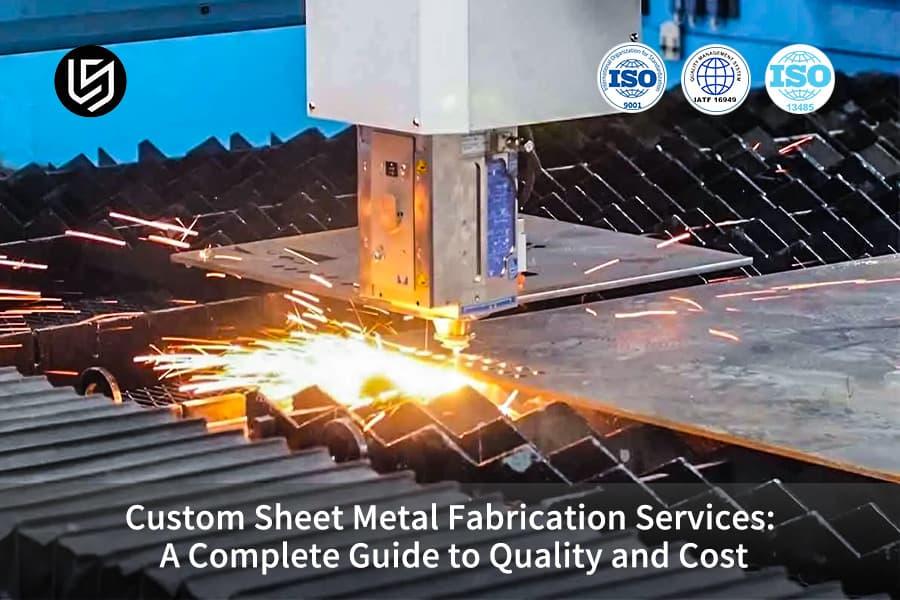
Custom sheet metal fabrication services often cause buyers to fall into a vicious cycle of compromise: low upfront costs cause welding defects, and high prototype costs cause production timelines to be delayed. This is because buyers do not benefit from a thorough DFM relationship; instead, stresses in the material and springback effects cause costly rework, driving costs out of control. LS Manufacturing overcomes this by providing a unique blend of precision prefabrication and statistical process control.
Our solution is a high-precision prefabrication and statistical process control system designed to decrease total procurement costs by 20% without compromising part performance. This is accomplished by starting with a fundamental audit of a supplier's basic process capability to shift the cost-quality curve from trade-off to synergy.
Custom Sheet Metal Fabrication: Essential Guide
| Key Element | Manufacturing Insight |
| Design for Manufacturability (DFM) | The early involvement in the design process for bend radii, hole locations, and tolerances is important so that costly redesigns are minimized and the design can be fabricated as intended. |
| Material Selection & Thickness | The sheet metal fabrication type used (steel, aluminum, stainless) and the gauge or thickness are significant in determining the strength, weight, cost, and process for fabrication. |
| Precision in Bending & Forming | The accuracy in the process of bending or forming metal can be achieved with a well-calibrated CNC machine and knowledge of how to compensate for springback in the metal. |
| Welding & Joining Integrity | Clean welds that are free from distortion are important, and welding methods are selected based on the type of welds that are needed. |
| Surface Finish & Protection | The finish and protection of the metal depend on the process used for finishing, which includes grinding, powder coating, anodizing, etc. |
| Our Integrated Service Model | We handle the entire process from DFM through finishing under one roof, providing quality control, communication, and a single point of accountability. |
| Result: Form, Fit, & Function | Provides a part that meets exact dimensional requirements, assembles correctly, and functions correctly for the sheet metal fabrication application. |
We provide the solution to the challenge of turning your idea into a high-quality functional sheet metal part. We use our expertise to design for manufacturability, precision fabricate the part, and deliver a finished part that meets your exact requirements for performance, durability, and appearance. We guarantee a reliable and professional result for integration into your finished product.
Why Trust This Guide? Practical Experience From LS Manufacturing Experts
Hundreds of articles can be found online regarding custom sheet metal fabrication services. So, what's the value of spending time on this article? We are not theorists. We are people who live in the trenches, working day in and day out with high-strength alloys, precise tolerances, and complex geometry under the gun. The information we are about to share is not theoretical. It is what keeps us alive and our clients successful in mission-critical applications.
All of the advice contained within this guide is based on experience. We understand what forming technique is best for aluminum 6061, how to deal with springback issues in high-carbon steel, and how to deliver speed and integrity in volume production. Our approach is carefully aligned with industry best practices as defined by the Society of Manufacturing Engineers (SME) and utilizes cutting-edge prototyping best practices from companies like 3D Systems.
The advice you'll learn is informed by many iterations of success and informative failure, tested and proven through metal fragments, quality assessments, and on-time delivery. We've walked you through the minefield so you don't have to. Our mission is to share the applied learning we use every day to deliver that critical balance of uncompromising quality and cost-effectiveness for each project.
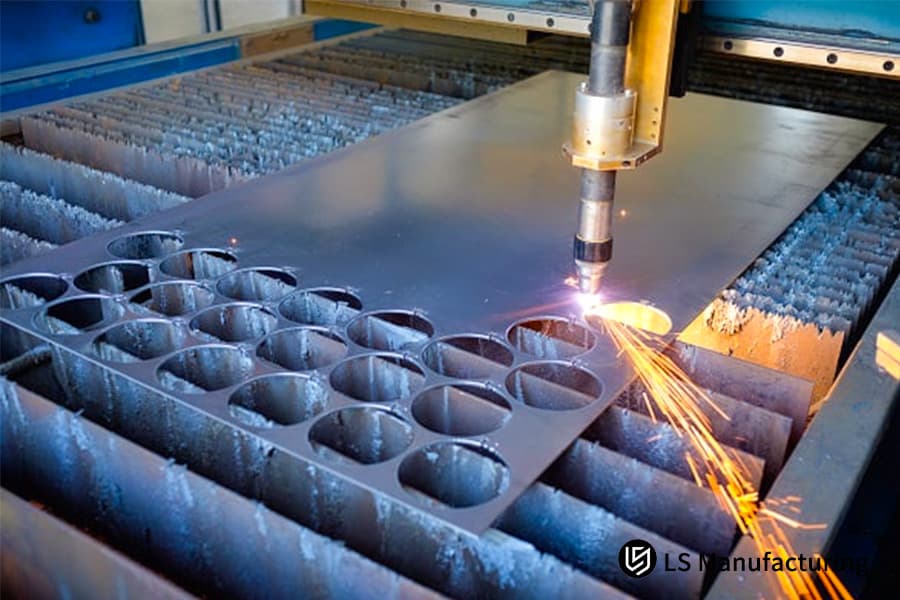
Figure 1: Machining a custom panel from cold rolled steel for an industrial control console component.
Why Choose Custom Sheet Metal Fabrication Services To Reduce Assembly Errors?
The primary problem for precision sheet metal fabrication is managing the overall effect of material thickness variance on finished part geometry, as it is a critical factor for assembly fit. This problem, if not addressed, ensures that parts can't be assembled into a consistent relationship. The following sections explain our step-by-step approach for solving this critical problem:
From Design to Reality: Quantifying Material Variance
We begin by treating material thickness as a variable, not a constant. We log actual gauge data into our MES for each batch of parts. This is a closed-loop sheet metal fabrication system, allowing our CNC press brake programming to use actual measured material thickness, rather than assumed or theoretical material thickness, as a basis for all calculations.
Precision Comp Starts with Accurate Bend Deduction
The fabrication process depends on the accurate calculation of the Bend Deduction value, which defines the flat pattern length required for the fabrication process. We have dynamically computed this value for the fabrication process by considering the tensile strength of the specific lot and the tooling geometry to be used during the fabrication process. This is an important step; otherwise, the welding process cannot be automated, and the process would require significant manual intervention.
Real-Time Angle Compensation via Laser Scanning
As the sheet metal fabrication process progresses, we have implemented the use of laser scanning after the completion of the bending operation to determine the angles achieved during the process, as well as the angles defined during the fabrication process. In case the angles are deviated from the design angles, as is common due to springback effects that are not apparent to the user, the precise amount of crowning correction required for the same part to be bent next is computed to ensure the ±0.1mm positional tolerance is maintained.
Ensuring Consistency Across Thousands of Parts
In the case where we are running a high volume of custom sheet metal parts, we need to use statistical process control. We monitor finished parts at regular intervals and plot a control chart for key part dimensions. This allows us to make proactive changes before the part gets out of spec. This ensures the thousandth part is identical to the first part, which is crucial to prevent assembly errors.
The entire process from the quantified properties of the material, through the dynamic bend deduction, live CNC compensation, and statistical process control, is a rather sophisticated process beyond the realm of merely sheet metal fabrication. It is a philosophy of precision control, and this is what sets us apart from other custom sheet metal fabrication services.

How Can Sheet Metal Fabrication Services Use DFM To Achieve Cost Efficiency?
The biggest leverage for cost control in sheet metal fabrication services lies not in the factory floor, as might be expected, but in the design process itself. Our Design for Manufacturability (DFM) process, which is a proactive and systematic process of engineering analysis, works towards eliminating hidden costs in materials, labor, and process before production even starts, so that our clients can realize quantifiable benefits on their bottom line from the very first design review:
Maximizing Material Utilization
- Strategic Nesting: Algorithmic nesting ensures that the orientation of the parts on the sheet maximizes over 90% utilization of materials.
- Blank Size Standardization: Designs are created with efficient and standard-sized stocks in mind, which can help in saving on sheet metal fabrication raw materials.
- Common-Line Cutting: Multiple parts are designed to take common paths in the sheet metal fabrication process, which can help in saving on laser cutting time and gas consumption.
Designing for Efficient Fabrication
- Weld Reduction: We redesign to reduce welding time and heat distortion by replacing welds with interlocking tabs.
- Bend Sequencing: We ensure logical and uninterrupted part bending sequences using standard tools to avoid refixture costs.
- Self-Locating Features: We include precision notches and pilots to ensure foolproof assembly and minimize labor time and errors for precision sheet metal assembly.
Selecting the Optimal Process Path
- Forming vs Welding Analysis: Our models analyze the cost of a complex part bend and the cost of designing a weldment to ensure the most cost effective sheet metal fabrication process.
- Tooling Commonality: Our designs are directed to utilize available press brake tooling to avoid costly tooling fees and time.
- Tolerance Rationalization: We advise on the use of standard tolerances to ensure quality sheet metal fabrication and avoid costly precision machining.
This detailed analysis of DFM, which is the core of our sheet metal fabrication services, ensures that efficiency is engineered in the product, thereby providing a documented process of iterative partnership with the customer, eliminating certain waste, and ensuring a cost effective sheet metal fabrication result without compromising on sheet metal fabrication standard.
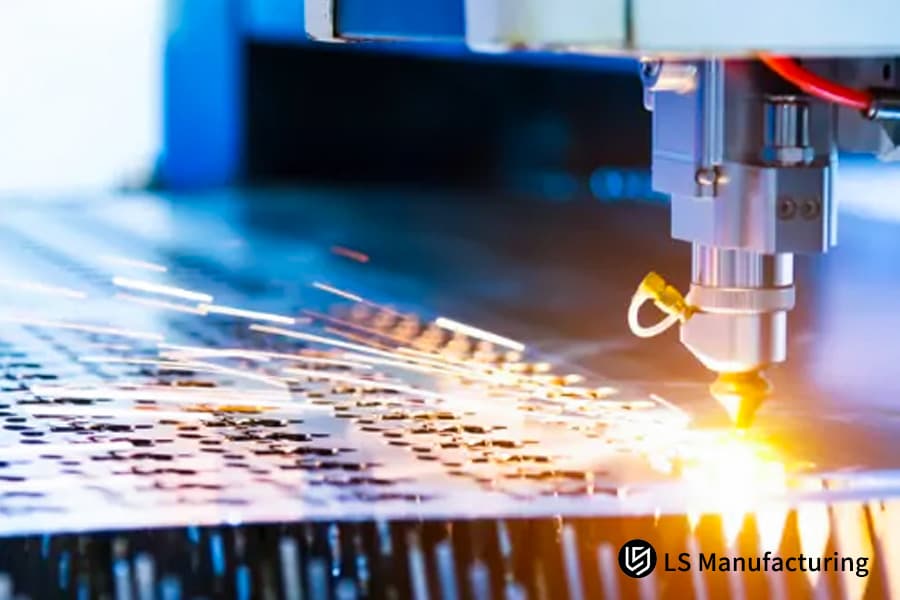
Figure 2: A nitrogen laser cuts a pre-perforated stainless steel panel for a data center server rack enclosure.
Which Quality Control Steps Are Essential For Precision Sheet Metal Fabrication?
In order to achieve a high level of part-to-part consistency for high-volume sheet metal fabrication, a major challenge has to be effectively addressed, and this challenge is mainly attributed to the variations in the materials and processes. Our solution for this challenge at LS Manufacturing is a data-driven quality process for controlling variations from raw materials through final audit. This document outlines the methodology we use:
Raw Material Verification via Spectrographic Analysis
LS Manufacturing's quality control process begins before the fabrication process starts. In this step, we verify the alloy content of the raw materials via a spectrographic analysis process, thus assuring us that the raw materials are correctly identified for a quality sheet metal fabrication process, avoiding potential problems related to weldability and/or heat treatment in the subsequent advanced sheet metal fabrication process.
In-Process Stabilization with SPC Monitoring
Critical dimensions are monitored online through Statistical Process Control (SPC) charts for all forming and punching operations in the sheet metal fabrication process. This enables corrections for tooling drifts to be made online, prior to any non-conforming parts being produced. This method for custom sheet metal parts production for large batches enables the process to ensure that tolerances are maintained within a fraction of the specification limit, thereby turning reactive process control into proactive process control.
Final Validation with 3D Non-Contact Scanning
After fabrication, critical parts are 100% dimensionally inspected. Coordinate measuring machines and laser scanning are used to measure the entire 3D shape of parts, comparing them directly to the original computer aided design (CAD) models. This is a critical process for complex sheet metal fabrication, and we use this method to generate a complete First Article Inspection (FAI) report, providing irrefutable proof of compliance and eliminating all risks in the assembly process.
Corrective Feedback for Continuous Calibration
The key to this process' strength is the closed-loop aspect. This means that there is a statistical analysis of the dimensional results of final inspection and feedback into the pre-production process. This process calibrates our nesting software. This software is then used to predict offsets in tooling. This is a self-correcting process and is very important for demanding sheet metal fabrication.
This process is a technically substantive process for manufacturing reliability and represents a very advanced process compared to simply meeting a deterministic process where quality is engineered into the process flow. Our competitive differentiation is our direct integration of metrology into our production planning process. This process then addresses the fundamental question of predictability in precision sheet metal fabrication.
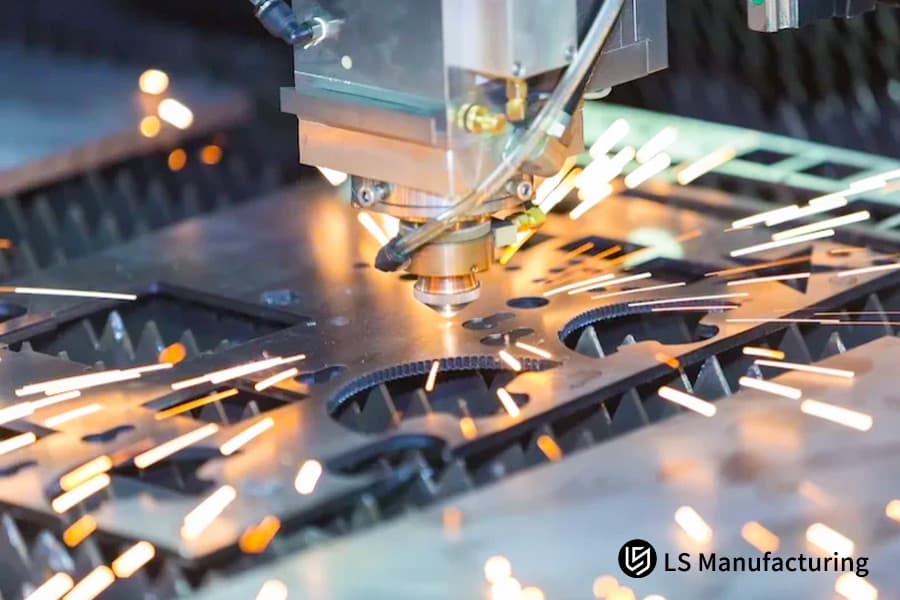
Figure 3: Machining a carbon sheet metal fabrication services to create a custom part for industrial equipment housing.
How Do Custom Metal Fabrication Services Manage Complex Shapes And Profiles?
Translation of complex designs into functional components is one of the key technical challenges in advanced sheet metal fabrication technologies. This document presents a comprehensive approach for resolving the technical issues related to deformation and integrity of materials. This is a vital tool for offering custom sheet metal fabrication services.
| Technical Challenge | Solution & Quantified Outcome |
| Multi-angle, tight-radius bends on large parts | Adaptive Bending Cell for real-time angle correction, where angles are within ±0.5° of nominal specification. |
| Distortion and springback in large, contoured profiles | Pre-calculation and compensation of springback using 3D simulation: Achieved over 70% reduction in rework. |
| Edge degradation in Heat-Affected Zone (HAZ) during contour cutting | 5-axis laser cutting: control of HAZ to < 0.2mm. |
| Processing reactive alloys (e.g., titanium) | Implementation of a cutting environment with argon purging, eliminating oxidation and edge embrittlement in the HAZ. |
| Maintaining accuracy across high-volume production runs | Adaptive robot paths using in-process laser scanning for accuracy during high-volume sheet metal fabrication. |
| Rapid validation of complex first articles | 3D scanning for direct CAD comparison, speeding up the prototyping process for complex sheet metal fabrication projects. |
The above workflow helps solve all issues of predictability and repeatability for complex parts. It also helps clients develop strategies for controlling deformations and material integrity, thus taking complex requirements and turning them into a reliable assembly construct. This is now the new standard for precision sheet metal fabrication, where technical certainty is paramount.
Why Is LS Manufacturing The Leading Cost Effective Sheet Metal Fabrication Company?
Actual cost-effectiveness in manufacturing is based on achieving minimum Total Cost of Ownership (TCO), not minimum unit cost. The major cost variables for global clients are unpredictable delays and quality inconsistencies. This document will outline how a systematic approach in engineering and operation can actually reduce these unknown costs, ensuring cost-effectiveness, which is the hallmark of a premier sheet metal fabrication company. This is achieved through:
Rapid Prototyping Through SMED & Process Digitization
- Quick-Change Tooling Systems: SMED methodologies allow changeovers within 15 minutes or less.
- Digital Work Instructions: Laser project templates and AR guides are used for error-free setup, thereby improving the accuracy of the first part correct.
- Outcome: Development costs for complex sheet metal fabrication prototypes are minimized as project lead times are compressed to 3-5 days.
Predictable Costing via Transparent, Granular Analysis
- Activity-Based Cost Modeling: Quotes are detailed with materials, machine time, labor, and finishing costs, thereby facilitating the identification of cost drivers for joint optimization.
- DFM Feedback: Engineers offer alternative design suggestions for improved producibility and cost reduction prior to quotes.
- Outcome: A fixed and justifiable cost model is provided to the client, thereby eliminating cost uncertainty and facilitating forecasting for all sheet metal fabrication services.
Lean Production for Volume Consistency and Waste Elimination
- Value Stream Mapping: Material and information flow are analyzed and improved for the elimination of non-value-added time.
- In-Line Quality Gates: Dimensional checks are included in key stations for the prevention of propagating defects, which can prove costly.
- Outcome: Consistent quality and throughput are facilitated in high-volume sheet metal fabrication, thereby minimizing scrap, rework, and expediting costs for a cost effective sheet metal fabrication.
This method redefines what is meant by value in precision manufacturing. Our competitive advantage is our closed-loop system that integrates design feedback, rapid setup, and transparent costing to manage those variables to control TCO. We address the fundamental business imperative of procurement risk by moving our clients from a reactive model of expediting to a proactive model of partnership. This document presents a tested model for achieving measurable financial certainty in demanding sheet metal fabrication.
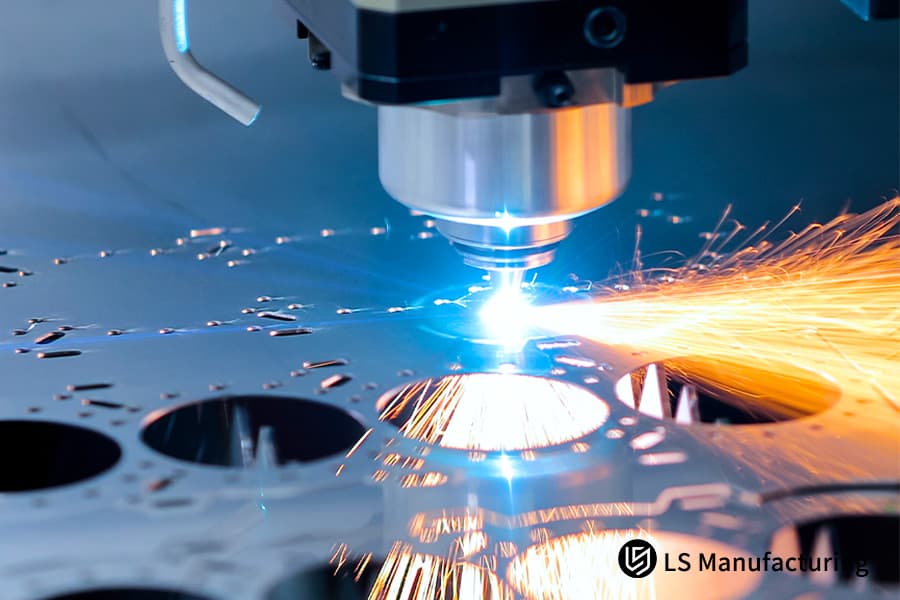
Figure 4: Machining a precision stainless steel panel with a laser for custom HVAC vent plate components.
Case Study: LS Manufacturing Precision Stainless Steel Medical Enclosure Project
This case study presents how LS Manufacturing addressed a critical flatness issue in a high-stakes medical device enclosure project. We did not simply address our client's need for custom metal fabrication services; instead, we used our deterministic method to solve their critical problem.
Client Challenge
The client was experiencing a 40% failure rate in assembling their 316L stainless steel main chassis. The distortion was over 0.8mm, and they were unable to install their motherboard. This chronic warpage from conventional TIG welding halted final assembly, directly jeopardizing the product's scheduled launch—a failure in demanding sheet metal fabrication.
LS Manufacturing Solution
TIG welding was replaced with high-frequency pulsed laser welding. This reduced the total heat input by approximately 60%. This was done to reduce thermal stress. A proprietary hydraulic flattening fixture was used during welding. Additionally, CNC bending parameters for custom sheet metal parts were algorithmically pre-corrected. This ensured distortion was addressed from a system perspective for precision sheet metal fabrication.
Results and Value
The final assembly was achieved with a flatness of 0.2mm. This ensured 100% first-pass assembly success. This meant there was no need for client rework. This sped up their final validation process. The project was launched two weeks ahead of schedule. This was with a 22% reduction in overall project costs. This ensured a return on investment for our engineered high-stakes sheet metal fabrication.
This project represents LS Manufacturing's core competency: integrated process engineering to solve unique and costly manufacturing failures. We took a critical quality issue and turned it into a controlled variable. We do not simply offer custom metal fabrication services. We offer certifiable results for those who require them for high-stakes applications.
Eliminate rework and accelerate time-to-market with LS Manufacturing's precision custom sheet metal solutions.

How Can A Sheet Metal Fabrication Company Ensure Material Traceability?
In industries that are considered to be of high risk, such as aerospace and medical devices, material error can be considered to be of the highest consequence. This document will outline the rigorous data-driven traceability process that creates an unbroken chain of custody for every single component that goes into the finished product. It will also outline the steps that a leading sheet metal fabrication company has implemented to move material certainty from assumption to deliverable:
| Traceability Stage | Implementation Method & Quantifiable Output |
| Raw Material Receipt & Verification | Every sheet and every coil is subject to the optical emission spectrometry process, where the alloy chemistry is verified against the Mill Test Certificate (MTC) before the material is accepted. |
| Unique Material Identity Creation | The material that has been accepted is given a unique heat/lot number, which is laser etched onto the sheet and entered into our MES (Manufacturing Execution System) database. |
| Component Identity Through Processing | During the nesting process, the material identity is associated with the job, and every custom sheet metal parts blank is given a unique data matrix code for high-risk sheet metal fabrication. |
| In-Process Tracking | The code scanned at each workstation (laser, brake, weld) tracks operator, machine, and date/time stamps in a digital traveler. |
| Final Audit & Documentation | A comprehensive report tracing the final part back to its original MTC and process information is generated for each shipment. |
This protocol addresses the key client issue of supply chain transparency and compliance risk. Our forensic-quality material and process information for every part makes root cause analysis a snap, eliminating the guesswork from auditing and compliance. This deterministic approach to quality sheet metal fabrication makes traceability a core engineering process, providing invaluable assurance for mission-critical sheet metal fabrication where failure is not an option.
How To Audit A Custom Sheet Metal Fabrication Services Partner Effectively?
Engaging a fabrication partner solely on the basis of price or certifications raises many risks for a project. The audit must also check for the partner's systemic ability to solve the complex challenges that arise during a technical sheet metal fabrication rather than just their capabilities for doing so. This framework extends beyond a basic verification approach to check for a solution-oriented approach to engineering and risk management:
Interrogate the Quality Management System's Technical Depth
While many firms may have certification for ISO 9001:2015, this framework encourages going beyond that to check for the actual depth of their quality management system's application. Recent non-conformances should be requested for review, along with the associated Closed-Loop Corrective Action (CLCA) report for a previously experienced non-conformance issue, such as inconsistent penetration depth in a weld on a prior project. This will help determine if their quality management system is proactive in its approach to precision sheet metal fabrication control or simply reactive to non-conformances that have already occurred.
Validate Technical Capacity Through On-Site Process Witnessing
Request to audit their process on an active production cell where they are currently running a job with built-in challenges. Measure how long a complete tool changeover takes on their press brake to gauge their SMED expertise. Critically observe their setup for a high-mix sheet metal fabrication project, like a deep draw with flanges for an enclosure. This will reveal their use of special tooling and precision backgauging.
Assess Data Transparency and Proactive Communication Protocols
Assess their level of operational transparency by asking for sample process data. A strong partner will readily provide Statistical Process Control (SPC) data for critical dimensions from a previous production lot. For active contracts, ask if they offer periodic dimensional audit reports from their CMM process. A custom metal fabrication partner that is a true partner will use this data-driven methodology to establish a level of trust and proactively address any potential issues that could cause problems down the line, such as delays or quality issues.
Evaluate Engineering Support During the Design Review Phase
Send over a complex, tolerance-critical part design and ask for a formal, annotated Design for Manufacturability (DFM) review prior to quoting the work. A solution-driven partner will offer specific, actionable feedback, such as suggesting a different grade of aluminum that will allow for a sharp radius or a laser welding sequence that will prevent distortion, thus providing a higher level of value beyond the simple custom sheet metal fabrication services.
This system removes the uncertainty from supplier selection by no longer relying on credential-based selection and instead using capability-based selection. This system selects the right partners for mission-critical sheet metal fabrication projects by assessing the rigor of their problem-solving capabilities and the transparency of their data. This effectively converts the decision-making process for supplier selection from a qualitative assessment to a quantitative assessment.
FAQs
1. What are the standard tolerances for custom sheet metal parts processed by LS Manufacturing?
Using high-tech equipment consisting of CNC laser cutting and precision bending machines, we can achieve linear dimension accuracy within 0.1mm, while the tolerance for the position of critical holes can be as high as 0.05mm.
2. How do you maintain quality consistency in large-volume orders?
LS Manufacturing uses Statistical Process Control (SPC), which allows us to monitor the production data in real time. This guarantees that the Cpk for us is always above 1.33.
3. What range of material thicknesses does LS Manufacturing support?
LS Manufacturing has comprehensive capabilities for working with a wide range of material thicknesses from 0.5mm to 25mm for stainless steel, aluminum, and other alloy materials.
4. How long does it take to receive a detailed quotation?
Once drawings and technical requirements are confirmed, a transparent report, which includes a cost breakdown, is usually provided within 24 hours by the quotation team at LS Manufacturing.
5. Do you offer one-stop surface finishing services?
Yes, we offer comprehensive services, which include polishing, plating, and painting; in addition, all finishes are subjected to 24-hour salt spray testing.
6. Can you provide support if my design is not yet fully refined?
Our DFM (Design for Manufacturability) engineers are on hand to offer free support in optimizing design details, ensuring that not only are the functional requirements met, but also that the design achieves the best possible manufacturing efficiency.
7. How does LS Manufacturing handle urgent project requirements?
Our rapid-response workshop can deliver prototype components in as little as 3 business days, thereby significantly improving your R&D project timelines.
8. How do you guarantee the confidentiality of my technical drawings?
LS Manufacturing takes Non-Disclosure Agreements (NDAs) very seriously and fully adheres to any that we sign.
Summary
Quality and cost optimization in precision manufacturing are best achieved synergistically through process mastery. By selecting LS Manufacturing, you are selecting a deterministic system that can be relied upon to drive your business forward—from proactive DFM optimization to rigorous SPC quality monitoring. For complex custom parts with high tolerances or high-volume mass production parts that require custom sheet metal fabrication, we have the capability to meet or exceed your expectations for performance and cost optimization.
Are you ready to take a decisive step forward in optimizing your supply chain for increased efficiency and predictability? Do you let high defect rates or quality inconsistencies hold you back from realizing your full business growth potential and maintaining a competitive edge in the market? Contact LS Manufacturing today to receive immediate technical support assistance and a review process that's tailored to your specific needs.
Achieve precision assembly and cost efficiency for your design with LS Manufacturing's integrated custom sheet metal fabrication services.
📞Tel: +86 185 6675 9667
📧Email: info@lsrpf.com
🌐Website: https://lsrpf.com/
Disclaimer
The contents of this page are for informational purposes only. LS Manufacturing services There are no representations or warranties, express or implied, as to the accuracy, completeness or validity of the information. It should not be inferred that a third-party supplier or manufacturer will provide performance parameters, geometric tolerances, specific design characteristics, material quality and type or workmanship through the LS Manufacturing network. It's the buyer's responsibility. Require parts quotation Identify specific requirements for these sections.Please contact us for more information.
LS Manufacturing Team
LS Manufacturing is an industry-leading company. Focus on custom manufacturing solutions. We have over 20 years of experience with over 5,000 customers, and we focus on high precision CNC machining, Sheet metal manufacturing, 3D printing, Injection molding. Metal stamping,and other one-stop manufacturing services.
Our factory is equipped with over 100 state-of-the-art 5-axis machining centers, ISO 9001:2015 certified. We provide fast, efficient and high-quality manufacturing solutions to customers in more than 150 countries around the world. Whether it is small volume production or large-scale customization, we can meet your needs with the fastest delivery within 24 hours. choose LS Manufacturing. This means selection efficiency, quality and professionalism.
To learn more, visit our website:www.lsrpf.com.