English



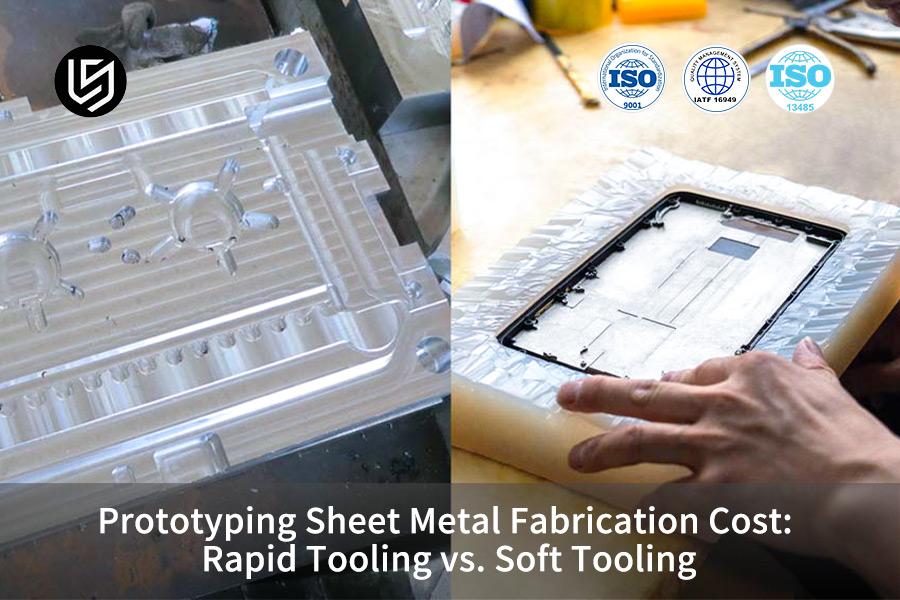
Prototyping sheet metal fabrication cost remains high is that many engineers simply can't measure the technical limits of moldless bending and low-stress soft mold techniques with labor costs, springback compensation, and cost amortization per piece at the initial design stage. What happens is, they end up blindly amortizing thousands of dollars of cost of simple, dedicated stamping die even for prototype runs of less than 50 pieces, or they resort to complicated cutting and forcing of geometries like deep drawing and continuous louvers, which often leads to scrapping and delays of the first prototype because of heat-affected zone hardening or cumulative tolerance going beyond limits.
To drastically work down the BOM costs and ROI cycle time, you need to figure out how to chart a parametric process selection route that will be based on design features and volume brackets. So, to fundamentally reduce BOM costs and ROI cycle time, a parametric process selection path based on design characteristics and quantity thresholds must be established. These practical guide, created by LS Manufacturing's senior engineering team, will walk you through selecting the best process and optimizing your BOM costs in just 5 minutes.
Rapid Tooling vs. Soft Tooling: Core Comparison
| Comparison Dimensions | Rapid Tooling (Moldless) | Soft Tooling (Simple Soft Mold) |
| Applicable Quantity | ≤ 50 pieces | ≥ 100 pieces |
| Initial Mold Investment | $0 | $800 - $3,000 |
| Single Piece Labor Cost | $85/hour (Higher) | $15/hour (Lower) |
| Delivery Cycle | 24 - 72 hours | 5 - 10 days |
| Complex Molding Capability | Limited (No stretching, louvers) | Supports deep drawing, continuous stamping |
| Tolerance Stability (Cpk) | Depends on operator skill | Mold locked, Cpk ≥ 1.33 |
Key Conclusions
- Quantitative Selection Watershed: Considering that geometric features, the watershed of main cost between Rapid Tooling and Soft Tooling is to prototype 55 to 75 pieces.
- Rapid Tooling Application Scenarios: If the total quantity of prototype is no more than 50 and there are no special forming features, rapid tooling (laser + NCT combination) will be the preferred option, which means saving the mold investment of over $1000 and rapidly delivering the product within 24-72 hours.
- Soft Tooling Application Scenarios: When the quantity of the product is 100 or more, or the drawings have complex stamping features like ribs or louvers with a depth > 5mm, it is necessary to have a simple soft mold to ensure dimensional tolerances.
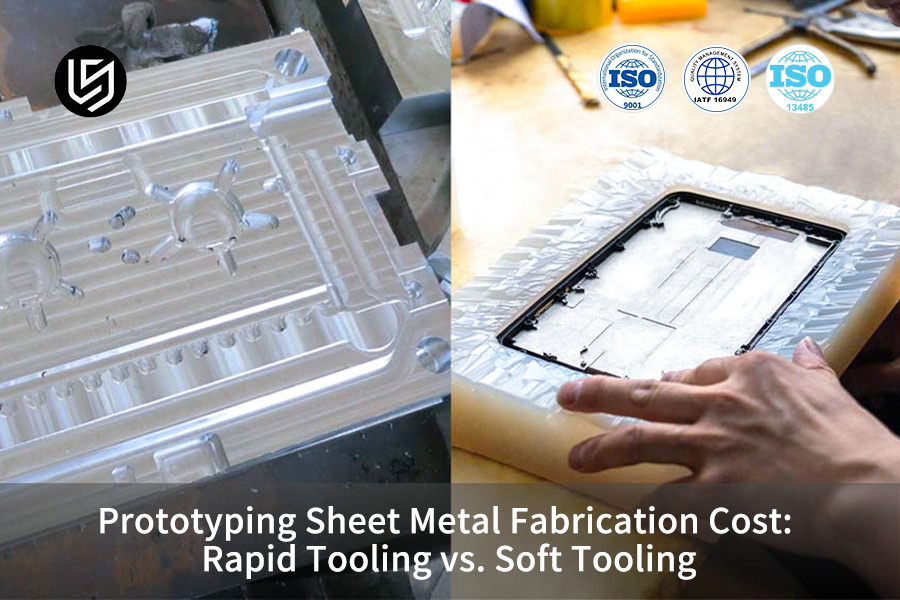
Why Choose LS Manufacturing's Rapid Prototyping Sheet Metal Service?
Drawing on our follow-up of a European medical equipment manufacturer project, where 80 MRI chassis were produced, making mistake during the selection of the processes, is mostly leading to the drawing stage problem. Rapid prototyping sheet metal service premium is first and foremost effectiveness of process selection rather than lowest price for the first try.
ISO 2768-1, General tolerances for unspecified linear dimensions, through the specification that the tolerance for precision (f-grade) linear dimensions is 0.05 mm made it clear.
For complying with this standard, we perform mandatory Design for Manufacturing (DFM) review, before the project start rather than after the components are discarded.
During that medical project, we only needed 2 hours to discover that louver structure was not amenable for moldless machining. A two-pronged approach was implemented - rapid tooling for planar sections, and soft tooling for intricate features - which finally lead to reduction of delivery time of 80 chassis to 9 days and total cost cut by 45% For you, this means your project is on the right track from the start.
Unsure which process is best suited for your design? Contact our application engineers directly for a free DFM assessment report. Receive professional feedback, including process selection recommendations and cost estimates, within one business day.

Why Prototyping Sheet Metal Fabrication Cost Skyrockets and How to Optimize It?
The key reason behind the dramatic rise in sheet metal prototyping costs is the misunderstanding of the concept of machining time and fixed mold amortization. By minimizing bending and non-standard forming features, and scheduling DFM (Design for Manufacturing) reviews even before the final design is ready, the total machining cost at the first-piece prototyping stage can be cut by more than 30%. Optimization for prototyping sheet metal fabrication cost starts at the design phase.
Cost Breakdown
The primary expenses involved in producing high-precision sheet metal parts through rapid prototyping are approximately threefold. To optimize, one must first understand the cost components of low-volume sheet metal production:
- Laser cutting machine time: About 85-120 per hour, with material utilization below 60%, the waste is Most of all substantial.
- CNC punching machine finishing labor costs: NCT (Neural Cutting) tool marks necessitate manual grinding work which consumes 5-15 minutes per piece, resulting in an additional 10-30 labor costs.
- Bending machine setup cost: In a moldless state, each mold change setup takes 20-40 minutes, and the more frequent mold changes are, the higher will be the BOM costs.
Material utilization optimization strategies
When material utilization is less than 60%, nesting optimization can dramatically reduce the cost of raw materials. The greater the accuracy of forming precision sheet metals, the more crucial the layout is:
- Nesting software intervention: Utilizing specialized nesting software for merging several parts can raise the utilization rate to 75%-85%.
- Reusing scrap: Repurposing scraps from cutting large sheets for producing smaller parts helps in reducing wastage.
- Standardized size design: Designing following standard sheet metal dimensions (e.g. 1250×2500mm) eliminates waste caused by non-standard dimensions during the manufacturing process.
Generally, in small batch fabrication service, material costs constitute from 25% to 35% of the overall costs, effective utilization optimization acts as a direct and highly efficient way of reducing costs. The margin for profitability in custom sheet metal manufacturing hinges quite a bit on material management.
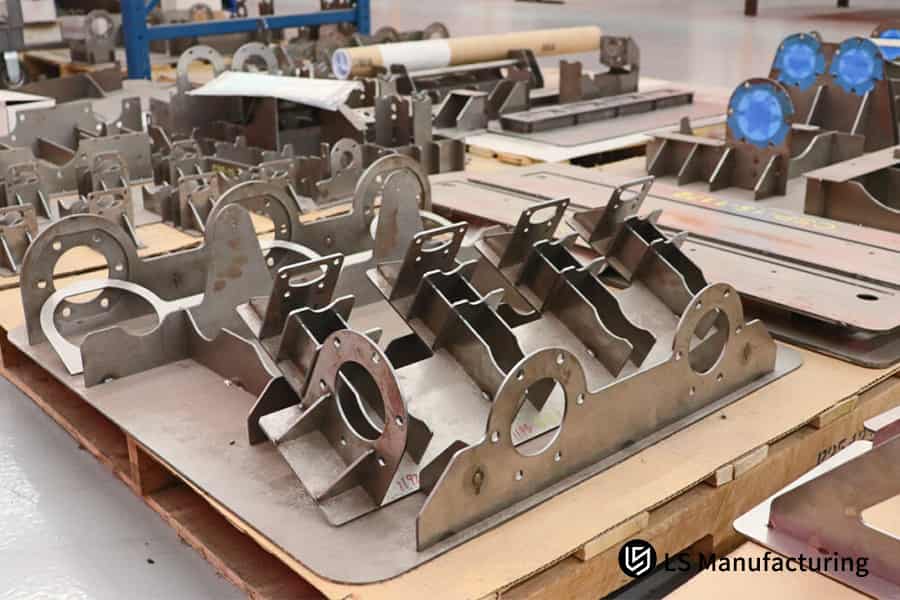
Figure 1: Various stamped sheet metal brackets and components on wooden surface.
What Are Technical Boundaries of Rapid Tooling Sheet Metal Process Without Dedicated Dies?
Rapid tooling sheet metal processing technology mainly revolves around pairing a standard V-bending die with CNC laser. The main limitation is that it cannot directly process continuous stretching, bulges, and high-precision countersunk holes that require the use of high-tonnage special forming dies.
Geometric Limitations
Operating in rapid tooling mode this geometric features may cause processing risks. Bending limitations in sheet metal are traps that engineers quite often miss:
- Not enough minimum bending edge: When the minimum bending edge is less than 3t (t is the thickness of the sheet), the probability of hole deformation increases drastically during die-free bending.
- Too short a distance from the hole to the bending line: When the distance is less than 2t, the tension raised by the bending can bring an uncontrollable elliptical deformation of the hole.
- Continuous stretching features: Reinforcing ribs or louvers with a depth of more than 3mm cannot be made by one bend only.
Assisted Forming and Tolerance Limitations
With 3D printed PLA or PETG bending aids, low-tonnage special shape forming can be accomplished with a standard press. Though, the prototype assistance of metal stamping:
- Auxiliary Block Cost: A single set of 3D printed auxiliary blocks costs only 20-50, suitable for a 1-5 pieces verification.
- Tolerance Control Limitations: This technique is able to maintain 0.15mm tolerance, for a higher precision soft mold has to be used.
- Applicable Scenarios: Good for performing parts of non-load-bearing structures for which appearance verification is desired. Functional load-bearing parts should not be made with this method.
The choice of rapid prototyping sheet metal service should rely on a solid understanding of these boundaries. The advent of sheet metal die-less forming technology is continuously unfolding these boundaries.
Unsure if your design features are suitable for moldless processing? Download the Rapid Tooling Geometric Feature Adaptability Checklist and quickly self-check against 12 key features such as louvers, stretching, and countersunk holes to avoid scrap losses due to incorrect selection.
When Does Soft Tooling Provide Lower Upfront Cost for Complex Stamping Profiles?
If sheet metal components have strengthening ribs or louvers with a stretch depth of more than 5mm, low-stress, easy soft molds produced from aluminum alloy (7075-T6) or mild steel (P20) can entirely take the place of very costly carbide stamping dies that require large upfront investment with extremely low investment. Correct choosing of sheet metal prototype tooling could greatly help saving on initial investment.
Aluminum Mold vs. Steel Mold Performance Comparison
A comparative analysis of the lifespan and performance of aluminum molds and P20 steel dies under low-stress stamping. Material selection for soft tooling for stamping directly impacts project success:
| Die Material | Applicable Sheet Metal | Lifespan (Strokes) | Initial Cost Percentage (vs. Hard Die) | Burr Control |
| 7075-T6 Aluminum | 1.2mm SPCC | 500 strokes | 12% | Ra deteriorates after 500 strokes |
| P20 Steel (Nitrided) | 1.2mm SPCC | 5000 strokes | 15% | Stable within 5000 strokes |
| Hard Carbide | 1.2mm SPCC | 1 million strokes | 100% | Stable throughout its lifespan |
Soft Die Selection Recommendations
- 7075 Aluminum Soft Die: A cutting edge of the die will normally begin to have a lot of burrs after stamping 500 times a 1.2mm SPCC hard sheet metal because it doesn't have enough shear strength. This is good for short term trials of 50-300 pieces.
- Low-carbon steel soft mold with nitriding: Making a first mold costs only 15% compared to a hard mold and after surface nitriding, production can very often exceed 5000 pieces. This is the right time between mass production of 300-5000 pieces.
The main point of the prototype tooling selection guide is to understand how many production units can the mold life sustain.
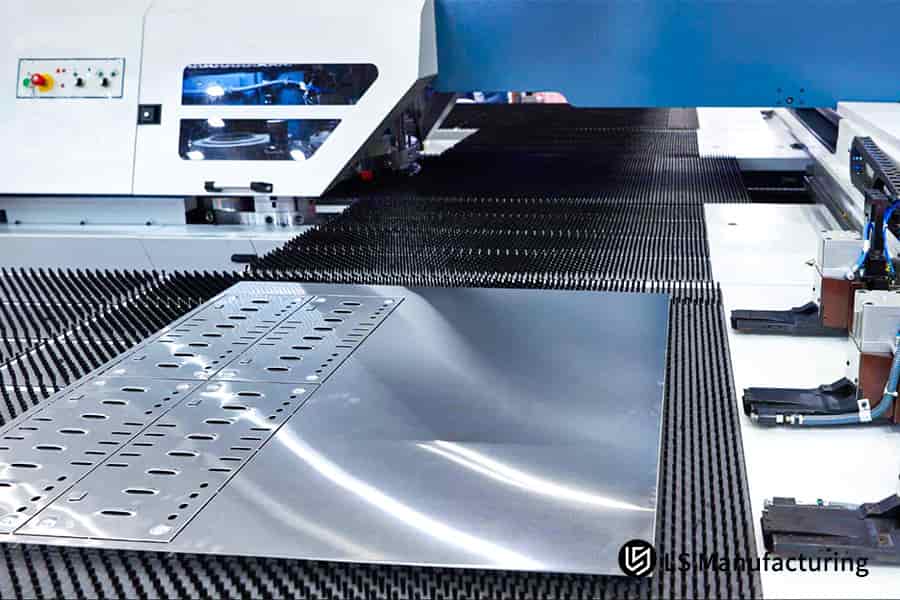
Figure 2: Stamped metal parts produced using soft tooling methods.
How to Calculate Breakeven Point Between Rapid Tooling vs Soft Tooling in Production?
The main equation to find the breakeven point between two processes is the point where the unit labor cost meets the mold-making cost. If we consider the simple geometric shape of the parts, the breakeven point usually lies somewhere between 55 and 75 pieces. The final choice between rapid tooling vs soft tooling has to be made based on the quantitative measurement of cost.
Breakeven Calculation Formula
As laser cutting machine time cost is very high per unit but cutting time is fairly negligible and then again, stamping cycle time is ultra rapid with very low cost per unit also, so this way cost formula is drawn. Cost analysis sheet metal mathematical tools provide the basis for such decisions:
- Biology: Volume (breakeven) = (Tooling Cost of Soft - Tooling Cost of Rapid) / (Part Cost of Rapid - Part Cost of Soft)
- Putting the average numbers in the formula: (2,000-0) / (85/h0.5h-15/h0.05h) 65 pieces
- Summary: From 75 pieces onwards, even after including mold costs, the overall ROI of soft mold purchase will be entirely better than that of rapid prototyping without a mold.
Cost Cross Curve Data
Below is a cost comparison list using real processing data of LS Manufacturing. Openness in sheet metal fabrication pricing encourages customers to choose wisely:
| Quantity (pieces) | Rapid Tooling Total Cost | Soft Tooling Total Cost | Recommended Process |
| 10 | $425 | $2,075 | Rapid |
| 30 | $1,275 | $2,225 | Rapid |
| 50 | $2,125 | $2,375 | Rapid |
| 65 | $2,762 | $2,650 | Flat |
| 100 | $4,250 | $3,500 | Soft |
| 200 | $8,500 | $5,000 | Soft |
Minimizing the prototyping sheet metal fabrication cost depends on accurately identifying this quantity watershed.
Which Geometry Risks Fail Without Right Sheet Metal Prototype Tooling Selection Guide?
Incorrect process selection may result in serious risks of design failures. For instance, if one tries to laser cut small holes in thick plates (T > 2.0mm) without using a dedicated blanking die, this can easily lead to heat-affected zone hardening and this way wire breakage during the tapping stage. The prototype tooling selection guide should identify ways to avert these types of geometric risks.
Manufacturing Louvre Risks
One can cause corner cracks if they do not use a proper die for simple single-pass stamping when they try to manually force bending louvers in segments, which is a typical louver forming characteristic:
- Cracking Mechanism: Manual segmented bending results in creating of stress concentration at the louver root with crack propagation rate of about 40%.
- Die Solution: Single-pass closed-loop stamping causes more uniform stress distribution and reduces cracking rate to less than 0.5%.
- Cost comparison: The expenditure on soft mold is around 1,200, it helps in avoiding losses for 403,000+.
Differences in Springback Compensation
Load-bearing springback of a material varies quite a lot between springback compensation correction of soft mold and manual fine-tuning of rapid tooling. The springback compensation method chosen has a direct effect on the yield:
- Rapid Tooling Springback: Each bend results in a different springback angle (±2°), and it is the operator that compensates piece-by-piece based on their experience.
- Soft Mold Springback Compensation: Compensation angle is actually a part of the mold design (e.g. 3°-5° compensation for SUS304), Cpk is the consistency equal or higher than 1.33.
- Cost Impact: Time spent on rapid tooling manual compensation understandably increases labor costs by 30-50 per hour, this is a very important disadvantage cost wise for batch more than 50.
Wrongly selected sheet metal prototype tooling may result in project failure. Geometric risk evaluation is a must at the time of design.
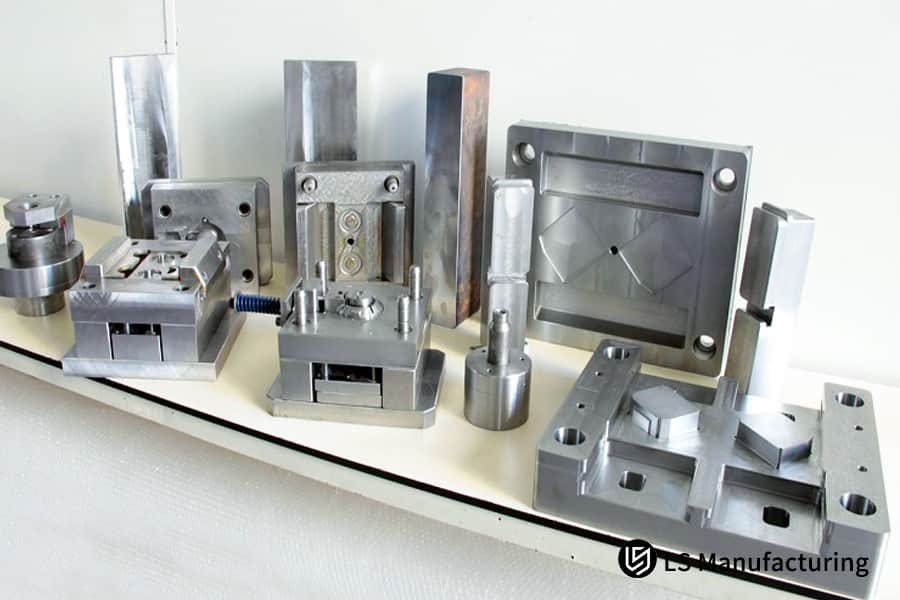
Figure 3: Precision sheet metal prototype tooling and fabricated parts.
Why Material Choice Limits Your Low Volume Rapid Prototyping Sheet Metal Service Options?
Material's mechanical properties are the main factors that decide whether rapid prototyping is possible or not. Sheets made of materials that are highly reflective like aluminum (5052-H32) and copper (C1100) challenge the choice of the laser cutting wavelength largely, whereas the highly elastic stainless steel (SUS304-CSP) needs the use of larger compensation angles for the soft mold. Material compatibility is one of the main considerations for rapid prototyping sheet metal service.
Dealing with Highly Reflective Materials
The highly reflective metals present what comes next constraints on equipment wear and procedures in small batch moldless manufacturing. The laser cutting of reflective metals merits special attention:
- Fiber Laser Reflecting Less: LS Manufacturing adopts a 1.06μm wavelength fiber laser that has an absorption rate of 30% for AL6061, this figure is more than four times that of CO2 lasers which stand at about 7%.
- Bending Inner Angle: It is necessary that, when bending hard-rolled aluminum, the inner bending angle should be over 1.5t to avoid stress concentration and cracking.
- Copper Plate Challenges: The C1100 copper plates are 95% reflective, which necessitates a 30% decrease in feed speed so that the laser reflection does not cause damage.
Molding of High-Elasticity Materials
High-elasticity stainless steel SUS304-CSP requires special processing. The difficulty of high-strength steel forming increases exponentially with hardness.
- Soft Die Compensation Angle: One has to up the springback angle to 5°-8°, which is almost double the one for regular SUS304.
- Ductility Heat Treatment: When the stamping is carried out with soft dies, the die should be preheated to 150℃ to lower the cracking tendency.
- Cost Change: Special manufacturing of materials raises the production cost per unit by 5-15% yet it is still less than the depreciation expense of hard dies.
Whether or not small batch fabrication service is successful depends largely on how well both the materials and processes are matched.
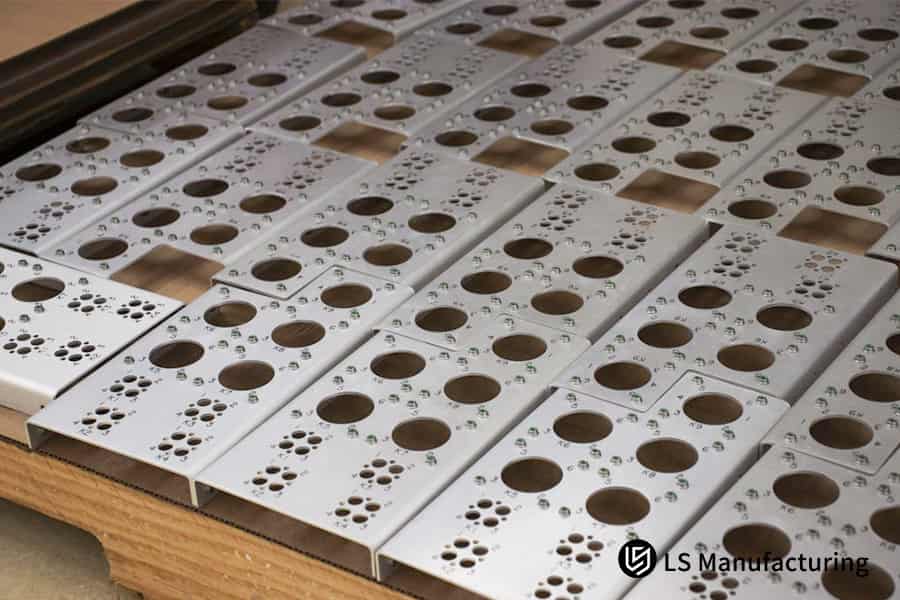
Figure 4: CNC punching machine processing sheet metal with various hole patterns.
What Quality Control Differences Exist Between Bridge Tooling vs Traditional Hard Tooling?
The most significant gap between using bridge tooling and traditional hard tooling during the transitional phase is the speed at which tolerance deteriorates. It's necessary to carry out very tight 3D coherent machining (CCM) checks not just of the first piece but also of the last one in a batch to watch for the cutting edge getting blunt when using bridge tooling. More regular checks have to be made on quality control of bridge tooling sheet metal.
Tolerance Decay Graph
The tolerance keeping power of simple aluminum blanking dies drastically drops during the production of small batches transition stage. Die wear tracking is the key to bridge tooling management:
- Initial Performance: The dimensional chain tolerance maintains a level of ±0.05mm after 50 pieces with Cpk≥1.67.
- Mid-term Decline: If the stamping is done until the 300th piece, the hardness of the material keeps generating heat feedback on the tensile strength die, administration cutting edges get blunt, and the tolerance drops to ±0.12 mm.
- Final Critical Stage: Around the 400th-500th piece, the tolerance becomes ±0.18mm, which is close to the upper limit of the design tolerance.
Measures of Interventions
LS Manufacturing through what comes next ways records a very high overall batch pass rate. The quality assurance process is the backbone of mass production in particular when the soft molds' tolerance characteristics decay have to be inspected per worldwide GPS standards.
ISO 1101:2017 states that the frequency of geometric tolerance inspections during the transitional production phase of small batches should correspond to the mold wear rate, intervention should be initiated when the critical feature Cpk is below 1.33.
To implement this rule thoroughly, the examination procedure is divided into three steps:
- Fully Automated 3D Measurement: All-dimensional CMM inspection is made every 50 pieces, tracking the pattern of key feature changes.
- Online Laser Scanning: The contours of parts are monitored continuously, the moment a deviation of more than 0.10mm is detected, the machine is shut down immediately for mold repair.
- First and Last Piece Comparison: The first and last pieces of every batch are inspected after being compared to see if mold wear is still in a manageable range.
Quality assurance in small batch fabrication service is dependent on dense inspection and the timely maintenance of molds.
Worried about the quality stability of small batch production? Get a quote now! We'll provide a complete set of quality control documents with each batch, including CMM inspection reports and dimensional trend charts, ensuring every piece meets your design requirements.
Case Study: How LS Manufacturing Saved 45% Cost on Medical Server Sheet Metal Enclosure?
Customer Dilemma
A famous medical device maker from Europe had to urgently deliver 80 highly customized and precision-made covers for a new MRI system image processing component. The drawings of the design had scattering ventilation openings for radiation protection and various types of holes that were recessed and countersunk.
The European manufacturers figured that making the hard molds through the traditional methods would have costs for each mold up to $18,000 and the production time up to 6 weeks, whereas pure laser + hand welding for the creation of prototypes would lead to very expensive labor costs per piece, and the overall tolerance of hand-welded louvers was more than 0.5mm, this way they failed the shielding effectiveness test. This shows the kind of difficulties which medical enclosure fabrication is facing.
LS Manufacturing Solution
When the LS Manufacturing project engineering team got the 3D drawings, they very quickly (infact, within two hours) did a Design for Manufacturing (DFM) feasibility study. We got very artistic and took a combination approach:
- The main parts of the chassis such as the flat body and the outer frame instead of traditional die were cut using a Trumpf fiber laser cutter and an NCT CNC punch press respectively following a combined nesting process to get material cutting without molds and very efficient.
- For the most critical and complex elements, persons radition-shieldings louvers and the deep-drawn countersunk hole structure, were made quickly a simplified three-in-one flexible mold based on the high-strength 7075-T6 aluminum alloy.
- Closed-circuit stamping in a single pass was performed on a 200-ton precision stamping press. This was the fundamental step in ensuring that the Cpk dimensional stability of key geometric features was achieved.
Results and Value
The delivery of all 80 precision high-accuracy chassis was made possible by LS Manufacturing through this innovative flexible rapid die-cutting solution in as little as 9 days. Actually, the medical client not only saved themselves from the very costly hard molds but at the same time reduced the entire BOM procurement cost during the whole prototype development phase by 45%, managed to perfectly control the core dimensional tolerances of the final product within ±0.08mm, passed first time the very challenging medical-grade EMI/RFI radiation leakage tests. The client has also made the first bridging production order of 500 units with LS Manufacturing.
Is your project facing similar cost and delivery pressures? Upload your 3D CAD drawings (STEP/DXF format) directly and receive a customized solution including process selection advice and a precise quote within 24 hours, replicating this success story.

FAQs
Q1: What is the typical lead time for a sheet metal rapid tooling project?
For rapid prototyping projects that only involve standard CNC laser cutting, NCT blanking, and a general standard bending die combination, the overall processing and delivery cycle is typically within 24 to 72 hours, depending on the complexity and quantity of the parts.
Q2: Can rapid tooling achieve the same tolerance as soft tooling?
When using high-end fiber lasers for 2D planar blanking, rapid tooling can easily achieve an extreme planar cutting tolerance of up to ±0.05mm, however, in complex 3D stretching forming, soft tooling, due to the mold's locked dimensions, offers significantly better contour consistency.
Q3: Which sheet metal materials are best suited for soft tooling optimization?
Metals that are known for their ductility with good elongation and moderate yield strength are ideal for soft tooling, as examples one can cite aluminum alloy 5052-H32, SPCC cold-rolled deep-drawing steel, and copper sheet, who will in the most significant way able to delay the wear of the die edges.
Q4: How long does an aluminum soft die typically last?
A simple sheet metal soft blanking die made of high-hardness 7075-T6 aluminum alloy can typically withstand 500 to 1500 strokes when stamping 1.0mm to 1.5mm aluminum or mild steel sheets. The specific lifespan depends on the hardness of the sheet material and lubrication conditions.
Q5: Is it possible to modify a soft tool if our design changes?
Of course! In fact, the ability to modify soft dies is their biggest engineering advantage. Since aluminum alloys or unhardened P20 steel are very easy to machine, the parts can be sent back to the CNC machining center for secondary die modification directly after the drawing sizes have been changed.
Q6: What is the minimum order quantity for LS Manufacturing's small batch fabrication service?
We are quite flexible when it comes to order quantities, even if you only want one prototype for a design test or you need up to 10,000 pieces for production, our supply chain can adapt and support you fully. Click to get a quote and receive a customized solution.
Q7: How do you protect critical surfaces from scratches during rapid prototyping?
After the metal sheet is purchased, we only use those with a surface protective film (high quality imported sheets) for laser cutting. At the same time, the surface of the lower die on our CNC bending machines is covered with polyurethane polymer anti-wear pads, so it is very difficult to get scratches and tool marks.
Q8: Can I get a free DFM assessment before I place an order for prototype tooling?
Of course. LS Manufacturing extends a absolutely gratis, a high-ranking DFM manufacturability engineering analysis service to all B2B clients who want to collaborate. Once the 3D drawings are uploaded in STEP or DXF format, we will complete the professional evaluation, with manufacturing recommendations, no later than 24 hours.
Summary
The selection of the most appropriate rapid prototyping (RFP) process for sheet metal should not be confused with a price competition, but it is rather established based on a scientific geometric feature assessment, anticipated batch size, and accurate engineering parameter computations. For light design verification of fewer than 50 pieces, moldless rapid manufacturing using lasers and NCT offers great responsiveness and extremely low start-up costs. Unfortunately, if the product is changed to small batch bridging production or has a complex continuous stamping structure, then the best option is to use a high-strength, low-stress, simple soft mold, which achieves a good balance between retaining the quality and having low fixed asset amortization.
If your next sheet metal new product development project is in the cost assessment and complex geometric tolerance bending stages, why not get help from a sheet metal engineering team directly? Click the Get an Instant Quote button on the right. Upload your 3D drawings in STEP/DXF format. Our team at LS Manufacturing will provide you a free industry-grade DFM manufacturability assessment report and a very competitive precision sheet metal customization quote within 24 hours. We will help your new product reach the market with the highest speed!
📞Tel: +86 185 6675 9667
📧Email: info@lsrpf.com
🌐Website:https://lsrpf.com/
Disclaimer
The contents of this page are for informational purposes only.LS Manufacturing servicesThere are no representations or warranties, express or implied, as to the accuracy, completeness or validity of the information. It should not be inferred that a third-party supplier or manufacturer will provide performance parameters, geometric tolerances, specific design characteristics, material quality and type or workmanship through the LS Manufacturing network. It's the buyer's responsibility.Require partsquotation Identify specific requirements for these sections.Please contact us for more information.
LS Manufacturing Team
LS Manufacturing is an industry-leading company. Focus on custom manufacturing solutions. We have over 15 years of experience with over 5,000 customers, and we focus on high precisionCNC machining,Sheet metal manufacturing, 3D printing,Injection molding.Metal stamping,and other one-stop manufacturing services.
Our factory is equipped with over 100 state-of-the-art 5-axis machining centers, ISO 9001:2015 certified. We provide fast, efficient and high-quality manufacturing solutions to customers in more than 150 countries around the world. Whether it is small volume production or large-scale customization, we can meet your needs with the fastest delivery within 24 hours. choose LS Manufacturing. This means selection efficiency, quality and professionalism.
To learn more, visit our website:www.lsrpf.com