English



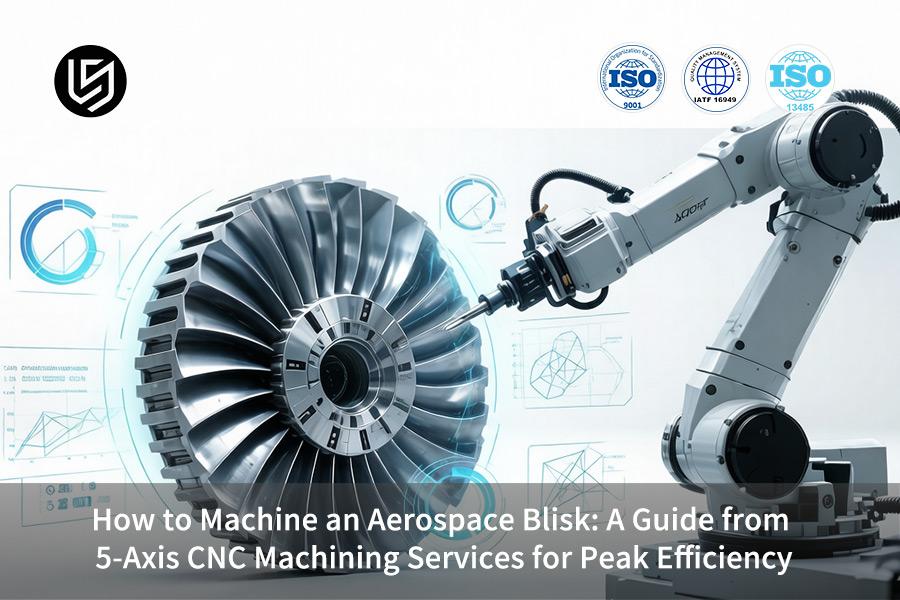
5-axis CNC machining services face the fundamental problem of balancing efficiency, cost, and quality in the manufacture of next-generation blisks. Aggressive cutting parameters for high material removal rates result in chatter vibrations on the titanium blades, leading to scrap, while overly cautious cutting parameters extend the machining time to hundreds of hours per part, stalling project schedules.
The fundamental problem is the lack of understanding of this as not merely material removal, but as a battle against unstable vibrations and thermal deformations. Our answer is a deterministic manufacturing system, which bridges this gap. We utilize deep process simulation to prevent issues, intelligent strategy to ensure efficiency, and a data feedback loop to control everything, so you can ensure the best balance between speed, cost, and quality.
How To Machine An Aerospace Blisk: A 5-Axis Guide
| Technical Challenge | Manufacturing Strategy |
| Complex Integrated Aerodynamics | The blisk's blade and disk are one, and machining the blisk demands uninterrupted 5-axis CNC machining movement to carve the blades, which have very thin, highly sculpted airfoil cross-sections that must be aerodynamically equivalent. |
| Tool Access & Chatter Prevention | Milling the space between blades, which can be very deep, demands the use of long, slender tools, which are prone to deflection. We have the ability to utilize custom tapered tools. |
| Material & Thermal Stress Management | Machining heat-resistant alloys like Titanium or Inconel demands the ability to control heat buildup. We have the ability to utilize high-pressure coolant, as well as custom tooling and a multi-stage approach. |
| Dimensional & Surface Finish Control | The airfoil cross-section, the leading and trailing edges, as well as the surface finish, are all critical. We have the ability to utilize on-machine probing as well as in-process SPC. |
| Our Multi-Stage Process Flow | Our process involves a combination of rough machining, semi-finishing, stress relieving, and final finishing in a carefully controlled sequence. |
| Result: Aerodynamic Performance | Our blisks are designed to meet critical specifications for airflow, pressure, and efficiency, maximizing engine thrust and fuel efficiency. |
We are the solution to the extreme challenge of machining a high-performance 5-axis blisk. Our expertise in machining and thermal management allows us to transform a solid forging into a precise and reliable integrated part. We ensure peak engine efficiency, safety, and fuel efficiency by machining blisks that meet exacting specifications for aerodynamics and structural integrity.
Why Trust This Guide? Practical Experience From LS Manufacturing Experts
There are many articles available on the web regarding machining for aerospace blisk machining. But why should you read this guide? We are practitioners, not theorists. Our experience in our 5-axis CNC machining services involves battling hard alloys and complex geometries where each cut is critical for safety and performance.
Our machining of a blisk is a very precise fight against chatter and distortion. We have further perfected our approach by rigorously adhering to Additive Manufacturing (AM) standards for pre-forms and validating them through 3D Systems. From thousands of machined blisks delivered to customers, we have learned what works optimally for titanium, what to do to prevent wear, and how to maintain quality in high-volume production from hands-on experience itself.
Each piece of advice in this guide is based on real-world trials—our successes and costly mistakes. We have learned from common pitfalls in material and setup configurations so that you can learn from them too. You can trust this guide for practical advice on battle-tested strategies we use daily to achieve peak efficiency in your blisk machining for optimal speed, cost, and reliability.
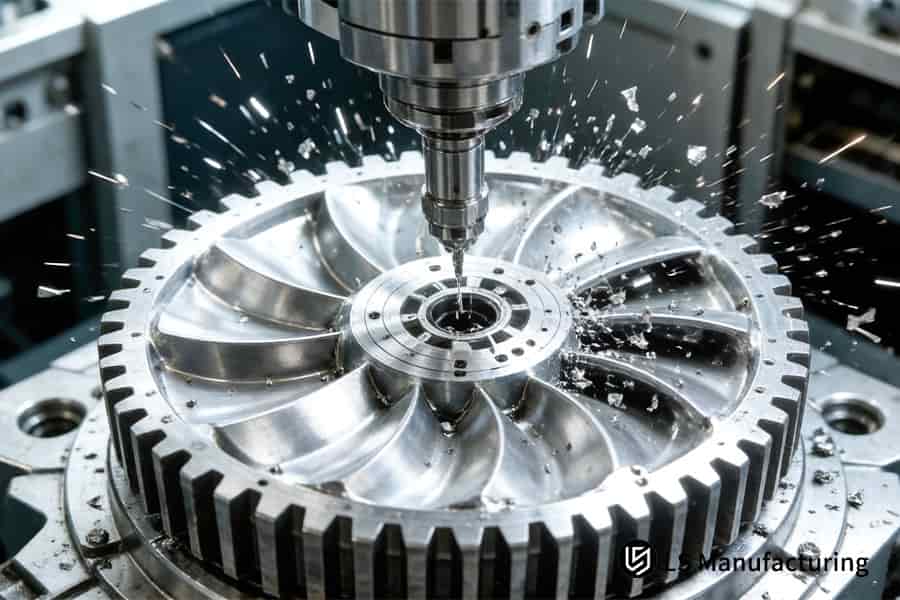
Figure 1: Processing a high-performance alloy engine blisk for aerospace propulsion system efficiency enhancement.
How Do Professional 5-Axis CNC Machining Services Address The Unique Dynamic Challenges Involved In Blisk Machining?
Aerospace blisks manufacturing is a fight against severe dynamic challenges such as chatter and thin-wall deflection. Our 5-axis CNC machining approach is to incorporate a predictive analysis of dynamics into a very stable process to turn potential instability into a predictable and high-integrity result for critical components:
Pre-Emptive Dynamic Analysis for Stability
We begin with FEA on the blade geometry and FRF tests on machine tools to identify the resonant frequencies. These can be directly applied to machine tool programming to avoid the problem of chatter. This is one of the essential aspects of our 5-axis CNC machining services to address one of the major machining challenges and ensure a stable process right from the first cut.
Tailored Protocols for Advanced Materials
In the case of materials like Inconel 718, we use a set of cutting parameters based on empirical tests. Besides this, we also use customized high-pressure coolant to deal with heat and work hardening. This is one of the essential aspects of CNC machining for aerospace to ensure a series of material properties for CNC machining aerospace parts to the most demanding specifications.
Engineered Solutions for Confined Geometries
We utilize highly rigid tooling and program optimized 5-axis contouring movements. We achieve constant tool engagement in tight flow channels using 5-axis simultaneous machining. This guarantees full geometric fidelity in the most constricted areas of aerospace blisk part manufacturing, thus eliminating access issues. This is achieved by fully exploiting true 5-axis capability for fully 3D contouring.
This is our methodology that differentiates us and gives us our competitive edge: it is no longer just integrated engineering versus basic machining. The de-risking of our complex production process is achieved in a predictive manner and in execution in such a way that guarantees success in a way that cannot be achieved by basic 5-axis CNC machining. Our strength is in our solution and not in how we run our tool.

How Do 5-Axis CNC Machining Services Eliminate Machining Chatter In Advance Through Simulation?
The fundamental limiting phenomenon is chatter, and this is the problem that 5-axis machining is trying to overcome in the quality and efficiency of the machining process. The issue is not the response to the chatter vibration as it is felt in the machining process but rather the simulation of the machining process itself in a way that guarantees success and optimal metal removal rates in the complex 5-axis blisk machining:
System Characterization: Building the Digital Twin
- Frequency Response Function (FRF) Testing: The dynamic response of the unique machine tool holder assembly is measured for each 5-axis CNC machine tool. This response includes the machine tool's stiffness and damping.
- Component Modeling: The computer model of the workpiece (for example, blisk blade) is analyzed to understand the workpiece's modal response.
Stability Lobe Diagram (SLD) Generation: Mapping the Safe Zone
- Simulation Core: With the data collected in the previous steps, special computer software is employed to compute and create Stability Lobe Diagrams for the tool and particular zones of the workpiece.
- Actionable Output: The Stability Lobe Diagram will prominently display the spindle speed and the axial depth of cut, defining a 'Safe Zone' in which chatter vibration prediction is absent.
Proactive Process Planning: Programming for Guaranteed Stability
- Parameter Selection: The spindle speed and depth of cut are selected from the safe zone in the stability lobe diagram. For instance: For a tool diameter of 10mm, or φ10mm, with a spindle speed of 12,000 rpm, and an axial cut depth of 0.15mm.
- Path Optimization: The parameters, as computed from the above steps, are fed into the computer-aided manufacturing (CAM) programming, which assists in ascertaining the path strategy for 5-axis CNC machining services.
Verification and Iteration: Closing the Digital Loop
- Virtual Machining: The tool path obtained from the above process is simulated in the virtual world.
- Parameter Refinement: The model allows the parameters to be refined quickly without any cost, thus achieving maximum value from process simulation.
The methodology employed in this approach reveals our competitive advantage in delivering engineering-grade machining services. Our claim to authority comes from our shift in the solution space from machine to simulation software. The solution to our problem of chatter is not to treat it as it happens, but to prevent it from occurring in the first place through physics-based process simulation and deterministic planning, for reliability, maximum efficiency, and first-part success in the most complex 5-axis milling operations.
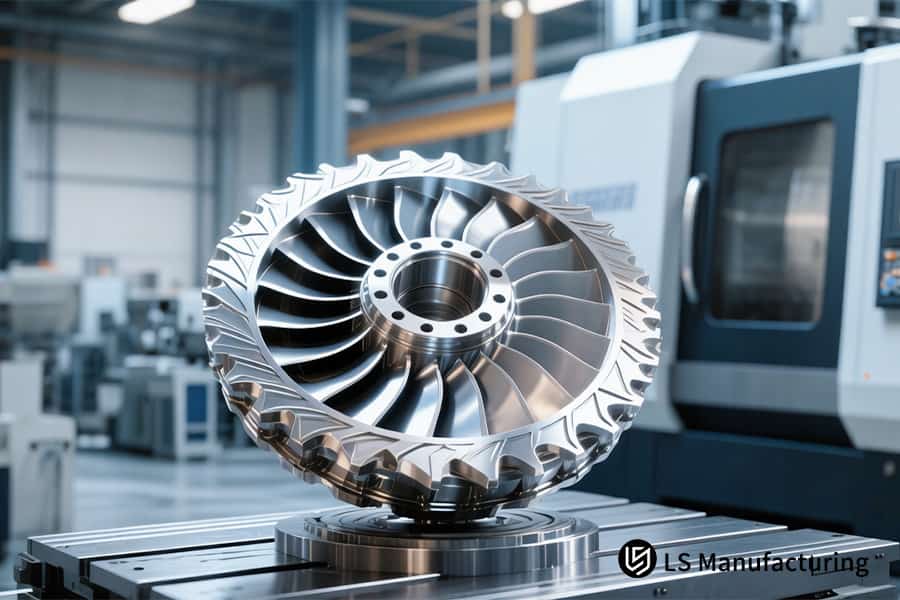
Figure 2: Manufacturing a high-tolerance nickel-based superalloy turbine blisk for next-generation aircraft propulsion systems.
What Roughing Strategies Are Employed In 5-Axis CNC Machining Services To Achieve The Highest Material Removal Rates?
The roughing phase is the major driver of the total machining efficiency for intricate parts like blisks. This document describes the specific strategies implemented within professional 5-axis CNC machining services to achieve the highest Material Removal Rate (MRR) through a revolutionary change to the machining methodology. Our objective is to replace conventional 5-axis CNC machining techniques with a complete solution of advanced toolpath kinematics and other technology to achieve a radical improvement in machining time and cost of tools:
| Strategy | Implementation & Quantifiable Impact |
| Trochoidal & Dynamic Milling | Adopting trochoidal milling paths to sustain a minimal, constant radial engagement, thereby allowing a vastly enhanced axial depth of cut and feed rate to achieve a higher MRR while reducing tool stress. |
| Model-Based Rest Machining | Using CAM software with the aid of stock models processed during the machining process to efficiently clear the material, which is a key component of a complete roughing strategy for blisk geometries. |
| Integrated High-Pressure Cooling (>70 bar) | Utilizing high-pressure coolant, which is delivered via the spindle and tool to break chips, regulate temperature, and remove swarf, which high-efficiency 5-axis machining. |
| Optimized 5-Axis Toolpath Strategy | Creating optimized 5-axis toolpaths, which utilize the capabilities of 5-axis cutting to ensure maximum tool orientation and cutting, with no unnecessary tool retraction or air cutting. |
This new approach to 5-axis cutting addresses the client’s need to overcome long roughing operations and high tooling costs. Our approach gives the client a competitive advantage, reducing blisk roughing time by 25-40% and tool life by over 50% over existing techniques. The approach also shows technical authority, utilizing deterministic physics-based techniques for 5-axis CNC milling for aerospace, ensuring maximum utilization of plant and predictability for high-value component manufacture.
How Do 5-Axis CNC Machining Services Ensure Profile Accuracy And Surface Integrity During The Finishing Stage?
The finishing stage is the stage that defines the final aerodynamic performance and structural integrity of the high-value parts. It is a stage that goes beyond the geometry cutting process to require absolute control of every machining process. This is what professional precision CNC machining services achieve through a closed-loop process that combines the optimization of tool contact strategies and adaptive compensation, transforming potential variation into deterministic outcomes:
Optimized 5-Axis Flank Milling for Contour Integrity
As a company, we prioritize 5-axis flank milling strategies, which position the cutting tool to achieve the best contact on the side of the tool, or the flank, to the contoured surface. This process is critical for the achievement of a quality finish and the aerodynamic form necessary for critical CNC machining for turbine components of the turbines.
Adaptive Toolpath Compensation Based On-Machine Metrology
Next, we use on-machine scanning of the blade's surface to produce an error map. The information is then used to drive our in-process compensation routine that adjusts the final finishing tool path. The material stress relief distortions up to 0.1mm are compensated for in this way. The errors are addressed proactively before the final cut in blade profile finishing.
Closed-Loop Control for Deterministic Results
This combines measurement and machining in a single, automated process. The data is compared to the scanned data and the required offset calculated and applied in a single process. This closed-loop 5-axis machining process ensures the finished part is within the profile tolerances of ±0.05mm.
This document outlines our technical authority in the delivery of precise results. The problem of finish variation is not addressed through the process of inspection but through control, and this is done in the 5-axis finishing process itself. The methodology is proactive and is based on the application of deterministic principles in the machining of the most demanding components.
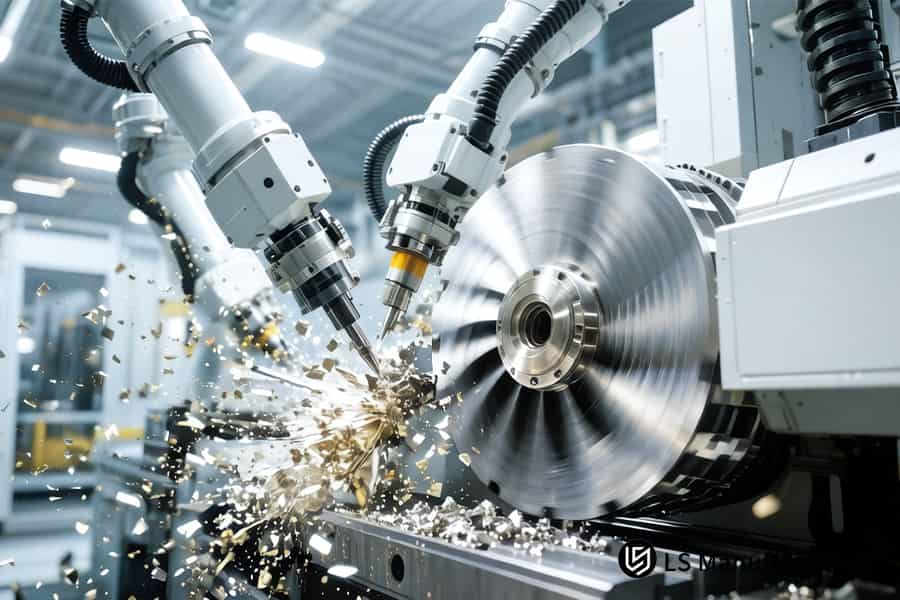
Figure 3: 5-axis CNC milling for aerospace-grade nickel alloy blisk components with high efficiency.
LS Manufacturing Aerospace: "Urgent, Difficult, Critical" Titanium Blisk For Turboshaft Engine
This document describes how the 5-axis CNC machining services of LS Manufacturing offered a scientific engineering solution to this critical and time-constrained prototype project. The client was plagued by the failure of two consecutive parts. Our solution strategy was to use digital simulation pre-processing and in-process control to ensure first-part success. The following is the LS Manufacturing aerospace blisk case that illustrates our ability to solve extremely difficult client projects:
Client Challenge
A prominent helicopter engine maker faced a major problem in the prototype stage of their Ti-6Al-4V material-based compressor blisk. The manufacturer scrapped two parts in succession because of unacceptable chatter marks and profile changes beyond the specified tolerance of ±0.05mm. This 100% initial failure rate caused a severe project delay, jeopardizing a key engine development milestone and associated flight testing schedule, highlighting the extreme difficulty of titanium blisk machining.
LS Manufacturing Solution
As an alternative to immediate machining, we carried out a complete digital twin analysis. Dynamics simulation was used to identify unstable speed zones, and a revised toolpath was generated with spindle speed variation as a key chatter suppression solution. The part was optimized for fixturing to minimize clamping forces, and a thermal stabilization operation was added after roughing. The 5-axis finishing operation was performed with on-machine scanning for adaptive compensation, precision 5-axis contouring.
Results and Value
The implemented solution resulted in first part success. The completed blisk satisfied all the aerodynamic profile tolerances within ±0.04mm, and there was zero chatter. The project timeline was not only recovered but was also reduced by 15%. This proves the value of engineered 5-axis CNC machining services, which helped the client achieve a critical development milestone.
This case highlights LS Manufacturing’s technical authority in high-stakes impasse resolution for complex manufacturing challenges. Our competitive advantage is a disciplined, simulation-based approach to de-risk complex 5-axis CNC machining, leveraging engineering expertise to guarantee predictable outcomes for the most critical aerospace parts.

How Do Professional 5-Axis CNC Machining Services Manage And Optimize Cutting Tools And Parameters?
In high-value 5-axis component manufacturing, the cutting tool is considered to be an extension of the process strategy. The management of cutting tool selection and parameter optimization is of paramount importance to ensure that the results are predictable and cost-effective. The following is a document that presents a data-driven methodology that differentiates professional 5-axis CNC machining services from conventional services. The document is especially relevant to complex components such as CNC machining for turbine components:
Application-Specific Cutting Tool Selection
Cutting tools are selected after analyzing the material type and geometry of the components to be machined. For instance, we use PCD-tipped tools to machine composites, use tools with ceramic inserts to machine high-temperature alloys, and use tapered ball nose tools to machine complex and deep channels. The cutting tools and materials must be selected to ensure that they can handle the application and ensure stable 5-axis flank milling.
Database-Driven Parameter Optimization with Stability Validation
We have access to a proprietary database of validated cutting parameters, e.g., Vc=50-80 m/min for finishing Inconel 718. These parameters, however, are not used universally. Instead, they are cross-referenced with Stability Lobe Diagrams for the machine tool and tooling configuration. This ensures that the cutting speed and feed rates used are firmly positioned in a chatter-free zone, ensuring that the parameter optimization does not compromise stability.
Condition-Based Tool Life Management
We do not stop at time-based tool changes. Instead, we go beyond this and adopt a condition-based approach. This involves monitoring parameters such as the power consumed by the spindle and the vibration patterns during 5-axis contouring. This will allow us to accurately predict tool life and ensure maximum tool utilization and minimize the possibility of tool failure, which is critical for ensuring non-stop high-volume 5-axis production.
This structured method addresses the fundamental problem of unpredictable machining costs and quality. Our technical expertise is validated by the integration of material science, dynamics, and live monitoring to form a complete tool management methodology. Our service provides guaranteed process stability and cost-per-part optimization since we approach the tool as a non-consumable part of the entire 5-axis CNC machining system.
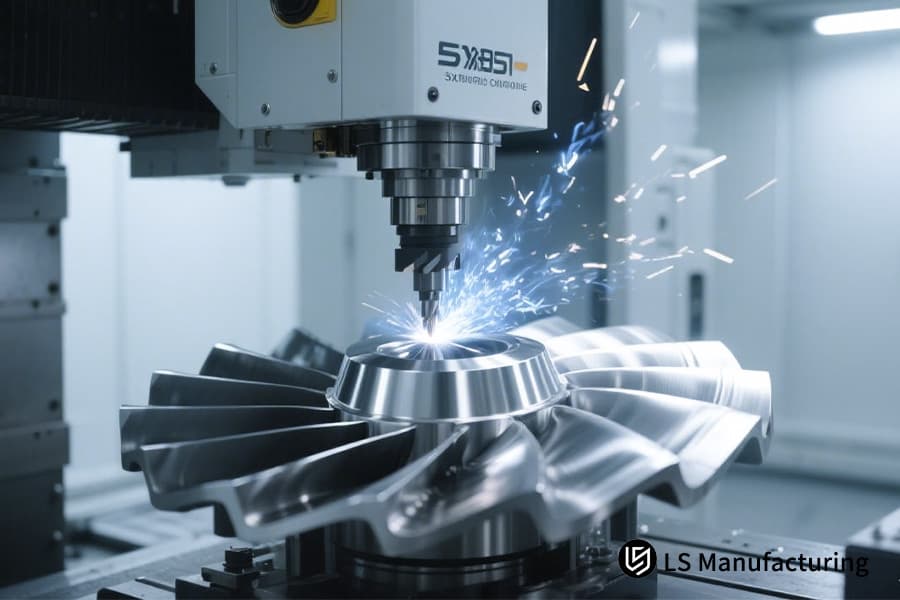
Figure 4: Active 5-axis CNC milling generates sparks while machining a high-tolerance alloy aerospace blisk.
What Inspection Procedures Should A 5-Axis CNC Machining Delivery Package Include?
The end of the 5-axis machining process is merely a milestone. The actual service delivery is the provision of quantifiable, data-driven evidence of the process. For mission-critical parts like blisks, a part is only as good as the data that proves its quality. This report describes the mandatory inspection and validation reports that make up the actual service delivery of professional precision CNC machining services, effectively becoming the 'digital twin passport' of a component:
| Inspection & Validation Component | Purpose & Quantifiable Deliverable |
| Comprehensive First-Article Dimensional Report | A detailed report generated by the CMM, including color-coded deviation maps, will ensure all aerodynamic and assembly geometries meet the required tolerances, i.e., profile within ±0.05mm, thus serving as a definitive blisk quality validation. |
| Surface Integrity and Finish Analysis | The quantification of surface roughness, e.g., Ra < 0.4 μm, as well as micro-defect scanning, provides documented proof of surface integrity, which is critical for fatigue performance, an important part of CMM and surface metrology. |
| Dynamic Functional Validation: High-Speed Balance | The high-speed spin test report provides assurance that the residual balance is within the required grade, e.g., G2.5 or higher, thus validating the dynamic performance, completing the aerospace part inspection validation process for rotating parts. |
| Process Documentation and Traceability | A comprehensive data package that includes tool logs, in-process inspection records, and material certification provides complete traceability, thus completing the closed-loop 5-axis CNC machining quality assurance process. |
This bundled validation solution addresses the key client concern of uncertainty in part performance and supplier reliability. We do not just manufacture a part, we guarantee confidence in part performance through objective evidence of integrity in terms of dimension, finish, and function. Our authority is proven in our comprehensive approach to 5-axis part validation integrity, which is critical for qualification of high-value parts for demanding 5-axis applications in aerospace and power generation.
How To Evaluate Whether A 5-Axis CNC Machining Service Provider Possesses Aerospace-Grade Mass Production Capabilities?
When choosing a partner for aerospace production, it is important to assess their basic engineering and quality systems, as opposed to their machine park. The true capabilities of the partner can be ascertained through their proactive control of their own processes and management systems. The above framework presents a concrete methodology on how to choose a 5-axis machining supplier that can help in the production of aerospace parts:
Scrutinize Pre-Process Engineering & Simulation
- Request Simulation Evidence: Ask for reports on pre-process dynamics (Stability Lobe Diagrams) and thermal/deformation FEA.
- Assess Proactive Mitigation: A capable supplier will integrate this information into 5-axis toolpath programming to avoid chatter and compensate for distortion before cutting.
Verify Certified Quality & Control Systems
- Confirm AS9100D Certification: The bare minimum to start is to ensure this standard is met to show that they have a documented quality management system.
- Audit Special Processes: Review of the processes of part marking, chemical processing, and NDT to validate aerospace manufacturing capability.
Examine Knowledge Management & Problem Resolution
- Review Corrective Action Reports: Evaluate examples of closed-loop 8D or similar documents to gauge the rigor of root cause analysis and prevention.
- Evaluate Deliverable Data Packs: In addition, scrutinize the thoroughness of last inspection and traceability records from previous projects to ensure a systemic 5-axis machining process.
This approach focuses on systemic outcomes rather than capabilities. We can demonstrate qualification for our 5-axis CNC machining services by allowing for a transparent audit of our simulation models, AS9100D certification-controlled systems, and corrective actions. Our differentiator is a robust 5-axis machining process backed by with the engineering discipline necessary for predictable series production in high-stakes aerospace applications.
FAQs
1. How long does it take to machine a typical aerospace blisk (integrally bladed disk)?
From the forged blank to the final product, including all machining operations, heat treatment, and inspections, the normal time required for a medium-sized blisk of titanium alloy or super alloy is 10 to 16 weeks.
2. What level of precision can be achieved when machining blisks using 5-axis CNC technology?
A blade airfoil profile tolerance of ±0.05 mm, a blade thickness tolerance of ±0.1 mm, a dimensional tolerance of ±0.013 mm on critical mounting features, and a surface roughness of Ra 0.4–0.8 μm can be consistently achieved.
3. How do you ensure the structural integrity and balance of the blisk during high-speed rotation?
Finite Element Analysis (FEA) is used to optimize the structural design of the blisk. Deformation is controlled during machining by the use of stress-free fixturing and machining the blisk symmetrically. Testing on a high-speed dynamic balancing machine is a mandatory requirement for every blisk before it is delivered. This ensures that the blisk's unbalance is within the stringent aerospace industry standards (e.g., Grade G2.5).
4. Will you provide feedback if my blisk design presents potential manufacturability issues?
Yes, we will. We have a complimentary service that includes a written analysis of the feasibility of the manufacturing. At the early stages of the project, we can help minimize future manufacturing risks and costs through design optimization recommendations such as blade root fillets, minimum allowable cutter diameters, and possible vibration modes.
5. Do you offer a complete, end-to-end delivery service—from blisk machining to coating and balancing?
Yes. We have a one-stop solution that includes precision machining, heat treatment, coatings such as micro-peening, high-speed balancing, and inspection. We can deliver components ready for installation.
6. What is the Minimum Order Quantity (MOQ)? Do you support prototype manufacturing?
We can fully support the manufacture of single prototypes and small batch runs. In the aerospace industry, it is important to validate through the prototyping stage; hence, our MOQ can start as low as one. If you have a prototype design ready for evaluation, you can get an instant manufacturing quote through our online portal to get started today.
7. Which aerospace material specifications do you support?
We are highly experienced and compliant with various specifications like the AMS and MMPDS. Our materials for the process include titanium alloys like Ti-6Al-4V and Ti-6242, nickel-based alloys like Inconel 718 and 625, and aluminum alloys like aluminum 7175.
8. How do I initiate a new blisk manufacturing project?
You may send us your 3D models, 2D drawings, materials, and performance requirements. Our aerospace engineers will analyze the project within five business days and schedule a technical meeting to discuss the project.
Summary
To manufacture a high-performance aerospace blisk is more than 5-axis machining; it is systems engineering. It requires in-depth integration of cutting mechanics, materials science, thermal management, and precision control technologies. To achieve peak efficiency, simulations and intelligent strategies must be employed, and data control must be achieved through a world-class equipment and engineering knowledge-based partner that ensures part performance excellence.
If you seek a partner to set blisk 5-axis CNC machining standards for next-generation aero-engines, submit your design concepts or performance challenges. Our Blisk Engineering Team will conduct a preliminary analysis of manufacturing risks and efficiency opportunities, leveraging high-volume production insights. Alternatively, schedule a workshop with our Chief Process Specialist to collaboratively map an efficient technical pathway from prototyping to mass production.
📞Tel: +86 185 6675 9667
📧Email: info@lsrpf.com
🌐Website: https://lsrpf.com/
Disclaimer
The contents of this page are for informational purposes only. LS Manufacturing services There are no representations or warranties, express or implied, as to the accuracy, completeness or validity of the information. It should not be inferred that a third-party supplier or manufacturer will provide performance parameters, geometric tolerances, specific design characteristics, material quality and type or workmanship through the LS Manufacturing network. It's the buyer's responsibility. Require parts quotation Identify specific requirements for these sections.Please contact us for more information.
LS Manufacturing Team
LS Manufacturing is an industry-leading company. Focus on custom manufacturing solutions. We have over 20 years of experience with over 5,000 customers, and we focus on high precision CNC machining, Sheet metal manufacturing, 3D printing, Injection molding. Metal stamping,and other one-stop manufacturing services.
Our factory is equipped with over 100 state-of-the-art 5-axis machining centers, ISO 9001:2015 certified. We provide fast, efficient and high-quality manufacturing solutions to customers in more than 150 countries around the world. Whether it is small volume production or large-scale customization, we can meet your needs with the fastest delivery within 24 hours. choose LS Manufacturing. This means selection efficiency, quality and professionalism.
To learn more, visit our website:www.lsrpf.com.