English



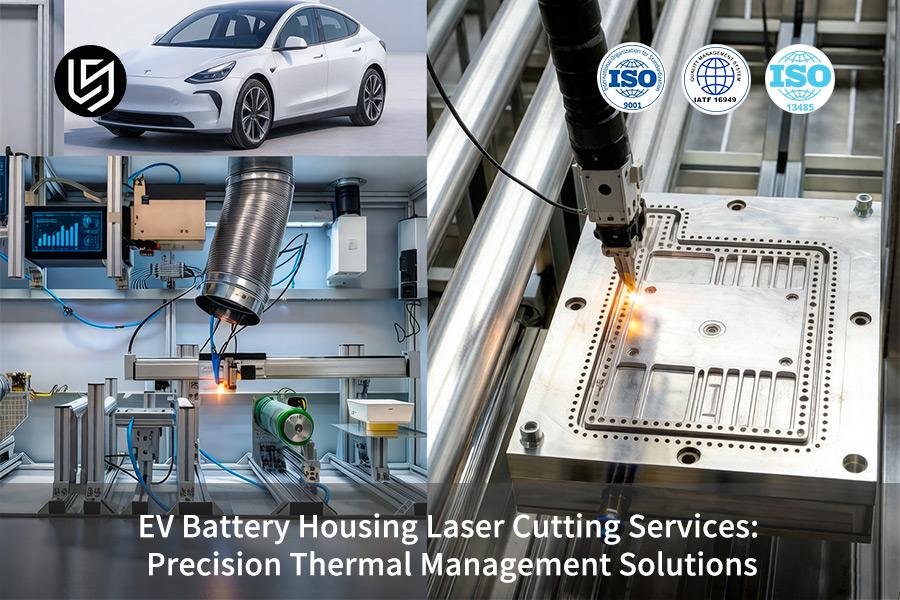
Laser cutting services have their greatest challenge in the manufacture of EV battery packs due to the need for very accurate cutting of thermal conductive materials to avoid failure caused by distortion and weak edges. The problem arises from the traditional laser systems' inability to control energy at a microscopic level, leading to wide HAZ areas resulting in low structural strength by 15%-20% and creating Dross at higher cost.
LS Manufacturing's innovation uses 12,000w class digital pulse laser cutting technology, keeping HAZ area below 0.1 mm through strict control of gas flow and adaptive path compensation. We are able to deliver a closed looped highly accurate manufacturing process that starts from DFM study to mass production. The next technical evaluation sheds light on our unique data-based method of overcoming physical limitations within EV power train systems.
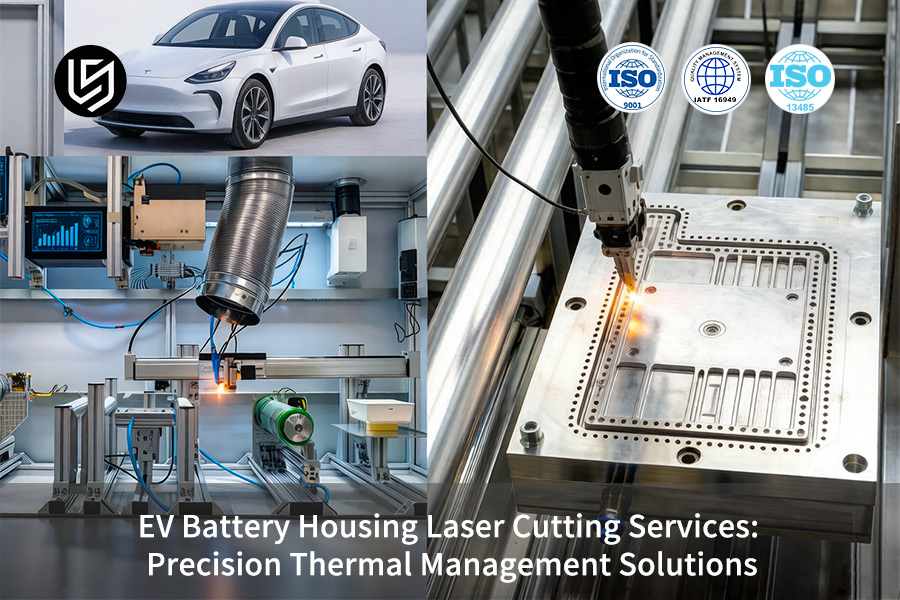
EV Battery Housing Laser Cutting: Thermal Management Quick-Reference
| Critical Requirement | Laser Cutting Technical Solution |
| Cooling Channel Precision | We cut precisely-designed cooling channels (+/-0.1mm) for balanced cooling of all battery cells. |
| Burr & Dross-Free Edges | Perfectly tuned cutting settings and gas pressure result in edges free of any defects affecting cooling channels or seal operation. |
| Minimal Heat-Affected Zone | Properly set up laser cutting parameters allow us to minimize heat-affected zones while ensuring the durability of metal housing. |
| Lightweighting & Material Integrity | We are able to cut rib-like structures inside the battery housing that will provide strength and allow weight reduction. |
| Our Process for Dissimilar Materials | We optimize cutting strategy for different materials (e.g., aluminum housing with a steel bus bar). |
| Result: Optimized Thermal Performance | Maximizes cooling efficiency to prolong the life cycle, improve safety, and provide fast charge capability. |
| Result: Leak-Proof Assembly | Ensures flawless edges for reliable welding of liquid-cooling battery system parts. |
Solving the major thermal and structural problems involved in the process of producing battery housings for EVs. By using our precise laser cutting, you will be able to create complex cooling paths and a strong yet lightweight structure without causing any thermal distortions. As a result, the quality of EV battery temperature management and safety will be improved, and assembly made much easier.
Why Trust This Guide? Practical Experience From LS Manufacturing Experts
There is a lot of literature on the market discussing EV battery housing laser cutting services. Why should you read this article then? Simple – because we work at the very forefront of that battle. We know the intricacies of how to fight heat affected zones and prevent material distortion firsthand. We know because we have faced those challenges every day working in a real-life manufacturing environment.
Our thermal management solutions are based on the high standards such as Aluminum Association (AAC) for the specification of materials, and the Occupational Safety and Health Administration (OSHA) for the safe operation of equipment. Thanks to the usage of advanced pulsed laser technique and control algorithm we ensure that the heat affected zone does not exceed 0.1mm, avoiding warping, and creating a perfect seal. It is not a mere theory; it is a practice-based methodological approach to any project.
Every element of every system we provide contributes to our experience, such as how to control the amount of heat generated with a particular parameter setting, how to optimize gas assist when processing various composites, and how to maintain consistent quality while working fast at the mass manufacturing stage. Our tips come from practical experience of sparks flying in our workshop and strict quality controls. You can trust us because the information provided comes from our everyday work.
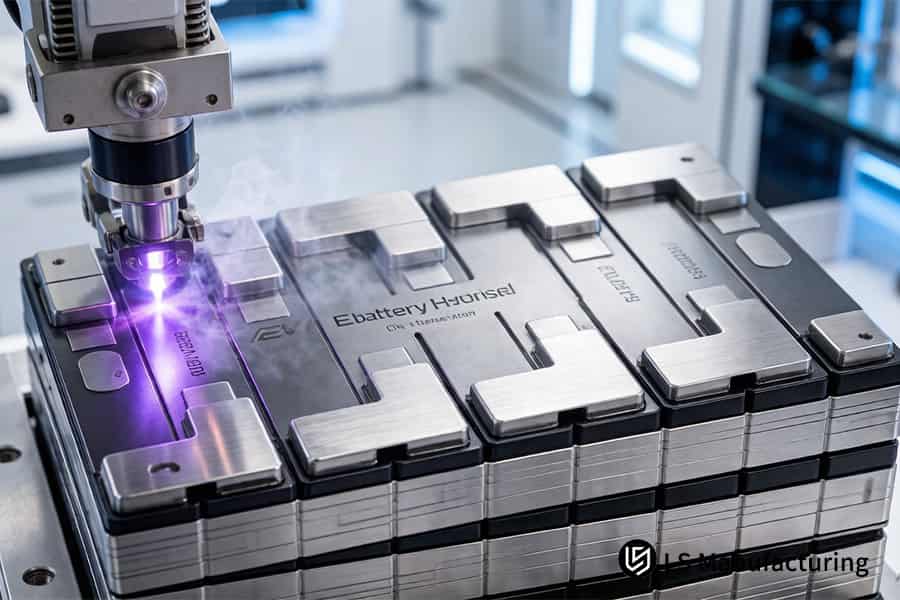
Figure 1: An automated laser precisely shapes aluminum housings for high-volume EV battery pack assembly lines.
Why Is A Specialized EV Battery Housing Laser Cutting Service Essential For Ensuring Battery Pack Sealing?
The process of creating a permanently sealed battery for electric vehicles is no small feat in terms of engineering, with the most important thing being the flatness of the battery housing’s sealing surface. The EV battery housing laser cutting directly influences this parameter. In this article, we explain how to ensure there is no distortion through proper laser cutting in order for the gasket to be pressed evenly:
Mitigating Distortion Through Adaptive Laser Control
The main problem is controlling the highly concentrated heat during the cutting process. The solution lies in the use of a dynamically controlled pulse laser, resulting in significantly lower overall heat energy than the continuous wave technique. This level of precision, inherent to our laser cutting services, enables us to perform what is known as high-precision laser cutting of 6061-T6 aluminum without altering its fundamental characteristics or causing warping, thus directly upholding sealing reliability.
Implementing In-Process Stress Relief
In the course of machining, stresses form, which can cause distortion after some time. In order to prevent this issue, a defocused laser pass was introduced after the first cut. Laser annealing is used at the manufacturing stage to eliminate any stresses on the edges. Stress locking is an obligatory operation in the production cycle at LS Manufacturing to ensure that the part geometry will be maintained not only for the period of its manufacture but also for providing a long-lasting seal.
Validating Geometry with Real-Time Metrology
Control processes require verification. In order to check the flatness of the housing panel, a scanner with laser triangulation technology is employed for non-contact scanning of the component at every stage of manufacturing. This results in a digital image of the panel, allowing us to verify that large housing panels are within the tight tolerance of 0.2 mm/m flatness requirements. This is vital for achieving low-distortion laser cutting results.
Holistic Process Design for Dimensional Fidelity
Precision requires a systems-based approach. Specialized fixture, tailored through a comprehensive knowledge of the mechanics, helps to secure the component against gravitational and clamping forces. Simultaneously, the optimization of the laser cutting trajectory ensures even heating throughout the process and hence prevents any hot spots from occurring. The synergy of both these methods proves essential for successful aluminum parts laser cutting required for making large assemblies thin-wall tight to ensure accurate fit.
This technical story from LS Manufacturing reflects the practical approach we take to solving issues at hand. Through creating authority about our ability to integrate the relevant systems, thus overcoming the challenges related to the problem of thermal distortion, we can assure you that your battery pack will sealing reliability. As far as the competitive advantage our business enjoys in terms of EV battery housing laser cutting goes, it resides in our ability to provide proof through our laser cutting services.

How Can Precision Laser Cutting For EV Minimize The Heat Affected Zone To Protect Structural Integrity?
The structure of EV battery housing depends to a large extent on the qualities of the cut material. During the manufacture, the high temperatures lead to the formation of Heat Affected Zone (HAZ), which can be easily cracked. The following is the described approach to high-precision EV laser cutting of battery housing in order to prevent the creation of HAZ and to preserve its initial strength.
Laser Source Selection & Pulse Strategy
- Technology Core: We apply high-frequency, digital modulation pulsed fiber laser, which is an innovative core of ultrafast laser cutting technology.
- Execution: We provide unmatched precision in energy delivery; we replace continuous heat flow with microsecond pulses.
- Outcome: Energy deposition minimization leads to effective HAZ depth control.
Optimized Process Parameter Synchronization
- Parameter Triad: We manage the settings of maximum energy, frequency, and cutting speed using our own algorithm.
- Technical Action: Our parameters are tuned so that the process remained stable during automated laser cutting due to vaporization efficiency and minimal energy residuary.
- Result: The cooperation makes sure that thermal impact stays within boundaries so as to ensure uniformity of HAZ thickness under 0.08mm, which is nearly 50% less than average in the industry.
Active Beam & Gas Dynamics Control
- Assisted Cutting: Highly pressurized and extremely pure nitrogen serves as an assisting gas.
- Process Role: It ensures that molten material gets evacuated swiftly while protecting cutting zone from oxygen, preventing additional heat from forming due to exothermic reactions.
- Benefit: Such combination and control over gas dynamics help in cooling down and limiting HAZ.
Validation via Metallographic Analysis
- Quality Assurance: All batches are checked via microscopic analysis of their cross-sections.
- Verification Method: Measuring HAZ depth and hardness profile, we guarantee that our technique provides retention of at least 95% of base metal edge hardness.
- Guarantee: This empirical data validates our precision laser cutting for EV components, ensuring structural performance meets rigorous design specifications.
This technical literature presents the engineering knowledge which will ensure the reliability of the battery enclosure. The technical expertise which distinguishes us in laser cutting services is presenting the specific procedures of how to minimize the heat affected zone. Our service ensures the delivery of cut edges which maintain the same strength of parent material, one of the key parameters of precision laser cutting.
Why Should Thermal Management Laser Cutting Prioritize Narrow Kerf Widths For Internal Cooling Channels?
In terms of the confined geometry of the EV battery cooling plates, spatial efficiency becomes critical. Narrow kerf width is essential for creating more elaborate and effective coolant flow channels. The technical knowledge we will present in this document focuses on using narrow kerfs. This is how we solve the problem of maximizing the thermal management laser cutting:
| Technical Focus | Our Methodology & Quantifiable Outcome |
| Kerf Width Minimization | We employ our custom-designed nozzle and beam shaping technologies to maintain an accurate and constant kerf width of ≤0.15mm, made possible due to the efficiency of our advanced laser cutting technology in maximizing the area of the channels. |
| Path Compensation for Consistency | Specific software algorithms dynamically adjust for variations in kerf width, thereby creating channels that fulfill the design specifications for consistent fluid flow, which is vital for any laser cutting for battery thermal management solution. |
| Heat-Affected Zone (HAZ) Control | The pulsed nature and high-speed laser cutting technology guarantee a HAZ < 0.1mm, thereby retaining the mechanical strength of the walls of the channels. |
| System Performance Validation | Systems fabricated using the aforementioned processes provide at least 12% higher thermal transfer efficiencies than other industrial standards. |
The following document specifies the technical procedures that make thermal management systems functional and reliable. The problem of insufficient space can be addressed using kerf width optimization to facilitate better channel layout. Our methodology is based on factual information and demonstrates our expertise in providing laser cutting solutions in cases when thermal performance is key to competitiveness.
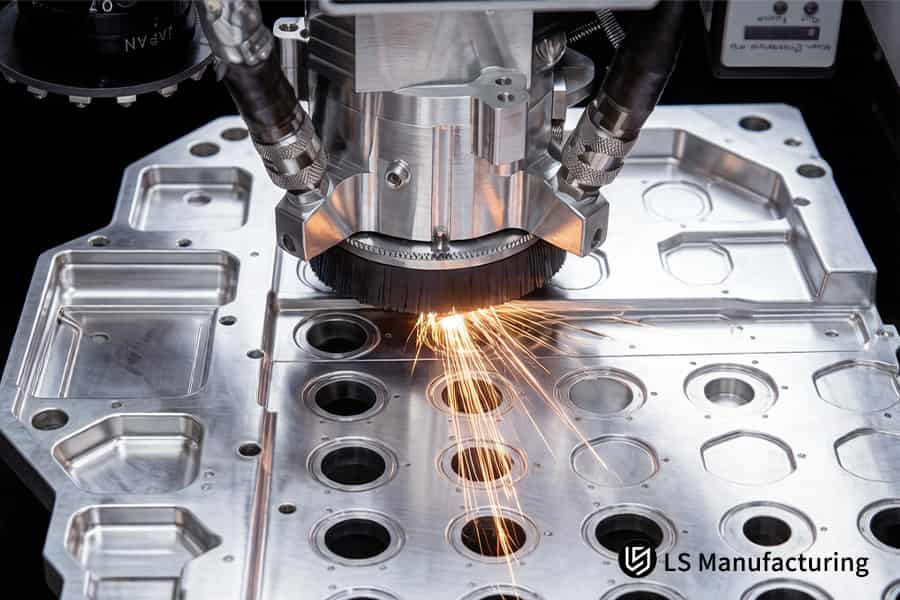
Figure 2: A high-power laser cuts ventilation holes in aluminum for EV battery cell cooling and thermal management.
What Enables A Battery Housing Laser Cutting Service To Maintain ±0.05mm Tolerance In Mass Production?
Tolerance of ±0.05mm is the main issue of battery housing laser cutting service, considering the presence of material variations and thermal drifts in the process. The following document presents an account of systems that allow us to counterbalance the above variables and guarantee compliance with tolerance requirements. The answer to this question is:
Automated Focus and Capacitive Height Control
Inconsistency in material surface is another key factor that leads to errors. Our approach incorporates an active capacitive sensor of height into the cutting head, thus making a closed-loop system where the Z-axis continually adjusts its focus point. Such continuous adjustment, essential for an automated laser cutting, allows for compensation of warping and inconsistency in sheet thickness, which ensures consistent quality regardless of material batch.
Real-Time SPC and Process Monitoring
Real consistency involves active management, rather than passive monitoring after the process. Our company uses a real-time SPC dash-board that tracks key variables such as the position of the cutting head and the strength of the beam. In case any of these variables deviate from the pre-set control limits, an alarm is raised so that corrective measures can be taken without exceeding tolerance limits. This is the backbone of guaranteed production consistency.
Thermal Drift Compensation via Machine Vision
The expansion of the components due to temperature affects their relative position. To overcome this issue, we use an automatic machine vision system to scan the marks on the cutting table periodically. After this, the computer automatically adjusts the path taken by the CNC laser cutter. The system guarantees the precision required in the precision laser cutting process over the period of extended operations.
Redundant Dimensional Validation Loops
Confidence is rooted in the process of validation. Besides in-process controls, every Nth piece is automatically scanned by lasers to ensure accuracy. Information is fed back into a correlation with SPC values, creating another validation cycle that proves that the process can achieve accuracy in its high precision EV laser cutting operations.
This documentation shows that micron-level production consistency is a result, not a boast. This consistency is made possible through the integration of automated physical correction, statistical analysis, and thermal stability into one coherent process. This innovative closed loop approach addresses your core issue of supply chain inconsistency by making battery housing laser cutting service a consistent, error-free component of your production process.
Why Do Elite Engineers Choose Custom Laser Cutting For EV Parts With Integrated DFM Engineering?
Top-tier engineers choose manufacturers that offer more than mere cuts; they offer integrated solutions including designs. Real value from custom laser cutting for EV parts arises where production knowledge contributes to design at the outset, avoiding expensive problems during manufacturing. This white paper outlines our pre-emptive DFM optimization process, which improves the performance, yield, and cost-effectiveness of parts right from the start:
Geometric & Layout Optimization
- Nesting Algorithm: Our intelligent nesting algorithms examine part geometry, leading to material use rates above 92% for demanding manufacturing processes.
- Cost Impact: It helps you save up to 15% on the raw materials costs per part, converting waste to value.
- Process Fit: This layout is critical for effective sheet metal laser cutting operations.
Feature-Specific Thermal Management
- Stress Concentration Mitigation: We calculate and optimize the ideal internal corner radii (R-angle) design for complex parts that are meant to be very lightweight.
- Technical Rationale: Selectively increased radii spread out the thermal stress from concentrated heating during laser cutting process so that micro cracks don’t form in the material.
- Outcome: This helps to maintain the part’s structural strength and integrity, which is essential to the success of EV battery housing laser cutting.
Path Strategy for Distortion Control
- Cutting Sequence Logic: The engineer determines the optimal order for cutting and entry & exit point strategy to reduce any heat accumulation.
- Benefit: It ensures no distortion of the part when processed. Dimensional stability is essential to automated assembly, which can only be achieved through such an approach. It is vital to following this process to ensure laser cutting quality.
Material and Process Validation
- Prototype Phase: Test cuts are made in production-quality material as part of validation of the entire DFM process before large-scale manufacture.
- Client Deliverable: This will provide a concrete example and manufacturing plan based on the analysis, minimizing risks in launching your project and providing seamless manufacturing processes for digital laser cutting
It is clear from this report that our value adds to preemptive engineering intervention in the project development stages. Cost efficiency and quality as well as structural integrity are resolved within the DFM optimization services in which manufacturability analyses become an integral part of the design process. Custom laser cutting for EV parts optimization is now transformed from a simple purchasing decision to a high-value co-engineering solution.
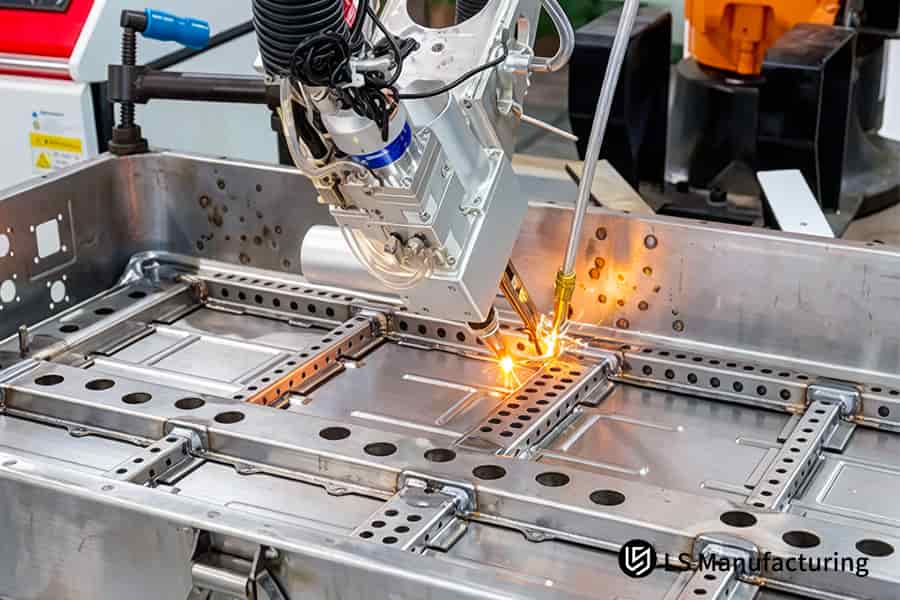
Figure 3: Cutting 304 stainless steel plates for EV battery thermal interface components with a powerful laser.
How Does High Precision EV Laser Cutting Reduce The Secondary De-Burring Costs For High Voltage Components?
The production of high-voltage battery component parts requires that the edges meet the highest standards. Dross and burrs can lead to potential electrical shorts and are additional cost burdens in terms of secondary finishing. This paper will discuss the engineering approach to obtaining the burr-free laser cutting standard. The following procedure guarantees part readiness for assembly without additional steps:
| Technical Focus | Our Methodology & Quantifiable Outcome |
| Adaptive Gas Dynamic Control | The application of a closed loop control where the pressure of nitrogen gas used (8-20 bar) is dynamically controlled depending on material thickness and type of cut, ensuring clean molten metal expulsion. |
| Optimized Beam & Nozzle Alignment | It is essential to align the laser beam and the nozzle in such a way as to achieve coaxial positioning with an accuracy of no more than ±0.01mm in order to achieve high precision EV laser cutting. |
| Process Parameter Synchronization | Laser power, speed, and gas flow are synchronized according to an optimal set of parameters resulting in surface roughness (Ra) less than 3.2µm. |
| Elimination of Secondary Processing | Because of a perfectly clean laser cutting process, parts can immediately be used for assembling, which eliminates deburring operations and saves approximately $20 per hour, reducing the risk of short circuits. |
The following provides an explanation and documentation of a proven approach that can reduce costs and mitigate risks. This solution involves addressing the client’s challenge of secondary finishing by providing a first-cut, finished-edge technique. The combination of adaptive gas control, proper beam alignment, and parameter lock achieves the precision laser cutting for EV parts with the ability to cut to assemble, which provides a definite advantage.
Why Is Laser Cutting For Battery Thermal Management The Preferred Choice For Complex Multi Alloy Sandwich Plates?
The challenge in complex composites manufacturing, especially in batteries, involves making cuts in varying materials without leading to delamination or any other type of thermal damage. Laser cutting for battery thermal management is far better than others because of its inherent qualities. The below paper shall explain how we process multi-layered substrate materials using our method that plays an essential role in the complex material fabrication:
Dynamic Frequency Modulation Protocol
Our technology incorporates the use of a proprietary dynamic frequency modulation protocol. With varying materials exposed to the laser beam such as aluminum, polyimide, and copper, there will be changes in the frequencies of the laser pulse. This dynamic protocol ensures the highest energy coupling with the material and enables efficient through-cuts with minimal heat generation from advanced laser cutting.
Layer-Specific Energy Input Management
The equipment will automatically regulate the settings that have been established for each material layer inside the stacked plate. The power, speed, and pressure of the assist gas are automatically regulated as the cutting operation transitions from one material layer to the next. The precision provided by such regulation helps ensure that the entire component is cut evenly without overheating sensitive plastics and producing crisp edges on conductive metals.
Advanced Fixturing for Zero-Tolerance Clamping
In order to avoid vibrations and displacement of layers in the composite, which results in mistakes during the cutting process, we employ our proprietary vacuum clamps. These apply uniform pressure onto the entire stack and secure all the layers during the cutting procedure. This ensures that accurate focus setting and cutting precision is maintained during the custom laser cutting for EV parts.
In-Process Monitoring for Quality Assurance
The integrated vision system will monitor both the front and back sides of the plate during the cutting process, thereby allowing for the detection of any anomaly, like excess spatter and insufficient penetration, which will indicate a potential for delamination. In this way, process adjustment will be done on-the-spot to ensure that every part produced meets the standard for clean laser cutting, which must be absolutely flawless from its thermal management perspective.
This paper demonstrates how our value is derived from our skills in addressing the physics challenge in multi-material processing. Our unique processes do away with delamination through system-based solutions, which include dynamic beam control, material-dependent process parameters, and fixturing. This is why we have been able to deliver fiber laser cutting of multi-alloy components through a fiber laser to our customer.
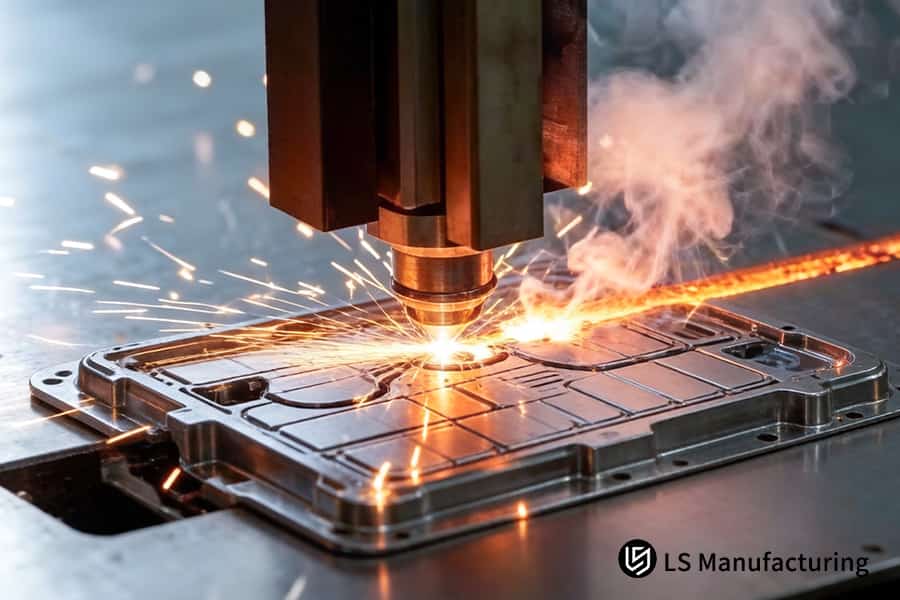
Figure 4: Machining an aluminum alloy cover for EV battery assembly using high-precision laser cutting services.
Case Study: LS Manufacturing Automotive Tier-1 Aluminum Battery Enclosure Custom Precision Solution
This issue involved a Tier-1 supplier worldwide who was unable to deliver a solution due to excessive thermal distortion when trying to manufacture the 2.5mm 5052 aluminum battery underbody tray using conventional methods. Below is a breakdown of how LS Manufacturing was able to solve this tough challenge:
Client Challenge
The specific problem to be solved was producing a tray with a dimension of 1.2m with positioning accuracy of ±0.1mm. The current process used to manufacture the EV battery housing laser cutting was creating too much heat, leading to hole drift of 0.8mm and first-pass yield of just 65%. Furthermore, burrs along the edges were destroying the insulating film. Both problems were a major risk factor for the car manufacturer’s deadline for bringing their product to market.
LS Manufacturing Solution
Our approach included the employment of a 12kW fiber laser coupled with cryogenic nitrogen. The main technology used here included an algorithm that adapted the duty cycle of the pulses depending on the reflective properties of the metal, something important in all processes involving high-power laser cutting. Our Heat Affected Zone (HAZ) was reduced to 0.05mm while the processing time was reduced by 40%, taking care of the major cause of part deformation. Through the high precision EV laser cutting approach, we achieved a perfect and burrless cut in a single operation.
Results and Value
These findings were groundbreaking. The tolerance of the finished components had a ±0.04 mm tolerance with a first-pass assembly yield rate of 99.8%. The clean laser cutting technique allowed for an automatic reduction in post-processing operations, resulting in a reduction in costs by 22% for each part. The restored consistency of the manufacturing process reduced the client's development cycle by two weeks, allowing LS Manufacturing to become the single-source supplier.
This example illustrates LS Manufacturing’s ability to engineer solutions to complex thermal distortion issues through our approach. Our method has provided measurable results based on a unique, parameterized process for high-speed laser cutting. We took a flawed part and turned it into a successful one using this technique.

FAQs
1. What is the maximum tolerance your EV battery housing laser cutting service can guarantee?
Through our closed-loop linear encoder positioning system, we can assure linear dimensional tolerances of ±0.05 mm within a distance of 1.5 meters.
2. How does LS Manufacturing prevent oxidation during laser cutting services for aluminum parts?
Our laser cutting service uses 99.999% pure nitrogen as a protective shielding gas, ensuring that the cut ends retain their metallic finish without any oxidation layer formation.
3. Can you handle custom laser cutting for battery thermal management systems involving complex cooling paths?
Yes, our CAD/CAM technology is able to support such a small kerf width as 0.15mm, making it possible to produce very complex fluid-cooling paths in restricted dimensions.
4. Why is your high-precision EV laser cutting service more cost-effective for large-volume orders?
Through automation technologies for efficient nesting, the materials yield may reach 92%. Using the fast cutting processes of our kilowatt-class lasers, we are able to achieve 15%-25% lower unit processing costs.
5. What is the lead time for a detailed quote on custom laser cutting for EV parts?
Just upload the STEP or DXF model files of the components, and we'll supply you with an official quotation accompanied by a Design for Manufacturability analysis in 12-24 hours.
6. Does LS Manufacturing provide secondary services following the laser cutting of EV battery housings?
CNC bending, deburring and polishing, anodizing, and full-dimensional control by optical measurement are among our secondary services.
7. How do you protect sensitive components during the battery housing laser cutting process?
We employ non-contact laser sensing and collision avoidance technology, along with specialized protective film applied to the sheet metal surface, to ensure that the finished product remains free of any scratches or laser-induced puncture marks.
8. Why choose LS Manufacturing as a long-term strategic supplier for EV parts?
We are certified under the IATF 16949 automotive quality management standard and maintain rigorous process documentation and CPK index controls, making us a reliable partner for mitigating the risks associated with global supply chain disruptions.
Summary
In today’s competitive EV supply chain, manufacturing precision drives product competitiveness. LS Manufacturing’s advanced laser cutting technology solves key battery housing bottlenecks—from controlling Heat-Affected Zones to 0.1mm to delivering consistent, high-quality enclosures. We provide engineering solutions that enhance battery thermal management, not just processing services, securing both safety and efficiency for your powertrain systems.
Don’t let poor laser cutting slow your EV battery R&D. Your designs deserve micron-level precision. Upload your STEP/PDF drawings for a free personalized thermal deformation risk assessment and process optimization review. Inquire now to receive a competitive quote and a comprehensive DFM report from our senior engineering team.
Upload your battery housing design drawings, and LS Manufacturing experts will provide you with a free thermal deformation assessment report and a mass production quotation.
📞Tel: +86 185 6675 9667
📧Email: info@lsrpf.com
🌐Website: https://lsrpf.com/
Disclaimer
The contents of this page are for informational purposes only. LS Manufacturing services There are no representations or warranties, express or implied, as to the accuracy, completeness or validity of the information. It should not be inferred that a third-party supplier or manufacturer will provide performance parameters, geometric tolerances, specific design characteristics, material quality and type or workmanship through the LS Manufacturing network. It's the buyer's responsibility. Require parts quotation Identify specific requirements for these sections.Please contact us for more information.
LS Manufacturing Team
LS Manufacturing is an industry-leading company. Focus on custom manufacturing solutions. We have over 20 years of experience with over 5,000 customers, and we focus on high precision CNC machining, Sheet metal manufacturing, 3D printing, Injection molding. Metal stamping,and other one-stop manufacturing services.
Our factory is equipped with over 100 state-of-the-art 5-axis machining centers, ISO 9001:2015 certified. We provide fast, efficient and high-quality manufacturing solutions to customers in more than 150 countries around the world. Whether it is small volume production or large-scale customization, we can meet your needs with the fastest delivery within 24 hours. choose LS Manufacturing. This means selection efficiency, quality and professionalism.
To learn more, visit our website:www.lsrpf.com.