English



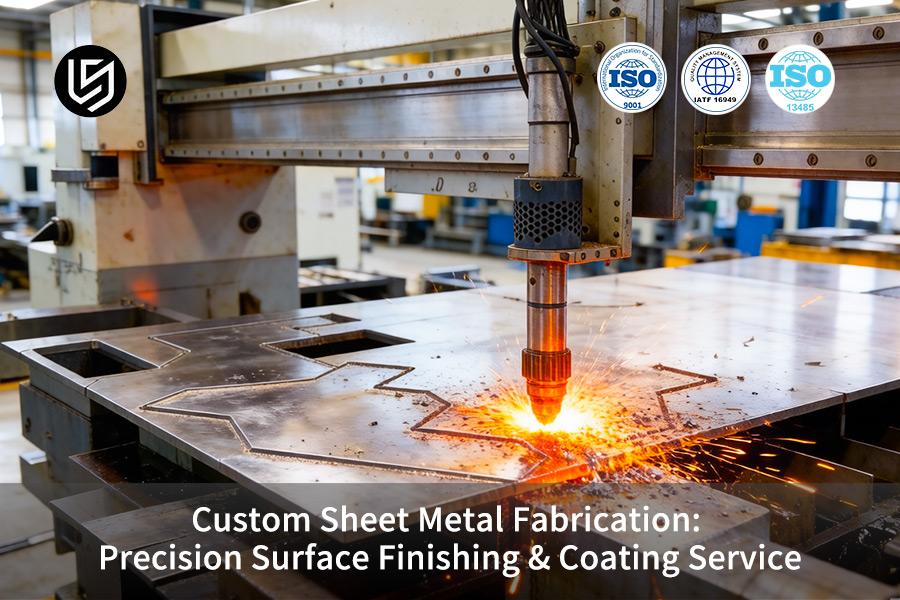
Custom sheet metal fabrication services that cater to critical needs in the medical and electronics packaging industry usually mask an expensive pitfall behind a seemingly flawless façade. Procurement professionals encounter coatings that blister after only 48 hours in salt spray tests or stainless steel sheets deemed defective due to discoloration, oxidation, and corrosion, thus adversely affecting their products' performance and perceived value.
Through LS Manufacturing, procurement teams have a physics-driven solution that addresses such concerns through a seamless manufacturing process. The company's expertise in "surface tension precision control" and its use of automated nanocoatings pretreatment technology allow them to address critical issues, such as microscopic contamination. Their stringent design for manufacturability (DFM) and statistical process control (SPC) method guarantees high-quality standards by ensuring a uniform coating thickness of $\pm0.1$ mil and 100% adherence compliance.
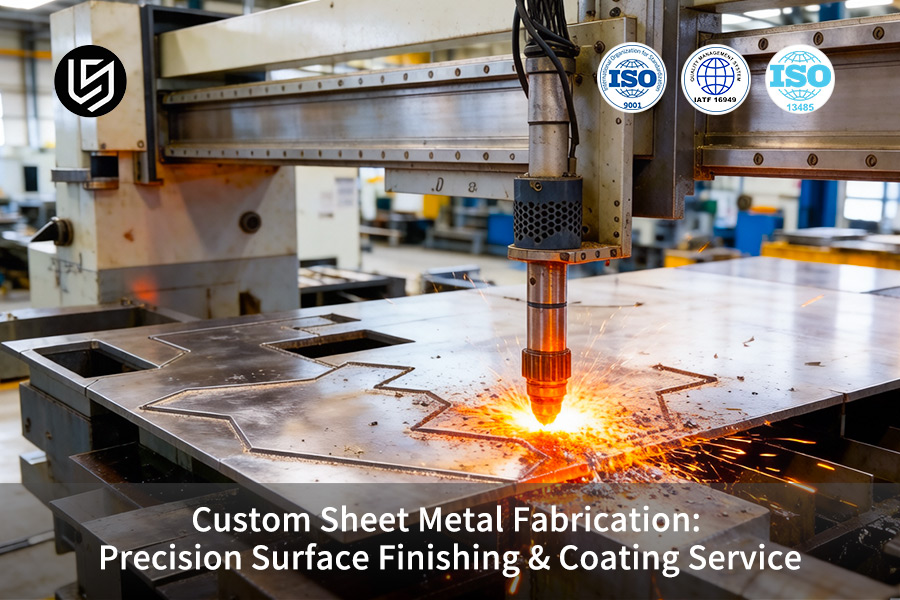
Custom Sheet Metal: Finishing & Coating Quick-Reference
| Finishing Process | Primary Function & Application |
| Powder Coating | Durable, smooth appearance; large selection of colors; process uses electrostatics and curing. Perfect for enclosures, frames, and outdoor devices. |
| Anodizing (for Aluminum) | Electrochemical procedure that makes aluminum more resistant to corrosion and harder; color can be added. Suitable for aircraft, consumer electronics, and architecture. |
| Plating (Zinc, Nickel, Chrome) | Zinc coating acts as sacrificial protection against corrosion. Nickel/chrome gives extra durability and looks good. Commonly used for fasteners, automobiles, and hardware. |
| Passivation (for Stainless) | Chemical process that removes iron from stainless steel and increases the effectiveness of its chromium oxide layer. Essential for medical devices and food-grade sheet metal fabrication applications. |
| Deburring & Surface Prep | Processes like tumbling or brushing used to remove burrs and prepare the surface for the application of any coating or finish. |
| Our Integrated Quality Control | We determine the finishing requirements (coating thickness, number of salt spray testing hours) and run adhesion tests. |
| Result: Enhanced Durability | The finishes prevent any damage due to corrosion, wear, and sunlight exposure, thus increasing the useful lifespan of the component. |
| Result: Professional Aesthetics | Gives the piece a uniform and professional appearance, satisfying both brand and consumer demands, thus increasing the value of the product. |
We address the issue of sheet metal parts protection and improvement after fabrication. Through our finishing solutions, we use the best possible finish according to your requirements, whether you prefer powder coating or anodizing. This guarantees the durability, resistance, and professional appearance of the components.
Why Trust This Guide? Practical Experience From LS Manufacturing Experts
There are many articles on the web about sheet metal finishing. What would make one choose to read this article then? The point of view behind it. While others can talk in theory, we know from experience that all information gained in this industry is acquired on the shop floor rather than the clean labs. We have more than 15 years of experience battling the tough coating challenges related to enclosures of various types and value.
We are not only applying coatings but creating surfaces for the most critical applications. Our experience includes the application of anti-corrosive coating that needs to be absolutely consistent and durable, the conductive coating that needs to provide consistent conductivity and protection when applied to the satellite housings, and the aesthetic coating for consumer electronics. From each of such projects we learn how to prepare certain metals like titanium before coating them.
All information contained within this guide is purchased through experience and refined through many iterations of manufacturing and testing. Our system is based on the fundamental principles of the Society of Manufacturing Engineers (SME) and utilizes the best practices of the American Production and Inventory Control Society (APICS). You receive proven, professional insight into ensuring the outer surface of your components is just as precise as its inner engineering design process.
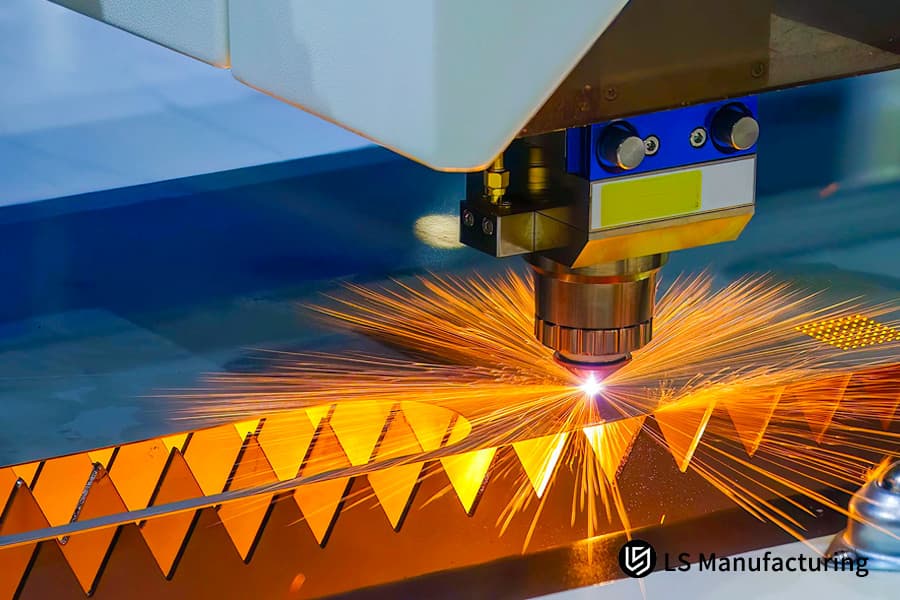
Figure 1: Stamping a cold rolled steel bracket with a hydraulic press for industrial machinery mounting points.
Why Choose Custom Sheet Metal Services With Integrated Finishing For High-End Parts?
For high-precision sheet metal parts, separating finishing from fabrication results in the introduction of defects. Particulate contamination is a significant issue because it affects coating adhesion, leading to failure. We address this issue through an approach that combines both processes, addressing failures where they occur. The result is a guaranteed part functionality because our method:
Closed-Loop Transfer to Eliminate Interim Contamination
The key is the total elimination of any ambient contamination once the laser cutting procedure has been completed. With our integrated method, all cut pieces will move seamlessly into the ultrasonic cleaning area, thus eliminating any uncontrolled handling that adds oils and contaminants, both of which result in a drop in surface energy to zero, which is crucial for precision finishing solutions.
Precision Surface Engineering for Perfect Adhesion
For optimal adhesion, the preparation of the surface should occur without affecting the metal underneath. The precision engineering of the surface with a configuration matching the type of metal alloy and its form after the complex sheet metal fabrication process allows us to reach perfection.
Synchronized Process Control via In-Line Analytics
All these parameters should be balanced at all stages of the production process. In our case, the control system of our process relies on data collected by means of sensors that allow us to adjust our production process at different stages like cleaning, pretreatment, and curing processes. The mentioned process control system plays a very important role in our process of integrated manufacturing of a good prototype sheet metal fabrication.
Deterministic Outcomes Through Full Digital Traceability
We tag every batch in our database where all the parameters are recorded. This will ensure that we can easily conduct a comprehensive root cause analysis in case of test failure because of the parts coming from a demanding sheet metal fabrication process. This helps us conduct an audit of the life history of these parts, correcting any error immediately.
This skill is demonstrated by the way we handle prevention. We deal with the core issue linked to uneven finishing in our custom sheet metal fabrication services by ensuring total control over the entire process, starting from just one single data point. This guarantees consistent outcomes in manufacturing premium parts that are sure to work well in the field.

How Can Precision Sheet Metal Finishing Improve The Look And Durability Of Medical Enclosures?
For medical enclosures, not only does perfection in beauty matter, but also longevity when exposed to harsh sterilization chemicals. A single defect on its surface may turn into a breeding ground for bacteria or corrosion. For this problem, we have designed a precision sheet metal finishing process using advanced metallurgy:
Electropolishing for Micron-Level Smoothness & Passivation
- Process: Exposing finished parts to harsh wipe test chemicals for numerous years.
- Action: Removes any tiny peaks present in the surface of medical sheet metal enclosures fabrication; provides a smooth surface enhanced by the application of the chrome oxide coating.
- Result: Gives rise to a surface that is easy to clean and also has an excellent internal anti-corrosive layer on its surface.
Parameter Calibration for Consistent, High-Grade Results
- Control: Calibrates bath temperature, current density, and immersion time as per individual alloy type and dimensions of the component.
- Action: Uses empirically derived numbers to ensure consistent chrome oxide film thickness and surface smoothness while maintaining tolerances.
- Result: Ensures reliable and reproducible outcomes essential for and regulatory compliance throughout each production run.
Performance Validation via Accelerated Testing
- Method: Exposing the assembly components to multiple chemical wipe tests that mimic decades of wear and tear in a clinical setting.
- Action: Evaluating abrasion resistance using surface roughness measurements after testing (for example, maintaining Ra roughness below 0.4µm).
- Result: Proof of required data needed to successfully submit to regulation regarding sheet metal fabrication for sterilization equipment.
Integrated Workflow Ensuring Substrate Integrity
- Sequence: Movement of components from manufacturing straight to finishing operations.
- Action: Ensures that the substrate does not get contaminated before finishing due to handling.
- Result: Provides assurance of substrate cleanliness needed for our custom sheet metal fabrication services to produce verifiably pristine finished products.
Our strategy for this case study is built on the metallurgy process that we have perfected. For this purpose, we shall explain how the controlled electropolishing process changes the surface alloy structure through thorough performance testing. Our method takes care of the problem of creating beauty and resistance to chemicals in precision sheet metal components through controlled process performance for critical medical device longevity.
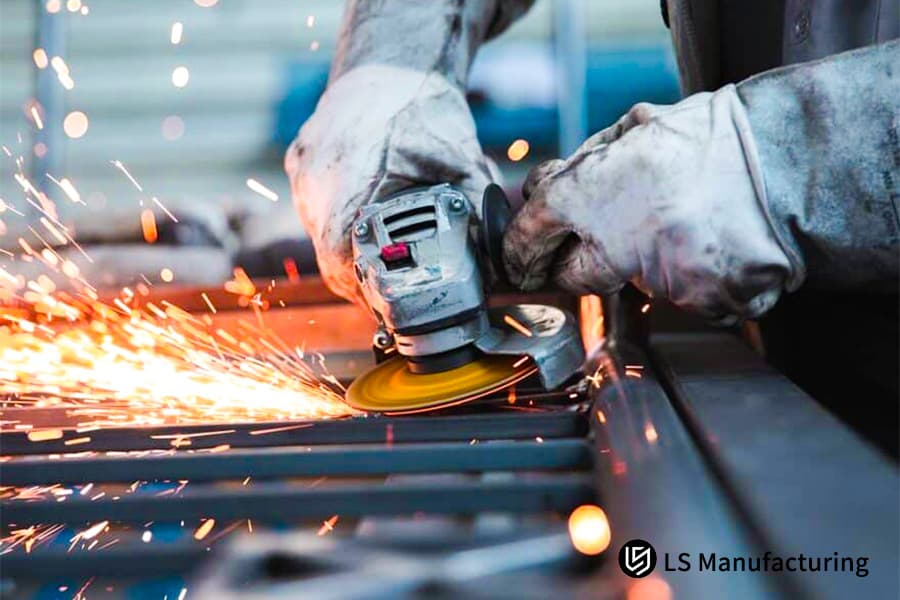
Figure 2: Grinding a high strength steel weld with an angle grinder for construction equipment structural frames.
Which Parameters Define A High-Performance Coating Provider For Outdoor Telecom Sheet Metal?
To ensure longevity and resistance to corrosion in outdoors applications such as those used in telecommunications, a coating system should be present to protect the parts from environmental conditions. This case study explains some indicators of high performance among sheet metal coating services providers.
| Parameter Category | Technical Specification & How It's Controlled |
| Precision Curing Process | The optimum thermal profile results in over 95 percent cross-link density for maximum chemical resistance and adhesion specific to the given chemistry of the powder used. |
| Automated Film Build Control | Customized reciprocating spray application with feedback system maintains dry film thickness between 60-80 microns with ±5 micron accuracy, including complex parts for outdoor telecom fabrication. |
| Validated Corrosion Resistance | Performance testing our validated corrosion resistance testing program indicates durability with continuous success after more than 1200 hours of neutral salt spray (ASTM B117) on the cabinet sheet metal fabrication process. |
| Adhesion & Mechanical Testing | Validation of the coating adhesion properties includes the cross hatch adhesion test with class 0 compliance, per ISO 2409 standard and mandrel bending test. |
| Validated Substrate Preparation | It is mandatory that a substrate preparation process involves at least a 5 step iron phosphate pretreatment to ensure substrate cleaning and activation necessary for sheet metal fabrication services. |
Our methodology is defined by performance metrics based on performance control and validation using data. We solve the problem of long-term protection against corrosion by designing coating systems, the performance of which will be proven through stringent performance testing, thus providing a deterministic foundation for ensuring extended durability.
Why Should Engineers Prioritize Surface Finishing To Mitigate Galvanic Corrosion?
Multi-material assembly galvanic corrosion is a major failure mode, which cannot be mitigated using conventional finishing techniques. Galvanic corrosion occurs due to potential differences between dissimilar materials, and our approach involves engineering the surface and interface to interrupt the corrosion circuit. The application of finishes thus becomes a fundamental part of anti-corrosion solutions, including:
Electrochemical Analysis and Targeted Finishing Selection
To determine the galvanic couple, for example, stainless steel in the aluminum enclosure sheet metal fabrication, electrochemical testing is carried out. The finish used depends on the difference in potential, and in the case of aluminum parts, anodizing is used to grow an oxide layer thick enough to alter the electrochemical potential.
Engineering the Electrical Interface with Insulating Barriers
Simple coating is not enough. The non-conductors are engineered to be used in areas where the metals touch each other. It involves coating some parts of the metals with dielectric coating, insulating gaskets, and bolts. This crucial step in our custom metal finishing services physically stops the flow of ionic currents and halts the formation of galvanic corrosion by breaking its circuit.
System Validation via Accelerated Corrosion Testing
The performance validation of the system is performed by accelerated environmental test, such as cyclic salt spray test (ASTM B117). The test of the final multi-material assembly fabrication will confirm that there are no galvanic pits at joints under prolonged exposure. The scientific validation of this type will confirm the effectiveness of the sheet metal surface finishing services.
Our expertise is demonstrated by discussing the material science behind our process. We combat galvanic corrosion through analyzing the electrochemical cell, designing insulation between cells, and evaluating system efficiency. Our extensive solution in this respect for complex sheet metal fabrication ensures assembly stability in the long term.
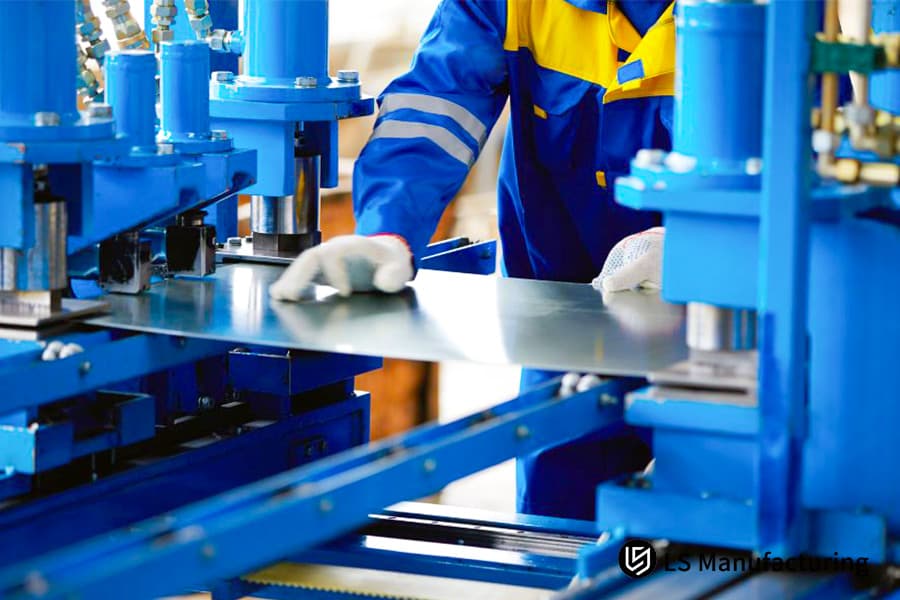
Figure 3: Preparing a galvanized steel sheet for powder coating on industrial electrical enclosure panels.
How Do Custom Metal Finishing Services Use Automated Robots For Large-Scale Production Consistency?
In high-volume sheet metal fabrication, part uniformity becomes essential. With our advanced robotic finishing process, we overcome the effects of human inconsistency to guarantee complete production consistency. Every component, be it the first or one thousandth, will have identical requirements for precision coating for sheet metal.
Precision Path Planning for Complex Parts
- Offline Programming & 3D Simulation: The path planning for all robotic coating applications is done offline and simulated before the actual testing phase.
- Synchronized Motion Control: In cases of complex sheet metal parts that contain internal recesses, the robot’s speed, spray angle, and fluid delivery are controlled simultaneously.
- Guaranteed Coverage: It guarantees the formation of film build in the pocket, ensuring CPK >1.33 for crucial measurements up to 10,000 pieces.
Real-Time Process Control and Monitoring
- Live Statistical Process Control (SPC): Dashboard monitors the process and alerts whenever there is a violation of any set limit.
- Closed-Loop Adjustment: This technology enables automated coating for metal through continuous regulation of paint flow as per sensor measurements.
- Quantified Color Consistency: The sheet metal fabrication system ensures that there will be no more than a color difference of ΔE = 0.5 between products.
Sustained System Performance and Output
- Automated Calibration Cycles: The continuous sensor monitors the performance of the process to ensure adherence to process standards by using certified masters.
- Predictive Maintenance Scheduling: The condition of individual components is monitored, which enables maintenance scheduling and avoids unexpected stoppages while maintaining production consistency.
- Rapid, Recipe-Based Changeover: The recipes stored in programs make it possible to quickly change between various sheet metal finishing solutions without any mistakes during setup.
An engineered solution will allow you to predict the outcomes of surface finishing based on empirical data analysis. Our unique advantage lies in combining robotics technology with real-time SPC analysis, which guarantees consistent results when performing powder coating or any other custom metal finishing services, whether in bulk or small batches.
What Technical Challenges Can Precision Coating Solve For Sheet Metal In Semiconductor Equipment?
In case of production of parts for semiconductor equipment, creation of the super clean vacuum becomes the key point. One of the sources of contamination becomes the outgassing of the metal surface in the equipment. This article describes a precision coating for sheet metal process that prevents outgassing, hence creating the necessary vacuum condition for advanced sheet metal fabrication technology. We have taken a quantitative approach to deliver semiconductor-grade manufacturing.
| Challenge / Phase | Technical Solution & Quantifiable Outcome |
| Problem Definition | Contamination by the substrate outgassing. The presence of raw material or ordinary coating leads to the evaporation of impurities under vacuum conditions. |
| Core Pre-Treatment | Preparing substrate surface for vacuum stability. The components undergo heating in vacuum to 400°C, during which time the impurities are desorbed within less than 4 hours. |
| Coating Application | Applying coating layer for functional barrier. A special coating with extremely low outgassing rate is applied onto the metal substrate. |
| Performance Validation | Confirmation of vacuum purity by testing. Complete parts that have been produced using the specialized sheet metal fabrication processes are tested for an outgassing rate of less than 1x10⁻⁹ mbar·L/sec using the helium mass spectrometry method. |
| Result for Fabrication | Making parts usable for high-tech application. The process makes it possible for the conventional sheet metal fabrication services to fabricate parts that can be used within the vacuum. |
The suggested process presents a simple solution to the problem of vacuum contamination in critical parts. We subject the parts to extensive baking to remove any form of volatile materials and then place a particular ceramic coating to make an eternal barrier. This guarantees that all custom sheet metal fabrication parts meet the important 10⁻⁹ mbar·L/s requirement.
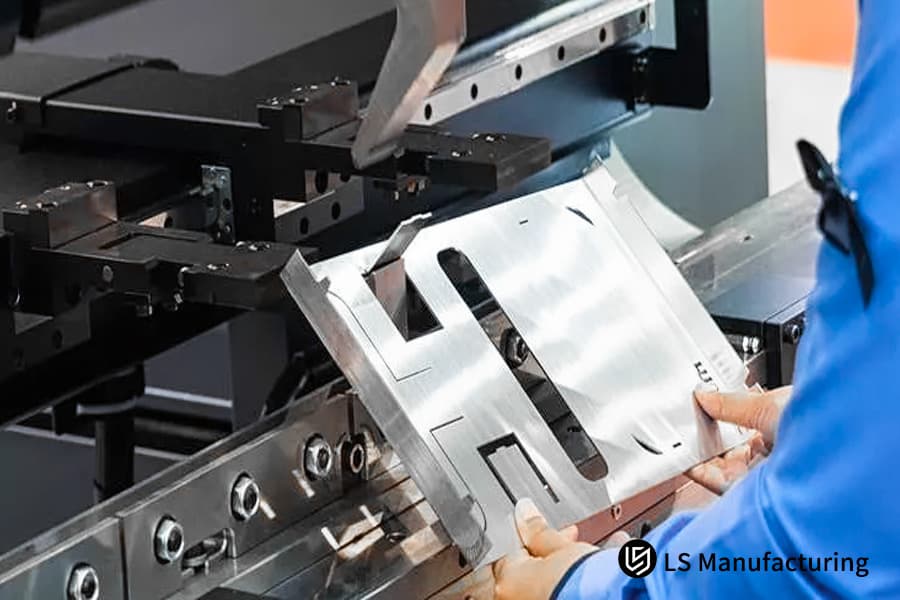
Figure 4: Inspecting a 6061 aluminum bracket with calipers for sheet metal surface finishing services in automotive suspension.
Why Is Custom Sheet Metal Coating The Most Cost-Effective Path For High-End Consumer Electronic Covers?
Creating a luxury feel to consumer electronics products requires coating technology, but not at the expense of increased cost per unit. This paper presents an approach to custom sheet metal coating in order to reduce cost through process engineering without reducing the quality of precision sheet metal parts. The key inefficiencies that can be used to reduce cost include:
Material and Process Innovation for Direct Savings
We substituted the traditional three layers of paint with one layer of UV-curable metallic coating in the laptop enclosure design. The change cut down process steps by 40%, resulting in low energy consumption (curing time: 30 minutes to 3 minutes) and low materials used, thus decreasing per-piece costs by 15% for high-volume sheet metal fabrication.
Optimizing Chemical Management Systems
Another significant cost is the amount used for pretreatment. A fully automated filtration and titration system was created by us for midframe lines of smartphones, allowing us to automatically control the concentration of chemicals. Thanks to our system, the losses from drag out, and chemical usage was reduced by 22% which means a savings of $0.15 per piece in custom sheet metal fabrication services.
Enabling Agile, Low-Cost Changeovers
Due to frequent iterations, changeover downtime can be considered essential. For example, an assembly line producing consumer electronics required the following solutions from us. Due to the digital nature of parameters such as bathing, and spraying routes, changeovers could be performed in less than 15 minutes without making any manual errors, thus ensuring scrap-free changeovers.
Technology developed by us proves that the key to successful cost optimization is to combine process controls and material sciences. We provide you with an innovative method that is based on data and enables you to cut costs on your finished sheet metal fabrication without compromising on quality. The main focus of our work is to identify cost-drivers in your production and save the costs according to their level.
Case Study: LS Manufacturing 316L Stainless Steel Medical Sterilizer Housing Finishing Project
This company that supplies surgical robots had to deal with problems caused by premature coatings failure due to harsh conditions that prevailed during the sterilization procedure of its essential components made from 316L stainless steel precision housing. Below is presented how LS Manufacturing has tackled this problem through complex sheet metal fabrication and finishing technologies.
Client Challenge
The current housing for the sterilizer, which is made from 316L stainless steel, is vital in the precision sheet metal fabrication components. The housing has been damaged by stress corrosion cracking and coating delamination, caused by prolonged exposure to strong alkaline disinfectants. The product became defective after only three months of use, and the return rate was 18%.
LS Manufacturing Solution
We developed a multi-phase process to solve the fundamental problem. It involved substituting conventional spraying with ultrasonic atomization cleaning, electrolytic passivation, and the application of an Anti-Fingerprint (AFP) coating with nanoscale durability. We utilized a patented dynamic thermal compensation algorithm during the 150°C curing period, ensuring material deformation did not exceed ±0.02mm. Custom sheet metal fabrication services were combined with 100% cross-cut testing (ASTM D3359) for each unit, thus ensuring adhesion integrity prior to delivery.
Results and Value
Our redesigned housing successfully endured 10,000 iterations of sterilization without coating degradation and improved surface finish quality (Ra) by two grades. Our reliable fabrication finishing decreased the client's assembly calibration expenses by 22% and lowered the incidence of customer complaints to less than 0.1%. As a result of our technical expertise and proven dependability, we became the exclusive strategic finishing vendor for the client's Asia-Pacific operations.
The current project is a great demonstration of our ability to provide a technical solution for mission-critical purposes. Through the integration of advanced material science and the sheet metal fabrication process control, we were able to provide our client with a deterministic solution which has transformed its critical failure into a competitive advantage. This project showcases the breadth of our sheet metal fabrication finishing services.
Conquer chemical cleaning and prevent coating failure with engineered sheet metal fabrication and finishing services.

How To evaluate A Reliable Sheet Metal Finishing Partner For A Long-Term Strategic Alliance?
A strategic partnership cannot be developed without proper technical evaluation of the supplier capabilities and processes. In the context of sheet metal fabrication finishing services, the essential criterion of choosing a supplier is the quality systems and the transparency of data available. The following guide can be used as a blueprint for technical supplier evaluation.
Foundational Material and Process Analysis
- In-House Metallurgical Lab: Our grain structure and adhesion tests detect substrate defects to guarantee consistency in technical sheet metal fabrication.
- Surface Energy Quantification: The contact angle test according to the ISO standard confirms the quality of pre-treatment, an important check point for custom metal finishing services.
- Proactive Risk Mitigation: This test prevents hidden failures by ensuring compatibility with chemicals, which is essential for sophisticated and expensive parts.
Embedded Process Control and Digital Traceability
- Digital Parameter Logging: Each item from a batch has its own QR code that contains information about all the relevant parameters (curing schedule, coating thickness).
- Real-Time SPC Monitoring: Real-time data displays are necessary to ensure the stability of a process and provide reliable evidence for any intervention.
- Technical Governance: This creates a digital backbone for advanced sheet metal fabrication, offering full traceability for definitive root cause analysis, a key metric in any thorough supplier evaluation.
Empirical Performance Validation and Testing
- Accelerated Life Testing: We conduct cyclic corrosion tests which mimic years of exposure on fully assembled products.
- Rigorous Adhesion Testing: 100% cross cut test (ASTM D3359) on batch samples assures coating effectiveness prior to delivery.
- Outcome: Predictive information on product performance can be collected through this process, reducing risk from new product launches.
Partnership for Continuous Co-Development
- Joint PFMEA Sessions: We collaborate in PFMEA sessions with engineers at your facility to mitigate risks associated with failure modes.
- Technical Co-Development: The sharing of test results facilitates co-development of specifications that lead to optimal results of custom sheet metal fabrication projects.
This approach focuses on verifiable process control and technical collaboration rather than marketing claims. A strategic partner with this approach - from materials science to full traceability – delivers a risk-controlled component of your supply chain. Selecting a partner that embraces this methodology as a part of their sheet metal fabrication finishing services will assure quality and predictability in your projects.
FAQs
1. Why does LS Manufacturing recommend ultrasonic cleaning before precision sheet metal finishing?
Residual processing oil is capable of developing a transparent layer of barrier film that will hinder the adhesion of the coating over the long run and cause the failure eventually. With ultrasonic cleaning, we make sure the surface tension is always greater than 38 dynes, thus solving the problem of blistering and peeling fundamentally.
2. What is the average lead time for custom sheet metal fabrication services with full coating?
By utilizing our one-stop manufacturing production line, we are able to complete the order within 10-15 days on average, which includes the procedures from cutting, bending, finishing, and packing, thus saving up 3-5 days compared to other companies.
3. Can LS Manufacturing ensure color consistency across different batches of custom sheet metal coatings?
Certainly, through the use of high-end X-Rite spectrophotometer, we ensure that the color difference (ΔE) across various orders of coating production is maintained within 0.5.
4. How do you ensure that precision sheet metal coatings meet RoHS and REACH environmental standards?
All of our coating materials come only from internationally certified manufacturers. Moreover, we issue third party tests for heavy metals in our product batches, allowing you to rest assured about your products' ability to freely trade in global markets.
5. Is there a Minimum Order Quantity (MOQ) for high-end sheet metal surface finishing services?
At LS Manufacturing, we are capable of flexible B2B customizations. Our service is adaptable to anything from rapid prototyping where quantities might be as little as 1-5 pieces per batch, up to mass production where millions of pieces can be produced at once, and all processes will be identical for all batches of parts.
6. How do you protect finished sheet metal products during global transit?
We use custom-made anti-static vacuum packaging coupled with highly robust, vibration-resistant inner trays. This way, each precisely manufactured and treated piece maintains 100% of its precision and surface quality until it reaches your warehouse after crossing the ocean.
7. Can LS Manufacturing assist in optimizing the finishing design to reduce overall manufacturing costs?
Yes. Our Design for Manufacturability (DFM) engineering team provides expert analysis during the quotation phase. By reviewing your design to recommend more cost-effective alternative coatings, simplifying masking areas, or helping you request a comprehensive sheet metal fabrication quote, we can typically help you save 10%–15% on total manufacturing costs.
8. What inspection reports will I receive with my precision finishing order?
Every order comes standard with a Material Test Report (MTR), coating thickness inspection report, adhesion test report, and visual consistency inspection records, ensuring 100% quality transparency and traceability.
Summary
Surface finishing is not only necessary as a process towards completion but also as an essential shield that ensures prolonged life. In everything that LS Manufacturing does, there is a thorough understanding of the material physics involved. We ensure excellent aesthetics while using Statistical Process Control in the precise tolerance compensation and quality tracking, ensuring a solid base for our value-driven and low-risk supply chain. LS Manufacturing will give you the edge that your business needs—through your products, not mere surface treatment.
Do you want to realize the potential of "zero-failure" surface performance in your precision parts? Don't let uneven coatings diminish the reputation of your brand. Get a free Surface Finishing Feasibility Audit from LS Manufacturing by sending us your STEP files or drawings now. In less than 24 hours, get a unique proposal on the recommended coating thickness, risk evaluation, and pricing. Send your files for a free audit or contact our expert today.
Elevate your product's finish and durability with integrated custom sheet metal fabrication and coating services.
📞Tel: +86 185 6675 9667
📧Email: info@lsrpf.com
🌐Website: https://lsrpf.com/
Disclaimer
The contents of this page are for informational purposes only. LS Manufacturing services There are no representations or warranties, express or implied, as to the accuracy, completeness or validity of the information. It should not be inferred that a third-party supplier or manufacturer will provide performance parameters, geometric tolerances, specific design characteristics, material quality and type or workmanship through the LS Manufacturing network. It's the buyer's responsibility. Require parts quotation Identify specific requirements for these sections.Please contact us for more information.
LS Manufacturing Team
LS Manufacturing is an industry-leading company. Focus on custom manufacturing solutions. We have over 20 years of experience with over 5,000 customers, and we focus on high precision CNC machining, Sheet metal manufacturing, 3D printing, Injection molding. Metal stamping,and other one-stop manufacturing services.
Our factory is equipped with over 100 state-of-the-art 5-axis machining centers, ISO 9001:2015 certified. We provide fast, efficient and high-quality manufacturing solutions to customers in more than 150 countries around the world. Whether it is small volume production or large-scale customization, we can meet your needs with the fastest delivery within 24 hours. choose LS Manufacturing. This means selection efficiency, quality and professionalism.
To learn more, visit our website:www.lsrpf.com.