English



5-axis CNC machining for robotic arm joints tends to be plagued by the “performance curse” of early operating life failure. Components that have survived laboratory testing begin to exhibit backlash or cracks after 3000 hours, primarily due to the failure of conventional suppliers to consider dynamic performance drivers such as microstructural homogeneity, fatigue strength, and stress matching at interfaces, which are the decisive factors in reliability after millions of cycles.
We break this cycle by developing 5-axis machining into motion performance engineering. Based on a database of 100,000+ high-reliability components, we design longevity into components, such as increasing contact fatigue life by three times by controlled compressive residual stresses. Selecting us means gaining access to “performance insurance” built into components, as demonstrated by increasing joint MTBF from 8000 to 25000 hours.
5-Axis CNC For Robotic Arm Joints: Technical Checklist
| Critical Requirement | Manufacturing Imperative |
| Dynamic Load & Fatigue Life | Joint components need to be able to resist millions of cycles of load without failure, which requires high-strength 5-axis CNC machining materials and perfect surfaces to prevent failure from cracks. |
| Ultra-Precise Bearing & Gear Interfaces | Surfaces of bearing, gear, or harmonic drive types require sub-micron finishes, as well as precise perpendicularity and parallelism, to allow smooth and precise motion transfer. |
| Complex Internal Channels & Ports | Designing complex geometries into a strong, compact housing that includes features like coolant, wires, or pneumatic ports requires advanced machining strategies involving complex toolpaths to reach deep into the part to perform precise machining operations. |
| Lightweighting Without Sacrificing Rigidity | Designing components with optimal strength-to-weight ratios requires machining complex geometries into the part, including complex internal lattices or pockets, which requires robust tooling and strategic material removal sequences. |
| Our Application-Focused Process | We use our machining strategies to concentrate compressive residual stresses in bearing surfaces, as well as utilize specialized tooling to machine deep cavities with high accuracy. |
| Integrated Quality Verification | Inspection of bore geometries, surface finishes, and critical interface alignments is a must in order to ensure performance and reliability over time. |
| Result: Uncompromised Performance | Produces robotic arm joints that provide precise and repeatable motion, low backlash, and long life in continuous duty cycles. |
| Result: System-Level Optimization | Enables the creation of lighter, faster, and more energy-efficient robotic arms by providing structurally optimized high-performance 5-axis robotic arm joint components. |
We address the daunting problem of manufacturing high-performance, durable, lightweight, and ultra-precision robotic arm joints by utilizing our expertise in 5-axis machining to ensure critical bearing interface and internal geometries are machined to perfection.
Why Trust This Guide? Practical Experience From LS Manufacturing Experts
In the online world, many articles are written on 5-axis CNC machining, and this one is different because it is written by someone who has spent many years machining high-load robotic joints where theory meets reality with regard to cyclic stress. Our understanding of 5-axis machining has been developed by solving real-world problems, like stopping micron-level deformation of arm sockets or ending premature bearing failure, where failure is not an improbable statistical occurrence, but an expensive field failure.
Our approach to 5-axis machining is based on qualification, not theory or assumption. We qualify materials and thermal processes to meet ASTM International specifications, so we can be sure of predictable performance. With regard to surface integrity, which is an important factor in fatigue life, we follow best practices as established by the National Association for Surface Finishing (NASF). A well-made part is not the same as one that will last, and that is what we are committed to doing.
The advice we provide has been tested in production. We provide information on how to apply techniques for dynamic milling of titanium alloys, fixturing for complex thin-wall geometries, and how to analyze machine data to anticipate tool wear. These are the lessons that have been applied to provide joints that have been able to maintain sub-0.1mm precision beyond 20,000 hours, which is the reliability your high-performance robotics require.
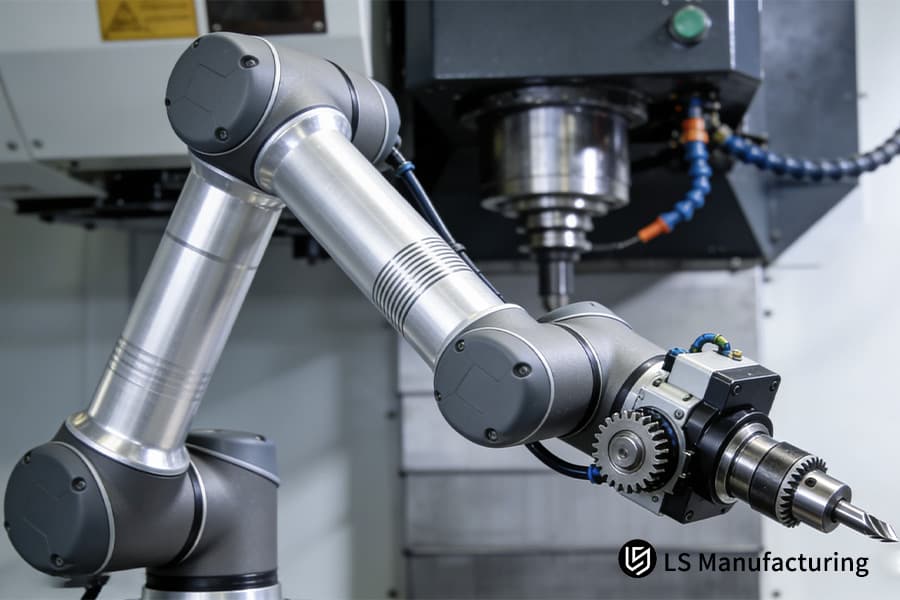
Figure 1: Machining a high-tolerance metal robotic wrist joint for high-load precision industrial automation.
What Are The Primary Failure Modes And Physical Root Causes Of High-Load, High-Precision Robot Joints?
Joint reliability is not measured in a lab but in millions of cycles in the real world, where wear, fatigue, and creep work together to reduce precision and cause a catastrophic failure. Going beyond the requirement of simple dimensional precision, our engineering seeks the physical roots of failure—material microstructure, interfacial stresses, and dynamic load response—to impart robustness into every component: a philosophy fundamentally applied to our high-load robotic components machining.
Targeted Surface Engineering to Mitigate Wear
We counteract motion accuracy degradation by designing the complete tribological system. This means choosing material combinations to resist adhesive galling and using engineered coatings such as PTFE-infused anodizing or thin, dense chrome. Most importantly, we employ 5-axis dynamic milling to optimize bearing surface topography and geometry before coating, ensuring consistent lubricant film development and directly extending life.
Residual Stress Management for Fatigue Life
The problem with high-cycle fatigue is frequently a negative impact of a tensile stress layer due to machining. Our approach is to add a compressive layer using controlled 5-axis machining techniques and post-processing such as shot peening. For instance, on a 4140 steel axle, our optimized peening process extended the fatigue limit by more than 40% relative to an as-machined component, effectively shifting the crack-initiation stress envelope outside of operating stresses.
Material & Thermal Treatment for Dimensional Stability
In order to combat this type of preload loss due to creep, however, we must do more than simply choose a suitable material. We must use an alloy such as 7075-T7351 aluminum for its excellent creep resistance and take advantage of 5-axis toolpath strategies in order to limit any type of thermal input during machining. This ensures that the temper of the alloy is not compromised in any way, and the joint housing is able to maintain a constant clamping force on critical components such as harmonic drives. This eliminates any possibility of stiffness loss on those components.
This document represents a distillation of our expertise in robotic arm joint failure analysis, where our understanding of root cause effects is directly applied to validated manufacturing protocols. It represents our primary competency: not just machining to print, but co-engineering components according to our deep understanding of applied wear and fatigue mechanisms.

How To Select Materials And Heat Treatments For Joints To Balance Strength, Toughness, And Lightweight?
Material selection for robot joints is a very important process that involves a trade-off in terms of strength, weight, and longevity, and improper selection ensures premature failure of the materials used in robotic systems. Our strategy extends beyond data sheet properties to a performance-based approach, where materials have been selected and thermal and mechanical processing have been tailored to address issues such as failure, wear, fatigue, and deformation:
Structural Member Selection: The Toughness Imperative
- Core Principle: The importance of toughness and fatigue life exceeds that of maximum yield strength in selecting materials.
- Our Action: Choose 7075 T7351 aluminum, which has excellent stress corrosion resistance for strong and complex 5-axis milled housing designs.
- For Extreme Demands: Machinate Ti-6Al-4V ELI with techniques that maintain its high cycle fatigue resistance.
Wear Surface Engineering: A Dual-Property System
- Core Principle: Design surfaces hard and substrates tough.
- Our Action: Assess case depth for your hardened steel materials (e.g., 20CrMnTi) according to your loading conditions to eliminate spalling in your 5-axis robotic arm parts.
- For Stability: Nitride your surfaces that need hardness with low distortion in critical areas.
Heat Treatment & Machining Integration
- Our Action: Specify heat treatment for fatigue resistance protocols, such as cryogenic treatment cycling, to stabilize microstructures.
- Critical Integration: Our 5-axis finishing is scheduled after your heat treatment process to ensure your final tolerances are met on your stabilized parts, an essential consideration in your robotic joint material selection.
This framework converts what would be merely a selection criterion into a performance guarantee. We not only supply materials, we supply engineered "Process Recipes" that combine predictive models with proven manufacturing steps. This ensures that the foundation of your precision robotic arm parts is engineered for endurance, not merely specified for it.
Which 5-Axis Machining Process Strategies Can Directly Enhance The Fatigue Life And Wear Resistance Of Joints?
The finished cuts of 5-axis CNC machining of robotic arm joints are what actually lead to the reliability of the finished component, not merely its original accuracy. "True reliability is engineered in, not just hoped for, by applying the principles of 'performance implantation' to a standard milling process." The report outlines specific steps for 5-axis contouring and finishing operations that are intended to counteract wear and fatigue, taking the machined part from dimensionally accurate to reliably accurate.
| Strategy | Target Benefit | Our Specific, Actionable Method |
| High-Performance Surface Milling | Enhances surface integrity enhancement and fatigue performance. | We will use High-Speed Machining (HSM) conditions (low depth of cut, high RPM) on bearing surfaces to obtain Ra < 0.4µm, yielding a surface with few micro-notches and reduced residual tensile stress. |
| Stress-Concentration Management | Removes micro-crack formation sites. | We will require specific 5-axis finishing on all internal fillets/radii with polished tools, reducing critical radii (e.g., R0.5 to R1.0mm) and using roller burnishing to enhance fatigue performance by >50%. |
| Integrated Surface Strengthening | Eliminates micro-crack initiation sites. | Our solution set for process includes post-process methods such as shot peening for critical regions (threads/splines), inducing a residual of 300+ MPa compressive stress, a basic tenet of our machining for fatigue life approach. |
| Dynamic Toolpath Optimization | Minimizes thermal/mechanical stress. | The strategy is based on continuous 5-axis simultaneous machining to ensure continuous optimal tool engagement, thereby eliminating hotspots and work hardening that decrease fatigue life. |
These strategies are formulated based on addressing the fundamental issue of premature failure. We offer a solution, not just a service, where specific strategies are formulated for specific life extensions of components. This is particularly important for robotics platform providers who want to offer competitive, high-value solutions where overall system reliability is the KPI.
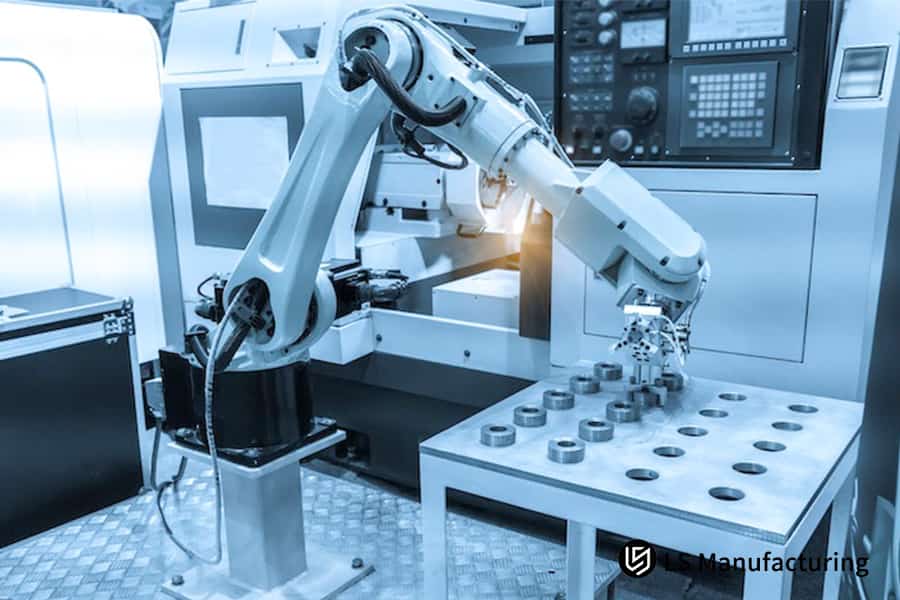
Figure 2: Producing high-strength alloy robotic joints for precision assembly lines in automated manufacturing.
How Can Joint Forces And Assembly Be Optimized Through Collaborative Design To Enhance System Precision?
Precision machined in isolation often does not survive assembly. Reality dictates that overall system precision must take into account co-engineering components for their assembled condition from the very beginning. Our co-engineering design philosophy is centered on this critical element of assembly integration:
Unified Datum Strategy for Predictable Assembly
We strive to bring these design, production, and inspection datums into one system. This eliminates the tolerance stackup and confusing measurement, which are the two major causes of assembly fit problems. This is done for complex shapes through strategic 5-axis machining, which enables all surfaces to be finished in one setup, optimizing design for assembly precision.
FEA-Driven Pre-Distortion for Stressed State Accuracy
For parts that have interference fits and/or bolts, we make use of FEA to simulate the assembly stresses and deformations. The trick in this situation is to account for this deformation in the CNC code, such that it cuts the piece in a "pre-deformed" state that fits together perfectly in assembly. This is especially important in custom robotic joint manufacturing, where clamp and bearing locations must be accurate.
Thermal Expansion Analysis for Stable Performance
This analysis allows us to simulate the difference in thermal expansion of different materials, such as an aluminum housing and a steel bearing, over the operating temperature range. We can then use this data to provide recommendations to ensure that there is no binding or loss of preload. This is proactive thermal deformation compensation, whether the joint is in a cold start condition or at operating temperatures.
This forward-thinking partnership, based on analysis, will address the significant void that exists between part tolerance and system function. By engaging with us at the onset of the project, 5-axis machining strategies and subsequent design optimizations will be utilized to ensure the reliability of parts that are "designed-in," not "inspected-in."
LS Manufacturing — Medical Robotics Sector: High-Reliability Customization Project For Surgical Robot Wrist Joints
LS Manufacturing surgical robot case demonstrates our solution to address "extreme" reliability issues where the disciplines of material science and precision machining combine to ensure uncompromising performance for mission-critical medical device manufacturing.
Client Challenge
A prominent developer was tasked with designing a Ø25mm wrist joint to support >30Nm torque and submillimeter accuracy after 50,000+ steam sterilization cycles. The original supplier, utilizing 440C Stainless and Zirconia, was found to be plagued with significant stiction problems after only 20,000 cycles. This was not only a failure but also threatened the validation of the device. A new solution was desperately needed to ensure wrist joint reliability.
LS Manufacturing Solution
The root cause analysis had identified micro-motion wear. Our design solution included the upgrade of the housing to custom 450 stainless steel with a proprietary low-temperature ion nitride process. The zirconia bearing surface had a DLC coating applied for wear resistance. Intricate lubrication channels were finished with precise 5-axis CNC machining services. Burn-in testing for 48 hours validated the assembly.
Results and Value
The new joint that was designed had exceeded over 100,000 cycles of accelerated sterilization without any signs of wear. Quantified reliability was achieved, and this was used to prove a critical piece of information to the FDA. Long-term accuracy and reliability ensured that LS Manufacturing was the sole strategic supplier, thus turning a critical failure into a competitive advantage.
The above project example illustrates our company's capabilities in providing critical engineering solutions to difficult problems. Our company guarantees performance by utilizing state-of-the-art surface engineering techniques such as DLC coating in conjunction with precise 5-axis micro-tool finishing.
Conquer wear, ensure precision. Our 5-axis machining for robotic arm joints delivers unmatched longevity and reliability under demanding cycles.

How Can The Long-Term Motion Precision Retention Of Joint Components Be Verified And Tested?
Start-up dimensional compliance is not a guarantee of long-term functionality. Practical reliability requires a multi-tiered validation procedure that progresses from static geometry to dynamic performance, verifying the ability of parts to withstand millions of cycles. This structure describes our systematic approach to validating and predicting long-term high-precision robotic machining of arm joints:
| Validation Stage | Core Methodology & Metrics | Direct Value & Outcome |
| Short-Term: Geometric Conformity | 100% inspection of mating diameters, true position, and critical GD&T with a high-accuracy CMM, ensuring a perfect initial fit. | Confirms the 5-axis machined part meets all design specifications, providing the starting point for assembly and functionality. |
| Mid-Term: Surface Integrity Audit | Sampling and quantitative analysis of critical surfaces by White Light Interferometry to determine roughness (Ra, Rz) values and detect micro-cracks/tears. | Validates the surface integrity of the 5-axis surface finishing will resist crack formation, directly relating process performance to future fatigue life. |
| Long-Term: Simulated Performance | Accelerated life testing on custom-built test rigs simulating real-world operating cycles, including backlash, temperature, and torque. | Enables critical predictive maintenance data and confirms product integrity for durability, creating a reliability testing for robotic parts. |
This multi-tiered protocol is designed to address a critical link between a product that has passed a QC inspection and one that has performed reliably in the field. We offer our clients a data-driven performance passport, which enables root cause analysis on failure and a strong reliability testing for robotic parts strategy, critical in mitigating high-value automation system risk for our clients.
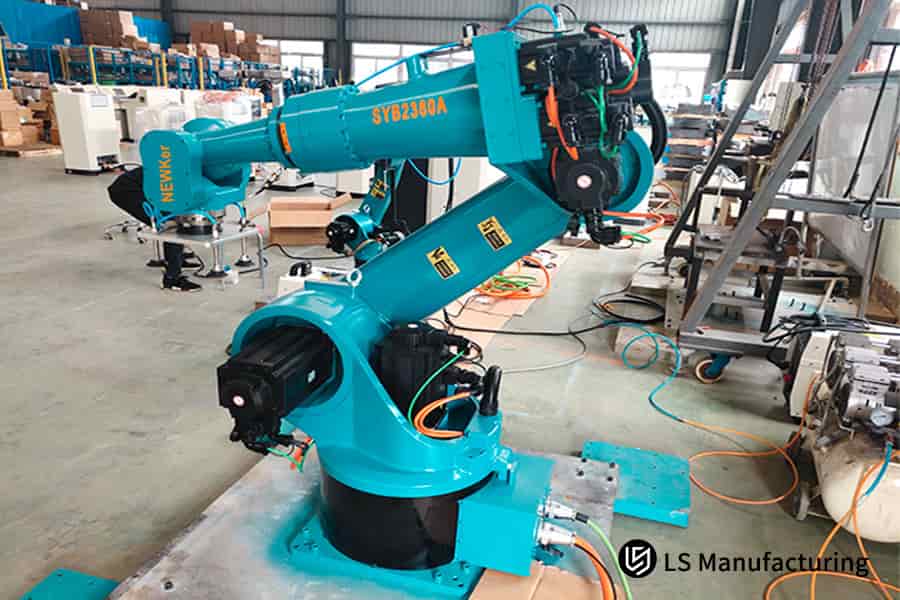
Figure 3: Assembling a high-precision industrial robotic arm for automated manufacturing and logistics systems.
How To Evaluate A Supplier's Inherent Capabilities For Manufacturing Highly Reliable Robotic Joints?
To find a robotic arm joint manufacturer, one must look beyond perusing machine catalogs to gauge their engineering prowess in providing guaranteed long-term reliability. True capability is not defined by what is said but by how they systematically eliminate difficult performance problems before they ever show up on your factory floor:
Deep-Dive Failure Analysis: The Diagnostic Mindset
- Core Question: Can they walk us through how a field failure relates back to the root cause?
- Our Method: Technical reviews where we share anonymous examples (early failure) to test their logical and interdisciplinary approach to solving problems from symptoms to material, heat treatment, or even 5-axis toolpath issues.
Statistical Process Control Audit: Proof of Consistency
- Core Question: Is their process statistically capable or do they inspect to conform?
- Our Method: We request and evaluate their annual CPK results for various critical factors such as coaxiality, which must have a CPK greater than 1.67. This fact-based supplier capability assessment is the only way to prove the consistency of their manufacturing process.
R&D Investment Scrutiny: Engineering Over Equipment
- Core Question: Do they invest in understanding or just in equipment?
- Our Method: We evaluate their technical publications, process validations, and simulation tools. A true partner will invest in performance engineering, such as advanced 5-axis finishing studies, to understand the physics of failure, not just invest in equipment.
This model transforms the traditional selection process from a cost-based transactional model to a risk mitigation partnership model. This model will find your suppliers that not only deliver parts but will also ensure their reliability through in-depth process control and engineering to mitigate your risk on your most critical high-load robotic parts.
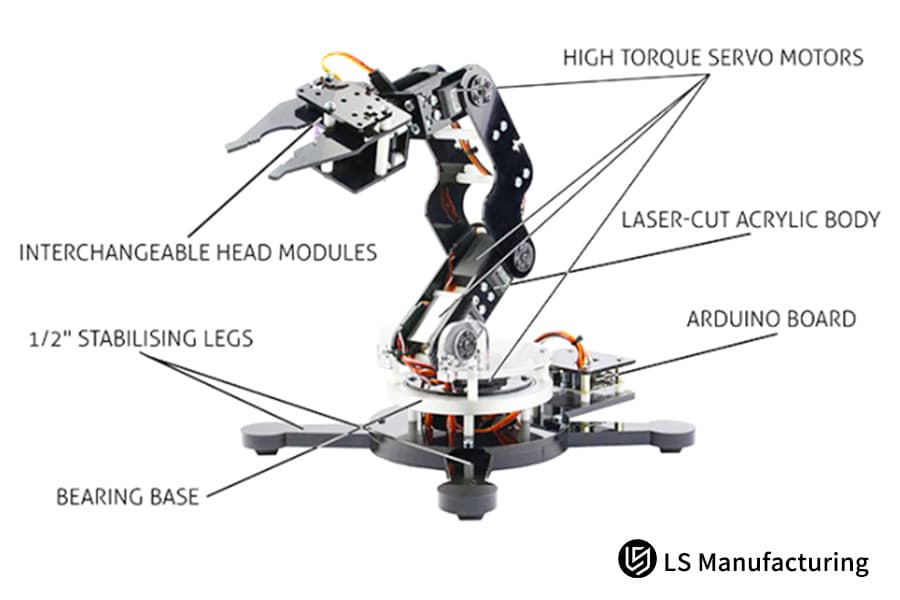
Figure 4: Manufacturing precision robotic arm parts with alloy materials for industrial automation systems.
Why Must You Choose LS Manufacturing In The Field Of Robotics When Pursuing Ultimate Performance?
The biggest risk in attempting to achieve the best possible performance in robotics is not that a component will fail a test, but that it will fail in the real world after thousands of cycles. The choice of which vendor to select is, in fact, the choice of who assumes the risk of long-term reliability. This document will describe our value proposition: We are your performance engineering partner, integrating materials science, predictive engineering, and precision robotic components machining.
Material Genealogy & Process Control
Our work begins at the metallurgical level. We do not merely purchase bar stock; we demand and verify material heat lots to precise performance requirements, such as grain flow orientation for forged blanks or oxygen content for titanium alloys. This critical process control is necessary to ensure that the basic material is naturally robust for endurance, a first step often overlooked in traditional robotic 5-axis CNC machining.
Simulation-Driven Process Design
We use thermo-mechanical and dynamic FEA to simulate manufacturing stresses and service loads before we cut the metal. This allows us to optimize 5-axis toolpaths and fixturing schemes to minimize distortion and residual stress. We have, in effect, "pre-solved" potential failure modes in the virtual world, reducing the manufacturing process from a geometry replication problem to a reliability optimization problem.
Manufacturing as "Reliability Implantation"
"Execution" - where theory meets reality. We use 5-axis simultaneous machining not only to produce complex geometries, but to produce the best surface finish and compressive residual stresses in critical bearing surfaces. Peening or laser hardening are not "add-on" processes, but essential steps in the process, each of which has as its goal to "embed" particular performance characteristics - wear resistance, fatigue strength, etc. - into the finished part.
The end result of this synergy is a "performance guarantee" based on actual data. Moreover, we are able to provide a prediction for performance degradation, such as wear rate, reduction in stiffness, etc., simulated over the life of the product. This supply contract becomes a collaborative, mutually beneficial risk sharing agreement, which answers the fundamental question of why choose LS Manufacturing for my application.
FAQs
1. What is the typical lead time for manufacturing a high-precision robotic joint?
From completion of the drawings to delivery, the standard lead time for joint parts of moderate complexity is 6 to 8 weeks. This includes material procurement, rough machining, heat treatment, semi-finishing, stress relief, finish machining, surface treatment, and inspection. Lead times for complex integrated joints or for joints needing special surface coatings can be extended.
2. What levels of precision and service life can you typically achieve for robotic joints?
In addition, we can guarantee the dimensional tolerance at ±0.01mm, geometric and positional tolerance at 0.005 to 0.02mm, and surface roughness, Ra, at ≤0.4 μm for critical mating surfaces. The service life depends on actual conditions, but by employing our performance engineering technology, we can increase the life of joint pairs by 50% to 200% relative to industry standards.
3. How do you ensure consistency in joint performance during mass production?
In our company, we ensure consistency in joint performance by employing a combination of standardized process packages and Statistical Process Control (SPC) technology. Each joint model is given a dedicated process control plan, and critical stages in the process are subjected to 100% inspection or SPC control. This ensures that CPK values are consistently at target levels, eliminating batch-to-batch variation.
4. Will you provide feedback if my design contains potential manufacturability or performance risks?
Yes, we will. We offer a free design for manufacturability and performance review service. We will provide a detailed written report within 48 hours from receipt of your drawings, offering suggestins for optimization based on potential stress concentrations, structural details that are undesirable from a long-term reliability viewpoint, uneconomical tolerances, etc.
5. Do you offer a one-stop service covering everything from individual joint components to complete sub-module assembly and testing?
Yes, we do. We offer turnkey "joint modules" that include precision machining of components, special surface treatments, matching joint pairs, lubrication, pre-load calibration, and testing—resulting in fully functional units ready for immediate use.
6. How do you protect the intellectual property rights associated with our highly innovative joint designs?
We enforce the most stringent Non-Disclosure Agreements (NDAs) and information security policies. All project information is stored and processed in a physically segregated, encrypted environment. We are ready to sign off on exclusive supply and confidentiality agreements with you, and we provide specialized IP training for our project teams to ensure full compliance.
7. What is the Minimum Order Quantity (MOQ)? How does pricing vary with quantity?
We support prototyping and small-batch pilot production, with Minimum Order Quantities (MOQs) as low as 1 to 10 units. Pricing scales down in a tiered fashion as the order quantity increases, as upfront tooling and programming costs are amortized, eventually plateauing once fixed mass production quantities are established.
8. How do I initiate a collaborative evaluation for a new joint component?
To start, simply send your 3D CAD models (STEP/IGS format) and technical specifications to our team through our email or website form. Our engineering team will conduct a complimentary DFM review and provide a detailed, tiered quote within 48 hours. Once approved, we will fast-track your project into our 5-axis prototyping workflow.
Summary
Selecting a 5-axis CNC machining partner for robotic joints is choosing a co-developer for core motion performance and market reputation. The true challenge is embedding dynamic reliability, fatigue resistance, and precision retention into material microstructure and manufacturing memory. This demands a partner who masters metal cutting's form and essence, with systems engineering for predictable outcomes.
If you seek a manufacturing partner for next-gen robotics to define joint performance limits, contact us and submit your most challenging joint design. LS Manufacturing's Performance Engineering Team will conduct a Joint Design FMEA and Performance Enhancement Simulation. We will rigorously re-examine every reliability-critical detail with forward-looking engineering perspective.
📞Tel: +86 185 6675 9667
📧Email: info@lsrpf.com
🌐Website: https://lsrpf.com/
Disclaimer
The contents of this page are for informational purposes only. LS Manufacturing services There are no representations or warranties, express or implied, as to the accuracy, completeness or validity of the information. It should not be inferred that a third-party supplier or manufacturer will provide performance parameters, geometric tolerances, specific design characteristics, material quality and type or workmanship through the LS Manufacturing network. It's the buyer's responsibility. Require parts quotation Identify specific requirements for these sections.Please contact us for more information.
LS Manufacturing Team
LS Manufacturing is an industry-leading company. Focus on custom manufacturing solutions. We have over 20 years of experience with over 5,000 customers, and we focus on high precision CNC machining, Sheet metal manufacturing, 3D printing, Injection molding. Metal stamping,and other one-stop manufacturing services.
Our factory is equipped with over 100 state-of-the-art 5-axis machining centers, ISO 9001:2015 certified. We provide fast, efficient and high-quality manufacturing solutions to customers in more than 150 countries around the world. Whether it is small volume production or large-scale customization, we can meet your needs with the fastest delivery within 24 hours. choose LS Manufacturing. This means selection efficiency, quality and professionalism.
To learn more, visit our website:www.lsrpf.com.