English



Custom robotic end-effector solutions must overcome the expensive gap between static part geometry and dynamic performance. The industry’s general pain points, such as grippers lasting only 50,000 cycles or needing weekly recalibration for a vacuum tool, come from suppliers designing to a geometric print and not engineering in real-world performance and longevity against challenges such as impact and fatigue loading. This results in a certificate of dimension and not a passport to reliability in a harsh production world.
Our solution is to engineer in reliability and performance into a component from the start. We use a combination of multi-physics analysis, material science for wear surfaces, and precision manufacturing based on functional metrics. We have a proven solution that demonstrates reliability and data-driven results, such as extending a heavy-duty gripper’s lifespan from 100k to 500k cycles and reducing weight by 20%, and developing surfaces that maintain adhesion for 1 million simulated cycles. You get a tool and a guarantee that you will have increased production tempo insurance.
Custom Robotic End-Effector Solutions: A Practical Checklist
| Focus Area | Implementation Strategy |
| Application-Specific Design | To ensure the tool is designed from the ground up for its specific task, the tool must balance precise actuation with the rigidity required to withstand the forces applied during CNC machining operation. |
| Weight & Dynamic Optimization | To minimize the weight of the tool, the center of gravity must be optimized, allowing us to use topological design to achieve the fastest possible robot speed. |
| Reliable Tool Changer Integration | To ensure flawless integration with the robot flange, precision-machined interfaces are used, allowing for the mechanical, electrical, and pneumatic connections. |
| Our Co-Engineering Process | To ensure the best possible result, we co-engineer the tool with the customer in the development phase, using simulation tools to validate the design and optimize the materials used in the manufacturing process. |
| Precision Multi-Axis Machining | We manufacture critical components as monolithic parts whenever feasible to ensure that all features and bores are perfectly aligned in a single accurate configuration. |
| Result: Enhanced Robotic Cell Performance | Delivers a solution that enables your robot to perform at its best potential by allowing for faster speeds, greater precision, and longer robot lifespan. |
We overcome the fundamental mechanical challenge of bridging your robot’s capabilities and a real-world CNC machining application requirement. With our precision manufacturing of custom end-effectors, we provide your robotic cell with optimal weight-to-strength ratio and seamless integration to ensure that your flexible robot becomes a high-performance solution that maximizes your return on investment.
Why Trust This Guide? Practical Experience From LS Manufacturing Experts
What sets this article apart in a flood of other online articles about robotic tools? For starters, we're practitioners, not theorists. At LS Manufacturing, we fight every day in the trenches of manufacturing against difficult alloys and close tolerances, where a gripper failure can mean costly downtime. That’s why we bring our insights from the trenches, not the classroom, to every solution we bring to our customers, including those that meet standards such as those set by the Occupational Safety and Health Administration (OSHA) to meet workplace safety needs.
Throughout our long history, we've provided thousands of custom end-effector solutions to industries such as automotive, electronics, and logistics. And in each case, we learned how to overcome ever-changing stresses such as grip force loss in precision parts, as well as interface drift in high-cycle parts, to optimize CNC manufacturing to handle materials such as stainless steel and composites, turning failure into success as we design solutions that can endure millions of cycles without failure.
All of the tips you'll find on these pages are based on hard-won experience, backed by the proof of testing and real-world results. What you'll find on these pages is not just knowledge, but a tested playbook for success, including the best practices of the American Production and Inventory Control Society (APICS) for efficient production control. So, trust this advice: it’s the same knowledge we use to ensure our robots hold on firmly, just as you want.
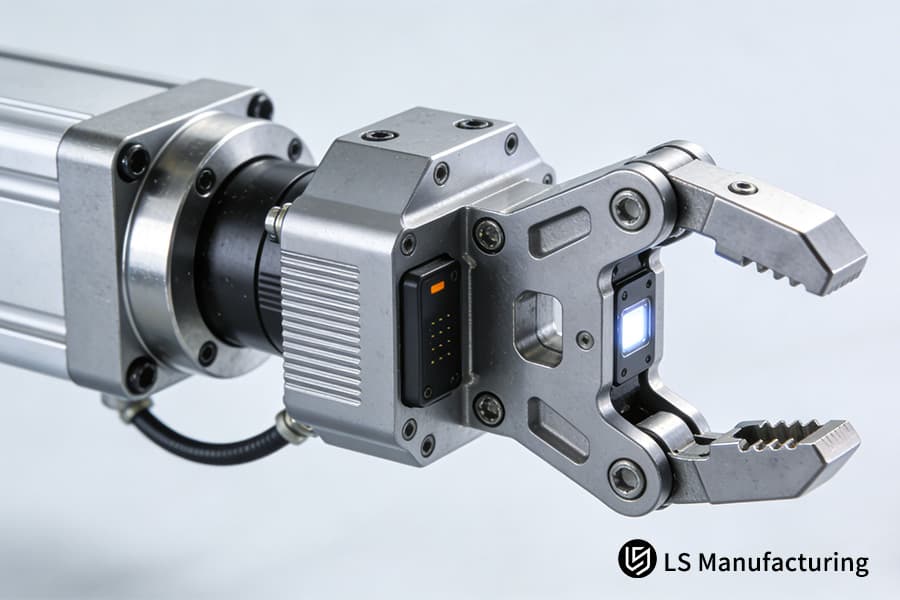
Figure 1: CNC machining high-precision metal robotic end-effectors for industrial automation solutions.
What Are The Root Causes Of The Premature Failure Of Robotic Grippers And Tools?
To achieve effective, successful, and long-lasting custom robotic end-effector solutions, one must go beyond the basic machining of a part, as the real physics of failure are addressed. The real challenge isn’t just the creation of a part, but the creation of a component that must be successful despite the forces applied during millions of cycles. The causes of early failure are predictable, knowable, and solvable:
Combating Wear-Induced Force Decay
We go beyond material hardness, designing the entire wear interface. This includes friction-optimized material pairings, for example, hardened tool steels with engineered polymers, as well as applying special surface treatments, for example, CNC machining micro-textures or coatings. Our process also includes simulating wear and fatigue mechanisms, for example, loss rates, to guarantee that grip force or vacuum integrity is maintained for the desired lifespan, avoiding the degradation of performance that brings production lines to a halt.
Preventing High-Cycle Contact Fatigue and Fracture
To prevent fractures at crack initiation sites, we use topology optimization during the design phase, allowing for a smoothed-out loading path, followed by 5-axis CNC machining for optimal geometries without internal sharp corners. Finally, post-machining treatments, for example, shot peening, are specified to achieve desired compressive residual stresses, greatly extending fatigue life. This holistic approach transforms a typical linkage from a weakest link into a reliable component.
Eliminating Drift from Inadequate Stiffness and Fretting
This is often due to micro-movements between connection interfaces. Our approach includes end-effector failure analysis, which is combined with finite element analysis to determine contact stiffness, helping us design for maximum rigidity. Finally, high-precision CNC machining is utilized to ensure perfect mating surfaces, whether these are required for tool changers or flange adapters. Other techniques, such as dry film lubrication of fasteners or particular surface finishes, can also be utilized to help prevent fretting, ensuring that the tool’s calibrated position is not compromised.
This is a paradigm shift. We do not simply make parts, we engineer performance longevity. Our competitive advantage is that we have data-driven, evidence-based integration of sophisticated design simulation, material science, and precise CNC machining techniques, all focused specifically on overcoming the dynamic failures that plague your automation, providing you with reliability that is not only designed-in, but machined-in as well.

How To Select The Appropriate Gripper Finger Tip Materials And Surface Treatments For Different Workpiece Materials?
The gripper fingertip is the critical wear location, and the failure of the gripper fingertip is what determines the production uptime. The gripper fingertip material selection is not an arbitrary process but a reasoned defense against part damage and degradation. This document outlines a rigorous and application-driven approach to convert CNC machining workpiece material properties into reliable engineering data, eliminating the guessing and ensuring part longevity in harsh CNC machining for robotic grippers applications.
| Workpiece Material Type | Primary Risk | Recommended Fingertip Strategy |
| Soft or Easily Marred (e.g., aluminum, plastics, painted surfaces) | Scratching, denting, or coating damage during handling and gripping. | Utilize compliant materials such as polyurethane or PEEK that are CNC machining to provide a smooth and compliant gripping surface. |
| Hard and Abrasive (e.g., steel, cast iron, ceramics) | Rapid abrasive wear that erodes fingertip profile and compromises gripping precision and power. | Utilize a tool steel material that is both hardened and enhanced by a specialized anti-wear coating such as DLC, which increases surface hardness to >HV 2000 and thereby increases wear resistance by a factor of 5-10. |
| Sticky or Delicate (e.g., bare metals, certain polymers) | Adhesive transfer or residue that interferes with reliable release of the workpiece. | Utilize non-stick coatings and surface textures that reduce real area of contact and thereby reduce adhesive forces for reliable operation. |
We eliminate the operational problem of early fingertip failure and part damage through the implementation of our disciplined selection protocol. This process cross-references your specific workpiece and cycle information with our proprietary performance database to prescribe solutions that actively maintain grip integrity. This data-driven approach, critical for high-value CNC machining, ensures that every custom robotic end effector solution is designed with fingertips that are engineered not only for geometric performance but also for long-term functionality.
How Can The Stiffness-To-Weight Ratio And Service Life Of End-Effectors Be Enhanced Through Structural Optimization And Precision Machining?
Superior dynamic performance is enabled by a statically optimized structure. For mission-critical applications, making a part stronger or heavier is not sufficient for high-performance CNC machining applications. Rather, the objective is to deliver maximum rigidity and fatigue life with minimum mass. Our performance-driven design process actively addresses this challenge through our integrated design and precision robotic tool manufacturing techniques:
Hybrid Topology Optimization & Additive Manufacturing
- Method: Use topology optimization for end-effectors to obtain an optimal lightweight path of loads, then use metal 3D printing (SLM) to create a complex core structure.
- Precision Integration: Use 5-axis CNC machining only on critical mounting surfaces and bearings to achieve perfect datum alignment.
- Outcome: Achieves dramatic weight reduction (e.g., 35%) as well as a substantial increase in the fundamental frequency (e.g., 25%), which prevents resonant vibration during high-speed cycles.
Eliminating Stress Risers in Design & Machining
- Design Mandate: Enforce large fillet radii and smooth transitions in all internal corners and section changes in the design.
- Machining Protocol: Perform these operations with high-precision CNC machining operations using tapered tooling, followed by a required edge break and surface finish operation.
- Outcome: Physically eliminates crack initiation points, converting potential failure points into long-lasting and stress-flow-conducive geometries.
Implementing Proactive Fatigue Life Enhancement
- Targeted Application: Apply post-machining operations such as controlled shot peening or laser shock peening to high load dynamic components such as pins and linkages.
- Mechanism: Produces a deep level of beneficial compressive residual stress on the surface.
- Verification: Validation is included in this process to ensure that a desired compressive stress depth and magnitude are achieved, serving as a "physical vaccine" against crack propagation.
Ensuring Integrity with Precision Assembly
- Process: All critical joints and interfaces are given a final CNC finishing pass after the initial assembly to address any micro-distortions.
- Control: This ensures co-planarity and perfect alignment across the mounting surfaces.
- Outcome: This removes all internal pre-loads and bending moments that quietly accelerate fatigue life enhancement, ensuring the tool functions as a unified and stable system.
The above methodology represents our competitive advantage: we engineer longevity into the structure itself. We address the critical issues of unpredictable dynamic failure and mass inefficiency not by over-designing, but by intelligently optimizing and strategically strengthening and precision machining all elements. The result is a custom CNC machining solution that offers guaranteed stiffness and longevity, converting the maintenance headache of the traditional end effector into a reliability asset.
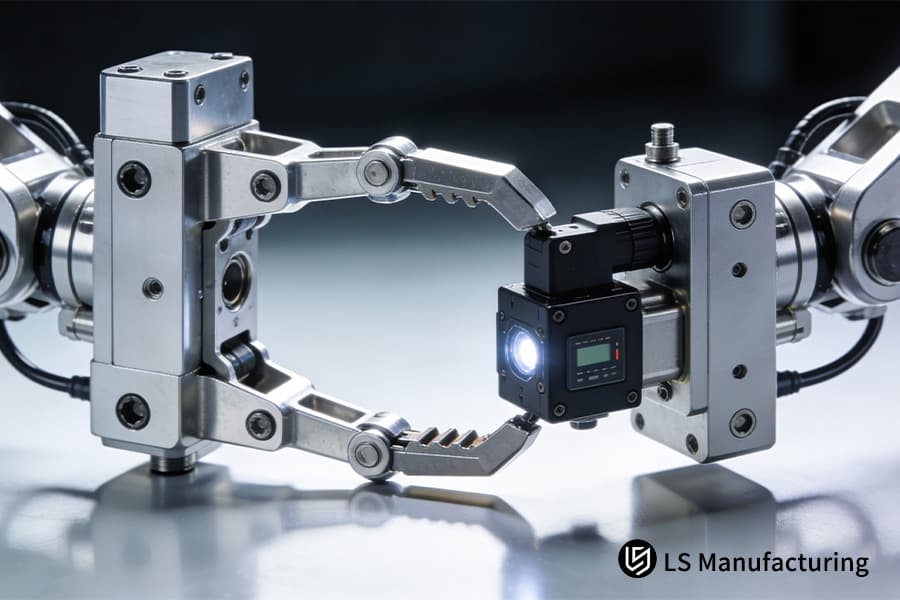
Figure 2: CNC machining provides high-precision metallic grippers for reliable precision robotic tool manufacturing.
How Is The Manufacturing Of High-Precision, High-Rigidity Robotic Tool Changers Achieved?
The tool changer is the point of convergence in terms of reliability, wherein the level of manufacturing precision directly impacts the entire end-effector’s level of reproducibility. The tool changer must be viewed as more than just a simple interface, as this leads to drift and failure; instead, the tool changer must be manufactured as a precision spindle:
Ultra-Precision Machining of the Coupling Interface
To address the interface consistency issues, as well as the premature wear, the master and receiver coupling interfaces, typically taper or face gear, are machined as a set in a single setup on a precision 5-axis machine with thermal stability conditions. The result is a contour accuracy of ≤0.005mm and a surface finish of ≤0.4µm, allowing for perfect reproducibility for the zero-point mounting system, eliminating the main source of TCP drift.
Micron-Accuracy for Positioning & Locking Mechanisms
To avoid issues of uneven loading, which may lead to deformation, micron tolerance processes such as jig grinding or wire EDM are used to machine features such as locking wedge grooves and detent ball holes. This is considered an advanced CNC machining, which ensures perfection in terms of geometry, thus ensuring even loading of all points of contact, transforming the tool changer precision machining process into a high-stiffness mechanical joint.
Integrated, Reliable Pneumatic & Electrical Passages
Leaks and signal drops are often caused by improperly finished internal passages. We precision machine complex internal passages using sophisticated 5-axis CNC drilling and contouring, as well as specialized polishing for a high-gloss finish. This ensures flawless utility transfer—a necessity for a robust industrial robot end-effector system.
Our approach addresses the very issues of tool point drift and utility failure with the manufacturing of the changer to spindle-grade CNC machining standards. This yields a custom robotic end effector solution in which the tool changer is not the weak link, but the foundation upon which unwavering repeatability and reliability are achieved in the most demanding cycle operations.
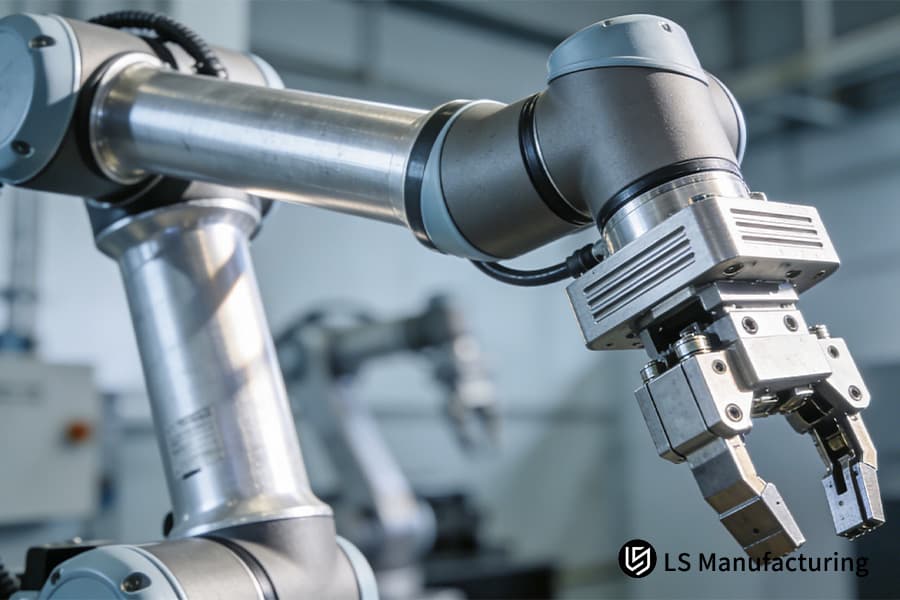
Figure 3: Machining high-tolerance metallic end-effectors for reliable custom robotic automation tool solutions.
LS Manufacturing — Automotive Sector: High-Reliability Fixture Project For Body-In-White Flexible Gripping System
Flexible, damage-free handling in multi-model manufacturing is a significant engineering challenge. The LS Manufacturing automotive case describes the resolution of a critical bottleneck in a door assembly process, in which unreliable tooling was jeopardizing production throughput and quality:
Client Challenge
An automobile manufacturer’s flexible assembly line for four door models demanded a flexible body-in-white gripper system, which could accommodate automatic changeovers. The existing gripper system utilized welded suction mounts, which were prone to distortion, causing leakage in the vacuum system. The use of mechanical locating pins in the changeover process led to accumulated error, which necessitated recalibration, causing the changeover process to take as long as 8 minutes, significantly disrupting the manufacturing JIT cycle.
LS Manufacturing Solution
We designed a "rigid structure flexible interface" solution. The core element is a topology-optimized 7075 T7351 aluminum frame made by 5-axis CNC machining in one setup for highest dimensional stability. Suction mounts have a precisely CNC machining floating design. The main innovation is replacing pins with a high-precision quick tool change system, and all interfaces were finished by on-machine measurement to achieve a repeatable coupling accuracy ≤±0.01mm.
Results and Value
Implementation has resulted in the reduction of the time required for the system's auto changeover from 8 minutes to just 90 seconds. Within the period of 12 months, the system has been able to attain zero stops due to tool deformation. This has resulted in a grip success rate of 99.99%. This has helped us establish our role in the specialized automation tool machining. This has also helped in the demonstration of the importance of the use of precise designs for the improvement of flexible manufacturing.
This project showcases our CNC machining core competency: addressing costly production constraints with advanced design integration coupled with precision CNC finishing. We offer quantifiable uptimes and flexibility, giving partners the reliable, high-performance custom robotic end effector they need for modern, agile manufacturing operations.
Let our highly reliable flexible grippers create stable value for your smart production lines.

How To Design And Validate Flexible End-Effectors Suitable For Force Control And Adaptive Grasping?
To achieve high-end CNC machining of intricate or inconsistent parts, end-effectors must have the ability to sense and respond to their environment. However, the main problem facing force-controlled gripper design is how to directly implement a controlled compliance into a robust mechanical system. This document describes a viable, multi-disciplinary manufacturing strategy to accomplish this, from concept to viable hardware ready to be put into use on the factory floor.
| Design & Manufacturing Focus | Method & Key Process | Outcome & Quantifiable Benefit |
| Integrated Heterogeneous Materials | Precision CNC machining of rigid aluminum frames to contain embedded cavities for customized end-effector machining. | Supports distributed force sensing on the end-effector’s gripping surface, allowing real-time pressure mapping and adaptive force control to avoid damage. |
| Fabricating Compliant Micro-Structures | Using 5-axis CNC machining and laser cutting to create a metal bellows or superelastic alloy flexures for compliant mechanism machining. | Designing fingertips with precise passive compliance at the millimeter scale, making them conform to complex geometries without the need for complex control mechanisms. |
| Precision Sensor Integration & Calibration | Using high-precision CNC finishing to create perfect tolerance fits for the mounting of the sensors in the H6/g5 tolerance. | Establishing a common reference between the mechanical and the sensor data, which is the fundamental requirement to achieve a reliable and precise force-controlled gripper feedback. |
In the above sections, the primary problem of integrating rigidity, sensors, and flexibility is tackled through the co-design of the product and the precision CNC machining processes. The solution results in a functional product where the CNC surfaces and structures perfectly accommodate the sensitive mechanisms and electronics. This is critical in the development of adaptive custom robotic end-effector solutions for handling delicate and complex workpieces with precision.
How Do You Evaluate A CNC Supplier's Comprehensive Capabilities For Highly Reliable End Effectors?
Determining the right supplier for vital production tools like the CNC machined end-effectors entails the distinction between a basic machine shop and a genuine engineering partner. The key distinction lies in the presence of a validated reliability engineering process that actively addresses failure modes. A comprehensive supplier capability assessment entails a critical evaluation of the supplier’s systemic competencies, as opposed to basic machine shop specifications:
A Validated Predictive Engineering Workflow
In order to minimize the potential for premature system failure in the field, we utilize a simulation-driven design process in which our system is simulated under Finite Element Analysis for structural response, dynamic analysis for vibration, and fatigue analysis before it is ever manufactured. In addition, our simulations are compared against real-world system performance data in order to create a feedback loop that continually improves our precision CNC machining techniques for guaranteed system longevity.
Integrated Control Over Complementary Processes
A reliable end-effector system is a system comprised of various complementary parts and finishes. In order to ensure that our end-effector systems meet our high standards for reliability and seamless integration within a fully automated system, we control the entire process from start to finish in-house or through audited partners, including special anti-wear coatings and CNC machining composites, as well as final verification using precision CMM and laser scanning techniques.
A Culture of Documented, Systemic Learning
We turn past problems into future reliability through our knowledge management process. Our knowledge management process is driven by our proprietary database containing sanitized failure analysis reports and Design FMEA documents. We utilize this process to proactively eliminate past failure modes in our client’s new projects. We also share relevant case studies openly as a demonstration of our commitment to evidence-based problem-solving – an essential element in advanced supplier capability assessment, especially in high-stakes automation.
Our solution meets the client’s critical need for production certainty by becoming an extension of their engineering organization. Our solution is a custom robotic end effector solution with predictive design, process control, and a culture of learning. This is a very scientific and systematic approach that ensures not only that the tools are built but also engineered to operate continuously.
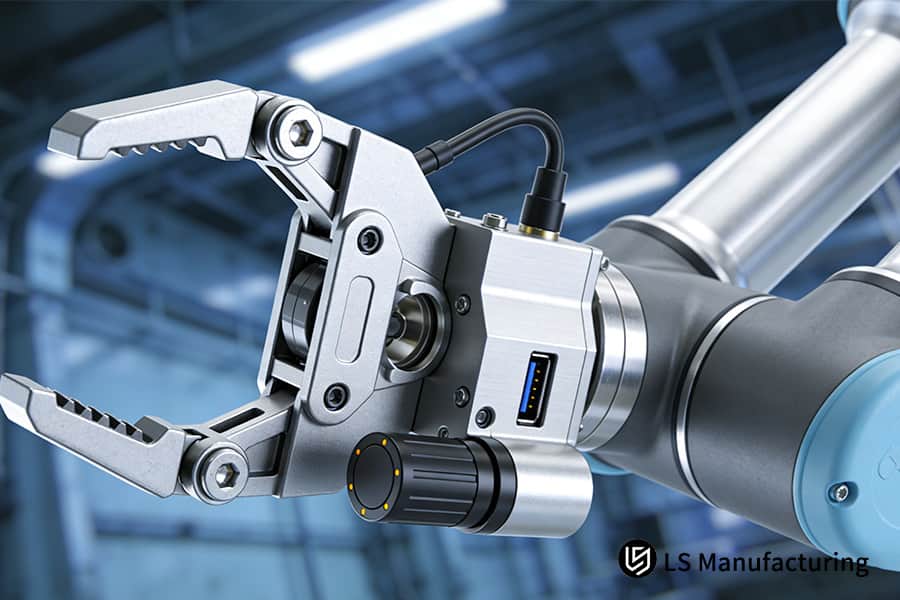
Figure 4: Fabricating high-tolerance metallic alloy grippers for advanced robotic assembly lines.
Why Is LS Manufacturing The Essential Choice For Automated Production Lines Striving For Zero Downtime?
With the insatiable drive towards true zero-downtime automation, the fundamental difference is not simply one of machining a part, but one of co-engineering a production tool that shares a common goal with you towards your automated production line’s Overall Equipment Effectiveness (OEE). The discussion of why choose LS Manufacturing is not one of vendor selection, but rather one of strategic selection of a true automation performance partner that shares your commitment to solving the root causes of tooling-related downtime through true engineering discipline:
Simulation-Driven Design for Predictive Reliability
- Method: Our process begins with a multi-physics simulation (FEA, dynamics) specifically tailored to your part, cycle time, and environment.
- Outcome: Predictive reliability is achieved through this process, eliminating all stress concentrations and failure modes before your part is even manufactured.
- Client Benefit: Your tools are engineered to a true duty cycle, not simply a print cycle.
Precision Multi-Process Manufacturing to Fulfill Design Intent
- Execution: Our precision CNC manufacturing capabilities are complemented by our control of secondary process operations such as specialized coating and post-machining treatment.
- Integration: The control of the entire process ensures that each and every component, from the main body part to the fingertips, is manufactured with exact material and geometric properties necessary for optimal long-term reliability.
- Client Benefit: The design intent is precisely transferred into the final CNC machining products, and therefore the predicted results will be precisely what is achieved in the real world.
Validation and Commitment Based on Measured Data
- Process: Each tool will be fully functionally tested to simulate real-world production conditions to gather data on grip force consistency and position repeatability.
- Deliverable: We guarantee data-driven metrics such as Mean Cycles Between Failure and long-term accuracy retention instead of a simple certificate of conformity.
- Client Benefit: You gain a reliability forecast and a business partner whose success is explicitly tied to your business.
This methodology embodies our business model’s core value proposition: to solve your high-cost problem of unplanned downtime as your engineering extension. We offer a portfolio of reliable robotic tools that utilize a closed-loop system of predictive design, disciplined multi-axis CNC machining, and evidence-based testing and validation. Partnering with us is more than just offering a tool solution; it’s a solution that’s a system of reliable robotic tools to maintain your rhythm of production and optimize your OEE.
FAQs
1. How long does it take to customize a highly reliable robotic end-effector?
From freezing of requirements to delivery of product, the standard lead time to customize a moderate complexity robotic end-effector is 6 to 8 weeks. This includes collaborative design, simulation analysis, material sourcing, multi-stage machining, surface treatment, assembly, and testing. We also offer an expedited service that allows us to reduce our standard lead time by 30 to 40%.
2. How do you ensure performance consistency for end-effectors produced in batches?
We assure the consistency of the performance of the end effectors manufactured in batches through a system of "Standardized Process Packages" and "Statistical Process Control" (SPC). We offer a dedicated process control plan for each project, in which critical dimensions and parameters of the product (for example, the diameters of the bores and the tolerances of the key flatness) will be subjected to 100% inspection or SPC monitoring. This will result in a CPK value of ≥ 1.67, eliminating any batch variations.
3. How do you provide support if a tool experiences abnormal wear or damage at the customer's site?
We provide full lifecycle support. Once we receive the feedback, our support team will respond within 4 hours. If the performance discrepancies are not caused by customer misuse, we will provide a solution for the tool's repair or replacement and help the customer with the Root Cause Analysis for the problem.
4. Do you provide end-to-end services, ranging from initial design concepts to on-site commissioning?
Yes, we do. We provide full-service solutions that include the entire lifecycle of the tool—from conceptual design and engineering simulation, precise manufacturing and integration of the tool with the actuators and/or sensors, factory acceptance testing, and finally delivering the tool and providing the customer with the support required for its on-site installation and commissioning so that the tool is ready for use as soon as it is delivered.
5. How do you protect the intellectual property rights associated with our unique end-effector designs?
We maintain the most stringent NDAs and information security standards; our data is processed in a physically isolated and encrypted system. We are also willing to enter into exclusive design, manufacturing, and supply contracts with you to ensure that your innovative designs are completely protected.
6. What is the Minimum Order Quantity (MOQ)? Do you support the development of single-unit prototypes?
We fully support prototyping and innovative development and have a MOQ as low as a single unit. We strongly recommend that you start with a single prototype design to minimize your initial development risk and optimize your design solution.
7. Do you support the manufacturing of end-effectors using specialized materials (e.g., carbon fiber composites, ceramics)?
Absolutely! We have significant expertise in machining carbon fiber composites and engineering ceramics and specialty alloys. In addition, we have access to material experts that provide recommendations and advice on material selection and processing strategies for specialized applications such as clean room environments, high-temperature operations, and magnetic shielding requirements.
8. How do I initiate a new end-effector project and get a pricing estimation?
Please provide details regarding your workpiece (including drawings, material specifications, and weight), your robot model, cycle time requirements, and a description of any existing operational challenges. You can submit your requirements directly through our online page to request a custom manufacturing quote. Our application engineering team will schedule a kick-off meeting with you within 48 hours to present an initial "Technical Feasibility Analysis and Project Roadmap.
Summary
In today's production lines, robot end-effectors have moved beyond simple grippers and become essential intelligent tools that play a key role in the efficiency, quality, and cost-effectiveness of production lines. Real reliability is a dynamic performance guarantee based on task simulation, material science, precise engineering, and testing. It is not based merely on inspections. This requires a manufacturing partner with a profound understanding of gripping technology and its wear behavior as well as the required engineering know-how for stable and precise movements.
Is your automation project suffering from end-of-arm tooling precision, speed, or reliability? Share your 3D CAD drawings with us for a complimentary Design for Manufacturing analysis and custom quote from our experienced team at LS Manufacturing CNC machining. Tap into our engineering and manufacturing know-how to power your robots with more reliable and efficient hands.
Contact us immediately to put an end to the cycle of line stoppages caused by unreliable end-of-arm tooling, and secure your exclusive reliability solution.
📞Tel: +86 185 6675 9667
📧Email: info@lsrpf.com
🌐Website: https://lsrpf.com/
Disclaimer
The contents of this page are for informational purposes only. LS Manufacturing services There are no representations or warranties, express or implied, as to the accuracy, completeness or validity of the information. It should not be inferred that a third-party supplier or manufacturer will provide performance parameters, geometric tolerances, specific design characteristics, material quality and type or workmanship through the LS Manufacturing network. It's the buyer's responsibility. Require parts quotation Identify specific requirements for these sections.Please contact us for more information.
LS Manufacturing Team
LS Manufacturing is an industry-leading company. Focus on custom manufacturing solutions. We have over 20 years of experience with over 5,000 customers, and we focus on high precision CNC machining, Sheet metal manufacturing, 3D printing, Injection molding. Metal stamping,and other one-stop manufacturing services.
Our factory is equipped with over 100 state-of-the-art 5-axis machining centers, ISO 9001:2015 certified. We provide fast, efficient and high-quality manufacturing solutions to customers in more than 150 countries around the world. Whether it is small volume production or large-scale customization, we can meet your needs with the fastest delivery within 24 hours. choose LS Manufacturing. This means selection efficiency, quality and professionalism.
To learn more, visit our website:www.lsrpf.com.