English


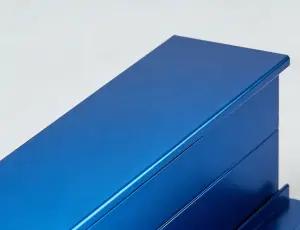
Anodizing
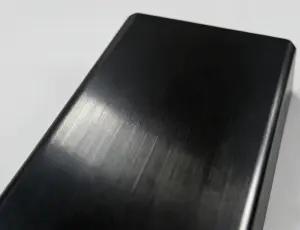
Forms a dense hard oxide layer with corrosion resistance & electrical insulation; supports natural/black/custom colors, ideal for high-end architecture & precision electronics.
Provide high-performance custom aluminum extrusions with precision up to ±0.02mm, achieve 7-day fast delivery via professional production lines, balancing structural strength and batch consistency for high-end industrial scenarios.
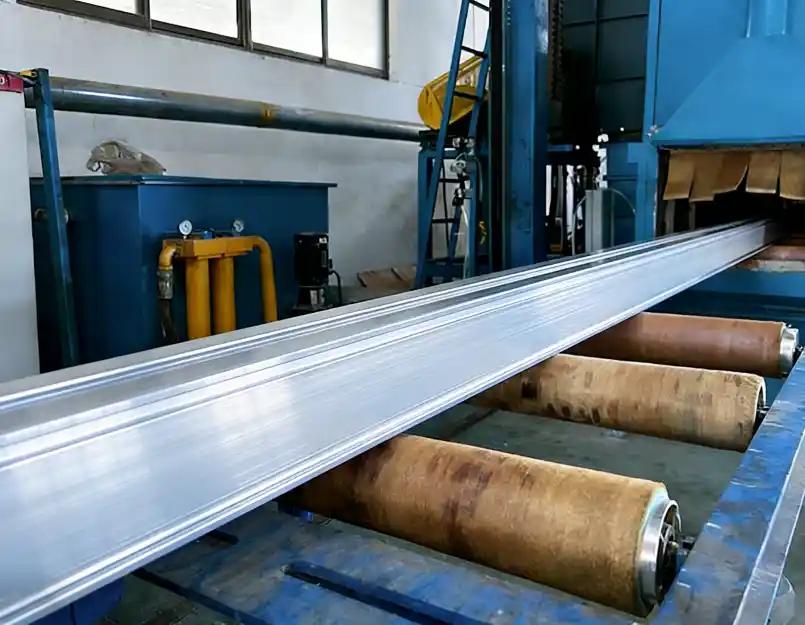









LS Manufacturing delivers ultra-precision aluminum extrusion solutions, with samples ready in 3-7 days and ±0.01mm tolerance, backed by the production of over 500,000 parts across 80+ machines and ISO 9001:2015 certified quality.
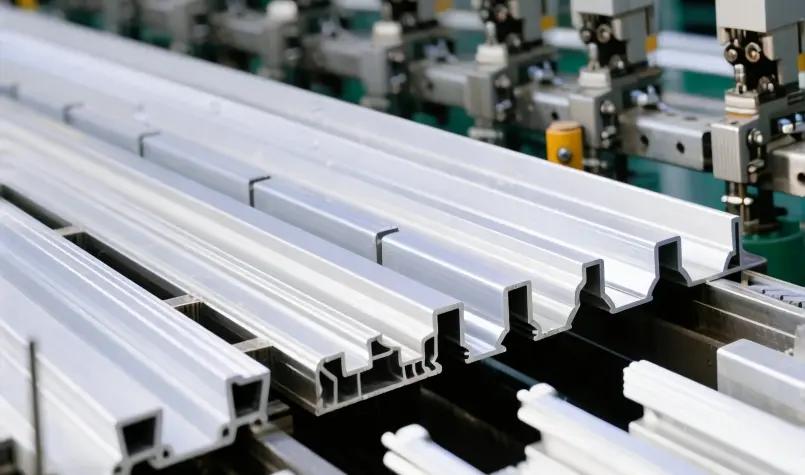
Provide customized aluminum extrusion services, suitable for prototype production, small-batch trial runs to mass production, enabling precision forming of multi-spec/complex cross-section aluminum profiles.
The manufacturing center is equipped with 80 intelligent extrusion lines (450T-4000T tonnage), capable of efficiently handling extrusion needs of varying complexity and batches; all lines are ISO 9001:2015 certified to ensure stable and consistent quality.
Customizable in shape and specification, it adapts to scenarios like industrial automation equipment frames and precision electronic heat dissipation parts, as well as popular fields such as door and window profiles, home appliance support structures, and warehouse shelf frames.
LS Manufacturing provides custom and standard aluminum profiles for your projects, combining high quality and process adaptability to balance performance and cost needs.
When standard profiles fail to meet requirements in function, cost, or design, customization is the ideal solution.
LS Manufacturing's fully customized aluminum extrusion services allow you to specify the shape, color, surface finishing, and material parameters of the profile, precisely adapting to project characteristics.
Our technical team reviews your drawings, confirms process feasibility, and selects the optimal production workflow to deliver high-quality results with short lead times.
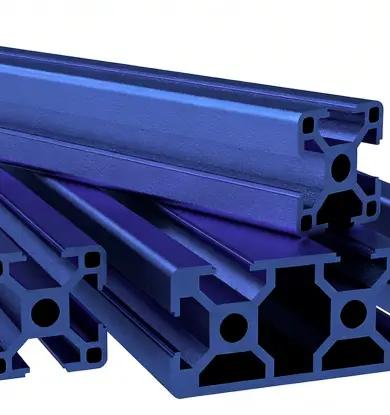
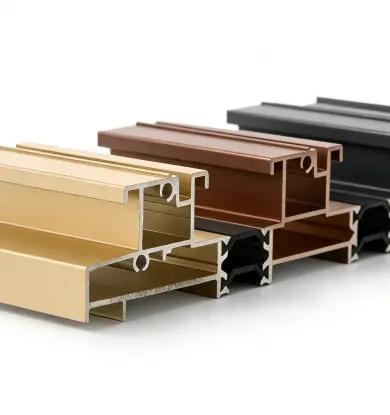
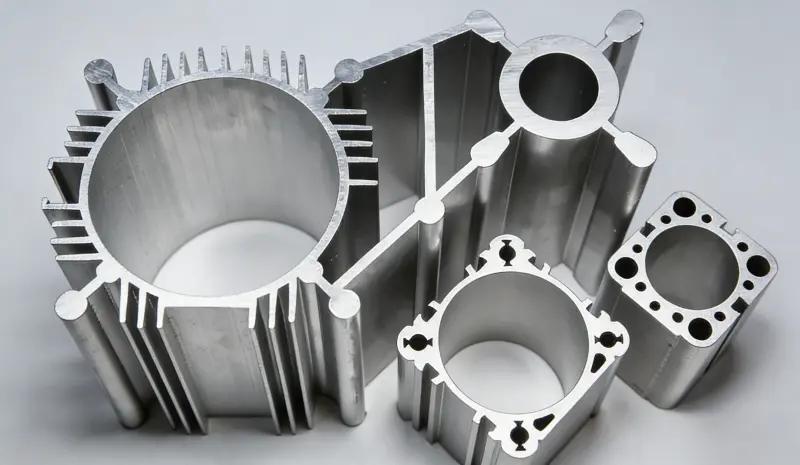
Our standard alloy system covers graded strength levels, differentiated corrosion resistance, and compatibility with diverse processing technologies—the preferred solution for high-end building systems, automotive precision components, and high-reliability electronic structures. Need other aluminum alloy grades for extrusion? Provide your performance index requirements.
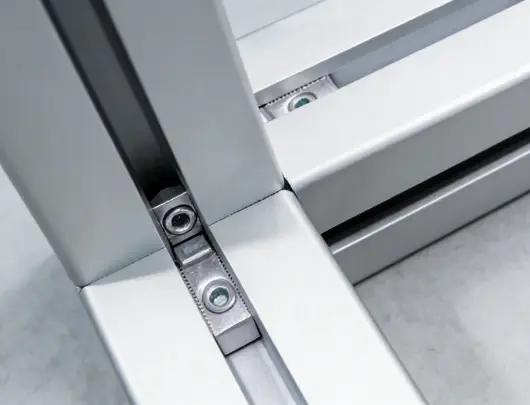
A precipitation-hardened medium-high strength aluminum alloy with excellent stress corrosion resistance and compatibility with CNC precision machining, suitable for high-end equipment structural parts, automotive chassis load-bearing components, and scenarios requiring strength-corrosion balance. Weld joint strength attenuation rate is low, with excellent assembly compatibility.
Surface finishes enhance corrosion/wear resistance and aesthetic quality of extruded aluminum parts. Below are LS Manufacturing's core finishing processes; we offer custom solutions to match your high-precision scenario needs.
Forms a dense hard oxide layer with corrosion resistance & electrical insulation; supports natural/black/custom colors, ideal for high-end architecture & precision electronics.
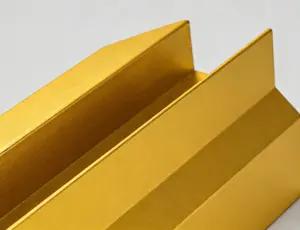
High-adhesion dry powder cured at high temp; scratch/UV/chemical resistant, wide color range for outdoor high-weathering scenarios.
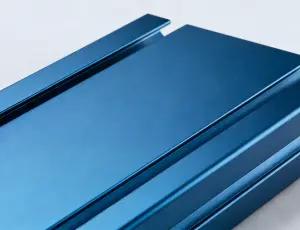
Uniform coating on complex structures via electric field; smooth surface & excellent corrosion resistance, ideal for high-end automotive precision parts.
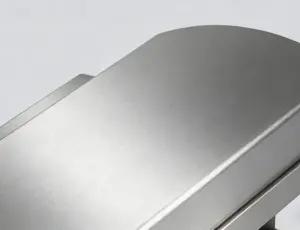
Fine mechanical directional brushing creates texture to hide scratches/fingerprints, ideal for premium consumer electronics, appliances & architectural trim.
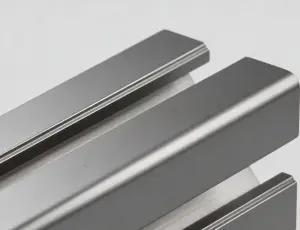
High-pressure glass beads create uniform matte surface; removes machining marks, ideal for precision parts & high-quality decorative components.
Custom liquid paint enables precise color matching; cost-effective for small-batch prototypes & multi-color custom needs.

High-adhesion ink prints fine logos/text/graphics, ideal for premium control panels, nameplates & branded products.

High-precision laser removes material for permanent markings; sharp edges, ideal for precision part serial numbers & patterns.
Quality is integrated into every step of our aluminum extrusion process. With ISO-certified production facilities and over 100 precision extrusion & inspection machines, we deliver parts that meet high-end industry standards in accuracy and surface finish.
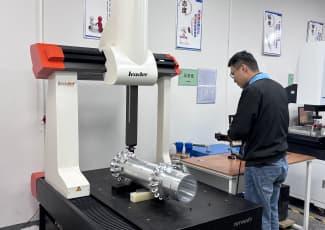
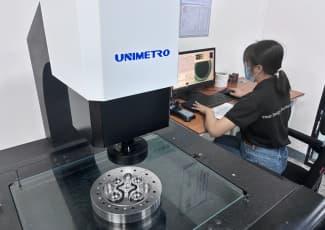
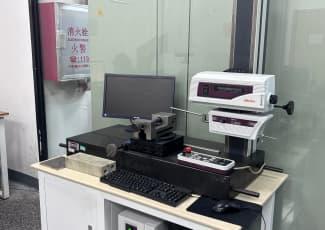
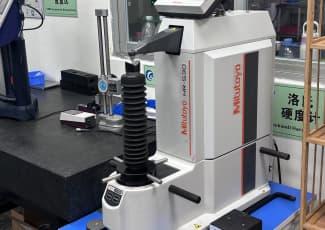
Measure key dimensions including cross-section width, height, wall thickness, total length, straightness, flatness, and fit accuracy of holes/slots; inspection tools include calipers, micrometers, height gauges, and high-precision coordinate measuring machines (CMM), ensuring tolerance control up to ±0.02mm precision.
Full-batch inspection for surface defects like scratches, dents, cracks, air bubbles, burrs, and extrusion lines; professional lighting systems and high-magnification equipment are used to identify micro-level surface issues.
On request, we provide test results for strength and hardness, along with RoHS compliance reports and material certificates; customized performance testing is available to meet high-end project requirements.
Centered on high-precision customization capabilities, end-to-end quality control, and efficient delivery systems, LS Manufacturing's aluminum extrusion services provide professional, reliable solutions for various complex profile needs.
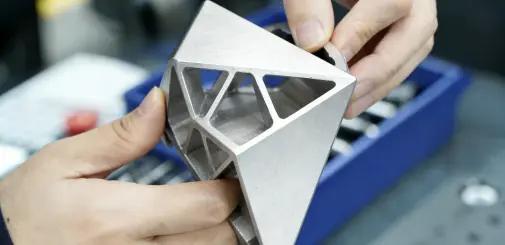
/01
Fully control surface finish (up to Ra0.8μm), complex irregular profile shapes, full-range alloy material grades, and customized color schemes, precisely covering exclusive precise specification needs for various scenarios, adapting to differentiated process requirements of diverse applications.
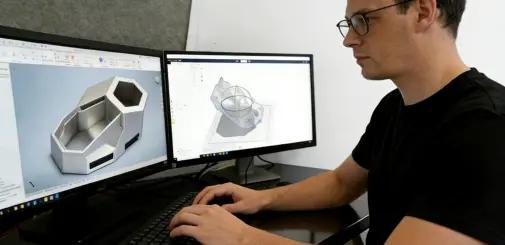
/02
Key dimension tolerance is strictly controlled within ±0.02mm, standard dimension tolerance ≤±0.05mm, with full-dimensional inspection covering cross-section, wall thickness, geometric tolerances, etc., ensuring precision consistently meets high-precision assembly and functional performance requirements.
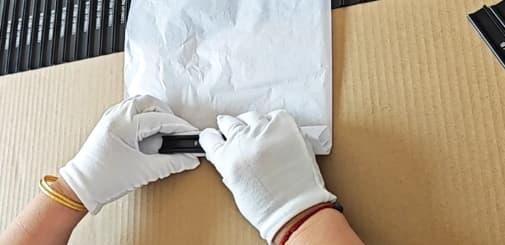
/03
Relying on rapid mold development + material precise matching system, standard customization process is delivered within 7 days; complex geometric profile requires no additional mold modification and can be produced within 10 days, with intelligent production line scheduling ensuring delivery progress stability.
Aluminum extrusion is a plastic processing technology that involves subjecting aluminum billets preheated to the process temperature to plastic deformation via custom forming dies, ultimately obtaining profiles with specific cross-sectional contours. At LS Manufacturing, we follow a high-precision, standardized professional production process:
First, high-precision custom die manufacturing (covering solid, hollow, semi-hollow and other cross-sectional dies) is completed, then the aluminum billets are precisely temperature-controlled and preheated to the 400-500℃ process range; then, according to the aluminum alloy grade and the high-end application scenario of the finished product, the appropriate extrusion process is selected—including direct/indirect extrusion processes, or hot/cold extrusion processes—to ensure the material properties and cross-sectional precision of the profile meet standards.
After extrusion forming, the profile undergoes online precision cooling, tension stretch straightening and fixed-length precision cutting in sequence to obtain semi-finished products of target dimensions; according to performance and appearance requirements, processes such as aging strengthening (to precisely improve strength and hardness), surface precision machining (to optimize appearance texture and functional characteristics), or component assembly can be further carried out. Before delivery, each custom aluminum profile must go through a full-item precision quality inspection and standardized protective packaging process.
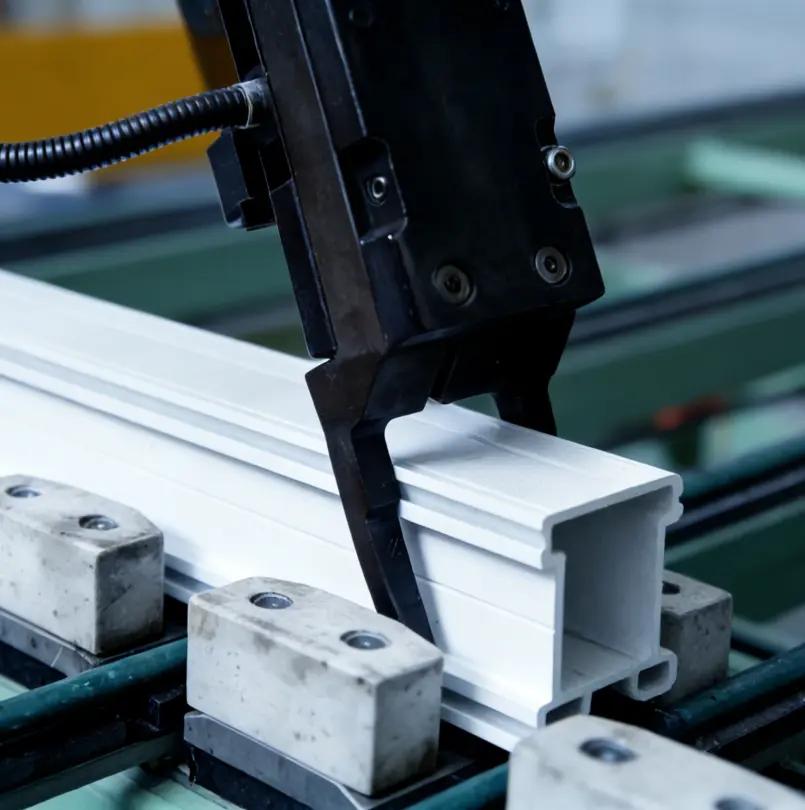
APPLICATIONS
Industries across the board rely on custom aluminum extrusions for their excellent strength-to-weight ratio and flexible design features, adapting to diverse scenarios from precision structures to lightweight needs. Below are its core application directions.
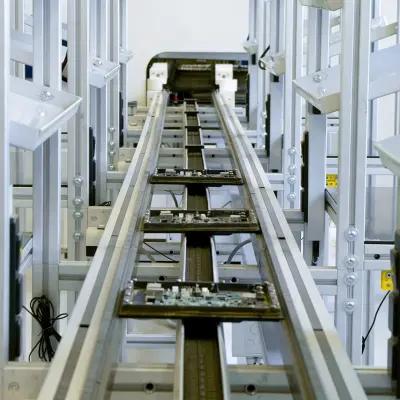
Precision equipment frames, custom workstations for automated production lines, dedicated structural components for intelligent devices
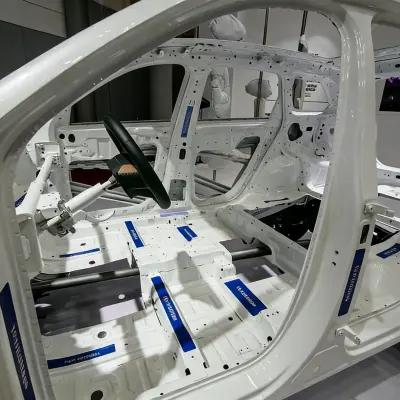
Lightweight structural parts for new energy vehicles, precision interior profiles for rail transit, custom load-bearing frames for special vehicles
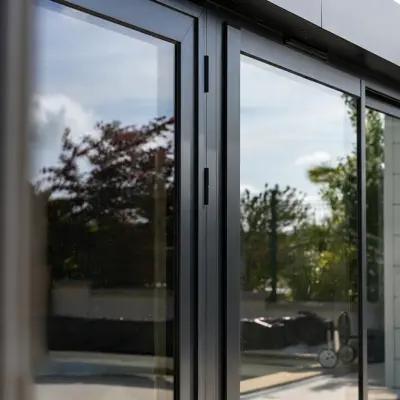
Custom profiles for unitized curtain walls, structural frames for smart door & window systems, precision cross-section components for building decoration
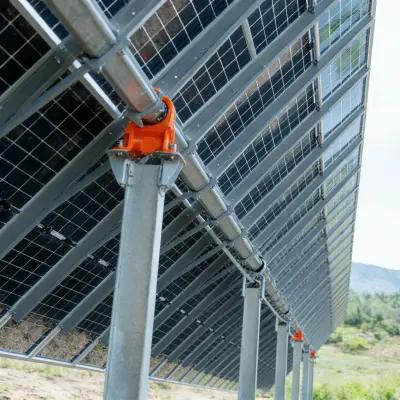
Dedicated support frames for photovoltaic tracking systems, lightweight structural parts for wind power equipment, corrosion-resistant profiles for new energy facilities
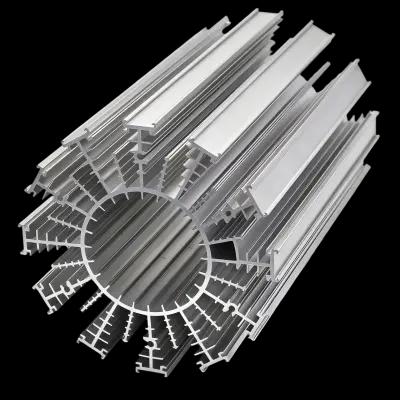
Sealed enclosures for precision electronic equipment, custom heat sinks for high-power LEDs, dedicated structural frames for semiconductor equipment
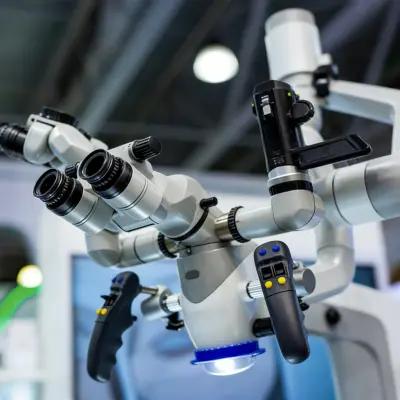
Precision structural components for surgical robots, lightweight frames for high-end imaging equipment, sealed enclosures for medical diagnostic instruments
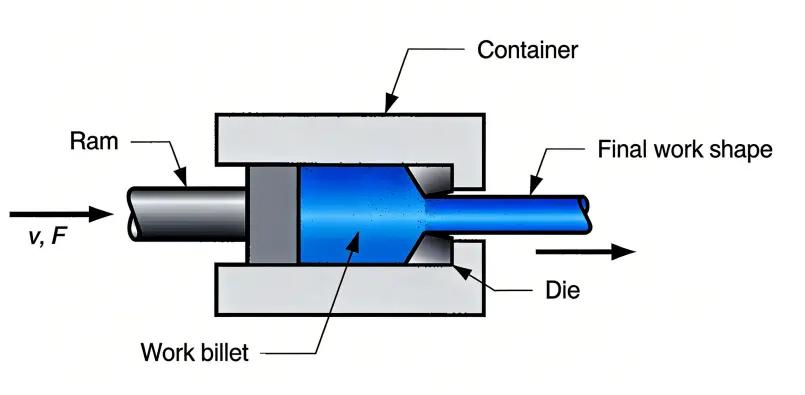
When the cut aluminum billets are preheated, a hydraulically powered ram pushes them into a custom die with precisely controlled pressure of approximately 45MN (≈10,000,000 pounds). The die can feature a standard aperture (e.g., round/square) or a custom-shaped composite cavity designed for high-end scenarios.
The extruded profiles are cooled uniformly on a closed-loop temperature-controlled cooling table, then cut to precise lengths via laser according to customer requirements. For high-strength applications such as aerospace and military, aging heat treatment can further enhance the hardness and mechanical stability of the aluminum profiles.
Aluminum extrusion is divided into hot extrusion and cold extrusion, each adapted to different high-end scenario requirements:
Hot extrusion: Enables continuous feeding of high-volume aluminum billets for efficient forming at low pressure, suitable for batch production of large complex cross-sections in high-end equipment.
Cold extrusion: Produces precision components with a surface finish of up to Ra0.8μm, featuring excellent oxidation resistance and mechanical properties, ideal for high-precision structural parts in semiconductor and medical fields.
In the hot extrusion process, aluminum billets are firstprecision-cut to micron-level tolerance dimensions then preheated to 350-580℃ in a dedicated temperature-controlled furnace (softening the metal while keeping it solid to avoid grain coarsening).
High-Strength Lightweight: Excellent strength-to-weight ratio significantly reduces structural loads for high-end equipment.
Native Corrosion Protection: Dense natural oxide layer provides long-term resistance to corrosive media for harsh working conditions.
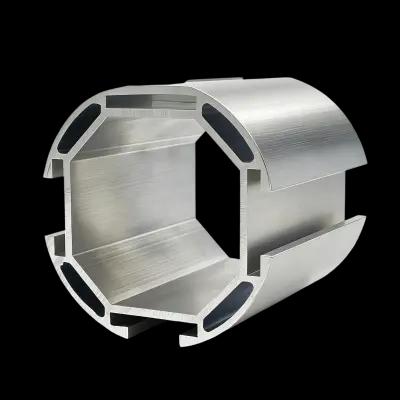
Integrated Complex Cross-Section Forming: Multi-cavity, irregular cross-sections formed in a single process, reducing subsequent assembly steps.
Efficient Material Utilization: 30% higher material utilization than solid aluminum machining, optimizing overall costs.
Modular Compatible Assembly: Compatible with precision T-slot interfaces for rapid modular assembly and upgrades of intelligent devices.
Low-Carbon Closed-Loop Recycling: 100% recyclable and renewable materials align with high-end manufacturing sustainability goals.
High-Precision Mold Pre-Investment: Custom precision molds require professional design, less cost-effective for small batches.
Mold Reconstruction for Cross-Section Iteration: Contour changes require new molds, limiting flexibility for frequent iterations.
Precision Processing Scrap Generation: Minor scrap produced during high-precision trimming, requiring professional recycling systems.
Tonnage-Dependent Size Limitation: Maximum profile size is restricted by equipment tonnage; extra-large sections need custom lines.
Multi-Line Surface Variation Control: Subtle surface texture differences across lines require post-processing for high-end consistency.
High-Temperature Strength Attenuation: Alloy strength decreases at elevated temperatures, requiring scenario-specific performance compensation.
Our tolerance control follows ISO 9001+AS9100 dual-certified standards: critical dimension tolerances can reach ±0.02mm, and regular dimension tolerances are stably within ±0.05mm. High-precision tolerances require supporting precision molds and full inspection processes, which increase production investment; we will match the optimal tolerance scheme for you based on your actual assembly needs to avoid unnecessary precision costs.
We offer steel profile mechanical connection solutions: non-welding fastening via corner brackets, metal screws, or specialized mechanical connectors/clamps, suitable for high-end equipment frame requirements. In addition, combined solutions of mechanical fasteners and structural adhesives can also replace welding; steel profiles have higher strength but slightly higher assembly complexity, while aluminum extrusions still have core advantages in assembly convenience.
Wall thickness determination requires comprehensive professional considerations: • Alloy Grade: Soft alloys need increased wall thickness to ensure strength, while high-strength alloys can adapt to thin-wall designs • Profile Design: Structures with deep channels, curves, or unsupported spans require thicker walls to improve stability • Press Capacity: The tonnage and size of extrusion equipment limit the forming limit of cross-sections • Surface Finishing: Anodizing or coating processes may require minimum wall thickness to avoid deformation • Dimensional Tolerance: Strict tolerance limits usually require increasing wall thickness to ensure processing consistency We will balance strength, weight, and cost optimally during the design phase.
The typical recommended wall thickness is 1.0mm-3.0mm: • Structural or load-bearing parts: Wall thickness ≥2.0mm is recommended to ensure strength and rigidity • Lightweight or decorative parts: Wall thickness ≈1.0mm is sufficient The minimum feasible wall thickness is limited by alloy, cross-section complexity, and equipment capacity; the final choice needs to balance mechanical requirements, weight, and cost based on the actual application scenario.
We provide high-precision prototyping and small-batch trial production services, which can produce sample parts for testing and verification before mass production. Prototyping services can help you: • Verify fit and function before committing to large quantities • Confirm that dimensions and tolerances meet technical requirements • Evaluate surface finishes and material properties • Optimize design solutions early in development to reduce later risks.
Costs are determined by core factors: • Material Type: Different aluminum alloy grades have significant cost differences; common alloys like 6061/6063 are cheaper than specialty metals • Part Size: Larger profiles require more material and larger tonnage equipment, resulting in higher costs • Design Complexity: Complex cross-sections require custom precision molds, and tight tolerances increase inspection and processing time • Other Factors Affecting Price: Order volume (larger orders have lower unit costs), surface finish type, tooling and die costs for new profiles You can provide drawings and specifications, and we will give you an accurate quote based on your actual needs.
Cost control can be effectively achieved through professional design and planning: • Optimize Structural Design: Keep wall thickness uniform (variable wall thickness increases mold cost), use rounded corners instead of sharp angles, design symmetrically as much as possible, and avoid deep narrow channels and other difficult-to-form structures • Choose Standard Materials: Prioritize standard alloys like 6061/6063 over specialty metals • Plan Orders Reasonably: Increase order volume to spread tooling costs, and only choose tight tolerances when necessary • Simplify Surface Finishing: Prioritize standardized surface processes and consider reusing existing die profiles • Lock Design Early: Changing designs after mold completion will significantly increase costs; we recommend collaborating with us early in the design phase to identify risks in advance.
Aluminum extrusions are 100% recyclable in a closed loop without losing strength or quality. The carbon emissions of recycled aluminum are only 5% of primary aluminum, which can significantly reduce the carbon footprint; our recycling system supports multiple cycles, meeting environmental needs while ensuring stable product performance.
Core die types include: • Solid Dies: Used for simple solid profiles without hollow sections or internal cavities, with the lowest cost and highest efficiency • Hollow Dies: Used for profiles with enclosed hollow sections or tubes, requiring mandrels to form internal cavities, with higher complexity and cost • Semi-Hollow Dies: Used for profiles with partially enclosed sections (e.g., C-channels, slotted angles), with complexity and cost between solid and hollow dies We will match the optimal die solution based on your cross-section requirements.
We offer a full range of precision T-slot profiles with standard sizes including: 10×10mm, 20×20mm, 30×30mm, 40×40mm, 45×45mm, 50×50mm, 60×60mm, 80×80mm, 100×100mm, 160×160mm. These sizes are suitable for high-end rack and assembly scenarios, and different applications can select corresponding specifications according to structural needs.
Lead time depends on the project type: • Prototyping/Small Batch: 3-5 days (including rapid mold development and trial production) • Mass Production: 7-15 days (including mold verification and stable production) • Complex custom projects: Need to be evaluated based on mold development cycle, and we will provide an accurate delivery schedule.
We provide customized post-processing solutions: • Aging Strengthening: Improve alloy strength and hardness, suitable for high-strength scenarios such as aerospace and military • Ultra-Fine Surface Treatment: Achieve a surface finish of Ra≤0.8μm, meeting the dust-free requirements of semiconductor equipment • Special Coating: Increase corrosion resistance or insulation, suitable for harsh working conditions We will match the optimal post-processing process based on your performance needs.