English



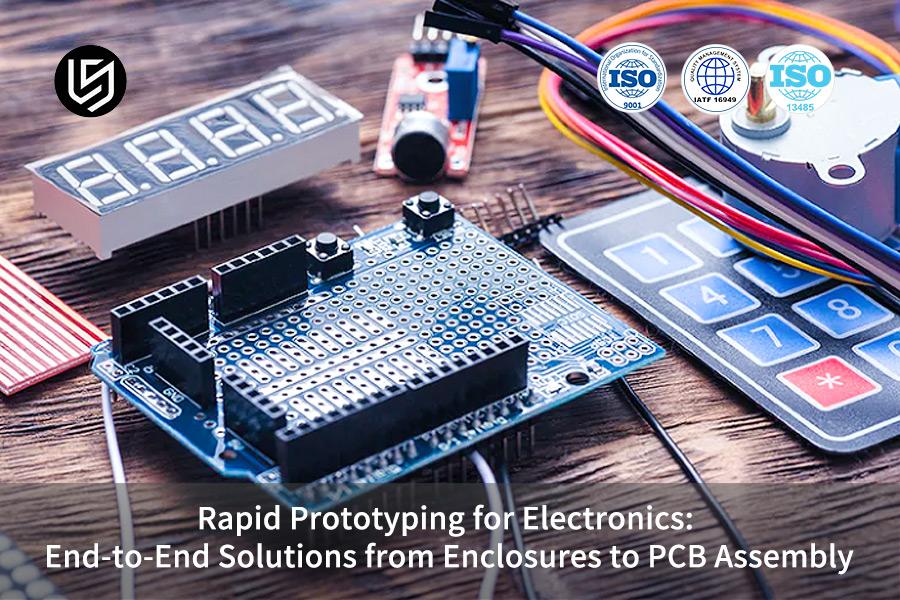
Rapid prototyping for electronics is a minefield where fragmented collaboration hell is the norm: mechanical cases don’t fit PCB mounts, components are unavailable for weeks, and hand-made prototypes are not reliable. This is the result of a fragmented approach where outsourcing is done separately for design, procurement, and assembly. This leads to costly fixes for information gaps that arise at the eleventh hour. Our approach is a complete solution where all disciplines come together at the start, allowing for concurrent decisions to be made.
With a 4-6 week delivery time for a reliable prototype, we help you save 30% on costs using our shared DFM platforms and risk material tools. Having incubated over 200 hardware projects, we offer a true integration checklist for a seamless move from concept to working prototype. Partner with LS Manufacturing for a hassle-free move from concept to investor-ready demo.
Rapid Prototyping for Electronics: Key Considerations
| Aspect | Practical Insight |
| Integration Challenge | To meet this challenge, the rapid prototyping stages must concurrently address PCB fabrication, component procurement, and mechanical case design, thereby creating parallel development hurdles. |
| Supply Chain Hurdle | Procuring small quantities of hard-to-find and long-lead-time electronic components may critically delay prototype assembly and testing. |
| Fidelity Gap | Several of the rapid technologies, for example, 3D printed circuits, may not accurately represent the electrical and/or thermal performance of the final product materials and processes. |
| Our Holistic Approach | We offer an integrated solution for PCB prototype quick turn, component kitting, and CNC machined and printed case solutions in a parallel workflow. |
| Component Strategy | We have established relationships with a variety of distributors and utilize rapid prototyping component sources to minimize critical component procurement delays. |
| Design-for-Test Focus | Our process includes test points, debug ports, and modular design to facilitate faster validation and iteration during the prototype phase. |
| Result: Accelerated Learning | Enables the creation of a functionally representative prototype that facilitates true electrical, thermal, and user interface testing very early in the development process. |
| Result: De-risked Transition | Identifies problems early, ensuring a faster, smoother, and less costly transition to volume manufacturing. |
We eliminate the fragmented and slow process of electronic prototyping by providing a synchronized, fast-turn process for PCB, components, and enclosures. This results in high-fidelity, testable prototypes that accelerate learning and de-risk the transition to manufacturing, saving critical time and development cost.
Why Trust This Guide? Practical Experience From LS Manufacturing Experts
There are hundreds of articles talking about rapid prototyping. However, this article comes from people who truly understand what it means to live and breathe it every day. Each and every prototype we deliver to you was born out of the struggles of dealing with PCBs that don’t fit in the enclosure and the delays of missing components. This article represents the hard-learned truths of delivering working and reliable hardware under tight deadlines.
We deliver true end-to-end solutions, where the design of the enclosure, PCB layout, and procurement of components are done in parallel from day one. Our process, built around the principles of ISO 9001 and Society of Manufacturing Engineers (SME) best practices, incorporates DFM and risk reduction in each and every step. This ensures we don’t have costly rework issues associated with non-integrated designs.
The techniques and tools we discuss in this article represent how we deliver working prototypes in weeks, not months. This is what we have learned about what works and what doesn’t in delivering working and reliable hardware under tight deadlines.
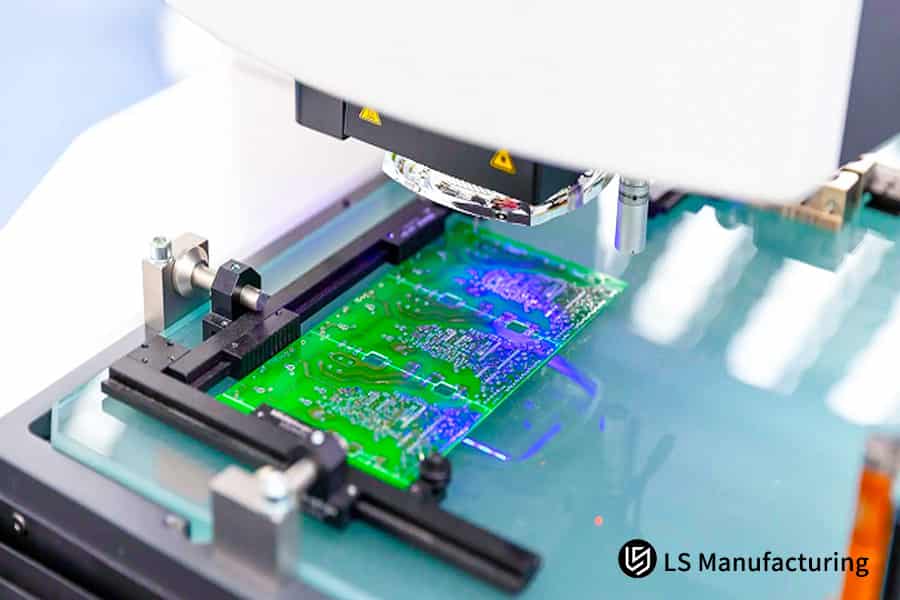
Figure 1: Assembling precision PCB components for rapid prototyping in electronics manufacturing services.
How To Balance Multiple Constraints In Electronic Housing Prototyping?
Successful electronics enclosure prototyping requires navigating interdependent constraints. This document presents a structured approach to effectively balance design aspects such as aesthetic appeal, heat dissipation, EMC, and DFM for electronics during the critical phase of the rapid prototyping stages. The importance of this approach is to avoid failures in the integration process, which could save considerable cost and time in the process.
| Design Aspect | Core Consideration & Actionable Strategy |
| Thermal Management | For a 2W QFN chip in the design, fins should be integrated externally with a 2mm pitch and 5mm height. Also, vent holes should be incorporated in the design based on the hotspot areas identified in the simulation report. |
| EMC/RF Pre-Compliance | A metal-free antenna keep-out area should be ensured in the design. Also, grooves should be incorporated in the design to facilitate the mounting of conductive gaskets near the edges to ensure the effectiveness of the shielding. |
| Design for Manufacturability | For a custom electronics enclosure design, we recommend using CNC machined POM for structural components and vacuum cast painted ABS for aesthetic components in an integrated workflow. |
| Material & Process Selection | We propose a hybrid approach that leverages the strengths of CNC machining for functional prototyping and vacuum casting for aesthetic components in a enclosure prototyping process. |
The custom electronics enclosure design should transform from a static model to a system-integrated product-ready part. Our electronic enclosure prototyping process, as depicted above, overcomes integration issues by incorporating thermal, EMC, and manufacturability (DFM for electronics) evaluations. This process is vital in ensuring that high-value projects in a competitive and time-constrained industry are executed successfully.

How To Prevent Supply Chain And Process Issues In Fast PCB Prototyping?
Along the way, several stumbling blocks can derail a prototype project. Between the design file and the final PCB are supply and process landmines that need to be successfully navigated. Our rapid PCB prototyping includes a design-to-qualification and process optimization phase that allows us to successfully navigate these two linked minefields. In this white paper, we will cover the following topics to enable you to do the same:
Synchronizing BOM Analysis with Design
After the design schematic is finished, we perform a DFM and PCB supply chain management analysis. If a BOM part has a long lead time or is obsolete, as MCUs often are, we will let the designers know. This way, fast track PCB assembly builds will not be plagued by component failures, that can be introduced as variables.
Prioritizing Debuggability in Process Choice
We like to use reworkable finishes for more advanced prototypes, which include features like HDI and 0402 components. We typically suggest SnPb HASL rather than a lead-free process for PCB assembly prototyping. It isn’t the “greenest” finish, but it offers superior solderability and reworkability, which is vital for fast-track builds. We use ENIG only when technically required, for example for BGA assemblies.
Enforcing Rigorous Pre-Delivery Inspection
To minimize debugging time, we insist on 100% flying probe test and AOI, even for 5-piece assemblies. This way, we can identify any electrical or assembly defects that typically have a 70% power-on success rate. Our process delivers >95% known good assemblies for fast-track builds, allowing the engineer to focus on functional verification.
The system mitigates the risk from your rapid prototyping process by taking tangible and proactive steps. Our secre sauce is transforming supply chain and process risks into defined and reliable phases, ensuring that your prototyping process is characterized by technical design and development, not avoidable hiccups and glitches. We provide the reliability that you need to move fast.
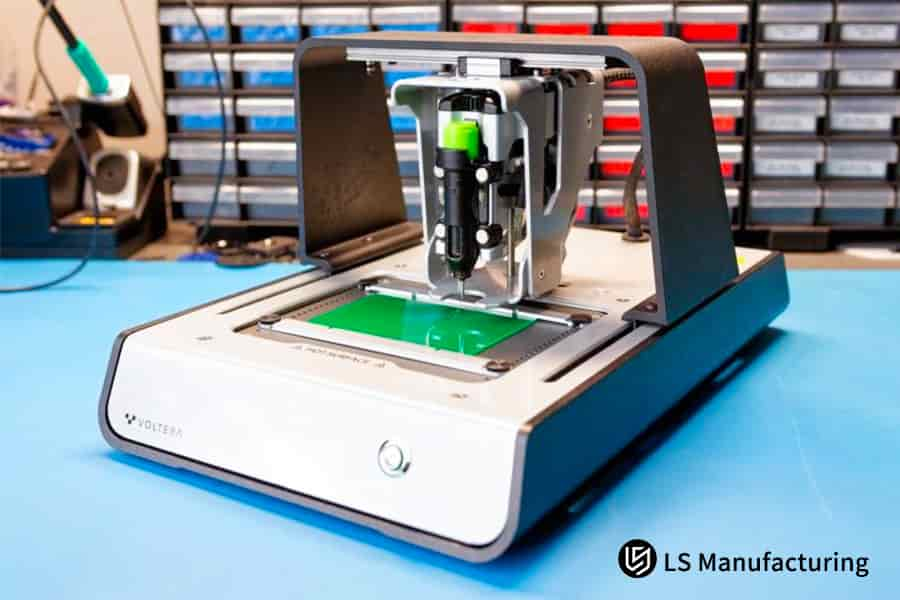
Figure 2: Assembling a high-precision circuit board and custom electronic enclosures in R&D laboratories.
How To Execute EMC Pre-Testing And Rectification In Small-Batch Prototyping?
Product EMC issues late in the development process can result in significant product launch delays. The early application of cost-effective and proactive screening tools during the product prototyping stage is vital for minimizing product development risk. Our electronic product prototyping services include a systematic approach to quickly and cost-effectively resolve product EMC issues:
Targeted Diagnostic Screening for Early Feedback
- Method: Using near-field probes to scan boards for EMC pre-compliance.
- Outcome: Quick detection of noise issues to enable accelerated rapid prototyping.
- Process: Our lab provides actionable emission maps in one day.
Data-Driven Remediation for Fast Iteration
- Actionable Library: Direct countermeasures from scan data to design.
- Example - Power Noise: Prescribe ferrite bead and MLCC filter on IC power pin.
- Example - Signal Integrity: Implementing guard traces for clock lines, aiding agile rapid prototyping efforts.
Closing the Design Loop for Inherent Robustness
- Knowledge Integration: Documented fixes are fed back to the design process for the next hardware revision.
- Forward Compliance: Proven fixes are incorporated into the design process to ensure lean rapid prototyping and robust rapid prototyping for electronics.
The process described above includes EMC robustness in the design process. This is a major differentiating factor from competitors in that we have this process in place in the streamlined rapid prototyping workflow. This process ensures that we have faster results in the process and that we have a predictable outcome in the process.
How To Build A Test Process For Fast Hardware-Software Prototype Iteration?
A good prototype can speed up validation and design development. This document outlines a well-structured and evidence-based methodology for the functional testing and hardware-software integration of development units. The framework ensures rapid prototyping hardware integrity, exposes latent failures, and creates a traceable foundation for efficient rapid iteration.
| Phase | Key Activity | Purpose & Measurable Outcome |
| Foundational Verification | Custom fixtures are deployed to automate firmware flashing and I/O validation. | Ensures hardware integrity to allow developers to concentrate on core logic to facilitate accelerated rapid prototyping. |
| Stress & Environmental Testing | Units undergo 72-hour burn-in and environmental testing (-10°C to 50°C). | Detects component failure modes and temperature-related operation issues. |
| Data-Driven Development | Units and their revisions are logged to facilitate evidence-based rapid iteration. | Ensures evidence-based rapid iteration to guarantee traceable and agile rapid prototyping. |
| Integrated System Validation | Execute test suites validating firmware-peripheral interaction under varied states. | Verifies robust hardware-software integration, ensuring system performance prior to next phase commitment. |
This structured approach is the answer to several key challenges by de-risking hardware builds, forcing failures early, and replacing guesswork with data. It is the technical rigor needed for high-stakes rapid prototyping development, ensuring each rapid iteration of a streamlined rapid prototyping process delivers maximum progress towards a mature product.
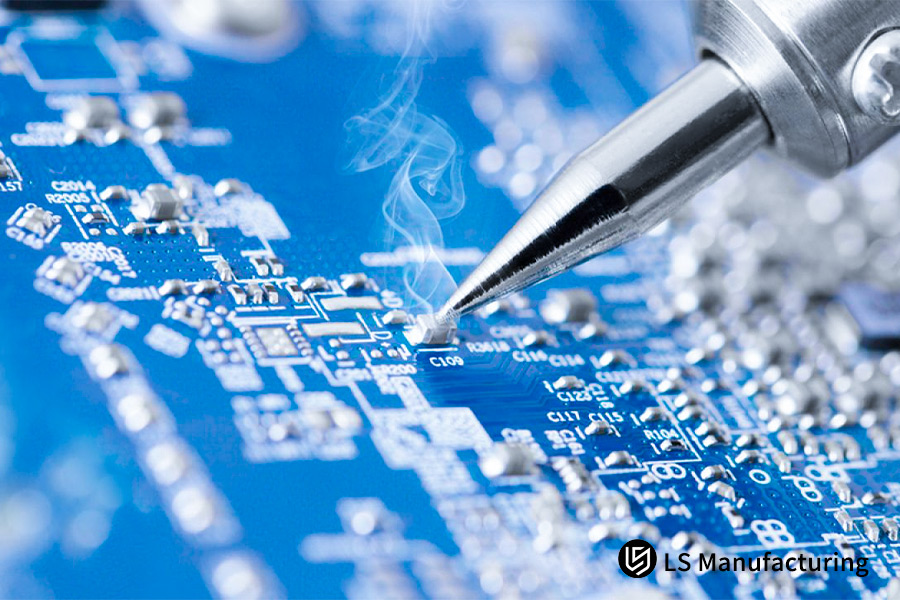
Figure 3: Soldering components onto a precision PCB for end-to-end electronics prototyping services.
LS Manufacturing IoT Industry: Smart Agri-Sensor End-To-End Prototype Project
This document outlines a specific LS Manufacturing IoT case study, exemplifying the power of integrated engineering and manufacturing solutions for complex multi-faceted prototype solutions. The case is the end-to-end electronics prototyping of a solar-powered, outdoor smart agriculture sensor:
Client Challenge
The first prototype of an IoT startup, which included a 4G module and a set of soil sensors assembled in a metalized plastic housing, encountered a series of issues. These included housing, which failed to meet IP67 standards due to a leak, a problem with the 4G antenna, which was shielded due to a conductive coating, and an obsolete power management IC, which caused a halt to the assembly of the prototype. This led to a delay of 12 weeks, which caused a stall in the development of the prototype.
LS Manufacturing Solution
The redesign of the IoT prototype was carried out in a consolidated manner. This included a redesign of the housing to accommodate ultrasonic welding and the creation of gasket grooves. Another problem, which was addressed, was related to the antenna. This was solved by using Laser Direct Structuring to create a precise antenna pattern inside the housing. At the same time, a redesign of the BOM included a new, available, and qualified power IC. This led to a seamless workflow, which included a modified CNC and LDS housing, as well as end-to-end electronics prototyping.
Results and Value
Within a mere span of 6 weeks, LS Manufacturing was able to deliver 25 fully functional and reliability qualified engineering samples. All of these were successfully subjected to IP67 pre-compliance tests and were observed to have stable connectivity to 4G networks. This helped the client to immediately start a successful 2-month field trial, which directly informed their seed funding round. Our integrated rapid prototyping helped turn a stalled project into a venture-enabling solution.
This example shows that IoT devices, which are complex in nature, need to be controlled as a whole, from design to fabrication. This is where we, through the application of advanced processes like LDS and end-to-end electronics prototyping, help overcome issues of interdependencies, which often act as a hindrance to the project.
Struggling to find a partner capable of handling complex, reliable electronic prototypes? Let us provide complete support from concept to physical product.

How To Assess A Vendor's True End-To-End Integration Capability?
To properly evaluate a supplier's true level of integration capability, however, one must look beyond their equipment portfolio. The fundamental issue here is to find a rapid prototyping partner with the internal workflows and cross-disciplinary engineering cohesion to fully own the process to eliminate "handoff" issues. Therefore, to properly evaluate this, one must scrutinize the following aspects:
Cross-Disciplinary Engineering Cohesion
The risk comes with isolated groups of specialist engineers who cannot fix interface issues between systems. To check this, one should ask for a dedicated and colocated project team roster. For our complex IoT gateway project, for example, our Mechanical, Embedded, and DFM engineers have jointly reviewed and worked through a conflict in the design of a dense PCB and the enclosure through an end-to-end electronics prototyping simulation.
Vertical Process Ownership and Control
"Integration" is not successful when the key processes are subcontacted, leading to communication lag and quality ambiguity. Inspect the physical facility of the supplier. Our differentiating factor is that SMT assembly, functional test, conformal coat, and system integration are conducted within the same facility. This vertical control, critical to true electronics manufacturing services, enables agile rapid prototyping iterations without the delay of multiple vendor coordination.
Real-Time Transparency via Digital Thread
Lack of visibility to progress and problems can cause significant risk on a project. A good integrator can offer this visibility as a standard service. We can offer the client a portal that leverages our PLM and MES to offer a live view. A client can see the status of a particular build in the specific rapid prototyping process, see the test results of that build, and even watch videos of the assembly process.
This framework provides a concrete method for supplier capability assessment, moving beyond claims to verifiable process evidence. Our deliverables clearly show that true integration is a technical discipline, which is supported by the presence of teams, processes, and transparency. This de-risks complex product development and speeds up the product release process through iterative rapid prototyping.
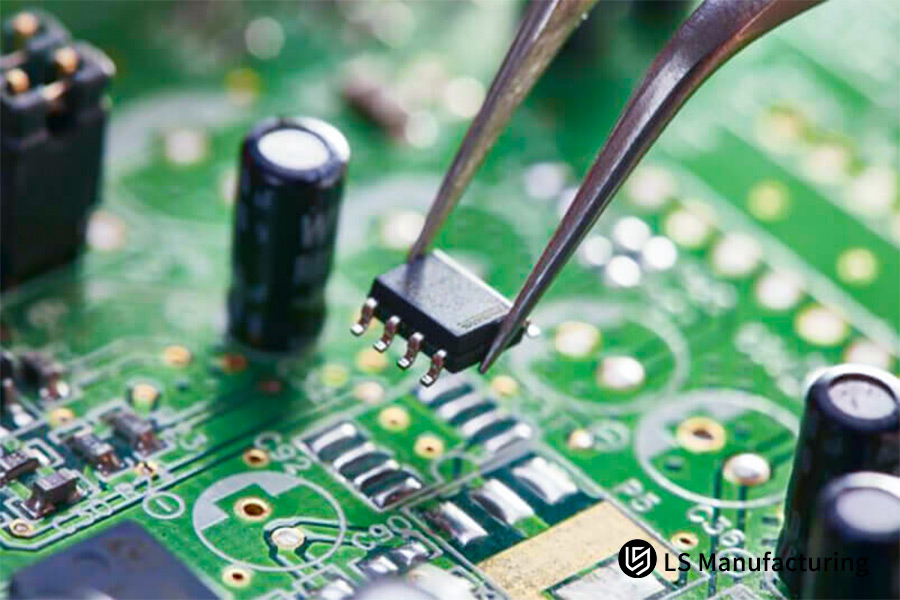
Figure 4: Precise placement of an integrated circuit chip for rapid electronics prototyping and manufacturing services.
How To Transition From 10 Prototypes To 1000 Units In Trial Production?
The key challenge with the transition from prototypes to small-batch trial production is the typical disconnect between the knowledge and processes required for the next steps. Our approach offers a seamless transition by intentionally designing the rapid prototyping stage with the knowledge required for the next steps:
Design and Process Lockdown During Prototyping
We scope the prototype phase to validate and freeze manufacturable processes, not just functional ones.
- DFM-Driven Component Selection: Use SMT-compatible connectors in agile rapid prototyping builds to validate the reflow profile, avoiding a later change from hand-soldered headers.
- Process Parameter Validation: Accurately capture critical parameters, such as adhesive dot weight and screw torque of 1.2 N·m, established during the agile rapid prototyping phase for direct translation to production work instructions.
- Tooling and Fixturing Strategy: Design and test modular pilot run tooling during the initial builds to validate ergonomics and rapid prototyping cycle time estimates.
Data-Driven Knowledge Transfer to Production
We institutionalize these learnings from the prototypes to ensure that we don't lose this information. We have a direct digital thread to the pilot line.
- Centralized Process Database: All validated parameters, inspection criteria, and test results from the rapid prototyping stage are recorded in a centralized PLM that is accessible to the pilot production team.
- Automated Documentation Generation: Approved assembly sequences from the rapid prototyping builds are automatically converted to visual work instructions for the low volume manufacturing line.
- Risk-Forecasting FMEA: Failure modes learned from the initial rapid prototyping builds are used to inform the Pilot Production PFMEA.
Supply Chain and Quality Continuity
We address this challenge through the establishment of continuity in key areas of the supply chain and quality processes established during the first build.
- Approved Vendor List (AVL) Conformance: Procure components for the prototype from the same sources planned for the pilot run and qualify them with regard to quality and delivery.
- Gauge and Measurement Correlation: Utilize the same measurement systems (CMMs, optical measurement systems) for the prototype and pilot run inspections. This eliminates the impact of the measurement system on the results.
- Staff and Skill Carry-Over: Engage key pilot run technicians on the prototype builds later on to enable the transfer of knowledge on the assembly processes.
This approach converts the prototype to pilot run phase into a much more controlled and knowledge-driven process. By locking down processes, learning through digitalization, and establishing continuity in the supply chain from the first piece, we ensure a predictable and low-risk approach to scale-up.
Why Choose LS Manufacturing's End-To-End Services For Hardware Startups?
Hardware startups have to navigate a perilous path of resource-intensive risks that include supply chain management, manufacturing, and compliance. Navigation through that path alone requires critical attention away from development and innovation. With a partnership with LS Manufacturing, this risk is not only mitigated but that path is shortened dramatically:
De-risking Productization Through Front-Loaded Engineering
We share risk because we introduce manufacturability and supply chain risk-reduction capabilities at the conceptual stage. In the case of a wearable product company, we conducted a supplier-led rapid prototyping review that allowed us to swap out a custom sensor for a pin-compatible off-the-shelf part. This both pre-qualified the part for high volume manufacturing as well as removing a 12-week long pole in the tent, which was a productization risk sharing since we were addressing the scalability concerns before even the first prototype was built.
Accelerating Time-to-Market via Unified Execution
A founders’ time is worth more than money, so we monetize it for them by taking over execution management. We helped one of our clients who was developing a smart hub manage everything from agile rapid prototyping all the way through certification. Our turn-key model took care of PCB fabrication, enclosure molding, and even handled the logistics of wireless pre-certification testing, freeing the entrepreneur from managing vendors on a daily basis, allowing our client to close a funding round and directly answering the question of why choose LS Manufacturing.
Delivering Investor-Ready, Data-Rich Artifacts
We don’t just deliver a prototype, we deliver a compelling argument for your next business milestone. Our builds include a Data Pack, a full DFM report, a costed BOM with second sources, test logs, and a regulatory plan. For a robotics hardware startup partner, the technical evidence of our Data Pack made their Series A investment argument unbeatable.
This methodology defines the optimal rapid prototyping path: we convert the founder's solo burden into a shared, technical execution plan. By front-loading risk, consolidating execution, and delivering transparent data, we function as a true co-pilot. This is how we enable startups to scale with confidence, turning a high-risk venture into a managed, technically de-risked progression from idea to market.
FAQs
1. What is the typical lead time for end-to-end prototyping services?
From completion of the final design package to the delivery of a functional demonstrator prototype, the average lead time is 4-6 weeks, depending on complexity. LS Manufacturing will deliver a master schedule which will detail the time required for each stage.
2. What is the minimum order quantity (MOQ)? Can we do single-piece orders?
For turnkey, we can certainly start with a full prototype but understand that the cost per unit will be very high as the NRE (non-reoccurring expense) for programming, fixtures, etc. must be absorbed. Normally we suggest 3-5 sets to get the cost per set down.
3. How do you protect our circuit design and software intellectual property?
NDA and IP contract must be signed before cooperation. We separate our customer's project physically, limit authority to the data and could offer a secure local burning solution to your key knowledge if you want keep the source code in your own side.
4. If problems are found during prototype testing, how quickly can we modify and redo the design?
We help you iterate quickly. Small modifications to the PCB (e.g., changing traces, changing some resistors and caps) can be redesigned and SMT'd in one week; Case modifications take one to two weeks depending on what it is. "Fail fast, fail small, advance quickly."
5. Which wireless technologies do you support for RF design and testing?
We are familiar with RF testing and debugging for popular technologies including Wi-Fi, Bluetooth, LoRa, and 4G Cat.1, and can assist you with antenna selection, matching circuit debugging, and pre-certification testing to ensure your device meets radio type approval requirements.
6. Do you provide packaging and instruction manual design and production services?
Yes. We can provide simple color box packaging, foam insert design and production, and instruction manual layout and printing, allowing your prototype to be directly used for customer demonstrations or crowdfunding pre-launch promotion.
7. How much will the cost decrease from prototype to small batch (1000 units)?
The cost savings is not linear. Generally, going from 10 units to 1000 units, the overall unit cost may reduce by 40%-60% due to material purchasing discounts, efficiency gains and spreading fixed costs. We will be able to offer a tiered pricing breakdown.
8. How to start our first end-to-end prototyping project?
Now, please prepare your PRD, initial ID and structure design documents, and schematics, and then schedule a kick-off meeting with the LS Manufacturing product manager and technical lead. We will assist you in figuring out the details and provide you with a project plan and quotation.
Summary
Rapid prototyping of electronic products is essentially a race against time and complexity. The traditional model of managing mechanics, electronics, supply chain, and testing in a fragmented manner has become the biggest internal obstacle to product innovation. A true end-to-end solution, through deep multidisciplinary collaboration, transparent process control, and proactive risk absorption, transforms uncertain "trial and error" into efficient "validation," thereby turning your ideas into a reliable, demonstrable, and investable product entity at the fastest speed and lowest overall cost.
Schedule a free online consultation with an LS Manufacturing rapid prototyping expert now. Submit your initial ideas or design documents, and we will tailor a "Product Implementation Path and Preliminary Risk Assessment Report" for you, using our professional insights to clear the first obstacle for your hardware startup.
Transform your electronic hardware vision into a market-ready prototype with our integrated, end-to-end development service.
📞Tel: +86 185 6675 9667
📧Email: info@lsrpf.com
🌐Website: https://lsrpf.com/
Disclaimer
The contents of this page are for informational purposes only. LS Manufacturing services There are no representations or warranties, express or implied, as to the accuracy, completeness or validity of the information. It should not be inferred that a third-party supplier or manufacturer will provide performance parameters, geometric tolerances, specific design characteristics, material quality and type or workmanship through the LS Manufacturing network. It's the buyer's responsibility. Require parts quotation Identify specific requirements for these sections.Please contact us for more information.
LS Manufacturing Team
LS Manufacturing is an industry-leading company. Focus on custom manufacturing solutions. We have over 20 years of experience with over 5,000 customers, and we focus on high precision CNC machining, Sheet metal manufacturing, 3D printing, Injection molding. Metal stamping,and other one-stop manufacturing services.
Our factory is equipped with over 100 state-of-the-art 5-axis machining centers, ISO 9001:2015 certified. We provide fast, efficient and high-quality manufacturing solutions to customers in more than 150 countries around the world. Whether it is small volume production or large-scale customization, we can meet your needs with the fastest delivery within 24 hours. choose LS Manufacturing. This means selection efficiency, quality and professionalism.
To learn more, visit our website:www.lsrpf.com.