English



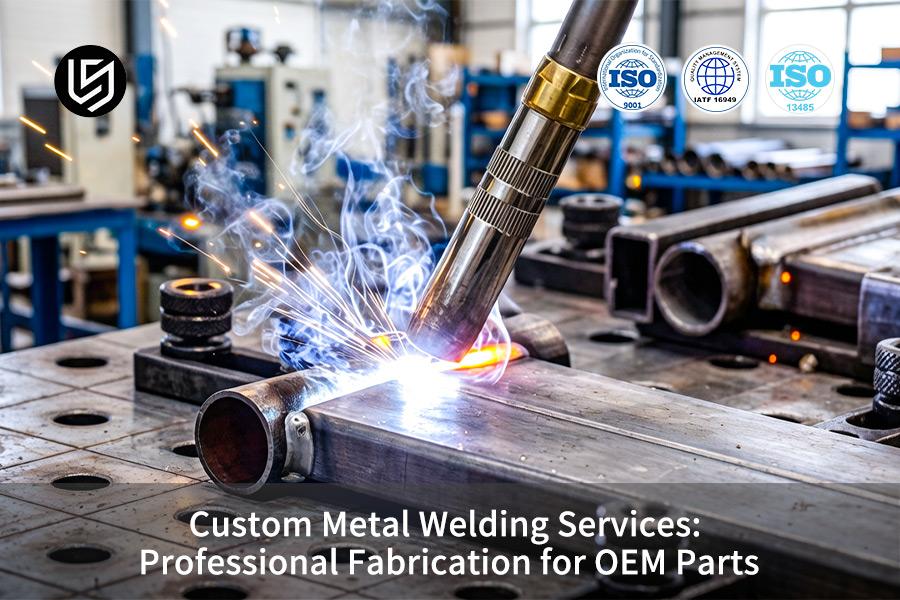
Custom metal welding services must tackle the key challenge between knowing how metal welding works and actually manufacturing products to the industry-standard level. The true challenges are welding distortion, porosity, and lack of sufficient strength, which will delay progress and inflate costs. It takes skillful management of temperature, tools, and material-specific parameters like aluminum alloy or stainless steel.
LS Manufacturing solves these problems with the use of our custom metal welding services and professional fabrication solutions. We solve these challenges with the help of using TIG, MIG, laser welding, and strict quality controls to produce distortion-free parts with excellent performance characteristics. Below you can see how process management contributes to efficient production for your OEM company.
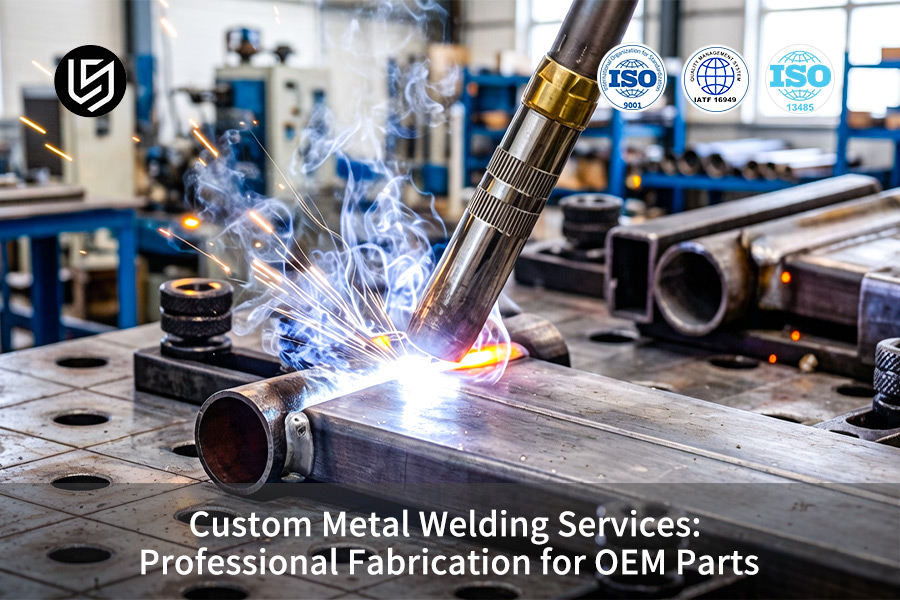
Custom Metal Welding Services: OEM Quick-Reference
| Critical Element | Professional Implementation |
| Weld Procedure Qualification | We formulate Welding Procedure Specifications (WPS) for each type of material and joint to achieve repeatable and compliant welding process. |
| Distortion & Stress Management | We manage distortion by applying sequence welding, pre-heating techniques, and fixturing to mitigate stresses. |
| Weld Integrity & Inspection | We verify our welds using visual examination, PT test, and RT inspection to validate weld quality, integrity, and absence of flaws. |
| Material Compatibility | We determine the right materials and gases (filler and shielding) that would suit steel, aluminum, and stainless materials. |
| Automated vs. Manual Process Selection | We apply automated welding processes when welding high-volume joints and manual (TIG/MIG) for precision welds. |
| Our Quality Documentation | We prepare weld mapping, material traceability, and inspection certificates to fulfill your OEM quality needs. |
| Result: Structural Reliability | Provides welded structures that are strong and durable enough to withstand the stresses imposed by OEMs. |
| Result: Seamless Integration | Supports welded sub-assemblies with seamless integration, making your manufacturing processes easy and efficient. |
We address the important issues of welding for OEMs, such as controlling distortions, ensuring the reliability of welds, and maintaining consistency. Our professional fabrications result in robust and compliance-code welding that easily integrates into your manufacturing. This will provide reliable performance, help avoid complications in assembly, and allow for your documentation requirements.
Why Trust This Guide? Practical Experience From LS Manufacturing Experts
There is an abundance of information available on welding, but little comes from the trenches of production where stakes are truly high. We have honed our craft in the fusion of mission-critical metals for OEM components where there is no room for error. Starting with a base of experience gained from standards set by the Environmental Protection Agency (EPA), we have mastered every technique required to deliver unparalleled results.
From concept to final product, we overcome the most challenging aspects of fabrication. We have crafted unique procedures for aerospace frames where strength reigns supreme and medical devices where absolute biocompatibility is essential. Through every project, we have learned more about controlling heat input in exotic materials, coding robotic welding paths through challenging geometries, and employing NDT testing according to TWI Global guidelines. The following pages contain the proven solutions we offer.
All of our recommendations are based on experiences of success and failure. We know which parameters need to be selected in order to achieve maximum longevity. We know how to design the fixtures for consistent fabrication of parts in a lean manufacturing process. We want to share our expertise so that you can leverage our successful experience and create something even better.
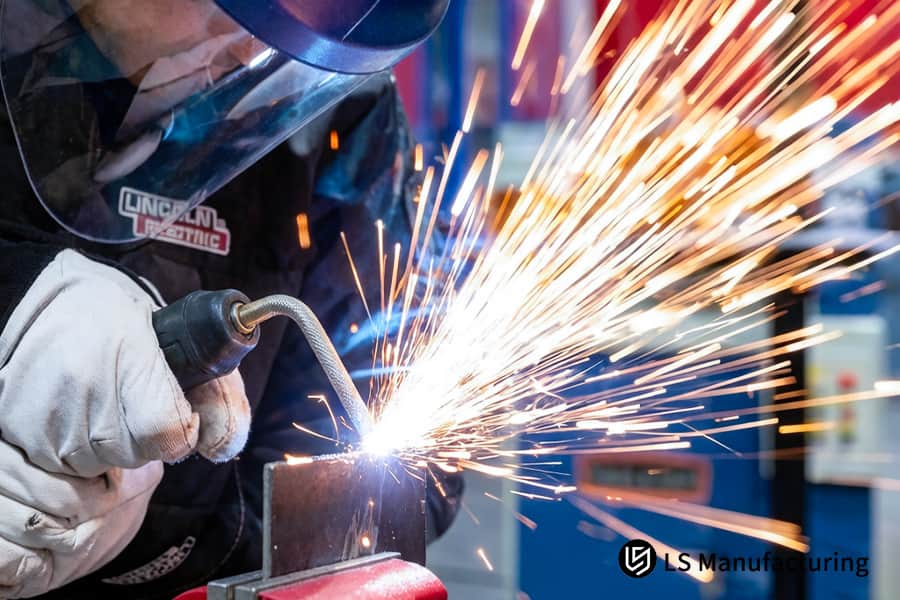
Figure 1: Assembling a custom aluminum bracket for industrial machinery using professional metal welding fabrication.
Why Is Selecting A Professional Custom Metal Welding Services Provider Critical For Your High Pressure System Safety?
High pressure system integrity demands precision beyond standard welding. Partnering with a specialist for custom metal welding services is critical for safety and long-term high pressure reliability. This analysis details how LS Manufacturing's controlled welding process, governed by a strict WPS, translates to quantifiable performance gains for critical components. Our precision metal welding approach is engineered for this purpose.
| Aspect | Standard Welding Process | LS Manufacturing's Controlled Process |
| Process Foundation | Dependent on general welding parameters. | All welding processes follow WPS certification guidelines specific to each project. |
| Parameter Optimization | Utilizes static parameters which may be non-ideal for certain alloys. | Special attention is given to pulse frequency of 316L stainless steel. |
| Resulting Mechanical Performance | Yields joints with minimal fatigue resistance. | Provides a 25% boost in fatigue resistance of welded joints. |
| Operational Risk Profile | Increased risk of material failure due to cyclical loading. | Drastically reduces chances of material failure within pressurized components, guaranteeing dependability. |
| Life-Cycle Cost Implication | Carries unseen costs due to possible downtimes and product recalls. | Prevents failures and associated costs via certified metal welding protocols. |
The data confirms that controlled metal welding services are essential for high pressure reliability, providing a 25%+ fatigue strength improvement. This specialized metal welding approach directly solves failure risks by enforcing an optimized WPS for every weld. It is the definitive rationale for selecting expert custom metal welding services in critical applications.
How Can Precision Metal Welding Services Manage Complex Thermal Deformation In Thin Walled OEM Components?
When dealing with thin OEM components below 1.5mm, avoiding distortions due to welding heat becomes the key obstacle in realizing the dimensional accuracy of the finished product. This problem is overcome by using a combination of predictive modeling, process control, and in-process correction to ensure distortion remains below 0.1mm. Here are the methods used to achieve this:
Simulation-Driven Weld Sequence Optimization
Using advanced thermomechanical modeling, the transient heat flow and resulting stresses will be predicted and studied. This allows us to identify the best welding sequence and path that will minimize thermal pulls, turning an otherwise hit-and-miss process into a science-based approach. It is this first step that makes it possible for us to provide high-quality precision metal welding services.
Dynamic Thermal Management via Segmented Welding
As opposed to continuous welds, we rely on a programmable skip-weld process. The principle behind this technique is to weld shorter stitch welds in a manner that allows heat to dissipate from one area before starting the next. Where necessary, we can make use of laser metal welding or pulsed metal welding for extremely local heat input. This approach ensures that there is no excessive concentration of heat leading to warping or distortion.
In-Process Deformation Correction with Custom Tooling
Deformation control is effectively carried out through our highly functional hydraulic clamping tools. Our hydraulic tools are not mere clamps but sophisticated instruments that apply dynamic pressure on key areas based on simulation data as the welding process progresses and parts start to distort. With an effective system combining custom metal welding services and efficient tools, we achieve consistent results.
The whole process of using predictive simulation and automated metal welding methods coupled with mechanical intervention to minimize deformation is indicative of our technical expertise and experience as solution providers. Our services will see to it that all the potential issues of deformation are eliminated, ensuring that you get ready-to-assemble parts delivered to you without any need for corrective action.
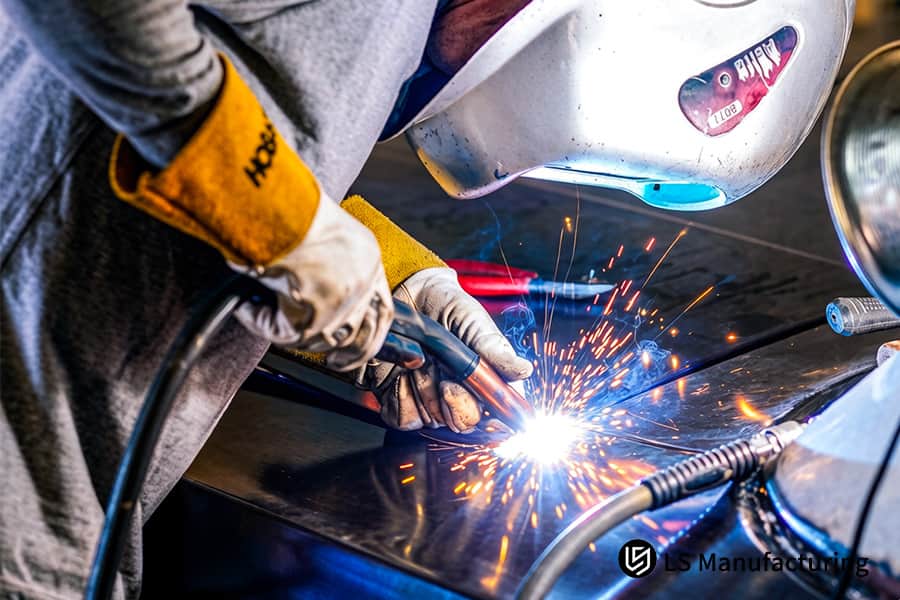
Figure 2: Fusing 304 stainless steel sheets for heavy machinery structural parts with a precision MIG welding torch.
What Engineering Standards Define High-Quality Medical-Grade Metal Welding?
A complete absence of oxidation and contamination is necessary to guarantee that implants will have weld quality appropriate for implant applications. Our approach tackles this problem by utilizing a professional metal welding fabrication process with total inert atmosphere control. Such an approach includes the following aspects:
Ensuring Inert Weld Integrity and Purity
- 100% Internal Argon Back Purging Protocol: It entails making sure that there is an enclosed atmosphere for all inside seam activities. Oxygen has to be evacuated to prevent heat tinting and precision metal welding defects from making the medical compliance non-compliant.
- Real-Time Atmosphere Monitoring: It is done using sensors to ascertain whether the purge gas quality is greater than 99.998% before initiating any arc welding, resulting in creation of an effective inert shield.
- Result: This process will eliminate all forms of surface oxidation and sugaring hence providing a metallurgical sound root pass.
Precision Parameter Control for Consistent Fusion
- Automated Pulsed-Welding Regimes: Programming and controlling factors such as amperage and frequency results in the creation of low heat input welds to create the high-integrity metal welding standard for thin wall parts.
- Certified Filler Material Handling: Careful handling of certified filler materials that do not introduce any contaminants into the metal welding services process.
- Verification: Weld parameter quality tested using test coupons and macro etched cross section analysis ensures proper penetration without any distortion.
Post-Weld Cleaning and Validation for Implant-Grade Surfaces
- Multi-Stage Ultrasonic Cleaning: The parts undergo multi-step cleaning process where medically-approved detergents are used in the ultrasonic baths at elevated temperatures to clean away microscopic debris.
- Process Control: Critical process data including solution chemistry, temperature, time, and number of rinses recorded for complete traceability in order to meet metal welding.
- Final Verification: Parts are checked using highly magnified microscopes. They should be perfectly smooth with a consistent "fish-scale" pattern and must satisfy standards for clean surface tests set by ASTM for medical-grade metal welding.
The documents detail a closed-looped engineering approach to solve the specific problems of oxidation prevention and particle contamination. Our proposed process, which relies on quantifiable criteria and demonstrable outcomes, forms the foundation for our confidence in the certified metal welding fabrication. Scientific justification allows us to maintain our status as your partner to deliver a validated metal welding processes for your medical device application.
Why Is Achieving Full Penetration Welding Essential For OEM Metal Welding For Long Term Structural Integrity?
In the metal welding for OEM structural components, partial penetration results in a significant stress concentration at the weld joint, causing fatigue life to be severely shortened by repeated loading. Full penetration welding thus becomes a prerequisite for reliable long-term structural integrity. In this document, we explain the engineering procedures and validations we apply to ensure 100% fusion, turning an abstract quality standard into concrete performance guarantees.
| Aspect | Methodology & Control | Verification & Quantifiable Result |
| Defect Prevention | High precision joint design and fit-up combined with optimal welding process control will be employed to avoid lack of fusion in the root region. | The approach ensures complete fusion geometry, thus avoiding formation of stress concentration regions that compromise structural integrity. |
| Non-Destructive Examination (NDE) | Necessary quality assurance technique using RT and UT of critical weld joints. | RT and UT provide volumetric test results that show 100% internal fusion without any lack-of-penetration indication based on AWS D1.1. |
| Process Qualification | All welding processes used by OEM metal welding services are validated through destructive testing of sample coupons before manufacturing. | Macro-etching cross-sections validate full penetration, confirming the qualification of the welding process on particular joint configurations. |
| Performance Validation | Perform accelerated fatigue tests on the assembled units that mimic decades of cyclical loads. | Our fabricated assemblies exhibit no failures or crack initiation within 1,000,000 load cycles, proving the welding integrity standard for 10 years of operational service. |
| Failure Analysis Contrast | Investigate failures in competing units due to the absence of complete penetration. | Metallurgical analysis consistently identifies unfused root areas as the primary crack initiation point, highlighting the critical risk of substandard precision fabrication welding. |
To solve the OEM dilemma of uncertainty in structural failures, we have adopted our empirical methodology based on the guarantee of full penetration. It implies that we do not base ourselves on guesswork but rather on facts, hence establishing measurable confidence levels. Our metal welding services rely on technical expertise to deliver reliable components.
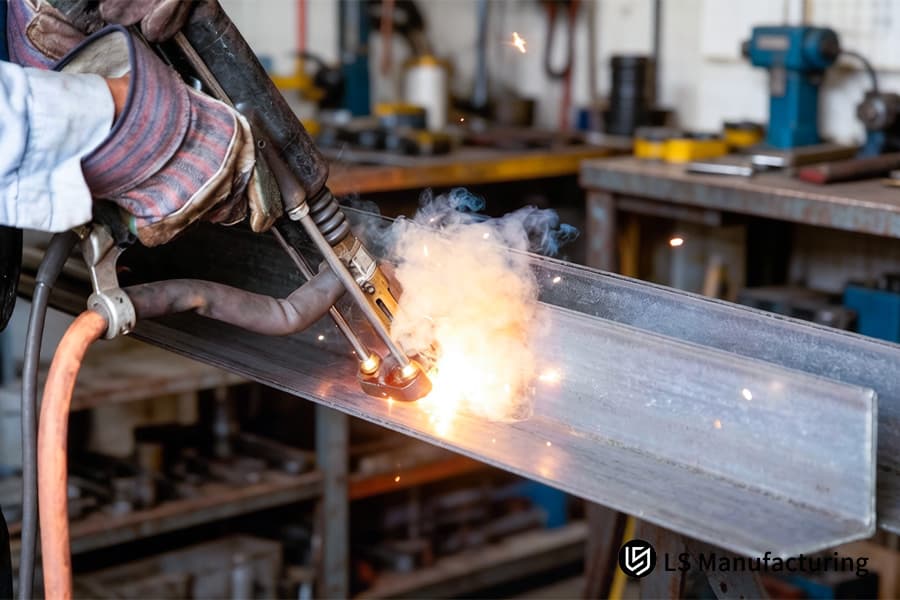
Figure 3: Fabricating a carbon steel I beam for structural support in building or industrial platform frameworks.
How Do Custom Welding For OEM Parts Leverage Robotic Automation For Million Scale Production Consistency?
The number one concern regarding the process of custom welding for OEM parts in millions of units includes limiting the influence of the human factor in welds to obtain identical results. This challenge can be addressed through robotics combined with real-time sensing and feedback loops since a craftsmanship task becomes automated data-driven activity. This work highlights the integration of systems required to achieve consistent results on an industrial scale:
Real-Time Tolerance Compensation via Adaptive Robotic Control
Our solution takes into consideration the discrepancies among the individual pieces by adopting 6-axis robots fitted with a laser seam tracker. We can make dynamic adjustments depending on any variance in cutting/bending that may happen along the ±0.5mm range. In this way, we guarantee the bead is positioned right at all times. It solves the fundamental problem in the automated welding processes prior to the arc being formed.
Closed-Loop Quality Control Through Data Monitoring
Statistical Process Control will be executed by the use of sensors in every cell to measure the important process parameters (wire feed speed, voltage, travel speed), for every single weld completed. This data can then be put onto dashboards for real-time feedback on any anomaly that may occur and an instant solution applied to remedy the problem. This system verifies our OEM metal welding services, locking key outputs like bead width within a ±0.2mm range across thousands of parts, ensuring measurable robotic welding consistency.
Standardized Execution via Validated Procedure Libraries
The welding procedure specific to each part is planned and perfected offline, subsequently stored within the robot’s computer, preventing any procedural changes from occurring. Consequently, there exists a digital history of all parts, ensuring that the production-scale custom welding with exactly the same amount of heat as the very first, maintaining a high degree of automated consistency.
It is our expertise in marrying adaptive robotics technology with live data feedback for self-correction in real-time that makes us unique. This is the answer to the key issue facing the OEM on how to mass produce high-volume custom welding without any deviation from the quality from one to the millionth unit.
Why Choose Specialized Sheet Metal Fabrication Services To Optimize Your Welding Cost Structure?
Cost reduction in welding doesn’t occur while performing the actual welding; rather, it begins during the fabrication process. The greatest savings can be realized during the preparation of parts that would need welding. The following is a presentation on how such an integrated sheet metal fabrication services can accomplish this and thus reduce cost structure:
Precision Blanking for Optimal Fit-Up
- Laser-Cut Preparation: Our high power fiber lasers are used for cutting and preparing blanks including V-grooves. This leads to precise cutting of the edges.
- Benefit: Virtually zero gap in fitting up of parts to be assembled, which is what is needed for effective metal welding process. It prevents the use of filler metals and saves a lot of time.
Design-Led Weld Minimization
- Proactive DFM Analysis: Our engineering team reviews designs to make parts simple wherever possible. We deliberately choose to bend pieces in such a way that we end up creating complex shapes from one single piece.
- Benefit: This will minimize the weld seam length by more than 15% on average in standard products. Fewer welds result in fewer expenses associated with materials, man-hours, and surface treatment after welding, which will directly impacting the project's cost reduction goals.
Process Integration to Streamline Workflow
- Unified Digital Workflow: All manufacturing activities, such as CAD design, nesting, and programming, take place in a single digital chain work flow that ensures absolute compatibility among all specifications required for professional metal welding fabrication.
- Benefit: The seamless transition from manufacturing to welding without any alignment errors or setup time. This process integration is critical to offering our customers an integrated metal welding production process.
This method shows that there exists the possibility of designing the maximum degree of saving into the system right from the beginning. As the efficiency in welding operations is mainly attributed to precision machining, the problem of unpredictable and high joining costs is avoided. Therefore, it may be concluded that we provide not only an ordinary shop service but value-engineered metal welding services, which through detailed analysis of the whole manufacturing process yield economically viable solutions.
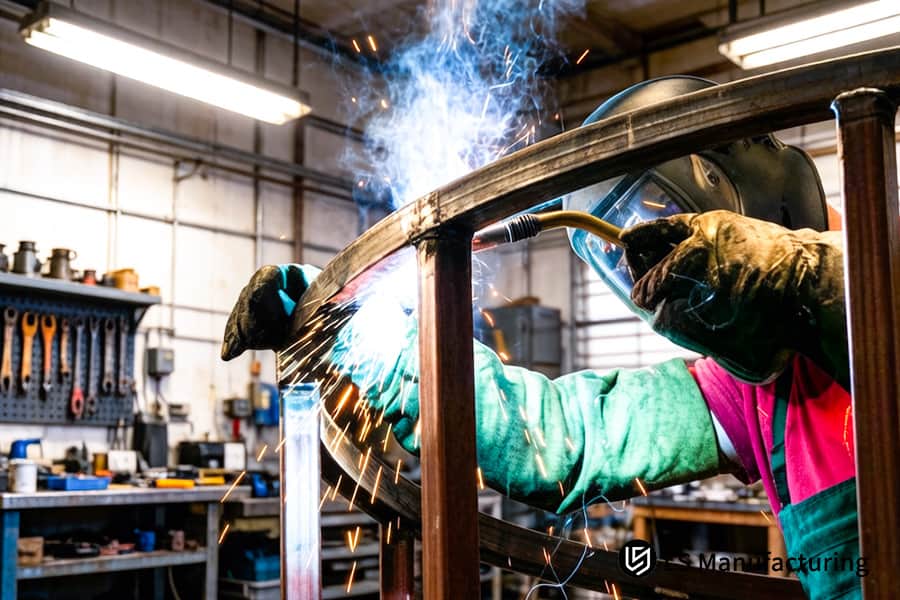
Figure 4: Forming a curved aluminum frame for automotive chassis components with custom welding for OEM parts.
Case Study: LS Manufacturing Medical Aerospace Titanium Heat Exchanger Precision Welding Project
In this case study, we show how LS Manufacturing was able to solve the problem of vacuum leakage due to inadequate welding in an aerospace-grade titanium heat exchanger. Our intervention involved creating an inert atmosphere with precise temperature control, resulting in higher yields and increased productivity. It is an example of how we provide custom metal welding services for challenging conditions:
Client Challenge
This supplier of aerospace components had recurring issues with leaks in thin-wall Gr.2 titanium heat exchanger cores. In the previous setup, the material was subject to oxidation and porosity due to exposure to air during welding. This led to unreliable leak rate results that did not meet the 10^-9 mbar criterion, achieving only a 65% success rate in the first pass.
LS Manufacturing Solution
The entire process of inert precision metal welding services was developed. Welding operations were performed under an argon glove box environment, and a pulse TIG welding method was used to ensure low heat input. What made our technology unique was that we included a post-weld vacuum thermal aging process to alleviate any residual stresses. Our 100% helium mass spectrometry weld inspection ensured certified aerospace welding quality.
Results and Value
As a result of implementation of the solution proposed, 100% zero-leak rate was obtained. This ensured an increase in the first-pass yield to 99.8%. Such high-integrity metal welding helped provide the customer with reliable components, thus allowing them to save valuable assembly time, up to three days per unit. Successful delivery of such high-quality components led to a 3-year exclusivity contract for LS Manufacturing.
The above project is an example of our ability to deliver root cause failure solutions through process innovations and not merely welding solutions. We have achieved mission-critical metal welding solutions by leveraging atmospheric controls, unique thermal controls, and 100% quantification. Our technology and process innovations define our competitiveness and make us capable of handling the most complex fabrication processes.
Achieve 99.8% yield on your mission-critical welds. Let's solve your toughest fabrication challenge.

What Factors Should Procurement Experts Verify When Auditing Custom Metal Welding Services Manufacturers?
Choosing a partner to supply custom metal welding services goes beyond looking into equipment availability; it involves auditing a system that takes the initiative to mitigate risks through engineering. It involves auditing for systems that can effectively provide assurance in regards to material integrity, process reliability, and product traceability. The following are some key considerations that the procurement professionals must consider when looking for a supplier that ensures high quality welding:
Material Integrity and Certification Verification
Conduct an audit of the process of verifying authenticity of the raw material through MTR and positive material identification using spectroscopic instruments. This will resolve the issue of alloy substitution or contamination during manufacturing. An experienced vendor should be able to provide end-to-end tracking from raw materials to the completed component to ensure the correct basis for further certified metal welding procedures.
Real-Time Process Control and Oversight
Determine the availability of live SPC data from the welding floor. Ensure that there are internal CWI qualified welders doing audits based on AWS/ISO standards and not just end inspections. This will solve the issue of passive quality control because it ensures that all processes involved in metal welding services are being proactively controlled, making it possible for reliable metal welding to be achieved.
Digital Traceability and Systemic Transparency
Review the digital thread running through the job travelers, welding parameters, and inspection results within your ERP or MES system. A proper supplier evaluation will ensure that you can trace the entire manufacturing history for any serialized part. This will solve the issue of manufacturing opacity by giving you the foundation for any root cause analysis necessary to prove precision metal welding.
A comprehensive audit should consider interrelated systems: material integrity testing, live process control, and traceable digital monitoring systems that constitute a complete and verifiable risk mitigation system. We offer this clear platform, helping you confirm that your chosen partner is capable of delivering consistent results. This makes us your partner for mitigating risk within the supply chain by not just supplying pieces, but managing and tracing a engineering-driven metal welding process.
FAQs
1. Why does LS Manufacturing require a 3D model for custom metal welding services quotes?
We leverage 3D models to apply computer-aided engineering programs to simulate thermal deformations, allowing us to give you accurate tolerance predictions and efficient design for manufacturing guidance.
2. How do you ensure zero-defect quality for high-volume OEM metal welding services?
These processes are strictly enforced, and we have inline vision inspection systems that enable us to conduct 100% visual inspections of our weld seams, guaranteeing that all parts produced adhere to IATF 16949 requirements.
3. Which materials can LS Manufacturing handle with its professional metal welding fabrication services?
We have the ability to process stainless steel, aluminum alloys, titanium alloys, and other high-temperature alloys within the range of 0.5mm to 20mm. In addition, we have our own material spectrometer systems capable of tracing 100% of our materials.
4. What inspection reports will I receive with my precision metal welding services order?
With each order you place, you will be able to receive the following reports: Material Test Report (MTR), First Article Inspection (FAI) Dimensional Report, and Penetrant Test (PT) or X-ray Testing (RT) Report.
5. Can you provide sheet metal fabrication services for small-batch OEM prototypes?
Certainly, LS Manufacturing operates an on-demand rapid response team that delivers precise customized prototyping in small quantities (1-10 pieces) with a turnaround time of five business days.
6. How does your custom welding process for OEM parts address the challenge of material springback?
We use Computerized Numerical Control (CNC) bending aids along with our unique hydraulic levelers to minimize the material spring back and control the tolerances of the final geometries at a maximum of ±0.2mm.
7. Why choose LS Manufacturing as my strategic partner for OEM metal welding?
As opposed to normal fabrication facilities, apart from manufacturing, we take advantage of our digital ERP software to give you real-time dashboards showing the progress and trends in production and quality, respectively, thus removing all uncertainties from your supply chain.
8. How can I request a cost-effective quote for metal welding for OEM projects?
Upload your technical drawings and indicate any important inspection criteria (e.g., airtightness needs); our senior engineers will generate a instant quote—including DFM advice on how to save costs—with the next 24 hours.
Summary
Welding is the process of carving the skeletal frame of a product. In LS Manufacturing, we infuse materials science knowledge into every step of our metal welding services, producing items with tolerances of ±0.1mm. Using DFM, NDT, and a transparent closed-loop database, we establish a no-risk, highly profitable supply chain framework. Every microscopic weld we create ensures that your devices will be rock solid under the most severe circumstances.
Willing to imbue your parts with zero defect metal welding? Don’t let any variance in quality hurt your company reputation or finances. As part of our special offer, we provide a free Welding Process Feasibility Audit done by one of our experienced engineers on your new project. All you need is to send us your STEP/PDF designs, and in less than 24 hours, you will get your offer with an HAZ study and cost reduction plan.
Stop worrying about welding defects. Start your project with a free, expert DFM analysis.
📞Tel: +86 185 6675 9667
📧Email: info@lsrpf.com
🌐Website: https://lsrpf.com/
Disclaimer
The contents of this page are for informational purposes only. LS Manufacturing services There are no representations or warranties, express or implied, as to the accuracy, completeness or validity of the information. It should not be inferred that a third-party supplier or manufacturer will provide performance parameters, geometric tolerances, specific design characteristics, material quality and type or workmanship through the LS Manufacturing network. It's the buyer's responsibility. Require parts quotation Identify specific requirements for these sections.Please contact us for more information.
LS Manufacturing Team
LS Manufacturing is an industry-leading company. Focus on custom manufacturing solutions. We have over 20 years of experience with over 5,000 customers, and we focus on high precision CNC machining, Sheet metal manufacturing, 3D printing, Injection molding. Metal stamping,and other one-stop manufacturing services.
Our factory is equipped with over 100 state-of-the-art 5-axis machining centers, ISO 9001:2015 certified. We provide fast, efficient and high-quality manufacturing solutions to customers in more than 150 countries around the world. Whether it is small volume production or large-scale customization, we can meet your needs with the fastest delivery within 24 hours. choose LS Manufacturing. This means selection efficiency, quality and professionalism.
To learn more, visit our website:www.lsrpf.com.