English



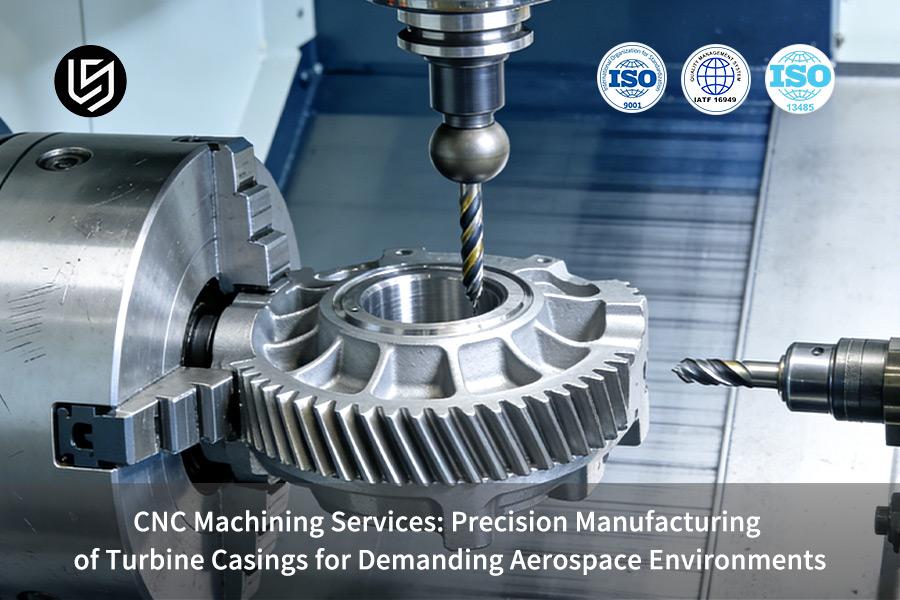
CNC machining services address the issue of environmental instability in cases by taking it beyond dimensionality to solve thermodynamic failure modes. We achieve this by integrating performance into our manufacturing process through coupled simulations that predict service deformation. We then apply compensation to toolpaths for thermal distortion. The machined part, when cold, has precise geometry that is maintained when hot, thereby avoiding costly cycles of testing, failure, and re-patching.
The CNC machining services ensure functional results, such as controlling total creep to less than 0.08mm at 650°C, as well as ensuring adhesion is greater than 70MPa through unification with coatings and processes. We achieve this by integrating adaptability into our manufactured part, thereby ensuring a case that maintains stable tip clearance through all flight envelopes.
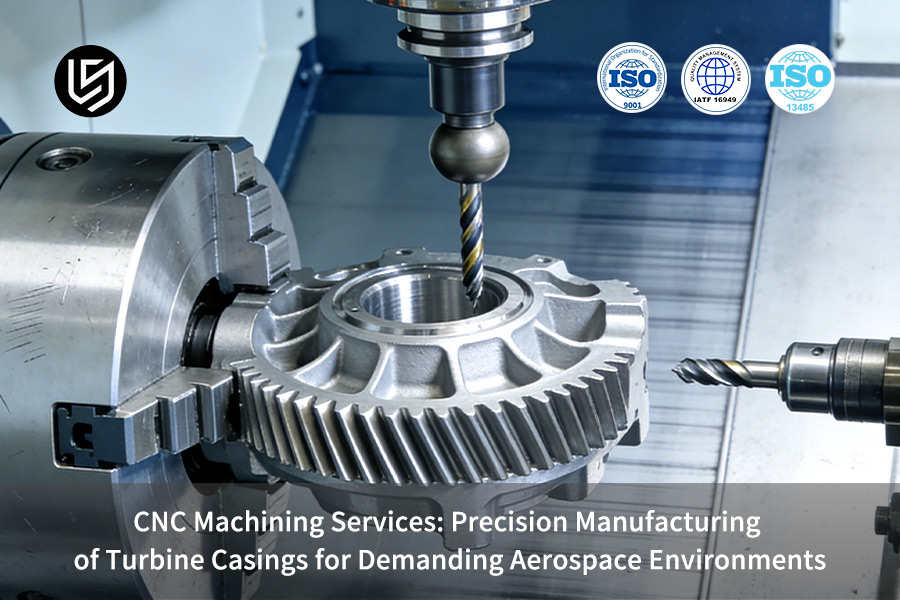
CNC Machining For Turbine Casings: Critical Guidelines
| Technical Challenge | Precision Engineering Solution |
| Thermal Growth & Distortion Management | We need to maintain precise clearances to rotating pieces despite massive thermal gradients, and we use advanced alloys and machining techniques to reduce stresses. |
| Complex, Asymmetric Geometries | We deal with complex, non-round casings with several mounting flanges and contours inside, requiring complex 5-axis machining and robust fixturing to maintain accuracy. |
| Ablative & Erosion-Resistant Coatings | We need to prepare surfaces to accept specialized thermal barrier coatings, requiring specific surface roughness to optimize coating adhesion. |
| Leak-Proof Assembly Interface Machining | We need to maintain exceptional flatness and perpendicularity of surfaces to ensure perfect sealing of the interfaces. |
| Our Holistic Manufacturing Strategy | We utilize large-format 5-axis CNC machining, thermal distortion control, and on-machine probing to accurately control distortion and maintain tight relationships between bores and flanges. |
| Integrated Quality Verification | We verify our complex internal geometry and all interfaces to the model by utilizing 3D scanning and CMM to inspect all surfaces. |
| Result: Controlled Running Clearances | Delivers casings with precise clearance to blades and vanes under all operating conditions, ensuring maximum efficiency and safety. |
| Result: Structural Integrity Under Load | Ensures casings offer a strong and reliable structure to contain thermal, pressure, and mechanical loads during the life of the engine. |
We overcome the unique challenge of machining complex and large turbine casings with precise internal geometry, despite the extreme thermal and mechanical stresses involved. The process provides casings with precise dimensions, perfect sealing surfaces, and coating surfaces, ensuring maximum efficiency, safety, and reliability in the most demanding aerospace CNC machining applications.
Why Trust This Guide? Practical Experience From LS Manufacturing Experts
There are countless online articles that cover CNC theory, but our expertise is based on the hard reality of day-to-day work. We live with the true problem every day: taking difficult-to-machine superalloys and turning them into engine casings that must withstand extreme service temperature cycles. We know this stuff because it is essential to reliability, not just because it sounds good on paper. We are a company that seeks to provide knowledge that is expressed in terms of problems already solved, not ideals.
At our company, our business is preemptive engineering. We use NIST Materials Data to predict high-temperature behavior, so we can actually "program" intelligent compensations for thermal distortion directly into the CNC toolpaths. This effectively makes a dimensionally perfect part at room temperature into a geometically stable part at operating temperature, directly addressing the underlying cause of creep and spallation in service.
Our decade-long provision of flight-critical parts has developed and refined a process that is not only robust and reliable but also validated against the most stringent industry standards, such as the National Association for Surface Finishing (NASF), and is guaranteed to provide specific results, such as controlling creep at < 0.08mm. By working with us, you are essentially plugging in this tried and tested, performance-imbued manufacturing solution that eliminates costly and time-consuming R&D cycles.
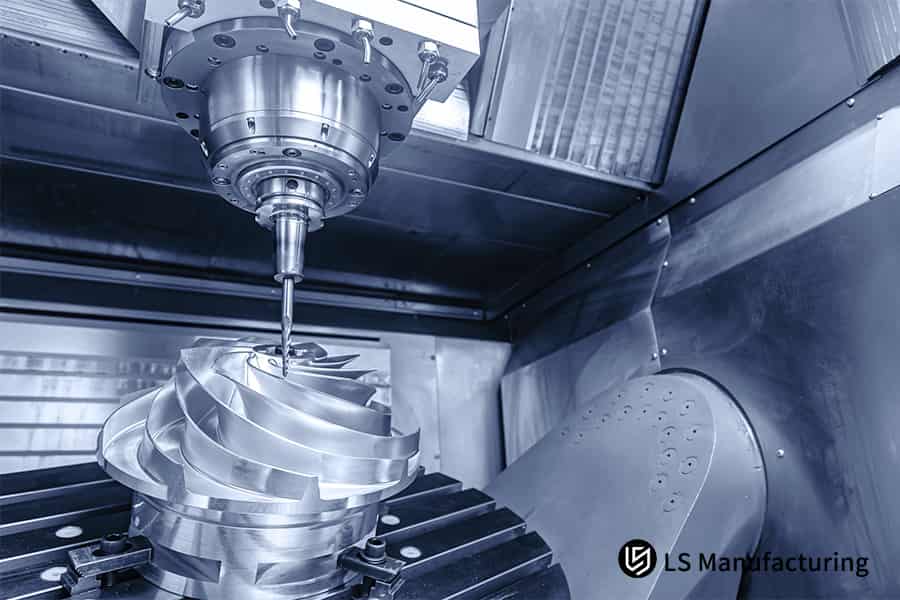
Figure 1: Performing CNC machining on a high-tolerance metal alloy spiral turbine casing for aerospace propulsion systems.
What Are The Primary Physical Mechanisms Leading To The Functional Failure Of Turbine Casings In Harsh Environments?
Functional failure is an intrinsic consequence of this synergy. The failure modes under extreme cyclic loading tend to converge on three main, but closely linked, failure mechanisms of turbine casings: geometric instability due to creep, spallation caused by thermomechanical fatigue, and resonant vibration. To tackle this, we change our approach from a reactive, passive design philosophy to an active compensation philosophy that is inherently part of the manufacturing process:
Counteracting Creep through Predictive Machining
To counteract creep and TBC spallation, we pre-distort the part. We use viscoplastic material models to predict the time-dependent deformation behavior of the part under its specific loading conditions. The pre-calculated creep deformation is then used as compensation input in the CNC machining toolpath. The part is then machined in a way that, when subjected to service loading, it will deform into its desired shape with minimal tip clearance.
Mitigating Coating Spallation with Interface Engineering
Spallation is also addressed at the interface. The surface topography and stress state of the substrate are accurately controlled through CNC machining techniques, thus ensuring an optimal substrate for the coating. This is achieved alongside a smooth transition in coefficient of thermal expansion (CTE) for the bond coat interface. Our parameters are referenced against international standards such as those set by NASF, thus ensuring environmental durability for the turbine casing for harsh environments.
Damping Vibration with Strategic Stiffening
We control harmful resonances through integral stiffness by integrating stiffness in those areas that need it most. Through modal analysis and forced response analysis, we obtain essential information on critical modes of vibration. We then use this information to program non-uniform wall thickness patterns as well as machined integral stiffening ribs or mass-additive features through a multi-axis CNC machining operation.
Implementing a Holistic Thermo-Mechanical Finish
The final part is optimized with respect to combined loading conditions, with post-processing operations such as shot peening or low plasticity burnishing performed with precision, utilizing simulation maps to accurately target the regions that are under maximum stress, with the objective of developing a compressive layer that is just in the right places to slow the growth of cracks due to thermomechanical fatigue, thus concluding the entire cycle of function-driven manufacturing.
Our methodology utilizes advanced simulation, predictive CNC machining, and certified material science to pre-solve field failure modes, with the key competitive differentiator being that we do not just manufacture a part, we certify the outcome with respect to the most demanding failure mechanisms of turbine casings.

How Can Creep Resistance And Thermal Fatigue In Casings Be Optimized Through Design?
It is only through true resilience that is engineered by co-optimizing both material microstructure and part geometry as an integrated defense against time-dependent deformation. The methodology for custom turbine casing solutions deals with failure modes at their roots through a holistic and integrated approach that is both physical and digital. The approach is as follows:
Material Gene: Alloy and Microstructure Engineering
- Precision Selection: The selection of material selection for high temperatures is based on the thermal and mechanical properties of materials, with alloy selection based on the stability of gamma prime phases.
- Microstructural Control: Specific regimes of heat treatment are developed for obtaining an exact microstructure that maximizes creep resistance.
- Substrate Engineering: The final CNC machining parameters are defined for obtaining substrate characteristics that maximize TBC adhesion and durability.
Structural Skeleton: Topology and Feature Optimization
- Load-Path Design: FEA-based topology optimization is used for designing the internal webbing, which offers structural optimization for creep resistance.
- Stress Concentration Management: The critical design features, i.e., flange transition, are optimized using the shape smoothing technique, thereby avoiding fatigue initiation.
- Integrated Manufacturing: The optimized complex internal structure is machined as a monolithic part using 5-axis milling.
System Validation: From Simulation to Certified Performance
- Process Simulation: Machining and heat treatment processes are simulated for predicting and controlling the final residual stress state, an essential performance criterion.
- Digital Twin Correlation: Individual component FEA models are updated with rig test results, creating a performance predictor.
- Performance Lock-in: The certified process guarantees that all precision CNC machining casings have predicted life for fatigue and creep.
In this document, we have proposed an engineering system that converts empirical risk into performance predictability. Our competitive differentiation lies in the ability to demonstrate an integrated approach to computer-aided design, process-related machining, and empirical validation of performance, resulting in a thermo-mechanical longevity guarantee for the proposed product.
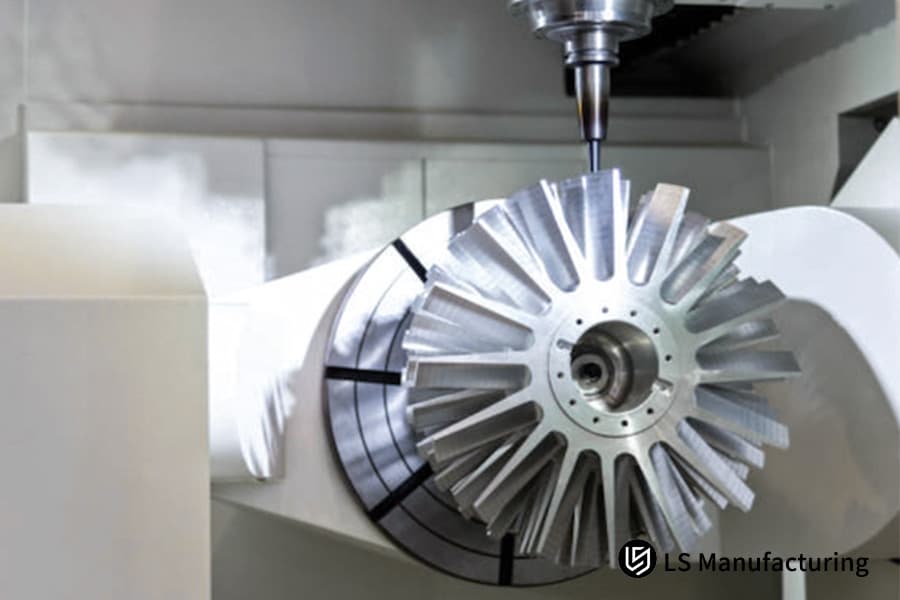
Figure 2: Machining a high-tolerance alloy turbine casing for aerospace propulsion systems in harsh environments.
How To Control Cutting Deformation And Residual Stress During The Machining Of Large-Scale Thin-Walled Casings?
The ultimate geometry of the large, thin-walled shell is either won or lost in the battle against the inherent stresses of the material itself. Uncontrolled machining distortion and stress cause unwanted "spring-back" in the finished part, leading to the scrapping of what was otherwise a perfect CNC machining operation. Our methodology for aerospace turbine casing CNC machining addresses these forces through the application of predictive simulation with a staged symmetric machining process, thereby controlling these forces before they even occur.
| Phase | Strategy | Key Action / Control Parameter | Target Outcome |
| Strategic Material Removal | Multi-Stage, Symmetric Machining | Implementing a “rough → stress relieve → semi-finish → stabilize → finish” sequence with balanced symmetric CNC machining passes. | To progressively minimize residual stress, ensuring a uniform, minimal (<0.5mm) final stock allowance. |
| Adaptive Workholding & Simulation | Deformation Compensation | Using FEA to predict clamping & cutting forces, then programming compensatory toolpaths; employing flexible, conformal fixture supports. | To negate “fixture-induced distortion” and correct for predicted elastic deformation during adaptive CNC machining. |
| Low-Stress Cutting Process | Source Control of Stress | Implementing high speed milling parameters with low depth of cut, high spindle speed, combined with the application of High Pressure Coolant (HPC) during the machining of thin walls. | To minimize the input of thermal and mechanical stress, the major cause of machining-induced stress. |
| Final Stabilization | Residual Stress Management | Implementing post-machining operations, including cryogenic treatment, vibratory stress relieving, according to the properties of the material used. | To lock the final geometry, preventing time-related relaxation that could cause failure of the machining distortion control. |
This process offers a definitive solution to the issue of dimensional instability, converting a key risk into a controlled variable. This process specifically solves the costly process of machining, unclamping, and learning out-of-tolerance distortion. The level of technical expertise we offer is validated by our ability to successfully incorporate adaptive machining strategies and residual stress management, ensuring first-pass success in the most demanding aerospace turbine casing CNC machining.
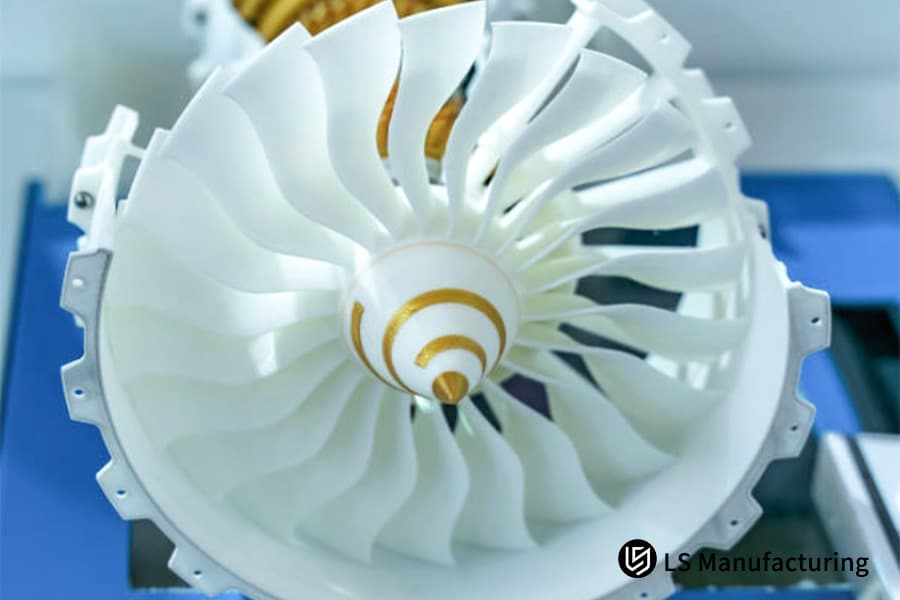
Figure 3: Manufacturing precision aerospace-grade alloy turbine casing for harsh environments jet engine systems.
How To Achieve High-Precision Integrated Manufacturing Of Thermal Barrier Coatings And Film Cooling Holes?
The effectiveness of a turbine casing’s thermal protection system depends on the precision of the manufacturing process, where coating adhesion and precision of the holes for cooling purposes are correlated. This calls for an interdisciplinary approach that goes beyond individual processes and incorporates an understanding of how these processes work together for the TBC integration machining and film cooling hole drilling processes. This is effectively done through an integrated CNC machining process chain that includes:
Substrate Surface Activation for Coating Adhesion
We control the bond strength at the substrate level. Prior to the application of the MCrAlY bond coat, the substrate surface is treated with a carefully controlled surface activation process, such as grit blasting with parameters tailored to the specific substrate material. This ensures that the substrate surface has the optimal surface roughness, typically in the range of Ra 3 to 6 μm, which is stringently measured per batch. This is the most important step in the durability of the coating, especially in precision turbine casing manufacturing.
Precision Hole Drilling and Geometry Control
The cooling efficiency depends on the precision of the holes drilled. In this regard, we utilize 5-axis laser or EDM hole drilling to create hundreds of CNC machining precision holes with precise positioning and diametric tolerances of ±0.05mm. The holes are then carefully deburred and edge-rounded using specialized micro-machining techniques, carefully controlling the flow coefficient and the sensitive TBC layer that is applied over and around these precision holes.
Post-Coating Dimensional Machining and Finishing
Once the ceramic topcoat process is done, we proceed to the high-risk finish machining process of the TBC. In this process, we use precise grinding or honing to remove material from the non-critical coated regions. This process of CNC machining for aerospace casings refinishes the coating buildup to the precise dimensions of the assembled casings.
Integrated Metrology and Process Verification
Each process step is fixed in place with verification. This includes checks such as dimensional checks, borescope examination of the inside of the holes, as well as adhesion tests (e.g., pull tests), all of which are done at specified process gates. This data-driven approach ensures the entire TBC and hole system meets the performance specification before we let the component go.
This document will describe the closed-loop process of precision engineering that is required to function correctly with the thermal barrier systems we offer. In this case, our competitive advantage will be our success in executing such high-level CNC machining processes, such as precision hole drilling and coating machining, under one chain of custody. This solves the key issue of integration with our casings, our cooling systems, and our coatings as one integrated, whole product.
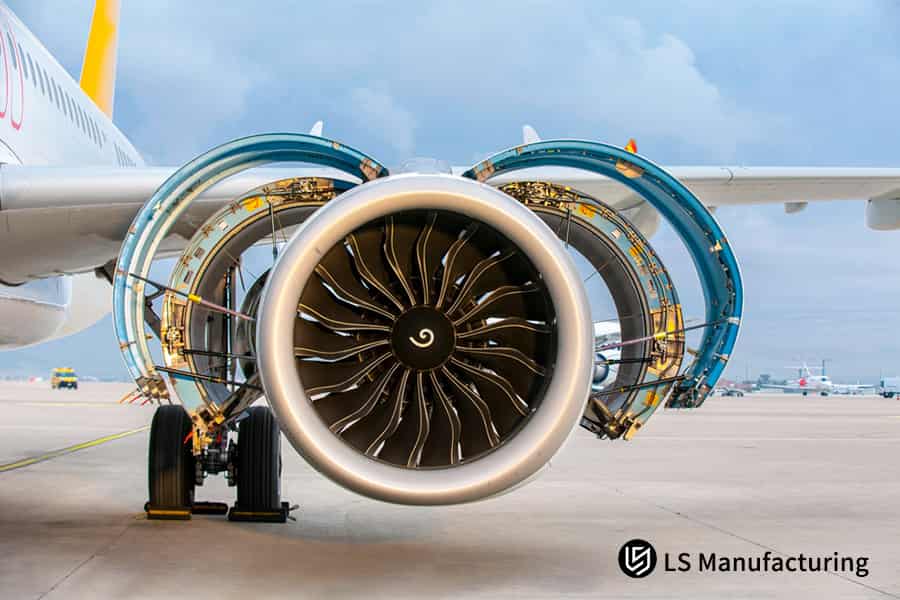
Figure 4: Assembling precision-machined high-temperature alloy turbine casings for aircraft propulsion systems.
LS Manufacturing Aerospace — Active Clearance Control Coating Project For A Titanium Alloy Engine Casing
The case study illustrates the manner in which LS Manufacturing, was able to address the critical active clearance control integration issue for the titanium intermediate casing of the particular engine type, as well as the problems that had previously been associated with the integration of the active clearance control system with the former supplier, such as the distortion and cracking of the thermal-sprayed coating that had been applied in the precision-integrated manufacturing of the CNC machining sensor mounts and coatings.
Client Challenge
The former supplier had been unable to address the post-machining distortions on the large Ti-6Al-4V casing, which had caused misalignment of the sensor pad, exceeding the tolerance of ±0.05mm. Additionally, the coating had failed due to assembly stresses. This reliability problem had made the active clearance system unusable, thus stalling the engine tests and potentially delaying the client's program—a significant LS Manufacturing aerospace case.
LS Manufacturing Solution
We started by using our integrated engineering approach for addressing the problem. This was done through performing a "machined assembled" simulation for determining bolt-up deformation through a complete FEA simulation. This information was used for CNC machining, where adjustments were made for pre-correcting distortion. The High Velocity Oxygen Fuel (HVOF) coating was used for creating an excellent bond with minimal thermal input.
Results and Value
The final product, namely the titanium intermediate casing, was delivered with all the positional tolerances being met. The bond strength of the coating was also 30% more than what was specified. The product also passed the engine test, thus creating a functional clearance system for efficiency during cruising. This ensured that LS Manufacturing was used for all of the client’s most critical aerospace products, including casings, thus turning what could have been a bottleneck into a performance advantage.
The above CNC machining project is an example of our fundamental capability of precision assured. This includes using unique processes and predictive machining for effectively addressing critical integration failures. This allows us to offer performance-guaranteed solutions for clients where traditional solutions cannot be used.
Transform your design into flight-ready precision—choose LS Manufacturing for certified aerospace CNC solutions.

How Is The Long-Term Performance And Reliability Of The Casing Verified Under Simulated Service Conditions?
In order to predict the reliability of the component during its in-service life, it is essential that the results of this basic dimensional verification be extended by simulating actual operating extremes. The critical environmental test for casings protocol outlined herein deals with the transition from a well-made component, as ensured by high-precision aerospace machining, to a well-performing CNC machining components.
| Test Category | Method & Parameters | Key Measured Outcomes & Success Criteria |
| Thermal Cycle & Shock Testing | Subjecting the casing or witness coupons to repeated cycles of heating, e.g., 800°C, and subsequent coolings in a controlled furnace. | Quantification of dimensional drift, assessment of TBC spallation, metallographic examination of micro-crack initiation, etc., which is essential for the thermal cycle validation for this component. |
| Creep and Stress-Rupture Testing | Performing tests on the material batch of the component using constant high temperature and load, as per the ASTM Standard E139. | Creep strain curve generation and rupture life calculation to verify engineering life calculations carried out during the design phase of the project. |
| Vibration and Modal Analysis | The application of Experimental Modal Analysis on the completed casing in order to determine the natural frequencies, damping ratios, and mode shapes of the completed part. | The correlation of the experimentally determined data with the results obtained in the FEA analysis in order to ensure that the dynamically tuned part has a sufficiently separated frequency response in comparison to the engine operational ranges. |
This regimen ensures the client's major concern of field failure, as it offers certified simulated service performance data. The empirical evidence of the performance of the part in actual operating conditions with combined loading is the final step in the performance-assured manufacturing regimen. This regimen offers the client the performance envelope of the part, which is crucial for mission-critical CNC machining applications.
How To Evaluate A Supplier's Full-Process Capability For Aerospace Casings?
In selecting a supplier that is critical in providing a casing, it is important that one moves beyond the capabilities of a machine shop and examines the supplier's ability in providing an integrated system engineering and special process. This is because, in order for a supplier to be a true partner, it is important that one is able to demonstrate their predictive engineering, certified production, and experience. This document is going to demonstrate a detailed framework in assessing a supplier that is able to distinguish between a "parts" manufacturer and a "performance" solution provider in the aerospace component manufacturing:
Predictive Engineering and Process Simulation
- Upfront Simulation Capability: We engage in and document the simulation of the entire manufacturing process and in-service performance using finite element analysis prior to any cutting and manufacturing operation beginning on the part.
- Data Correlation Discipline: We provide comparative data reports that are provided to clients on predictions versus actual measured results obtained from first-article inspection and testing.
Certified Special Process and Statistical Control
- Nadcap Accreditation: As an added bonus, our primary special processes, including heat treatment, non-destructive test, and coatings, are Nadcap special processes accredited, ensuring that industry best practices are met.
- Process Performance Metrics: As an additional tool, we use Statistical Process Control (SPC) methodology, which we can clearly show proves that Cpk > 1.33, thus proving the precision CNC machining capability through statistical evidence.
Demonstrated Experience with Complex Geometries
- Project Portfolio Review: We are able to provide sanitized project information regarding similar large, thin-walled casings, including the challenges and solutions, as well as the final metrology and performance data.
- Integrated Technical Proposal: As an integrated approach to the supplier capability assessment for large casings, including precision CNC machining of large casings, we include, as a key differentiator, a risk mitigation plan that is derived from lessons learned, as opposed to the standard process flowchart approach.
Integrated Production and Verification Flow
- Digital Thread Integration: Our integrated CNC machining and finishing process is done with the aid of a digital thread, which links the simulated compensation model with the CNC machining and inspection program.
- Holistic Validation: Our final delivery is not just the machined part, but a comprehensive data package that is gathered from the entire set of predictive machining simulations, as well as the final validation tests performed.
This framework represents the decisive method by which an aerospace component manufacturing partner is selected. We help our clients eliminate risk in their supply chains by openly demonstrating our system of predictive engineering, Nadcap special processes, and data-driven execution. Our position in the market is differentiated by this comprehensive, evidence-ready solution, ensuring we provide performance solutions, not just machined parts.
Why Is LS Manufacturing The Indispensable Choice In The Field Of Aerospace Propulsion, Where Absolute Safety And Performance Are Paramount?
Safety and performance are not up for negotiation in the world of aerospace propulsion, given the extreme environments that the internal components are expected to perform in. It is not a question of whether we are a parts supplier or a performance and reliability partner that is engineered to share the burden of the structural integrity of your engine, but the value of our CNC machining services aerospace is represented by a closed-loop, system engineering approach that relates the execution of our manufacturing commands directly to the flight envelopes:
From Flight Envelope to Toolpath
We start with the performance requirement of the efficiency, surge margin, and lifespan of your engine, and work down to the geometric and material tolerance of the casing. This performance requirement is the basis for our entire predictive manufacturing process. It is the way in which we ensure that the part we make is for the ultimate purpose of the print, not the print itself.
Physics-Driven Process for Guaranteed Outcomes
We use our physics simulation tool to predict the behavior of the casing in actual working conditions. This prediction data we use is derived from the simulation tool and is used in our precision CNC machining process. This allows us to move from a process of replication to one of performance engineering.
Validation Under Simulated Service Conditions
We are not satisfied with simply providing you with CMM reports of our process. We validate our parts under simulated service conditions to provide you with assurance of the high-temperature geometric stability of our parts, as well as the durability and batch consistency of our coatings. This removes the guesswork in your integration and test phase.
Integrated Technical Partnership
We are an extension of your engineering team. We provide you with complete data sets that document the performance pedigree of the part. We are transparent and co-responsible. All decisions, from material selection to finishing, are optimized for your success.
Why choose LS Manufacturing? It is quite simple: we have developed a system that translates the performance requirements of your system directly into the performance of the individual parts. This is the fundamental challenge we have addressed: closing the gap between the "perfect" room temperature part and the reliable performance of the hot end part. What differentiates us in the marketplace is that we have developed a methodology that guarantees performance, and we are your strategic performance and reliability partner.
FAQs
1. How long does it take to process a typical aero-engine turbine casing?
From raw forging or casting to final delivery—including all machining, heat treatment, coating, and inspection processes—the typical lead time for a moderately complex nickel-based alloy casing is 12 to 20 weeks. The specific timeline depends on the component's size, material, coating complexity, and customer-specific validation requirements.
2. What level of dimensional accuracy and geometric tolerance can you typically guarantee for large-scale casings?
We consistently guarantee a tolerance of ±0.1 mm on the diameter of the casing when the diameter is in the meter range, a position tolerance of ±0.05 mm, flatness of 0.03 mm/300 mm on the mounting face, and a thickness tolerance of ±0.2 mm on thin walls of the casing, etc. Even tighter tolerances are possible with the application of special processes.
3. How do you ensure the dimensional stability and coating longevity of the casing under high-temperature operating conditions?
We predict high-temperature deformation at the design stage by using the techniques of 'in-service condition simulation' and 'manufacturing compensation,' and apply pre-compensation during the machining process. The long life of the coatings is guaranteed by the substrate surface preparation techniques employed and the tests conducted on the coatings by subjecting them to thermal cycling tests. We can also provide the customers with test data regarding the bond strength of the coatings.
4. Will you identify and flag potential manufacturing difficulties or thermal performance risks within my casing design?
Yes, absolutely. We can provide you with a complimentary service known as 'Design for Manufacturability and Environmental Suitability' (DFM/A). Within one week of receiving your technical drawings, we can provide you with a comprehensive DFM/A report and optimization recommendations regarding the following potential issues: deformation risks, uneven heat dissipation, structures liable to spallation, and areas of high stress concentrations at assembly interfaces.
5. Do you offer a comprehensive, modular delivery service—ranging from casing machining and coating to the assembly of sub-components?
Yes, we do. As a modular supplier, we can provide the units fully assembled with the casing, coating, and mounting hardware as required and can also provide the mounting hardware for the sensors to make the final assembly of the aero-engine more efficient.
6. What is the Minimum Order Quantity (MOQ)? Do you support the production of single-unit prototypes?
We support the production of single-unit prototypes or small batch orders of the product. As the product is related to the casing of the aero-engine, which is a high-value item, the MOQ is just one piece.
7. Do you support specialized testing methods, such as industrial CT scanning or fluorescent penetrant inspection?
Absolutely, as we have access to a tightly integrated network of third-party test houses that can arrange industrial CT scanning to inspect the complex internal structures of the product, as well as other forms of non-destructive testing such as FPI and ultrasonic testing to inspect the integrity of the materials and welds, with the test reports being fully compliant with the relevant standards.
8. How do I initiate an evaluation for a new aero-engine casing project?
Please provide us with your preliminary performance requirements, operating conditions (such as temperature and pressure), preferred materials, and any existing design information. You can also use our online portal to get an instant quote based on your initial specifications.Our aerospace structural engineers will begin a preliminary feasibility analysis within five business days and set up a confidential technical meeting to discuss possible implementation strategies.
Summary
In the pursuit of the best aero-engines ever, the turbine casing has progressed from being merely a load-bearing shell to an intelligent system that drives efficiency and safety. Precision manufacturing in harsh environments is an engineering discipline that includes the prediction of high-temperature materials, deformation management, and durability. It calls for a master integrator of knowledge from various disciplines with the final aim of converting this knowledge into "zero-compromise" flight performance.
If you are looking for a company that can help define the environmental adaptability boundaries of your next-generation turbine casings, please provide us with your performance challenges or design concepts. Contact our CNC machining expers, we will conduct an in-depth analysis of your design using the "Casing Potential Failure Mode and Manufacturing Feasibility Analysis." From the perspective of flight safety, every aspect of the design is carefully examined from the standpoint of reliability in extreme environments.
Contact LS Manufacturing today for CNC machining services that ensure your turbine casing's precision meets the harsh reality of flight.
📞Tel: +86 185 6675 9667
📧Email: info@lsrpf.com
🌐Website: https://lsrpf.com/
Disclaimer
The contents of this page are for informational purposes only. LS Manufacturing services There are no representations or warranties, express or implied, as to the accuracy, completeness or validity of the information. It should not be inferred that a third-party supplier or manufacturer will provide performance parameters, geometric tolerances, specific design characteristics, material quality and type or workmanship through the LS Manufacturing network. It's the buyer's responsibility. Require parts quotation Identify specific requirements for these sections.Please contact us for more information.
LS Manufacturing Team
LS Manufacturing is an industry-leading company. Focus on custom manufacturing solutions. We have over 20 years of experience with over 5,000 customers, and we focus on high precision CNC machining, Sheet metal manufacturing, 3D printing, Injection molding. Metal stamping,and other one-stop manufacturing services.
Our factory is equipped with over 100 state-of-the-art 5-axis machining centers, ISO 9001:2015 certified. We provide fast, efficient and high-quality manufacturing solutions to customers in more than 150 countries around the world. Whether it is small volume production or large-scale customization, we can meet your needs with the fastest delivery within 24 hours. choose LS Manufacturing. This means selection efficiency, quality and professionalism.
To learn more, visit our website:www.lsrpf.com.