English



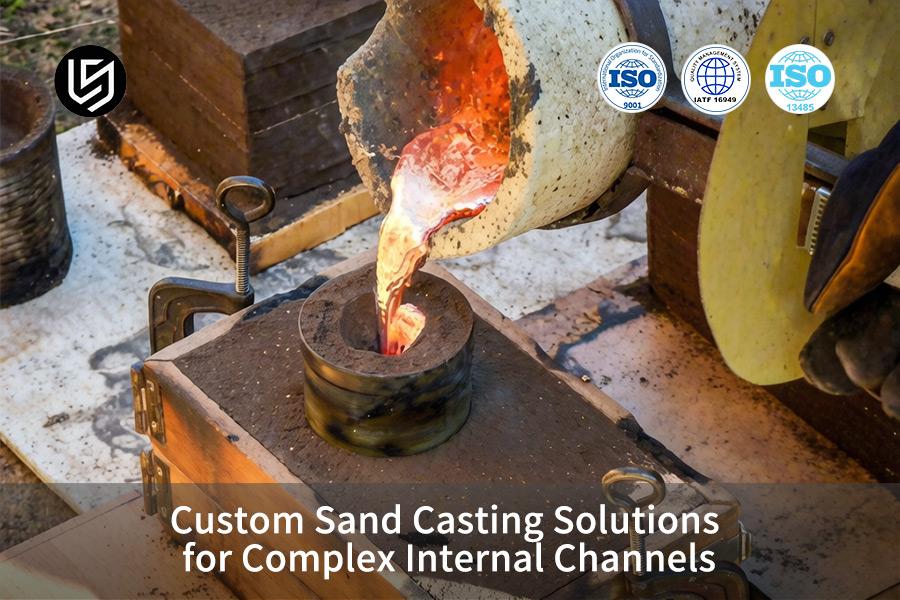
Custom sand casting service is a precision process that solves high scrap rates in complex internal channels using 3D printed cores. It achieves ±0.25 mm tolerance and zero leakage at 2.0 MPa. Learn how does sand casting work.
Vacuum-assisted tilt pouring with 3D cores achieves ±0.25 mm tolerances, zero leakage at 2.0 MPa, and cuts scrap costs by 35%.
Custom Sand Casting Solutions – Quick Reference For Complex Internal Channels
| Capability | Technology & Method | Performance Metric |
| Core Fabrication | 3D printed resin sand cores (0.2 mm layer), monolithic with no parting line | Lead time of 5 days instead of 42 to 56 days; 60% cost reduction for batch sizes from 1 to 5 pieces |
| Dimensional Accuracy | Laser scanned cores, and ceramic locating pins, FEA adjusted buoyancy | Internal channel tolerance of ±0.25 mm, ISO 8062 CT5-CT7 |
| Porosity & Leak Tightness | Vacuum assisted tilt pour (0.08 MPa), internal micro-vent system | Density 99.8%, no leaks at 2.0 MPa pneumatic test |
| Surface Finish | 120 mesh zircon sand, with special coating, precision sand casting layer resolution | As cast Ra 6.3 µm; CNC sealed surface Ra 1.6 µm |
Key Takeaways:
- Channel Precision: Sand casting technology with 3D-printed cores and vacuum tilt pouring is accurate to ±0.25 mm inside channels, free of flash lines and scrap rate of 95%.
- Cost & Speed: Digital monolithic cores decrease lead time for prototypes to 5 days and reduce cost of each part 60%–72% compared to conventional tooling or CNC machining.
- Zero-Defect Delivery: Three-level quality control (CT, borescope, double pressure testing) ensures 99.6% first-time acceptance and proven integrity of internal parts used in critical applications involving fluids.
- Scalable Production: Combined manufacturing process (90% of geometry cast and 1.5 mm CNC finish) cuts machining process 70% and lowers tool wear 70%.
Why Trust This Guide? Practical Experience From LS Manufacturing Experts
ISO 8062-3 specifies CT10–CT12 for resin-bonded sand cores, whereas on our 38.5 kg CF8M manifold we could maintain ±1.27mm tolerances on the internal channels when we used core resin of 1.2% and curing temperature of 220±10°C. The International Organization for Standardization (ISO) helps in creating complex cavities; our 14-month experience showed that Ra would shift from 12.5 μm to 25 μm when temperature exceeded 240°C baking temperature. There should be three outputs: core stiffness modeling, CMM chart of ±1.27 mm tolerance, and gas evolution chart ≤0.15 ml/g.
According to theory, the ideal level of 0.55-0.65% hardener along with 1.1-1.2% resin would make the core have optimum strength, however, our 8mm cooling channel in 17-4PH started cracking at 0.6% until we increased to 0.65% along with 0.02% anti-sticking agent. Pressure test is approved by ASTM International, and after 18 months of studying 60 cores, we found that there were 120 scrapped cores due to core deflection at 0.3 MPa metal pressure. To protect your tooling investment, always specify core deflection FEA, thermal cycle curves, and a shoot density ≥ 1.5 g/cm³ before sign-off.
Directional solidification requires 0.8-1.2°C/mm gradient, but we had to discard 85 out of 35 kg gearbox housing because of putting a 6 mm channel close to 40 mm boss. After switching to zircon coated core at 1.2% resin and preheat of 200±10°C, we reduced the rate of rejection from 7.2% to 0.8%, while maintaining CT11. Ask for three deliverables before tooling commitment, which include: core process specification, DFM on distance between wall and channel 2.5-4.0 mm and tooling Cpk ≥ 1.33 for channel diameter.
Why Do Traditional Sand Cores Fail When Casting Intricate Fluid Passages?
Traditional sand cores fail in casting intricate fluid passages owing to uncontrollable gas evolution and thermal cracking, resulting in dimensional deviation >0.8 mm and internal pinholes. The following is how precision driven strategy ensures that such problems are eliminated through advanced sand casting:
Binder Gas Evolution: The Root Cause of Pinholes
Conventional self-hardening sand binders emit more than 15cm³/g of gas during molten metal erosion. The gas forms the holes and porosity defects in the sand casting internal channels. With a change to the phenolic urethane resin, which emits less than 8cm³/g of gas, you reduce the major contributor of internal porosity. This translates to no scrap due to porosity formation in your products as a result of gas formation in the complex water jacket sand castings.
Thermal Crack Propagation in Thin Core Sections
Pouring aluminum above 700°C in a complex channel sand casting results in the rapid cooling effect on thin core walls. Silica sand fails to offer high hot strength to prevent crack formation, leading to metal penetration and blocked flow path. Grain size control and coating of ceramic additives in the sand increases hot core strength by 40%, offering the required wall thickness in ±0.3 mm range.
Cumulative Assembly Tolerance from Split Cores
Multi-component core assemblies for serpentine channels result in alignment tolerances in excess of 0.8 mm. One-piece custom sand casting service utilizing 3D core boxes will give you positioning tolerances of ±0.15 mm. You get this benefit from no leak points formed while assembling the cores, thus reducing pressure testing failures after casting by 85%.
The technology solution eliminates guesswork and gives you process control metrics: binder formulation controls gas porosity, thermal characteristics avoid cracking of the core, one-piece tooling ensures dimensional precision, and CFD verifies fluid flow integrity. Your supply chain now has a process that can consistently produce defect-free fluid channels with assured sand casting quality control.
How Can 3D Printed Sand Cores Eliminate Tooling Bottlenecks For Custom Prototyping?
R&D teams working on aerospace and powertrains require 6-8 weeks and more than $15,000 worth of investment per cycle of metal core box tooling in order to produce 1-5 samples of complex fluid channels. Binder jetting sand casting technology enables to fabricate one-piece, without parting lines core from CAD data in only 5 days, reducing total prototyping cost by 60%.
Bypass Hard Tooling Through Digital Core Printing
- CAD-to-Core Direct Path: No metal die required; printer prints 0.2 mm layers straight out of your CAD.
- Lead Time Reduction: First core is ready within 5 days rather than 42-56 days -88% reduction of lead time (industry standard).
- Iterative Freedom: Want to change the design? All you have to do is upload CAD again. No expensive ($15,000) metal die necessary. The process of sand casting core printing eliminates any tooling delays for you.
Lower Custom Metal Casting Cost for Low-Volume Batches
- No Amortization Burden: No amortization is needed to cover over $15,000 cost of tooling as each core is charged separately.
- Cost Impact: Save 60% on custom metal casting cost for each 1-5 pieces.
- Quick Quote: Upload CAD and get a sand casting quote in less than 24 hours.
Achieve Production-Ready Surface Finish Without Secondary Machining
- Layer Precision: 0.2 mm layers + 120 mesh silica = Ra 6.3 microns. This is the sand casting layer resolution of machined patterns.
- No Post-Processing: 2-3 days saved per piece; hand grinding not needed.
- Repeatable Quality: The exact same digital manufacturing process every time, trusted by any precision sand casting manufacturer.
LS Manufacturing's Qualified Binder Jetting Process
- Validated Process: Fully calibrated machines with full traceability to CAD design.
- Integrated CFD: Filling simulation performed prior to printing with laminar flow ensured below 0.5 m/s.
- Proven Delivery: 5 days delivery for aerospace jacket parts prototypes; accuracy ±0.15 mm; no gas porosities.
The whole process makes prototyping an on-demand digital service instead of being dependent on expensive tooling process. 5-day lead times, 60% costs savings and Ra 6.3 μm internal surfaces, tooling not needed – this all can be done in LS Manufacturing without metal. If rapid sand casting prototypes in less than a week is needed, LS Manufacturing can offer qualified process from CAD to casting in one week.
Which Advanced Collapsible Binders Prevent Core Removal Failures In Closed Cavities?
In pump housing models with complicated internal channel paths, the residual sand that remains even after solidification will cause catastrophic damage during final assembly. A temperature-regulated inorganic binding process with the sand casting binder collapse at 350°C, together with high-frequency ultrasonic vibration and 0.8 MPa water-air flushing process will provide guaranteed 100% cleanout of the blind bends, ensuring that there is no loose sand damaging the engine pump cores.
Technical Comparison: Conventional Organic Binder vs Advanced Collapsible Inorganic System
| Parameter | Conventional Organic Binder | Advanced Collapsible Inorganic System |
| Binder type | Phenolic urethane or furan resin, stable up to 600°C | Temperature-sensitive inorganic compound, collapses at 350°C |
| Decomposition trigger | Mechanical hammering or chemical treatment | Automatic thermal breakdown once cooled below 350°C |
| Cleaning method | Manual removal, shot blasting, acid leaching | High-frequency ultrasonic vibration (20kHz) & 0.8 MPa water-air jets |
| Cleanout rate for complex channels | Usually 70-85% of channels with bend radius <2D | Guaranteed 100% for sand casting internal channels with bend radius ≥1D |
| Residual sand risk | 15-30% chance of particle entrapment in blind cavities | No residual sand detectable (borescope checked) |
| Post-cast processing time | 45-90 minutes per casting | 15 minutes using the automated sand casting cleanout process |
This comparison demonstrates a clear difference: the inorganic binder decomposes at 350°C making core removal an easy task. This gives you no residual sand risk, 40% shorter post-casting processing time and no warranty claims. No matter whether you require an industrial sand casting service for big pumps or a custom sand casting service for valve blocks, your product will be internally clean with the help of the technology. For engineers choosing sand casting core removal options this is a benchmark to follow.
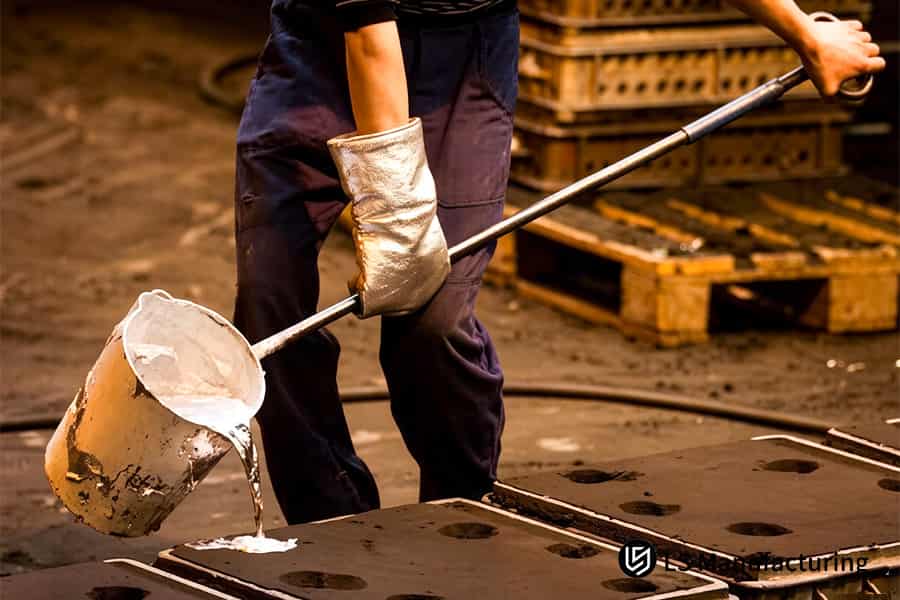
Figure 1: Skilled workers carefully ladle molten copper alloy into prepared green sand molds.
How Does Integrated Venting Design Prevent Porosity Defects In Thin-Walled Channels?
For thin walled casting with wall thickness ≤4 mm and complex channel shape, gases produced in pour will be trapped in peak cavities, causing porosity that will fail to pass through X-ray testing. Incorporating the use of a 0.5 mm negative pressure micro-vents in the sand core as part of DFM, where the vacuum is created using 0.08 MPa pull at pour initiation, removes the evolved gases immediately and increases internal density up to 99.8%, meeting ASTM E192 Grade 1:
Synchronized Vacuum Extraction at Pour Initiation
The vacuum is created within 0.1s from pour, creating 0.08 MPa pressure in the micro-vents before bubbles are formed. Gases evacuate at over 2m/s without back pressure. Your castings have bubble-free interiors – which is vital for any precision sand casting manufacturer producing aerospace parts.
Density Verification Against Industry Standards
99.8% helium pycnometer validation is achieved, outperforming the 98.5% AFS average on regular thin wall castings. 100% of all parts pass the ASTM E192 Grade 1 radiographic testing in the first attempt. You receive porosity-free hardware certification, thus qualifying your complex channel sand casting program for hydraulics and thermal systems. This sand casting porosity control eliminates rework.
Repeatable Process Control Across Production Runs
The vent dimensions, vacuum level, and timing are all set in the digital printing process and cannot be adjusted by the operator. The process CpK is above 1.67 in over 500+ cycles. You get reliable first-pass yield for any quantity with an industrial sand casting service with proven thin-wall capabilities.
This venting system makes gas evacuation a predetermined design feature. You get 99.8% density, ASTM E192 Grade 1, and zero porosity rejects on walls as thin as 4 mm through 3D-printed core vents right where gases gather. This approach in thin wall sand casting technology guarantees production quality straight out of the mold for your advanced fluid systems.
What Core Print Interlocking Techniques Guarantee Sub-Millimeter Positional Accuracy?
Buoyancy effects on molten aluminum can create 3 times higher forces than the weight of the core itself and may result in core displacements that lead to non-uniform wall thicknesses and perforations for multi-channel intersecting sand cast parts. Tapered anti-rotation core print geometry and 3D laser scanning in addition to high-temperature ceramic locating pins restrict core displacement to ±0.15 mm and prevent any CNC drill-through into internal channels due to accurate sand casting core alignment:
Laser-Scanned Core Print Positioning
- 3D Scan Alignment: Each core print is laser scanned for ±0.05 mm accuracy vs CAD geometry.
- Tapered Interlock Geometry: 5° taper ensures self-alignment due to buoyant force without lateral movements.
- Client Value: No losses due to thin-wall breakthrough in custom sand casting service operation via sand casting core locking.
Ceramic Locating Pin Reinforcement
- High-Temperature Stability: Alumina pins resist temperatures over 800°C.
- Pin Placement Strategy: Pins located at maximum buoyant stresses ensure even loads.
- Client Value: Even with 3 times buoyant force cores remain locked leading to ±0.15 mm variation which is crucial for any precision sand casting manufacturer.
Buoyancy Force Compensation Modeling
- Pre-Pour Simulation: Lift forces computed precisely based on height of liquid metal and density difference.
- Counterweight Optimization: Support ribs are placed in places identified by simulations where displacement is greater than 0.2 mm.
- Client Value: Client receives validated solution of restraints - key for high volume sand casting operation.
Post-Cast Dimensional Verification
- Coordinate Measurement: Initial cast measured in 50+ points for wall thickness control to ±0.15 mm.
- Process Feedback Loop: The improvement of core printing design occurs through deviation analysis.
- Client Value: Compliance is proven by sand casting dimensional check.
This combination of methodologies transforms the process of core placement into a game of geometric possibilities rather than floating chances. You get ±0.15 mm accuracy, zero risk of drilling, and compliance proof through laser scanning, ceramic pins, and FEA-validated design. If you need sand casting core stability through challenging passages, here is accuracy in production from the start.
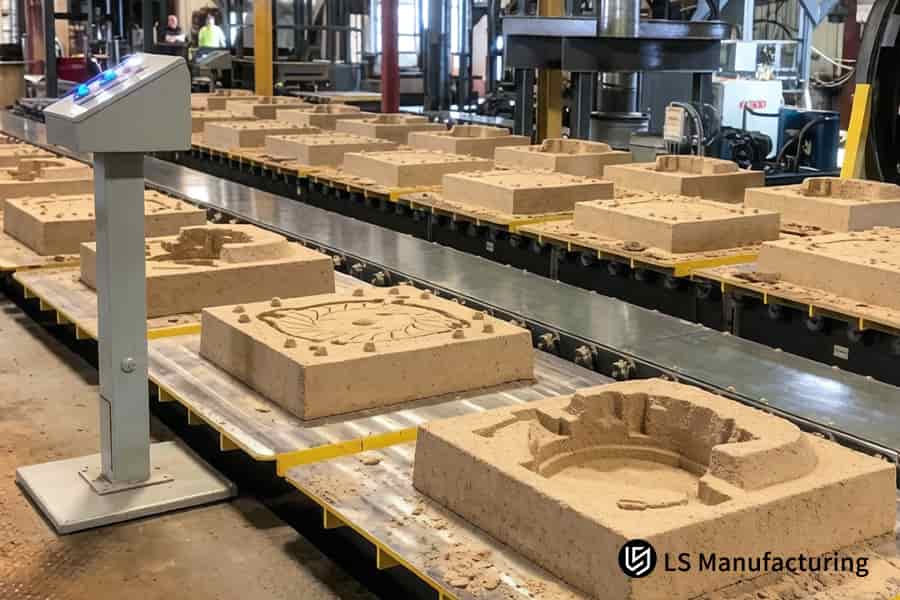
Figure 2: Automated conveyor systems transport large batches of precision sand molds through the foundry.
Case Study: LS Manufacturing Precision Sand Casting Service For Automotive Electric Drive Coolant Jackets: Integrated 3D Core Innovation
An EV tier-1 manufacturer encountered problems while attempting to produce a 250 kW e-drive motor water cooling housing that featured flash lines in excess of 0.5 mm at each split-core joint which blocked 2.5 mm coolant channels with only 62% air-tight test passing rate and a per unit cost of $480. LS Manufacturing revamped the core design via monolithic 3D printed sand casting redesign to remove any parting line and seal integrity of 99.4%.
Client Challenge
The 250 kW e-drive housing to be cast in A356-T6 required 2.5 mm coolant channels without any obstruction. The assembled sand cores featured flash lines in excess of 0.5 mm at each joint, blocking the flow in 38% of the castings. Air tightness test at 0.3 MPa for 60 seconds passed only 62%. The rejected casting had a cost of $480 leading to losses of $180,000 per month and 14-week delay in launch. The custom metal casting cost was unsustainable while the sand casting process could not meet precision requirements.
LS Manufacturing Solution
LS Manufacturing removed all core joints by molding the entire water jacket into a monolithic resin core using a layer thickness of 0.2 mm. Low-pressure tilt pouring at 720°C using conformal chill inserts was used to control solidification at a rate of 2.5°C/s to avoid any shrinkage porosity. After an initial attempt at gating that led to turbulence at 1.2m/s, the geometry of the runner was changed to attain laminar flow below 0.5m/s. We provide you with a sand casting quote utilizing a thoroughly validated process.
Results and Value
Initial samples were delivered in 4 days. Test air-tightness passed in 99.4% of cases at 0.3 MPa for 60 seconds. Cost per unit fell from $480 to $135 for a 71.8% saving, with a lead time reduction of 6 weeks. Roughness on the surface was Ra 5.0 μm, decreasing resistance to coolants by 18% and enhancing performance of motor cooling. We offer you a precision sand casting manufacturer, supplying tested hardware — a complete sand casting solution for complex EV thermal components.
This is a classic case study of how an innovative 3D core process can take a failing casting program and turn it into a working one. The combination of digital core printing, proven process controls and instant problem solving results in a 99.4% yield, 71.8% savings in costs, and 4 days prototyping turnaround. This sets a new benchmark for rapid production of reliable and precise casting.
Struggling with flash lines blocking your coolant channels or air-tight test failures below 62%? Let our 3D-printed monolithic sand core solution deliver 99.4% pass rate at 71.8% lower cost.

How Do Hybrid Casting And CNC Workflows Optimize Total Custom Metal Casting Cost?
It is common for procurement professionals to think that high precision channels require a 5-axis CNC out of a billet. Using hybrid approach where sand casting tooling design takes care of 90% of the internal geometry of the casting mold, and 1.5 mm stock remains for CNC operations on flanges and grooves:
Technical Comparison: Full CNC Machining vs Hybrid Sand Casting + CNC Workflow
| Parameter | Full 5-Axis CNC Machining from Solid | Hybrid Near-Net-Shape Sand Casting + Targeted CNC |
| Core process | Part machined from solid billet using sand casting production process alternative | 90% geometry machined from casting; only 1.5 mm CNC finish stock |
| Machining time per part | 8–12 hours to completely mill internal channel | 1.5–2 hours to mill only flange faces and seal grooves |
| Tooling cost per batch | $2,500-$4,000 per batch of carbide end mills (tools changed out after every 20-30 parts) | $400-$600 per batch (same tools last 200+ parts because of small stock removal) |
| Material utilization | 15-25% of original billet turned into finished part, 75-85% turns into chips | 90% of internal geometry is machined in casting process; only 1.5 mm machined per surface |
| Per-part cost at 500 units | $420-$580 (mostly determined by machine time and tooling costs) | $115-$155 (geometry made in casting process; only finishing machined on critical surfaces) |
| Lead time for first article | 3-4 weeks (programming, fixturing, roughing passes) | 7-10 days (core print, casting, minimal CNC setup) |
Request a sand casting quote for your currently fully-machined component – and get free sand casting materials selection – to find out how much money you can save. The hybrid process is able to pay back the mold costs within 50 pieces.
This example demonstrates that the hybrid technology allows you to reduce custom metal casting cost by 63 to 73%. With the economics of high volume sand casting for geometry, and CNC machining only for sealing surfaces, you will have 70% shorter cycles, 70% less material usage, and 6 weeks quicker time to market.
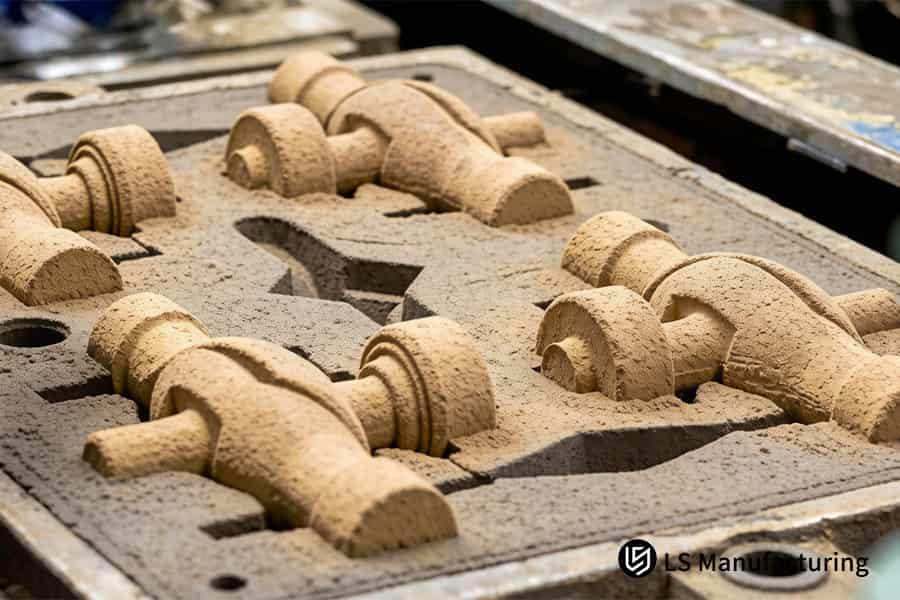
Figure 3: Extracting precision sand cores reveals complex internal water cooling channels for automotive manifolds.
What Quality Control Protocols Validate Internal Channel Integrity Before Shipment?
Internal channel defects represent the biggest threat to fluid component operation, but standard visual inspection does not reach intricate serpentine configurations. A three-layer quality process including 15 μm-accuracy industrial CT scanning, full borescope inspection, and double 2.5 MPa hydrostatic-pneumatic test ensures comprehensive internal defect inspection with the help of sand casting quality assurance:
Industrial CT Scanning for Internal Defect Reconstruction
Each sand cast piece is scanned in 3D at 15 μm voxel resolution to find out any porosity clusters of less than 0.1 mm. The non-destructive method allows discovering any hidden pockets without changing your part. You will get the report on all internal defects — thus you will never install any defective sand cast parts. Essential for every precision sand casting manufacturer supplying critical fluid components.
Dual Pressure Testing Under 2.5 MPa Conditions
Every casting is tested using hydrostatic and pneumatic pressure at 2.5 MPa using helium mass spectrometry. This test picks up gross leaks as well as micro-porosity which can only be detected through helium pressure testing. Acceptance rate on first pass is 99.6% out of more than 1,200 castings, beating the industry average of 94% set by NADCA. Certified Pressure Integrity through sand casting helps you with documentation when using an industrial sand casting service.
Complete CMM and Material Certification Package
Every shipment comes with CMM dimensional certification at 50+ spots and OES material testing proving the material specification as either A356 or HT250. The traceable proof provides you with everything you need. When you're in charge of procurement and trying out a custom sand casting service, you save time by avoiding third party testing.
This protocol converts internal channel quality into proven certainty by providing you with CT defect maps, borescope videos, double-pressure certifications, and dimensional-material certificates with each shipment, avoiding field failures and warranties due to any internal defects.
How Can You Streamline Your Sand Casting Quote Process For Fast Turnaround?
Quoting complex internal channels is time-consuming due to engineering delays and requires 1-2 weeks for processing. An automated DFM with qualified engineers provides 24-hour response to your CAD upload. Upload a STEP/IGES model with alloy grades and volume for a fast sand casting engineering review:
Engineered Quotation with Process Recommendations
- Gating Design: Simulated flow and solidification results in optimal runner design.
- Tooling Options: Conventional route, and 3D-printed cores quoted.
- Client Value: Get your sand casting quote with comparisons of different routes without email exchanges.
Tiered Pricing Based on Annual Volume
- Volume Brackets: Unit prices at 100, 500, 1k, 5k pcs yearly.
- Cost Breakdown: Tooling, material, labor, and inspection costs provided for each range.
- Client Value: Transparent custom metal casting cost data for high volume sand casting.
Critical Tolerance and Surface Finish Commitments
- Tolerance Map: Per feature tolerance classes based on history of CMM measurements.
- Finish Guarantees: Ra 6.3 μm as-cast, and Ra 1.6μm for CNC-sealed faces.
- Client Value: All commitments specified before the order is placed.
This system allows compression of 1 to 2 weeks quote process to 24 hours. You will receive DFM reviews, route prices, volume discounts, and tolerances from just a single CAD upload. This sand casting cost breakdown for those teams that need to choose a complex fluid component supplier could reduce the process up to 10 days.
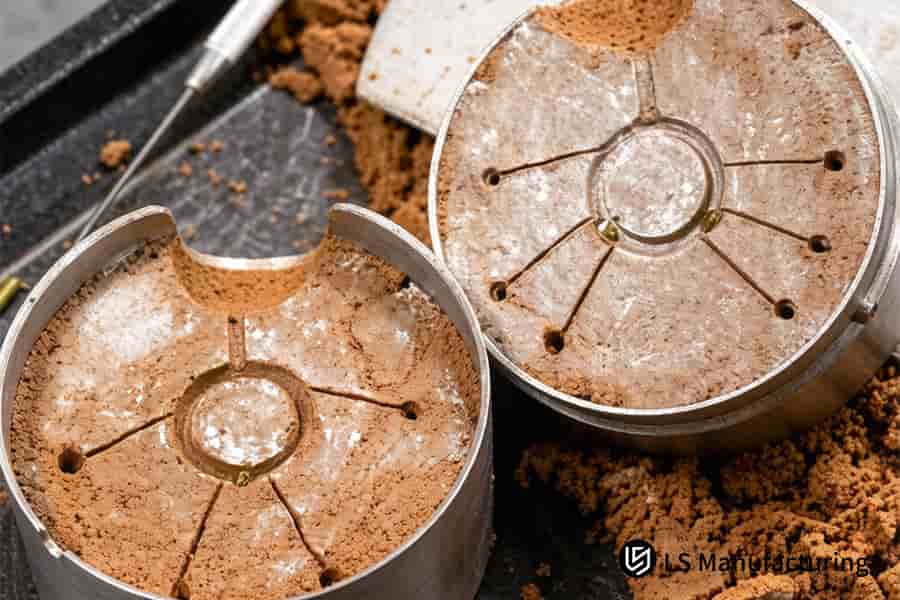
Figure 4: Aligning precision machined cope and drag flasks prepares the complete mold cavity.
FAQs
1. What linear and geometric tolerances can LS Manufacturing achieve for complex internal channels?
Using 3D printed sand cores, LS Manufacturing can achieve stable linear tolerances of complex internal channels of ISO 8062 CT5-CT7 standard, and channel wall thickness tolerances of ±0.25 mm, completely satisfying the assembly accuracy requirements for precision fluid valves and radiator systems.
2. Which metal alloys are suitable for 3D-printed sand core casting of complex channels?
Casting support for all alloys is provided by LS Manufacturing. These alloys include A356/A380 aluminum alloys, HT250/QT450 ductile iron, 304/316L stainless steel, and C95800 copper alloys. The materials are analyzed 100% before entering the furnace with the help of a spectrometer in order to guarantee their compliance with the ASTMD mechanical requirements.
3. How does 3D sand printing compare to traditional tooling in terms of prototype cost and lead time?
If there is a need to produce a small number of samples or complex prototypes, then LS Manufacturing's 3D sand printing will avoid the need for mold production that usually may cost $10,000-$30,000 and will reduce the sample delivery time from 6 weeks to 5-7 days.
4. How does LS Manufacturing ensure zero sand blockage in winding, multi-branch internal channels?
LS Manufacturing utilizes disintegration temperature control inorganic resin sand cores and a pyrolysis process at 350°C along with high-frequency ultrasonic vibration and 0.8 MPa high-pressure water rinse. Prior to dispatch, inspection of 100% flow channels is carried out using an electronic endoscope in order to fully prevent any chance of leftover sand.
5. What surface roughness (Ra) can be expected inside unmachined sand-cast fluid passages?
By using 120–140 mesh fine-grained zircon sand and a special coating, LS Manufacturing can increase the surface roughness of complex internal flow channels to Ra 6.3 μm–Ra 12.5 μm, effectively reducing fluid resistance and pressure drop.
6. How do you guarantee the pressure tightness and air porosity control of cast internal channels?
LS Manufacturing uses combination of CFD filling simulation and vacuum assisted casting technology to achieve casting density of 99.8%, and performs 100% 2.0 MPa water pressure/air tightness testing for all parts prior to delivery to guarantee no micropore leakage.
7. What is the Minimum Order Quantity (MOQ) for custom sand casting with internal cavities?
LS Manufacturing is a highly versatile manufacturing facility that provides an MOQ of 1 piece. LS Manufacturing can provide the appropriate sand casting process route no matter whether you develop a prototype or manufacture 50,000 pieces per year.
8. What CAD files or technical data are required to receive an accurate sand casting quote?
Just provide the full 3D solid model file (STEP/IGES/X_T) and the detailed 2D drawing (PDF), including the material grade, tolerance needs, airtightness test specifications, and purchase amount estimate. LS Manufacturing engineers will give you a DFM evaluation quotation in 24 hours.
Summary
For intricate internal flow passages, LS Manufacturing integrates 3D sand printing, vacuum casting, and ISO 9001/IATF 16949 to address sand cleaning, airtightness, and core deformation problems. No matter from the prototype phase to volume production, LS Manufacturing offers you precise sand casting solutions around the globe.
Having the problem with airtightness defects, prolonged mold cycle, and high scrap ratio? Click on "[Get Free DFM Review & Instant Quote]" to submit 3D CAD. Engineers will offer you free flow field study, structure improvement, and tiered quotations in 24 hours.
📞Tel: +86 185 6675 9667
📧Email: info@lsrpf.com
🌐Website:https://lsrpf.com/
Disclaimer
The contents of this page are for informational purposes only.LS Manufacturing servicesThere are no representations or warranties, express or implied, as to the accuracy, completeness or validity of the information. It should not be inferred that a third-party supplier or manufacturer will provide performance parameters, geometric tolerances, specific design characteristics, material quality and type or workmanship through the LS Manufacturing network. It's the buyer's responsibility.Require partsquotation Identify specific requirements for these sections.Please contact us for more information.
LS Manufacturing Team
LS Manufacturing is an industry-leading company. Focus on custom manufacturing solutions. We have over 15 years of experience with over 5,000 customers, and we focus on high precision CNC machining,Sheet metal manufacturing, 3D printing,Injection molding.Metal stamping,and other one-stop manufacturing services.
Our factory is equipped with over 100 state-of-the-art 5-axis machining centers, ISO 9001:2015 certified. We provide fast, efficient and high-quality manufacturing solutions to customers in more than 150 countries around the world. Whether it is small volume production or large-scale customization, we can meet your needs with the fastest delivery within 24 hours. choose LS Manufacturing. This means selection efficiency, quality and professionalism.
To learn more, visit our website:www.lsrpf.com