English



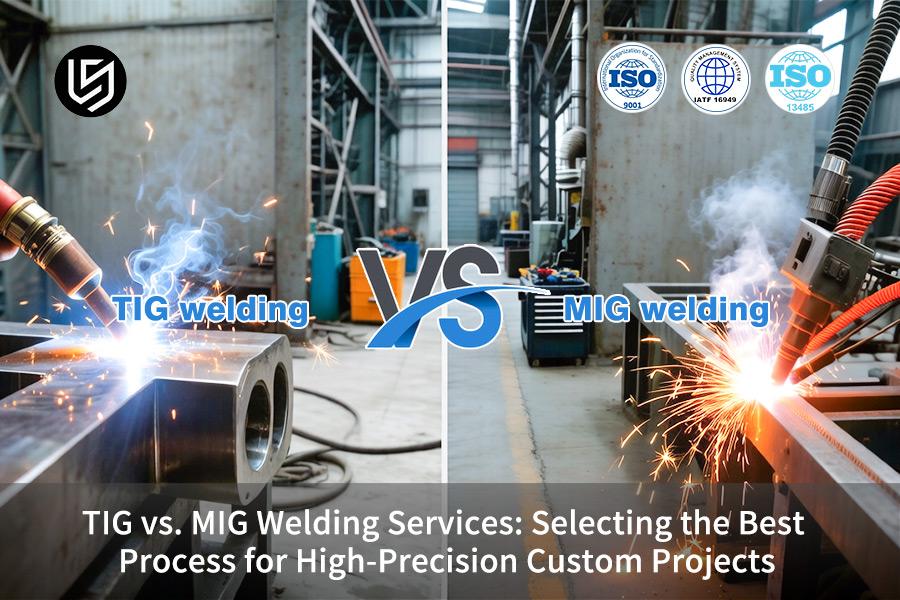
TIG welding services present a fundamental dilemma in high-end manufacturing: exceptional craftsmanship vs. timely completion. The choice is simple: make the wrong one and experience costly overruns due to failures such as excessive thermal warping in thin aluminum sections over 2.0mm or critical cracks in heavy sections of steel. At LS Manufacturing, our answer to this dilemma is our database of metal welding services and our patented Welding Engineering Decision Matrix. We use pulsed arc and real-time thermal monitoring to optimize performance vs cost for your project.
Most companies fail to realize that heat input is directly related to crystal structure and that 99.999% purity argon gas used in welding dictates porosity levels in welds, resulting in X-ray inspection failures. At LS Manufacturing, our answer is to make the microscopic physics of the arc our core competence – and that is the only true measure of a global supplier.
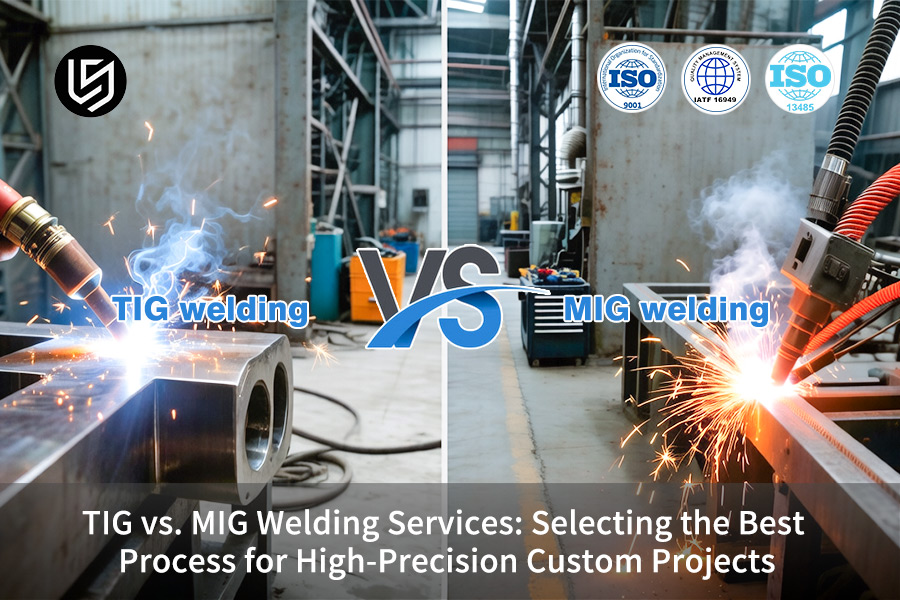
TIG VS MIG Welding: A Selection Guide
| Key Criterion | TIG Welding (GTAW) | MIG Welding (GMAW) |
| Primary Application | Precision work involving thin materials, intricate joints, aerospace, medical devices, and visible cosmetic welds. | High-speed production involving thicker materials, frame construction, and long welds. |
| Process Control | High precision due to separate torch and filler rod control for excellent heat and puddle control. | Good control due to automatic wire feed for consistent and faster deposition rates. |
| Weld Appearance | Excellent weld appearance with clean and minimal spatter, and in some cases, no finishing is needed. | Good weld appearance with some risk of spatter that requires cleaning for cosmetic finishes. |
| Material Suitability | Excellent for stainless steel, aluminum, titanium, and other reactive and exotic materials. | Best suited for carbon steel, stainless steel, and aluminum within common thickness ranges. |
| Operator Skill Level | High skill and experience levels are needed to master the technique involving the torch and filler rod. | Lower skill levels are needed to learn the technique for consistent and faster production rates. |
| Production Speed | Slower deposition rates for quality and speed. | Faster deposition rates for high-speed metal welding. |
| Our Selection Protocol | For maximum joint integrity, precision, and beauty, we select TIG. | For maximum joint production efficiency, speed, and cost-effectiveness, we select MIG. |
Why Trust This Guide? Practical Experience From LS Manufacturing Experts
There are hundreds of articles online that discuss and debate the merits of TIG and MIG welding. What sets this article apart? We are not theorists. We are practitioners. We are a workshop where high-strength materials, tolerances, and designs are our reality every day. We don't have the luxury of choosing between TIG's flawless finish and MIG's efficiency. We don't have the luxury of choosing because our choice can be the difference between success and failure.
We build for the aerospace industry where a weld failure on an engine turbine can be catastrophic. We build for the medical industry where purity is paramount for an implant. We build for optics where thermal expansion can be catastrophic. We have worked on hundreds of custom jobs over the years and know exactly when TIG is vital for thin aluminum sections and when pulsed MIG is necessary for thick steel sections.
Each has been a learning experience in its own right – optimizing argon flow for porosity-free seams or calibrating heat input to ensure properties are preserved. Our recommendations are based on this hard-won expertise, battle-tested against the most demanding specifications. Our processes are rigorously correlated to industry standards set by the International Aerospace Quality Group (IAQG) and the Society of Manufacturing Engineers (SME), so you can be assured that the reliability we cite has already been demonstrated in industry and is ready to be harnessed for your most demanding tasks.
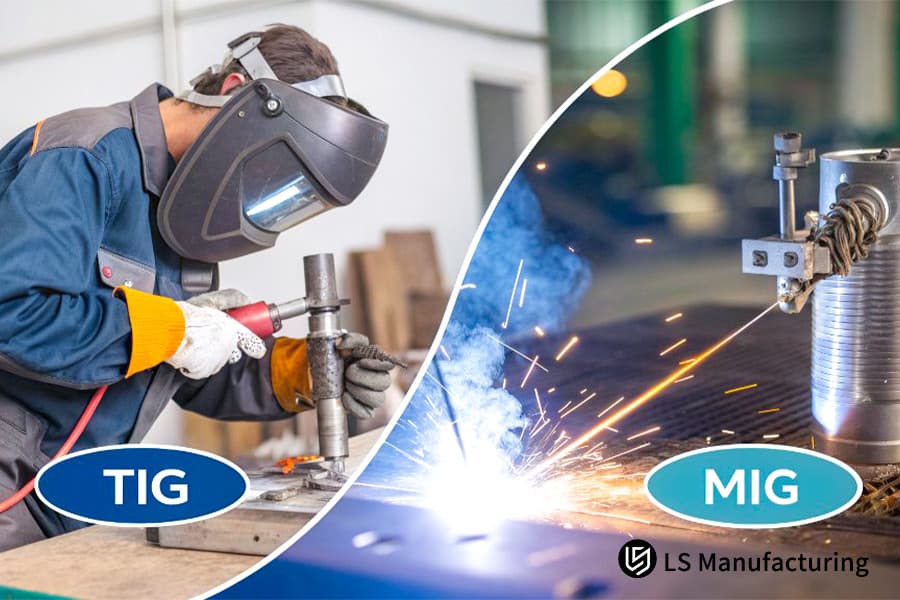
Figure 1: A welder uses TIG on steel while a robot performs MIG welding for high-precision automotive parts.
Why Should Engineers Prioritize TIG Welding Services For Thin-Walled Precision Aerospace Components?
For thin-walled precision aerospace components, the key issue is achieving full integrity in the joined assembly without causing thermal distortion or metallurgical degradation. Tungsten Inert Gas (TIG) welding is the key process for achieving this. This document outlines the exact processes that are used:
Precision Control of Heat Input
The process also allows for the independent control of amperage and arc length. We employ the use of pulsed currents, where the waveform is utilized for the precise control of the energy. The waveform cycles through the peak and background currents. The application of the pulsed current waveform ensures full penetration, with the base material being allowed to cool. The constraint on the high precision welding Heat-Affected Zone (HAZ) is thus maintained within ±0.5mm. The control is imperative to prevent warping or grain growth in 0.8mm titanium alloy structures, which is part of our TIG welding services.
Independent Filler Metal Management
Unlike the automated welding processes, the filler metal is introduced independently of the arc heat. The independent introduction of the filler metal allows for real-time control of the weld geometry. The control of the weld geometry is imperative for delivering precise custom metal welding services. The precise control ensures that the weld is not overdone, thus introducing unnecessary stresses, or underdone, thus compromising the structural integrity.
Ensuring a Contamination-Free Joint
The inert argon shield and non-consumable tungsten electrode provide the molten weld pool with complete isolation against any contaminants present in the atmosphere. This provides a spatter-free and slag-free weld bead. This level of weld bead purity is not optional when dealing with components like semiconductor vacuum chambers, where any particulate creation will result in system failure. Our metal welding services protocol for these types of components includes supplementary trailing shields to provide protection for the cooling weld, ensuring metallurgically pure welds.
Verified Process for Critical Penetration
In order to achieve 100% penetration without burn-through on thin sections, a proven process must be followed. Our process includes careful fit-up, specialized fixture tooling for heat sinking, and welding procedures that outline specific parameters for each configuration. This level of welding process control converts the theoretical advantages of the precision welding technique into auditable results for every part.
This analysis highlights the solution-based approach to engineering, going beyond generalized capabilities. The level of detail here involves specific and verified techniques, ranging from the parameters of a pulsed waveform to gas shielding. This approach situates our documentation and the services it represents within the marketplace based on verifiable process expertise and results for critical applications.

How Can MIG Welding Services Optimize Production Costs For Large-Scale Industrial Frames?
In terms of high-volume manufacturing of large-scale industrial frames, the primary consideration revolves around balancing the process based on cost. Gas Metal Arc Welding, also known as MIG, specifically helps to reduce costs by allowing for high deposition rates and process automation. This document outlines the specific methodologies used to achieve this capability.
Maximizing Deposition Rate with Automated Systems
- Solution: Deployment of robotic and semi-automatic MIG welding services workcells.
- Method: Utilizing high-speed spray/pulse transfer modes to maximize deposition.
- Outcome: Achieved over 40% reduction in weld time for structural frames.
Eliminating Post-Weld Cleanup via Process Control
- Solution: Implementation of synergic pulse welding programs.
- Method: Advanced waveform technology reduces spatter by 95%.
- Outcome: Welds are direct-to-paint ready, eliminating grinding labor in our metal welding services.
Data-Driven Welding Process Selection
- Solution: Proprietary model for and parameter optimization.
- Method: Quantitative analysis of joint design, volume, and materials informs welding procedure development.
- Outcome: Transparent and minimized cost forecast for custom welding services.
The conversation shifts from the generalized benefits to specific engineering applications. The differentiator in the marketplace is the integration of automated welding systems, advanced pulse technology, and our proprietary costing models. We don’t just demonstrate capability; we demonstrate a methodology to minimize overall cost of application, ensuring structural integrity of large-scale fabricated structures.
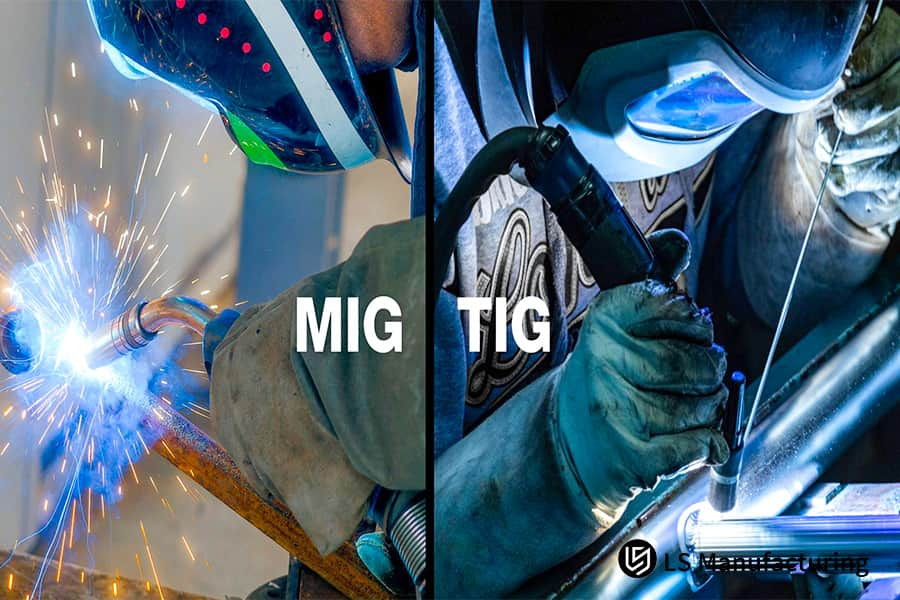
Figure 2: Showcasing TIG vs. MIG welding methods to achieve high-quality industrial manufacturing.
What Are The Critical Metallurgical Differences When Comparing TIG VS MIG Welding?
The selection of the best arc welding process for a specific application involves a clear understanding of the metallurgical trade-offs, which go beyond the deposition rate of the welding process. The paper analyzes the differences between TIG and MIG welding processes, including the arc, heat control, and the resultant microstructure of the weld, which form the basis of our precision welding services:
| Comparison Dimension | TIG (GTAW) Welding | MIG (GMAW) Welding | Process Implication |
| Arc & Heat Input Control | Non-consumable electrode, decoupled heat & filler. | Consumable wire electrode, coupled heat & filler. | TIG welding offers better control of the heat input, which is critical for high precision welding, especially for thin gauges of materials below 3mm. |
| Penetration & Bead Profile | Lower penetration depth, smooth & concave bead profile. | Higher penetration depth, convex bead profile with higher deposition rate. | MIG welding is more appropriate for thicker gauges of materials, especially for high volume metal welding services for structural components. |
| Microstructure & HAZ | Slower cooling rates; potentially wider but softer HAZ. | Faster solidification; finer grain structure but higher residual stress risk. | Depends on the balance of required material toughness and distortion control, informing the welding procedure. |
| Shielding & Atmosphere | 100% Argon common; Ar/He mixtures are used for increased heat input on conductive metals. | Ar/CO2 or Ar/O2 mixtures are used for arc stability and improved wetting on steel. | The choice of shielding gas is critical in the selection between TIG vs MIG welding in terms of weld purity. |
The document represents a decision process based on measurable metallurgical results. The professional value comes in the application of the data to prescribe the solution set, using TIG on heat-sensitive alloys or MIG on structural steel when deposition controls cost. This rationale for the welding process selection demonstrates the level of technical knowledge appropriate for critical applications.
Why Is LS Manufacturing The Preferred Custom Metal Welding Services Partner For Medical-Grade Equipment?
The challenge of welding medical-grade equipment lies in the balance of biocompatibility, dimensional stability, and mass production repeatability. Our answer is the translation of regulatory requirements into a controlled and verifiable process methodology. This document represents the specific process protocols engineered to accomplish this:
Validated Cleanroom Welding Protocol
We perform all precision welding services for medical devices within our ISO Class 7 cleanroom. This is important to prevent atmosphere contamination at the weld area. The end result is a metallurgically pure weld with a surface finish that meets all requirements for cleanliness according to the pharmacopeial standards, which is essential for our custom metal welding services in this industry.
Robotic Automation for Lot-to-Lot Consistency
We utilize robots to perform our welding process within our facility. The parameters for our robots are locked to prevent variations, ensuring absolute repeatability for our processes. The precision in our robotic welding precision ensures that all products, from first to last, meet identical specifications, which is not negotiable in this industry.
Algorithmic Thermal Management for Dimensional Integrity
Proprietary path-planning software can be used to plan the order of welds. This intelligent welding process can reduce cumulative thermal stress by 30%. This helps to solve the problem of distortion. This process can be used to ensure that complex assemblies, like backplanes of surgical instruments, can maintain their flatness after welding within a critical tolerance of ±0.1mm.
This document shows our methodical approach to engineering, not just what our capabilities are. Our technical authority can be shown through specific protocols, like cleanroom operations and algorithmic path planning, that solve the problem of medical device fabrication. This shows our metal welding services as part of our client's quality system, giving them the assurance and confidence needed to meet strict regulatory requirements.
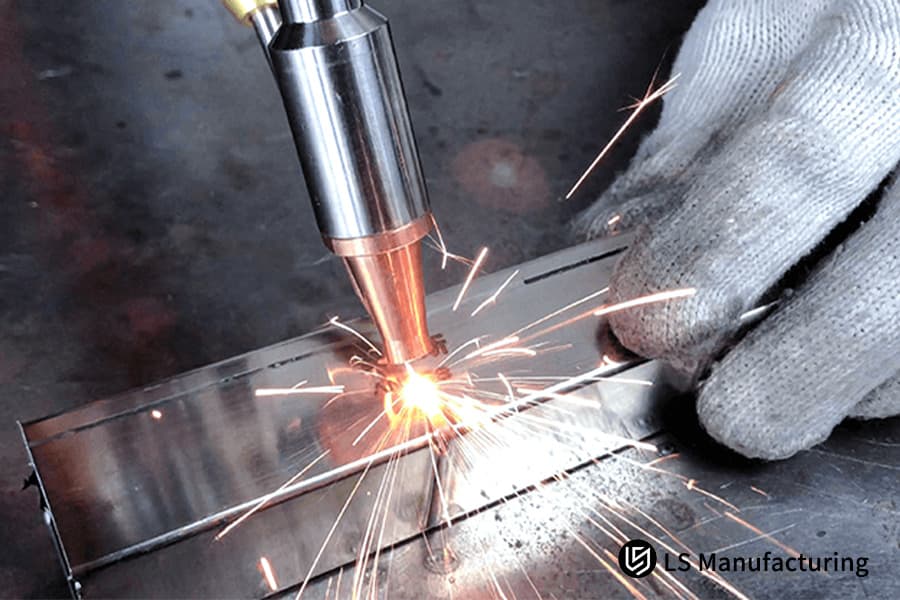
Figure 3: Welding high-strength steel alloy components for automotive chassis assemblies.
How Does High Precision Welding Technology Eliminate The Risk Of Thermal Deformation In Custom Assemblies?
Thermal deformation is one of the major difficulties in the assembly of complex, large-scale, or thin-walled structures, which sometimes hampers the proper fitting and functionality of the assembly. Our strategy addresses the problem of thermal deformation in the assembly process by effectively managing the input and output of heat through the assembly process. The methodologies given below explain the process of addressing this problem in the assembly process:
Predictive Analysis via Thermal Simulation
- Process: Finite Element Analysis (FEA) Modeling during the welding process selection.
- Action: Simulate the heat flow, stress development, and the predicted distortion of the assembly.
- Outcome: It helps to inform the optimal welding sequence strategy and fixture design prior to any physical trial.
Active Heat Sink with Custom Tooling
- Process: The design and fabrication of custom water-cooled fixtures.
- Action: The channels within the fixture actively sink the heat away from the weld zone, reducing the thermal gradient.
- Outcome: It is a critical enabler for high precision welding of materials with low thermal conductivity, like aluminum.
Pre-Compensation Using Stress-Engineered Fixtures
- Process: The metal welding application of pre-calculated mechanical pre-stress within clamping fixtures.
- Action: The fixture maintains the assembly in a precisely offset geometry that compensates for the anticipated weld shrinkage.
- Outcome: The completed assembly settles back to the proper nominal dimensions, which is the defining characteristic of our custom metal welding services.
Validated Outcome on Large-Scale Assemblies
- Case Data: For a 2-meter-long aluminum structural component, the applied protocol has yielded a maximum linear distortion of less than 0.2mm.
- Value: Avoids the expense of straightening the weld or shimming the assembly, thereby allowing the part to be installed directly in the client's process line.
The document describes the predictive and corrective engineering process, not just inspection after the weld. The competitive difference is the inclusion of virtual simulation, active thermal control, and mechanical pre-compensation in one welding procedure. This places our metal welding services in the market as the first-part-correct assembly process, removing the cost and time associated with downstream fit-up for mission-critical welding parts.
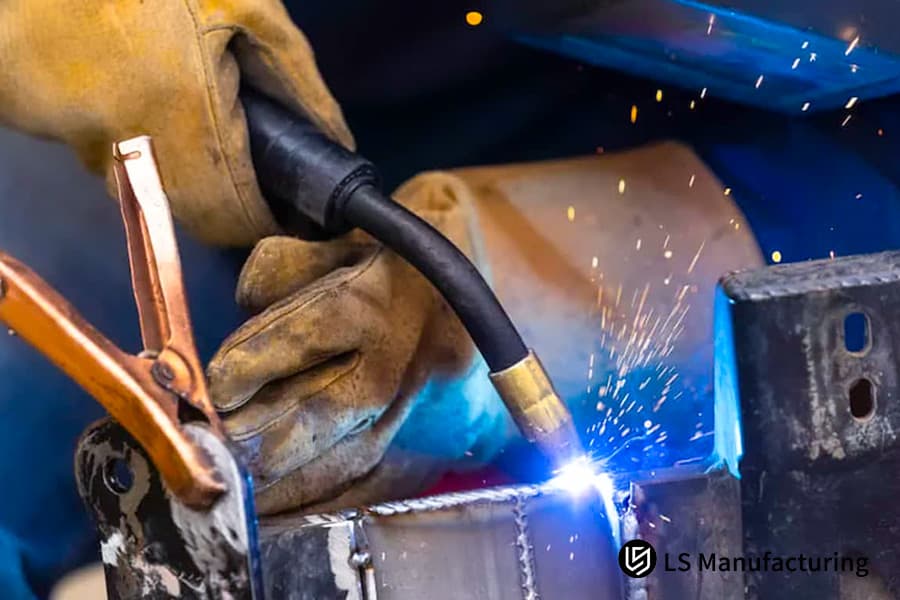
Figure 4: A welder performs high-precision TIG welding on stainless steel for industrial equipment fabrication.
LS Manufacturing — Custom Case Study: High-Precision TIG Welding Of Stainless Steel Brackets For Medical Equipment
The document describes the process of how LS Manufacturing has used our advanced TIG welding services to solve a critical quality and assembly problem for a major OEM in the medical imaging industry. With high rejection rates in a critical component, the client needed a solution that would guarantee dimensional stability and weld integrity. Our process demonstrates the value of using specialized custom metal welding services in mission-critical applications.
Client Challenge
A global manufacturer was experiencing recurring reliability issues in mounting precision linear sensors to 304L stainless steel X-ray gantries. The existing welding process was producing excessive porosity and thermal distortion, resulting in a 25% failure rate during final calibration. This directly impacted project deliverability and profitability, as each failure meant rework or scrap, thereby affecting project efficiency.
LS Manufacturing Solution
The proposed solution involved a two-step high precision welding process. Initially, a high frequency pulsed TIG welding process with copper chill fixtures was used to minimize the net heat input to the weld area by 22%. Subsequently, a 99.999% pure mixture of Ar/He gas was used to further enhance penetration and strength while ensuring rapid dissipation of heat to maintain flatness within ±0.15mm.
Results and Value
The result was instantaneous and measurable. The rejection rate after welding was reduced to 0%. The final high-integrity welds had a smooth and polished surface. This reduced the time and cost associated with subsequent electropolishing by 50%. From the client's point of view, this equates to a two-week acceleration in product launch and a 15% reduction in assembly costs. This is a true measure of return on investment.
This case study represents the methodology that LS Manufacturing takes in addressing client constraints and providing physics-based welding solutions. It demonstrates the results that can be obtained in terms of zero defects and significant cost savings. It is a true measure of our ability to solve complex fabrication problems.

What Inspection Standards Should You Demand From Your Precision Welding Services Supplier?
In high integrity industries, the level of confidence in a welded assembly is based on verifications that are objective and data-based. The following document outlines the fundamental inspection standards and methodologies that provide the foundation for a high level of reliability for precision welding services. Beyond the level of stating our compliance to welding industry standards, we outline the specific non-destructive testing methodologies and digital traceability that form the foundation of our custom welding services.
| Inspection Method | Standard / Protocol | Detectable Flaw & Sensitivity | Deliverable Output |
| Liquid Penetrant Inspection (LPI) | ASTM E165 / ISO 3452-1 | Flaws on the surface (cracks, porosity). | Inspector report with a flaw map. |
| Radiographic Testing (RT) | ASTM E94 / ISO 17636-2 | Internal volumetric flaws (slag, porosity, lack of fusion). |
Digital image of the flaw with dimension measurements. |
| Helium Mass Spectrometry Leak Test | ASTM E499 / ISO 20485 | Systemic or localized leaks, down to 1x10⁻⁹ atm·cc/sec. | Quantitative leak rate certificate per assembly. |
| Real-Time Weld Data Monitoring | AWS D17.1 / Welding Procedure Record | Parameter deviation (amperage, voltage, travel speed). |
Digital log file for 100% traceability of the metal welding process. |
The framework here proves that to be a credible metal welding services, one does not only claim to comply but also provides auditable proof thereof. Our solution to our client's risk of hidden defects is our provision of a digital quality dossier for every order, including all inspection reports and logs for our real-time weld data. Our objective and data-driven package is definitive proof of integrity for our high precision welding services, especially for technically complex and valuable applications.
How To Get An Accurate Quote For Custom Welding Services Based On Your Project Requirements?
In order to obtain a precise quote for fabricated parts, it is essential to look beyond per-pound price quotes and into a technical and logistical assessment. An accurate quote is one that takes into consideration the unique challenges inherent in your project. The following is a description of our collaborative data exchange and analysis process to provide transparent and accurate quotes for our custom welding services:
Providing Comprehensive Project Data
Our clients begin the process by providing comprehensive project data, including complete project files in STEP/IGES format, material information including grade and condition, and clearly defined welding symbols per AWS A2.4. This allows for an accurate initial assessment of project complexity, material cost, and requisite welding procedure qualification, which is essential for all subsequent analysis in our metal welding services.
Executing Technical Analysis and DFM Feedback
Our team also conducts a DFM analysis, which is performed in parallel with the welding process selection. We will determine the optimal mix of automated and manual welding techniques. The result will be an early identification of cost drivers, such as filler materials or heat treating, which will ensure cost-effectiveness for your custom metal welding services.
Delivering a Transparent, Actionable Quote
Within 24 hours, our team will deliver a structured quote document. The document will include the validated cost breakdown, the initial project plan, and the project timeline. The quote will not only be the price, but also the welding cost analysis, ensuring that your budget is properly aligned with the quality and delivery needs.
This process provides a structured approach to quoting that changes the traditional "black box" process into a "transparent front-loaded engineering review." Our answer to the problem of providing cost certainty and overcoming the risk of unexpected delays for our clients is to provide a data-driven proposal that acts as a verified plan for project success. This process provides the foundation for trust and efficiency.
FAQs
1. What is the typical lead time for TIG-welded precision prototypes at LS Manufacturing?
Utilizing our rapid response sample workshop, precision welded prototypes, which have successfully passed initial inspection, are typically available within 5 to 7 business days.
2. Do your custom metal welding services include third-party X-ray inspection reports?
Yes. Depending on the needs of the project, a full set of NDT (Non-Destructive Testing) records, including x-ray and ultrasonic inspection reports, can be provided.
3. Can your MIG welding services guarantee zero deformation when processing ultra-thin aluminum sheets (under 1.5mm)?
Although we do utilize pulsed MIG technology for our 1.5mm aluminum processes, for those processes that require the most precise tolerances, our experts at LS Manufacturing always recommend TIG welding for those processes.
4. Which specialty materials are supported by LS Manufacturing's high-precision welding stations?
In addition to stainless steel and aluminum, our company specializes in high-precision custom welding for titanium alloys, Hastelloy, and Inconel (high-temperature superalloy).
5. How do you prevent internal oxidation when welding tubular components?
LS Manufacturing strictly adheres to its internal argon purging process to ensure that the backside of the weld seam has a golden-yellow or silvery-white finish.
6. Does LS Manufacturing accept orders for custom welding services in small batches—or even for single-piece prototypes?
We support everything from the R&D of individual high-value prototype pieces to mass production of tens of thousands of pieces. In addition, we can readily adjust our fixturing strategies based on the quantity of the order to best minimize the unit cost.
7. How does the choice of welding process affect the surface aesthetics of the final part?
TIG welding produces artistic-quality weld beads that resemble "overlapping cicada wings," while MIG welding is focused on strength and speed and is best suited for industrial structural pieces that will be covered by subsequent surface coatings and/or painting.
8. Do I need to provide 3D CAD drawings to receive a formal quotation, or are hand-drawn sketches acceptable?
Although providing us with 3D CAD drawings will ensure a 100% accurate quotation for you, our engineers can also work from sketches to help you with cost estimation and Design for Manufacturability (DFM).
Summary
In precision metal welding, the choice between TIG and MIG is a strategic one that has a direct impact on the reliability and cost of a product. At LS Manufacturing, materials science and advanced robotic welding techniques combine to eliminate the uncertainties inherent in traditional processes. Working with a service provider that can deliver data-driven thermal management and NDT verification services means that your custom components will be competitive in the global market. At LS Manufacturing, we build a reputation for engineering excellence, not just joining metals together.
Ready to take the integrity and craftsmanship of your precision components to the next level? Don’t let sub-standard welding quality bring down your entire supply chain. Tap into the power of LS Manufacturing for a free DFM consultation. Our engineers will work to reduce costs and maximize weld fatigue life for you. Upload your STEP and PDF drawings for a transparent quote within 24 hours. Or click to consult our experts for custom welding challenges.
📞Tel: +86 185 6675 9667
📧Email: info@lsrpf.com
🌐Website: https://lsrpf.com/
Disclaimer
The contents of this page are for informational purposes only. LS Manufacturing services There are no representations or warranties, express or implied, as to the accuracy, completeness or validity of the information. It should not be inferred that a third-party supplier or manufacturer will provide performance parameters, geometric tolerances, specific design characteristics, material quality and type or workmanship through the LS Manufacturing network. It's the buyer's responsibility. Require parts quotation Identify specific requirements for these sections.Please contact us for more information.
LS Manufacturing Team
LS Manufacturing is an industry-leading company. Focus on custom manufacturing solutions. We have over 20 years of experience with over 5,000 customers, and we focus on high precision CNC machining, Sheet metal manufacturing, 3D printing, Injection molding. Metal stamping,and other one-stop manufacturing services.
Our factory is equipped with over 100 state-of-the-art 5-axis machining centers, ISO 9001:2015 certified. We provide fast, efficient and high-quality manufacturing solutions to customers in more than 150 countries around the world. Whether it is small volume production or large-scale customization, we can meet your needs with the fastest delivery within 24 hours. choose LS Manufacturing. This means selection efficiency, quality and professionalism.
To learn more, visit our website:www.lsrpf.com.