English



Custom precision 3D printing service is the solution for procurement confusion about what is stereolithography, saving 40% of the R&D budget.
Precision 3D printing service guarantees an accuracy of 16μm and multistep material mixture for cost reduction from 30% to 50% and time saving for 3-5 days.
Stereolithography VS PolyJet: Precision Prototype Process Quick-Reference
| Decision Factor | Stereolithography (SLA) | PolyJet |
| Layer Thickness | 25-100µm; 16µm layer thickness is possible for micro structures. | 16µm; ultra fine droplets deposited. |
| Dimensional Tolerance | ±0.1mm or ±0.1% of large components (upto 800mm). | ±0.025mm for small components; costs 4 times more at 127mm³. |
| HDT (Heat Deflection) | ≥65°C; HDT>250°C by employing double post cure (120°C + 160°C). | 45-50°C max; Not recommended for heat deflection temperature test. |
| Multi-Material Capability | Single material per component only; cannot conduct over molding. | Supports Shore A 30-95 + hard materials in same build; Pantone color matching. |
| Best Application | Big components, snap fit, high temperature resistant tooling - stress-relieved SLA 3D printing. | Soft grip components, micro fluidics, CMF testing. |
| Post-Processing | Chemical solvent cleaning treatment and UV curing; wet sanding to Ra<0.05μm. | High pressure water jetting treatment; keep inner passages of 0.15mm intact. |
| Cost Driver (Large Parts) | Linear scale, 40-60% cheaper than Polyjet after 300mm. | Cost increases 400% at 127mm³; ideal for small, dense production runs. |
Key Takeaways:
- Choose SLA for Strength & Heat: SLA provides ≥60MPa tensile strength, HDT>250°C after curing, and ±0.1mm tolerance for building up to 800mm – perfect for heat-resistant structural prototypes.
- Choose PolyJet for Multi-Material & Detail: PolyJet prints Shore A 30-95 and rigid material with 16 μm layer thickness and pantone matching – perfect for over molding and micro-channels of less than 0.15mm.
- Size Dictates Cost: Cost of PolyJet goes up 400% for models larger than 127mm; vacuum-coated SLA 3D printing is linear in pricing and 40-60% cheaper for large models (>300mm).
- Snap-Fits Need SLA Tough Resin: Tough SLA resin (Izod 45-60 J/m, elongation >20%), 45°raster angle and R0.5mm fillets pass through >100 test runs - PolyJet does not have enough ductility for cantilever snap fits.
- Early DFM Review Cuts Risk 40%: A two-hour DFM analysis of thin walls (<0.6mm), obstructed and sealing face stair stepping reduces risk by 40%.
Why Trust This Guide? Practical Experience From LS Manufacturing Experts
Stereolithography and PolyJet belong to the "High Resolution Resin Printing" group, but not according to our validation racks. Just recently we have tried out a prototype of a micro-valve with concentricity ±35μm and 6 bar hold pressure at 22°C-25μm layer SLA failed the burst test on the first pull, while PolyJet rigid-digital composite failed due to 0.09mm tolerance on the small bore boss after support wash.
Begin the comparison with Society of Manufacturing Engineers (SME) AM technology library, which puts SLA in the vat photopolymerisation category and PolyJet in the material jetting category, and price each according to its value. 16μm SLA with UVA post-cure provides ±50μm tolerance on a 316L-like surgical clamp designed for 65°C HDT; PolyJet droplet pitch between 14-32μm is worth the extra cost only if the BOM requires multiple durometer materials in a single part cut—Shore A 30 TPU together with rigid jig body, for instance.
The same parts will show a consistent pattern in The Welding Institute (TWI) polymer AM cases where the number of batches per hour versus average minutes spent per batch washing are the killer gates. Reusable pre-check criteria of four gates—the smallest fillet compared to layer ceiling, HDT compared to duty-cycle maximum, monomaterial compared to multimaterial, and batch size compared to wash labor—makes "SLA or PolyJet?" question not about vendors but specifications before CAD release.
Why Is Precision SLA 3D Printing Service The Gold Standard For Large-Scale Engineering Prototypes?
Production-grade SLA 3D printing addresses the primary problem of prototypes failing tests for airtightness and interference due to uncontrollable shrinkage and stress resulting in warping and misaligned parts. By using a calibrated single material curing technology which allows for accurate ±0.1mm dimensional tolerance, we produce monolithic large scale parts maintaining its geometry under assembly and pressure conditions. It makes a difference from other methods which require iterations to compensate for:
Shrinkage Compensation Eliminates Warpage Risk
By precisely calibrating the laser scanning speed and using a specific shrinkage model for each material, our technology guarantees a deviation no more than ±0.1% or ±0.1mm. Our precision SLA 3D printing service makes sure that honeycomb structures or thin-walled enclosures will not deform during the curing stage. You get your monolithic part ready for assembly without further iteration.
Verified Mechanical Data Supports Real-World Testing
With tensile strength ≥60MPa and HDT ≥65°C (up to 100°C for selected resins), your model holds its ground under pressure from pneumatics and repeated loading without cracking. Our professional industrial 3D printing service uses the best advanced SLA 3D printing technology to offer components with proven material properties, so the results of your test will be representative of the final production. You won’t have to wonder if a leaky seal is a problem of geometry or of material anymore.
Single-Print Builds Simplify Large Assembly Checks
The largest part size of 800mm × 800mm × 550mm means that you get a whole housing or frame at once. Being a custom prototype manufacturer, we don’t have any joint lines or misalignment issues with multi-part models. You can go right ahead with your interference tests, as well as airtightness testing, confident that your part’s geometry is exactly as in your CAD drawing.
Reliable SLA 3D printing with accurate shrinkage and proven strength makes your toughest validation hurdles simple pass/fail tests. Together with SLA 3D printing technologies for intricate internal structures, this allows engineering directors to get from prototype to production in one place.

How Does A Professional PolyJet 3D Printing Quote Deliver Ultra-Fine Detail And Multi-Material Versatility?
Standard SLA 3D printing means you will be limited to a single-resin model that can never achieve Shore A 30-95 gradations or seam lines in an over-mold. A professional PolyJet 3D printing quote converts your CMF specifications into a printing plan by jetting rigid, flexible, and colored resins at 16μm layer resolution, allowing you to test just one part rather than three non-interoperable models.
| Evaluation Dimension | SLA Limitation (Single Material) | PolyJet Capability (Per Quote Plan) |
| Material flexibility in one build | Conventional SLA 3D printing technology uses one type of resin for each build; cannot produce touch keypad gradients | Uses Co-jets; Shore A from 30 to 95 on the same part |
| Color fidelity for CMF review | Single-resin SLA 3D printing offers monochrome or dip-dye proxy; no Pantone matching | >500,000 Pantone combinations, full-color gradient supported |
| Over-molding / double-shot simulation | Impossible in one print; requires manual assembly | Simulated double-shot molding via multi-material jetting, no post-bonding |
| Layer resolution for fine details | ~25–50µm typical; visible stepping on small fillets | 16µm layer thickness, ±0.025mm uniformity across build |
| Interface stability at material transitions | Not applicable (single resin) | Printhead held at 45-50°C, calibrated nozzle array eliminates delamination |
This SLA vs PolyJet 3D printing service comparison demonstrates that the use of PolyJet results in getting the prototype with measured Shore hardness, Pantone color matching, and delamination-free interfaces—no trade-offs are present with single-resin SLA 3D printing. Being your custom precision 3D printing service, we set printhead temperature at 45-50°C and verify 16µm layer thickness reducing CMF review time up to 30-50% through fit-haptics-color sign-off.
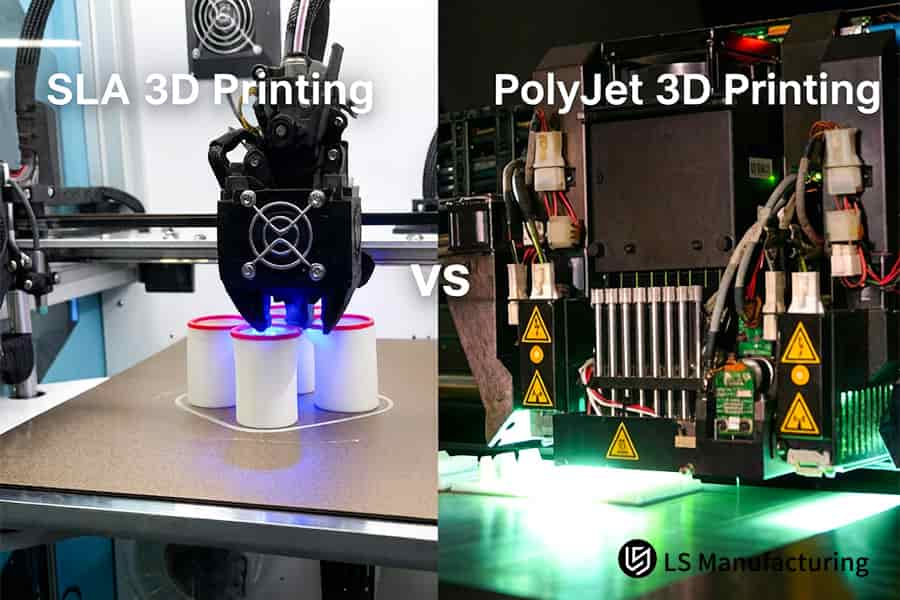
Figure 1: SLA 3D printing cures resin while PolyJet jets flexible material simultaneously.
Which Custom Precision 3D Printing Service Provides The Optimal Resolution For Functional Snap-Fit Components?
Functional snap-fit prototypes require both flexibility to allow repeated assemblies as well as stiffness to hold firmly in place. A custom precision 3D printing service using robust photopolymers along with DFM design modifications takes care of the “snap-and-break” issue by providing snap-fits that can withstand 100+ assemblies without breaking.
Resin Selection for Ductile Snap-Fit Behavior
- Material choice: Opt for tough-resin SLA 3D printing with Izod impact 45-60J/m and elongation of ≥20%, which allows snaps to last 100+ open-close cycles.
- Benefit: You will not be experiencing breakage during testing as early as before, thus reducing time spent on redesigning by 40% compared to normal brittle resins.
- Comparison: The low toughness of PolyJet makes it suitable for micropress fit, whereas the precision SLA 3D printing service is needed for cantilever snaps.
Layer Orientation and Thickness Optimization
- Raster angle: Should be set at 45° against the bending axis to align interlayer bonds with the main shear plane.
- Layer thickness: Choose 25-100μm layer thickness; 75-100μm will increase ductility for high-deflection snaps.
- Outcome: Bending fatigue life will improve 150% in comparison to default 0°/90° orientation due to optimized SLA 3D printing parameters under cyclic loading conditions. This precision SLA 3D printing service will ensure proper interlayer bonding.
DFM Root Fillet and Gate Placement
- Fillet radius: Apply R0.5mm fillet radius at snap-root to remove sharp notch stress concentrators.
- Gate location: Should be located on the opposite side from the hook-tip to prevent flow-induced weak zones near the flex zone.
- Result: Maximum peak before break increases from 35N to 58N (66% improvement); you get an end-use prototype service with high-resolution SLA 3D printing that confirms production snap-behavior at the very first attempt.
Through the combination of tough resin selection, 45-degree raster alignment, and R0.5mm root fillets, durable SLA 3D printing creates snap-fits that match production results. This method reduces validation time to days from weeks, saving designers from broken hooks while assembling prototypes. For designers in consumer electronics and medical devices, this method offers an evidence-backed way of creating functional first-time right snap-fits.
When Does Precision Prototype Cost Justify Selecting High-Temperature Resins Over Traditional Thermoplastics?
For engine-bay brackets and wave-solder fixtures with thermal resistance requirements above PolyJet’s 45-50°C HDT limits, you are stuck between accepting the heat-induced failure or spending more on CNC machining, which is time consuming. In such situations, high-temperature SLA 3D printing makes sense for your precision prototype cost by providing 250°C+ HDT at 60% reduced cost and 48-hour turnaround time:
Post-Cure Schedule Unlocks 250°C+ HDT
Two-stage thermal baking, 120°C for 2 hours and 160°C for 1 hour, forces crosslink density in order to reach HDT greater than 250°C under 0.45MPa. The cost-effective SLA 3D printing process, offered by a custom prototype manufacturer, substitutes PEEK or aluminum fixture while preserving the ±0.05mm tolerance. No more 10-day CNC manufacturing and save money for your prototype in 60%, obtaining a heat-resistant prototype in just 48 hours.
Exposure Calibration Prevents Warpage Under Heat
Calibration of laser power and scanning speed is done per each layer in order to avoid the build-up of internal stress during the UV curing of parts. As a result, the combination of this post-curing procedure and part will keep its shape during cycling between room temperature and 180°C. This rapid SLA 3D printing technology, included into industrial 3D printing service, allows you to obtain a flat fixture (±0.05mm).
Cost Justification Through Material Substitution
The method used involves not cutting or milling the metal nor waiting to have it injection molded using PPS, but having one dimensionally stable SLA 3D printing resin at 70% lower price than CNC parts per unit for low-volume production (less than 50 pieces). The cost savings on your precision prototypes happen due to not needing any hard tooling, as well as getting done in 2 days, which cuts down the 10-day process of test fixture validation by 8 days.
Replacing the CNC process with the optimized high-temperature SLA 3D printing process consisting of a two-step post-cure cycle saves 8 days on the fixture lead time and 60% cost, while achieving the same tolerance of ±0.05mm at 250°C HDT. This provides a fast and economic method for engineers to validate thermal-sensitive assemblies without sacrificing accuracy.
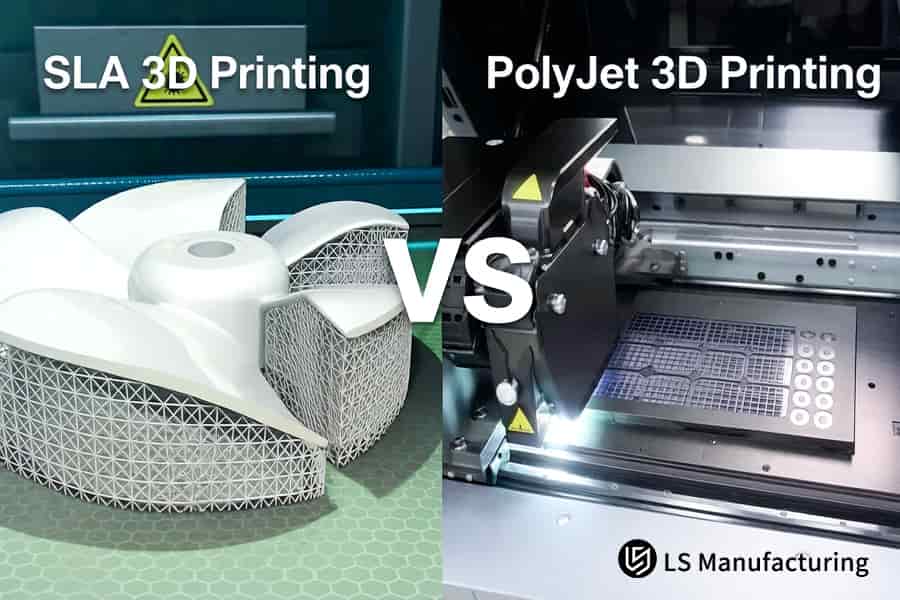
Figure 1: SLA 3D printing forms impeller while PolyJet produces inspection fixture.
How Can A Custom Prototype Manufacturer Optimize Surface Post-Processing For Optical-Grade Transparency?
The raw prints from SLA printers used for optical purposes usually exhibit <70% transmittance and Ra>1μm, requiring re-work. A custom prototype manufacturer manages optical-grade SLA 3D printing with >92% transmittance and Ra<0.05μm using a combination of IPA wash process, 2000-5000 grit wet sanding, and UV stable vacuum coating to fill the gap towards achieving injection-molding grade clarity without tooling.
| Metric | Raw SLA Printing (Typical) | Optimized Post-Processed SLA Printing |
| Surface roughness (Ra) | >1μm by stair-stepping effect | <0.05μm using 2000-5000 grit wet-sanding |
| Light transmittance | <70% (hazy yellow color) | >92% water-clear using clear SLA 3D printing |
| Yellowing index | Yellow color caused by residual photoinitiator | Clear with no discoloration after IPA wash (<5min) and coating |
| Step effect visibility | Evident on curved and/or angular geometry | Entirely eliminated with progressive abrasion |
This custom precision 3D printing service provides polished SLA 3D printing components that equal those injection molded for optics. This is an end-use prototype service that allows validation of light transmission and scratch resistance in one step, saving up to 60% in validation cycles without additional costs for polishing for medical fluid chambers and car lenses. Download our Clear SLA Finishing Guide for the step-by-step abrasion sequence, coating parameters, and transmittance validation metrics that turn raw SLA prints with <70% clarity into injection-molding-grade optical components.
What Dimensional Limits Constrain The Choice Between SLA VS PolyJet 3D Printing Service?
If your part is larger than 127mm in at least one dimension, PolyJet's 16μm resolution becomes too costly and too slow, while large area sagging causes geometrical failure. Large-size models are printed cost-effectively and fast enough on SLA thanks to self-supporting honeycomb structure. This large format SLA 3D printing ability makes SLA the best solution:
Size Threshold Triggers Exponential Cost Growth
- PolyJet limit: Parts >127mm³ cost increase to 400% because of droplet-jet technology scaling.
- SLA advantage: Linear scaling of laser scanning; cost-effective SLA 3D printing saves you 60% of the cost and 50% of the lead time.
- Client benefit: Avoid unnecessary spending on large-size PolyJet prints through precision SLA 3D printing service.
Self-Supporting Geometry Reduces Internal Waste
- Design rule: Honeycomb grid saves you 70% of post-processing time.
- Thickness guidance: Minimum wall size ≥0.8mm for SLA; thin-wall SLA 3D printing manages parts down to 0.8mm.
- Outcome: No support material inside your part. This industrial 3D printing service produces parts that work from the first build.
Interference Simulation Prevents Fit Failures
- Software check: Checks part for build envelope and shrinkage before giving the quote.
- Adjustment: Identifies sub-0.8mm walls and suggests a design change or PolyJet material.
- Result: Delivery guaranteed, no surprises. This SLA vs PolyJet 3D printing service helps you pick the right process.
Optimal-process SLA 3D printing decisions made according to interference simulations help you save up to 60% on large prototypes. For engineers, who need accuracy and scalability, this approach transforms a technological choice into sizing decisions based on data analysis.
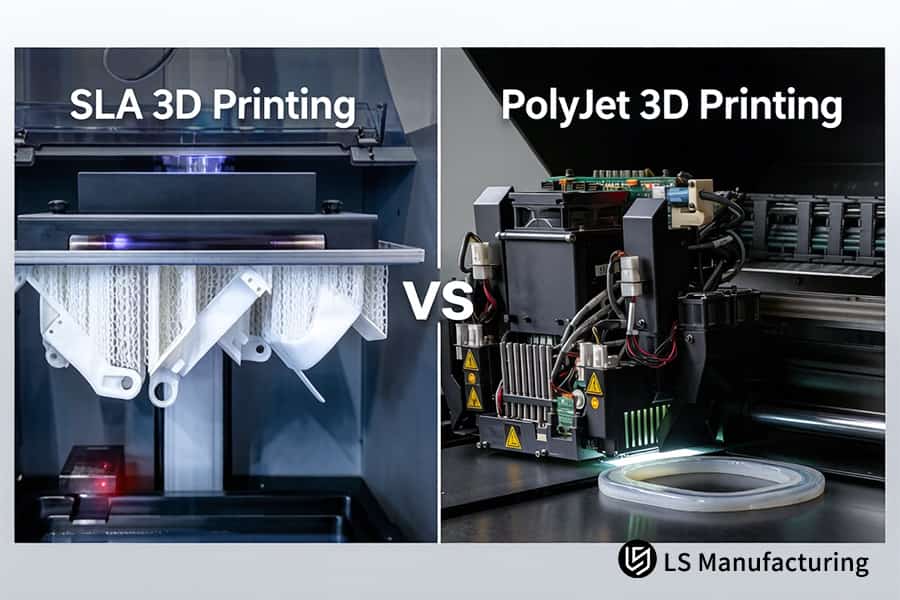
Figure 3: SLA 3D printing manufactures lens while PolyJet constructs sealing ring.
Why Is Wet Support Removal In PolyJet Printing Superior To SLA Solvent Wash For Delicate Micro-Fluidic Channels?
Wet removal of support material from micro-fluidic channels below 1.0mm in diameter and with delicate walls is crucial. SLA solvent wash usually leads to resin uncured residues formation or to channel embrittlement and cracking. Comparison of this SLA vs PolyJet 3D printing service reveals what makes PolyJet wet removal better: water-soluble gel supports dissolved using high-pressure water jets (0.5-1.5MPa) allow retaining features down to 0.15mm with 100% integrity:
Gentle Water Jet Preserves Delicate Features
PolyJet's water jet dissolves gel-like supports at 0.5-1.5MPa of water pressure, whereas SLA involves physically stripping off supports with harsh solvents that can swell or cause cracking of thin structures. With the water-soluble SLA 3D printing support technology, you keep fine channels up to 0.15mm intact without swelling or cracking them. Thus, you eliminate the flow resistance errors in your micro-fluidic testing and get accurate results at once.
No Residual Uncured Resin Inside Channels
It is impossible for SLA alcohol washing to clean all corners of sub-1.0mm channels, where sticky monomer deposits will cure later and prevent further flow. With water-soluble supports, the flushing is complete without any chemical reactions. Thus, your micro-fluidic chip acquires a flawless internal surface, and the pressure drop variability reduces to less than 10%.
Faster Turnaround Without Secondary Curing
SLA demands prolonged solvent bath followed by drying, while PolyJet water removal requires only minutes. This PolyJet 3D printing quote contains an advanced cleaning procedure that will reduce the whole process time to 60%. The functional prototypes are ready in hours, not days.
Structural Integrity Guaranteed for Thin Walls
The mechanical prying of SLA technology can cause the cracking of 0.15mm membranes, while water jet provides even pressure. Using this SLA 3D printing process, PolyJet has a 100% rate of intact parts compared to 70% of SLA in case of micro-fluidic prototypes. The custom precision 3D printing service delivers your fragile internal geometry untouched.
Using water-jet flush instead of solvent bath prevents such problems as solvent destruction and contamination of fine-channel SLA 3D printing. Such approach ensures 100% channel integrity in micro-fluidics of below 1.0mm. For the developers of biomedical chips, it means no flow blockage and correct results even for the first prototype.
How To Minimize Risk And Lead Time By Reviewing A Detailed PolyJet 3D Printing Quote Early?
The late prototype failure due to lack of DFM review results in delays and increased budget. An elaborated PolyJet 3D printing quote sent in 2 hours after CAD submission will prevent cracking, blocked vias, and sealing face steps. This early-detection SLA 3D printing system converts the ordinary price list into a risk prevention strategy:
Thin-Wall Safety Check Below 0.6mm
- Detection: DFM will analyze all thin walls under the 0.6mm threshold and warn about possible rupture under assembly pressure.
- Action: Suggest adding thickness or ribs without changing the initial design idea.
- Value: Avoid cracked pieces when physically testing, saving a 2 week reprint cycle. This risk-reduction SLA 3D printing process step ensures a first run success.
Via Blockage Prediction for Micro-Channels
- Analysis: Software analyzes possibility of support material remaining inside channels under 1.0mm in diameter and proposes changing orientation of your print.
- Correction: Changing print angle to enable self-draining of support material.
- Outcome: You will not have any blockages of your micro-fluidic channels during your first test. The DFM-integrated SLA 3D printing process detects these issues prior to manufacturing.
Multi-Material Hardness Transition Stress Mapping
- Challenge: Lines formed on sealing surfaces cause leaks in fluid assemblies.
- Mitigation: The DFM process adjusts the print plane angle in order to reduce stair-stepping on critical surfaces.
- Benefit: Enjoy flawless over-molding simulation free of peeling, decreasing the chances of needing rework by 80%. This first-pass SLA 3D printing approach will result in optimal yield.
Sealing Face Stepped-Artifact Control
- Issue: Layer lines on sealing faces result in leaks in fluid assemblies.
- Fix: The DFM makes the print plane tilt to reduce the effects of stair-stepping on sealing faces.
- Result: Your seal passes its leak test in one attempt. The precision prototype cost is well justified, having avoided further secondary processing.
An initial DFM-driven end-use prototype service converts a simple quote into a full risk assessment. Through detecting thin walls through blockages, hardness changes, and sealing face artifacting within 2 hours, the validation-ready SLA 3D printing analysis prevents any further costly re-designs. Project managers can now be assured of first-pass success and a 40% decrease in total prototype development time.
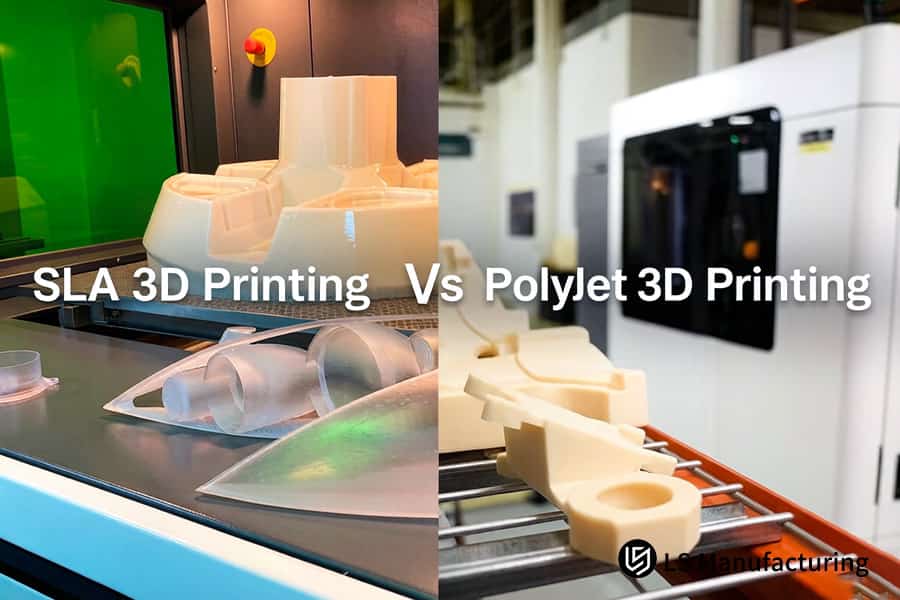
Figure 4: SLA 3D printing creates cover while PolyJet prints soft jaw directly.
LS Manufacturing Precision SLA 3D printing Service For Medical Device Enclosures: DFM-Driven Micro-Feature Customization
A minimally invasive surgical instrument manufacturer had problems with 100% snap-fit breakage and 0.35mm thermal warping of endoscopic handle enclosures. The initial samples showed Ra >3.2μm, leaked >5% air at 60°C, and cost $450 with 10-day lead time. LS Manufacturing provided micro-feature SLA 3D printing resulting in a prototype that became Class II compliant:
Client Challenge
The 0.5mm thick snap fit of the inner enclosure cracked every time it was assembled. Post 60°C simulated transport test, the part warped by 0.35mm, resulting in air leakage greater than 5%. Every part costed $450 and resulted in a delay in preclinical testing by two weeks. Our client required a high-toughness SLA 3D printing solution which would pass 15 open-close cycles, meet tolerance of ±0.03mm and have no leakage in hot condition.
LS Manufacturing Solution
By increasing the thickness, you get the thickness of the snap-fit root to 0.8mm from 0.5mm and incorporated an R0.3mm fillet. Employing an ABS-type photopolymer (with 55MPa tensile strength and 22% elongation), we printed the part at a 22.5° angle relative to the recoater blade at 50μm layer thickness. Post-curing at 80°C for 60 minutes reduced the stresses in the polymer.
Results and Value
The optimum design yielded 100% snap-fit tolerance, surviving 15 cycles without cracking. The tolerance of the prototype was ±0.03mm, and thermal deformation after 60°C test was nil—there was no air leakage. We were able to reduce the prototype cost from $450 to $110 (a saving of 75%), and the lead time was cut down from 10 days to 48 hours. This sealed SLA 3D printing enabled preclinical trials two weeks earlier.
With the integration of DFM-based geometry optimization, stress-relief post-curing process, and precise layering techniques, LS Manufacturing has created a prototype which surpassed all the clinical criteria. This success story is evident from the zero defects, cost saving up to 75%, and a turnaround time of 48 hours. It is a testimony of the company’s extensive experience with medical devices – transforming an idea into a product that is ready for the validation stage.
From 100% snap-fit breakage, 0.35mm warpage, and $450 per part to zero defects, ±0.03mm tolerance, and $110 with 48-hour delivery. Need the same for your medical enclosure? Request a DFM-optimized SLA quotation.

FAQs
1. What are the differences between SLA and PolyJet processes regarding surface quality and dimensional accuracy?
Layers up to 16μm in thickness can be obtained with PolyJet, resulting in excellent surface finishes. With SLA, layer thicknesses range from 25 to 100μm, but this method ensures ±0.1mm tolerance for large parts through the use of point-laser curing, thus rendering it a better choice for industrial structural parts.
2. Which 3D printing process should I choose for products requiring multi-material capabilities or over-molding?
Our recommendation is PolyJet. The printers offered by LS Manufacturing produce soft elastomers (Shore 30A-95A) and hard plastics in a single print job, accurately reproducing over-molded buttons, grips, and multi-material seals without assembling any parts afterward.
3. Which process should I choose if my prototype requires high-temperature testing around 150°C?
Use precision SLA high temperature resin from LS Manufacturing. Post curing at temperatures between 120-160 °C increases the HDT up to over 250°C, while Polyjet materials resist up to 45-50°C. Thus, SLA will be the best option in case of thermal properties higher than 100°C.
4. Which material is suitable for medical device prototypes that frequently come into contact with saline solution or even cellular fluids?
LS Manufacturing offers medical grade SLA resins according to ISO 10993. Our company has third party certificates on skin sensitization, irritation and cytotoxicity tests, which guarantee safe usage of our materials in physiological environment when the device contacts the tissue for a short period of time.
5. Does the removal of PolyJet’s water-washable/water-soluble support material really avoid damaging micro-channels?
Yes, because unlike the mechanical removing of the support material used in SLA technology, PolyJet uses gel support material which washes off completely with the help of high-pressure water jet or water bath. LS Manufacturing guarantees safe cleaning of the channels walls as thin as 0.15mm.
6. Why is SLA far more cost-effective than PolyJet for batch printing housings or brackets?
The whole nozzles' assembly in PolyJet uses up the materials quickly, resulting in increased expenses. Industrial SLA printers from LS Manufacturing allow you to reduce expenses by 40-60% as compared to the cost of PolyJet prototypes, thanks to increased material usage, therefore, SLA prototyping is a cheaper option.
7. What is the standard turnaround time for LS Manufacturing to deliver SLA and PolyJet prototypes?
We operate 24/7. Once CAD files are finalized, standard SLA prototypes ship within 24-48 hours. Complex multi-color or multi-material PolyJet prototypes are typically delivered within 48-72 hours, enabling rapid design iteration and accelerated time-to-market.
8. How can I determine if my complex 3D design meets the minimum wall thickness and tolerance limits for precision SLA 3D printing?
Upload your CAD files to our platform. LS Manufacturing engineers provide a free DFM quote review within two hours, highlighting any features below the 0.6mm threshold, ensuring your design is optimized for successful SLA printing before production begins.
Summary
Precision 3D printing is a well-structured engineering process that is based on thermodynamics and material science. Precision SLA can be used when high-strength and heat resistance are required for an industrial prototype; PolyJet is great at multi-material printing with micron accuracy and Pantone color palette. Our company provides LS Manufacturing services using wide range of SLA and PolyJet printers along with medical grade and 250°C functional resins and DFM engineers who provided more than 5,000 precision projects globally.
Nervous about shrinkage or distortion prior to your testing next week? Just click “Get a Quote” to send us your .STEP/.STP/.IGS files. We'll send you a free DFM review within two hours by our senior engineers including wall thickness, stress analysis, and build orientation along with a low-cost solution.
📞Tel: +86 185 6675 9667
📧Email: info@lsrpf.com
🌐Website:https://lsrpf.com/
Disclaimer
The contents of this page are for informational purposes only.LS Manufacturing servicesThere are no representations or warranties, express or implied, as to the accuracy, completeness or validity of the information. It should not be inferred that a third-party supplier or manufacturer will provide performance parameters, geometric tolerances, specific design characteristics, material quality and type or workmanship through the LS Manufacturing network. It's the buyer's responsibility.Require partsquotation Identify specific requirements for these sections.Please contact us for more information.
LS Manufacturing Team
LS Manufacturing is an industry-leading company. Focus on custom manufacturing solutions. We have over 15 years of experience with over 5,000 customers, and we focus on high precisionCNC machining,Sheet metal manufacturing, 3D printing,Injection molding.Metal stamping,and other one-stop manufacturing services.
Our factory is equipped with over 100 state-of-the-art 5-axis machining centers, ISO 9001:2015 certified. We provide fast, efficient and high-quality manufacturing solutions to customers in more than 150 countries around the world. Whether it is small volume production or large-scale customization, we can meet your needs with the fastest delivery within 24 hours. choose LS Manufacturing. This means selection efficiency, quality and professionalism.
To learn more, visit our website:www.lsrpf.com