English



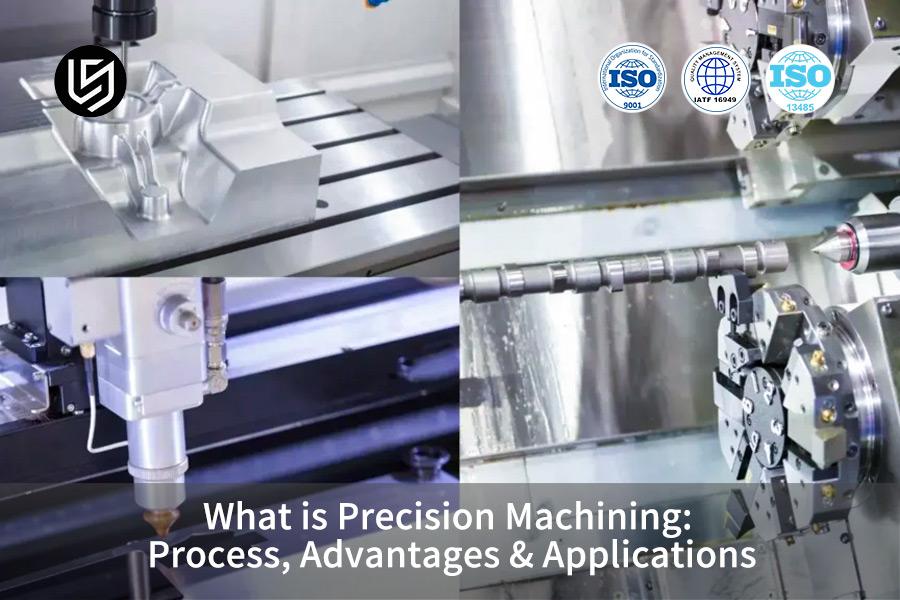
Precision machining goes beyond merely producing high-tolerance parts; it involves a carefully regulated method of combining different factors such as material science, thermal dynamics, and process stability. This systemic approach is the one that can directly address the main issues of inconsistent batch production, the dilemma of reducing weight while maintaining structural strength, and escalating costs of prototyping.
Our validated methodology, which is the result of working with thousands of precision parts, is the one that can be trusted to provide consistent results. We achieve this by comprehensive process design, making adjustments during the process for variables such as thermal drift, and strict supply chain management, thus ensuring stable tolerances, optimized performance, and cost and timeline predictability from prototype to series production.
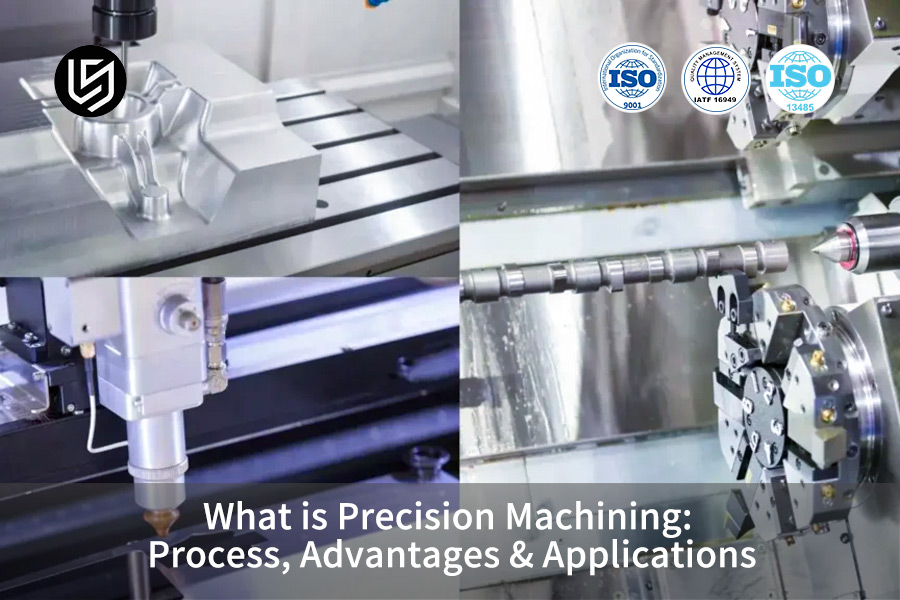
Precision Machining: Essential Checklist
| Element | Strategic Insight |
| Fundamental Trade-off | The core dilemma is that on the one hand, you have to make the precision machining tolerances even tighter, but on the other hand, you face an exponentially rising cost and manufacturing complexity. |
| The Over-specification Trap | Most of the drawings have tolerances that are much tighter than necessary for the function which can easily raise the cost of a part by as much as 50%. |
| Capability vs. Claim | Many shops boast about their level of precision but they do not have the metrology, process control, or environmental stability to be able to verify and maintain it consistently. |
| Our Scientific Methodology | We conduct a thorough function, first analysis, defending each tolerance against an all, encompassing cost-capability model. |
| Data-Driven Foundation | The last word in our decision, making are the empirical benchmark of the producibility taken from our proprietary database of hundreds of precision machining projects. |
| Holistic Process Control | Winning in the market means that you have to master not only the factory but also the entire chain: the machine stability aspects, the tooling strategy, the thermal effects, and the in- process verification. |
| Result: Guaranteed Conformance | First-pass yield rates exceeding 99% of critical-to-function features and part quality consistent with design specifications. |
| Result: Economic Precision | By matching the design to the manufacturing process that is both the most cost-efficient and capable, one can achieve remarkable cost savings. |
| Strategic Partnership Value | From a commodity purchase, precision machining is transformed into a reliable, predictable, and ingenious extension of your engineering team. |
We accomplish to disarm the precision-cost paradox of accuracy by substituting scientific approach for a guessing. Our data, driven framework is capable of technically justifying and economically optimizing each tolerance that is, at the same time, fully performance, assured and cost, controlled. In this way, your precision machining is transformed into a value-driven, dependable, and predictable collaboration.
Why Trust This Guide? Practical Experience From LS Manufacturing Experts
Precision machining is usually explained theoretically, however a true understanding can only be obtained from everyday practice. Our workshop doesn't merely learn about tolerances; we prove them under extreme conditions, where even a micron's difference in a fuel system component or a surgical guide can lead to very serious consequences. This guide reveals the hard-won and practical knowledge gained from the battle line.
Our method is based on the integration of design and execution, with a strict adherence to the standards of such bodies as the Aluminium Association (AAC) for alloy performance and the Metal Powder Industries Federation (MPIF) for advanced materials. In this way, the components are not only accurately machined but are also profitably engineered for the final usage, thus reaping strength, durability and performance.
Every suggestion here is the result of our experience, from determining the toolpath for heat-resistant alloys to stabilizing thin-walled geometries. We offer a number of proven methods, balanced between speed, cost, and uncompromising quality, which has been tried on thousands of parts and thus, based on real results.
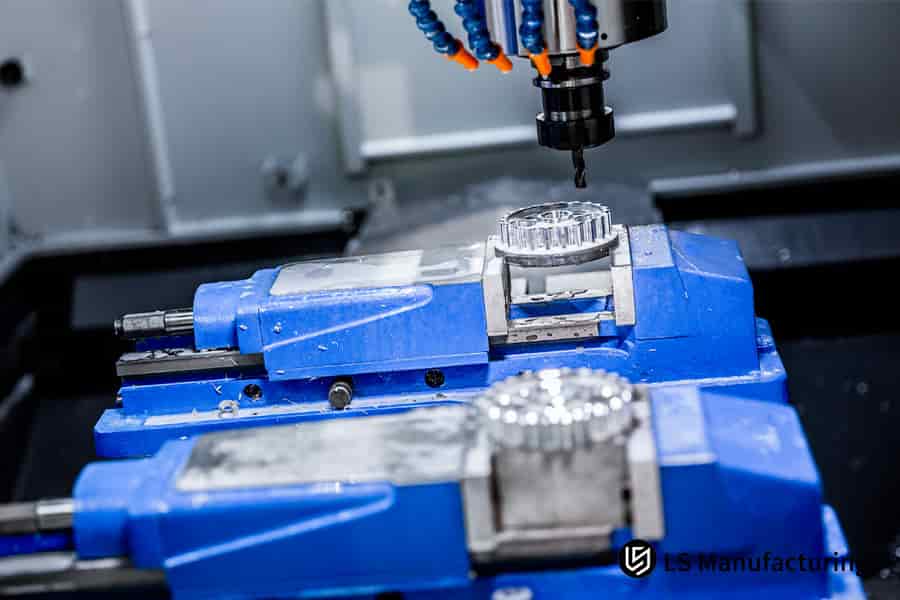
Figure 1: Machining a high-tolerance metal gear component for precision engineering services and companies.
Does The Modern Definition Of Precision Machining Go Beyond Simple Dimensional Tolerances?
In today's world, precision engineering goes far beyond just keeping dimensional tolerances. It requires a holistic definition of part quality, where geometrical precision, top surface quality, and statistical performance reliability are combined to guarantee the working reliability of the parts. The following work reflects how we are able to solve the entire scope of the challenges that are heavily interdependent:
Mastering Ultra-Precise Geometry and Surface Topography
We don't "just" nail sub-micron accuracies and complex geometries (e.g., position ≤0.02mm, form accuracy to λ/ 4) down to the smallest detail. Our smart system closes the loop in integrating real, time metrology feedback directly into machine tool paths. For a freeform optic mold, such a closed, loop correction adjusts for tool wear and thermal drift during cutting, thus making sure of the final precision machining standards for both dimension and surface finish (Ra < 0.1µm) are met simultaneously in one, stable setup.
Ensuring Material Integrity for Functional Performance
One way to look at it is to say a component can be dimensionally accurate and still not last long. Our precision machining systems are designed to limit the negative effects of machining on the surface/subsurface of the material. Entering into the beneficial compressive residual stress zone is what we do by limiting the formation of cutting forces and temperatures and also by applying post-process treatments such as controlled laser peening. Doing this, for example, turns a critical aerospace bearing raceway which used to be a source of potential fatigue into a highly resistant component, thus extending its calculated fatigue life by more than 300%.
Guaranteeing Consistency Through Statistical Process Control
Precision in quality can be only demonstrated through large volumes. SPC (Statistical Process Control) tracking is performed at the primary source, where key parameters (e.g., cutting force, acoustic emission) are continuously being monitored to determine the quality drift. When making 10, 000 fuel injector nozzles, these preemptive measures allow a tool adjustment to be made in advance, thus keeping Cpk ≥ 1.67 for critical flow diameters. The result is that the level of reliability from one batch to another is so high that it effectively turns what is precision machining in the laboratory into production reality.
This documentation is an evidence of our inherent technical capabilities translating the comprehensive definition of modern manufacturing into predictable, robust processes. It demonstrates how we leverage our competitive advantage in focusing on the root-cause physics of machining to deliver not only parts but also guaranteed performance and longevity through advanced precision machining.

What Is The Core Process Chain For Achieving Micron-Level Precision?
Stable micron-level precision machining tolerances dont come from one, off steps but a systemic manufacturing workflow. We change accuracy drift and scrap by making predictive engineering, highly disciplined material preparation, phased machining, and closed-loop metrology work together as one, single, managed chain. This kind of end-to-end control is what turns a theoretical specification into a deliverable, dependable component.
Simulation-Driven Process Design: Predicting and Compensating for Error
- Virtual Prototyping & Force/Thermal Simulation: We calculate and compensate tool deflection and part distortion in our digital twin before actual cutting.
- Deformation Pre-compensation: The CNC program is modified before the first cut so as to use the predicted errors to achieve net-shape accuracy.
Material Science and Pre-processing: Ensuring a Stable Foundation
- Spectroscopic Verification & Ultrasonic Inspection: We check the alloy composition and internal flaws of the blanks.
- Strategic Stress-Relief Cycling: Thermal pre-treatment enables the material to retain its stability, thus it does not distort during the precision machining process that follow.
The Phased Strategy: Progressive Machining to Final Specs
- Roughing, Semi-Finishing, Stress Relieving, Finishing: The sequential method of these four steps effectively controls internal stresses and thermal loads.
- Intermediate Aging: Implementing a separate stabilization step in between machining stages is very important to achieve long-term precision control in titanium and stainless steel precision machining components.
Metrology Feedback and Closed-Loop Control
- In-Process Gauging & Post-Stage CMM Verification: Data is accumulated after each significant step of the process.
- Real-Time Parameter Adjustment: The gathered data is used to adjust the tools and paths for the next operation, thus, a self-correcting manufacturing chain is created.
The well, defined precision process chain converts accuracy from just a prediction to a controlled and expected outcome. Our advantage over competitors is the entire system whereby we not only operate with precision but also design and control the whole ecosystem to assure that the final micron is maintained. Here is a detailed method of a way to overcome the inherent instabilities in high precision machining and attaining repeatable success.
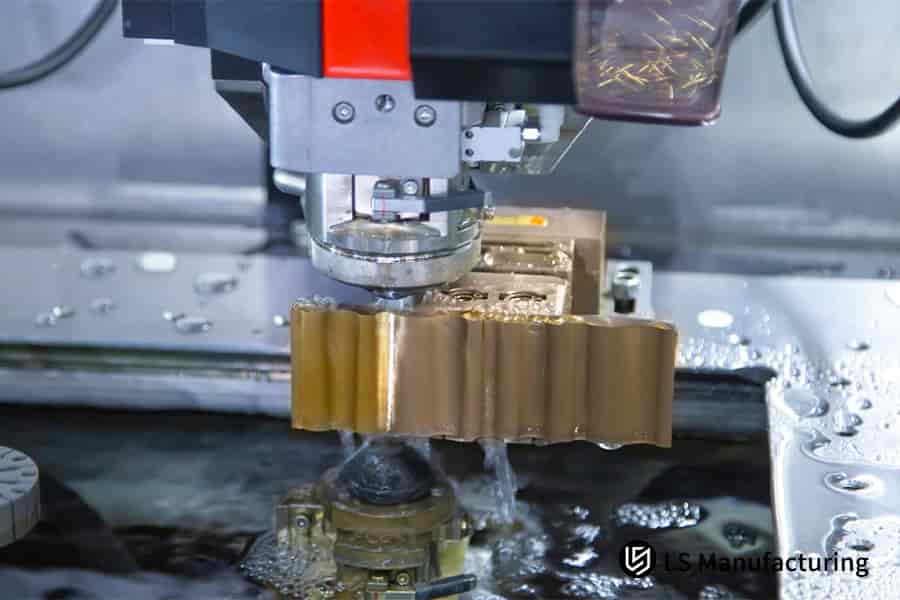
Figure 2: CNC machining a high-tolerance metal gear component for automotive and aerospace manufacturing applications.
What Key Factors Together Determine The Final Upper Limit Of Machining Accuracy?
The ultimate limit of precision machining is not set by a single machine specification, but rather by the combination of various accuracy factors. We thoroughly work through each of these variables to a point where we can practically push the limits of tolerance, while at the same time ensuring the predictability of the results:
Controlling Machine Tool Dynamics Beyond Static Specs
Separating the static positioning accuracy from the dynamic path fidelity has been our focus. Using advanced servo tuning and real-time trajectory correction our machines are able to follow the tool path accurately at high feed rates thus fulfilling the programmed path within microns, which is an indispensable factor when demanding precision machining applications such as aerospace impellers are involved.
Implementing a Holistic Thermal Management Strategy
Since thermal management is the main source of error, we have decided to make a strong multi-layered defense against it. It comprises a ±1°C climate-controlled room, temperature-stabilized coolant systems and a thermal compensation algorithm running during the process. A 300mm aluminum structural part, for instance, this combination of measures allowed the flatness to be kept within 0.02mm thus avoiding the 0.08mm deviation that was typical of the free running environment.
Engineering Stability at the Tool-Part Interface
Precision disappears at contact points. We implement very strict measures on toolholder balance (TIR ≤0.003mm) and create separate fixtures based on kinematic coupling principles to ensure a repeatable locational accuracy of better than 0.005mm. This value variation eliminates the variability that the precision machining process setup would introduce.
Enabling Closed-Loop Accuracy Through Metrology
We treat measurement as a real-time control function, not as a final inspection. Machine probing with the tool automatically adjusts for the tool wear and part positioning, thus the feedback loop maintains accuracy. This kind of in-process compensation can hold the diameter of a bore within 0.005mm over long production sequences.
Such an analysis proves our technical competency when it comes to breaking down and mastering the elements of the evolved ecosystem of precision machining limits. Taking a systematic, physics-based approach to error prevention and compensation, we set ourselves apart from the competition. This is the core of our offering to clients who require the most dependable and reliable methods of meeting their precision machining tolerance requirements.
What Are The Core Advantages Of Precision Machining Compared To 3D Printing And Traditional Machining?
Choosing the best manufacturing process is essentially a function of performance and cost. Hence, this article focuses on a comparative cost-benefit analysis of various manufacturing routes which helps to identify for which technically demanding applications precision machining can give better material properties, surface quality, and total cost of ownership.
| Evaluation Criteria | Precision Machining | Metal Additive Manufacturing (3D Printing) | Traditional Machining |
| Material Integrity & Performance | Delivers 100% dense, isotropic material with superior, predictable fatigue strength. | A key differentiator vs 3D printing is the absence of process-induced porosity, which directly impacts dynamic load capacity. | Good integrity, but final part performance is limited by achievable accuracy and surface finish. |
| Achievable Surface Finish | Produces fine finishes (e.g., Ra 0.8 m) directly, ideal for sealing or bearing surfaces. | Typically as-built roughness exceeds Ra 10µm, necessitating secondary precision machining for functional interfaces. | Limited by inherent process capability; achieving finer finishes reduces throughput and economy. |
| Dimensional Accuracy & Consistency | Enables stable, high-volume production at tolerances an order of magnitude tighter (e.g., ±0.01mm). | Challenges with accuracy on internal features highlight a core advantage of subtractive precision methods. | Sufficient for general applications but lacks the consistency for true high-tolerance requirements. |
| Economic Efficiency | Offers the optimal cost-benefit analysis for medium volumes (50-5, 000 pcs) when superior finish and strength are required. | High per-part material cost; economical primarily for complex prototypes or very low-volume production. | Most cost-effective for very high volumes of simpler parts where premium accuracy is not critical. |
This discussion gives the technical reasons for choosing the process. We use this cost-benefit analysis to help us understand client problems and thus decide where the precision machining advantages better material performance, natural surface quality, and batch economicscan be fused to provide functionalities at total cost that is optimal and guaranteed for critical parts, medium volume.
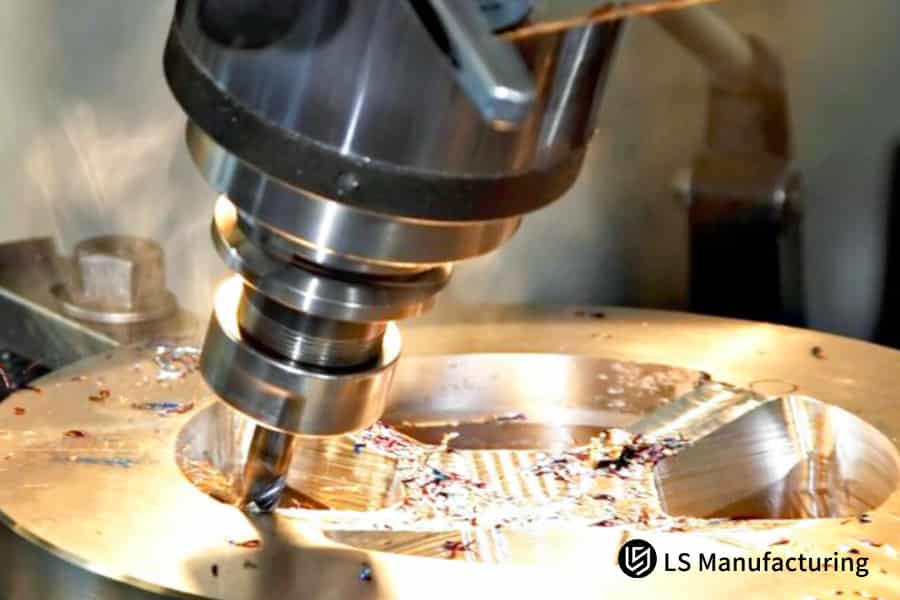
Figure 3: Cutting a high-tolerance alloy circular part for precision engineering services in aerospace manufacturing.
How To Address Extreme Challenges In Precision Machining In The Aerospace And Medical Device Fields?
Precision machining applications are essential for components facing extreme environments, where failure is not an option. Here, the emphasis is going to be on how the processes in precision machining can be customized to solve the respective, critical issues in the manufacturing of both aerospace and medical device, thereby ensuring the products are dependable even when subjected to extreme stress.
| Sector | Extreme Challenge | Our Precision Machining Solution |
| Aerospace | Titanium blades are machined to a profile of 0.05mm airfoil while a compressive residual stress layer is imparted for enhanced high-cycle fatigue life. | By using a low, speed, high-depth-of-cut method along with ultra-high-pressure coolant, we regulate the heat input to get the desired surface stress condition and at the same time, the tool life is increased by more than 50%. |
| Medical Device | Developing a cobalt, chromium knee implant with a consistent 50% ±5% porosity and burr-free micro-features to osseointegrate and avoid the biological response of the body. | A micro-EDM and micro-precision CNC milling hybrid process is applied to precisely create and finish each pore, thereby fully eliminating the microscopic defects that are crucial for biocompatibility. |
This evaluation confirms that we can create and implement specialized precision machining processes designed to meet the stringent sector-specific performance criteria. We address the basic issue of manufacturing advanced materials into safe-critical components for the application by understanding the relationship between material science, mechanics, and precision engineering.
LS Manufacturing: Overcoming Micro-Deformation In Aluminum Lens Barrels
Going beyond meeting the initial tolerances, high-stakes manufacturing requires ensuring long, term dimensional stability under real working conditions. In this LS Manufacturing case study, we recount how we uncovered and resolved a significant, hidden challenge of stress-induced distortion in a precision aluminum mirror tube for an optical system manufacturer:
Client Challenge
The manufacturer had issues with an aluminum optical component - a mirror tube that needed a 50mm bore with ≤0.005mm cylindricity. Although initial samples were in spec, latent machining stresses led to the distortion of the bore by more than 0.015mm 48 hours after assembly, thus the final imaging system yield dropped to 65%, and the major defense contract was at risk.
LS Manufacturing Solution
Our stress relief machining guide addressed the issue at its core. Besides roughing, a deep cryogenic treatment (-196°C) was applied to relieve residual stresses. Symmetric tool paths were used in precision aluminum machining finishing, and a heat treatment of 48-hour stabilized the microstructure, finally. In-process roundness measurement provided a closed-loop verification.
Results and Value
Post-process, the initial cylindricity stayed within ≤0.004mm, with a change of less than <0.001mm after 30 days. This engineered stability was one of the main factors of our client's final assembly yield increase from 65% to 98%, thus securing the contract and setting the new standard for mission-critical precision machining in optomechanical assemblies.
This is a good example of how technically competent we are in identifying and fixing of the root-cause physics of failure. We handle such high-stakes incidents not by quick isolated fixes, but through a systematic engineering method that integrates material science, predictive precision machining, and rigorous validation to provide guaranteed, long-term dimensional stability even for the most demanding applications.
Learn how precision machining solves stability issues – contact us for a custom quote today.

Key Hard Metrics Beyond Certification For Evaluating A Precision Machining Supplier?
Choosing the precision machining supplier of critically important parts is a task requiring one not to stop at the basic quality standard checking, but also to physically look at the process performance data. This paper identifies the required "hard metrics" that genuinely capable suppliers use to separate themselves, thus providing a clear benchmark for rigorous technical supplier evaluation.
Verifying Statistical Process Control (SPC) and Capability
- Transparent CPK Data: We provide real SPC charts of key features (e.g. boring diameters) that show a stable Cpk ≥ 1.67 during production runs.
- Proactive Process Management: The data are used not only for predictive maintenance and tool, life management but also for precision machining process control and thus precision is regularly being achieved.
Auditing Measurement System Integrity
- MSA/GR&R Reports: We confirm measurement reliability through well, maintained Gage R&R studies ≤10% for all critical inspection equipment.
- Traceable Metrology Chain: This means that the data on which you base your quality standards and our process changes is essentially accurate and can be reproduced.
Assessing Deep Technical and Problem-Solving Expertise
- Engineer-Led Process Design: Our senior engineers (avg. >10 years experience) develop process plans and thoroughly explain each step to control variables such as stress in hardened steel.
- Root-Cause Methodology: Leveraging their expertise, they are highly capable of issue prevention which is their main differentiating factor when compared to other precision machining companies.
Evaluating Sustained Investment in Advanced Capability
- Technology Roadmap: We regularly maintain a capital investment plan for multi-axis precision machining systems, in-process probing, and thermal compensation software upgrades.
- Future-Proofing Operations: This promise allows us to keep our advanced machining processes always at the cutting edge of both capability and efficiency.
This framework is the prepared set of criteria that defines the substantive technical audit requirements. By this assessment, we are making it easier for you through the transparent demonstration of how our data-driven methods, expert engineering, and consistent investment in the core challenge of delivering and proving the predictability of high-volume precision machining at the highest level of excellence.
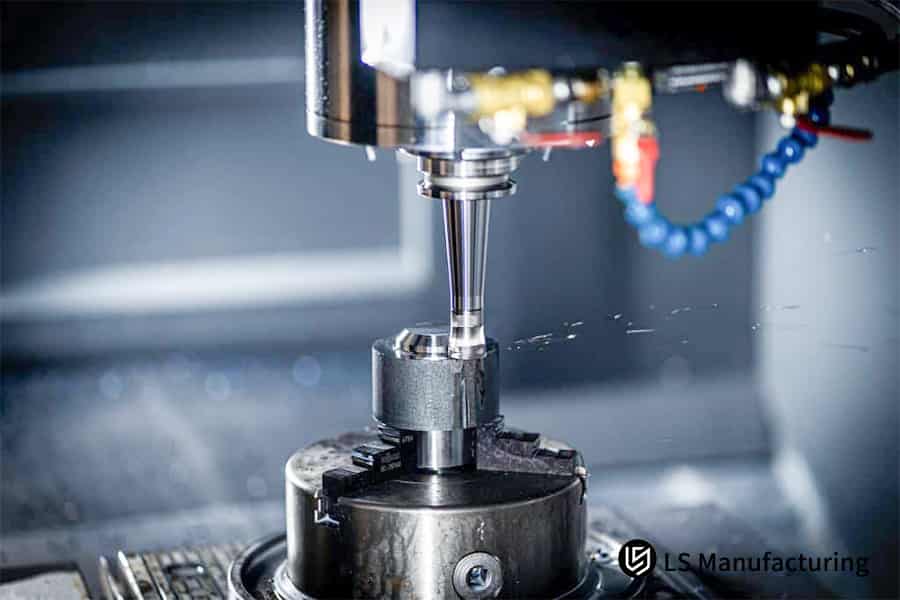
Figure 4: High-speed precision machining with coolant spray processes high-tolerance metal components for engineering applications.
Why Is It Crucial To Choose The Same Precision Machining Partner From Prototype To Mass Production?
Switching a component from prototype stage to volume production stage with different suppliers entails major technical and programmatic risks, such as loss of knowledge and disputes over quality. Our integrated prototype to production service totally eliminates these risks by giving you a continuous, streamlined process flow that essentially safeguards your schedule, budget, and product quality:
Preserving and Scaling Proprietary Process Knowledge
The know, how in the form of best fixture layouts, toolpath strategies, or coolant parameters, that is typically gained by prototyping is here digitally captured in our integrated precision machining process. This digital thread gives us the opportunity to take the proven process straight to the production machines without the need for re-designing, thus, we eliminate the costly re-qualification loops and keep your design's performance intent confidential.
Ensuring Unchanging Quality Standards and Metrology
We establish a single measurement baseline which is maintained and controlled by audit going through all the stages of development and production. The same CMMs, programs, and master artifacts that were used to qualify the prototype are also employed in the Production Part Approval Process (PPAP). In this way, a "good" prototype is guaranteed to be a "good" production part with the same strict precision machining quality standards.
Establishing Undisputed Accountability and Rapid Resolution
When a one-stop solution is provided, the question of the responsible party is immediately solved. In case of any deviation, it is treated by a one unified engineering team having the full historical process data at their disposal. This direct line from the problem to the solver reduces the time of finding the root cause and implementing corrective actions by weeks, thus, giving reliable volume production without the delays caused by finger-pointing.
This system reflects the depth of our commitment to complete precision machining services that solve the biggest problem of commercialization. We dont simply make prototypes and then parts; we take a single, confirmed manufacturing process from first article to ten-thousandth and master it to such an extent that we can guarantee a stable quality, accelerate your time to market and provide scaling-up without any problems.
How Can I Obtain A Preliminary Feasibility Analysis For Precision Machining Of Your Parts?
Starting production without having production feasibility checked is really unsafe. Our preliminary review within 24 hours changes your design files into intelligent process solutions which serve taking the risk out of your project right from the first step. This indispensable product serves as a firm platform for a call for quotation process to be on point:
Comprehensive Design Interrogation via Free DFM Analysis
We conduct a free DFM analysis of your 3D/2D data to identify the features that normal precision machining services might have trouble with. Features may include deep micro-holes or thin walls, for example. Our suggestions are accompanied by concrete changes such as slightly loosening non-critical tolerances in order to make the product more manufacturable and thereby cheaper without compromising the function.
Process Simulation & Critical Risk Identification
Using our comprehensive process library, we run a simulation for a machining sequence. To manufacture a complex manifold, we analyze whether a single multi, axis setup would be sufficient or if we would have to rely on secondary precision machining operations like EDM. We apply this method to identify the tolerance stacks that are most critical and the potential thermal distortion, thus, positioning control points in advance.
Resource-Based Cost & Timeline Modelling
By changing the virtual process to real machine time, tooling, and inspection requirements, we determine cost and lead time. We compare scenarios, for example, using a 5-axis machine for prototypes versus dedicated fixtures for volume, providing a clear financial and scheduling outline prior to the formal quotation process.
This report not only lists our precision machining expertise but also demonstrates our expertise through problem-solving in a proactive manner. It helps us to be seen as a strategic partner who manufactures, economically viable precision machining components, thus, providing you with decisive technical and commercial clarity.
FAQs
1. What is the highest precision achievable through precision machining?
Precision machining can go as far as producing a part with a dimensional accuracy of ±0.001 mm (1 micrometer) and a surface roughness of Ra 0.1 μm. That, of course, is assuming a perfect scenario and the use of the best possible equipment. Although part size, material, and construction may influence the result, this level of precision is great for an initial assessment.
2. Is precision machining always significantly more expensive than conventional machining?
In a way, it depends. Precision machining may be at the risk of being quite expensive if you are going to produce the components and then require additional secondary machining if there is a high scrap rate. However, the inherent nature of precision machining allows for a reduction in total cost of ownership (TCO) by achieving the first-pass yield and enhancing product reliability. To evaluate the exact cost for your project, you can get a custom precision machining quote based on your specific drawings and requirements.
3. Is precision machining suitable for small batches (e.g., 10-100 pieces)?
Great choice. Essentially, precision machining is the same as flexible manufacturing, which does away with the need for costly mold investments. By utilizing streamlined procedures and fast changeover, LS Manufacturing can carry out small-batch precision machining orders both in an effective and economically viable manner.
4. Which materials are best suited for precision machining?
This question is quite open, ended and the outcome will mostly depend on what your performance criteria are (e.g. strength, corrosion resistance, weight) and whether the material in question fits well into our process database. That said, some materials are typically associated with precision machining, and they include aluminum alloys, stainless steel, titanium alloys, and engineering plastics (such as PEEK).
5. How can I ensure the security of my design drawings during the inquiry process?
LS Manufacturing is committed to protecting our clients' intellectual property as our core principle. Internally we have implemented strict NDA adherence, encrypted file transfer systems as well as access control for project files.
6. How long does it typically take from inquiry to receiving the first sample?
We can only produce samples within 2-4 weeks from receiving the final data for components made of common materials. In fact, the period from receipt of data to delivery includes time for process planning, programming, material procurement, initial piece turning, and inspection and verification.
7. If my design might have machining difficulties, will you provide advice?
We always do DFM (Design for Manufacturing) review right away and this is one of our standard services. We will come up with changes that can be made to the design in order to achieve better manufacturability, cheaper price, or higher precision, and will present them during the evaluation stage.
8. What are the most problematic "red flags" when choosing a precision machining supplier?
Avoid suppliers who are not willing to share specific process capability data (CPK/SPC), who refuse to have an on-site audit, who provide extremely non-transparent quotations (only a total price), or who cannot clearly explain their methods for controlling thermal deformation and stress.
Summary
True precision machining translates superior engineering insights, rigorous process control, and extensive materials knowledge into predictable and repeatable manufacturing results. It's not just about achieving the numbers on the drawings, but about realizing the product's design intent, functional reliability, and market success. In the iron triangle of cost, speed, and quality, precision machining offers the optimal balance for high-end manufacturing through its systemic advantages.
Upload your part drawings now to receive a customized "Preliminary Feasibility and Value Analysis Report for Precision Machining" by LS Manufacturing engineering team. This free report will help you: 1) identify potential manufacturability bottlenecks and optimization opportunities in your design; 2) understand the key technological paths and challenges to achieving your required precision; and 3) obtain preliminary cost and delivery time assessments based on real project data. Take the first step and let professional insights safeguard your project.
Define your precision with a full-spectrum engineering solution—contact us for a free project assessment.
📞Tel: +86 185 6675 9667
📧Email: info@lsrpf.com
🌐Website: https://lsrpf.com/
Disclaimer
The contents of this page are for informational purposes only. LS Manufacturing services There are no representations or warranties, express or implied, as to the accuracy, completeness or validity of the information. It should not be inferred that a third-party supplier or manufacturer will provide performance parameters, geometric tolerances, specific design characteristics, material quality and type or workmanship through the LS Manufacturing network. It's the buyer's responsibility. Require parts quotation Identify specific requirements for these sections.Please contact us for more information.
LS Manufacturing Team
LS Manufacturing is an industry-leading company. Focus on custom manufacturing solutions. We have over 20 years of experience with over 5,000 customers, and we focus on high precision CNC machining, Sheet metal manufacturing, 3D printing, Injection molding. Metal stamping,and other one-stop manufacturing services.
Our factory is equipped with over 100 state-of-the-art 5-axis machining centers, ISO 9001:2015 certified. We provide fast, efficient and high-quality manufacturing solutions to customers in more than 150 countries around the world. Whether it is small volume production or large-scale customization, we can meet your needs with the fastest delivery within 24 hours. choose LS Manufacturing. This means selection efficiency, quality and professionalism.
To learn more, visit our website:www.lsrpf.com.