English



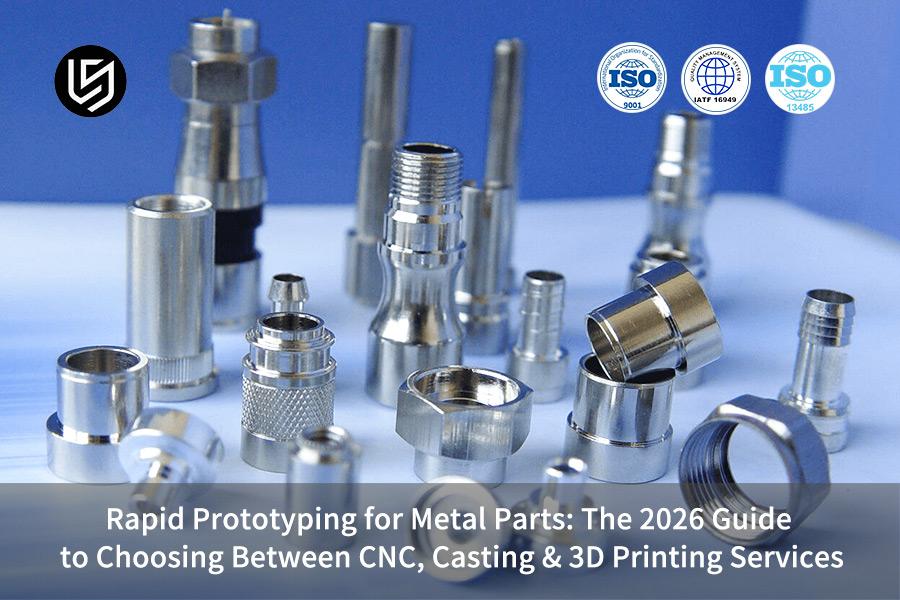
Rapid prototyping for metal parts often become stuck in the cycle of expense and failed validation due to the unknowns that occur when attempting to optimize material and design freedom. Whether it is the expense and failure of CNC iterations, the structural failure of 3D printed prototypes, or the delayed results of casting trials, the common denominator is the lack of focus on the true goal: minimizing total time and cost to obtain reliable performance data.
Our new framework, released in 2026 with over 400 projects worth of data, is the clarity you need to escape the cycle and make the decisions that will break it. With our tools such as cost curves and performance charting, you will clearly see when one method is faster than the next. In addition, you will have the definitive guide to selecting the best method and the unbiased expertise of LS Manufacturing as your guide to maximize the value of your development dollars.
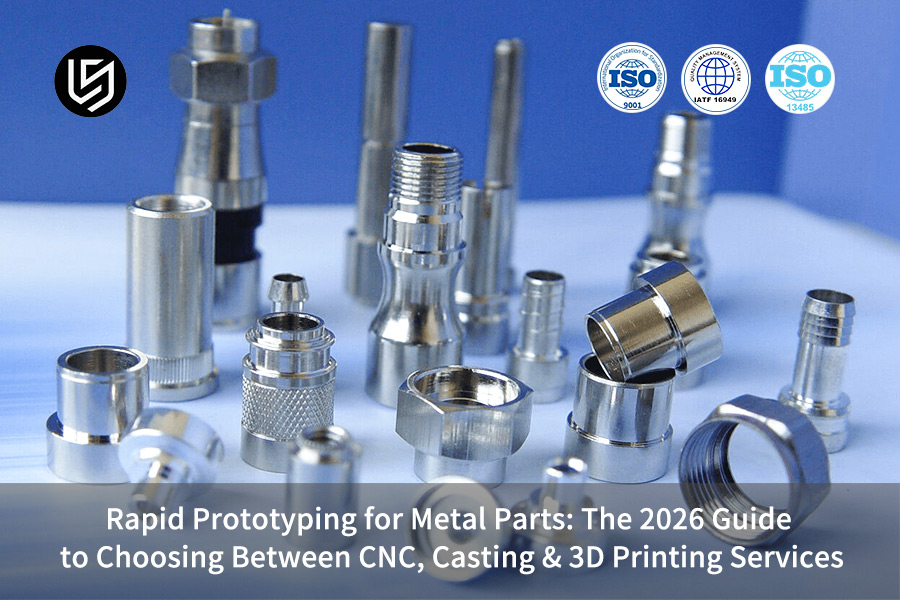
Rapid Prototyping For Metal Parts: Strategic Guide
| Key Consideration | Our Strategic Approach |
| Process Selection Dilemma | The choice of Additive (DMLS/SLM) or Subtractive (CNC) manufacturing process is based on the mechanical properties of the part, its geometrical intricacy, and the time it requires for production. |
| Cost-Time-Quality Triangle | The achievement of production-like properties in a part for purposes of prototyping is normally in conflict with cost and time constraints. |
| Design Iteration Support | The process of choice should support design iterations at a fast turnaround and low cost without incurring additional expenses for tooling and programming. |
| Our Integrated Service Portfolio | Our services cover 3D printing metal parts requiring intricate and lightweight geometries, and CNC machining for parts requiring isotropic strength properties and high surface finish requirements. |
| Technical Advisory Role | Our role is to assist you in choosing the right process for your functional requirements and advise you on the most optimal way to validate your design intent. |
| Accelerated Post-Processing | We have optimized processes for heat treatment, support removal, and surface finishing (machining and polishing) that are optimized for quick-turn metal prototypes. |
| Outcome: Validated Design Data | Delivers prototypes that can be fully tested from a mechanical, thermal, and fitment perspective to provide the highest confidence level for production decisions. |
| Outcome: De-risked Development Path | Provides a proven path from prototype to production, eliminating surprises related to materials and processes during the production phase. |
We have solved the fundamental problem of providing functionally accurate metal prototypes that can be used to test production part performance. By providing the best process for your prototypes and executing it at high speeds and precision, we help our customers avoid costly time in the development phase.
Why Trust This Guide? Practical Experience From LS Manufacturing Experts
There are many resources on rapid prototyping out there, but this one is written from the fire-tested crucible of production reality. What we advocate is battle-tested in everyday life, informed by widely recognized standards such as those from the Occupational Safety and Health Administration (OSHA) for safety or industry best practices for Additive Manufacturing (AM). We haven’t learned from a textbook or a classroom, but by making functional prototypes that must endure in the real world for applications in aerospace, mobility solutions, or medical technology.
What we advocate in this guide is battle-tested in everyday life by success or costly failure in production reality. We know exactly how to avoid porosity in a thin-wall aluminum casting or how a CNC tool path can help maintain titanium’s fatigue life or when a part’s anisotropy in Selective Laser Melting (SLM) will lead a design astray from validation reality.
That experience, distilled into a clear decision process, is what this guide aims to provide: a clear decision process to make a choice between CNC, casting, and 3D printing technologies, offering the same insights we rely on every day to balance performance, cost, and speed, avoiding costly mistakes, and compressing your product development cycle with certainty.
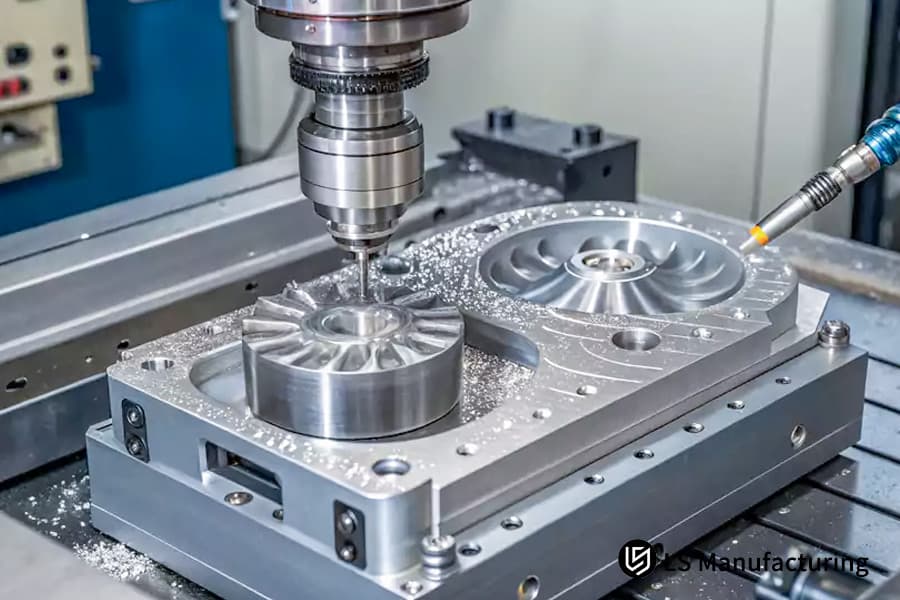
Figure 1: Comparing precision machining for rapid metal prototyping to guide method selection and supplier evaluation.
How To Deconstruct The Unit Cost Of CNC Machining, Metal 3D Printing And Rapid Casting?
In order to make an effective decision in the field of rapid prototyping for metal parts, it is necessary to move from quotes to fundamental economic principles of the process. In this analysis, we will take a standard quote for a 316L stainless steel part as a base and provide a detailed cost breakdown of the process for a rational decision process in choosing between different methods of manufacturing and reducing the time for a meaningful prototyping cost comparison in terms of its economic characteristics.
| Process | Primary Cost Drivers & Economic Logic |
| CNC Machining | Programming and machine time dominate the cost model. A complex 5-axis part can be 3-5x more costly than a simple block, while material content is often less than 20%. |
| Metal 3D Printing (SLM) | Cost is directly related to the volume of the material and the time taken. Internal complexity has a negligible effect on cost. Part orientation, supports, and recyclable powders all contribute to the end cost. |
| Quick Casting | Cost is affected by the initial tooling costs. The more pieces are required, the less the cost per piece will be. It has the lowest cost when the quantities are known (i.e., ~¥900/part for 20 pieces). |
Without this information, the term "unit cost" is meaningless. This data-driven approach allows you to make informed decisions as to the best technology for your needs, minimizing the cost and risk associated with your prototypes. We pass this information on to our clients so they can make the optimal rapid prototyping, turning this potential cost center into a competitive advantage in today's high-stakes world of product development.

How Does The Cost Of A Prototype Evolve From 1 To 100 Units With Quantity?
The key to selecting the best prototyping method is not in the quote, but rather in the total cost curve. In volume based cost analysis, it is seen that there is an economic point of inflection where one technology is clearly less expensive than the other, eliminating the 'process selection penalty.' Understanding these crossover points is the key to the successful implementation of the metal rapid prototyping strategy:
CNC vs. SLM: The First Cost Inflection (1-5 pcs)
In the case of a medium complexity aluminum part, for example, CNC machining might be more economical for the first 1-2 parts. However, for the range of 3-5 parts, the cost curves cross over. While the cost of CNC machining rises linearly with machine time, metal additive manufacturing technology like SLM amortizes its programming cost, offering superior cost stability. Thus, choosing CNC beyond this point means paying a 20-40% low-volume premium, which is significant in prototyping method selection.
SLM vs. Casting: The Decisive Batch Threshold (10-25 pcs)
The major economic variation is seen in SLM and quick investment casting. In making an AISi alloy housing, for 15 pieces, the cost for SLM would be around ¥800/unit, while for casting it would be around ¥750/unit. In making 50 pieces, the cost for casting would come down to around ¥400/unit, while for SLM it would still be around ¥750/unit. By using our volume based cost analysis tool, you would be able to determine at exactly which point for your project these two would cross over so you would avoid a 30-100% cost penalty in this critical range for your prototyping metal parts.
Optimizing for Certified Pre-Production (>25 pcs)
Besides the crossover point from the economics, there is a significant crossover point in the cost savings per unit favoring casting. We are now focused on executing the efficient rapid prototyping bridge to production, optimizing the tooling design for lead time and part quality, and cast parts that have been certified to the appropriate material and performance specifications.
It is a rigorous process, and it really changes how to choose prototyping method from something that is based on guessing and speculating to something that is very predictable. We can give our clients exact models for cost transparencies, so you can determine exact economic breakpoints, waste reduction, and risk reduction to production—a critical competitive advantage in the development world.
How To Match Core Processes With Verification Objectives (Assembly, Function, Lifespan)?
Determining the best manufacturing method for the optimal prototype is a vital decision, and this decision is frequently misapplied and has considerable consequences for the validation process. The crux of the problem is the way in which the state and representation of the prototype can be correlated in an exact manner to a validation objective—function, assembly, and lifespan. This document outlines our approach in determining this vital decision in the validation and transformation of prototypes into validation tools:
A Validation-Driven Process Selection Protocol
- Mandated Objective Clarity: Ensuring the presence of a Validation Objective in order to avoid the use of aesthetic prototypes for structural validation, which leads to the need for rapid prototyping.
- Structured Decision Flow: Our decision-making process at LS Manufacturing is designed in a way that there is a link between the objective and the prototyping method of our choice, and in our case, we have to make a choice between the two processes: CNC vs 3D printing for prototyping.
- Quantified Trade-off Analysis: Our decision-making process is data-driven in order to ensure that we can make a proper comparison of the key issues at hand, such as the inherent material anisotropy, surface finish, and dimensional stability.
Ensuring Dimensional Fidelity for Assembly Validation
- Precision-First Approach: We would rather opt for the CNC method for prototyping in critical fit applications since it has the capability to achieve accuracy of ±0.05mm and Ra 0.8-1.6μm, which is the high-fidelity rapid prototyping.
- Proactive Risk Mitigation: In addition, we refrain from using SLM/casting for precise assemblies since it might cause shrinkage and surface finish problems, which could cause the part to fail in the validation process.
- Guaranteed Outcome: This approach ensures the generation of a real geometric twin, which can be trusted to determine the parts’ interactions and avoid last-minute design changes.
Matching Material State for Functional & Durability Testing
- Static Testing Strategy: In terms of functional testing, we can guarantee the matching material state through isotropic CNC parts or optimally aligned SLM parts.
- Dynamic Testing Imperative: In terms of dynamic testing, the functional testing matching state required for the fatigue life means that prototypes produced through production intent processes (i.e., forged blanks produced through SLM) will be required.
- Strategic Sourcing Principle: In terms of the requirements of the rapid prototyping for durability testing, the final process and state of the metals is always our priority.
By taking the objective approach as outlined above, we can take the rapid prototyping process and make it something far more significant and fundamental to the world of engineering development. The differentiation that we can provide as a company is the determination of the exact approach to the process of the rapid prototyping that will be able to provide the answers to the critical questions in the most definitive way.
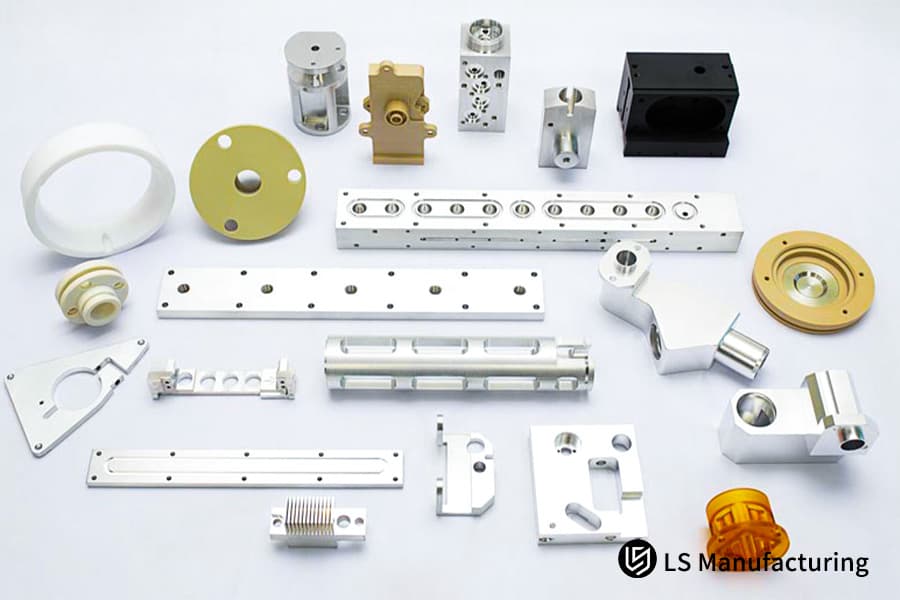
Figure 2: Presenting an array of precision metal alloy prototype parts to facilitate prototyping method and supplier selection.
In What Scenarios Is Metal 3D Printing An Irreplaceable Prototyping Solution?
Although similar in comparison to CNC machining, metal 3D printing services are not a replacement, but rather an enabling technology for very complex challenges. This document is intended to define the scope in which processes such as Selective Laser Melting are the only way to achieve prototyping, beyond the cost debate and into the realm of geometry and material possibilities. The value lies in making the unmakeable, in order to validate designs that cannot be made in any other way:
| Scenario | Specific Advantage | Quantifiable Data / Fact | Our Applied Solution |
| Extreme Topology & Internal Channels | Allows for the manufacture of complex geometries, such as internal lattice structures and conformal cooling channels, that are impossible to manufacture using conventional techniques. | The finished surface is rough, with an Ra of 10-15μm, requiring post-processing operations such as sealing and aerodynamic surfaces. | We leverage the advantages offered by the SLM prototyping advantages, such as design validation that can achieve injection molds with greater than 30% faster cycle times and satellite brackets with greater than 40% mass reduction. |
| Multi-Part Integration | Allows consolidation of assemblies, e.g., 10 parts into 1, to ensure integrated functionality and remove assembly stack-up errors. | Minimizes potential leak paths, assembly time, and weight while enhancing system reliability in the final prototype. | Our integrated rapid prototyping approach allows us to create monolithic parts such as fuel injectors with micro channels. |
| Hard-to-Machine Materials | A cost-effective solution for prototyping Inconel 718, Ti-6Al-4V, etc., particularly thin, complex features. | CNC machining thin, complex features of hard-to-machine materials results in excessive tool wear, rendering the process too costly; therefore, a viable solution for targeted rapid prototyping of small quantities of hard-to-machine materials is SLM. | We choose SLM for parts to be used in a high-temperature environment, taking into account anisotropic properties, stress relieving, etc. |
Our decision to utilize metal 3D printing services is based on necessity, not price. We utilize it as a strategic rapid prototyping tool where it is uniquely capable of overcoming geometric and material barriers. Our expertise allows our clients to prove impossible designs, such as monolithic injector designs with channels inside, giving them a critical advantage in critical design and development cycles.
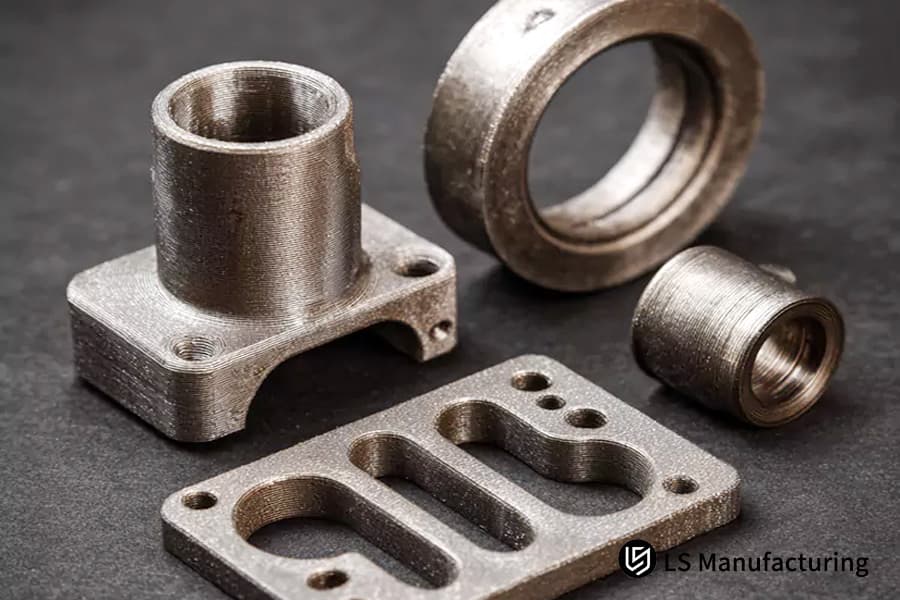
Figure 3: Comparing rapid prototyping for metal parts to guide method selection and supplier evaluation for industrial projects.
When Should CNC Be Abandoned In Favor Of Rapid Casting Solutions?
The decision of when to transition from subtractive CNC machining to additive-enabled casting is a critical economic and technological juncture. This document presents a data-driven decision process for embracing metal casting prototyping, moving past the stereotype of slow tooling and capitalizing on its unique benefits in price, material accuracy, and production match. The determinants and application process are as follows:
Volume & Geometry: The Economic Threshold
The transition point is particularly relevant when there is a well-defined breakeven point, and this is at 10 to 15 units of the prototype parts. We also consider the part geometry in order to ensure its suitability for casting and hence remove any particularly bad part geometry for casting. For example, in the pump impeller part, producing 20 pieces of the part using 3D printed sand molds resulted in 1/3 the cost of producing the part using CNC machines and hence provided us with the economic justification for production intent prototyping.
Material Truth: Validating the Alloy
We recommend casting when the production material is a well-known casting alloy such as A356 Aluminum or ductile Iron. This is because the microstructure and mechanical properties of such materials are very hard to replicate in the machined billet. This approach is core to answering the question of when to choose casting over machining for representative material performance.
Process Fidelity: The Bridge to Production
The first and foremost critical technical reason is to validate the manufacturing process itself. While CNC machining prototyping for form and fit, we utilize fast casting to create actual casting surfaces, determine machining allowances, and predict possible defect locations like shrinkage porosity. This directly bridge to production, thereby de-risking the transition to high-volume manufacturing.
This framework transforms rapid casting from a niche option into a strategic tool for pre-production validation. We implement it to deliver prototypes that offer both economic efficiency and unparalleled fidelity to final production parts, solving the critical challenge of high-confidence process validation. This expertise provides clients with a decisive advantage in de-risking product launches and accelerating time-to-market.
LS Manufacturing Aerospace: Prototype Project For Hybrid Manufacturing Of Titanium Alloy Engine Mounts
The case study below highlights how LS Manufacturing addressed the complex engineering challenge that could not be solved through traditional single-process solutions. In the case of the titanium engine bracket prototype that needed complex light weight lattice structures and critical mounting interfaces, we came up with and implemented a new approach that successfully validated the part for the critical aerospace development program:
Client Challenge
The client requested a novel topology-optimized bracket constructed out of Ti-6Al-4V, including internal lattice structures. Moreover, the flatness requirement for the mounting face was ±0.02mm. A traditional full-CNC approach would not be able to produce the internal geometry, and a full build within the SLM system would not be able to ensure the required accuracy on the large datum planes. This was a major technical and programmatic risk during this mission-critical prototyping phase.
LS Manufacturing Solution
Our developed hybrid prototyping methodology successfully built the internal lattice using SLM technology, integrating precision CNC machined titanium components in-situ. The part then underwent Hot Isostatic Pressing (HIP), thereby creating a consolidated rapid prototype with the required integrity and stability for rigorous validation. The integrated rapid prototyping methodology effectively combined the distinct advantages of each respective technology.
Results and Value
The delivered prototype successfully qualified through all static and vibration qualification tests. This approach resulted in a reduction of total project costs of approximately 35% when compared to a full-CNC approach and 20% when compared to a full-SLM approach, as well as definitively resolving the precision interface problem. This project resulted in a validated rapid prototype and critical manufacturing data, de-risking production decisions and significantly accelerating the qualification process.
The LS Manufacturing aerospace case is one of many examples of how we utilize our expertise in delivering integrated solutions that can transcend conventional process boundaries. This allows us to definitively solve intractable engineering problems and provide our clients with critical business advantages in the development of mission-critical, high-performance components.
Struggling to choose a single process for a complex metal prototype? Let us engineer a hybrid solution that combines the strengths of multiple technologies.

How To Assess A Supplier's Ability To Provide Objective Process Recommendations?
Selecting a rapid prototyping supplier is key to success, but the biggest challenge is to find a vendor that gives unbiased advice rather than just selling their available capacity to you. When a vendor works as a consultant, their goal is to maximize your overall project value, not just push their preferred technology or vendor relationship. The following is a methodology for how to evaluate a supplier on this key criterion:
Assessing Multi-Process Capability and Alignment
To assess a vendor’s level of inherent objectivity, we look at their technical footprint to ensure that we are working with a vendor that is giving us unbiased advice by having access to multiple solutions.
- Multi-Process Footprint: We ensure that we are working with a vendor that has access to all three technologies: CNC, 3D Print, and Casting.
- Internal Decision Tools: Our internal staff utilizes proprietary cost modeling tools to create internal analyses between different technologies for your project, such as CNC vs 3D Print vs Casting, using your inputs.
- Outcome: The result of this internal decision tool is to ensure that we are giving you unbiased recommendations that are aligned with your project goals, rather than internal vendor utilization goals.
Analyzing the Quality of Technical Discovery
The initial consultation demonstrates the supplier’s intent. We focus on those suppliers who undertake thorough discovery work.
- Proactive Questioning: In our initial dialogue with you, we ask targeted questions about your validation goals, manufacturing intent, and volumes before inquiring about part quantity and lead time.
- Focus on Application: The conversation is always about your functional requirements, loading conditions, and certification goals to determine the proper validation-focused rapid prototyping approach for your project.
- Outcome: The process is designed around your fundamental business problem, not a pre-determined manufacturing approach.
Demanding Data-Driven Comparative Analysis
Objective advice is quantifiable, and we require suppliers to provide transparent and data-driven comparative analysis.
- Cost-Volume Analysis: We provide detailed analysis and comparison of multiple processes to you, including the associated costs and breakeven analysis based on your volumes.
- Technical Trade-off Presentation: We provide a detailed and transparent analysis of the performance characteristics (i.e., anisotropy, surface finish, material properties) of each process suitable for your project.
- Outcome: This will provide you with a strategic rapid prototyping roadmap, allowing you to make an informed decision with a thorough understanding of trade-offs and total cost of ownership.
This evaluation process will turn supplier selection into a procurement process into a strategic technical partnership. Through a thorough evaluation of your supplier’s multi-process capability, consultative approach, and data transparency, you will have secured a partner committed to optimizing your project’s success. This is the approach we take internally to provide you with an objective approach to your rapid prototyping supplier selection, allowing you to achieve the optimal in your project’s prototypes.
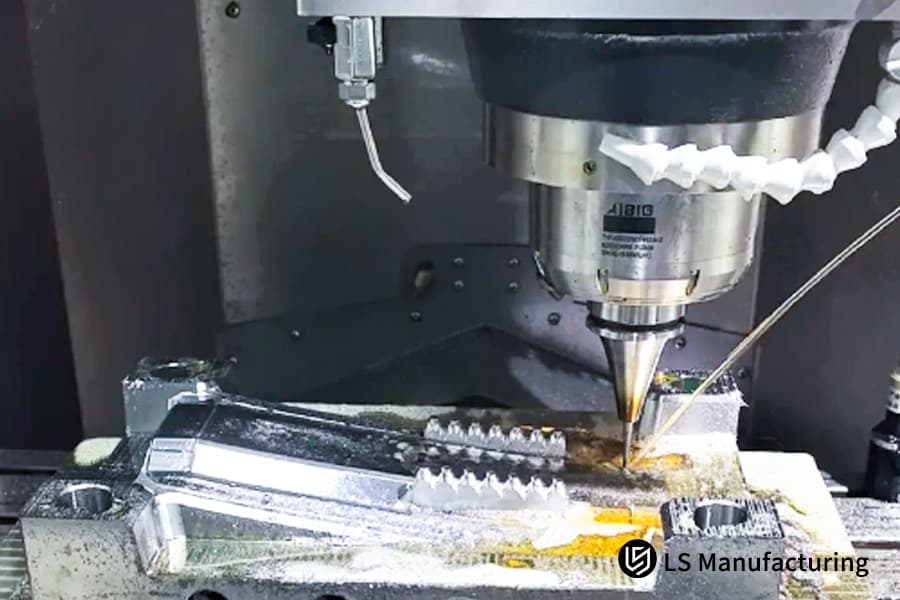
Figure 4: Active CNC machining a metal prototype for method comparison and supplier selection in industrial manufacturing.
Why Is LS Manufacturing The Most Efficient Single Interface In Complex Metal Prototyping Projects?
Managing a complex prototype across several specialized vendors poses a number of coordination costs, technical transfer risks, and unseen costs. The problem lies in the ability to seamlessly integrate different processes and knowledge bases. Why choose LS Manufacturing as your sole partner? We are your single source solution, your integrated project office, with technical integration and total cost accountability, delivering certainty to you:
Integrated Multi-Process Execution
You receive a single point of contact, a project manager who leverages all of our capabilities, as well as those of our alliance partners, to deliver a hybrid workflow, such as an SLM part completed near-net shape on our CNC machines, without the burden of managing several suppliers. This allows us to deliver a seamless integrated rapid prototyping solution to you more quickly.
Seamless Knowledge Transfer from Prototype to Production
Our process knowledge is systematically retained and transferred. Data regarding distortion, post-processing, and material response from the prototype stage is incorporated in a common model, which is used to directly inform process selection and planning for low-volume production, thereby avoiding requalification issues and ensuring rapid prototyping to production.
Guaranteed Optimal Total Project Cost
Our team assesses your validation objectives, volume path, and risk tolerance to develop a model of total cost, including iteration risk, and then guarantees the optimal combination of processes (CNC, additive, casting) to satisfy all objectives at the lowest total cost. This is a strategic rapid prototyping strategy, wherein, as a total solution provider, we ensure that cost overruns are eliminated due to poor process selection or inter-vendor issues.
With technical authority and process ownership in-house, we can avoid the coordination waste and technical gaps associated with the multiple vendor model. We do not only bring efficiency in the production of parts but also in the assurance of the optimal and de-risked path from prototype validation through production intent. This makes us the definitive full-cycle rapid prototyping partner for complex and high-stakes development programs.
FAQs
1. Can the mechanical properties of metal 3D printed parts truly reach the level of forgings?
While the static tensile properties of SLM parts, after hot isostatic pressing (HIP) and appropriate heat treatment, can be at the level of forgings, the fatigue properties (particularly HCF) are generally still below the level of forgings. This is based on the differences in internal micropores and microstructure, and this needs to be carefully assessed in the selection process.
2. What are the typical lead times for the three processes?
Typically, the time taken for CNC machining is 5-10 working days, metal SLM printing is 7-14 working days, and rapid casting is 10-20 working days.
3. How is design intellectual property protected during the prototyping stage?
We use legally binding NDAs and encrypt all the documents related to the projects. In addition, a separate physical production environment can be provided for critical projects.
4. If prototype testing fails and design changes are required, which process has the lowest iteration cost?
It depends on the type of changes required. If the changes are minor and related to dimensions only, then changes in the CNC programming would be the lowest. However, in cases where there are changes in the topology of the object, the advantage of the "zero mold" concept would be visible in the SLM method. The highest cost would be involved in the casting method because of the need for mold changes.
5. Do you provide process transition services from prototype to small-batch production?
Yes. This is our main service. We can evaluate and record the process data during the prototype phase and provide a comprehensive technical package and feasibility report for transferring to mass production technologies such as CNC batching, die casting, and investment casting.
6. Do you provide complete material certification and performance testing reports?
Yes. Third-party testing reports can be provided for the prototypes, including chemical composition, mechanical properties, metallographic structure, X-ray flaw detection, and so on, which can meet the certification requirements of some high-standard industries such as aerospace and medical.
7. What is the minimum order quantity (MOQ)? Do you support single-piece prototyping?
Single-piece prototyping is supported for all three processes. However, we must point out that the price per unit will be higher because the programming/modeling/mold costs must be amortized. Generally, we recommend that 2-3 prototypes be produced to optimize the cost per unit.
8. How to start a metal prototyping project and get comparative quotes?
Please also indicate your 3D model, and we will be able to assist in explaining the validation objectives, quantity, material, and performance requirements. You can easily request a quote through our website, and we will be able to offer you a proposal in 4 hours by our application engineers.
Summary
In 2026+, metal prototyping decision-making has transformed from simple choice to multiple-objective optimization according to dynamic validation objectives. To achieve this, we must shift from blind faith in individual processes to a scientific framework that combines quantitative economics, materials science, and validation logic. With LS Manufacturing, with a comprehensive multi-process perspective and objective consulting, we can convert prototype investment from trial-and-error cost to validation investment.
To achieve the most cost-efficient rapid validation solution for your critical metal part, please upload your 3D model now. We will be able to offer a customized report titled "Multi-Process Prototyping Solution Comparison and Total Cost Simulation" in 2 hours by our application engineers.
Stop wasting budget on the wrong prototype process. Let us analyze your project to deliver the optimal metal solution.
📞Tel: +86 185 6675 9667
📧Email: info@lsrpf.com
🌐Website: https://lsrpf.com/
Disclaimer
The contents of this page are for informational purposes only. LS Manufacturing services There are no representations or warranties, express or implied, as to the accuracy, completeness or validity of the information. It should not be inferred that a third-party supplier or manufacturer will provide performance parameters, geometric tolerances, specific design characteristics, material quality and type or workmanship through the LS Manufacturing network. It's the buyer's responsibility. Require parts quotation Identify specific requirements for these sections.Please contact us for more information.
LS Manufacturing Team
LS Manufacturing is an industry-leading company. Focus on custom manufacturing solutions. We have over 20 years of experience with over 5,000 customers, and we focus on high precision CNC machining, Sheet metal manufacturing, 3D printing, Injection molding. Metal stamping,and other one-stop manufacturing services.
Our factory is equipped with over 100 state-of-the-art 5-axis machining centers, ISO 9001:2015 certified. We provide fast, efficient and high-quality manufacturing solutions to customers in more than 150 countries around the world. Whether it is small volume production or large-scale customization, we can meet your needs with the fastest delivery within 24 hours. choose LS Manufacturing. This means selection efficiency, quality and professionalism.
To learn more, visit our website:www.lsrpf.com.