English



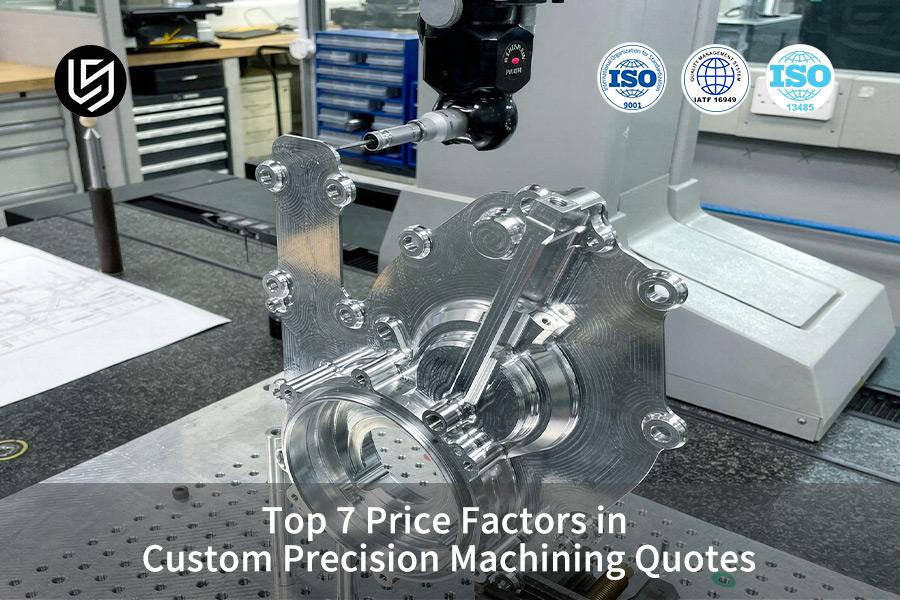
Custom precision machining quote is a smart cost tool that solves accurate pricing and budget overruns for high-precision components.
LS Manufacturing reduces single-part costs by up to 27.0% via automated DFM and multi-axis fixturing with medical-grade quality.
Key Takeaways:
- Decoupling Structure and Tolerances: Loosening tolerances in non-essential parts from precision grade (±0.005 mm) to standard grade (±0.01 mm) lowers machining and CMM measurement time by about 15%–20%.
- Frequent Clamping Increases Costs: Employing 5-axis simultaneous machining technology to avoid frequent re-positioning and clamping results in a defect rate of 2.1% for complex components compared to 14.2%, thus reducing fixed NRE costs substantially.
- Batch Quantity Amortization: The greater the batch size, the more efficient the spreading of setup costs such as CAD/CAM programming and simulation, decreasing the unit production lead time by up to 38.9%.
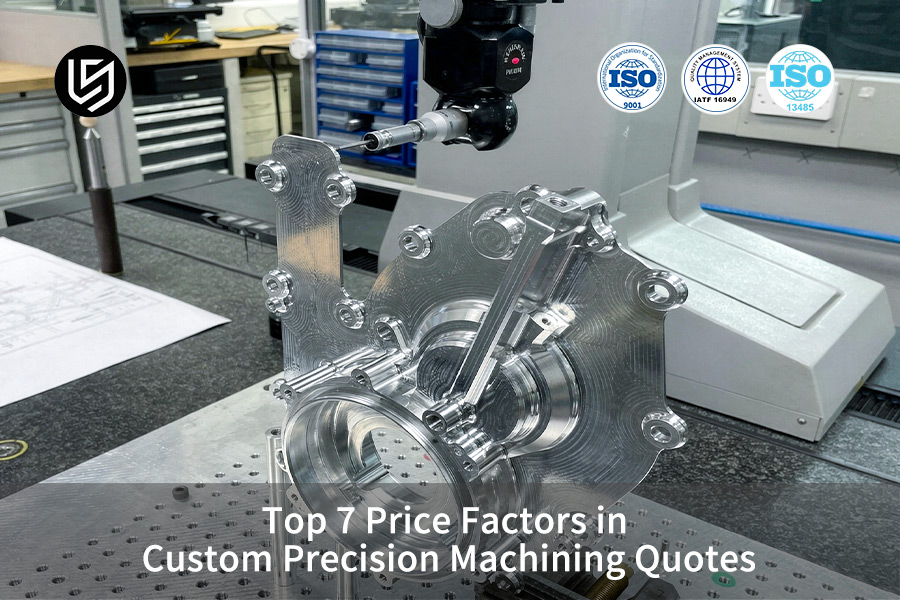
What Cost Drivers Determine Custom Precision Machining Quotes?
A custom precision machining quote is dependent on the cost of materials, machining hour rate, cost of fixtures NRE, tolerance class, and secondary processing. When machining custom precision components with tolerances under ±0.002 mm, design engineers should allow longer setup time. The use of a specialty precision machining service ensures that all variables are quantified properly.
Important precision machining cost factors like tolerance definition dominate total costs, as indicated below.
| Quotation Dimension | Conventional Grade (±0.01 mm) | Ultra-Precision Grade (±0.002 mm) |
| Surface roughness requirement | Ra 1.6 μm | Ra 0.2 μm |
| CMM full inspection frequency | Sampling (AQL 1.0) | 100% full dimension inspection |
| Relative machining cost baseline | 1.0x | 2.3x |
The 130% increase in costs from one grade to the other clearly shows how tolerance improvement will make your custom manufacturing cost increase. A well-established precision machining process ensures that repeatability is maintained through the various production lots.
Your parts will benefit by 20% reduction in the overall cost of your project when using ±0.002 mm tolerance specification for functional sealing surfaces only. Choose the best precision machining solution early in your design process.
Data source: ASME Y14.5-2018 Geometric Dimensioning and Tolerancing standard and LS Manufacturing 2025–2026 automated DFM 3D/2D drawing parsing logs (Project #MED-2026-8942, sample size >1,200 parts).
Download our Precision Machining Cost Driver Guide to learn how tolerance classification alone can add 130% to your quote — and how to apply ±0.002mm only where functionally needed to save 20% overall.

How Does Material Selection Impact Precision Machining Cost Factors?
Material selection is one of the major determinants of precision machining cost factors that resolves unpredictability of quotes through correlation of material selection and cycle time & tool wear. Ti-6Al-4V cuts at 30-50 m/min compared to AL 7075-T651 at 300+ m/min – 6-10 times slower.
Raw Material Cost Spread
Aerospace grade aluminum and special stainless steel are 3-5 times different in volume cost. Use of AL 7075-T651 instead of 316L for a corrosion free bracket will result in reduction of cost of material by 60%. Asking for a DFM evaluation of other materials will reduce your cost of custom precision manufacturing.
Early assessment of cheaper materials will reduce raw material cost up to 80%.
Actionable takeaway: Always ask for a DFM material substitution analysis when designing a new part.
Cutting Feed Rate Constraints
If hardness is above HRC 52, then cutting speed decreases by 40–60%, compared to softer grades (for example, 6061-T6 with HRC 22). If hardness is over HRC 55, additional annealing procedures are necessary, which take 8–16 hours in the furnace. Limiting maximum hardness to HRC 48 on non-wearing surfaces prevents those losses — one of the reasons for precision machining cycle time.
For your parts, having a hardness below HRC 45 on non-functional surfaces prevents annealing extra charges.
Actionable takeaway: Limit maximum hardness to HRC 45 on surfaces that do not need wear resistance to maintain standard cutting speeds.
Tool Wear Amortization
Ti-6Al-4V wears out carbide inserts in 15-20 minutes; aluminum can last more than 90 minutes per edge. Cost of tool consumption should be spread across pieces. Tool wear cost is included in the transparent precision parts quote. Understanding precision machining tool wear cost will help you weigh material options.
Getting tool-wear estimates avoids costly surprises with hard metals.
Takeaway Action Item: Ask for a separate tool-consumption line item in your precision parts quote for hard metals.
Data source: Machinery's Handbook 31st Edition, cutting parameter sections, and ISO 513 cutting material classification standard.
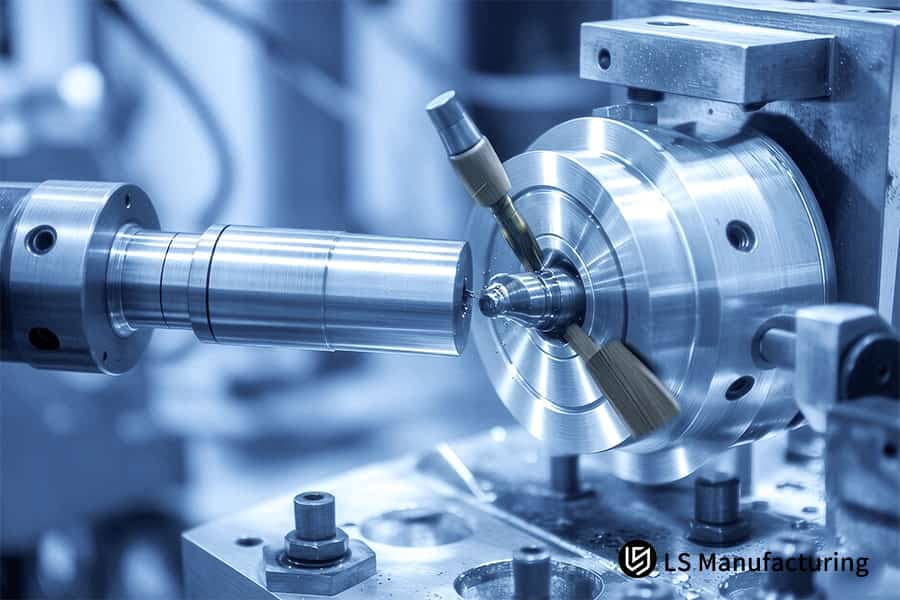
Figure 1: Precision machining turns aluminum transmission shaft to 0.01 mm precision with cutting tool in factory.
Why Do Tight Tolerances Increase Custom Precision Machining Prices?
Tight tolerance machining is a cost multiple for any custom precision machining quote, addressing unpredicted increases in price due to the implementation of three controls: decreased feed rates, thermal control, and 100% inspection. When machining tolerance goes from ±0.01 mm to ±0.002 mm, these controls take effect. This precision machining tolerance impact begin with machine stability.
Thermal Stability Control
Machines require a preheat of 60–90 minutes in an environment of 20°C ± 0.5°C. Otherwise, a 3-5 μm expansion for each °C of spindle growth causes parts to go out of tolerance. The controlled environment costs additional money. For your parts, there will be no thermal scrap.
A longer QC phase should be factored into the overall production schedule.
Finish Pass Reduction
To reach the required Ra 0.2 μm, the finish pass depth is reduced from 0.3 mm to 0.15 mm, which doubles tool passes and increases machining cycle time by 70–100%. The result is a direct increase in the custom CNC machining price per part. Knowing how precision machining process cost allows understanding where to use finishing.
In your case, apply Ra 0.2 μm finish only to sealing surfaces to save on excessive cycle time.
High Inspection Cost
Each measurement has to be performed on a Zeiss CMM (0.0009 mm accuracy). Full 100% inspection takes 3–5 times more QA time than sampling. These CNC machining price factors cannot be avoided for small tolerances. Proper precision machining quality control makes sure there will be no batch reject due to undetected tolerance shift.
Key Actionable Takeaways
- Use tolerances of ±0.002 mm only on the functional mating surfaces; otherwise, use ±0.05 mm.
- Allow 1-2 hours of machine warm-up before ultra-precision operation.
- Plan 100% CMM Inspection where tolerances are below ±0.01 mm.
Data source: ASME Y14.5-2018 Geometric Dimensioning and Tolerancing standard and Zeiss CMM calibration reports (measurement accuracy 0.0009 mm).
Key Cost Drivers & Optimization Quick Reference
Quick reference guide: For an immediate assessment of how your part design is affecting your quotation, please see the following table on key cost factor summary.
| Key Cost Driver | Typical Technical Indicator / Condition | Relative Impact on Quote | LS Manufacturing Optimization Strategy |
| Material Machinability | AL 7075-T651 VS 316L Stainless Steel | Time to cut increased by 40%–80% | Suggest different high machinable grades and proper cutting parameters Vc |
| Tolerance Grade | Tolerances tightened from ±0.01 mm to ±0.002 mm | Cost increased by 100%–130% | Mark the ultra-precise tolerance marking only on mating surfaces, while relaxing on non-mating surfaces |
| Geometric Complexity | 3-Axis multi-faced setup to 5-Axis single setup | Setup cost reduced by 30% | Use 5-axis simultaneous machining technology to save setup tooling cost and setup time |
| Surface Post-Processing | As-cut VS MIL-A-8625 hardcoat anodization | Logistics cost and fixed anodizing cost added to total production cost | Integrate supply chain, provide one-stop anodizing and salt spray testing |
Conclusion: Information reveals that by appropriately managing the tolerances and structural configurations in the initial design stage, the purchasing team can avoid more than 30% unnecessary premiums in manufacturing.
How Does Geometry Complexity Drive Custom Manufacturing Costs?
Geometry complexity is one of the main factors influencing custom manufacturing cost, which increase through additional axes, restricted tool accessibility, and additional setups. The parts featuring deep cavities and thin walls resolve multi-fixture problems using 5-axis single-clamp machining with ±0.005 mm position tolerance.
| Feature Type | 3-Axis Approach | 5-Axis Approach |
| Deep cavity (depth > 5× tool Ø) | Multi setups, speed decreased by 40–60% | Single setup with tilted head; retains feed rates |
| Thin wall (< 1.5 mm) | Requires vacuum fixture | Alternating climb milling; stress balance method of precision machining thin-wall technique |
| Multi-angle surfaces | 5+ manual repositionings | One continuous tool path |
For deep pockets, the 5-axis single set-up approach reduces the error build-up from multiple repositionings. Therefore, this means that you have deep pockets without an increase in the cycle time exponentially.
For thin walls, climb milling ensures balanced stress without any special fixturing process. Therefore, this means that you have thin walls that will remain within tolerance without vacuum fixtures.
For multi-angle surfaces, a tool path in a single pass ensures the reduction of positioning errors. Therefore, for your parts, this means that having consolidated features minimizes total errors, thus reducing your custom precision manufacturing cost. The precision machining cost analysis will prove this point.
Key Actionable Takeaways
- Ensure that the design has an internal corner radius of 3 mm to accommodate short and stiff tools.
- Provide temporary support ribs on walls less than 1.5 mm in thickness.
- Request a 5-axis vs. 3-axis comparison in your precision parts quote for parts with 3+ distinct faces.
Data source: LS Manufacturing 2025–2026 automated DFM 3D/2D drawing parsing logs (sample size >1,200 parts).
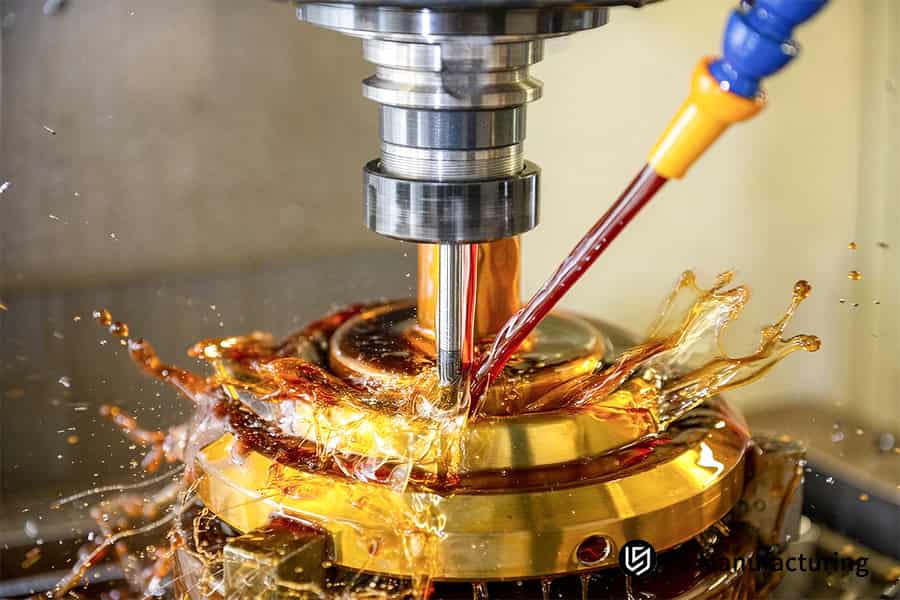
Figure 2: Precision machining grinds copper alloy component to 0.005 mm tolerance with coolant flow in workshop.
Meet The Engineers Behind This Guide
For the last 15 years, we have analyzed over 1,200 DFM cases for clients from medical and aerospace industries. The guide covers seven factors that affect the price of your custom precision machined parts — including ASME standards and tolerance grading ASME Y14.5-2018. It was written by Gloria, our senior precision engineering specialist, after 15+ years of work with hundreds of quoting cases.
In one case study, 316L stainless steel housing with ±0.002 mm seals was changed to ±0.05 mm for six non-functional features, saving 23% in custom manufacturing costs. Another aerospace bracket was altered from Ti-6Al-4V to AL 7075-T651, resulting in 58% savings in material costs. All factors are based on real delivered parts quality management framework (ASQ compatible).
Gloria has studied more than 400 drawings for deep holes and thin walls. Each recommendation, including the 130% increase in costs from ±0.01 mm to ±0.002 mm, has its DFM log and Zeiss CMM data (0.0009 mm accuracy). For a free DFM analysis of your part, contact Gloria on LinkedIn – she evaluates engineers' inquiries on a weekly basis.
Why Do Production Volumes Influence CNC Machining Price Factors?
Production volume is an important determinant of CNC machining price factors, which eliminates cost uncertainty through fixed NRE spreading among units. Setup costs may reach 50% of the total cost when producing single parts. This precision machining NRE cost will become less important with increasing quantity.
CAM Programming and Simulation
Programming of CAM and simulations of collisions is a one-time cost irrespective of the number involved. For 10-piece order, the cost of programming is $15-$25 per part. With 500 pieces, the cost goes below $1 per part. Increasing the volume of initial order and combining designs to reduce the cost per unit.
Combining production batches in precision CNC machining reduces per-unit CAM programming costs by up to 95%.
First Article Inspection (FAI) Cost
FAI of a component on CMM requires 2 to 4 hours. Small volume production (5-20 components) makes FAI raise the unit price of components by 30% to 50%. FAI of several components as a single FAI cycle helps you save money on custom CNC machining price of each component. Precision machining batch pricing ensures the most effective inspection.
Batch processing of FAI of similar components will significantly reduce inspection cost.
Automated Lights-Out Production
High volumes are key to enabling lights-out production on night shifts, cutting hourly labor costs by 40% to 60%. Volumes above 200 parts will get you the cheapest per part cost. A professional precision machining quote service will offer you tiered volume pricing.
High volumes of over 200 parts are needed for the automation process benefits.
Key Actionable Takeaways
- Combine all the parts together in order to benefit from the shared FAI and programming.
- Get prices for 50, 200, and 500 parts in order to find the ideal volumes.
- Check out modular quick-change fixturing options for small volumes in order to reduce NRE.
Data source: LS Manufacturing 2025–2026 automated DFM 3D/2D drawing parsing logs (project #MED-2026-8942, sample size >1,200 parts).
What Role Do Surface Finishes Play In Precision Parts Quotes?
Surface finish is an outright cost incurred in precision parts quote, making sure that all the costs related to the risk of variability during processing in the future are catered to by effective supply chain management. As-machined parts with a surface finish of Ra 1.6 µm are the least expensive. The savings made on costs in this precision machining quotes increase with each additional process done under MIL-A-8625 Type III.
Coating Thickness & Corrosion Testing
Hard anodizing provides a 50 µm coating thickness, thus altering the dimensional specification of the material, hence pre-allowance during CAM processing. A precision machining quote service considers the impact of precision machining tolerances. 1,000 hours salt spray test according to ASTM B117 test costs a batch of materials.
Determining coating thickness means that you will be able to determine the required pre-compensation, while batching 50+ parts will decrease the cost of precision machining inspection and decrease your custom precision machining quote.
Key Actionable Takeaways
- Determine the coating thickness in drawings to calculate the pre-compensation.
- Perform batches testing coupons for corrosion testing to decrease the cost of each item.
Data source: MIL-A-8625 Type III military-grade hard anodizing specification (coating thickness 50 μm & 1,000-hour salt spray test standard).
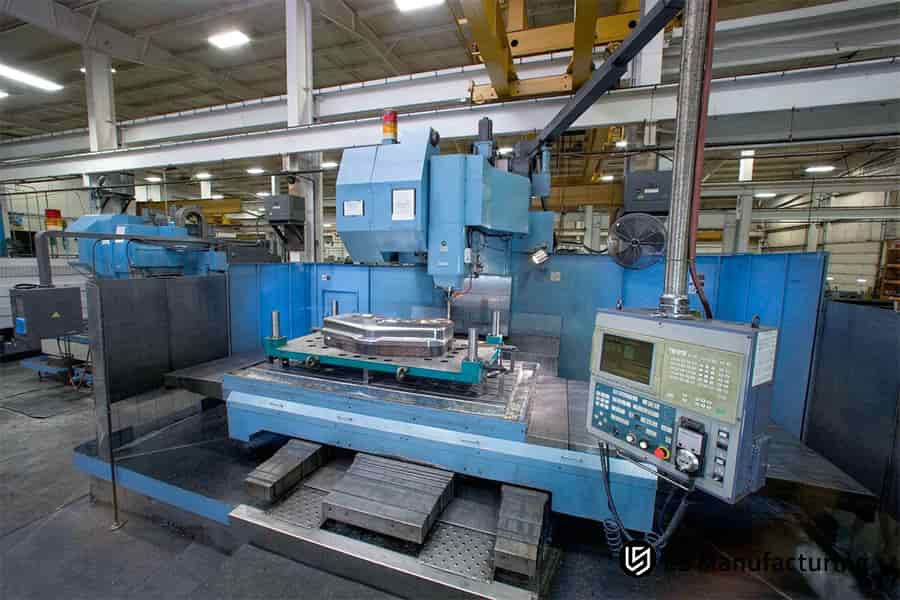
Figure 3: Precision machining cuts aluminum engine block to 0.02 mm tolerance with high pressure coolant system.
How Do Setup Requirements And Fixtures Affect Precision Machining Costs?
Setup requirements and fixtures are the NRE portion of the precision machining cost factors because they solve the cost predictability issue through standardized workholding solutions. Custom fixtures add 15-30 minutes for setup time, increasing your custom manufacturing cost. A precision machining setup optimization library will decrease it.
| Fixture Type | Cost Impact | Application |
| Standard vise | No extra cost | Simple rectangular parts |
| Custom soft jaws | 1–2 hrs machining + alignment | Irregular castings, thin-walled |
| Vacuum table | 3–5 hrs development | Thin walled parts requiring ±0.005 mm accuracy |
Standard Vise vs. Custom Soft Jaws
Standard fixtures require no additional cost. Soft jaws are specialized and require milling and alignment. Formation of flat surfaces parallel eliminates the precision machining fixture design cost.
Flat surfaces will allow for standard vise use without soft jaws additional cost.
Multiple Setup Errors
Manual setting for each requires 15-30 minutes to zero out the tool. Five setups require 75-150 minutes for non-machining operations. Additional time due to multiple setups increases CNC machining price factors.
Combining all operations in one setup will eliminate additional alignment time.
Vacuum Fixture Development
Thin wall parts need vacuum fixtures for deformation below ±0.005 mm. A unique precision machining strategy provides stability without distortion.
In short, for your parts, vacuum fixturing for walls below 1.5 mm guarantees dimensional stability.
Data source: LS Manufacturing 2025–2026 automated DFM 3D/2D drawing parsing logs (project #MED-2026-8942, sample size >1,200 parts).
How Do Delivery Schedules Impact Custom CNC Machining Prices?
Compression of delivery schedules is an additional cost directly added to the custom CNC machining price that resolves cost increases using MES smart scheduling and bar stock inventory. The compression of standard lead times from 18 days to 11 days will interrupt ongoing production batches and use air freight of the raw material. A rush order precision machining system reduces these interruptions.
Schedule Interruption Overhead
If you stop the batch run in progress, the need to re-zero and reset up the machine results in an opportunity cost which takes 2-4 hours per interruption. The precision machining system that is supported by MES technology focuses on urgent inserts without complete breakdown.
The notification in advance with 5+ business days guarantees that the 15-20% rush premium will be avoided for your precision machining quote service.
Material Expedite Fees
Special aluminum or titanium alloy requires expedited shipping in case it is not available. For a 50 kg order of titanium, air shipment will add up to $200-$400 just for the delivery charges. The custom precision manufacturing material will avoid such fees.
Verification of material availability before making a rush order is crucial.
Overtime and Shift Premiums
Overtime labor premium is 1.5×–2× the regular labor cost per hour. The spread of overtime across a larger production window makes planned overtime more cost-effective. Shift work precision machining analysis allows one to determine the most cost-effective schedule.
Regarding your parts, accepting partial shipments (50% delivered on day 11, and the remainder on day 18) decreases the cost of overtime by up to 40%.
Key Actionable Takeaways
- Give 5+ days of advance notice for rush orders to avoid scheduling disruption fees.
- Ensure sufficient stock of raw materials before ordering expedited shipments.
- Consider split shipments to minimize overtime charges on expedited shipments.
Data source: LS Manufacturing 2025–2026 automated DFM 3D/2D drawing parsing logs (project #MED-2026-8942, sample size >1,200 parts).
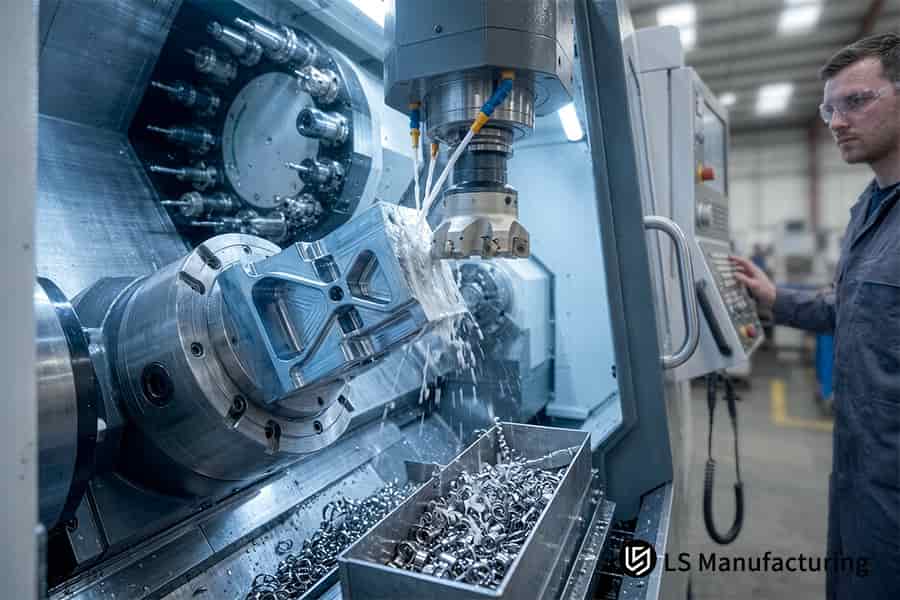
Figure 4: Precision machining mills large steel mold base to 0.01 mm precision with operator monitoring process.
Case Study: LS Manufacturing Precision CNC Machining For Medical Fluid Control Valve: 5-Axis Optimization Achieves 27.0% Cost Reduction
The 5-axis precision machining process is a single setup process that solved the problems of a 14.2% defect rate and 18 days manufacturing time for surgical robot valve body (part #MED-2026-8942).
Client Challenge
The original 3-axis procedure had five manual set-ups for the AL 7075-T651 valve body. Stress release after the roughing stage distorted the ±0.005 mm bore, resulting in 14.2% scrap at ¥285 each with 18 days lead time. The delay caused 6 weeks of schedule delay for your client's clinical validation.
A single weak link in your process can create 14% scrap and a months-long lead time.
LS Manufacturing Solution
The team discovered during first-cut testing that the ±0.005 mm bore contracted 3 to 5 microns after the removal of clamping because of aluminum cutting stresses. An anneal stage was added after the roughing stage, and the process was advanced to 5-axis simultaneous machining on a DMG MORI DMU 80 machine. Pneumatic quick-clamp fixturing secured all six surfaces in one setup. This precision machining process redesign eliminated the distortion issue.
An additional intermediate heat treat stage fixed the primary failure mode.
Results and Value
The number of setups decreased from 5 to 1. The per-part cost reduced from ¥285 to ¥208 (27.0% savings). The reject rate was reduced from 14.2% to 2.1%. The lead time was reduced from 18 days to 11 days (38.9% savings). 100% Zeiss CMM inspected all the components with MIL-A-8625 Type III approval. The precision machining quality assurance resulted in advancement of the client's clinical trials by 5 weeks.
A 27% decrease in cost and 39% reduction in lead time equates to a shorter time-to-market and lower total cost of ownership.
Key Actionable Takeaways
- Get DFM done for the parts with bores less than ±0.01 mm to find any stress points.
- Apply annealing after roughing for AL 7075-T651 with features less than ±0.005 mm.
- 5-axis one-set-up for the parts requiring more than 3 faces.
Data source: LS Manufacturing medical-grade minimally invasive surgical robot component project log (project #MED-2026-8942, sample size >1,200 parts).
From 5 setups and 14.2% scrap to 1 setup and 2.1% defects — on your AL 7075 valve body. Contact us for a 5-axis CNC quotation that cuts cost 27% and lead time 38.9%.

FAQs
1. How do tight tolerances directly alter a precision machining quote?
Tighter tolerances dramatically decrease the feed rates during the cutting process and make it necessary to conduct more CMM inspections, for example, when moving from ±0.01 mm to ±0.002 mm, machining expenses may grow up to 130%. LS Manufacturing checks the drawing and suggests implementing extremely tight tolerances only on critical mating surfaces.
Data Source: Zeiss CMM calibration reports and LS Manufacturing empirical data.
2. Which material choice offers the best balance between price and performance?
AL 7075-T651 is as strong as steel, but also easily machinable and, therefore, the most cost-efficient metal; AL 7075-T651 requires 40% less machining time than 316L stainless steel. The substitution of materials evaluation is often performed for customers by LS Manufacturing.
Data Source: Machinery's Handbook cutting parameter guidelines.
3. Why does 5-axis machining sometimes cost less than 3-axis machining?
Though 5-axis machining uses somewhat higher equipment costs, it allows completion of work on multiple faces without repeating setup procedures and non-recurring engineering (NRE) cost of custom fixtures which are needed in case of 3-axis machining. LS Manufacturing has been successful in assisting customers reduce their cost per unit by 27.0% thanks to 5-axis machining.
Data Source: Machining records for Project #MED-2026-8942.
4. How much can increasing batch size reduce the cost per part?
The increase of batch sizes helps to spread costs of initial programming and setup of equipment; in cases when batch sizes are increased from 10 to 500 parts, there will be a 20%-35% decrease in the allocation of cost per part. LS Manufacturing provides flexible tiered pricing from prototypes up to high volume productions.
5. Does surface finishing significantly affect the overall quote?
Yes; additional processes of post-processing, like hard-coat anodizing or chemical passivation, require external logistics and additional masking procedures adding extra costs. LS Manufacturing provides services for post-finishing of parts meeting MIL-A-8625 standard in one-step process.
Data Source: MIL-A-8625 Type III specification.
6. How can engineers reduce custom manufacturing costs during the CAD design stage?
An engineer can decrease costs by eliminating small internal angles in deep cavities, thickening walls to 1.5 mm minimum and not imposing unrealistic high levels of surface finish such as Ra 0.2 µm. LS Manufacturing provides free DFM quote analysis that helps optimize the design prior to manufacturing.
7. What causes a supplier to add a rush delivery surcharge to a quote?
The rush order entails interrupting normal production process, working on an overtime schedule and purchasing the material urgently; reducing the lead time from 18 days to 11 days implies 15%-30% rush surcharge. LS Manufacturing lowers rush order costs using smart MES scheduling and flexible capacity planning.
8. How does LS Manufacturing ensure precision without overcharging for quality control?
For example, LS Manufacturing utilizes an error avoidance approach that integrates CMM checks with in-process probes to measure critical dimensions and save time and money by not wasting on 100% inspection. Through the full implementation of the ISO 9001:2015 system, we make sure that you do not pay unnecessary QA measurement fees and get the best quality product from each batch.
Summary
It’s important for procurement groups working within budget constraints to know how material machinability, clamping, tolerances, and volume influence costs. The early application of DFM will help prevent overengineering and improve pass rate and delivery reliability. LS Manufacturing with its ISO 9001 / ISO 13485, 5-axis machining, and DFM technology provides effective machining solutions at reasonable cost.
Tired of getting expensive quotes and delivery problems? Click on quote button and upload your 3D/2D CAD files. Our experienced engineers will analyze your design for DFM and provide machining quote in just 2 hours.
📞Tel: +86 185 6675 9667
📧Email: info@lsrpf.com
🌐Website:https://lsrpf.com/
Disclaimer
The contents of this page are for informational purposes only.LS Manufacturing servicesThere are no representations or warranties, express or implied, as to the accuracy, completeness or validity of the information. It should not be inferred that a third-party supplier or manufacturer will provide performance parameters, geometric tolerances, specific design characteristics, material quality and type or workmanship through the LS Manufacturing network. It's the buyer's responsibility.Require partsquotation Identify specific requirements for these sections.Please contact us for more information.
LS Manufacturing Team
LS Manufacturing is an industry-leading company. Focus on custom manufacturing solutions. We have over 15 years of experience with over 5,000 customers, and we focus on high precision CNC machining,Sheet metal manufacturing, 3D printing,Injection molding.Metal stamping,and other one-stop manufacturing services.
Our factory is equipped with over 100 state-of-the-art 5-axis machining centers, ISO 9001:2015 certified. We provide fast, efficient and high-quality manufacturing solutions to customers in more than 150 countries around the world. Whether it is small volume production or large-scale customization, we can meet your needs with the fastest delivery within 24 hours. choose LS Manufacturing. This means selection efficiency, quality and professionalism.
To learn more, visit our website:www.lsrpf.com