English



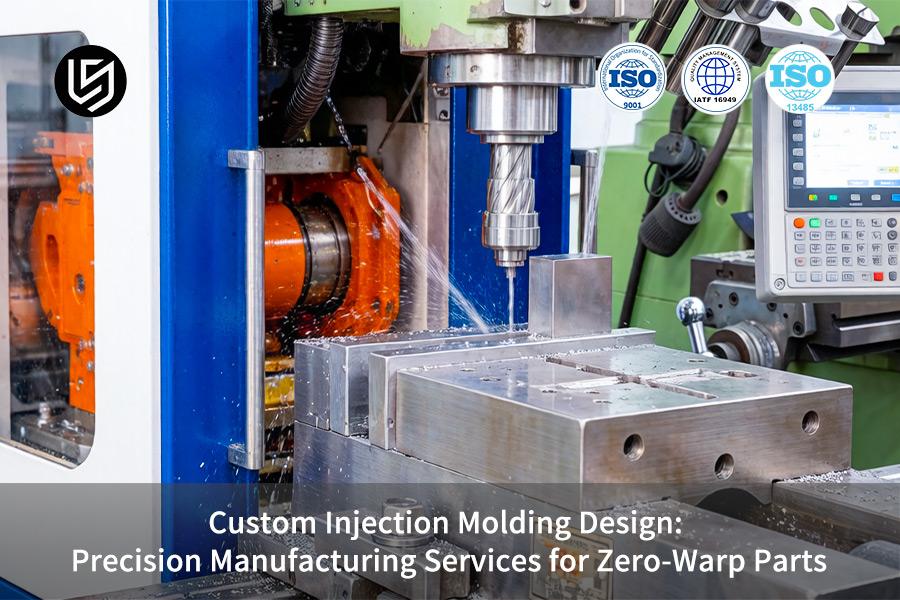
Injection molding services experience major warpage issues in the precision industry, especially in medical and automotive, due to oversight of key injection molding design considerations, including non-uniform wall thickness. This is because the industry still practices general evaluation rather than Moldflow analysis to predict crystallization shrinkage and thermal stresses in engineering resins for instance, 30% glass-fiber-reinforced PBT—an engineering plastic that is high in strength but highly susceptible to uneven shrinkage caused by the directional alignment of the glass fibers.
LS Manufacturing’s custom injection molding design service is a manufacturing solution characterized by both high precision and predictability; through the integration of closed-loop control and Moldflow simulation, it comprehensively resolves the critical issues of deformation and dimensional deviation often encountered during the production of precision plastic components. Get insights into overcoming your injection molding warpage challenges using the best solutions possible by following our seasoned project engineers today.
Custom Injection Molding Design: Zero-Warp Quick-Reference
| Technical Focus | Engineering Solution | Dimensional Outcome |
| Uniform Cooling | Development of conformal cooling channels to ensure even cooling of the mold. | Achieves flatness tolerance of ±0.05mm, thus avoiding warpage. |
| Flow & Pressure Control | Optimal gate design to avoid stress during flow through mold. | Prevents internal stress gradients causing distortion upon ejection from mold. |
| Shrinkage Compensation | Mold flow analysis to allow compensation for material shrinkage. | Meets tightest possible tolerance levels (+/-0.02mm) of critical features. |
| Wall Thickness Management | Forcing uniformity in wall thicknesses (+/-10% variation), avoiding uneven shrinkage. | The most common cause of sink marks and warp is differential shrinkage. |
| Tooling & Validation | Advanced injection mold tooling with cavity monitoring and full CMM inspection. | Fully validated, net shape parts, in accordance with CAD model designs. |
| Result: Assembly-Ready Parts | Production of parts that have been molded to spec, without any secondary operations. | Simplifies assembly processes while maintaining high-precision injection molding standards. |
Key Takeaways:
- Cooling is Key: Warpage is a thermal problem; therefore, sophisticated cooling channels are necessary to achieve warpage-free parts.
- Simulation is Critical: Simulation determines the potential risk of any shrinkage-driven warpage and eliminates it beforehand.
- Uniformity is Rule One: Designing with uniform wall thickness ensures the least amount of warpage.
- Data is Proof: Only CMM-assisted FAIR reports guarantee the absence of warpage successfully achieved.
Why Trust This Guide? Practical Experience From LS Manufacturing Experts
You will find plenty of theories about designing plastic injection moldings through numerous theoretical pieces. However, there is one big difference in our advice. In fact, this article was developed by our experienced engineers and technicians who deal with issues like warpage on a daily basis during production. Unlike academic theories, we know how to validate our guidelines using real-world testing against automotive industry standards established by SAE International.
The components that we design and produce have no tolerance for warp: optical lens holders used in semiconductor lithography, fluidic manifolds used in diagnostic equipment, and structural brackets used in satellite construction. The tolerances required for such components to function properly are so stringent that we must follow an approach to design dictated by German Institute for Standardization (DIN), whose priority lies in predictability over theoretical knowledge.
Each warpage defect we have collected or scrapped has provided us with an important lesson in gate position for proper flow control, rib design to prevent sink without causing stress, and cooling design to ensure that the temperature differential across the part is ±2°C. We pass on all the lessons we have learned to enable you to design molds which will produce parts which are not warped even in their initial samples.
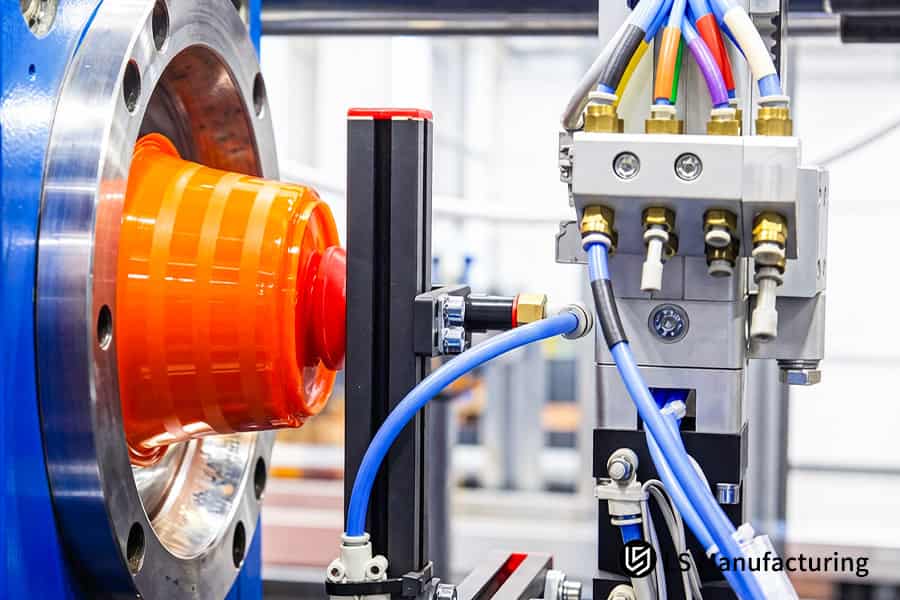
Figure 1: Zero warp injection molding utilizes precise cooling channels to form electronic enclosures without warping.
What Are The Primary Injection Molding Design Considerations Required To Eliminate Part Warpage?
There is one way to completely eliminate part warpage, and that is to strictly adhere to design guidelines in order to maintain an even wall thickness, proper shrinkage, and balanced cooling throughout the design process.
Enforce Strict Wall Thickness Limits
Wall thickness uniformity is one of the most important considerations during the injection molding design consideration products. Any deviation of more than 25% results in warping. In our company's custom injection molding design service, we have set a maximum wall thickness variation of 15% for amorphous materials such as PC/ABS and 10% for semi-crystalline materials like PA66. This is done by analyzing the 3D model beforehand and optimizing features like bosses.
Design Ribs and Draft for Structural Harmony
The ribs should be engineered in such a manner that there will be no thick section created by them. The rib thickness is taken as 0.5-0.6x adjacent wall, and its base fillet is 0.25x wall thickness. With a draft of 0.5°-1.0°, it will ensure smooth eject without any drag. This kind of specification is essential in precision injection molding services because it will control localized shrinkage and avoid sink marks.
Integrate Material-Specific Shrinkage Compensation
Shrinkage varies based on materials and orientation. Our injection molding services employ proprietary databases for pre-adjustment of mold dimensions. In our case of PA66 injection molded parts, we modify core and cavity dimensions to account for shrinkage at 1.5% ±0.2%. We ensure high-quality injection molded parts from the mold without any further processes.
Validate with Predictive Warpage Simulation
The final proof of concept comes through mold flow analysis. In this process, we analyze the differential in cooling times and create warpage simulations (e.g., ±0.8mm). This injection molding quality assurance process enables us to produce a manufacturing feasibility report that saves money for the client.
Warpage results are addressed by designing for consistent shrinkage and stress release at the origin, creating reliable, high-quality products with minimal waste and lower assembly costs. This is the key principle behind our comprehensive engineering and commercial injection molding solutions.

How Can Custom Injection Molding Design Utilize Non-Linear Moldflow Analysis To Predict Volumetric Shrinkage?
Our injection molding design services employ non-linear Moldflow analysis to estimate and solve volumetric shrinkage issues prior to actual metal cutting. This converts a problem of uncertainty into one where the unknown becomes a factor that is known and manageable via data simulation:
Configuring Nonlinear Analysis with Precise Inputs
- Process Parameters: The simulation is conducted with specified input data such as melt temperature of 280°C, mold temperature of 80°C, and packing pressure up to 120 MPa.
- Material Model: The non-linear PVT material model is considered as it is necessary for accurate injection molding flow analysis.
Identifying and Acting on Shrinkage Disparities
- Output Map: The analysis provides a map of volumetric shrinkage distribution in the part.
- Decision Threshold: Localized differential exceeding ±0.8% is highlighted, triggering a design review. It is critical in our precision injection molding services.
Optimizing Gating for Uniform Packing Pressure
- Design Change: For uniform packing and flow, we change the custom injection molding design.
- Implementation: Change to hot runner valve gate system injection molding simulation is carried out for uniform shrinkage.
Locking in Predictable Production Outcomes
- Final Validation: The optimized simulation gives a shrinkage map which can be used to compensate mold dimensions accurately.
- Client Assurance: This injection molding process control technique ensures that 90% of warpage issues will not occur in production.
The above methodology shows our technical competence since it involves simulation and action threshold in place of assumptions. Our strength is in the mandatory use of this injection molding simulation method to take definite actions, making injection molding production stability from the beginning. We overcome the issue of volumetric shrinkage prediction and control using the simulation tool.
Why Do Specialized Gates And Runners Determine The Success Of Zero Warp Injection Molding?
The zero warping injection molding process demands tooling of gate and runner systems based on empirical evidence and not from conventional mold designs. The flow channels are created based on precise control of shear, orientation, and pressure in an effort to nullify the effects that cause differences in shrinkage. With experience in the high-precision injection molding process, dimensional stability can easily be transformed from a target to a tangible outcome:
| Application Scenario | Technical Intervention | Key Design Target / Parameter |
| Premature Gate Freeze Causing Sinks | Gate depth defined to be 50%-60% of the main wall thickness. | Prevents gate freezing and assures proper packing pressure. |
| Anisotropic Warpage in Fiber-Filled Materials | Fan gate included to slow down material flow rate. | Removes the difference of 2x to 3x between the two shrinkage rates, causing the warped saddle shape. |
| Unbalanced Filling Leading to Differential Stress | Runner design optimized by injection molding flow analysis. | Contributes to simultaneous flow into all injection ports for uniform cooling/packing. |
| Flow Front Disturbance from Cold Material | Cold slug gate installed in the tip of the runner. | Delays injection of the first cold slug and maintains uniform material flow front. |
On an applied basis, then, this is our set of skills in relation to injection molding for zero warpage parts. This problem, which involves overcoming warpage, distortion, and alignment issues, can be solved by designing a feeding system that will automatically produce naturally stable molded parts. Our experience in solving such problems lies at the very core of our custom precision molding service, allowing high-tolerance precision through injection molding process optimization.
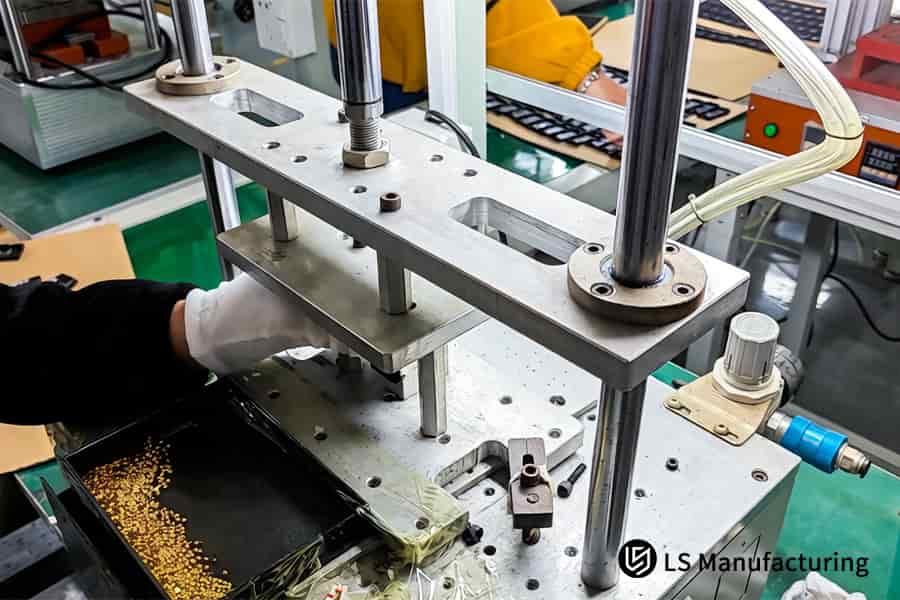
Figure 2: An operator monitors the injection of plastic into aluminum cavities for automotive interior assemblies.
How Does Dynamic Vonformal Vooling Design Drastically Minimize Thermal Stress In Custom Precision Molding Service?
Using dynamic conformal cooling technology, which ensures precise integration of the cooling circuits with the geometry of the mold surface, the issue of temperature variations inside the mold, resulting in warping, can be overcome. Greatly reducing thermal stress levels, dynamic conformal cooling has made it possible for precision injection molding services to now benefit from:
Replacing Linear Channels with Geometry-Matched Pathways
Straight drill lines being straight in nature do not trace complex geometries. Consequently, there will be temperature hot spots where variations in temperature may exceed 30°C. The novel idea involved in the approach is that conformal cooling lines can be designed using the technology of metal 3D printing. They will maintain constant distances from the cavity, i.e., 1.5 to 2 times the channel diameter (say, 10 mm from 6 mm line). It is imperative to have conformal cooling lines in order to produce warp free injection molded parts.
Enabling Isothermal Cooling Through Precise Channel Placement
This proximity of the cooling circuit to the cavity surface makes possible an enormous reduction in the thermal gradients present. This is done by designing the channel design based on the 3D thermal analysis of the part, where each and every area of the cavity surface receives enough coverage. In conjunction with the high flow rate and temperature-controlled coolant, this system manages to keep the thermal variation across the entire surface of the mold to ±2°C, which is very crucial to our custom precision molding service.
Validating Performance with Quantifiable Process Data
The advantages offered by this process can be seen from the outcome of our A/B test when compared with traditional cooling processes. Our process data, which are arranged in comparison form, give us proof of the advantages of our system: reduced cooling time to give a 35% shorter processing cycle time, and a reduction of 75% deformity of the part due to lower thermal stress. Data validation is important in injection molding process validation.
Integrating Design, Manufacturing, and Process Control
Success depends on seamless integration. Conformal cooling simulation is used to optimize the channel design, which is then produced through Laser Powder Bed Fusion (LPBF). Lastly, conformal cooling is accomplished by means of high-pressure cooling, using PID temperature units. Thus, the entire injection molding thermal management system leverages conformal cooling to take theory into successful implementation.
This methodology demonstrates that minimizing thermal stress is an engineered outcome, not a hope. Our competitive edge is the integrated application of additive manufacturing, multi-physics simulation, and closed-loop process control to execute conformal cooling effectively. We solve the root-cause problem of differential cooling, thereby guaranteeing exceptional dimensional stability and faster cycle times for the most demanding applications. This technical depth defines our commitment to advanced injection molding solutions.
Which Advanced Process Parameters Guarantee Warp Free Injection Molded Parts During High-Volume Production?
Warp free injection molded parts can be produced in large quantities only if specific pressures, speeds, and time settings can be controlled at each stage of production. In addition, these control methods go far beyond simply setting the machine to an appropriate level; rather, they include controlling the properties of materials and stresses at each stage of production. The following executable factors must be included in production to ensure the production of warping-free parts:
Implement Multi-Stage Packing Pressure Control
- High-Pressure Packing: Use maximum packing pressure (85%) directly after filling to account for shrinkage.
- Sustained Pressure: Reduce the packing pressure to 60%, which will hold gate closed while feeding the material but without packing it into the gate.
- Sensor-Based Taper: Use cavity pressure sensor feedback to control the last step and avoid any residual stress at gate freeze. It's crucial in injection molding for zero warpage.
Execute a Scientific Fill Speed Profile
- Profile Strategy: Use a "Fast-Slow-Fast" fill profile.
- Technical Objective: The fast filling at first will fill up the cavity, then the slow-down will prevent shearing through thick sections from causing shear heating, and fast again to pack the melt. Thus, it will maintain the shear stress below the critical shear value during fill, which is an essential principle of precision injection molding production.
Enforce Sufficient In-Mold Cooling and Ejection
- Cooling Time Rule: The cooling time should be between 60% and 65% of the overall cycle time.
- Purpose: It will make sure that the part is crystallized (semi-crystalline materials) or fully cooled below its deflection temperature.
- Ejection Protocol: Ejection of parts takes place after they have sufficient strength to resist mechanical force of ejector pins. This is an important part of our injection molding services quality control process.
Utilize Process Monitoring for Consistency
- Closed-Loop Control: Monitor the cavity pressure and hydraulic pressure in real time to ensure consistency in profiles.
- Result: The injection molding process optimization will detect and adjust any changes in material viscosity or machine drift to ensure each injection matches the stress-minimized parameters defined in the qualified process.
The document contains practical parameter data to develop a process for dimensional stability. The competitive edge we possess is through enforcing these controls as mandatory, such as cavity pressure sensors, staged profiles, and calculated cooling. The issue of managing stress on a large scale will be addressed through a process control that makes stress control a measurable output of our injection molding process.
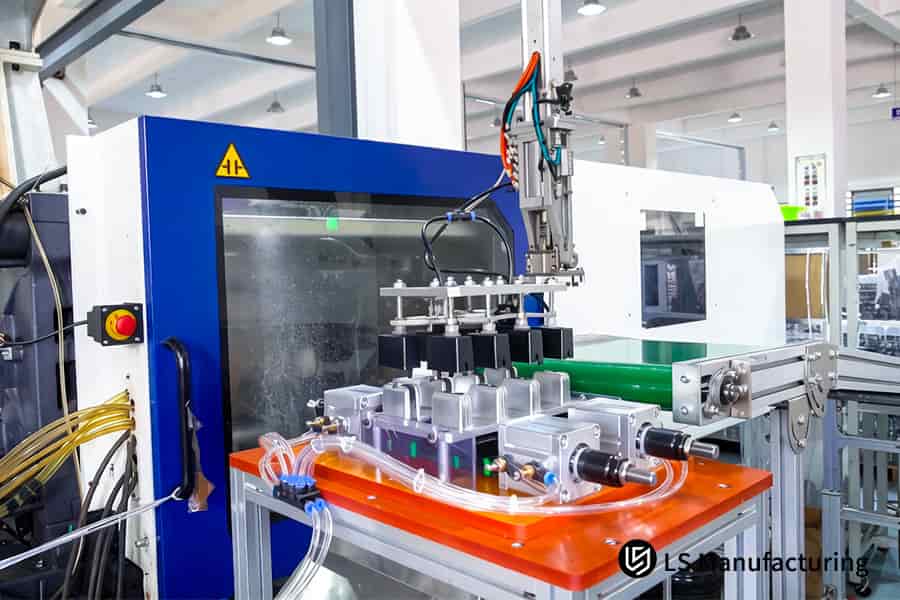
Figure 3: Injection molding services operate a robotic arm to produce plastic parts in an automated factory setting.
Case Study: How Did LS Manufacturing Engineering Deliver Zero-Warp Medical housing parts for an automotive electronics giant?
An internationally renowned provider of automotive electronics components was experiencing serious problems with its assembly lines, due to warpage problems in a sensor housing component. The task to solve this issue fell upon LS Manufacturing, who successfully tackled the issue through a combination of engineering expertise, detailed analysis, custom injection molding design and tooling, achieving exceptional dimensional accuracy:
Client Challenge
The client needed to overcome difficulties, as the 1.2mm saddle warp in the existing sensor housing made of PBT+30%GF provided by an earlier supplier resulted in a failure rate of 15% in their automated assembly process, where parts could not be properly assembled and sealed. An extraordinary deviation of ±0.05mm in critical locating features was impossible to maintain with standard injection molding services.
LS Manufacturing Solution
During the initial round of mold flow analysis, we discovered that the use of a conventional gate would result in severe anisotropic shear damage to the glass fibers at the corners. Consequently, the team decisively rejected the edge-gating scheme and opted instead for a 3-point valve-gated sequential hot runner system.
We commenced a complete DFM evaluation requiring at least three essential changes to be made. Initially, the nominal wall thickness had been changed to become 2.0mm across the board.
Secondly, the feed method was revised using non-linear Moldflow analysis and utilizing a 3-point valve gate hot runner system that balances fill and pack pressure.
Finally, we used 3D printing technology to install conformal cooling channels into the core insert to reduce surface temperature variations to only ±1.5°C. Such an approach established our precision injection molding services.
Results and Value
Validation was conducted via 100% on-line CMM inspection. Mold warpage in the key dimensions was decreased from 1.2mm to less than 0.03mm, far below the ±0.02mm tolerance limit. Moreover, optimized cooling contributed 28% time reduction to the entire cycle. Thus, we increased the client's production line efficiency to 99.9%, and ensured the full volume order of 500k units with high-precision injection molding at lower cost due to guaranteed manufacturability.
Here’s an example of how our engineering-driven approach works. Rather than resorting to trial and error, we address challenging cases of warpage by redesigning the material, flow, and heat processes using physics. Our ability to deliver zero-defect injection molding of critical parts means that you can be confident in quality, schedule, and costs, making us your partner for demanding injection molding applications.
Achieve similar results: reduce 1.2mm warpage to 0.03mm and boost assembly line efficiency to 99.9%. Let’s discuss your precision housing challenge. Contact our engineers for a feasibility review.

How Do Material Selection And Fiber Orientation Affect Injection Molding For Zero Warpage?
Material shrinkage and fiber orientation are the two primary internal factors that lead to part warpage. A success in injection molding for zero warpage is achieved by engineering the materials to cope with inherent anisotropy, which sets a solid base for the whole injection molding process.
| Material/Challenge | Core Warpage Risk | Our Proactive Mitigation Strategy |
| Amorphous Polymers (e.g., PC) | Isotropic; Low shrinkage (~0.5%). Predictable but demands precision. | Chosen for complex parts that utilize isotropic shrinkage, an important strategy in precision injection molding. |
| Semi-Crystalline Polymers (e.g., POM) | High anisotropic shrinkage (1.5%-2.5%) due to crystallization. | Use nucleated grades; maintain tight thermal controls (mold temperature +/- 5°C) during injection molding production. |
| Glass-Fiber Reinforced Grades | Extreme anisotropic shrinkage (flow ≈1/3 transverse). | Conduct injection molding design (gate shear) and mix with minerals to avoid fiber orientation. |
| Material Data Shortfall | Insufficient datasheets for prediction of molded-in stresses. | Custom compound database for injection molding materials selection through injection molding design services. |
This scientific method is integral to our custom precision molding service. Our solutions address the basic cause of distortion at the material level, where we engineer compounds and injection processes to reduce inherent stress. We have the knowledge to provide a scientific approach for obtaining dimensional stability in parts manufactured through injection molding applications.
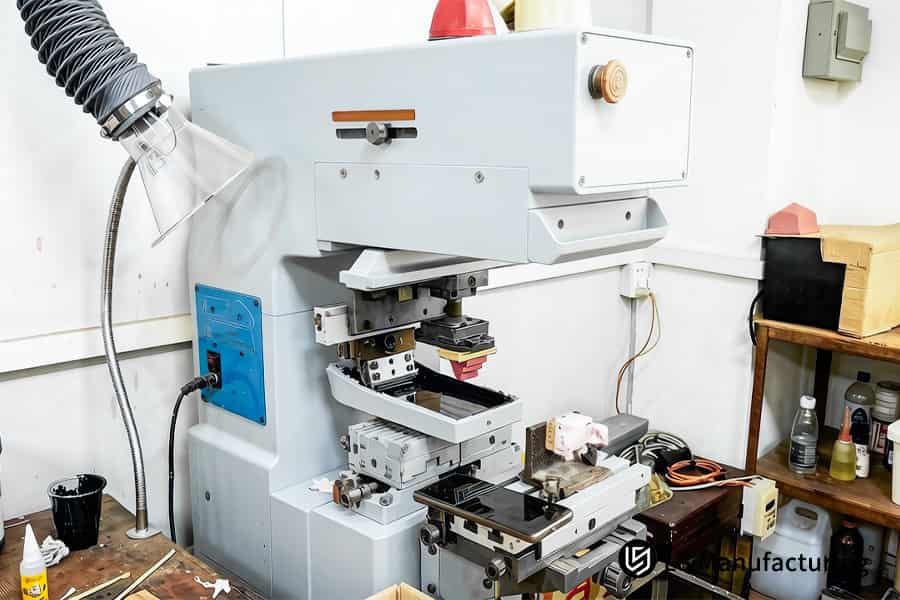
Figure 4: Custom injection molding design processes ABS plastic for automotive connector housings with overhead exhaust systems.
Why Is LS Manufacturing The Premier Tier-1 Partner For Precision Injection Molding Services And Global Procurement?
LS Manufacturing is the best Tier-1 partner to provide injection molding services that guarantee manufacturing commitments made. LS Manufacturing addresses the key challenge of obtaining a reliable and quality-oriented supply chain of precision parts by implementing process discipline, sophisticated engineering, and vertical control, thus removing any procurement and quality risk.
Mitigate Quality Risk with System-Governed Consistency
LS Manufacturing implements its ISO 9001:2015 and IATF 16949:2016 through process control mechanisms. The production process involves locked and verified parameters. This eliminates the issue of consistency by providing SPC statistics with the shipment. This guarantees consistent product quality right from the initial sample up to production runs.
Eliminate Dimensional Ambiguity with In-Line Verification
The combination of our injection molding machines equipped with closed loop pressure control (±0.5 bar) and in-cell metrology, including CMMs (±1.5 μm) is the key to overcoming late detection of defects by ensuring real time verification of crucial dimensions and delivering your custom precision molding service. Such technical collaboration forms the backbone of a dependable injection molding partnership.
Resolve Design-for-Manufacturability Issues at the Digital Stage
Your 3D data will be analyzed for a complete DFM and Moldflow report within 24 hours. This report will offer you valuable suggestions regarding design improvements, thus avoiding costly rework due to design errors. Injection molding design services are one of the essential functions provided by us.
Secure Your Supply Chain with Vertical Scalability
Our one-stop shop from prototyping through large scale production, run by one engineering team, combined with our transparency in volume-based pricing, is able to overcome the issues of fragmentation and inefficiency, meeting all of your needs within the sphere of international precision injection molding services and providing you with better injection molding supply chain.
The cornerstone of our collaboration is our certainty in engineering. By designing and managing the whole project, we are able to reduce any uncertainties from the technological and commercial points of view. This ability of ours to be responsible for quality, time, and price will make us a great partner in your global injection molding.
FAQs
1. What is LS Manufacturing's typical lead time for custom injection molding design and tooling?
Our standard lead time for mold design and manufacturing typically ranges from 21 to 35 days. For precision sample projects requiring urgent validation—following a successful initial DFM review—we can deliver the first batch of trial-shot samples (meeting zero-warpage tolerances) in as little as 14 days.
2. How do you guarantee the quality and zero warpage of parts before shipping?
We strictly implement a three-stage, closed-loop quality control process: 100% non-linear mold flow analysis verification is conducted *before* mold fabrication begins; parameters are monitored in real-time during production using in-cavity pressure sensors; and *before* shipment, dimensional accuracy is cross-checked using high-precision Coordinate Measuring Machines (CMM), with a comprehensive quality report included with every shipment.
3. Does LS Manufacturing have a minimum order quantity (MOQ) for high-precision injection molding services?
To support our clients' R&D efforts and market validation trials, we do not impose strict minimum order quantities. Whether you require a small batch of 100 engineering samples for scientific research validation or a large-scale production run of 500,000 units via automated assembly lines, we offer highly competitive pricing.
4. How do you handle and protect customer intellectual property (IP) during the design review process?
Protecting intellectual property is the absolute foundation of our collaboration. LS Manufacturing has established rigorous protocols for safeguarding trade secrets; we execute a formal, legally binding Non-Disclosure Agreement (NDA) prior to receiving your 3D CAD drawings, and all drawings are stored securely on isolated, encrypted servers.
5. What factors most significantly influence your quotation for custom precision molding services?
Our injection molding quotations are primarily determined by three core dimensions: first, the structure and complexity of the mold (e.g., whether conformal cooling channels are required); second, the specific plastic resin and additives selected (e.g., standard PP versus aerospace-grade PEEK); and third, the batch size of the order and the overall molding cycle time.
6. Can you help optimize my design if the initial mold flow analysis indicates a high risk of part warpage?
Yes—that is precisely where LS Manufacturing's core value lies. If our analysis reveals that the localized volumetric shrinkage rate of a part exceeds acceptable limits, our engineers will provide you with a complimentary DFM optimization plan. We proactively recommend adjustments to localized wall thicknesses or changes to gate locations, thereby helping you mitigate potential mold modification costs in advance. As demonstrated by our recent case study on automotive sensor housings, this upfront validation successfully reduced the part deformation for a Fortune 500 client from 1.2mm to 0.03mm.
7. Which engineering material options do you support for injection molding to achieve zero warpage?
We support the processing of over 50 types of engineering plastics—including heat-stabilized PA66, high-rigidity PBT, high-performance PEEK, PPS, and various glass-fiber-reinforced modified materials. Furthermore, through scientifically engineered processes, we are able to effectively eliminate the orientation stress and resulting warpage inherent in fiber-reinforced materials.
8. How does LS Manufacturing maintain pricing stability amidst fluctuations in raw material costs and international markets?
We have established long-term strategic procurement partnerships with leading domestic and international resin manufacturers (such as BASF, DuPont, and SABIC), backed by a robust supply chain and inventory buffering system. This enables us to lock in cost-effective and stable long-term supply pricing for our clients, even during periods of significant market volatility.
Summary
Achieving zero warp injection molding is a systematic engineering effort that integrates precise custom molding design with rigorous process control. From uniform wall thickness and optimized gate design to conformal cooling and stepped holding pressure, every technical node is quantified and tuned. Drawing on deep hands-on experience and proprietary data, LS Manufacturing overcomes plastic shrinkage anisotropy, helping global buyers turn 2D/3D designs into flawless physical products.
Concerned about warpage or costly mold iterations for enclosures, medical parts, or automotive components? Avoid delays from trial-and-error. Click “Get Free DFM & Custom Quote” to upload your STEP/IGS files. Our senior experts will deliver a multi-page DFM report with mold-flow analysis, shrinkage prediction, and optimization advice, plus a transparent tiered quote—all within 24 hours—so your precision project wins from the first shot.
📞Tel: +86 185 6675 9667
📧Email: info@lsrpf.com
🌐Website: https://lsrpf.com/
Disclaimer
The contents of this page are for informational purposes only. LS Manufacturing services There are no representations or warranties, express or implied, as to the accuracy, completeness or validity of the information. It should not be inferred that a third-party supplier or manufacturer will provide performance parameters, geometric tolerances, specific design characteristics, material quality and type or workmanship through the LS Manufacturing network. It's the buyer's responsibility. Require parts quotation Identify specific requirements for these sections.Please contact us for more information.
LS Manufacturing Team
LS Manufacturing is an industry-leading company. Focus on custom manufacturing solutions. We have over 20 years of experience with over 5,000 customers, and we focus on high precision CNC machining, Sheet metal manufacturing, 3D printing, Injection molding. Metal stamping,and other one-stop manufacturing services.
Our factory is equipped with over 100 state-of-the-art 5-axis machining centers, ISO 9001:2015 certified. We provide fast, efficient and high-quality manufacturing solutions to customers in more than 150 countries around the world. Whether it is small volume production or large-scale customization, we can meet your needs with the fastest delivery within 24 hours. choose LS Manufacturing. This means selection efficiency, quality and professionalism.
To learn more, visit our website:www.lsrpf.com