English



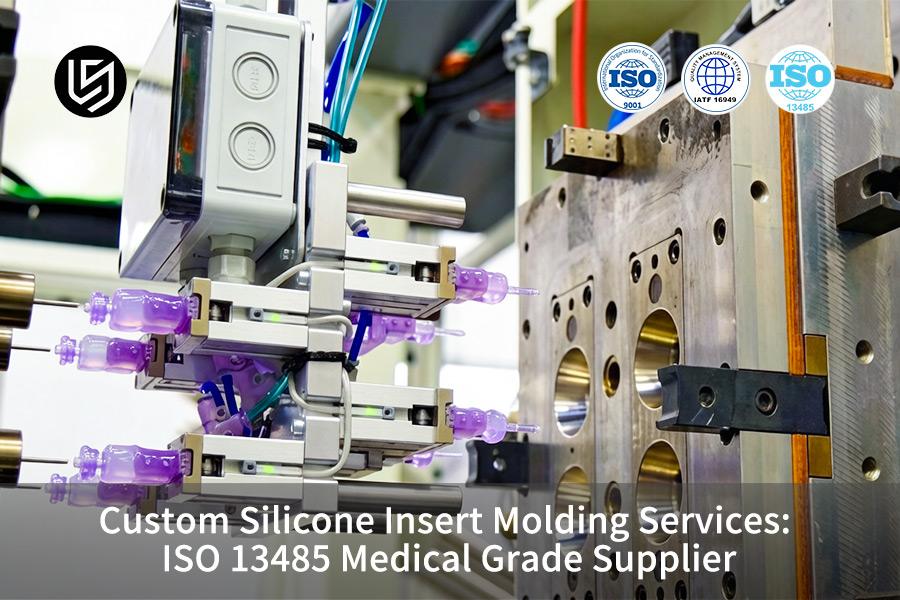
Custom silicone insert molding services resolve zero-tolerance sealing and biocompatibility challenges in advanced medical device engineering. When technical buyers analyze what materials are used in insert molding to prevent critical failures like overflow, poor bonding, or thermal micro-bubbles, understanding substrate behavior under Liquid Silicone Rubber (LSR) processing temperatures of 160°C to 180°C is essential.
By optimizing the thermal match between LSR and high-performance thermoplastics like PEEK or PPSU within an ISO 13485-certified Class 10,000 cleanroom, this process eliminates batch rejections and guarantees 100% compliance in rigorous airtightness and bio-compatibility testing.
LS Manufacturing offers deterministic solutions to this problem through decades of experience in precision silicone insert molding using pro-active DFM mechanical interlock design, controlling the mold flash at ±0.005mm, and using ISO 13485 certified quality systems to offer solutions from design to mass production for medical grade silicone insert molding products. This is covered below.
Custom Silicone Insert Molding: ISO 13485 Supplier Quick-Reference
| Compliance Factor | Manufacturing Protocol | Clinical Outcome |
| Material Traceability | USP Class VI silicone, along with the associated MTRs, following ISO 10993 requirements. | Vital for manufacturing biocompatible components intended for contacting body tissues. |
| Process Validation | Validation of medical-grade insert molding process and tooling. | Confirms consistency in production of parts from lot to lot. |
| Cleanroom Production | Medical-grade components manufactured in ISO Class 7/8 cleanroom environment. | Guarantees manufacture of sterilization-ready components. |
| Bond Integrity | Based on proven surface preparation method for ensuring permanent seals (minimum 5 MPa). | Creates reliable sealed systems used in catheter assembly and other implantable devices. |
| Quality Assurance | Full in-line automated inspection and leak testing. | Provides flawless components vital for high-performance medical devices. |
| Regulatory Documentation | Digitally archived DHR for each production run. | Required documentation for FDA/CE regulatory submissions or audits. |
The above matrix demonstrates how aligning manufacturing protocols with regulatory data guarantees 100% compliant clinical outcomes.
Key Takeaways:
- Validation is Foundational: A comprehensive IQ/OQ/PQ validation is essential for consistent precision insert molding processes.
- Environment is Part of the Spec: Cleanrooms are a necessary requirement when it comes to manufacturing high-quality medical devices.
- Sealing is a Certified Process: For consistently hermetically-sealed devices, it is essential to use the certified sealant.
- Documentation is Integral: Device History Record (DHR) is equally significant in getting your product approved as your actual product.
Why Trust This Guide? Practical Experience From LS Manufacturing Experts
Many guides will tell you the theoretical side of the process of precision manufacturing. Why choose this one? It comes directly from people who know how it needs to be done. Our team consists of experienced precision manufacturing experts.
Our team is known for being able to get the job done because we work in the most demanding industries out there. We manufacture parts for satellites where precision is critical, massive turbines capable of enduring huge loads, and diagnostics that require perfect precision. All our work adheres to strict metrology principles provided by National Institute of Standards and Technology (NIST).
Our advice is based on experience; specifically, we know how difficult it is to hold tight tolerances of ±2 microns for challenging contours, avoid chatter when working with titanium material, and maximize efficiency without sacrificing quality. It makes perfect sense to adhere to the standards set forth by the European Committee for Standardization (CEN). We have learned the hard way, and we want you to learn without making the same mistakes.
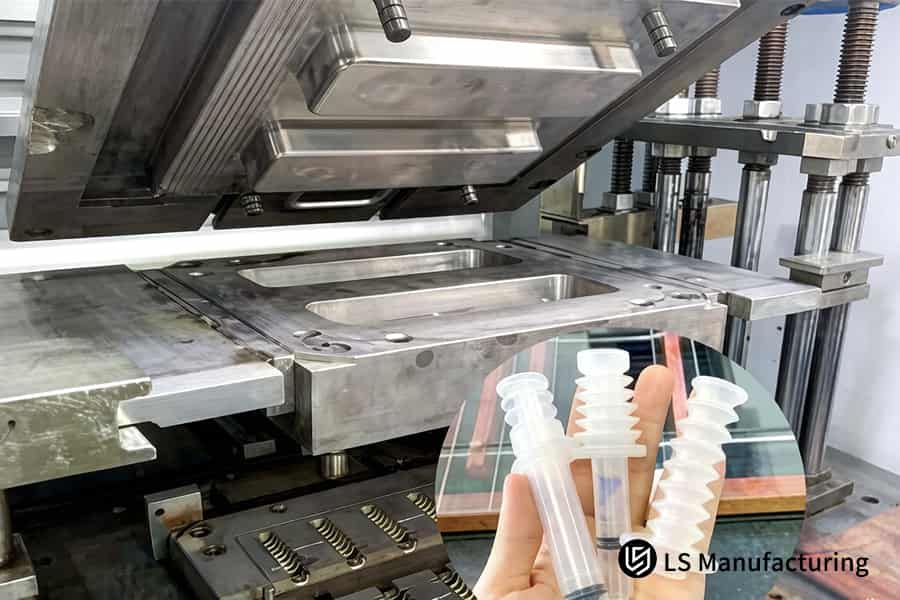
Figure 1: A hand holds three clear silicone medical components for visual inspection at the quality control station.
Why Is ISO 13485 Insert Molding Certification Mandatory For Medical Device Bio-Compatibility Risk Mitigation?
Along with certified materials, it is necessary to provide a contamination-free environment that ensures strict control, documentation, and validation of all processes. That is exactly what ISO 13485 insert molding technology provides us with. See how our solution is being implemented:
Precision Environment: A Foundation of Purity
ISO 13485 compliant class 10,000 clean room technology is the basis for manufacturing of quality medical grade silicone insert molding products. The temperature in the ISO 13485 compliant class 10,000 clean room does not exceed 22±2°C. Relative humidity does not exceed 45%. The number of air exchanges per hour must be not less than 20. Continuous monitoring of particles (the size is 0.5 μm and 5.0 μm) as well as positive room pressure provides purity of the process environment.
Material Genealogy and Lot Traceability
The mitigation must begin from where the problem exists. All rolls of silicone will be supplied with the Certificate of Compliance in accordance with USP Class VI and ISO 10993-5/-10 standards. Our tracking system records the Lot Number from the supplier, its date of arrival to our company, as well as an LS Manufacturing batch number. These numbers remain consistent throughout gravimetric mixing, degassing at or below ≤1.0 mbar, and additional molding process, in order to ensure traceability of the custom medical insert molding processes.
📥Unsure about medical compliance documentation? "Download our Complete ISO 13485 Material Traceability Checklist (PDF)" to streamline your upcoming FDA audit.
Validated Process Control and 100% Inspection
Elimination of any risk can be achieved by making sure that the verification of components takes place within the limit of predetermined parameters, such as temperature of mold (±1.5°C), cavity pressure sensors, and control of injection speeds. The product undergoes 100% in-process inspection of dimensional requirements with calibrated pin gauges to ±0.005mm as well as visual inspection according to AQL Level I. Thus, only conforming products will be monitored in real time, illustrating our medical insert molding services and validated validated insert molding procedures.
Material Verification via FTIR Analysis
This is the last barrier that can be seen and has to do with the actual physical verification of materials. This will involve the use of FTIR to test the produced parts through the use of the spectrum developed from a master reference sample that has been approved. Thus, this forms an integral part of verifying the use of materials in biocompatible insert molding and high-precision insert molding projects.
The stringent approach adopted in this methodology results in complete compliance with regulations and defect-free batches in your project. Put simply, through the combination of live parameter control and empirical validation using FTIR, we guarantee your components will pass FDA and CE audits at their first attempts without having to undergo time-consuming revalidation processes.

How To Optimize Primer-Free Chemical Bonding Strength During Custom Silicone Insert Molding Services?
In short, by replacing chemical primers with physical plasma activation, we deliver toxic-free molecular bonding that tolerates over 100 autoclave cycles without failure. Chemical primer removal avoids both toxic outgassing and toxic leaching to create a molecular bond that is one of the capabilities of a reliable silicone insert molding supplier.
This method guarantees that the overmolded parts remain intact despite exposure to harsh shear forces as well as more than 100 consecutive autoclave cycles for sterilization. It relies solely on surface thermodynamics, plasma activation using atmospheric pressure, and interlocking geometry at micrometer scale.
Advanced Surface Activation
- Plasma Treatment: Atmospherically pressurized plasma treating inserts (e.g., 300W, 90s).
- Result: Attains hydrophilic surface treatment (greater than 72 mN/m), without the need for a primer, thus permitting covalent silicon bonding without a primer-free insert molding.
Mechanical Interlock Design
- Micro-Feature Engineering: Micro-undercuts fabricated through the process of laser ablation (such as micro-undercuts with width measuring 150µm).
- Result: Ensures flow of silicon into the system; mechanical lock insert molding anchor created.
Thermodynamic & Material Control
- CTE Compensation: Inserts are heated up to 180 ± 5 ºC before insert molding.
- Precision Process: Necessary for precision silicone insert molding of parts.
Validated Bond Integrity
- Process Monitoring: Time taken for plasma treatment, temperature before insert molding, and injection pressure recorded during each procedure.
- Performance Verification: Peel test samples (ASTM D429) are tested after each cycle. Minimum value of peel strength is 2.5 MPa to ensure quality of custom silicone insert molding services.
This protocol details a physics-first engineering solution, replacing variable chemical primers with controlled, measurable surface activation and intelligent mechanical design. It provides the quantifiable, primer-free bonding assurance needed to de-risk device performance for critical OEM silicone insert molding applications, delivering consistent results for high-strength insert molding challenges.
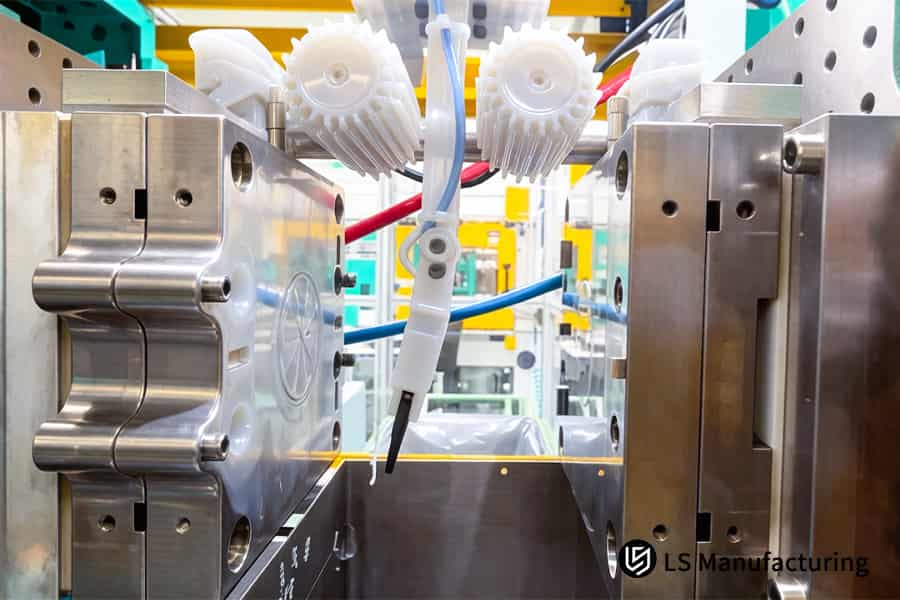
Figure 2: A robotic arm transfers white silicone components attached to colored pneumatic hoses for assembly.
What Mold Engineering Matrix Controls Flash And Overflow Within ±0.005mm In Custom Medical Insert Molding?
Elimination of Microscopic Flash from medical-grade LSR overmolding becomes a relevant topic due to the risk of jeopardizing the safety of the medical device. Further below, please see the summary of the proposed control matrix for flash elimination at ≤0.005mm – key condition for reliable cleanroom insert molding process. Combination of high precision tool manufacturing, proven process control dimensions, and control constitute the backbone of the efficient production of complex custom medical insert molding.
| Control Dimension | Technical Implementation | Quantified Target / Parameter |
| Mold Manufacturing | Precision High-precision grinding/lapping of parting lines and insert fitments. | Precision tolerance is ±0.002mm. |
| Gating & Flow Control | Valve-gated cold runner to enable precise shot/cut-off for zero-flash insert molding. | Set specific injection pressure between 80-120 bar. |
| Venting Design | Precise venting channels to enable air release at the parting line. | Maintain the controlled 0.005-0.008mm vent depth. |
| Process Force Balance | Optimization of the clamping force in conjunction with the injection pressure to eliminate deflection which forms part of precision silicone insert molding. | Constant checking will ensure that there is sufficient calculation gap maintained. |
With this preventative approach in mind, quality control changes from an end-of-the-line solution into a reactive approach that eliminates critical defects from happening in the first place. This is a very accurate process that achieves precisely what is needed for mass producing high-quality medical grade silicone insert molding products.
Utilizing this technique proves successful in setting the standard for the rest of the industry for a top silicone insert molding supplier in achieving perfection through flawless high-precision insert molding processes. Apply this proven control matrix to eliminate sub-0.005mm flash in your medical LSR parts. To evaluate it for your project, request a precision molding feasibility assessment and a detailed protocol.
How Do Cold Runner Thermal Isolations Stabilize Multi-Cavity Dosing Consistency For OEM Silicone Insert Molding?
Shot-to-shot repeatability in multiple cavities in molding requires complete thermal isolation between the runner and the cavity. Early curing of material within the runner before it enters the cavity is one of the most common reasons that causes inconsistency in OEM silicone insert molding. The problem can be solved by using a completely insulated cold runner that keeps the material entering the heated cavity at a stable temperature of ≤1% cavity-to-cavity variation:
Decoupled Thermal Management Strategy
The thermal control system consists of two separate zones. Particularly, the cold runner is cooled down to 20°C-25°C using the unique cold water circuit in order to eliminate cross-linking before curing. At the same time, each mold cavity is separately heated by means of a cartridge heater with a temperature of 175°C ±2°C regulated through PID control. Temperature-controlled insert molding conditions allow us to cure the material solely inside the cavity in order to avoid burning and any viscosity changes.
Balanced Runner Design via Rheological Simulation
Flow balance is engineered, not assumed. We use Moldflow analysis with LSR-specific viscosity data to design runner geometry. The diameter, length, and branching of each channel are optimized to ensure fill time between all cavities is within 0.15 seconds. This scientific approach to balanced-cavity insert molding is fundamental to precision silicone insert molding, guaranteeing uniform packing pressure and part density for custom silicone insert molding services.
Process Monitoring and Validation
Consistency is proven by measurement. Thermocouples used in the cold runner and cavities give the computer constant feedback. Measurements done on the shots made through several cavities are recorded, while samples are tested for weight and measurements now and then. Statistical Process Control (SPC) is very useful in proving the whole process, hence leading to consistency in high-volume insert molding.
The process takes a different approach from traditional means, where there is decoupling of the material history and controlling it. In doing so, OEMs get guaranteed that they will manufacture parts free of complications through dependable data. It is important in our medical insert molding services because of predictability of the results.
How Can Advanced DFM Review Mitigate Insert Deformation Risks Under High LSR Injection Pressure?
Insert molding involves some inherent dangers because the thin-wall inserts may get displaced or warped by the use of high pressure during the molding process. However, there is no other option but to perform an initial simulation-driven manufacturability study in order to address these problems and bring down costs. It is essential in providing effective custom silicone insert molding services:
Moldflow Analysis & Design Validation
- Simulation First: We perform Moldflow analysis simulations on the 3D model given by the customer.
- Action: Identify areas with high shear stresses, insertion deformation at higher than 100 bar pressures.
- Outcome: Provide recommendations for best gate placements and design-optimized insert molding to ensure balanced flow and reduce lateral forces on inserts.
Precision Support & Venting Design
- Mechanical Reinforcement: Identify precise gate placements and optimized geometries of insert molds to ensure balanced flow and prevent lateral forces on inserts.
- Function: We manufacture hardened steel pins for supports (for instance, pin diameter = 3.0mm) that are immediately behind the inserts within the mold.
- Integration: This is the key component of precision silicone insert molding.
Controlled Injection Profiling
- Pressure Management: We've used an injection speed approach instead of increased injection pressure approach.
- Parameters: Initially, the injection speed is 15 mm/s but is reduced gradually down to 5 mm/s during the fill stage in proximity to the insert.
- Result: With simulation-driven insert molding method, it is possible to decrease hydraulic pressure in the area of the insert by more than 40%, which eliminates the problem of "water hammer."
Documented DFM Protocol
- Process Integration: Every suggestion made along with every modification of parameters becomes documentation for DFM analysis.
- Value: Such approach guarantees that the objectives set by the client with regard to design meet the demands of manufacture in advance.
- Standard: This is a classic example of proactive ISO 13485 insert molding standards.
Engaging in this simulation-driven review protects your critical project timeline and financial investment before tool steel is cut. By resolving structural risks in a digital environment, you receive a validated manufacturing blueprint that guarantees right-the-first-time tool sampling, accelerates your time-to-market by weeks, and ensures the structural integrity of your high-performance device.
Utilizing this rigorous engineering-driven and analytical approach is precisely what establishes this platform as a solution-based silicone insert molding supplier for risk-mitigation insert molding.
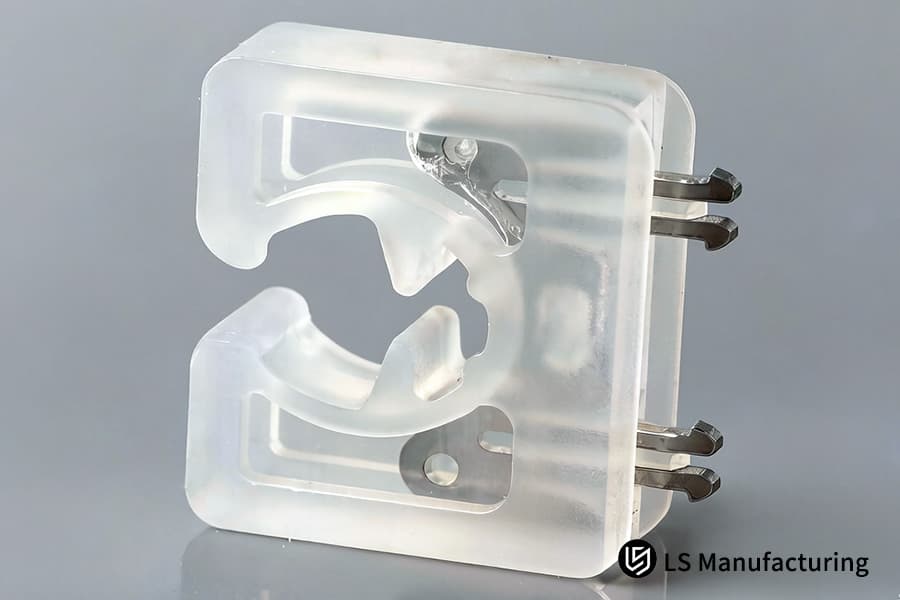
Figure 3: A clear silicone jig with embedded metal pins secures components for precision manufacturing applications.
Case Study: How LS Manufacturing Resolved A 28% Seal Leakage Failure For An Endoscopic Surgical Handle Project?
A 28% failure rate for an essential endoscopic handle was compromising a product launch due to issues with creating adequate seals. LS Manufacturing was called on board to address leakage problems arising from the junction of the PEEK component and the silicone piece, proving just how important it is to have extensive engineering knowledge while undertaking OEM silicone insert molding for sterilizable insert molding applications.
Client Challenge
An issue with 28% leakage rate was identified in the autoclave testing of the surgical handle under the temperature of 134°C. The reason behind this defect is that the use of a rigid PEEK insert would cause deflection and poor adherence to medical silicone due to the high-pressure injection process. This caused a delay in development exceeding three months, putting the entire timeline of the project in danger.
LS Manufacturing Solution
To address this issue, our engineers employed a two-pronged approach. Firstly, the design was re-engineered to use a valve-gated cold runner system for optimal injection process parameters resulting in pressure from 140 bar to 95 bar and minimizing insert deflection. Secondly, we incorporated 40 kHz plasma treatment (for 60 seconds) and a 0.3mm mechanical interlock mechanism. This solution for high-pressure insert molding addressed the problems with adhesion and stability directly.
Results and Value
The redesigned parts showed 100% success through 100 successive autoclave sterilization runs with no defects, producing 100% yields on air leak testing. The interface peel strength also improved by 42%, ensuring long-term sterilization. This eliminated the defect and expedited the client’s time to market by 4 weeks, demonstrating the ROI of professional custom medical insert molding.
This case proves that solving complex reliability hurdles requires analytical problem-solving beyond standard molding. LS Manufacturing provides this expertise as a silicone insert molding supplier, delivering leak-proof insert molding solutions that transform high-risk development challenges into manufacturing successes for life-critical devices.
Eliminate 28% seal leakage and save 4 weeks in development. To validate a 100% leak-proof solution for your handle, submit your design for a performance review and production quote.

What Secondary Post-Curing Profiles Ensure Zero-Volatile Compliance For Medical Insert Molded Components?
The presence of residual volatile compounds after mold curing LSR is a main reason behind biocompatibility failure tests, specifically where high levels of accuracy are demanded. Proper post-curing of LSR will guarantee the removal of these contaminants. Effective thermal control plays a significant role in manufacturing reliable medical grade silicone insert molding and is important for the consistency of the material needed in precision silicone insert molding.
| Control Dimension | Technical Implementation | Quantified Target |
| Validated Thermal Profile | Forged convection heat cycle with controlled ramp and hold periods. | 200°C for at least 4 hours. |
| Process Environment | Oven systems with forced airflow and integrated VOC insert molding process. | Flow rate >1.5 m/s. |
| Analytical Verification | Analysis through GC/MS on each batch produced. | Maximum of 0.01% total volatiles. |
| Traceability | Each production run associated with an individual oven log, making it compliant for custom medical insert molding. | Fully documented and auditable. |
This protocol elevates post-curing to a critical, verified unit operation for VOC abatement. It provides auditable proof of material safety, directly solving the problem of failed biological evaluations. Our medical insert molding services integrate this rigorous standard, which is fundamental for insert molding and guarantees the long-term biocompatibility of finished devices.
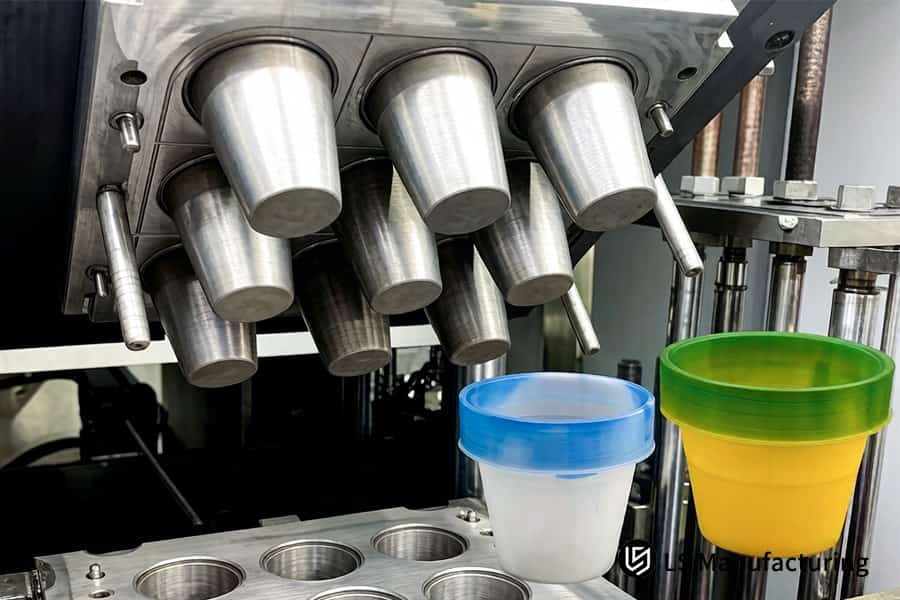
Figure 4: Metal molds positioned above colored silicone containers enable high-volume production of industrial parts.
Why Choosing LS Manufacturing As Your Single-Source Silicone Insert Molding Supplier Maximizes Total Cost Of Ownership Efficiency?
Optimizing total cost ownership (TCO) necessitates a complete change in strategy from controlling the disparate group of suppliers to working with a single vertically integrated partner. Such an arrangement ensures the prevention of the wastage of efforts and resources that comes with managing multiple medical device suppliers. As a company that offers services as a silicone insert molding supplier, we optimize TCO through our vertical integration to provide a better insert molding solution for the manufacturing of your product:
End-to-End Process Integration for Direct Cost Control
All essential processes, including DFM, in-house precision mold fabrication, manufacture, and full functionality test of all products, take place inside our plant. In doing so, we save on the extra management time and validation expenses required when using independent vendors. This helps us streamline operations and reduce our clients’ total cost of ownership (TCO) by up to 20-30%, which is a key benefit provided by our OEM silicone insert molding program.
Accelerated Timelines via Concurrent Engineering Workflow
Vertical integration enables a true concurrent engineering workflow where product optimization and tool design occur simultaneously. Tooling specialists synchronize with design engineers from the very beginning of the project, executing early-stage mold development while validating manufacturing viability to eliminate traditional down-time. All these processes are regulated by ISO 13485 insert molding standards and compress product development cycles by up to 40% compared to fragmented multi-vendor timelines.
Risk Mitigation through Unified Quality and Accountability
The same source unifies IP security as well as the responsibility for quality. There is no controversy between vendors regarding any non-compliances. The advantage of our comprehensive full-service insert molding approach guarantees that each potential problem will be dealt with directly with accountability in mind, thus protecting project schedules while alleviating client's need to manage suppliers for the complex insert molding process.
Guaranteed Traceability in a Closed Manufacturing Loop
Parts progress from the raw materials to sterile-packaged final product within one and the same traceable cycle. Such closed-cycle manufacturing avoids any possibilities of contamination by transportation processes across different manufacturing facilities. This traceability principle forms the basis of the custom silicone insert molding services we offer.
Our vertically integrated approach is built to maximize TCO with zero waste in terms of coordination, timing, and quality. We do not sell individual pieces, but a proven insert molding solution that offers cost savings, time reduction, and total accountability, which makes us a good partner for any serious and highly valuable medical device project.
FAQs
1. What are the primary tool steel standards for ISO 13485 insert molding applications?
At LS Manufacturing, we use only corrosion-resistant mirror tool steels (hardened to HRC 52+ via vacuum heat treatment) – NAK80 or S136 – for the hard part of our tools. With HRC 52+ vacuum heat treatment, it provides minimal tolerance of cavities down to ±0.002mm at 180°C for silicone vulcanization over many years. Single-mold longevity is guaranteed to be above 500,000 cycles.
2. How to prevent thermoplastic melting during high-temperature medical-grade silicone insert molding?
Our engineers employ Moldflow to perform dynamic heat conductive simulations, regulating the mold’s cold runner region to stay at 22°C to ensure smooth material flow. At the same time, our system employs fast flash vulcanization of the part cavity contact point at 165°C to make sure that no material melting occurs within the mold’s PEEK and PPSU inserts because of high temperatures.
3. Which surface texturing spec guarantees the highest interface bonding for custom medical insert molding?
Toxic surface coatings are not an option; instead, we utilize 40kHz low-pressure plasma surface treatment in combination with a unique surface texturing design, where the mold’s end is equipped with an optimal EDM surface roughness of VDI 24/27 microns, allowing twice as much physical contact area to exist between the insert and the silicone part.
4. What is the minimum MOQ threshold for specialized medical insert molding services?
In order to facilitate medical device product prototype verification and V&V for small batch products, LS Manufacturing provides a flexible production line capable of supplying minimum orders quantity down to 100 items in first-time innovative medical applications. LS Manufacturing provides full sets of FAI in accordance with ISO 13485 requirements, as well as complete DFM technical services.
5. How does a silicone insert molding supplier secure client design IP during engineering collaboration?
LS Manufacturing protects its clients' custom medical devices' assets on both physical and legal grounds. In addition to signing all required NDAs, LS Manufacturing maintains a three-level access system for drawings using an independent offline server for safe storage of encrypted drawings. Manufacturing area in the factory is placed in a sealed environment operating under 24/7 leak-proof conditions. If you have a need in this regard, please contact us, and we will provide you with a detailed quotation.
6. What is the standard production lead time for high-volume precision silicone insert molding?
With the help of our highly advanced multi-axis CNC/EDM clusters that can be used completely automatically, we managed to shorten the delivery time for silicone inserts molds up to 18-25 days. Once the successful trial molding was finished, the injection molding capacity of the Class 10,000 cleanroom will achieve the level of 50,000 per day.
7. How do you perform inline seal inspection for custom silicone insert molding services?
Prior to the packaging, each batch of goods is tested for sealing using the customized negative pressure test fixture with a stable pressure level of -50 kPa for 15 seconds; the precision is measured in 0.1 sccm with the zero false-negative rate; hence, there is no chance of leaking of fluids through the endoscopic or surgical tools during the procedure.
8. Why are traditional thermoset alternatives excluded from high-precision OEM silicone insert molding?
In comparison with standard rubber compounds, liquid silicone rubber (LSR) demonstrates improved physiological inertness and chemical stability. The specialty of LS Manufacturing consists of manufacturing high-quality, fast-curing silicone that is highly viscous and able to fill very fine and intricate insert cavities under low injection pressure, which makes it an ideal choice for creating micron-precision, flawless products in medical insert molding applications.
Summary
The process of developing custom inserts made from silicone for the use in high-spec medical device environments is a multi-disciplinary practice of "trust-engineering," encompassing materials science, micron-sealing, surface energy modification, and ISO 13485 certification. In order to eliminate all typical defects of the LSR manufacturing process (flash, leaks, warpage, biocompatibility problems), LS Manufacturing utilizes a Class 10,000 clean room, ±0.005 mm cold runner flash control, 100% inline leak testing, and VOC-free curing.
Have you been having issues with molds that failed the trial stage or looking for ISO 13485 traceable, high-volume manufacturers of medical devices? Do not rely on general molding companies then. Click on "Get Instant Quote & Free DFM Analysis" and upload your CAD files (.STEP/.IGS/.STP). Our senior medical engineers will offer you a thorough DFM analysis, including bondings, expansion, and flashing concerns, and also quote directly from the factory.
📞Tel: +86 185 6675 9667
📧Email: info@lsrpf.com
🌐Website: https://lsrpf.com/
Disclaimer
The contents of this page are for informational purposes only. LS Manufacturing services There are no representations or warranties, express or implied, as to the accuracy, completeness or validity of the information. It should not be inferred that a third-party supplier or manufacturer will provide performance parameters, geometric tolerances, specific design characteristics, material quality and type or workmanship through the LS Manufacturing network. It's the buyer's responsibility. Require parts quotation Identify specific requirements for these sections.Please contact us for more information.
LS Manufacturing Team
LS Manufacturing is an industry-leading company. Focus on custom manufacturing solutions. We have over 20 years of experience with over 5,000 customers, and we focus on high precision CNC machining, Sheet metal manufacturing, 3D printing, Injection molding. Metal stamping,and other one-stop manufacturing services.
Our factory is equipped with over 100 state-of-the-art 5-axis machining centers, ISO 9001:2015 certified. We provide fast, efficient and high-quality manufacturing solutions to customers in more than 150 countries around the world. Whether it is small volume production or large-scale customization, we can meet your needs with the fastest delivery within 24 hours. choose LS Manufacturing. This means selection efficiency, quality and professionalism.
To learn more, visit our website:www.lsrpf.com.