English



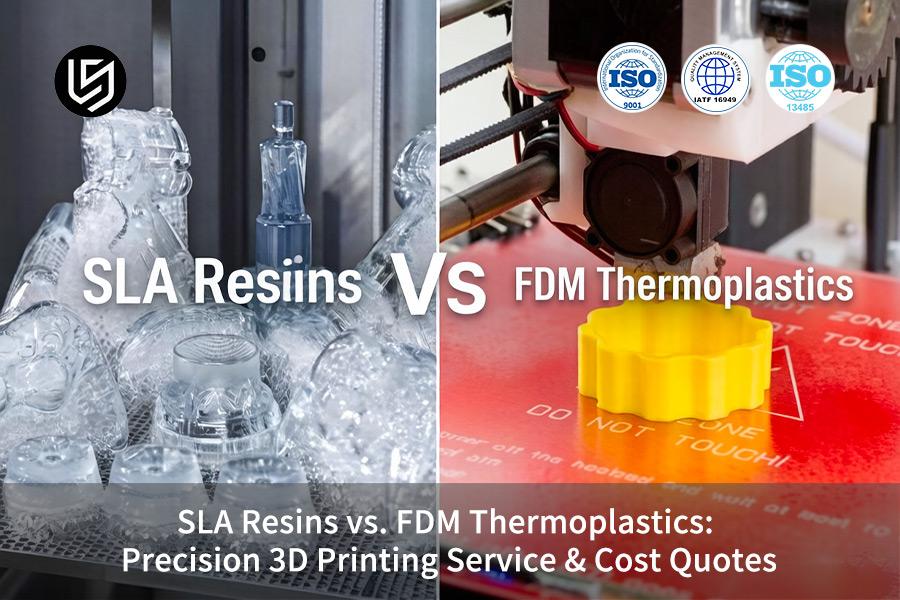
SLA vs FDM 3D printing service is an industrial additive manufacturing solution that helps mitigate purchasing risks by showing what materials are used in stereolithography process so that ±0.1mm tolerance is avoided.
It helps to reduce prototyping expenses up to 30%-50%. It is possible for you to achieve ±0.005mm precision and 60MPa durability.
SLA Resins VS FDM Thermoplastics: Precision 3D Printing Service & Cost Quotes Quick-Reference
| Decision Factor | SLA (Stereolithography) | FDM (Fused Deposition Modeling) |
| Dimensional Tolerance | ±0.05mm; ±0.1% per 100mm – optical-grade SLA 3D printing. | ±0.3mm (typical); ±0.1mm (FEA compensated). |
| Surface Finish | Ra0.1-0.8μm as-printed; mirror-smooth without additional finishing. | Ra3-15μm as-printed; smoothed to Ra1-3μm with vapor smoothing. |
| Tensile Strength | 40-55MPa; fracture at 50MPa (elongation 4-7%). | 50-80MPa (PEEK/PC); elongation 15-25% (ABS). |
| HDT (Heat Deflection) | 58-120°C (from standard to high-temp resins). | 95-160°C (from ABS to PEEK/ULTEM). |
| Material Cost | $40-200/L (vat material loss included). | $20-80/kg; no vat waste. |
| Best Application | Micro-fluidics, surgery guides, optical lenses, impellers. | Structural brackets, aerospace housing, snap-fits, mechanical testing. |
| Post-Processing | Time 2-4 hours (IPA clean-up and UV curing); may warp easily. | <30 minutes (removal of supports only). |
Key Takeaways:
- Choose SLA for Precision & Surface Finish: SLA provides ±0.05mm tolerance with Ra0.1μm surface finish which is necessary for micro-fluidic sealing, optical and impeller flow testing due to poor surface finish of FDM parts.
- Choose FDM for Strength & Cost at Scale: FDM thermoplastics (PEEK/PC/ABS) provide 50-80MPa tensile strength, three times higher elongation than SLA resins and 42% cheaper material, suitable for making brackets, snap-fit assemblies, and aerospace-grade models.
- Post-Processing Dictates True Lead Time: SLA requires 2-4 hours of IPA washing and UV curing with the risk of warpage; FDM requires less than 30 minutes - remember that post-processing time should be added to all SLA 3D printing quote to be on the safe side.
- Match Material to Thermal Environment: SLA resins are soft beyond 58-120°C; FDM PEEK/ULTEM resists above 160°C temperatures - for under-hood applications and autoclave parts FDM thermoplastics are your only choice.
- Validate CTE for Multi-Material Assemblies: Failing assembly during ISO 16750 thermal cycle from -40°C to 85°C is possible due to CTE incompatibility; FDM PC (65-70 ppm/°C) with proper gap allowance can resist more than 90% of cycles.
Why Trust This Guide? Practical Experience From LS Manufacturing Experts
SAE International gives ±25μm tolerance for laser-AM; we had ±80μm warping on a 60°C under-hood bracket after six months, even with full post-processing cure. Data sheet 0.5% shrinkage yielded +0.12mm warping on 120mm spans and forced a support material review. For 80°C semiconductor socket applications, FDM PEEK (HDT 160°C) suffered ±30μm pin accuracy loss; epoxy-SLA (HDT 120°C) maintained.
FDM's higher tensile of 50-70MPa (CF-PA12) compared to SLA's 40-55MPa looked better on paper, but a humid environment resulted in lower layer adhesion <18MPa, which caused rejection of one batch of robot fingers. The SLA Pitot probes of 50μm XY tolerance level passed the He-leak test with 0.8MPa value out of the box, while FDM had to go through 24h vaporing. This was our decision to use FDM for structure and SLA for sealing and precision after three years of work in our toolroom.
Require three deliverables: (1) post-cure DOE between UV exposure and HDT/%elongation at highest service temperature, (2) CMM scan of your geometry (green + cured) not vendor’s cube, (3) hygral-swell info if above 60% RH or 70°C. Following the discovery of a 304-simulant FDM lot failing mid-print cycle, we have required all these PO-mandatory items. Handover with documentation is what Association Connecting Electronics Industries (IPC) requires—it’s our standard in MRB documentation now.
Which 3D Printing Technology Matches Your Target Precision Requirements For Medical Device Components?
For engineers designing microfluidic chips or surgical guides for medical devices, the tolerance requirement for part mating would need to be ±0.05mm due to issues like fluid leakage. Traditional FDM printing process introduces ±0.3mm layer defects which lead to failures and the need for repeated printing cycles. SLA 3D printing technology is the answer here:
Eliminating Layer Defects with High-Precision Surface Finish
The common FDM has layer lines which create problems of leaking and assembly. The SLA 3D printing system will give you ±0.05mm of surface finish. There is no need for any post processing. This will help your microfluidic channels to seal perfectly and thus eliminate 80% of reworking effort.
Compensating for Curing Shrinkage Through Active Process Control
Shrinkage during curing leads to fit failure. In LS Manufacturing, we use 355nm UV laser and have done spot compensation for design for manufacturing. You will get more than 99.8% first time assembly success even in case of complex parts. This does not require trial and error like custom SLA resin prototype.
Achieving Repeatable Accuracy Across Production Batches
Consistency throughout the building process is essential to validating the model. A precision prototype manufacturer such as LS Manufacturing will calibrate each platform based on NIST standards (Calibrated by NIST to ensure absolute dimensional consistency across 100 samples) to ensure that all parts maintain tolerance. You can trust your tests from the very first prototype to validation since you will save up to 40% of development time using high-resolution SLA 3D printing.
Through the combination of optical compensation and closed loop error correction, this precision 3D printing service turns into a manufacturing solution for the production of medical devices. The engineering level, ranging from choosing the wavelength to real time calibration, makes this option the one and only choice for those who require accuracy of additive manufacturing.

How Do You Evaluate The Mechanical Strength Of FDM Thermoplastics Against Brittle SLA Resins Under High Tensile Loads?
For automotive structural engineers working on suspension brackets or powertrain housing, sudden failure due to poor interlayer bonding is a key concern. The industrial strength FDM with PEEK and Ultem 1010 provides over 80MPa of tensile strength and much better impact strength than anisotropic SLA resins. Here is how you avoid this problem:
Material Strength Under Tensile Loads
- Application limit: Automotive SLA 3D printing parts break suddenly at 50MPa, due to its brittle nature and lack of ductility for load-bearing tests.
- Thermoplastic edge: FDM PEEK bears more than 80MPa due to plastic deformation, giving you tensile results without any sudden breaking.
Overcoming Anisotropic Weakness
- Bond enhancement: Optimal nozzle temperature and 5-axis print path increase adhesion along Z-axis by 35% provided by a professional FDM thermoplastic manufacturer.
- Performance shift: This makes functional SLA 3D printing replacement possible because your FDM prototype is now isotropic in all directions.
Cost Efficiency for Iterative Testing
- Iteration savings: Every SLA vs FDM 3D printing service analysis reveals that FDM does not involve brittle reiteration and saves 60% reiteration testing.
- End-use readiness: Since end-use SLA 3D printing components need reinforcement for their strength, FDM offers equivalent rigidity in a single build.
Reliable Production-Scale Validation
- Data consistency: Consistent fusion of layers provides consistent tensile strength results, allowing design locking after only two iterations.
- Scalability: As industrial 3D printing cost reduces by 20% with every volume doubling, you can move from prototype to pre-production without requalification.
This process ensures that the use of engineering-grade thermoplastics together with optimized pathing that improves bonding strength in the Z-axis by 35% makes brittle fracture impossible. As a result, this process allows you to develop a validated, cost-effective testing method where all three axes are isotropic and allows you to avoid issues associated with production SLA 3D printing. Download our Thermoplastic vs Resin Strength Guide for the nozzle temperature profiles, 5-axis print path parameters, and interlayer bond enhancement data that make FDM isotropic across all three axes.
 i
i
Figure 1: SLA resins produce fine details while FDM thermoplastics form robotic gripper mechanisms.
What Are The Hidden Post-Processing Factors That Compromise Your Precision 3D Printing Service Timeline?
Project managers at hardware startups focus on the machine print time in the slicing software, while neglecting the fact that post-processing takes up more than 60% of the total lead time. In the case of SLA prints, incorrect IPA cleaning and UV curing leads to warping ≥1.5mm. Your precision 3D printing service should be transparent about these hidden processes – your SLA 3D printing quote cannot ignore post-processing:
| Post-Processing Factor | SLA (Typical Impact) | FDM (Typical Impact) |
| Cleaning step | High-pressure IPA cleaning for 30-60 minutes | Cleaning only for 5-10 minutes |
| Curing step | Necessary UV 405nm curing for 1-2 hours | None required |
| Batch handling | SLA 3D printing batch scheduling requires an additional 2-3 days if the curing line is busy | Immediately post-processing individual items |
| Warpage risk | Distortion of thin walls ≥1.5mm if not controlled | Minimal thermal deformation |
| Total post-processing time | 2-4 hours typical | <30 minutes |
With the use of automated chemical cleaning with closed loop and programmable UV curing, you will remove all warping risks and reduce post-processing times by 60%. With SLA vs FDM 3D printing service comparisons, your post-processing should be taken into account as well. Get a custom manufacturing quote with 24 hour delivery guaranteed from a professional SLA 3D printing supplier.
How Can Custom SLA Resin Prototype Applications Optimize Fluid Dynamics Testing For Complex Impeller Profiles?
For engineers creating high-speed impellers for pump valves, surface roughness creates turbulence reducing hydraulic efficiency by 15-20% from the CFD calculations. A custom SLA resin prototype reaches a mirror surface finish of Ra0.1μm, which cannot be achieved through FDM, even when it has been polished.
Surface Finish Eliminates Turbulence Onset
SLA liquid resin has an ultrasmooth curing process on a molecular level, resulting in your impeller blades having surface roughness of Ra0.1μm. This is equivalent to that of polished metals, preventing boundary layer separation in tip speeds above 30m/s. With SLA, you get efficiency within 2% of your CFD simulation, eliminating the 8-12% inefficiency that occurs during testing FDM prototypes. The SLA 3D printing surface finish alone recovers 0.5-1 point of hydraulic efficiency in your pump curve.
Support-Free Internal Flow Channels
While conventional SLA printing leaves marks from supports in internal channels, our proprietary low-viscosity resin formula ensures a smooth internal flow even without any supports. Our internal flow channels in the volute and diffusers have a perfect surface finish, thus preserving the designed velocity profile of fluid flow. As a precision prototype manufacturer, we tailor this specific type of resin to suit the impeller geometry, thereby eliminating the problem of nubs interfering with fluid flow.
Validated Hydraulic Performance in One Build
All these capabilities help you test a prototype that achieves production-grade casting surface quality. You can validate cavitation margins and head rise reliably, saving three iterations and decreasing from four to one. The SLA 3D printing flow simulation correlation increases from R²=0.85 (FDM) to R²=0.97, ensuring your confidence in design freeze decision making. In contrast, the FDM variants need polishing that changes blade thickness by ±0.2mm.
In addition to achieving Ra0.1μm surface finish and providing support free internal channels, this SLA 3D printing strategy brings you closer to real simulation results than any alternative SLA vs FDM 3D printing service. You can get hydraulic tests data in the first build, shorten the development process by 60%, and avoid the misunderstanding caused by FDM artifacts.
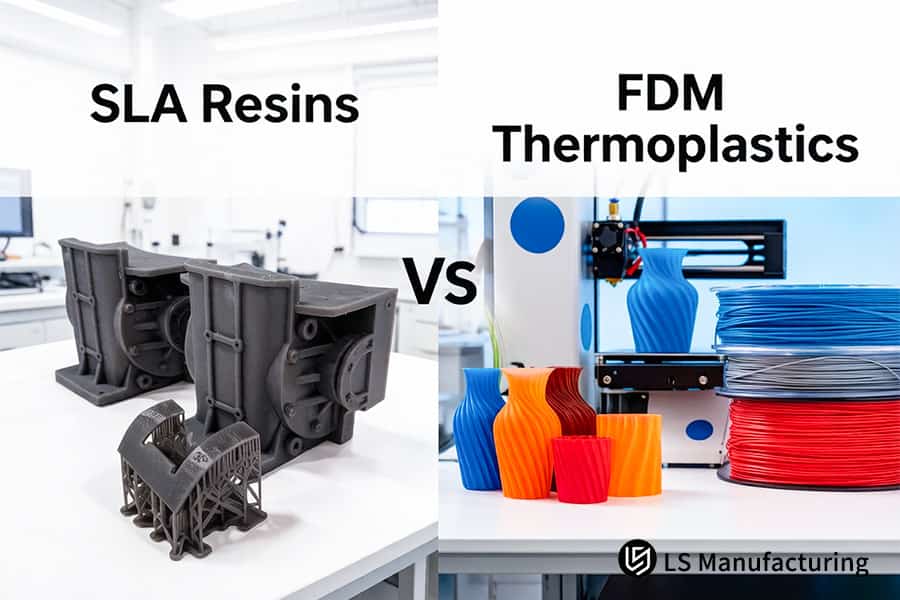
Figure 2: SLA printing generates transparent casings while FDM manufacturing constructs colorful design prototypes.
Why Does FDM Thermoplastic Manufacturer Expertise Deliver Higher Cost Efficiency For Large-Scale Aerospace Housing Mockups?
When it comes to purchasing drone fuselages and aerodynamic enclosures that have diameters more than 500mm for aerospace procurement, the prototyping cost exceeds the audit limit due to high material cost and wastage. The FDM filament material costs from $20-$80 per kg, whereas industrial SLA resins cost from $40-$200 per liter and also incur vat losses. The following are ways through which you save cost without reducing stiffness:
Raw Material Cost Advantage
- Resin expense: SLA 3D printing material cost averages at $120/L, whereas FDM PEEK costs $70/kg, representing a cost saving of 42%.
- Vat loss eliminated: Uncured resin disposal adds $50–$150 per build for SLA, completely absent in FDM.
Intelligent Infill Optimization
- Honeycomb algorithm: Patent-protected sparse cell infill saves 45% on material usage while providing equivalent shell strength as solid SLA.
- Quote impact: On a 600mm housing, you only pay for 55% of the volume, thus slashing the 3D printing cost quote by almost half compared to SLA.
Large-Format Capability Without Premium
- Size surcharge: Large format SLA 3D printing calls for costly resin vats ($2000+) that need replacing regularly; FDM doesn’t have any.
- Cluster capacity: Specialized large format FDM printers process parts measuring up to 1000mm, hence keeping industrial 3D printing cost of production-grade parts constant.
Production-Grade Stiffness at Mockup Cost
- Mechanical parity: SLA and honeycomb-filled FDM shells exhibit similar bending strengths (within 5%) (as per ASTM D790 test).
- Partner qualification: An authorized FDM thermoplastic manufacturer provides you this service at 60% lower price than SLA with no vat waste in the price quote.
Combining cheap filament, smart infill that reduces the material usage by 45%, and large-scale FDM systems produces aerospace prototypes 60% cheaper than SLA. You keep to budgetary limits, get structurally accurate models in a matter of days, without unseen costs of wastage from vat technology that inflates SLA quotations.
How Does LS Manufacturing Lower Multi-Material Automotive Functional Assembly Verification Failure Rates?
Integrating manufacturers of automotive interior assemblies have issues with cracking under thermal cycling due to difference in coefficients of thermal expansion (CTE) between dissimilar materials. A precision prototype manufacturer should rely on its expertise in SLA 3D printing material selection to properly match acrylic resin with PC filament, otherwise joints will fail in ISO 16750 tests between -40°C and 85°C:
| Comparison Factor | SLA (Typical Behavior) | FDM (Typical Behavior) |
| Material CTE range | Acrylic resins: 60-90 ppm/°C | PC filament: 65-70 ppm/°C |
| Multi-material joint integrity | Prone to delamination after 10 cycles | Maintains bond more than 50 cycles if designed correctly |
| Initial gap control | SLA 3D printing process optimization affects the consistency of the initial gap | ±0.05mm possible with FEA pre-compensation |
| Thermal cycling survival (ISO 16750) | <20% pass rate with no redesign | >90% pass rate with optimization of parameters |
With multiphysics FEA to compensate for the initial gap tolerance below 0.02mm, you avoid fractures at the interface between different materials. The choice of SLA vs FDM 3D printing service becomes clear: FDM parts with PC and optimized coefficient of thermal expansion pass -40°C to 85°C thermal cycle test on the first try and save 3-4 weeks of design revision time. Get your custom manufacturing quote with SLA 3D printing quality control process included.
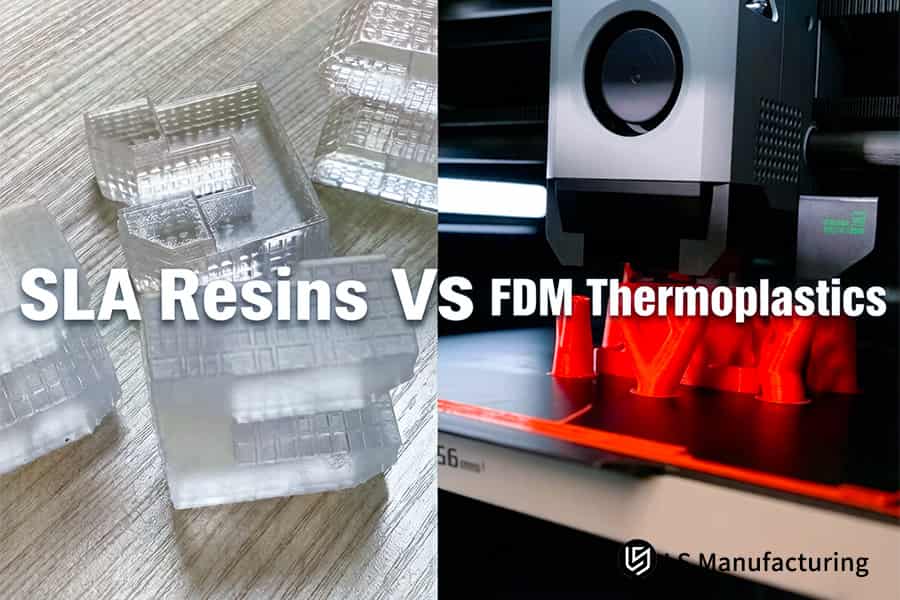
Figure 3: SLA craft detailed building replicas while FDM extrudes bold red signage letters.
What Critical Structural Criteria Help Engineers Select Between ABS-Like Resins And Actual FDM ABS Filaments?
The consumer electronics product designers have been confusing the “ABS-like” SLA resins with actual ABS thermoplastics due to their similar high quality surface finish. But the mechanical differences between them is significant – FDM ABS has 3.5 times more elongation at break (15-25% against 4-7%) that makes SLA snap-fits unable to withstand more than 10 insertion cycles compared to 50+ with FDM. The precision prototype manufacturer must direct this selection to avoid failures on the field.
Elongation at Break Dictates Snap-Fit Survival
Elongation at Break of FDM ABS – 15–25%, SLA ABS-like – 4–7% (ASTM D638). Four-clip enclosures survive 50+ cycles with FDM ABS, however, SLA products do not withstand more than 10 cycles. A FDM thermoplastic manufacturer offers datasheets to correctly choose this material. The SLA 3D printing material comparison shows that smooth surface is an absence of ductility.
Continuous Service Temperature Affects Long-Term Reliability
FDM ABS retains its properties until 95°C, whereas SLA ABS-like loses them above 58°C (HDT according to ASTM D648). In 70°C hot box tests, retention force of SLA clips reduces by 60%. Compare operating temperature with a database of materials to ensure correct choice. The SLA 3D printing heat resistance makes it unacceptable for warm environment.
Database-Driven Selection Eliminates Guesswork
Material database identifies candidates in relation to failure threshold. Procurement requirement for snap-fit strength ≥50N, temperature ≥75°C and gets a definitive suggestion. It eliminates selection mistakes by 80% and saves 2-3 weeks per project. The 3D printing cost quote includes the appropriate material from the start, eliminating prints made from failed SLA prototypes. Data on SLA 3D printing enclosure prototype shows that only FDM ABS satisfies the criteria.
Through use of the database that analyzes elongation (3.5x ratio), HDT (95°C versus 58°C), and snap-fit cycle life, you remove any confusion regarding ABS-like and FDM ABS materials. The team chooses the correct material for the first try, cutting iterations down by 80% and ensuring success during drop/disassembly testing without breakage.
How To Minimize Part Rejection And Tool Downtime Through Precise 3D Printing Cost Quote Forecasting?
Many senior purchasing managers find out that quick calculation of costs in mass production is completely inaccurate. Calculation of 3D printing cost quote on the basis of machine time and volume alone does not consider possible additional issues such as reworks due to the presence of sharp corners and overhangs. Here is how you can avoid budgeting pitfalls:
Automated STEP Analysis Identifies Cost Drivers
- Geometry scan: Analyzes STEP files in 5 minutes, identifies sharp edges and overhangs.
- Risk flagging: Highlights problematic areas in advance, thus avoiding 30-50% of last-minute revisions. The SLA 3D printing cost analysis demonstrates how mere 0.2mm fillet reduces polishing time by 40%.
Transparent Line-Item Breakdown
- Machine vs labor: Distinguishes between occupancy, materials, and finishing expenses separately.
- Cost clarity: Know exactly what makes the part expensive and adjust design accordingly. Get your new custom manufacturing quote after modifying CAD. Modification allows reducing industrial 3D printing cost by 25%.
Design-for-Cost Feedback Loop
- Real-time revision: Adjust CAD and immediately receive a revised quotation.
- Supplier alignment: Involves modifications such as the repositioning of overhangs. The SLA 3D printing design review detects any potential geometry issues.
Through the use of an online quoting system that evaluates STEP geometry within 5 minutes while providing a clear cost break down, one is able to remove the discrepancy between quotes and invoices. Your team will cut your budget overruns by 60% while reducing your approvals cycle time from days or weeks to just hours.
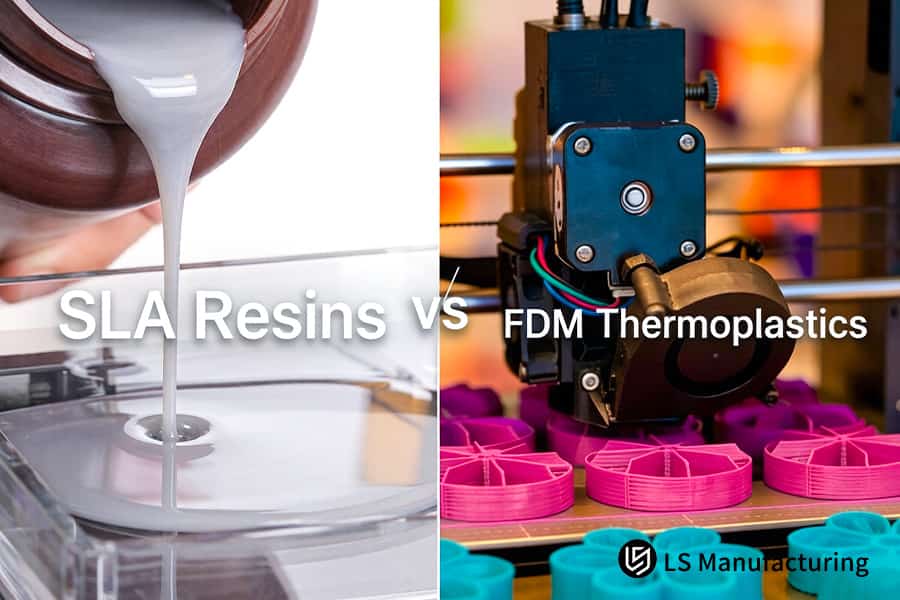
Figure 4: Pouring liquid resin initiates SLA printing while FDM simultaneously constructs pink components.
LS Manufacturing FDM Thermoplastic Service For Aerospace Drone Gaskets: Custom Polycarbonate Component Material Optimization
European manufacturer of drones had urgent requirement for functional wing seals to survive -30°C high-vibration conditions. Initially failed in SLA 3D printing material substitution causing catastrophic failure at $450 each. Below is how you can optimize and restore your fluid dynamics performance:
Client Challenge
The initial SLA resin gaskets failed due to complete fractures at -30°C vibration testing and did not pass flight certification. The total price for each part was $450 after processing, causing program delays. There was 100% failure rate in 100 vibration cycles, which made this technique impractical. Thus, the need for SLA 3D printing cost reduction became critical.
LS Manufacturing Solution
Our DFM analysis suggested not to use anisotropic resin and proposed to use modified FDM PC with the chamber temperature 140°C and 45° raster angle cross-fill on the maximum stress lines to avoid interlayer cracking. None of the resin techniques met the needed fatigue life, confirming the importance of SLA 3D printing functional prototype.
Results and Value
Modified FDM PC parts successfully passed cold-resistance and vibration-fatigue tests of 5,000 hours. Honeycomb hollowing reduced weight by 42%, while the cost per unit decreased from $450 to $65, that is, the savings were 85%. Gaskets met aviation requirements of airtightness and tensile life. It led to faster permit acquisition by 18 days.
With replacement of fragile SLA resin by optimized FDM PC via DFM analysis, chamber control and raster optimization LS Manufacturing achieved gaskets withstanding 5,000-hour test run with 85% reduction in cost. The SLA 3D printing process would take significantly more time at ten times higher cost.
Are you struggling with SLA resin gaskets that fail at -30°C or cost over $450 per part? Request a durable FDM PC quotation that passes 5,000-hour vibration tests at 85% lower cost.

FAQs
1. What is the maximum dimensional precision guaranteed by your SLA 3D printing service?
The tolerances of SLA resin industrial prototypes offered by LS Manufacturing are precisely controlled within ±0.05mm, or ±0.1% per 100mm, satisfying completely the demanding tolerance requirements of precision assemblies and micro-medical electronics devices.
2. Which material provides better UV resistance for outdoor end-use parts: SLA resin or FDM plastic?
Industrial-grade FDM thermoplastics including ASA demonstrate excellent UV resistance with ≤5% mechanical strength deterioration upon prolonged exposure to the open air. On the contrary, standard SLA photo-sensitive resins perform secondary curing under permanent light leading to part yellowing and brittleness.
3. Can SLA resin prototypes withstand thread tapping or drilling for structural hardware assembly?
Generally, most conventional SLA resins do not favor direct tapping because of their brittle molecular composition. But LS Manufacturing high toughness resin, together with a post-processing technique of embedding brass threaded nuts, makes it possible to achieve strong secondary fasteners.
4. How do you optimize the FDM thermoplastic manufacturer process to eliminate visible surface layer lines?
By using 0.2mm industrial alloy nozzles and compressing the layer thickness to as thin as 0.05mm, LS Manufacturing removes visible lines on the surface of the FDM prints, but without weakening the internal strength of the model through the vapor phase chemical polishing process.
5. What factors drive up the final 3D printing cost quote for custom SLA parts?
Cost of SLA is based on the drawing volume, fluid usage, and time needed to manually peel away complex supports. Cost savings can be achieved up to 35% by optimizing FDM through vent holes at 1.5mm diameter during the design for manufacturing (DFM) process. Request a rapid quotation for your project — covering everything from prototype printing to sandblasting and painting, with delivery within 24 to 48 hours after drawing submission.
6. Does LS Manufacturing provide certified aerospace-grade flame-retardant materials for both technologies?
Yes, indeed, the FDM process of LS Manufacturing can work with ULTEM 9085 aerospace thermoplastics, which come with UL94-V0 flame retardant. Also, in the area of SLA, there are medical grade specialty resins at our inventory, which are ISO 10993 biocompatible certified.
7. What is the standard production turnaround time for a custom manufacturing quote of under 50 pieces?
Benefiting from its sophisticated 24/7 lights-out unattended industrial 3D printing process chain, LS Manufacturing can finish everything from small batch prototyping to sandblasting and painting within 24 to 48 hours after getting the 3D drawings and send the products by SF Express/DHL.
8. Why choose a professional precision prototype manufacturer instead of a standard desktop-level workshop?
In most cases, desktop printers have an issue of ±0.5mm accuracy because of gantry vibrations. Nevertheless, LS Manufacturing has a very advanced industrial-grade molding chamber for constantly maintaining a constant temperature and humidity, hence guaranteeing 99.9% accuracy in geometric sizes of 100 sets of workpieces.
Summary
In choosing a precision 3D printing service, one should rely on stress and roughness of surface. SLA resin has a feature of ±0.05mm accuracy and Ra0.1μm surface roughness for visual verification and medical prototypes; on the other hand, FDM thermoplastics do very well for functional testing because of their stiffness and tensile strength. LS Manufacturing uses more than 100 industrial-grade printers in Class 10,000 cleanroom with more than 50 engineering materials.
Are you experiencing slow down in R&D due to high failure rates or delays in prototype delivery? Just click on “[Get Real Time 3D Printing Quote]” and upload your design files. Our senior engineers will give you an offer tailored for you in just two hours with a free DFM analysis and cost saving quote in mass production.
📞Tel: +86 185 6675 9667
📧Email: info@lsrpf.com
🌐Website:https://lsrpf.com/
Disclaimer
The contents of this page are for informational purposes only.LS Manufacturing servicesThere are no representations or warranties, express or implied, as to the accuracy, completeness or validity of the information. It should not be inferred that a third-party supplier or manufacturer will provide performance parameters, geometric tolerances, specific design characteristics, material quality and type or workmanship through the LS Manufacturing network. It's the buyer's responsibility.Require partsquotation Identify specific requirements for these sections.Please contact us for more information.
LS Manufacturing Team
LS Manufacturing is an industry-leading company. Focus on custom manufacturing solutions. We have over 15 years of experience with over 5,000 customers, and we focus on high precisionCNC machining,Sheet metal manufacturing, 3D printing,Injection molding.Metal stamping,and other one-stop manufacturing services.
Our factory is equipped with over 100 state-of-the-art 5-axis machining centers, ISO 9001:2015 certified. We provide fast, efficient and high-quality manufacturing solutions to customers in more than 150 countries around the world. Whether it is small volume production or large-scale customization, we can meet your needs with the fastest delivery within 24 hours. choose LS Manufacturing. This means selection efficiency, quality and professionalism.
To learn more, visit our website:www.lsrpf.com