English



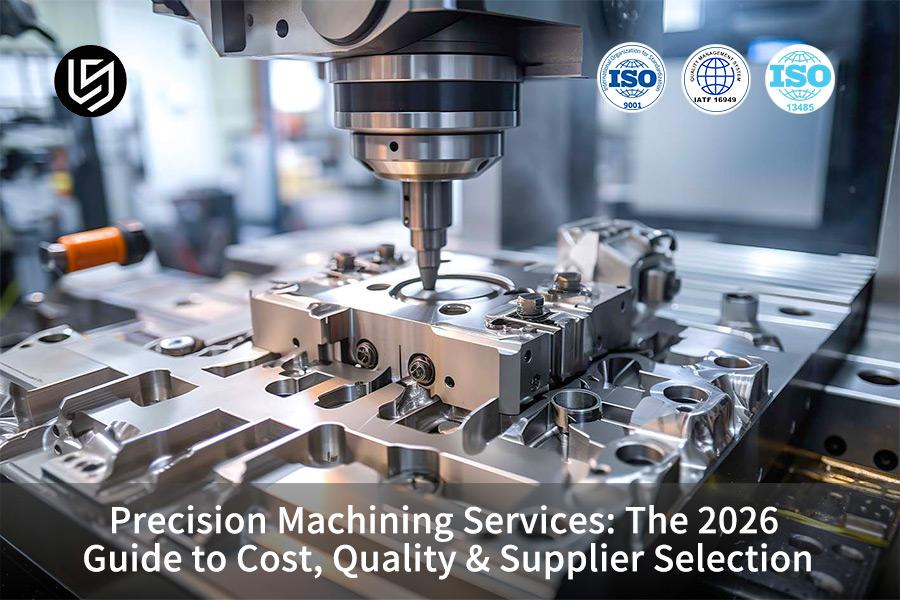
Precision machining services sometimes create a costly conundrum for companies. Many vendors claim the same tolerance levels, like "±0.01mm," but the end result is often far from the same. What starts out as a comparison based on price for a like specification often results in a cost for a risk premium on unproven technology, rather than a cost for a known level of precision.
We solve this by giving you a deterministic option based on a three-dimensional core value of quantified process control for sustained accuracy, simulation-based optimization for actual cost, and a quality culture that drives continuous improvement. This means that from the first part to the ten-thousandth part, our results are always predictable, taking the cost out of a potentially costly gamble.
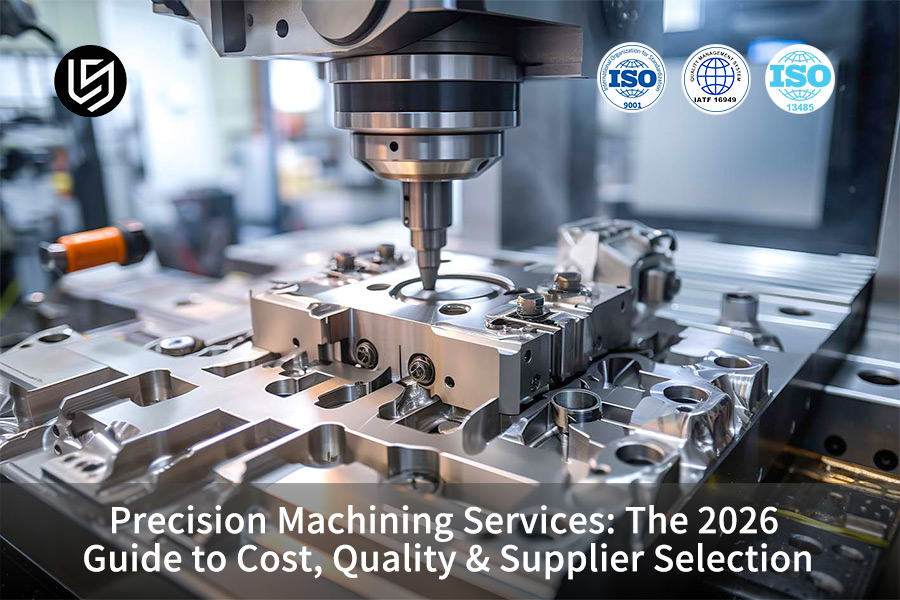
Precision Machining Services: Critical Assessment Guide
| Evaluation Dimension | Expert Analysis |
| Tolerance Economics | Here, the challenge lies in distinguishing between necessary precision and over-specification, as tolerances beyond what is necessary will exponentially drive up costs without providing any benefits. |
| Process Capability vs Claim | Supplier capability is not just about having high-end precision machining equipment; it is about what statistical process control (SPC) and repeatability studies say. |
| Material & Thermal Science |
To machine precision, you must have a thorough understanding of how different materials perform under cutting action and temperature. |
| Metrology as a Foundational Service | Without verification, precision is meaningless, and advanced, in-house metrology equipment such as CMM, optical, and roundness is a requirement for certification of precision tolerances. |
| Our Science-Driven Methodology | Our methodology is based on a function-first approach to specifications, validated by our capability studies, to ensure that we take the cost-effective path to precision. |
| Full-Control Manufacturing Cell | We bring together high-stability equipment, environmental control, in-process probing, and post-process inspection into a system that guarantees controlled results. |
| Result: Guaranteed Conformance | We bring together high-stability equipment, environmental control, in-process probing, and post-process inspection into a system that guarantees controlled results. |
| Result: Optimized Total Cost | We remove the unforeseen cost of scrap, rework, and assembly fit issues by delivering parts that are correct first time, optimizing your total cost of ownership. |
We are focused on solving the basic problem of delivering precision machining parts that are guaranteed for optimal cost. This is done by removing all guesswork from the equation, ensuring that all tolerances are technically justified and manufacturably correct. This means that precision parts are no longer a cost issue but a value-based partnership.
Why Trust This Guide? Practical Experience From LS Manufacturing Experts
In the already saturated digital environment with so many articles on the subject of precision machining services, this guide for 2026 stands out from the pack because it is written from the unrelenting truth of the factory floor. We are not consultants or writers; we are practitioners who have spent our careers battling against tough alloys and tolerances that demand a perfect performance every single time or else the cost is monumental.
Our expertise, learned over a number of years working in industries like aerospace or medical devices, is informed by the strict disciplines of organizations like TWI Global or Additive Manufacturing (AM). This means that our advice is not based on anecdotal evidence; rather, we are giving you a means by which to measure cost and quality. We are taking our expertise and using it as your competitive edge in finding a partner that has the capabilities necessary for your needs.
As such, the following is a direct transfer of actionable knowledge from cost analysis to supplier audits that will save you from the expense of trial and error. We will reveal the essential knowledge required to achieve manufacturing certainty. This will enable you to progress from speculative quotes to a partnership based on predictable results for your most important projects.
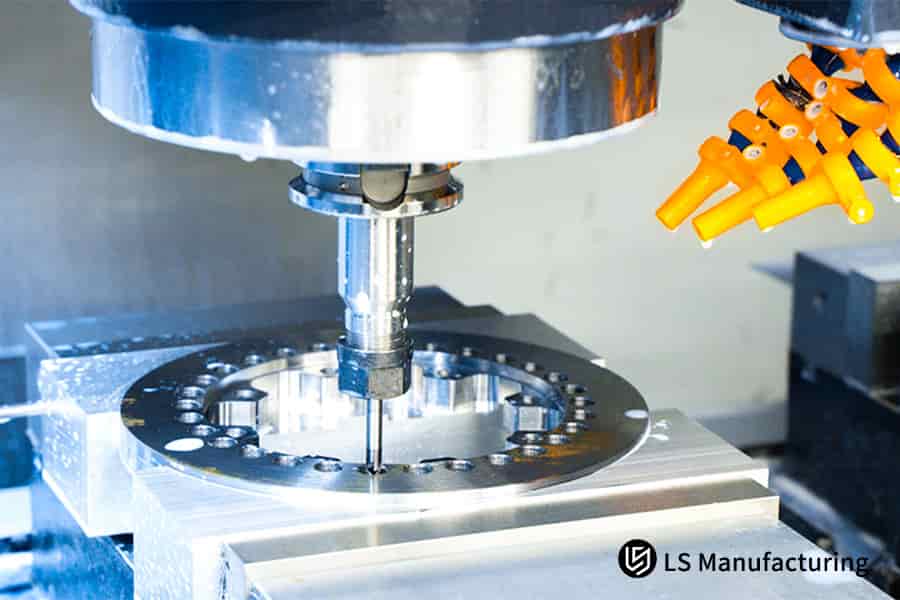
Figure 1: Machining a high-tolerance metal flange for precision supplier selection in the 2026 industrial guide.
What Constitutes The True Cost Of Precision Machining, And What Are The Common Pricing Pitfalls In The Industry?
A truly competitive precision machining cost analysis must be able to differentiate between a unit price and the true total cost of ownership. This document will disassemble the three most prevalent quotation ambiguities that create uncertainty for the supplier and subsequent financial risk for the buyer.
| Pitfall Category | Core Issue | Direct Consequence | Key Audit Question |
| Blurred Risk vs System Cost | Quotes may combine the high cost of an unstable, artisanal approach with the benefits of a reliable, process-controlled system. | You are making an assumption regarding the risk of variability between parts and the risk of downstream failures. | What is the documented long-term process capability (CPK) of this important feature? |
| Suboptimal Process Economics | Applying traditional multi-stage routings to parts more suited to efficient single-setup precision machining processes. | Additional costs are incurred due to increased lead times, handling, and machine time. | Has a comparison of alternative materials and methodologies been performed? |
| Hidden Internal Failure Costs | A supplier's low first-pass yield is a silent contributor to the cost of your product, as the supplier's internal scrap cost is factored into the price of your product. | You are essentially buying the supplier's lack of efficiency, as well as the quality risk that accompanies the supplier's product. | Can you break down the cost of "quality assurance cost" as well as your first-time yield for the operation? |
Being a precision machining supplier is a business that, at its core, is a simple cost-benefit analysis of whether you want to pay for a supplier's internal uncertainty or invest in their system control. This analysis allows you to make that distinction. We can help you eliminate the hidden cost in machining by offering a completely transparent cost model for the machining operation, which allows ambiguous risk to become a defined, value-added cost for the operation.

How To Go Beyond Print Tolerances To Define True "Precision Machining Quality"?
Authentic precision machining quality is a function of statistically assured process capability, rather than merely a part’s conformance to a static blueprint tolerance. The present document represents a stringent data-driven approach for assessing a supplier’s authentic capability for delivering functional quality. The focus is no longer on inspection results but rather on the system that drives these results. The key metrics include process stability and surface quality:
Quantify Process Capability, Not Just Conformance
We offer extensive statistical process control (SPC) reports that include long-term Cpk and GR&R data for key features, rather than relying merely on first-article inspection results. A Cpk ≥1.67 indicates that your process is finely centered within your tolerance and that your process has minimal variation. Every part in a batch is guaranteed to meet spec, effectively turning your drawing into a predictable outcome.
Certify the Measurement System’s Integrity
All inspection data is only valid to the extent that the tools and techniques used to collect the data are valid. Therefore, our quality documents include a full Gage R&R study to ensure that our measurement systems have an acceptable variance (typically <10%). This is the first step to ensure that all subsequent precision machining data is credible to our clients.
Define Functional Surface Integrity
True high quality precision machining extends beyond Ra values. We specify and verify surface integrity using advanced metrology (e.g., 3D optical profilometry) to characterize micro-geometry and can test for subsurface metallurgical changes. This ensures the machined surface will perform under operational stress and fatigue, which is critical for dynamic components in aerospace or medical devices.
This framework offers the quantitative data required to make a selection based on proven control. We address the critical issue of ensuring functional quality through implementation of a closed-loop system based on statistical process control, validated metrology, and sophisticated surface analysis, offering proven reliability for our most demanding applications.
During An On-Site Assessment, How Should One Verify The Actual Operational Depth Of A Supplier's Quality System?
Certificates prove the existence of a system. However, to prove the vitality of the precision machining system, an on-site audit is required. To perform a true supplier quality audit, you must dig deeper than the manual to check the discipline of the system that is preventing failures. This is a checklist of the essential steps to check the depth of a live quality system for a precision machining supplier:
Audit the Non-Conformance Management Loop
- Evidence Review: Review a random Material Review Board (MRB) report from recent history.
- Root-Cause Scrutiny: Determine the root cause is not superficial.
- Closure Verification: Verify that the corrective actions are incorporated into the control plan.
- Training Check: Ensure all relevant personnel have been trained on the updated procedures.
Scrutinize Equipment Integrity & Calibration
- PM Record Check: Review the preventive maintenance records of the critical equipment (e.g., wire EDM machine, jig grinder).
- Calibration Validation: Review the calibration records of the critical metrology tools (e.g., laser interferometer).
- Trend Analysis: Review the records of the accuracy drift trend and the compensations taken.
- Real-Time Proof: Observe the display of the real-time thermal/geometric compensation systems.
Verify End-to-End Traceability
- Trace Test: Request a real-time trace of a finished part back to the raw material heat/lot code.
- Speed Requirement: Time the response to retrieve the information. This traceability should be attainable within minutes.
- Data Integrity: Check the linkage and completeness of records at each step (precision machining material, operations, inspection).
- System Inquiry: Request a viewing of the digital thread or system that facilitates this rapid data flow.
Our operational audit process is not just theory; it's a practical tool for measuring the truth in operations. We help you solve the key question of how to choose a precision machining supplier by giving you on-demand access to the data that drives our high-precision machining outputs and the systems that ensure our quality for the long term.
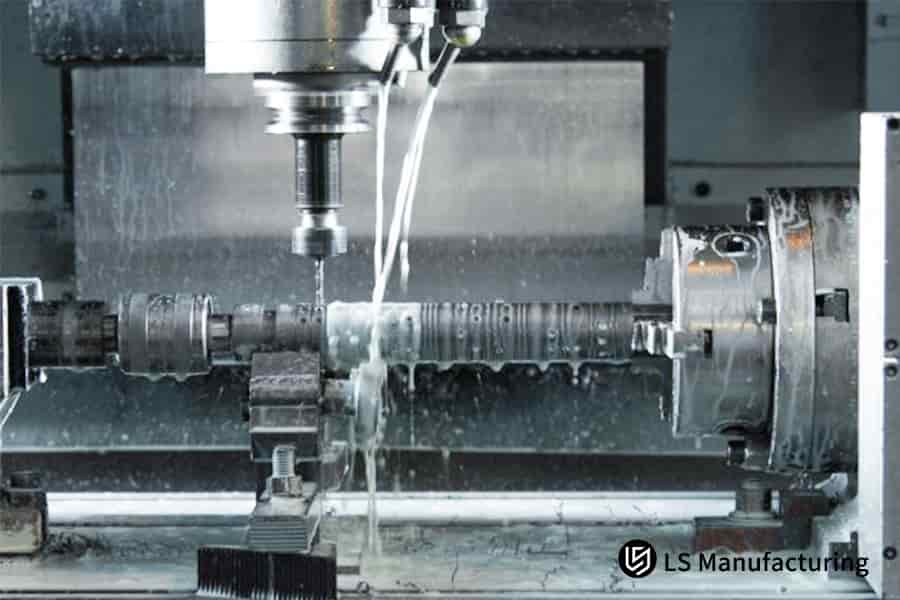
Figure 2: Machining a high-precision metal shaft with cooling for the 2026 supplier selection and quality guide.
What New Capability Requirements Do 2026 Precision Manufacturing Trends Impose On Suppliers?
In 2026, excellence in precision machining will be based on the ability to deliver functional part performance. This 2026 machining guide is a critical analysis of the three emerging capabilities that distinguish leading precision machining companies from all others. This is a working tool for evaluating a partner's readiness for the next generation of future trends in precision machining.
| Emerging Capability | Core Requirement | Key Technology/Process | Evaluation Metric |
| Multi-Physics Conformal Manufacturing | The control of geometry, surface integrity (residual stress, etc.), and microstructure during the machining process. | The integration of on-process monitoring, precision machining toolpath programming, and metrology (such as XRD) to measure stress. | Can the supplier provide a coupled data set (such as a map of surface roughness and a map of microhardness)? |
| Digital Twin-Driven Process | The utilization of thermo-mechanical simulation to predict and compensate for machining distortions prior to the first cut. | Implementation of a validated digital twin manufacturing workflow, from simulation to compensated CNC code generation. | What is the proven accuracy of their deformation prediction model (e.g., ±0.02mm), and is it used for first-part success? |
| Material-Gene Informed Process Development | A structured, data-centric approach to developing machining parameters for new or difficult materials (e.g., high-entropy alloys). | Existence of a proprietary material-process database and a defined development protocol for new alloys. | What is the historical reduction in trial iterations and associated cost for a new material's first article? |
It is no longer enough for a client to simply choose a precision manufacturing partner. Instead, one must now prove the forward-looking precision machining technology infrastructure. We help our clients succeed in these future trends in precision machining by offering a proven process development approach that eliminates the inherent risks associated with new designs and difficult materials.
LS Manufacturing — Semiconductor Equipment Industry: Ultra-Precision Machining Project For Wafer Transfer Module Ceramic Chucks
The semiconductor equipment industry requires an extremely high degree of accuracy that conventional processes cannot deliver. The LS Manufacturing semiconductor case presented in this article outlines our achievement of a technological breakthrough in ultra-precision machining for a mission-critical component, proving our ability to address problems that are hindering our clients’ roadmaps:
Client Challenge
A major equipment supplier needed an alumina ceramic wafer chuck material with thousands of φ0.3mm micro-holes, requiring ±0.005mm positioning accuracy and <0.001mm flatness. Competing suppliers failed to deliver due to edge chipping resulting from ceramic brittleness, and thermal issues causing systemic hole misalignment, putting our client's next-generation tool roll-out in jeopardy, indicating a major gap in precision machining technology.
LS Manufacturing Solution
Our team of experts designed a technical partnership solution that involved creating a hybrid process between pulsed laser machining, ultrasonic-assisted machining, and finite element analysis of thermal stress issues. A fixture was designed with active cooling that provided a ±0.5°C process window, together with in-situ laser interferometry for real-time positioning compensation in a controlled metrology environment.
Results and Value
The chuck was successfully completed on the first attempt, with the results meeting the requirements for ±0.003mm hole location and 0.0008mm flatness, thereby surpassing the specifications. This ultra-precision machining not only served as a benchmark for the client's platform but also expedited their product-to-market cycle, thereby cementing our position as a certified global supplier with a co-developed process patent.
This success story represents the system-level approach to complex prototypes precision machining, which are often a risk for many original equipment manufacturers. We offer technical leadership to our clients within the semiconductor industry, as well as other high-tech industries, with precision machining services that can successfully meet the specifications that were previously unattainable.
Conquer your most challenging tolerances and materials with a partner that guarantees first-pass success through engineered precision solutions.

What Are The Key Elements For Customized Precision Parts, From Prototyping To Mass Production?
The biggest risk associated with scaling custom precision machining projects is the loss of data and knowledge between the approval of the prototype and the start of production. This seamless prototype to production handoff change can only be achieved by recognizing the prototyping phase as a data generation tool for mass production. This document outlines the methodology to achieve continuity and consistency:
Establish and Freeze the Process Baseline Early
Within the prototype phase, we will work together to lock in the production machine type, master fixture solution, primary tooling, and primary measurement methodology. This is a significant phase to align all development data to be directly comparable to the future production line.
Develop and Transfer a Comprehensive Digital Process Package
All of our optimized precision machining parameters are then assembled into a standardized digital process package that not only includes final feeds and speeds but also any thermal compensations and even the best practices for inspection. This is not just a drawing; it is the actual digital process package that is transferred to the production group to ensure that the “recipe for success” is preserved and executable on the chosen high-volume platform.
Ensure Continuity of Critical Personnel and Tacit Knowledge
Our dedicated project team, including our key process engineer, remains unchanged from NPI to production ramp-up. This ensures that the tacit knowledge of the process is preserved, providing an irreplaceable “layer of oversight” that is not possible to achieve with documentation alone.
This structured method changes the nature of the scaling process from a risky redevelopment to a predictable execution. We address the key problem in scaling: the loss of knowledge by institutionalization through early baseline freezing, comprehensive digital process package development, and team continuity. This ensures your custom precision machining parts perform and maintain quality in scale as they did in prototype.
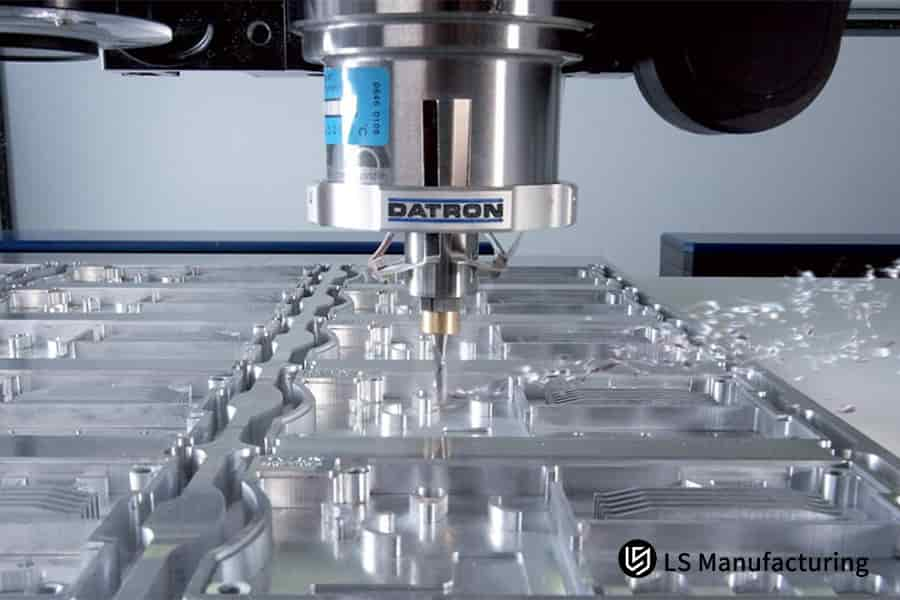
Figure 3: Operating high-precision machining equipment on metal alloy to 2026 machining guide supplier selection and cost-quality evaluation.
How Do You Select A Partner With Long-Term Collaboration Potential From Among Numerous Precision Machining Companies?
While it is easy to identify a potential vendor for a one-time purchase, choosing a potential partner for a future collaboration requires an assessment of the underlying organizational systems that drive a company’s resiliency and continuous advancement. The key decision process for precision machining supplier selection evaluates the key characteristics that differentiate a transactional partner from a potential partner that can drive a future of innovation and reliability:
Evaluate Sustained Investment in Technological Evolution
- R&D Commitment: Examine the percentage of revenue invested in advancing capabilities such as hybrid processes and smart metrology.
- Future-Proofing: Validate the existence of a specific group focused on the next-generation applications, as opposed to the current processes.
- Knowledge Openness: Evaluate their contribution to the community, e.g., publishing research articles on the latest techniques for advanced precision machining.
Audit the System for Knowledge Capture and Transfer
- Institutional Memory: Validate the existence of a live database for training purposes, containing technical case studies and failure analysis.
- Codifying Expertise: Validate the transfer of tribal knowledge from the company's experts into digital precision machining process rules.
- Systematic Onboarding: Evaluate the training of new engineers to ensure the transfer of critical machining knowledge, not the loss of it.
Scrutinize the Foundation of Ethics and Transparency
- Proactive Candor: Assess their level of candor in pointing out design issues and cost breakdowns unequivocally.
- Contractual Philosophy: Evaluate their fairness in contracting, with a focus on those areas that foster a sense of shared risk and value creation.
- Collaborative Posture: The initial responses to problems need to be monitored to ensure that a collaborative posture is present for effective problem-solving, which is one of the major long-term partner criteria.
As shown in the above framework, a focus on immediate capabilities is replaced by a focus on long-term partner potential. Precision machining companies that are market leaders differentiate themselves on these principles. This is where we differentiate ourselves by showing our R&D investments, our codification of our knowledge systems, and our unequivocal transparent collaboration that ensures your most critical projects are built on a foundation of shared growth and success.
Why Is LS Manufacturing Regarded As The Ultimate Safeguard In Fields Where Zero Compromise Is Required?
In industries where failure is not an option, becoming a supplier is not simply a matter of purchasing; it is a matter of risk mitigation. The ultimate supplier partner is not simply defined by their ability to perform; the ultimate supplier partner is defined by their willingness to take full responsibility for results. The following is a treatise on the operational pillars that define LS Manufacturing as the definitive partner for zero-compromise manufacturing, explaining the underlying reasoning for why choose LS Manufacturing over traditional supplier partners.
Systemic Precision, Not Artisanal Skill
We eliminate the need to concern oneself with the skill sets of individual operators and their effect on the quality of output by basing our precision upon a foundation of metrology science, statistical process control, and machine compensation. This system guarantees results for even the most precision machining projects, allowing a critical specification to be not only a hoped-for outcome but a statistically certain outcome at any time.
Cost Optimization Through Deep Collaboration
Co-created value is achieved within the design phase. Our engineers work together on front-loaded Design for Manufacturing (DFM) and manufacturing simulation to optimize the part design and the manufacturing routing, eliminating waste and inefficiency within the production process before a first cut is made. This co-created value concept ties our success with our co-created value, extending beyond a traditional pricing model into a shared efficiency savings model and a advanced precision machining economics model.
A Quantifiable, Risk-Sharing Partnership
We go beyond a traditional warranty concept by offering a performance-based warranty on your most important metrics, with detailed information on the processes. This risk-sharing partnership model ties our business interest with the long-term reliability and market success of your product. We are a true extension of your organization, working together to minimize program risk with success on your most challenging high precision manufacturing programs.
Our integrated model offers unprecedented security with the integration of systemic precision machining process control, collaborative value engineering, and aligned business interest. We are your ultimate assurance by taking technical and business risk on your behalf. We provide not just components, but predictable success on your most critical applications. This model shifts the supplier relationship paradigm from a cost driver to a fundamental pillar of your product’s reliability and competitive position.
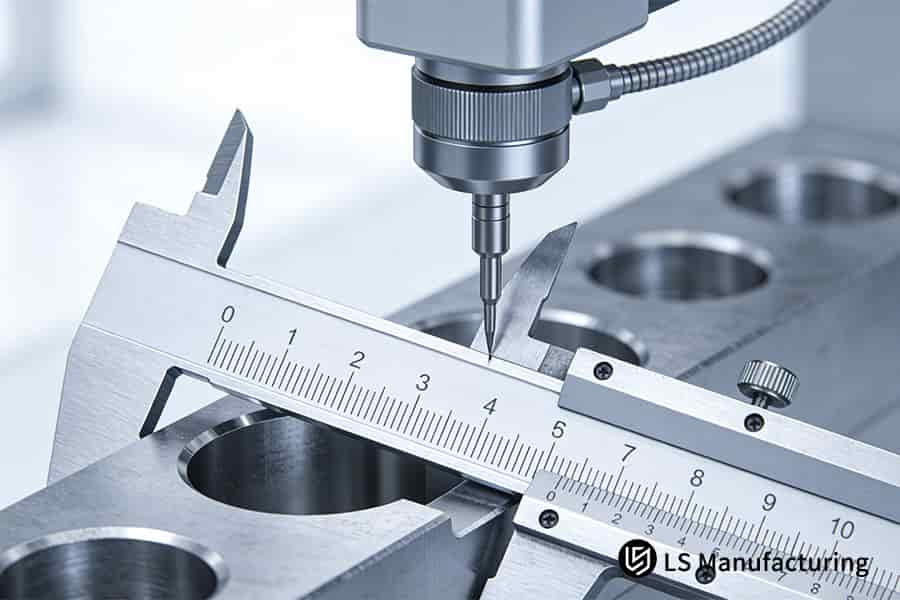
Figure 4: Measuring metal part with caliper to ensure high quality for precision machining supplier selection.
FAQs
1. What accounts for the primary cost difference between precision machining and standard machining?
The difference can be attributed mainly to the costs that need to be invested in the system to attain precision stability. Such costs include high-quality equipment, a controlled environment, sophisticated inspection equipment, process set-up times, and quality control measures that need to be in place to attain high process capability.
2. What level of precision can you typically achieve? Do you hold any relevant certifications?
We can attain a high level of precision in terms of dimensional tolerances up to ±0.005mm and geometric tolerances between 0.002mm and 0.005mm. We have certifications such as ISO 9001 and AS 9100. Most importantly, we can offer process capability reports for specific part types that can be used as evidence.
3. How do you handle situations where parts pass your outgoing inspection but are subsequently found to have defects during our usage?
We shall take immediate action on a top-priority basis. We shall work together with you within 24 hours to analyze the root cause of the problem. Should the problem, upon verification, be identified as a result of our responsibility for the manufacturing, we shall absorb all the related costs, including consequential damage, as well as take system-level actions to correct the problem. Our Quality Agreement has specific commitments on the above procedure.
4. Do you provide end-to-end services, ranging from material selection to post-processing?
Yes, we do. We are a one-stop-shop service provider, which means that from the selection of the materials, DFM analysis, precision machining, special heat treatment, surface treatment, to full dimensional metrology, the whole process is under our control.
5. How do you protect our design intellectual property (IP)?
We maintain the highest level of Non-Disclosure Agreements (NDAs) and information security procedures, which are aligned with the requirements of the ISO 27001 standard. We maintain all of our project information on encrypted servers, and our production areas are under strict access control. We are willing to enter into exclusive partnership agreements, too, upon your request.
6. What is your Minimum Order Quantity (MOQ)? How does pricing vary with order volume?
We can accommodate single-unit prototype production. Our pricing structure decreases as the order quantity increases, although the rate at which the price decreases seems to plateau after a certain economic order quantity is achieved. We maintain a tiered pricing structure to ensure that you understand the economies of scale that are achieved with increasing order quantities.
7. Do you support specialized industry standards and material specifications?
We do, and with a high level of expertise. We are knowledgeable of, and comply with, industry-specific standards for the medical industry (ISO 13485), the aerospace industry (AS 9100), the semiconductor industry (SEMI), etc. We are also knowledgeable of, and comply with, industry-specific requirements for machining exotic materials, including titanium alloys, Invar, ceramics, PEEK, etc.
8. How do I initiate an evaluation for a new project?
We are requesting 3D models, 2D drawings, and performance specifications from you. Our application engineers will kick off a preliminary analysis within four hours, and a meeting for a technical consultation will be arranged to get into the details of your requirements. Thereafter, a project launch summary will be provided, which includes a preliminary solution as well as a transparent precision machining quote.
Summary
In precision machining, the most dangerous cost is the "unknown cost"; the most fragile precision lacks systemic support; the most expensive supplier is the "invisible risk partner" that haunts you post-launch. True wisdom lies in seeing past quotation numbers to identify a system building precision on verifiable data, optimizing costs via deep collaboration, and elevating partnership to shared risk and success. This requires a partner with state-of-the-art equipment plus systematic capabilities and ethics to turn potential into client certainty.
If your project's success is non-negotiable and you seek a partner with true "systemic precision," we invite an evaluation beyond convention. Submit drawings of your most challenging component; within 24 hours, LS Manufacturing precision machining team will provide a unique "Supplier System Capability Simulation and Potential Risk Analysis Report." It offers a third-party decision-making perspective, framed through our rigorous systemic standards.
Contact LS Manufacturing today to embark on a risk-free partnership for precision machining services.
📞Tel: +86 185 6675 9667
📧Email: info@lsrpf.com
🌐Website: https://lsrpf.com/
Disclaimer
The contents of this page are for informational purposes only. LS Manufacturing services There are no representations or warranties, express or implied, as to the accuracy, completeness or validity of the information. It should not be inferred that a third-party supplier or manufacturer will provide performance parameters, geometric tolerances, specific design characteristics, material quality and type or workmanship through the LS Manufacturing network. It's the buyer's responsibility. Require parts quotation Identify specific requirements for these sections.Please contact us for more information.
LS Manufacturing Team
LS Manufacturing is an industry-leading company. Focus on custom manufacturing solutions. We have over 20 years of experience with over 5,000 customers, and we focus on high precision CNC machining, Sheet metal manufacturing, 3D printing, Injection molding. Metal stamping,and other one-stop manufacturing services.
Our factory is equipped with over 100 state-of-the-art 5-axis machining centers, ISO 9001:2015 certified. We provide fast, efficient and high-quality manufacturing solutions to customers in more than 150 countries around the world. Whether it is small volume production or large-scale customization, we can meet your needs with the fastest delivery within 24 hours. choose LS Manufacturing. This means selection efficiency, quality and professionalism.
To learn more, visit our website:www.lsrpf.com.