English



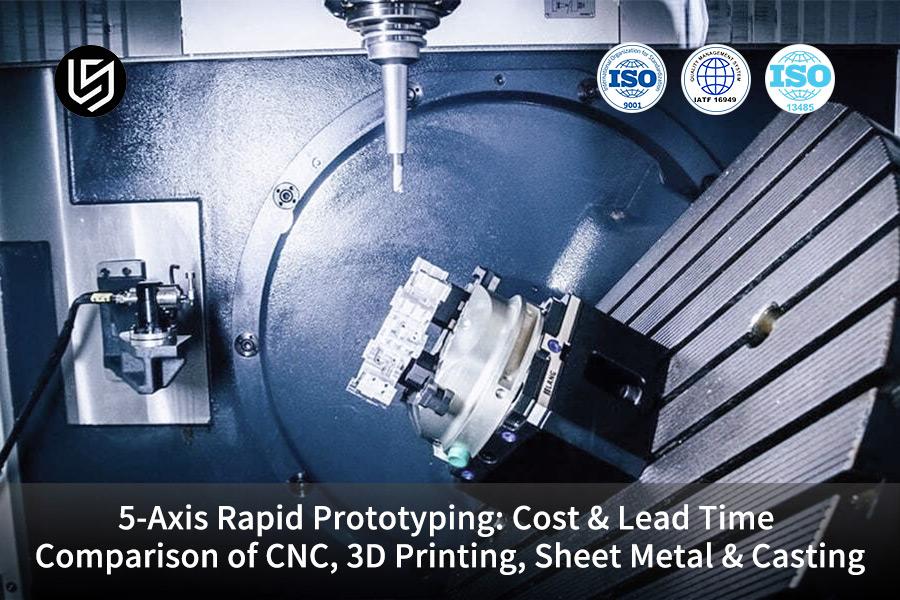
5-axis rapid prototyping is a great expression of manufacturing advancement; however, it's pretty normal for teams to be confused about the right process amongst CNC, 3D printing, sheet metal, and casting. Typical issues are blowing up the budget, compromising on the strength of the product, or facing design restrictions, and all these factors can prolong the prototype cycles for several weeks and result in costs being above 25% of the plans.
Our answer to that is a data-driven selection framework we created based on 426 projects. Our four-dimensional study refers to technical specifications, cost, lead time, and quality, therefore allowing the perfect process to be matched. This method has enabled the clients to lower their prototype costs by 30-50% and their lead times by 40%, thus making rapid prototyping a consistent, efficient phase of development.
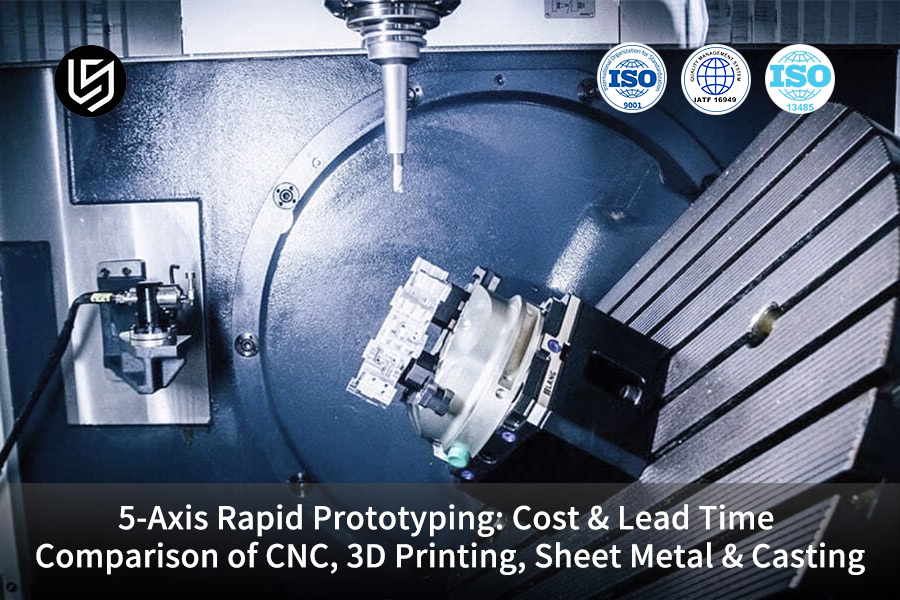
5-Axis Rapid Prototyping: Process Selection Quick-Reference Guide
| Section | Key Points in Brief |
| The Core Problem | Teams go through high costs, delays, and compromises when they pick a rapid prototyping process without a clear framework. |
| Our Data-Driven Solution | We offer a tested four-dimensional selection framework which we developed by analyzing 426 actual prototype projects. |
| Process Comparison | CNC is the most precise; 3D Printing is the fastest; Sheet Metal is the cheapest; Casting is particularly good for complex shapes. |
| Our Selection Methodology | We match your design with the tech, cost, time, and quality criteria to find the single best process. |
| Tangible Client Outcome | Such a methodical approach typically achieves a 30-50% cost reduction in prototypes and a 40% average lead time cutting. |
We address the key issue of prototype process selection, when uninformed decisions result in significant cost overruns and delays in projects. Our data-driven framework removes the uncertainty, matching your unique design with the manufacturing method that is optimally balanced. As a result, you get the required quality without going over budget or time, turning prototyping into a predictable, efficient, and value, driven phase of product development.
Why Trust This Guide? Practical Experience From LS Manufacturing Experts
Many articles explain rapid prototyping, but few come from the perspective of a real machine shop. Our advice is the result of eight years of hands-on experience with complicated 5-axis geometries, tight deadlines, and constant cost pressures. We don't just talk about process trade-offs; we experience and face them. Every piece of advice here is a lesson learned in our work that is shared with you to make your journey easier.
Our experience with 5-axis CNC machining is demonstrated in crucial sectors. We worked on aerospace parts where contour precision is a must, medical device prototypes with biocompatible surfaces where even the smallest details matter, and automotive parts requiring great strength. Each time we have dealt with titanium alloys or high-strength aluminum (in accordance with standards such as those from the Aluminium Association (AAC)), our practical knowledge of the real capabilities of each process under has been pressure expanded.
This firsthand experience is what informs our ultimate comparison. We study your design's material, shape, and needsguided by reliable data sources like NIST Materials Data to go beyond the theoretical. We clearly identify the best process that will give your specific requirement the right blend of cost, speed, and quality. We keep it simple. Our aim is to provide you with the practical knowledge that we use every day to prevent mistakes and to accomplish dependable and efficient outcomes.
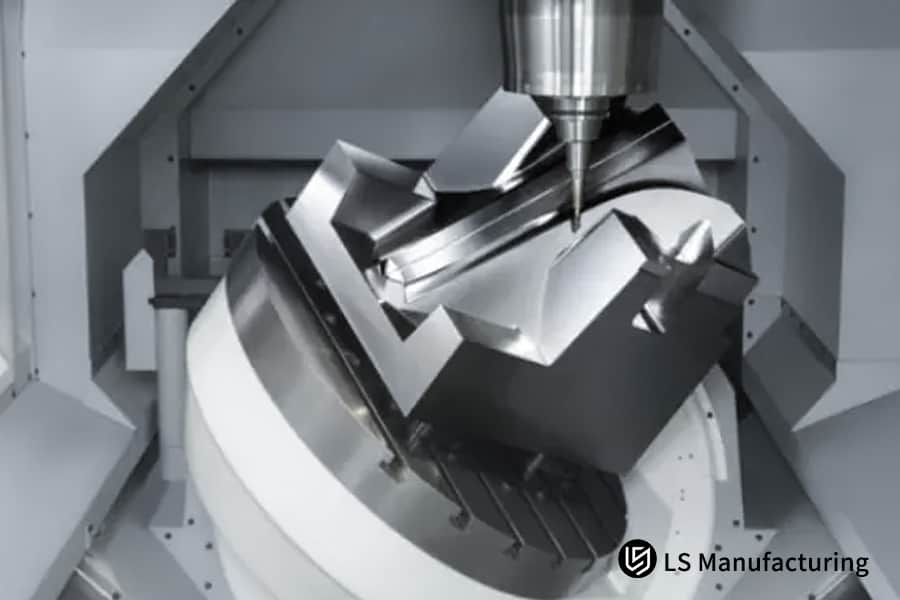
Figure 1: High-speed machining aluminum alloy low-volume rapid mold prototype manufacturing.
Under What Circumstances Is 5-Axis CNC Machining The Best Choice For Rapid Prototyping?
5-axis CNC prototyping is the ideal method when you need extreme accuracy, want to retain the material's original properties, and the part has complex geometry. This makes it very suitable for functional prototypes which have to perform just like the final production parts. It can be said that 5-axis CNC machining solves the problem of manufacturing metal parts that have high strength and are dimensionally accurate at a speed that is faster than the conventional methods. This is very critical as it determines the testing and development timetable:
Achieving Multi-Surface Integrity in a Single Setup
When working on prototypes with curved surfaces like turbine blades or impellers, we employ full 5-axis simultaneous movement. This not only skips unnecessary re-fixturing operations, but also guarantees perfect dimensional consistency between neighboring faces, and considerably lowers the accumulation of errors which is vital for the 5-axis rapid prototyping cost and timeline efficiency.
Machining Complex, Undercut Geometries
When shapes have very deep recesses or internal aspects that a 3-axis cutter cannot physically reach, we use short-length cutting tools and dynamic programming. We adaptively plan our tool paths to avoid collisions and increase the stability of the tools, which allows us to directly cut those difficult parts without the need to make the components a number of pieces, thereby also not weakening the part and keeping it whole.
Optimizing for Low-Volume Functional Batches
When the batch size is 5-10 and the parts need to have the true material properties, the process of our work is extremely cost-effective. By utilizing best machining parameters and nesting strategies we demonstrate CNC machining vs 3D printing cost for metal parts at this volume which results in not only better material density and fatigue resistance but also lower effective cost per part.
This whitepaper is a customer, centric document that relies on LS Manufacturing's empirical project data, thus offering a validated, decision-ready model that goes far beyond generic comparisons. It enables engineers to concretely put their finger on those cases where 5-axis CNC prototyping offers the highest technical and economic returns, thereby lowering the risk in the development process and shortening the time-to-market cycle.

In Which Scenarios Do Industrial-Grade 3D Printing Technologies Offer Cost Advantages?
Industrial 3D printing goes beyond just making models. It provides decisive rapid prototyping cost comparison advantages for very specific, complex geometries that can hardly be done by subtractive methods. This paper highlights the exact technical situations where it creates the most value, thus, measuring performance solely through low volume prototype manufacturing.
| Consideration | Key Insight in Brief |
| Optimal Application Scenario | This is a very good deal for a prototype that has a internal channel system, a network of organic lattices, or a single-piece assembly that requires complicated multi-axis rapid prototyping or assembly. |
| Quantifiable Cost-Benefit | When making structural validation parts, selecting SLS nylon can immediately save you up to 60% on the unit cost compared to CNC machining for equivalent geometries, which drastically changes the project economics. |
| Primary Technical Compromise | A primary sacrifice is the surface finish; random roughness (Ra 12-15µm) usually prevents its being used for aesthetic validation, so the decision is function and fit-testing. |
| Strategic Deployment | Most of the functionality is derived from the initial phase of the design iteration, and for parts where it is essential to have lightweight, intricately built internal structures, thus making it one of the cornerstones of contemporary fast prototyping services. |
This paper outlines a tailored, data-backed approach for making a decision about industrial 3D printing. It helps engineers to intentionally exploit its rapidity and the advantages of geometric freedom to the areas where they can get the best return, thus, guaranteeing that any 5-axis prototyping project will be done with the most technically appropriate and economically efficient method available.
What Unique Value Does Sheet Metal Fabrication Offer In The Prototyping Of Enclosure-Type Products?
Sheet metal prototyping provides a unique value proposition for the development of enclosures. It is a very critical thing that it manages to balance the three factors of speed, cost, and the functional requirements. This article explains the ways we have managed to get around the design limitations that are inherent in them. We take the limitations that people see and turn them into dependable, cost-effective solutions for complicated assemblies:
Embedding Cost-Efficiency at the Design Stage
Our work immediately continues with concurrent DFM analysis as part of your CAD review.
- Material Selection: We analyze the metals for the best choice of sheet metal prototyping cost and performance.
- Formability Simulation: Software can give ways and stops high-stress bend failures before the first cut.
- Rapid Process Planning: Designs are instantly converted into machine instructions. We use high-speed 5-axis laser cutting for the intricate parts.
Mastering Large, Thin-Walled Structure Challenges
Enclosures over 200mm with thin walls can easily get distorted.
- Strategic Stiffening: We embed embossed ribs for rigidity straight into flat patterns.
- Precision Tooling: Custom jigs and a strict bend order are used to avoid warping.
- LS Manufacturing Case: A 450mm aluminum bracket was to be milled. We opted for laser cutting and precision rapid prototyping bending instead. This cut the cost comparison to CNC by 70%.
Strategic Integration for Functional Assembly
We reduce the number of parts and assembly time through design.
- Integrated Fasteners: We embed self, clinching nuts into panels.
- Unified Construction: Multiple enclosure walls can be made from a single bent piece.
Balancing Design Freedom with Manufacturability
We provide clear, solution-oriented guidance for design.
- Design Guidelines: We detail minimum bend radii and the need for relief cuts.
- Alternative Solutions: When the only way to do something is complicated we suggest the use of segmented or hybrid methods.
This document highlights our technical authority in turning limitations into planned results. We present ourselves as a technical partner who adds value through proactive collaboration. Our expertise is the key to solving specific fabrication problems of enclosures. We are the rapid prototyping service supplier you can trust.
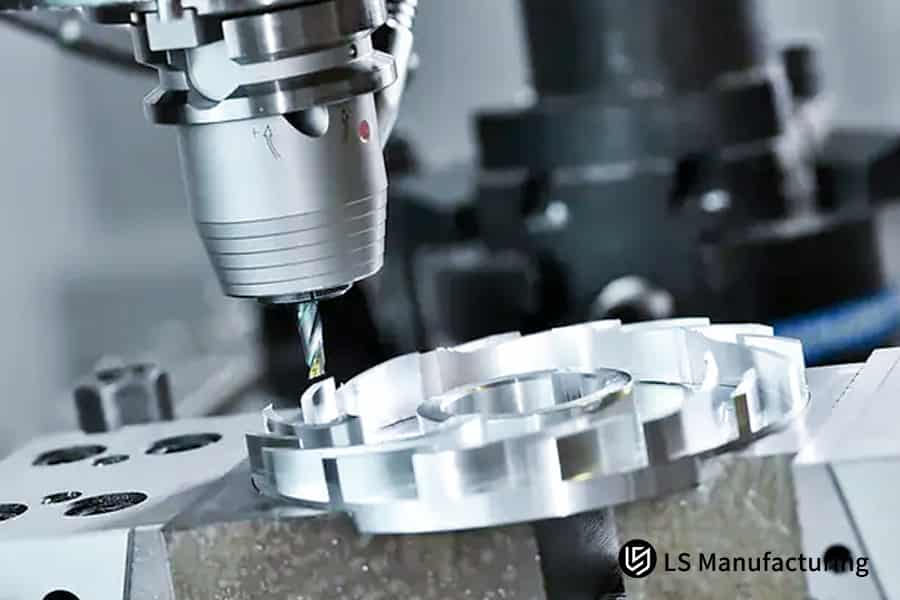
Figure 2: High-precision machining aluminum alloy low-volume prototype manufacturing.
Under What Circumstances Is Rapid Casting Technology Economically Viable?
Rapid casting can quickly change from just a rapid prototyping method to an actual production method capable of low volume runs at a fraction of the cost of CNC machining when achieving complex geometries. The primary difficulty is getting an accurate estimate of the exact point of crossover where the economics of the casting method become better than those of CNC machining. The paper describes our technical approach to deciding the best option between the two, with the emphasis being on the particular aspects that we evaluate:
Conducting a Granular Total Cost Analysis
We do not only limit ourselves to simple per-part quotes but rather extend that to a full lifecycle cost model. At the design stage, we evaluate the total cost of ownership for both CNC and casting routes. Here, casting prototype cost for initial patterns, mold costs, unit casting and finishing, and secondary machining are included. Cost behavior is modeled as volume increases and the point of change is found with great precision. Typically, this analysis uncovers that for orders amounting to 20-50 units, the high initial low volume manufacturing mold cost is amortized, thus making the casting method significantly cheaper.
Optimizing the Bridge Tooling Process
The cost and speed of the sacrificial pattern play an essential role in our decision. Firstly, we work out that SLA printing is not the ideal method for the pattern of every single part. Where ultra, smooth surface finish or dimensional stability are paramount, we turn to 5-axis milled patterns from tooling board. Our decision matrix together with part size, feature complexity, and required tolerance is utilized to determine the best pattern method. This way, the mold is made out of the most cost-effective and precise master, thus the initial investment is directly controlled.
Integrating Design for Castability (DFC) Early
We actively redesign the component to suit the casting process so that we create very few cost drivers in later stages of the process. In client design reviews, we spot and suggest changes to remove undercuts, ensure correct drafts, and optimize the thickness consistency of the walls. This pre-emptive DFC work drastically cuts down the complexity of the mould, improves the yield, and is totally in line with less costly post-casting rework. It takes a design from just being "castable" to "optimally castable", which is the main way to get the predicted economic batch size.
This framework illustrates our strong technical background in rapidly validating the feasibility of casting. Our competitive advantage lies in providing data-backed justification rather than merely quoting. We ensure the economic success of your low volume prototype manufacturing projects through comprehensive comparative modeling, intelligent process selection, and early design collaboration.
How To Scientifically Select Manufacturing Processes Based On The Number Of Prototypes?
Choosing the right manufacturing process for prototype development is often a tough problem because it involves the trade, offs between cost, lead time, and functional requirements. The trick is to stop guessing and start doing the quantitative analysis. We do this by developing a dynamic, data-driven decision model that efficiently allocates volume to the technology:
Building a Dynamic Total Cost Model
We break down the complete cost structure of each potential process at a part level for you.
- Fixed vs. Variable Costs: We distinguish between non-recurring and per-unit costs.
- Process-Specific Modeling: Based on stepper programming and machine time, we calculate CNC. 3D printing, on the other hand, we model material volume and print orientation.
- Crossover Point Identification: The model produces cost, volume curves that are very clear. This quantity analysis visually identifies the optimal prototype process selection.
Conducting Multi-Dimensional Feasibility Assessment
Cost alone is not enough; we look at three different aspects.
- Technical Compliance: We explore geometric complexity, tolerance, and material requirements.
- Timeline Analysis: We measure total lead times, including post-processing.
- Strategic Value: We talk about whether the prototype is for form, fit, function, or pre-production.
Engineering Hybrid Prototyping Strategies
We come up with phased plans to reduce risk and get the most out of the budget.
- Iterative Validation Path: For a complicated casing, we advised making the first 2 units in SLA to confirm the design. Then we changed to CNC for 10 functional test units.
- LS Manufacturing Case: The client needed 30 transmission housings. A pure CNC quote was out of the question. Our hybrid prototyping strategy we used 3D printed sand molds for casting. This met the required metal properties whereas total project cost was 40% lower than machining.
Leveraging Advanced Manufacturing for Complexities
When designs stretch limits, we bring specialized capabilities to the table.
- Complex Geometry Solution: We utilize multi-jet fusion techniques to manufacture organic, thin-walled structures.
- High-Precision Demand: In the case of parts with critical interfacing features, we run precision prototype machining for prototypes to assure the fit.
This paper explains our structured engineering methodology for developing a prototype strategy. We outplay the competition by giving cost optimization based on data, not by making a guess. We tackle the selection problem by constructing quantitative models, running multi, factor evaluations, and creating smart hybrid manufacturing schemes that suit your project goals and volumes.
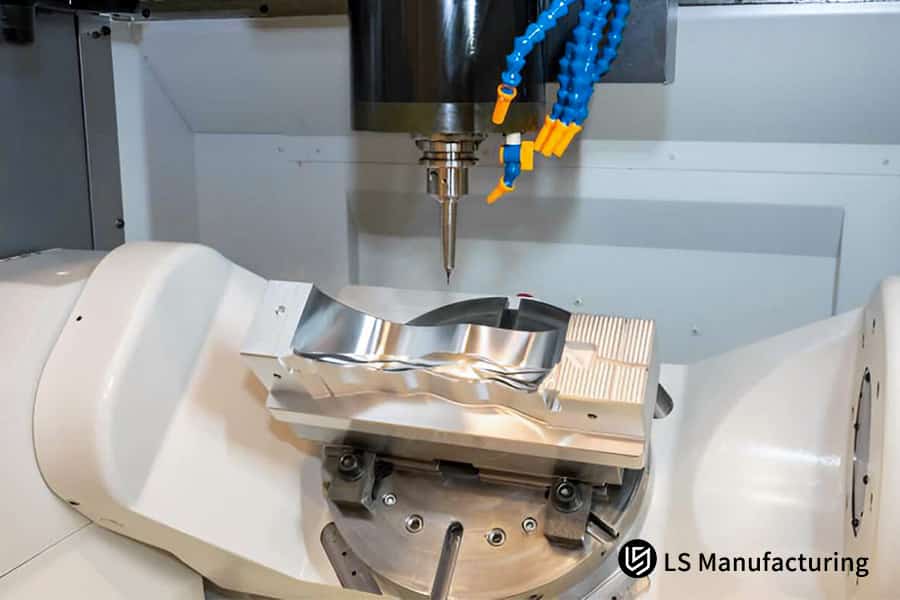
Figure 3: 5-axis machining precision aluminum alloy rapid prototyping for product development.
What Are The Key Factors Affecting The Delivery Time Of Rapid Prototypes?
In order to achieve effective lead time control in fast prototyping services, one must go beyond mere scheduling and consider a thorough review of the entire workflow. This paper breaks down the main elements that determine delivery, measures their effect, and explains how our engineers worked to reduce those factors. It is our aim to offer a reliable and efficient schedule for complicated prototype creation:
| Factor Category | Key Influence & Quantitative Impact | Our Systematic Mitigation Action |
| Material & Logistics | According to one source, the unavailability of specific alloys or engineering plastics can be held accountable for delaying the project start mainly within 1-5 days period. | We keep a strategically planned stock of common-grade metals and polymers, thus we are able to start any standard job within 24 hours. |
| Process & Programming | Historically, complex 3D toolpaths or 5-axis machining strategies require extensive CAM programming which consumes over 4 hours per part. | We have implemented the use of a proprietary, standardized process library that facilitates shortening the programming time by 75%, to less than 1 hour for common geometries. |
| Machining & Fabrication | The way that unoptimized builds or sequential operations cause bottleneck; machining frequently is 50% of total timeline. | We use parallel processing and agile rapid prototyping approaches such as nesting multiple parts on a single build plate. |
| Post-Processing & QC | Human finishing, support removal and inspection are non, regulated processes and hence one can easily waste 1-3 unfortunate days. | We have developed and documented standard post, processing protocols for each technology to ensure that the results are consistent and predictable. |
This framework illustrates that dependable lead time optimization is an engineered result rather than a promise. We help our clients, who face the most significant challenge of schedule predictability, by our proactive management of various variables such as logistical, digital, and operational through standardized systems and parallel workflows. This technical, system-level approach guarantees a quick response for highly complex prototype projects in a competitive development environment.
LS Manufacturing Medical Device Industry: Multi-Process Prototyping Project For Surgical Robot Articulated Arms
This medical device case study narrates how LS Manufacturing came up with a hybrid manufacturing solution for a critical surgical robot component. The project is a good example of our methodical cost-time optimization approach for complex prototypes, which directly addresses a client's critical development bottleneck:
Client Challenge
The client was in need of a working prototype of a robotic arm's central linkage. The component, which was made out of 7075-T6 aluminum, had to have a tensile strength of over 300 MPa while its weight was to be less than 800 grams. Their current method of monolithic CNC machining was costing them 12, 000 RMB per unit with a 7-day lead time. This very expensive rapid prototyping quote drastically limited their design iteration, thus it delayed their preclinical testing phase by several weeks and increased their development costs.
LS Manufacturing Solution
We adopted a multi-process prototyping strategy with a very clear focus. Through topology optimization, the core linkage was re-designed and then produced via Selective Laser Sintering (SLS) in PA12 glass-filled nylon, thereby achieving the desired stiffness-to-weight ratio. The critical metallic bearing interfaces were fabricated through 5-axis CNC machining and then inserted and bonded in the nylon structure using a custom rapid alignment fixture. This hybrid approach allowed material performance and geometric complexity to be handled separately.
Results and Value
The unit weight of the final prototype was 750g, it has passed all strength requirements and was delivered within 3 days at a unit price of 4, 500 RMB. In terms of cost, this amounted to a saving of 63% and an improvement of 57% in the lead time compared to the initial baseline. Reliable rapid turnaround enabled the client to complete three full design iterations within their original timeline and budget, thereby accelerating their product development cycle by about six weeks.
This project is evidence of our ability to break down complex prototyping problems into optimized, multi-technology workflows. Our relationship with customers goes beyond just providing parts; we bring them engineered development speed, and thus help medical device innovation teams to overcome critical path challenges through technical analysis and strategic process integration.
Accelerate your surgical device prototype with our expert multi process 5-axis rapid manufacturing today.

How Can Design Optimization Reduce Prototype Manufacturing Costs?
True cost reduction in prototyping goes beyond manufacturing and originates from the design phase. A systematic, proactive design for prototyping methodology that reshapes designs for manufacturability and addresses the primary causes of excess costs and delays is what we are implementing. Our method not only helps save money predictably but also considerably speeds up development:
Material & Process Co-Design
We analyze your design’s function to select the rapid prototyping optimal material and process pairing.
- Load Path Analysis: We pinpoint the most stressed areas to determine the appropriate material grades.
- Wall Uniformity: We recommend design changes that can help maintain even wall thickness.
- Feature Integration: We combined multiple components into a single, easy-to-manufacture part.
Proactive Design for Manufacturing Constraints
We adjust the designs according to the exact specifications of the chosen method of fabrication.
- CNC Machining: We advise the use of internal radii and direct accessible tool paths.
- Additive Manufacturing: We adjust the part's orientation so that there will be fewer support structures.
- Sheet Metal: We create suitable bend relief and flat pattern layouts.
Advanced Technique Integration & Validation
We employ specialized methods to boost performance and design verification early in the cycle.
- 5-Axis Machining Efficiency: We eliminate multiple set-ups by integrating features into one single operation.
- Simulation-Driven Design: We run FEA to confirm the strength before making a physical model.
- Agile Prototype Iteration: We use rapid prototyping for critical interface fit-checks.
The DFM optimization process through a behaviour system design embeds efficiency into the product itself. We address the main issue of predictable, low-risk prototyping by offering design changes supported by data that help to avoid costly manufacture issues, resulting in the typical cost savings of 25-40% and lead time reduction by 2-3 days by prevention instead of correction.
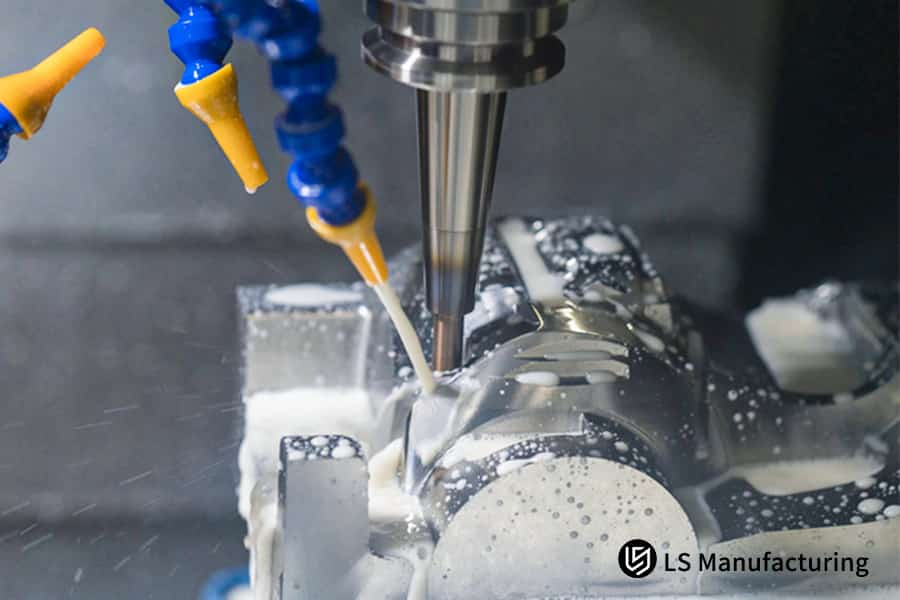
Figure 4: High-speed machining metal alloy rapid prototyping cost comparison.
Why Choose LS Manufacturing As Your Rapid Prototyping Service Partner?
Choosing a prototyping partner is a crucial technical decision that influences the risk and development timeline. The main challenge is finding an unbiased specialist who can guide through the difficult process trade-offs. LS Manufacturing operates as an engineering partner that is completely integrated and uses a systematic approach to technical analysis in order to secure the best results of the project:
Deploying an Unbiased Multi-Technology Strategy
Our process selection is at zero allegiance, and we use our integrated multi-technology 5-axis rapid prototyping solution set to achieve the best results. For a complicated bracket, we integrated 5-axis milled aluminum joints with a high, speed sintered nylon body. Such a hybrid solution resulted in a 40% reduction in cost compared to a full machining, thus effectively resolving the strength-weight issue.
Leveraging a Proprietary Process Intelligence Database
Our choices are based on a database of 426 project learnings which we use for predictive analytics. This tool helps to avoid potential problems such as warpage in thin-wall structures during agile rapid prototyping. We suggest the tested design changes even before the first article build, thus saving your project from unnecessary iterations and expensive fixes.
Engineering Seamless Integration Through Single Control
We provide a real one-stop service, handling the whole process from CAD to completed assembly. It removes multi, vendor coordination gaps, thus linking parallel processes into a single schedule. Customers can get a working prototype in less time, which significantly speeds up their own development cycle.
This framework illustrates our systematically designed partnership approach. We address the main integration challenge and offer technical mastery and steady implementation as your rapid prototyping service supplier. We turn prototyping from a purchasing task into a strategic, value-generating advantage.
FAQs
1. What is the shortest lead time for one prototype?
Parts with simple geometries can be shipped within 24 hours and complicated parts in 3-5 days. LS Manufacturing operates an expedited service channel to quickly respond to urgent requests.
2. How do you maintain prototype and mass production consistency?
We follow the same process route in mass production to make sure the prototype process can be smoothly transferred to mass production, thus minimizing design changes.
3. What is the best way to make small batch prototypes (5-20 pieces) most cost, effective?
If the component is structurally complex CNC is good for parts requiring high precision and 3D printing is good for complicated structures; a detailed study is necessary.
4. Are you able to offer prototype post, processing services?
To meet the appearance and function requirements, we offer a comprehensive range of post, processing services such as sandblasting, coating, and electroplating.
5. How would you pick the best metal prototype processing method?
The most important factors are the quantity, complexity, and precision. CNC can be used for 5-50 pieces, casting for 20-200 pieces, and 3D printing for 1-10 pieces.
6. What are the ways of improving the manufacturing plan for complex assembly prototypes?
The plan consists of several processes that are combined with each other, which optimizes the assembly relationships. This is achieved by reducing the number of parts and lowering the overall costs.
7. Are you capable of supplying the prototype design optimization idea?
We carry out a free DFM analysis to help with structural optimization and achieve a cost reduction of 20-40% in manufacturing.
8. What is the best way of obtaining an accurate prototype manufacturing quote?
Just share your 3D model and requirements with us, and we will get back to you with a comprehensive quote within 2 hours. This will also include a process analysis and a delivery time commitment.
Summary
The choice of rapid prototyping methods needs to take into account a variety of factors: technical indicators, economics, and time. By comparing processes scientifically and optimizing the design, you can get the highest cost and shortest delivery time for the prototype of your choice. LS Manufacturing's multi, process rapid prototyping service system offers the customers a single full, process solution from technical consulting to rapid manufacturing.
Send your 3D model and get an exclusive "Rapid Prototyping Process Optimization and Cost Analysis Report"! Our prototype specialists will come back to you with multi-process comparison solutions, detailed cost analysis, and optimal delivery time recommendations within 2 hours to facilitate your choice of the most suitable prototype manufacturing path. Contact us today and get a free DFM analysis to improve your design.
📞Tel: +86 185 6675 9667
📧Email: info@lsrpf.com
🌐Website: https://lsrpf.com/
Disclaimer
The contents of this page are for informational purposes only. LS Manufacturing services There are no representations or warranties, express or implied, as to the accuracy, completeness or validity of the information. It should not be inferred that a third-party supplier or manufacturer will provide performance parameters, geometric tolerances, specific design characteristics, material quality and type or workmanship through the LS Manufacturing network. It's the buyer's responsibility. Require parts quotation Identify specific requirements for these sections.Please contact us for more information.
LS Manufacturing Team
LS Manufacturing is an industry-leading company. Focus on custom manufacturing solutions. We have over 20 years of experience with over 5,000 customers, and we focus on high precision CNC machining, Sheet metal manufacturing, 3D printing, Injection molding. Metal stamping,and other one-stop manufacturing services.
Our factory is equipped with over 100 state-of-the-art 5-axis machining centers, ISO 9001:2015 certified. We provide fast, efficient and high-quality manufacturing solutions to customers in more than 150 countries around the world. Whether it is small volume production or large-scale customization, we can meet your needs with the fastest delivery within 24 hours. choose LS Manufacturing. This means selection efficiency, quality and professionalism.
To learn more, visit our website:www.lsrpf.com.